Category: Allies
Categories
Light Gun
:quality(70)/cloudfront-us-east-1.images.arcpublishing.com/archetype/DWEIYYFE6RBUTPYG3GNOZHO2DQ.jpg)
Marine scout snipers conduct long-range live-fire training at Camp Fuji, Japan, in March 2022. (Lance Cpl. Manuel Alvarado/Marine Corps)
The Marine Corps is scrapping its scout sniper program and will soon house its snipers under reconnaissance, rather than infantry, battalions.
Instead of scout sniper platoons, infantry battalions will have scout platoons, an message sent to the fleet from the Corps’ Plans, Policies and Operations department on Tuesday said. The message called for the transition to happen immediately.
The message, first reported by Coffee or Die Magazine, said that scout sniper platoons didn’t provide battalion commanders with sufficient “continuous all-weather information gathering.”
The scout platoons are meant to “provide the commander with relevant, reliable, accurate and prompt information,” the message said.
“The shift to a Scout Platoon will allow those Marines to focus their training and evaluations on scouting, providing commanders the right tools to accomplish their mission,” Marine spokesman Capt. Ryan Bruce said in a statement to Marine Corps Times.
Bruce noted that infantry Marines will still have access to precision rifles as necessary.
The Marine Corps didn’t immediately respond to a Marine Corps Times request for information about what roles scout snipers will have and where they will be placed after the platoons disband.
Scout snipers have been part of the Marine Corps since World War II. They are trained not only in marksmanship but also in scouting, or reconnaissance.
They aren’t the only snipers in the Marine Corps; some reconnaissance Marines and Marine special operators are also trained as snipers.
The president of the USMC Scout Sniper Association wrote in a message to the association that he urged Berger to “reconsider this ill-advised policy decision.”
“It’s unlikely that any officer who commanded and employed Scout Snipers in combat agrees that removing a sniper capability from the infantry battalion makes sense,” retired Master Sgt. Tim Parkhurst wrote in the message.
Marine Commandant Gen. David Berger ordered the transition, according to the message. The move comes as part of Force Design 2030, the Marine Corps’ overhaul that called for a reorganization of infantry battalions and a doubling down on reconnaissance.
Separating the sniper role from infantry battalions is one aspect of the Force Design 2030 plan, which seeks to “divest the preponderance of weapon-specific military occupational specialties in the infantry battalions and build highly trained Marines who are capable of employing a range of weapons and equipment,” according to Bruce.
Scout platoons will be made up of 26 Marines: four teams of six infantry Marines, with a first lieutenant and a gunnery sergeant in charge. That’s larger than scout sniper platoons, which typically have 18 Marines.
The Marine Corps didn’t immediately provide the number of scout snipers currently serving.
In 2018, a Marine spokeswoman estimated the number at around 300. Thanks to shortfalls in the number of snipers, scout sniper platoons have in recent years consisted of lots of marksmen who undergo on-the-job training with help from fully trained scout snipers.
After fiscal year 2024, which ends in fall of that year, there won’t be any seats in the Scout Sniper Basic Course, according to the Plans, Policies and Operations email. The Marine Corps will still train snipers through the Reconnaissance Training Center and the Marine Raider Training Center, the message stated.
Marine snipers will bear a new 0322 military occupational specialty, designating reconnaissance snipers, rather than 0317; 0321 is the military occupational specialty for reconnaissance Marines.
Irene Loewenson is a staff reporter for Marine Corps Times. She joined Military Times as an editorial fellow in August 2022. She is a graduate of Williams College, where she was the editor-in-chief of the student newspaper.

You cannot make this up, and even if you could, the actual facts would read like something out of a really strange movie script about good versus just plain dumb.
When Illinois Gov. J.B. Pritzker last month rushed to sign a brand new gun control bill before the Legislature adjourned (only to re-convene about 24 hours later), something happened nobody saw coming. County sheriffs up and down the Prairie State loudly declared they would not enforce the new law, which banned so-called “assault weapons” and “high-capacity magazines.” It requires current owners to register their guns with the Illinois State Police.
How this may play out is ripe for speculation. By the time you read this, at least one federal lawsuit involving the Illinois State Rifle Association, Second Amendment Foundation and Firearms Policy Coalition will have been filed. There could be more. It all means that the new Illinois law might be headed for a collision with the Constitution’s Second Amendment.
This certainly appears to be what the sheriffs of at least 80 Illinois counties were thinking when they posted letters saying essentially the same thing.
“As your duly elected Sheriff,” the letter says, “my job and my office are sworn to protect the citizens … This is a job and responsibility that I take with the utmost seriousness. The right to keep and bear arms for defense of life, liberty and property is regarded as an inalienable right by the people of this country …”
“Therefore, as the custodian of the jail and chief law enforcement official, I proclaim that neither myself nor my office will be checking to ensure that lawful gun owners register their weapons with the State, nor will we be arresting or housing law-abiding gun individuals that have been arrested solely with non-compliance of this Act.”
Published reports, and reliable sources, confirm Pritzker was furious when the sheriffs went public with their opposition. When he intimated the lawmen would lose their jobs, at least two different Illinois sources told me between laughs that the governor does not have the authority to fire elected sheriffs.
Meanwhile, Out West
When sheriffs in Washington State got wind of the gun control package put forth by Gov. Jay Inslee, which also involves a ban on semi-auto rifles, the Washington State Sheriff’s Association circulated a letter signed by Kittitas County Sheriff Clay Myer —president of the group — and it was not congenial.
“Governor Inslee,” Sheriff Myers wrote, “has announced plans for significant new restrictions on the ownership of firearms by law-abiding Washingtonians. We, members of the Washington Sheriffs’ Association, believe the proposed restrictions will serve to erode constitutionally protected rights without addressing the root causes of violent crime. We are particularly concerned with the proposed so-called ‘assault weapons ban’ and ‘permit to purchase’ laws.”
A few paragraphs later, Myers put it bluntly: “The rise in violent crime that so concerns citizens has happened even as regulations and restrictions on firearm ownership have grown. Of course, this is because the people who commit violent crimes simply don’t concern themselves with obeying rules about guns.”
Murder and mayhem is up in Washington, and so is the number of concealed pistol licenses. As the year wrapped up, there were just short of 697,000 active CPLs in circulation, according to data from the state department of licensing.
It’s not the first time county sheriffs have “just said no.” Back in 2018 and early 2019, many Washington sheriffs announced they would not actively enforce provisions of Initiative 1639, an extremist gun control measure passed by voters.
Some sheriffs in New York State say they will not “aggressively” enforce that state’s new gun law, which is being challenged by at least two federal lawsuits. A few sheriffs in Oregon have said essentially the same thing about provisions of Measure 114, the gun control initiative passed there last November.
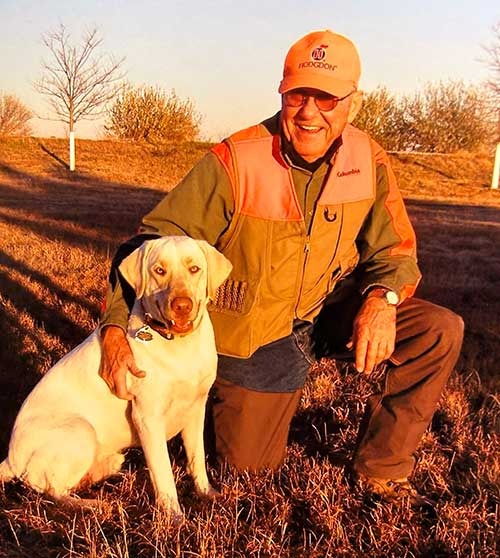
A Good Man Gone
The problem with being an old gun guy is that it becomes more frequent we must say “goodbye” to a good friend, who happens to have also been just a plain good person.
Robert E. “Bob” Hodgdon, whose family name is part of the fabric of American metallic cartridge reloading, passed away Jan. 13. Having been born in August 1938, Hodgdon had a good run that covered a lot of ground. He and his brother, J.B. helped build the company founded by their father, Bruce Hodgdon, and today that name is iconic in the industry for the variety of reloading propellants for rifles, shotguns and handguns. According to an obituary the family posted, he “also assisted with the design and lead the team constructing the Pyrodex Plant in Herington, Kan. in 1979 and helped to design and build The Bullet Hole, a 44-station indoor shooting range in 1967.”
I served with Hodgdon on the NRA board of directors more than 20 years ago, and you could not find a more devoted fellow where perpetuation of the shooting sports, and protection of the Second Amendment, was concerned. He was a kind and gentle soul, a person you’d be delighted to share a campfire with, and someone who was as devoted to his family as his professional pursuits. He was father to four children, Chris (Adele) Hodgdon, Heidi (Erwin) Rodriguez, Stacie (Bryant Larimore) Hodgdon and Alisa Hodgdon — and grandfather of 11 and great-grandfather to eight.
A native of Kansas, he grew up in suburban Kansas City. He attended Baker University in Baldwin City, Kan., and graduated Summa Cum Laude from the University of Kansas. He served in the U.S. Air Force and the Air Force Reserves.
He served as president of Hodgdon for more than 20 years and then as board chairman from 2014 to 2017.
Hodgdon volunteered in several civic organizations, and was a member of the Westside Family Church in Lenexa, Kan.
Additionally, he was a founding member of the National Shooting Sports Foundation, a member of the Kansas State Rifle Association, and founding member of the Kansas Sportsmen’s Alliance.
Men like Bob Hodgdon are very rare.
:quality(70)/cloudfront-us-east-1.images.arcpublishing.com/archetype/N62LKHOTFVBA7GXAUWZDOHV4DE.jpeg)

The tiger shark eats most anything it can catch.
On Thursday, April 25, 1935, a proof reader for The Sydney Morning Herald named Narcisse Leo Young was out enjoying the collection of exotic fish at the Coogee Aquarium and Swimming Baths near Sydney, Australia. Their accumulated menagerie was impressive for its day. The newest addition was an 11.5-foot Tiger shark that had been caught by an angler a week before some two miles out to sea. All were mesmerized by the massive beast as it cruised menacingly around its ample tank.
Narcisse saw the big shark begin to behave erratically. The beast suddenly wretched and deposited some unfortunate guy’s left arm in the pool. Aquarium personnel duly retrieved the ghastly limb. She later reported that the stench was “frightful.”
The arm was duly presented to police on the justifiable assumption that its former owner might yet have a vested interest in it. A forensic analysis showed that the stump had been severed cleanly with a cutting tool. There the case likely would have languished had it not been for a certain distinctive tattoo.
Adorning the unfortunate man’s severed limb was a crude depiction of two boxers in mid-punch. There was also a short length of rope tied around the wrist. While the arm had clearly seen better days, the tattoo remained both unique and intact. The authorities documented the curious ink extensively.
Three days after the shark’s unfortunate performance it was sacrificed for the greater good. Here the tale gets even weirder. Inside the creature was found a smaller shark that had apparently done the actual arm eating.

Behold the regurgitated shark arm. This distinctive tattoo gave
police insight as to the arm’s original owner.
The fingers were surprisingly intact, so the cops were able to retrieve usable fingerprints. The prints were traced to a small-time thug named Jim Smith, who had gone missing nearly three weeks before. His wife Gladys and brother Edward positively identified the tattoo.
Jim Smith was a known associate of a crooked local businessman named Reginald Holmes and a former soldier-turned-criminal named Patrick Brady. Holmes was a boat-builder by trade who used his fast powerboats to retrieve cocaine shipments dropped from passing ships to make a little dark money on the side. These three model citizens supported themselves by running a variety of rackets ranging from check forgery to insurance fraud.
The criminal fraternity is a fickle thing indeed, and the successful businessman Reginald Holmes had the most to lose. Diligent police work uncovered some compelling circumstantial evidence tying the now unarmed (an intentionally awkward metaphor) Smith with the veteran Brady, as well as some good old-fashioned blackmail of the bent businessman Holmes. Now distraught over the inevitable brewing scandal, Reginald Holmes retired to Sydney harbor aboard one of his boats and shot himself in the forehead with a .32-caliber automatic pistol.
Alas, the synergistic combination of Holmes’ thick skull and his little mouse gun resulted in nothing more than a flattened slug and a killer headache. Reggie Holmes was knocked into the water by the blow but revived in short order. He then remounted his personal speedboat and led the harbor patrol on a merry chase for several hours before finally being apprehended.
What likely got Jim Smith in deep with the criminal Brady in the first place was his reported cooperation with police as an informant. Now, Reginald Holmes saw a cozy relationship with law enforcement as his lifeline out of this mess. The following month he spilled the beans to Detective Sergeant Frank Matthews.
It seemed that Brady had indeed killed and dismembered the hapless Jim Smith. Always game to optimize his return on investment, Brady then materialized at Holmes’ domicile with Mr. Smith’s severed arm in tow. He brandished the appendage to prove he was serious and then purportedly demanded Holmes pay him 500 pounds. Brady left the arm at Holmes’ place as a token of his sincerity. Not wishing to alarm the missus unduly, Reggie Holmes drove to nearby Maroubra and disarmed himself in the ocean. It was here that the sharks apparently first became involved.
A few days later, the businessman Holmes was found dead in his car of an apparent suicide. This time he had been shot three times in the chest. Though sometimes forensic evidence can indeed be difficult to interpret, even I know that it is nigh impossible to commit suicide by shooting yourself three times in succession. Holmes had an appointment to testify against Brady later that day. It was here the lawyers got involved.
Brady’s Solicitor, Clive Evatt, asserted that his client could not be convicted of murder on the strength of a single severed arm barfed up by a shark with gastrointestinal issues. He alleged that the arm “did not constitute a body” and that many people were thriving who had lost an arm or worse. With the prosecution’s star witness now finally demised, the case imploded, and Brady walked free.
Patrick Brady maintained his innocence for the next 30 years. In the spring of 1965, he died peacefully at the Concord Repatriation Hospital in Sydney at the age of 76. Recent analysis has posited that Holmes actually hired a hitman to end his own moral misery and that Brady had indeed been innocent of that particular crime, at least. Despite some diligent Googling, I was unable to ascertain a final disposition on the arm.