Categories
A Victory! Allies Manly Stuff Real men

I REALLY like this man & wish we had a lot more of him around!

Categories
Allies Soldiering

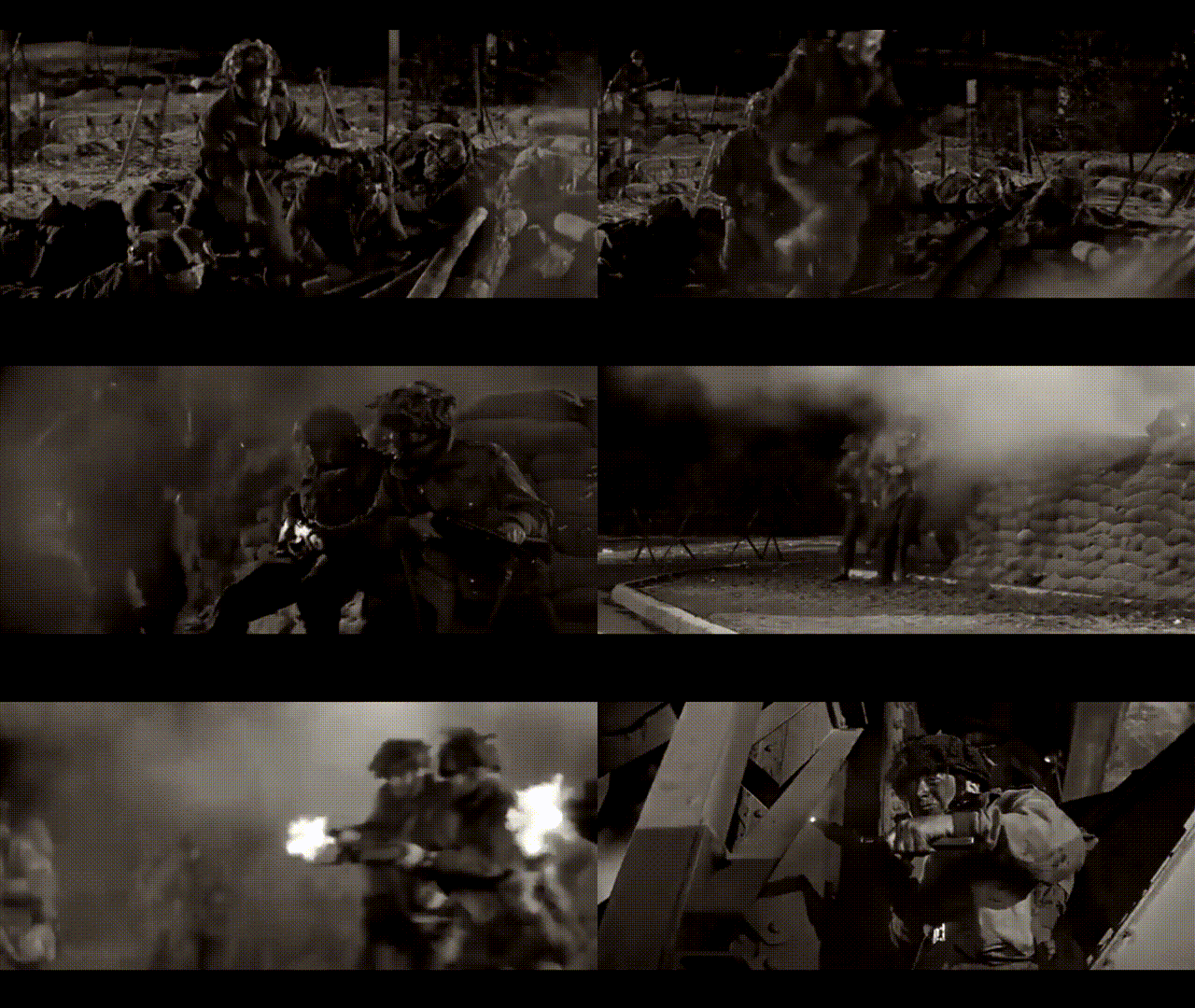
Royal Marines Commandos ‘The Mist’ advert

Categories
All About Guns Allies Well I thought it was neat!

100 (Antique) Guns at Holts! #2 – September 2020

Categories
All About Guns Allies Anti Civil Rights ideas & "Friends" Gun Fearing Wussies Well I thought it was neat!

GUNS SAVE LIVES WRITTEN BY WILL DABBS, MD


The mainstream media is like a dog chasing a squirrel. Talking heads pontificate about the crisis du jour, while public figures rend their clothes while wearing sackcloth and ashes before the klieg lights and cameras. There is something fresh, new, and horrible every single day. It is predictable. That’s a great way to earn clicks but a really bad way to shape government policy.

According to them, our country’s greatest existential crisis is assault weapons. Now we all know that it’s not even possible to define a “semiautomatic assault weapon,” much less control its proliferation and nefarious use via legislative fiat. However, reality has never stopped the Left from throwing ineffective laws at a problem. As it relates to the Second Amendment in general and an assault weapons ban in particular, it behooves us to appreciate a few inconvenient facts.

Everytown for Gun Safety is a rabidly anti-gun political activist organization. Let’s give them the benefit of the doubt and assume their numbers are accurate. Everytown defines a mass shooting as a rampage event wherein four or more people are killed with firearms excluding the shooter. They counted an average of nineteen mass shooter events per annum between 2009 and 2020, with a total of 1,363 fatalities. Of these tragedies spread over 12 years, firearms that could be defined as “assault weapons” were used in 30 shootings, resulting in 347 deaths.
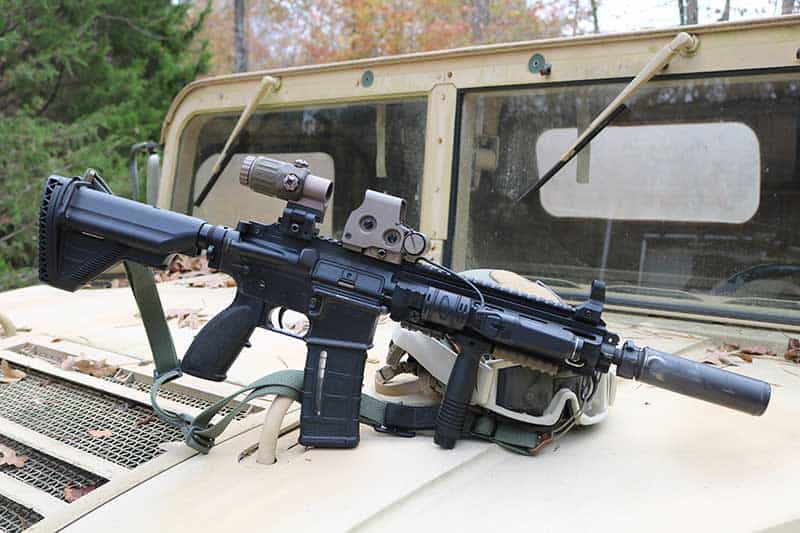
 

Gun banners would have you believe that this is responsible for the
deaths of thousands of innocent Americans. That’s just not true.


Ours is a nation of 328 million people. In 2019, 364 Americans were killed with rifles of all sorts. That’s 364 unimaginable tragedies. I do not for a moment trivialize that. However, there is the issue of scale.

In that same year, we lost 480,000 Americans to cigarettes. Of those 480,000, some 41,000 were innocent non-smokers killed by secondhand smoke, mostly children with breathing disorders. That same year, 1,476 Americans were killed with knives, 600 were beaten to death with fists, and 397 died from attackers wielding clubs and hammers (statista.com). More people were murdered with knives in that single year than were killed in mass shootings between 2009 and 2020. People are just bad.

The images are undeniably heartrending. No normal person can gaze upon the pictures of terrified survivors streaming out of a school or shopping center without being viscerally moved. However, isolated images are no basis for sound policy.

As horrible as these diabolical events are in the grand scheme, the cold absolute numbers are still fairly small. By contrast, there is a flip side to the Second Amendment question that is typically completely overlooked in the national discourse. Just how many lives are saved by America’s unique infatuation with these implements of violence?
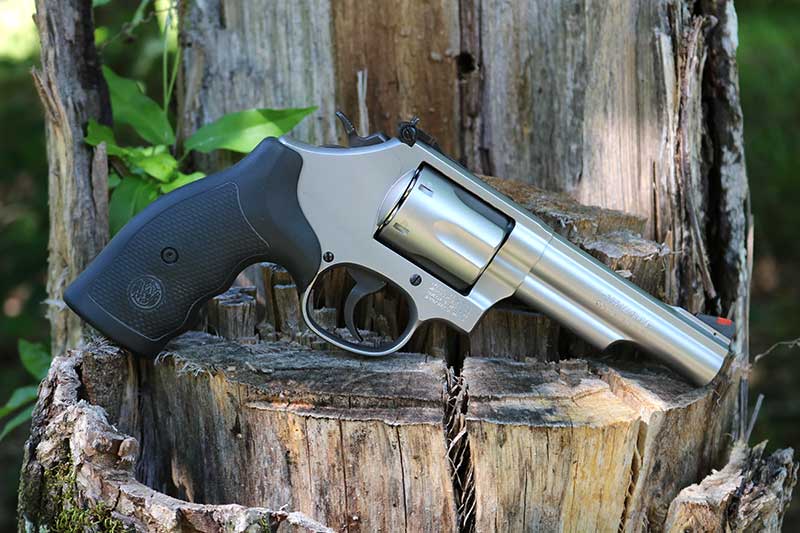
 

Lots more folks are hurt by thugs wielding unimposing handguns than black rifles.


Gunfacts.info estimates that guns are used to prevent crimes some 2.5 million times per year in America. That’s an average of 6,849 incidents every day. The same researchers assert that guns are used to avert a life-threatening crime 400,000 times per year. These numbers are amply footnoted, but statistics are readily manipulatable. I take all those things with a grain of salt. Today, I’d like to think a little bigger.

Our great republic has served as a beacon of freedom and democracy to an oft-enslaved world for some 245 years now. Ours is the most resilient, long-lived, and productive democracy in human history. We are also a gleaming exception. Time after time after time, governments have their day in the sun but then devolve into blood-soaked despotism. That cycle is a lamentable part of the human condition.

Cambodia suffered unimaginably under Pol Pot (2 million dead). Germany had Hitler and the Nazis (21 million dead). China had Mao (45 million dead). And then there’s Putin (pushing half a million dead total).

The real body counts don’t come from mass shooters. The serious body counts come from governments. And the only thing standing between the United States government and something similarly ghastly, as has been the case with democracies throughout human history, is a well-armed populace.


If you really want to make a dent in violence then figure out a way to
control the proliferation of these things. Knives are used to kill way more
people in America than scary black rifles.

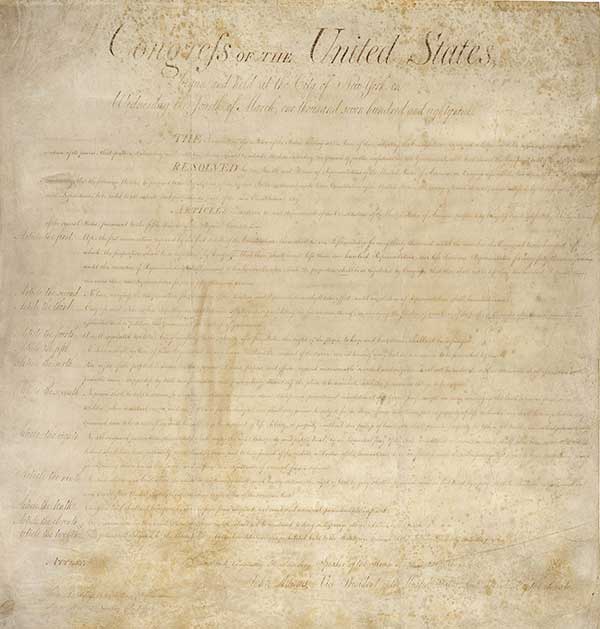
An armed population is absolutely ungovernable without their consent. Those great wise old guys who drafted the U.S. Constitution knew that to be the case. That’s why the right to own a weapon was enshrined right behind the right to gripe about the government and attend the church of your choice.

I have a dear friend who is alive today because he had a gun on a remote deserted road late at night. The cops were never notified, and the incident never made it into any statistical database. However, I’m sure glad he traveled with a weapon. It’s a scary world.

The American phenomenon is unique in human history. The unhinged rantings of revisionist activists notwithstanding, we have been the greatest force for liberty in the history of the planet. And that could all be gone in a generation. We are not fundamentally different from the Germans, the Cambodians, the Russians, and the Chinese. We simply can’t let short-sighted witless agendas undo two centuries of profound, timeless wisdom.

Categories
All About Guns Allies

I like this kid !

Categories
All About Guns Allies

ABSENT FRIENDS WHEN A SHOOTING BUDDY PASSES, IT LEAVES A MIGHTY BIG HOLE WRITTEN BY JOHN TAFFIN

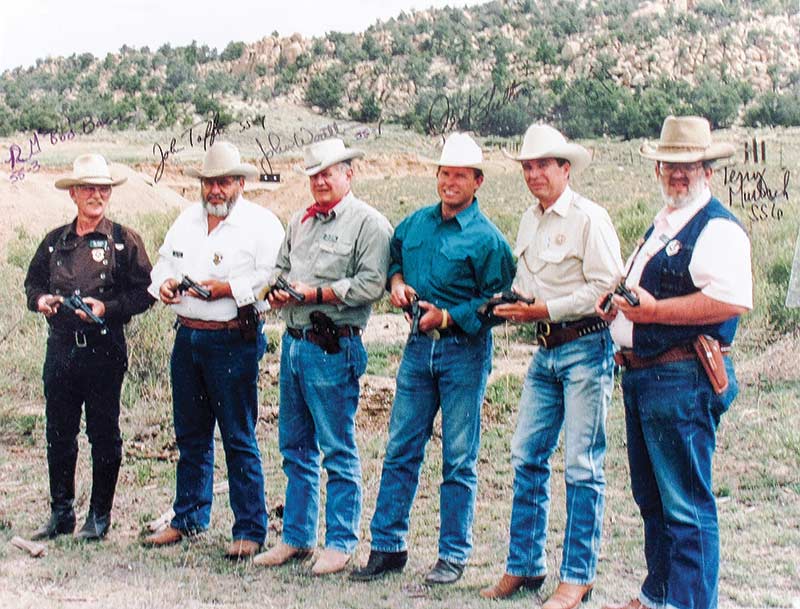
Buena Vista around 1990 (left to right): Bob Baer, John Taffin,
John Wootters, Bart Skelton, Jim Wilson and Terry Murbach.


Regular readers know I never repeat myself, however I sometimes, well, review things. I’ve often said the best part of my job is not all the guns, but rather all the friends I’ve made — friends who not only taught me much but were also great encouragers. I’ve corresponded with many of them regularly, and when the letters and phone calls stop it usually means they’ve been called Home.

Never in my wildest dreams could I have ever envisioned such men as Rex Applegate and Bill Jordan being friends. Both of them called me on a regular basis and I’ve missed those phone talks for a long time now.

Hal Swiggett was a very special friend and fellow Shootist; he helped me in many ways. John Lachuk was a great encourager. I always enjoyed visiting with John Wootters and we were definitely close kin when it came to sixguns. It has been more than 30 years ago since John saw my article on “L’il Guns” and he wrote me a long letter about his friendship with Skeeter Skelton and also how Skeeter’s Custom Ruger .44 Special came to be. The last time I talked to him by phone was just before he passed and we discussed small-bore rifles. Two giants in the industry, JD Jones and Wayne Baker have been close friends for four decades (I’m blessedly joyful they’re both still around). Wayne was just here this past week for a visit and we spent much time discussing important things like Faith, Family, Friends and Firearms.
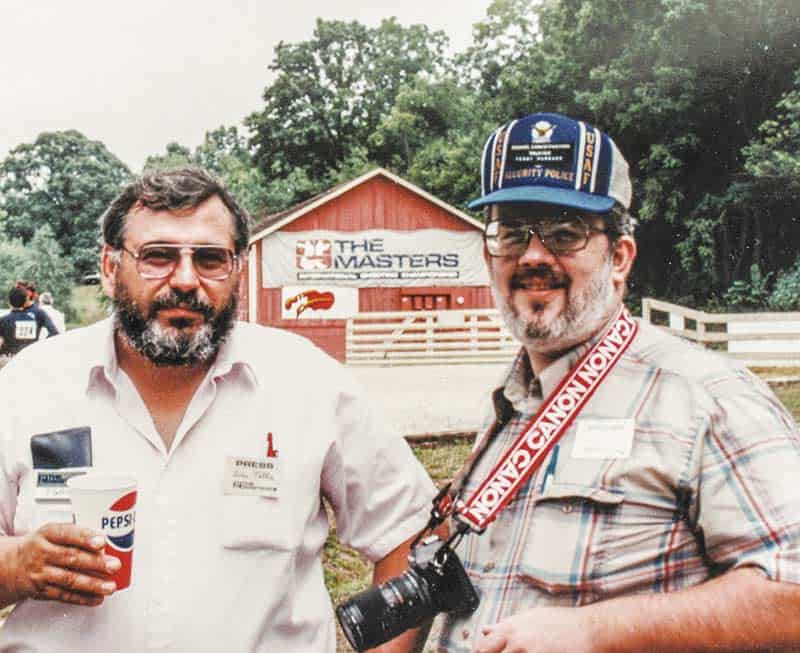
 

First meeting, Masters Tournament, 1988 — John and Terry.

A Fellow Critic Found


I just finished watching an episode of Gun Stories and as I listened to the expert I immediately thought, “I have to call Terry Murbach.” I first met Terry in 1988 at the first Masters Tournament in Barry, Illinois. I was eating lunch in the hotel dining room when this fellow walked up and introduced himself. We shared lunch together and were friends ever since. Terry was a voracious reader and he and I both shared a real appreciation of history. Today history is being rewritten both deliberately and through a flat-out lack of knowledge. Whenever I caught a mistake by any of the so-called experts on TV, I’d call Terry and we’d both decry the misinformation being disseminated.

In this particular episode on the Winchester Model 1873, I caught several mistakes and I wanted to call Terry immediately but now we’ll have to discuss it when I, too, cross over the river. In this particular segment it was stated as fact Oliver Winchester — after he saw the success of the 1860 Henry — bought the Henry Rifle Company and changed it to Winchester. Not even close to the truth!

In 1855 Oliver Winchester and his partner purchased the remaining assets of the Volcanic Arms Company. They changed it to the New Haven Arms Company and hired B. Tyler Henry as shop foreman. Henry designed the rifle bearing his name. There never was a “Henry Rifle Company” until the arrival of Henry Repeating Arms in the last quarter of the 20th Century. Winchester was not quite ready to put his name on such an endeavor. After the success of the 1860 Henry the company name was changed to Winchester and the 1866 lever gun was the first to bear the Winchester name.
I really regretted not being able to share a laugh with Terry over it!


Ohio get-together (left to right): Blackie Sleeva, JD Jones, Terry and John.

Touching Base Over the Years


How many times have I heard it said Elmer Keith invented the .44 Magnum? Terry and I discussed this several times, along with the fact Elmer said he was as surprised as anyone was when he got the call from Smith & Wesson in December 1955 about his .44-caliber dream becoming reality!

I’ve also seen it in print Elmer Keith invented the .357 Magnum! Again, not true. Keith did do a lot of work with heavy loads in the .38 Special after Smith & Wesson came out with the .38/44 Heavy Duty six-gun. He designed a special bullet — Lyman’s #358429 — with a long nose to fill out the cylinder of the .38-44.

When Smith & Wesson brought out the .357 Magnum with the same length cylinder, it was found Keith’s bullet was too long to be properly crimped in the groove of the longer brass and fit the cylinder of the new magnum sixgun. So Keith continued to use his .38 Heavy loads in the new .357 Magnum. In fact, he reported the hits on long-range targets in Ed McGivern’s book (out to 600 yards) were accomplished with his .38 Heavy in a long-barreled .357 Magnum S&W. Terry, of course, knew this also.

Every two months Terry would call me to tell me he just received the latest issue of Handloader and tell me about all the good things in it (he always received his copy at least two weeks before I did). This past issue came to me very early and I couldn’t even call Terry and tell him I already had mine.

He also called me every time GUNS and American Handgunner showed up to tell me about all the good stuff in them. He read all three magazines cover to cover. Terry was also a great fan of college football and he would also call me and tell me about some of the teams which I had very little knowledge of except for Boise State. When Boise finally hit the big time and defeated some very worthy opponents in bowl games, I think he was even happier than I was (even if he lost a buck on our bet!).

This past bowl season, “his” team Ohio State won big and my first thought was to call Terry, but he’d passed just before Christmas and, unfortunately, long-distance phone calls don’t work when trying to call Heaven. I will continue to think of Terry often especially when I see or hear glaring errors. I always knew he would know exactly what I was talking about. Many of the history books in my library are there because Terry recommended them and now that is done.
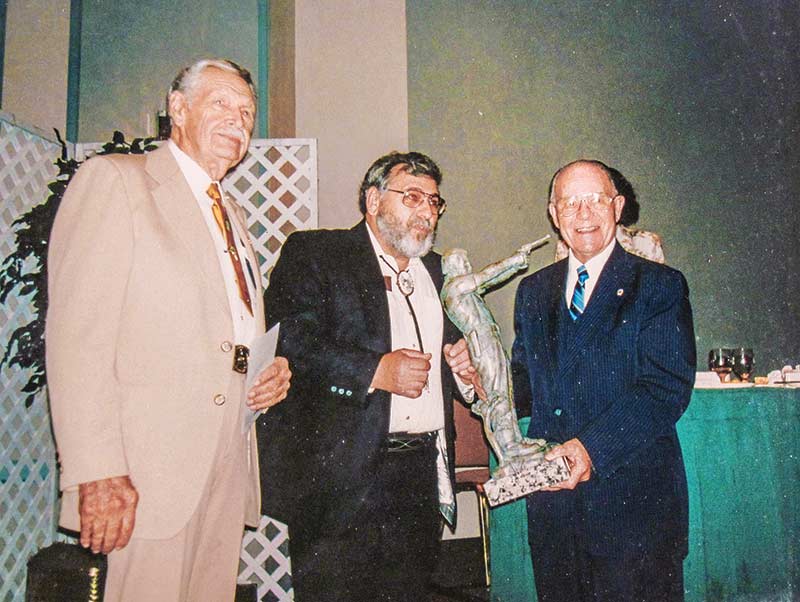
 

John and good friend Bill Jordan present the Outstanding American Handgunner Award to Harry Reeves.

Special Edition, Special Shootist


When the first Shootist Special Editions were issued Terry couldn’t afford to purchase one, which was unfortunate since he was directly responsible for the project. In the early 1990s Terry had contacted Tom Ruger to see about a special Ruger sixgun for the Shootists. I was sitting in Bill Ruger’s office when he got the phone call telling him about Tom’s fatal leukemia. After Tom died I told Terry to wait a while and then contact Bill directly and see if he wanted to carry on the project as a tribute to Tom. Terry did and Bill agreed and the result was the 4-5/8″ stainless steel .22 Bisley Model, specially marked in honor of Tom Ruger. Several Shootists came together and made sure Terry received one. It was presented to him as a gift from Deacon Deason after Deacon passed on in 1994. They’re probably discussing this right now.

The last time Terry was visiting me he had two very special Ruger .22s. One was a little Bearcat, which not only shot superbly accurately, its muzzle velocity registered much higher than you’d expect from such a short barrel. His other .22 — which he cherished a great deal — was his Bowen-customized Single-Six.

When Terry talked about this project he had planned to stay with the 6-1/2″ barrel and I told him he absolutely had to go with a 7-1/2″ barrel, which he did. He was never sorry and this particular Single-Six with its bright blue and case hardened colors is as beautiful as they come. I hope someone has it now who’ll appreciate it.

Terry old friend, my adopted little brother, I’ll see you down the line. Keep the bacon sizzling and the beans bubbling and don’t let the campfire die out.
Categories
All About Guns Allies

Building my New Gun – Longthorne Gunmakers

Categories
All About Guns Allies

Battleship Texas, Firing The Guns Step-By-Step

Categories
All About Guns Allies War

The British STEN: Desperation Submachine Gun by William Lawson

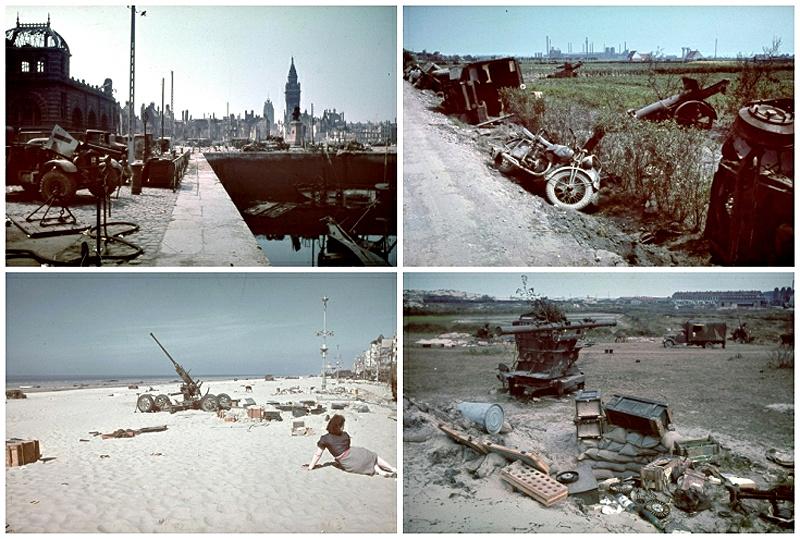
The British STEN submachine gun was born from desperation. Early June 1940 had seen the British Expeditionary Force ignominiously kicked off the European Continent. A herculean rescue effort pulled 340,000 men from the Dunkirk beaches, but all their equipment had to be left behind for the victorious Germans. France was two weeks away from total capitulation and it didn’t take a genius to figure out that Adolf Hitler would quickly turn his focus to the island nation across the English Channel.

In a June 4 speech before Parliament, Winston Churchill declared “We will never surrender!” His nation needed to hear that, but the truth was they had little with which to back it up. The threat of a German invasion was very real at the time (it wasn’t practical but that wasn’t evident just then). The British needed arms for those rescued soldiers and they needed them yesterday.

Desperately Seeking a Submachine Gun

The British Army entered World War II without a domestic submachine gun. The short campaign on the Continent showed the need for such a weapon, especially after seeing the German MP38 in action. They had some American Thompsons, but not nearly enough. Thanks to the isolationist sentiments of the United States, Congress stipulated that any war material sold to belligerents had to be paid for in hard currency, meaning actual gold. Thompsons were expensive to produce. In 1940, one Thompson cost about $200 to make. That’s a little over $4,000 in today’s money. For a nation that needed lots of everything, spending their limited gold reserves on submachine guns was more than impractical.

Dunkirk aftermath: the British rescued 340,000 men but had to leave all their equipment behind. (Express & Star)
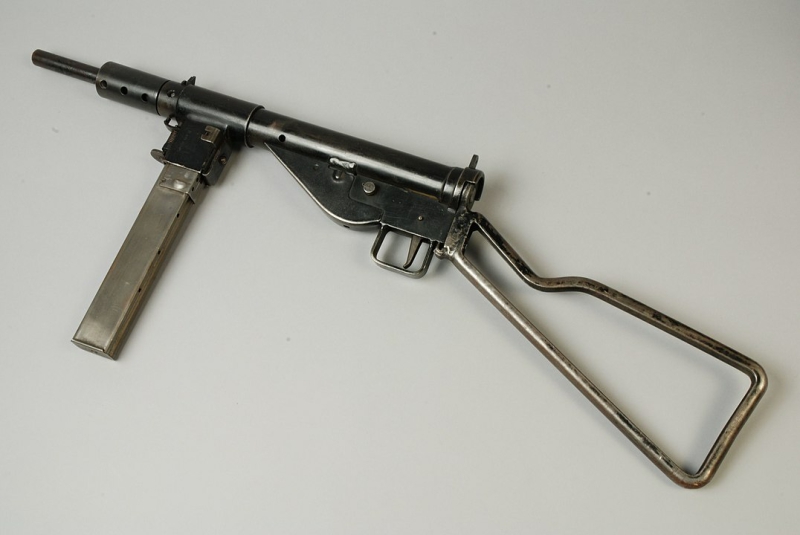
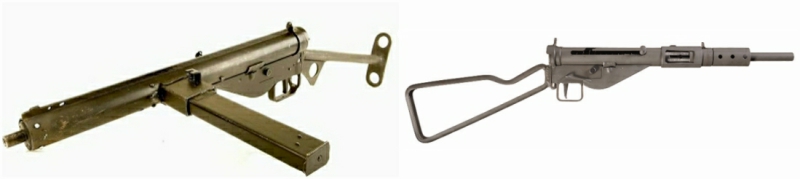
STEN Mk II
Over two million STEN Mk IIs were produced by British factories during World War II. (Pinterest and Rock Island Auction House)

A couple of German submachine gun copies were tried after acquiring some examples from Ethiopia. Fifty thousand units of the Lanchester submachine gun, a direct copy of the German MP28, were produced, but they were heavy, complicated, and expensive. Most ended up with the Royal Navy and many served into the 1970s as an anti-boarding weapon. But that was not the answer. A cheap gun that could be mass produced quickly was needed.

The solution was provided by Major Reginald V. Shepherd and Mr. Harold J. Turpin. The new design was made of stamped sheet steel components welded together. The only machined parts were the bolt and the barrel. The gun was called the “STEN.” The “S” and “T”came from the first letters of the last names of the designers and the “EN” came from Enfield, the famed firearms manufacturer where the weapon was developed. It worked well enough, could be produced at a prodigious rate, and was affordable. Following the trend of copying German models, the STEN was chambered in 9mm Luger.

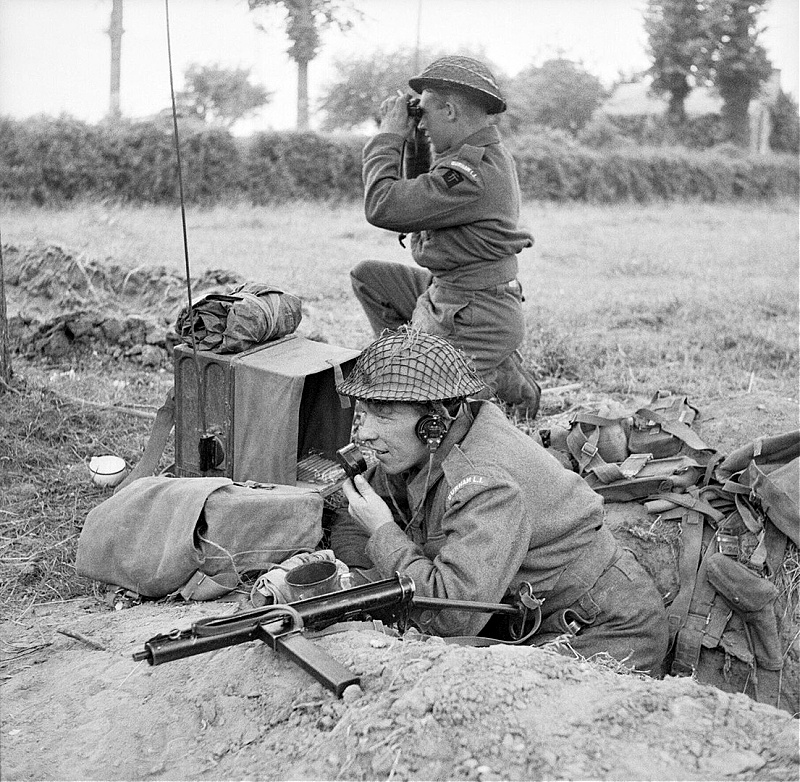
Soldiers of the Durham Light Infantry with a SEN Mark III
Soldiers of the Durham Light Infantry with a STEN Mark III. Note the monolithic receiver and barrel. (Imperial War Museum)

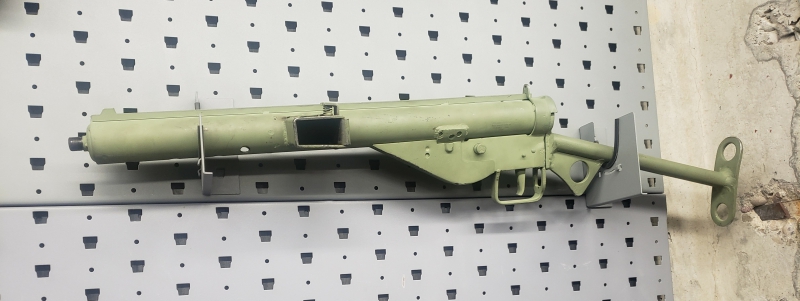
The most recognizable feature of the STEN series is the side-mounted magazine well. It made the gun easy to fire from the prone, but it made it difficult to grasp properly with the off hand. Soldiers often grasped the mag well from the top, though they had to be careful not to put pressure on the mag. The mags were not especially reliable to start with since they were double stack single feed models, which causes feeding issues. They held 32 rounds and the feeding problems were mitigated by downloading them to 30. Exerting pressure on the mag while in operation could easily cause a failure to feed. Soldiers were taught to grip the gun under the heat shield, like a regular rifle, with the mag resting on top of their arms. Some did that but many continued to grip the mag well from the top.

Different Versions of the STEN

Eventually, the STEN series yielded five official versions, Mk I through Mk VI. The Mk IV was a proposed airborne version that was never adopted, so there was never an actual Mk IV produced. There was also the Mk I* (read as “Mark I star”) which was a simplified Mk I and doesn’t count as its own version. The Mk I* served as the basis for the Mk II, which was the most produced version by far and is considered the “classic” STEN gun.

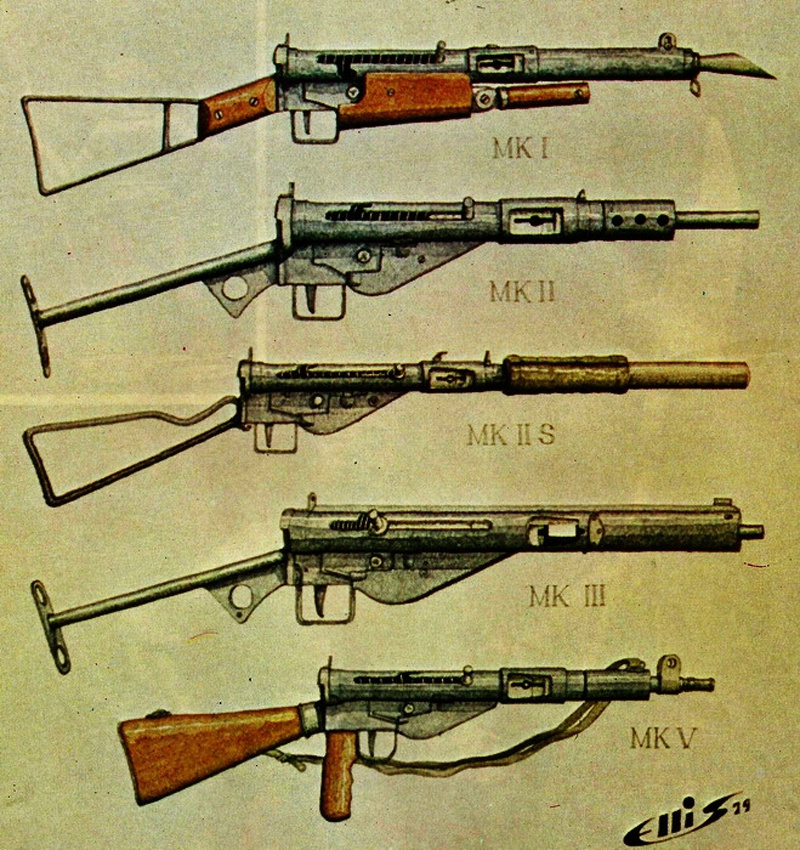
STEN Gun models
Many versions of the STEN. The Mk I* and Mark VI are not represented. (militaryimages.net)

The STEN underwent a series of evolutions that, somewhat ironically, seemed to go almost full circle in terms of the gun’s features. The Mk I had a sturdy skeletal stock, wood handguard and “pistol grip,” barrel-length heat shield, flash suppressor, and a folding vertical foregrip. The side mag well could be rotated down for storage and transport. The rotating mag well also served as a dust cover for the ejection port. A large barrel nut allowed the barrel to be easily removed for cleaning or storage.

STEN Mk II with magazine well rotated down

The Mk I* lost the wood, foregrip, and flash suppressor, creating the bare bones look of the eventual Mk II. As noted earlier, the key thing to remember with the STEN’s development is that the British needed lots of them at the cheapest price in the shortest time possible. There was little thought given to ergonomics other than basic functionality and aesthetics were not considered at all. Having a Nazi knife at the national throat will do that.

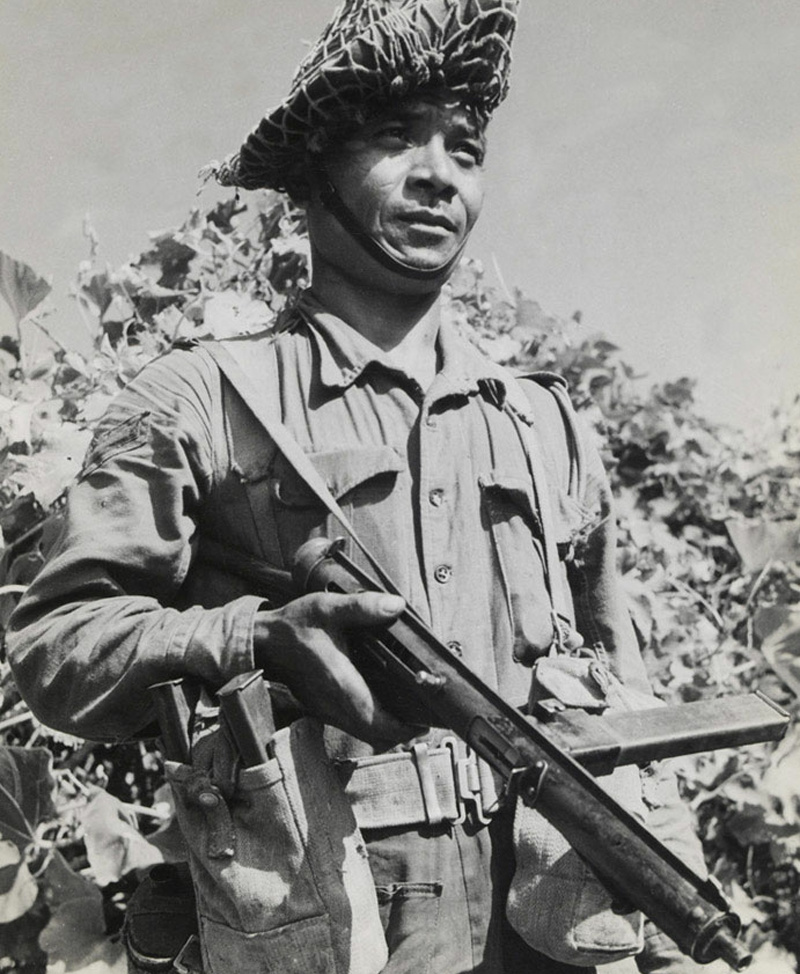
Gurkha soldier with STEN Mk II
A Gurkha soldier with a STEN Mk II in Burma. (National Army Museum, London)

The Mk I was adopted in March of 1941 and about 300,000 were made. 200,000 of those were Mk I*s. The development of the STEN was so fast that five months later, in August, the even simpler Mk II went into production. Keep in mind that Britain was still fighting Hitler alone until June 22 of that year, when the Nazi warlord stabbed his Russian allies in the back with Operation Barbarossa. Even then, the best estimates predicted a Soviet collapse by fall. The British kept producing weapons as fast as they could turn them out.

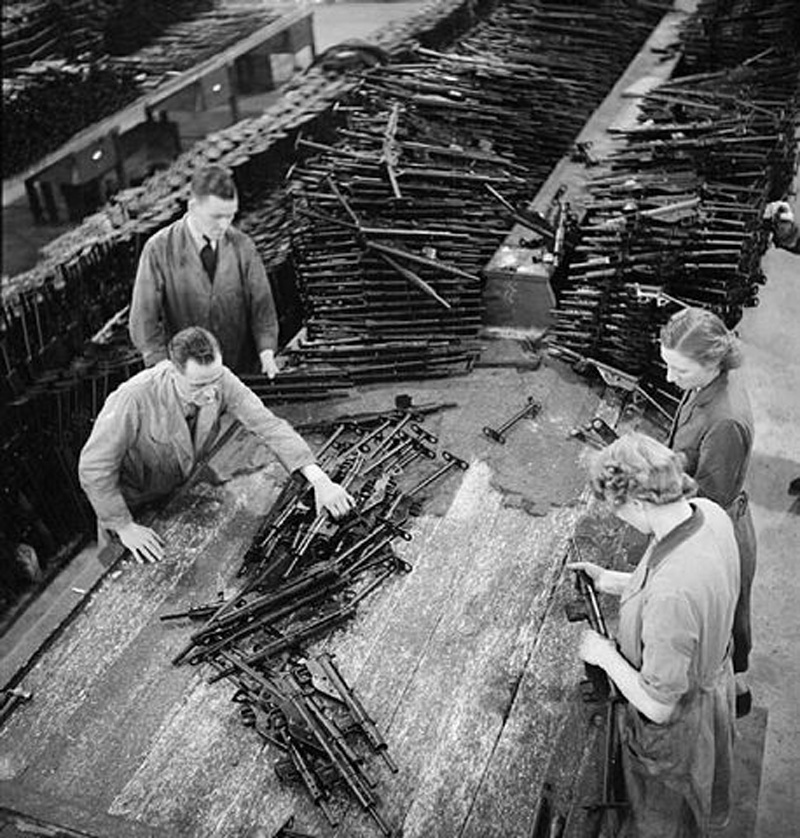
And turn them out they did. At the height of its production, a complete STEN Mk II required five and a half man hours to make. Factories could build 500 units in a single shift. They were cost effective too. Fifteen Mk II STENs could be produced for the cost of one American Thompson at the 1940 price. Over two million STEN Mk IIs were cranked out during the war. Even accounting for its two-year head start, STEN production dwarfed that of its American equivalent, the M3 “Grease Gun.”

British STEN factory
British factories often made as many as 500 STENs in a single shift. (Military History Now)

1943 saw the introduction of the Mk III, which simplified the Mk II by axing the removable barrel, making the gun a monolithic sheet metal tube. Mk III parts, however, were not always interchangeable with other STEN models and the one-piece gun made maintenance difficult.

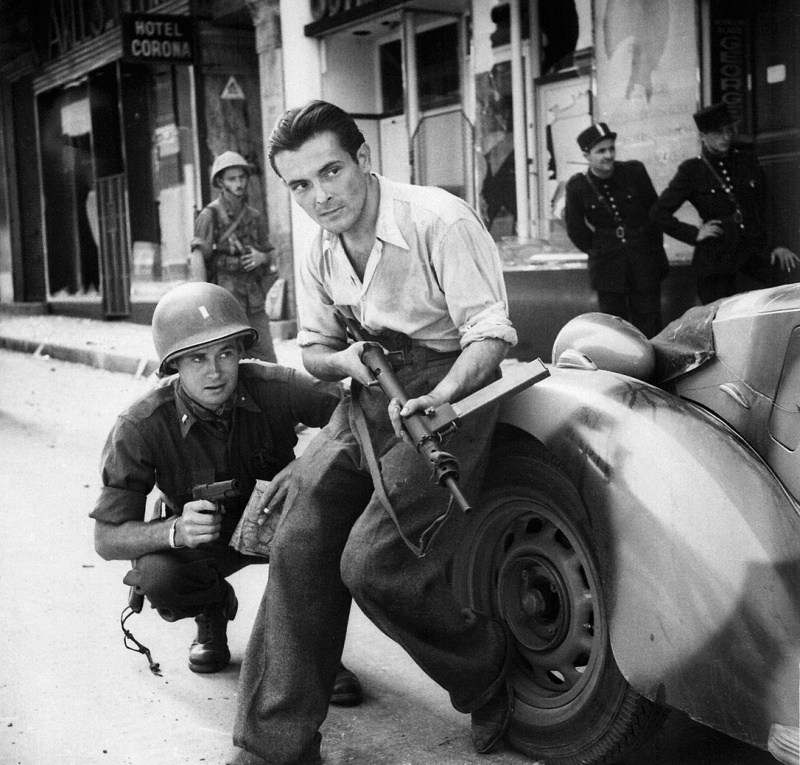
French resistance fighter with STEN MK III liberation of Paris
A French resistance fighter and his STEN Mk III with a US officer during the liberation of Paris, 1944. (National Archives)

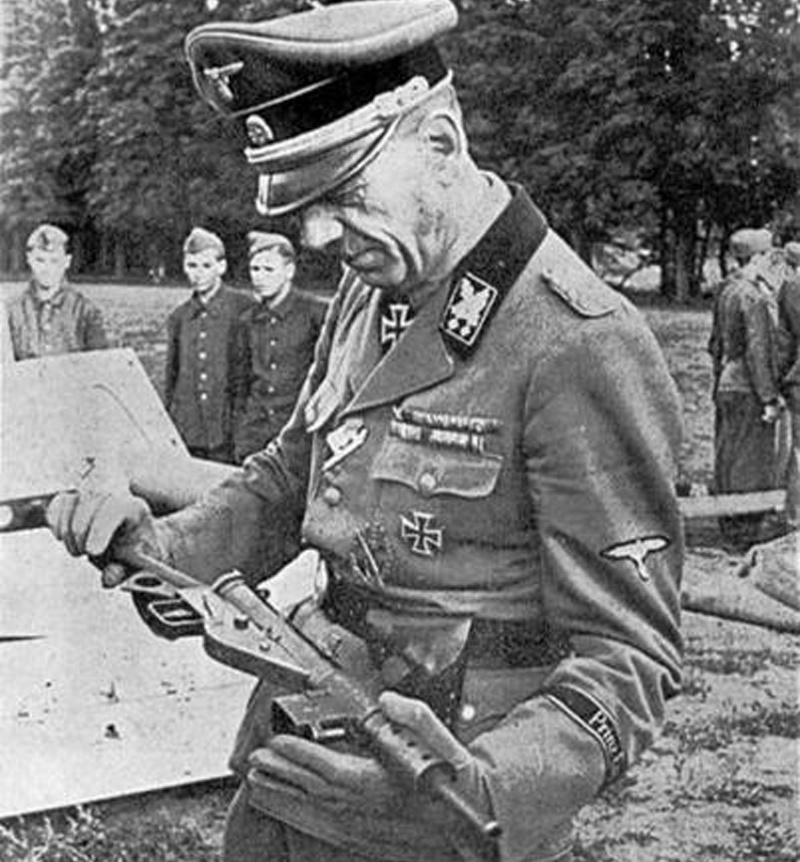
Even so, 876,000 Mk IIIs were made. To put that in perspective, the United States only manufactured 655,390 Grease Guns of all configurations, ever. The British Army was literally awash in STEN guns by the end of the war. Even the Germans used captured STENs. Their version of the Mk II was the MP 3008, and the Mk III was called the MP 750 (e).

The German MP 3008, a copy of the STEN Mk II.

The STEN Mk V came along in 1944, by which time the threat against Britain had eased considerably and the Germans were on the defensive. The Mk V reflected those changed conditions in that it was built more with quality and ergonomics in mind, though it was still a cheap submachine gun. The new gun had a proper wooden stock and pistol grip. Some had a wood vertical foregrip, hearkening back to the Mk I just a bit. The rear aperture sight was retained but instead of the crude triangle front sight, the Mk V sported a Lee Enfield Rifle front sight. The Mk V also had a lug for a Lee Enfield bayonet. 527,000 were made from February 1944 until the end of the war in 1945.

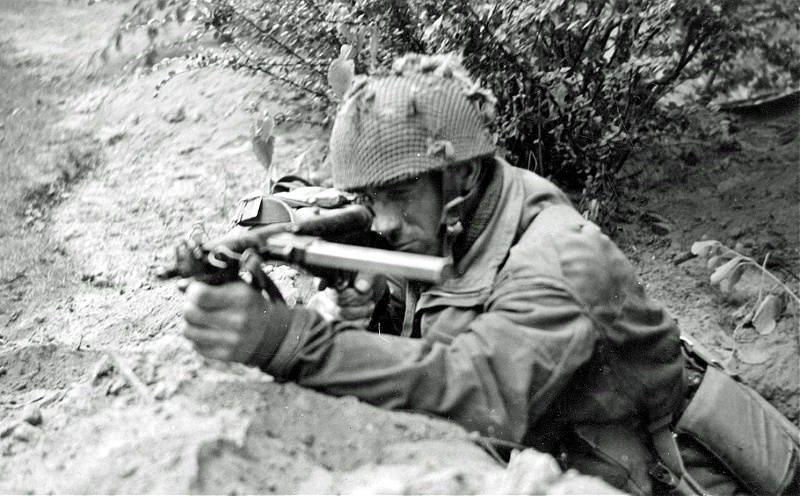
STEN at Arnhem
Private Joe Cunningham of the 1st Border’s anti-tank platoon at Arnhem in September 1944. The vertical foregrip and Enfield rifle front sight mark his STEN as a Mk V. (pegasusarchive.org)

In my research I saw several examples of what appeared to be STENs with parts from other models, mostly the Mk II and especially the stocks. I can’t say why that is, other than the number of models and the need to slap them together quickly may have led to some overlap of production or maybe they were modified later with available parts.

Not Always Reliable

The STEN had a reputation for jamming, in large part because of the poorly designed magazines. Even more alarming was the propensity of the open bolt guns to fire if they dropped and sometimes keep firing until the mag was empty. There are accounts of British soldiers cocking a STEN and chucking it into a roomful of enemy soldiers, knowing it would run itself in a circle until it was empty.

It sounds like Hollywood stuff, but the stories are out there. The most credible account that I saw was from a Canadian officer in Korea in 1953 who tells the story of one of his men dropping his STEN and he and others trying to avoid it:

At first we did some shy polka steps to avoid getting hit, but as the rotation speed increased so did our dance. With about 10 rounds to go the muzzle of the weapon started flipping up, as if looking for a larger target. It was then that the first primitive steps of what would later become known as break-dancing came into being… (Quote: Legion magazine, April 1994)

You can decide for yourself, but I tend to believe it based on seeing similar things in many different places.

Suppressed STENs for Special Ops

A suppressed version of the Mk II was developed for special operations, most notably the Special Operations Executive (SOE). The SOE was the British version of the OSS. They operated in occupied Europe assisting resistance fighters in every nation. The STEN Mk II (S) was intended not only for SOE operatives but was dropped by the hundreds, maybe thousands, to those freedom fighters. The “S” stands for “Special Purpose,” not “suppressed” or “silenced.”

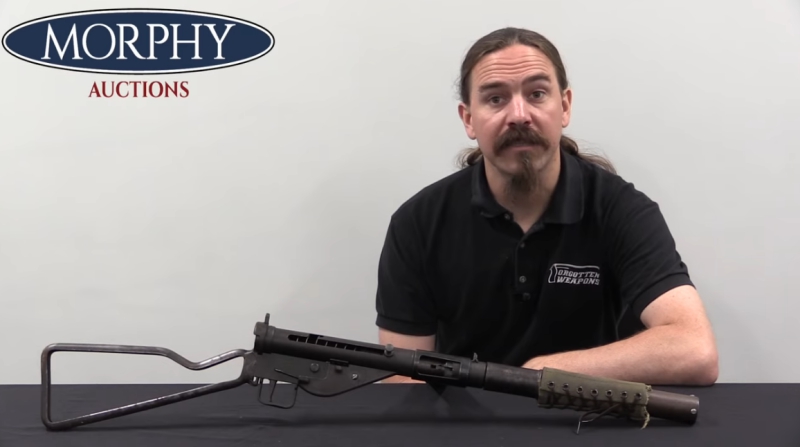
Ian McCollum of Forgotten Weapons with a STEN Mk II (S)
Ian McCollum of Forgotten Weapons with a STEN Mk II (S) (Forgotten Weapons)

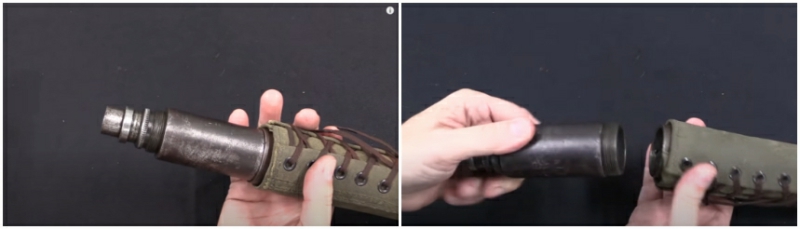
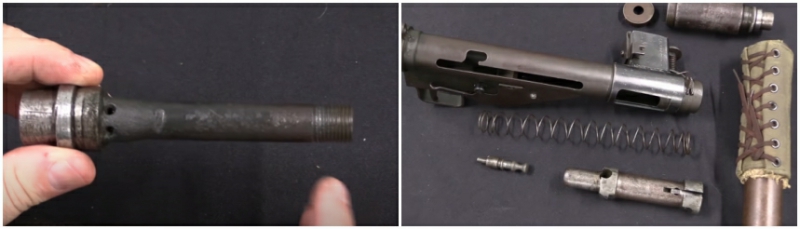
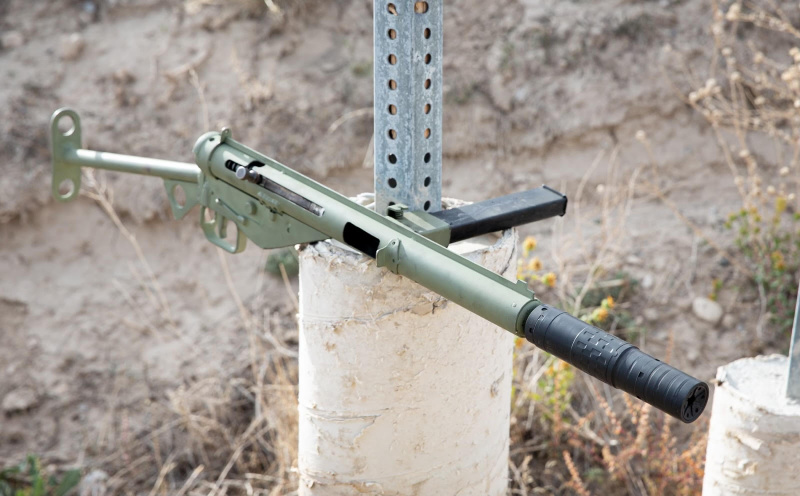
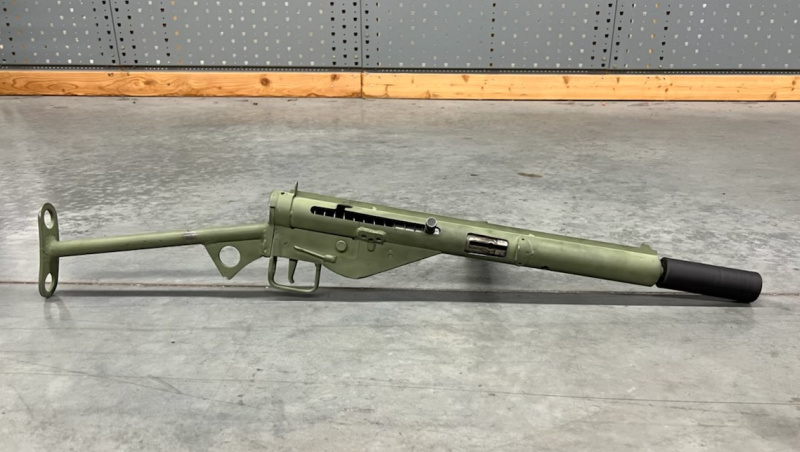
The suppressor system was fairly simple, with a 12.25-inch suppressor threaded onto a barrel shroud/expansion chamber. The suppressor had eighteen baffles separated by wire mesh rings. To allow the use of standard supersonic ammunition, six holes were cut in the barrel, directly in front of the chamber, to allow enough gas to escape that the bullet would stay subsonic. This, combined with the fortuitous decision to chamber the STEN in 9mm Luger, allowed SOE and resistance personnel to use captured German ammo.

STEN barrel and shroud
Left: The STEN barrel screwed into the receiver on all models except the Mk III. Right: The shroud/expansion chamber screwed onto the barrel and the suppressor itself. (Forgotten Weapons)

The baffle system wasn’t especially durable and the suppressed STENs were meant to be fired in single shots or, at most, small bursts. Even one magazine on full automatic could ruin the baffles, defeating the purpose of the suppressor. Since the suppressed guns were intended for missions like sentry elimination or assassinations, as opposed to hard front-line combat, this wasn’t usually a problem. Some were produced in semi-auto only. The guns came with a canvas handguard, over horsehair or asbestos string, on the suppressor.

The reduced energy from the cartridge meant the action needed attention as well. The danger was that the gun could short stroke and jam or, even worse, cycle just enough to pick up a round without engaging the sear, resulting in a runaway gun. This problem was solved by slicing off some of the bolt, reducing its weight from 600 grams to about 493. A coil was also taken from the recoil spring, making it a bit longer. Interestingly, each spring seems to have been tailored by the armorer at the factory to its particular bolt and suppressor. These were not precision parts by any stretch. So, the length of each spring may vary a bit, making the suppressor, bolt, and recoil spring a set that is not necessarily interchangeable with other guns.

STEN barrel ports and breakdown
Left: The barrels on the suppressed STENs were ported to reduce the energy of the bullet. Making it subsonic. Right: The suppressor and bolt assemblies of the STEN Mk II (S). (Forgotten Weapons)

Another interesting thing about suppressed STENs is that, despite the mostly standardized Mk II (S), there were numerous guns modified for suppression by the SOE and operatives in the field. If you run across a suppressed STEN that doesn’t match the description above, that doesn’t mean it’s not authentic. Very late in the war, a suppressed version of the Mk V was implemented but it saw little action in World War II. This was the Mk VI. It used the same suppressor system as the Mk II, just with Mk VI everything else.

There are also modern suppressed STENs out there.

The sheer number made, and their adaptability, make it easy if you know what you’re doing. SilencerCo haa a Mk II that is threaded at 1/2×28 and runs with the Omega 9K and Omega 36M on. I’d imagine this setup is more durable and reliable than the World War II versions. So, if you’re looking to suppress your STEN, I say go for it.

STEN Mk III
SilencerCo’s STEN Mk III without a suppressor installed. (Author’s photo)
The STEN with the SilencerCo Omega 36M in it's long configuration.
The STEN with the Omega 36M in it’s long configuration.
British STEN gun with Omega 9L suppressor.
And here it is with the Omega 9K.

Good Enough

The STEN gun, while not perfect by any means, was good where it had to be. Despite being officially replaced by the Sterling, it stayed in British Service, in one form or another, until 1971. The STEN’s cheap but ruggedly simple construction meant that it was easily produced and attractive outside Britain. It was copied by the Germans during the war and afterward by France, Norway, Denmark, Poland, Austria, Argentina, and Belgium. Many resistance units, most notably the Norwegians, produced their own STENs during the war. Hard post World War II service was seen in Korea, Vietnam, and the India-Pakistan Wars.

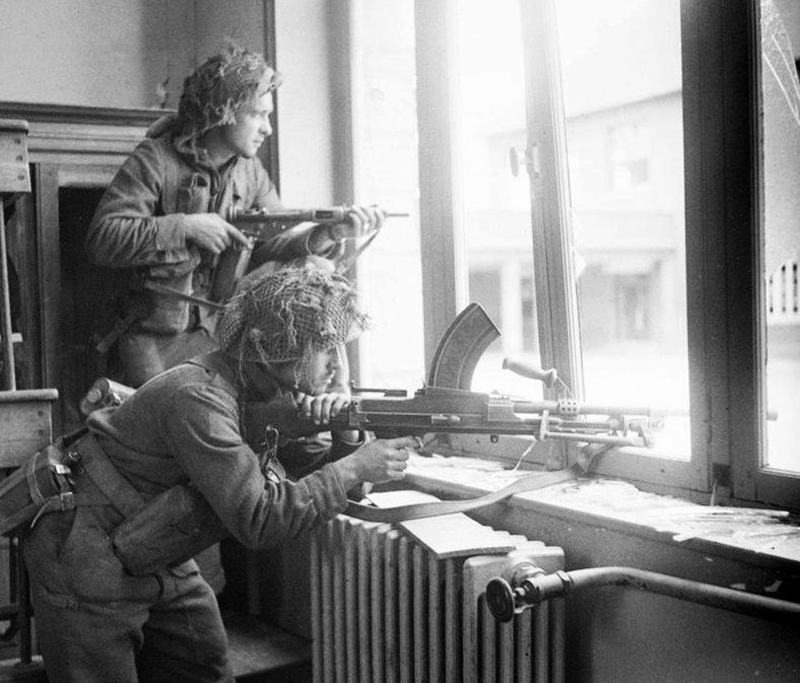
British soldiers with a STEN Mk II and a BREN light machine gun.
British soldiers with a STEN Mk II and a BREN light machine gun. (Pinterest)

Despite being a desperate wartime expedient, the basic soundness of the STEN design served Great Britain, and the Allied cause, admirably. It deserves to ranked among the great war weapons of World War II and the Twentieth Century.

Pegasus Bridge assault from the film The Longest Day
While I was writing this article, I was constantly reminded of the assault on Pegasus Bridge from the movie The Longest Day, so here you go.
Categories
All About Guns Allies

The US Nationals in San Antonio, Texas