Categories
All About Guns Allies

IT’S THE LITTLE THINGS NOW AND THEN, WE’RE REMINDED HOW NICE IT IS TO HAVE FRIENDS WRITTEN BY DAVE WORKMAN

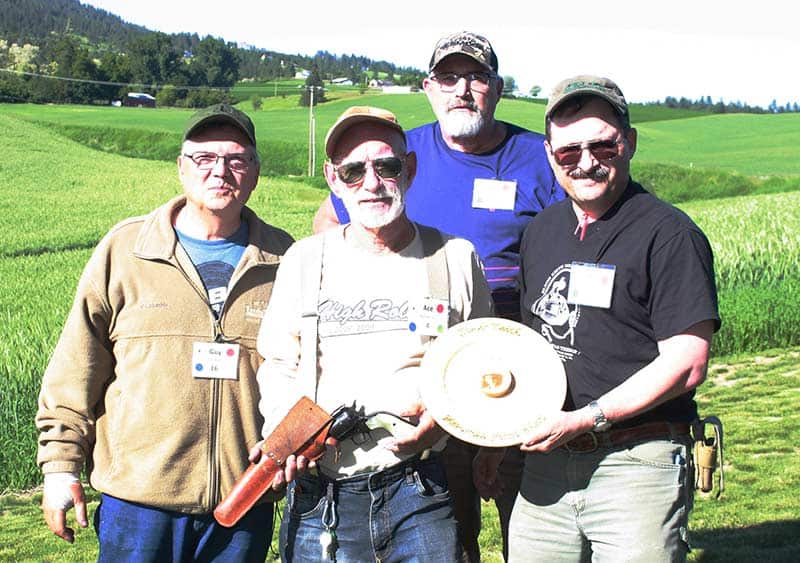
That’s Ace Fernandez, celebrating a win at one of the past Elmer Keith Long
Range handgun shoots. He’s holding a vintage Ruger Super Blackhawk in .44
Magnum, and he knows how to use it! He is flanked by Guy Maakad (left),
Ed Parry (right) and Bob Toppen to the rear.


Ace Fernandez is walking proof one should never compete with a guy named “Ace,” and never, ever, underestimate anybody on a shooting range who has a snow white beard, mild demeanor, affable disposition and a great, big hogleg.

I’ve known Ace for at least a decade and then some, and I can say without fear of contradiction — because he’s done it in front of witnesses — he is one of the most remarkable and annoyingly proficient long-range handgunners anywhere. Perhaps what I like most about this old gentleman is that he hasn’t made a career of running around bragging about it. Guys like Ace do what they do and then go about their business.

Fernandez is, or we should say was, a mainstay at the annual Elmer Keith Memorial Long Range Handgun Shoot, which I wrote about a few months ago under the headline “The Last Dance,” (add internal link to previous story) because after 20 years, this wonderful little gathering of handgunners from around the Northwest came to an end this year. I will miss watching him shoot.

So, when a nondescript padded envelope with something inside appeared in my office mail recently, with his return address label on the corner, it got my immediate attention. It felt kinda like a pocketknife, but wasn’t quite heavy enough. Out came my dangerously sharp Spyderco and with a quick swipe or two through layers of tape, what came out of an inner package was a stunner.

There, in my greasy little palm, was a pistol magazine for an original Ruger Standard semi-auto, about which I also wrote recently. Original magazines are fairly rare anymore, so a couple of days later, while taking a break from house painting (yeah, even writers have “normal” chores during the summer!), I called Ace to thank him and see what I owed him for this little treasure.


From the ‘Old School’


Me: “Do I owe you anything?”

Ace: “For what?”

Now there’s a guy from “the old school” with whom you could sit at a campfire, reminisce, share a tall tale or two, and burn powder most of an afternoon in the farmlands south of Spokane and never get tired. It is, after all, the “little things that count” in life, and guys like Ace are to be treasured, only if for the sake of saying you met them.

 

Ace Fernandez may look like an old guy who might shoot a little,
but don’t kid yourself. This particular old guy is one of the best long-range
handgunners I’ve ever seen. And he’s generous!


According to his brief narrative, Ace was sifting through some boxes of stuff (that’s what we call junk out here in the wilds) and came across this Ruger magazine. Apparently, there was no longer a gun for it in his safe, and I can only presume he had read my earlier piece on shooting grouse with .22 pistols — a horrid habit us westerners have developed over several generations, much to the chagrin I presume of haughty New Englanders who sit around the fireplace at the hunting lodge in the fall, reminiscing about all the great missed shots they’ve fired through their 28-gauge Purdeys, but at least we folks in the settlements eat well — and decided the magazine needed a new home.

It evidently occurred to Ace he knew this cantankerous, and frequently obnoxious gun scribe upon whom charity is probably a wasted effort. So, he explained, “I needed to get rid of some stuff.” Thus, his package with the treat inside landed on my desk. Well, it wasn’t my birthday and it wasn’t Christmas (in my case, they fall on the same day in December), so being the pitiful wretch that I am, I gratefully and most humbly accepted his generosity.
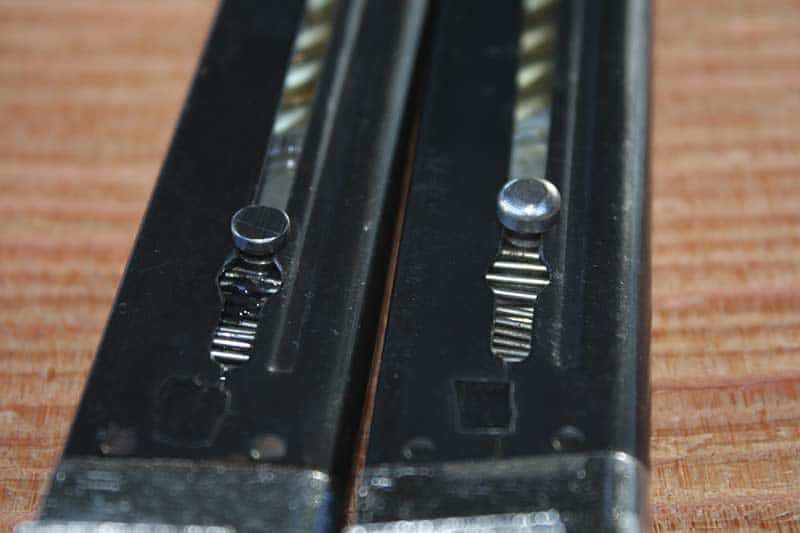
 

See the difference in follower buttons? The one on the left was sent to
Dave by Fernandez, who found it in a box of “stuff” and it fits an original
Ruger Standard pistol.


Now, this particular specimen must have been a really old original. I reached that conclusion because instead of a rounded head on the magazine follower button, the “Ace model” has a flat button. I cannot recall ever having previously seen one of those, but everything else about this magazine was true to form. The first thing I did was insert it into my pistol and it fit like a glove.

However, I quickly discovered the follower didn’t descend and rise smoothly, and it turned out the magazine was so dry inside — likely from sitting idle for years — I had to lube it up with some gun oil and Gunslick graphite compound. Works good, now! By the time you read this, I’ll have likely capped off a few rounds at fool hens, and hopefully will be dining this evening on grouse, barbecued or fried in a cast iron skillet, remembering Ace helped put it there.


The Moral


I guess the moral to this story is that one can never take for granted the friendships that spawn on a gun range, or around a campfire or any other place where camaraderie is always on the agenda.

Little gestures make big impressions because they are the sort of thing nobody ever has to do, but does so anyway. That is the sort of fellow Ace is, and there is usually somebody just like him in any fellowship. You know the type. The older guy with wrinkles he earned, probably the hard way, to whom there is much more than meets the eye.

But be wary of the ones called Ace. They can probably shoot rings around you on their worst day, and do it with such nonchalance it may drive you nuts.
Categories
Allies Soldiering

Military A Piece of Cake 1960

Categories
All About Guns Allies Soldiering

Guarding Hong Kong – British Forces 1945-1997

Categories
Allies Soldiering War

The Pathfinders: Jungle Battle in Sierra Leone | TEA & MEDALS

Categories
Allies War

RGJ Museum Battle of Waterloo Diorama reassembly clip

Categories
Allies Dear Grumpy Advice on Teaching in Today's Classroom Leadership of the highest kind One Hell of a Good Fight War

Armada: The Untold Story – Full Episode | BBC Select

https://youtu.be/ua6HRdKaqyA

Categories
Allies War

The Empire Called to Arms

Categories
Allies Manly Stuff

BEHIND THE BYLINE: WILL DABBS

“Whether it is around a campfire, in an exam room with a sick kid or behind my keyboard,
I just love to tell stories. God has blessed me with a robust life to use as a foundation.”
Will Dabbs

Dabbs

For over 10 years, Will Dabbs of Oxford, Miss., has engaged readers with his passion for the science, sport and engineering of firearms. Will’s father exposed him to the virtues of hunting and “art of fieldcraft” at an early age. He was immediately drawn to the mechanical merits of firearms.

After college, he married his passion for firearms and dream of being a soldier and served eight years as an Army helicopter pilot. He served as Commander of the U.S. Army Alaska High Altitude Rescue Team before resigning as a major in 1997.

To spend more time with his family, he began a medical career at 32 and opened an urgent care clinic. Dr. Dabbs dedicates 40 hours, three days every week to treating patients.

He also owns a business designing and building sound suppressors.

And he’s a reserve deputy sheriff, too.

Major-Doctor-Deputy-Lecturer-Entrepreneur —and his most prized role, Dad— Dabbs attributes his skill to “hook words together” to his grandmother – one of very few professional women writers of her era.

“Whether it is around a campfire, in an exam room with a sick kid or behind my keyboard, I just love to tell stories. God has blessed me with a robust life to use as a foundation,” he shared.

Will believes the sense of family sets FMG publications apart from many: “[The magazines] are homey, warm and comfortable. Readers are not customers; they are friends. The latest issue of Handgunner has 11 pages of letters to the editor: Who else does that?

Categories
Allies Well I thought it was neat! You have to be kidding, right!?!

Israel to have partial laser defenses by next year – Rafael chair

“One year from now – Israel will be the first country to have partial laser protection. In two years there may be complete protection,” said Yuval Steinitz.
By YONAH JEREMY BOBJERUSALEM POST STAFF
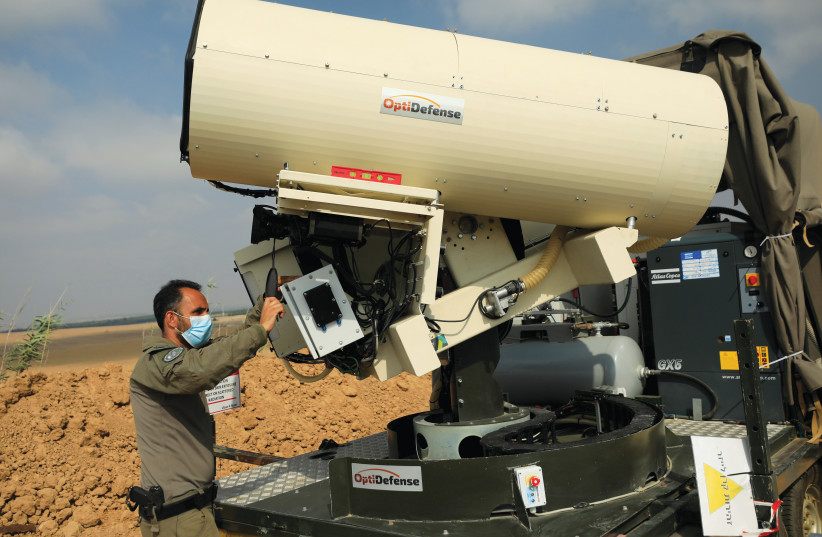
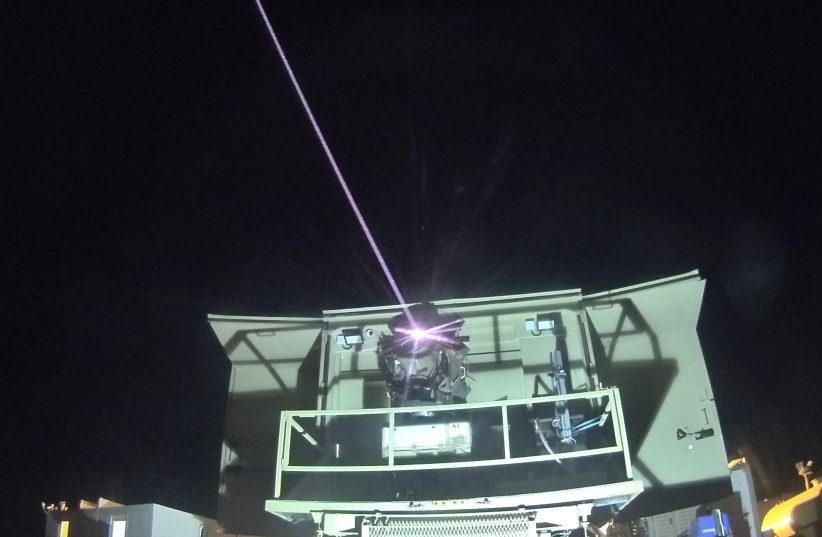
Israel’s ground-breaking laser system experiment carried out in the south of the country by the Defense Ministry’s Directorate of Research and Development (DDR&D, or MAFAT in Hebrew) and Rafael Advanced Defense Systems.
(photo credit: DEFENSE MINISTRY)

Israel will have partial laser defenses by this time next year, Rafael Advanced Defense Systems chairman Yuval Steinitz told Army Radio on Sunday.

“One year from now – Israel will be the first country to have partial laser protection. In two years there may be complete protection – against missiles, shells, rockets, or anything else. This will protect us both in the South and in the North,” said Steinitz.

Israel’s push for laser air defenses

This past February, senior Defense Ministry official Brig.-Gen. (res.) Danny Gold said Israel’s air-defense lasers, when fully deployed, will be able to shoot down the drones Iran has been sending Russia to use against Ukraine.Speaking at the Artificial Intelligence conference at Tel Aviv University at the time, the MAFAT [Directorate of Defense Research & Development] director said his ministry was working on developing “the next generation of using lasers.”

He talked about multiple successful tests destroying rockets “with a very sophisticated laser-weapons system…. We have done the same for mortars, rockets and UAVs [unmanned aerial vehicles], like the Iranian UAVs they are sending to Ukraine. The same concept of UAV, we can shoot them down.”

In February 2022, then-prime minister Naftali Bennett proclaimed that Israel’s ability to use lasers had progressed significantly and could be operational much sooner than people had expected.

  BORDER Police officer checks a unit  at a laser system aimed to intercept  incendiary balloons, near the Gaza  border. (credit: AMIR COHEN/REUTERS)BORDER Police officer checks a unit at a laser system aimed to intercept incendiary balloons, near the Gaza border. (credit: AMIR COHEN/REUTERS)

This past January, outgoing IDF chief of staff Aviv Kohavi told The Jerusalem Post, “The laser-defense system is truly great news. It will be both land- and air-based. I do want to be cautious regarding timeframes. In another two years, we expect to deploy systems along the Gaza Strip border to test this tool’s effectiveness.

“It has worked very well in field tests. If this experiment works – and we continue to integrate and enhance the laser-defense system over two years – we will move as fast as possible to deploy it across the entire North. I cannot commit to a specific number of years. I don’t want to be optimistic and I also don’t want to be pessimistic.”

Kohavi added, “I know that there has been great progress over the last three years, and we invested a lot of money in this. We defined the laser-defense system as having multiple benefits that we would need to invest a lot in. I am happy that it has progressed so much.”

Categories
All About Guns Allies

Skeeter’s Dream Gun

This article first appeared in the April 1969 issue of Shooting Times.


Skeeter’s handgun potpourri results in an attractive, effective gun designed for lifetime service.

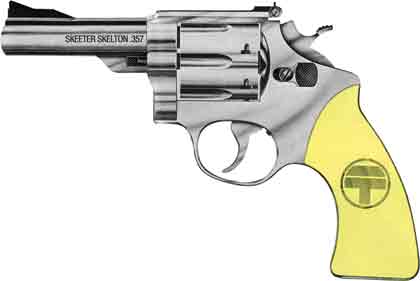
The editor of this fine magazine has posed an intriguing problem: If the facilities of the great handgun manufacturers were thrown at my disposal to create one handgun to keep and use for the rest of my days, what would my tastes combined with the skills of the designers produce?

I have no ideas for a new cartridge that would be feasible with existing propellants, so the round would have to be one that is already in the book. My hunting and law enforcement work would dictate that it be a powerful load, and one that is readily obtainable everywhere. I would want to reload for my new gun, so plentiful brass and long case life would be factors.

No automatic cartridge is as powerful as the .357 Magnum. The autos throw their brass around a bit too promiscuously to please the handloader. Although production autoloaders are generally less accurate than good revolvers, this is not an issue here because I am planning a tool room job, and the auto could certainly be brought up to top accuracy if it were otherwise acceptable.

It’s no secret that I am fond of single-action revolvers, but a double action has a slight edge as an all-purpose gun. My .357 will be a double action. The DA .357 sixguns now available are all excellent, and I could live with any of ’em if I had to, but there is always room for a little improvement.

For many years I carried the standard Smith & Wesson heavyweight Model 27, fitted out with a 5-inch barrel, 0.1-inch front sight, and Roper grips that were tailored to my hand. Over the seasons I had a total of four of these guns put together to the same specifications, and fine pieces of machinery they were.

Five or six years ago I stated that if I could have only one gun, it would be a Model 27 S&W. This view has relaxed somewhat, and I now more frequently find myself carrying a Model 19 S&W Combat Magnum.

When the Combat Magnum .357 was first introduced more than 10 years ago, I didn’t care much for it. It recoiled more with heavy loads, and the smaller diameter cylinder didn’t give a boost to fast double-action shooting as did the massive cylinder of the older Model 27. Too, when the little revolver first appeared, many shooters had their doubts about its ability to stand up under continued firing of heavy loads.

These fears proved groundless, and the Model 19 is accepted as being as sturdy as any other Magnum when loads within the normal pressure limits of the .357 are used.

My dream gun prototype would have a slightly larger frame and heavier cylinder than the Model 19, mainly to give it a little extra weight to dampen recoil. The frame of the Colt Python is that of Colt’s ancient .41 Long Colt double action and is about right in bulk and weight.

I don’t care for the Colt’s lack of a front cylinder latch and would employ the Smith & Wesson front and rear latch. Some nitpickers claim that the counterclockwise rotation of the S&W cylinder causes the movement of the hand to push the cylinder against its latches, eventually loosening the crane, and that a Colt locks the cylinder in place more tightly because the hand pushes the cylinder toward lock position. I have never seen any tangible evidence to this theory, but as a concession to those who believe in it, I will make my cylinder rotate clockwise.

This will require some changes in the lockwork. The S&W system of a separate trigger rebound spring assembly lends to smoothness of trigger pull, so let’s retain that. I have never broken a mainspring in an S&W, and their leaf springs are certainly smoother than the coil mainsprings in their pocket revolvers. Still, I think Bill Ruger’s idea for an all-coil-spring interior in his single action has produced the most trouble-free revolver yet, so I’ll go the same route. Surely, if they put their minds to it, my gun designers can conjure up a coil mainspring assembly that is smooth on double action.

Rounding out the inner workings of my hybrid, I would adopt the rebounding firing pin of the Colt Python and Ruger Blackhawk. This is a better deal for the handling of hot loads and prevents anyone trying to use your gun’s hammer for a leather punch.

The grip straps of the frame will have to be altered. This feature of our centerfire revolver frames hasn’t changed in this century. The few efforts made to fashion a better-feeling gun handle have produced bulky “target” stocks that simply cover up the poor profile of the steel straps.

High Standard had the right idea when it carved the little Sentinel 22. Instead of the usual dished-out arch behind the trigger guard that lets the fist grab much too deeply, leaving the third finger prey to the raps of the guard, the Sentinel’s strap comes into the guard at a much lower point, lowering the grip, protecting the knuckle, and leaving the trigger finger pulling from a more natural angle. This in turn allows the use of much smaller, more attractive grips and is an altogether comfortable handle. But even the High Standard should fill in more of the gap between the guard and the strap.

The backstrap of the Colt doesn’t have the pronounced inward curve at its top that the S&W does, and I prefer this. Although the heel of my palm is quite fleshy, I find that it tends to slide over this depression in the S&W backstrap, especially when Magnum ammo is fired. Also, I have somewhat better control when the space is filled by custom stocks that are joined behind the backstrap.

My grip frame will be lowered behind the guard, with a slight forward flare at the bottom of the frontstrap. The backstrap will approximate that of the Colt DA, perhaps toeing forward slightly at its bottom as does the old Colt Shooting Master.

I’ve never been completely satisfied with our selection of revolver barrels. The barrels of the S&W Model 27 and Highway Patrolman magnums are too thin and light for so heavy a gun, leaving a preponderance of weight in the rear and being conducive to unnecessary sight wiggle.

Colt first brought out a large diameter “gas pipe” tube for its .38 Officer’s Model Target, then later carried it over to a special lot of U.S. Border Patrol 4-inch Official Police .38s made up for the immigration service. When it was finally adapted to the Python, this big barrel was gussied up with a full-length lug under its belly to enclose the extractor rod and a ventilated rib. The result is pleasingly muzzle heavy but has a cluttered look.

S&W’s Combat Magnum is made with a choice of 2½-, 4-, or 6-inch barrels, and these are of the most handsome configuration. For both appearance and the desirable heaviness for good pointing, these bulky barrels lack only two things I want–even more diameter and weight and a 5-inch length. This length has been my favorite for maximum in power and sight radius while staying within reasonable bounds for a revolver to be carried in a holster.

The Baughman ramp front sight on S&W guns leaves little to be desired. I prefer the plain, blued style of 0.1-inch width. The S&W Micrometer rear is also excellent. It rides closer to the axis of the bore than most other models and, once the corners of the rear leaf are rounded, is less prone to catch on clothing.

My hammer and trigger will be conservative. The hammerspur will be no wider than the remainder of the part and will bear checkering that is coarse but not sharp enough to make the thumb sore when put through long strings of dry fire. These great, wide platforms called “target” hammers are no surer or faster for single-action work once you’ve mastered the narrow kind, and they slow down locktime.

Wide triggers are all right for single-action shooting, giving the illusion of a lighter pull. A better way to attain lighter single-action pull is to make the proper adjustment on the rear and hammer notch, not relying on such crutches as the wide trigger, which is impossible in fast double-action shooting. Single-action trigger pull should register around 2½ pounds.

Every metal part of my new “lifetime” gun will be crafted from stainless steel, which resists rust and corrosion better than any blued or plated gunmetal.

For stocks, I’m going to indulge myself a little. Although there are more durable handles, I will leave practicality behind and trouser my sixgun in elephant tooth, perhaps with my old T cattle brand inlaid in gold.

My stainless-steel, 5-inch, Colt-S&W-Ruger-High Standard .357 may not be your dish, and if the saints are willing, you may never have to choose just one gun to serve you. But a little advance cogitating never spoiled a mulligan stew. Try your own recipe–you might brew up a prize winner.