Categories
Category: All About Guns
As collectors know, fine firearms can be a solid investment, but, at times, firearms themselves become a commodity. In post-World War II Germany, the country’s currency had devalued rapidly, and a barter economy replaced traditional money.
Cigarettes, scarce on the civilian market but readily available in the PXs (Post Exchanges) of occupying G.I.s, became a currency of sorts. German citizens would trade household valuables for cigarettes and then trade the cigarettes for food and other essentials on the black market. These household items included firearms, some made specifically for trade, which became known as “cigarette Mausers.” Many of these bartered rifles came back to the states in the duffle bags of returning soldiers.
In collecting circles, the terms “cigarette rifle” and “guild rifle” are often confused. The most agreed-upon definition is that a guild rifle is one that was built pre-World War I or during the interwar period (1919-1939) by small craft gunsmiths using a commercial (or military contract overrun) action, barrel and stock. These rifles are clearly marked by their makers. Not all guild rifles are Mausers, as some were built on actions sourced from the 1888 Commission Rifle or even the Steyr M95 straight-pull.
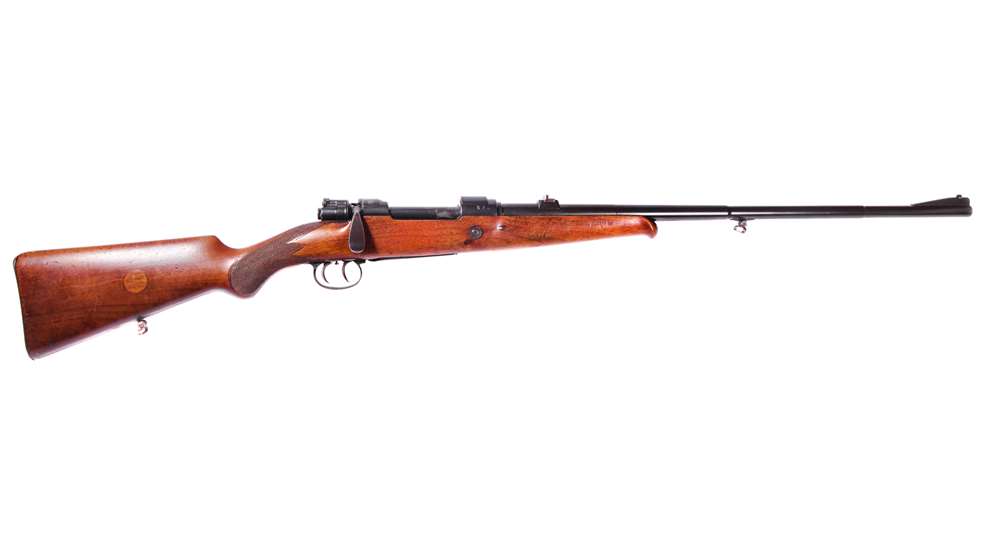
A cigarette rifle was constructed post-World War II using a military-surplus action and usually is not marked with its gunsmith’s name. The rifle pictured falls into this category. The quality of cigarette rifles varies from crude to nearing pre-war commercial quality. This rifle lies somewhere in between those two extremes. It is assembled from a mixture of parts.

The action started life as a World War I-era Gewehr 98. Though most of its original markings have been removed or are obscured by the scope mount, several Prussian imperial proofs remain. The straight bolt handle has been reworked into a turned-down, spatulated “butterknife” design. The original single trigger has been replaced by a double-set mechanism with the original military trigger guard modified to accommodate it. The action has a pair of offset World War I-era claw mount scope bases, but, as is the case with many of these rifles, its rings and optic are missing.
The barrel is from a Karabiner 98k that was manufactured in 1942 by Mauser and was left at its original 600 mm length. Its tangent rear sight and base have been removed and replaced by a two-leaf folding sight, and its banded front sight replaced by an extended and checkered ramp.
The original Gewehr 98 stock and its metal buttplate were retained. The rear sling swivel and bolt disassembly disk have been removed and plugged, and a dished cheekpiece has been grafted into the buttstock. The fore-end is shortened and tapered into a schnabel tip, with a slight remnant of the grasping grooves remaining. Narrow, sporting-type sling swivels have been added to the stock and barrel. The rifle’s overall appearance approximates the style of a pre-war Mauser commercial Type B sporter.
This rifle appears to be in its original, as-built state, though cigarette rifles are often found with an additional step of “customization” that occurred once they arrived in the United States—such as receiver-mounted peep sights or more modern American scope mounts, stock embellishments and rubber recoil pads. Before firing any Mauser sporter rebuilt in Europe from a military rifle, it is advised to have a gunsmith inspect the gun to confirm its chambering.
This rifle, in fair condition, is valued at $450. While cigarette rifles have little collector value, the better-made ones offer an affordable pre- war-style Mauser rifle for the hunter or shooter.
Gun: Mauser 98 “Cigarette” Rifle
Manufacturer: Prussian imperial arsenal
Chambering: 8×57 mm Mauser
Condition: NRA Fair (Modern Gun Standards)
Value: $450
The single shot that killed conservative activist Charlie Kirk’s last week upended decades of the gun control debate.
As high-profile shootings piled up, activists said the solution lay in background checks and bans on semi-automatic AR-style assault weapons, high-capacity magazines and 3D-printed firearms.
But authorities said the shot that killed Mr. Kirk came from a Mauser bolt-action rifle chambered in .30-06 caliber — a classic hunting gun and the type of weapon that had previously been immune from the gun control debate.
“As usual, the Democrats wasted no time before weaponizing the assassination of Second Amendment advocate Charlie Kirk to promote their unconstitutional gun-grabbing agenda,” said Aidan Johnston, director of federal affairs for Gun Owners of America. “But the murder weapon is a sporterized, Mauser Gewehr 98 — a bolt-action rifle first manufactured in Germany over a hundred years ago in 1898. So, when Democrats call for ‘assault weapons’ bans, every gun owner must realize that means grandpa’s old hunting rifle too.”
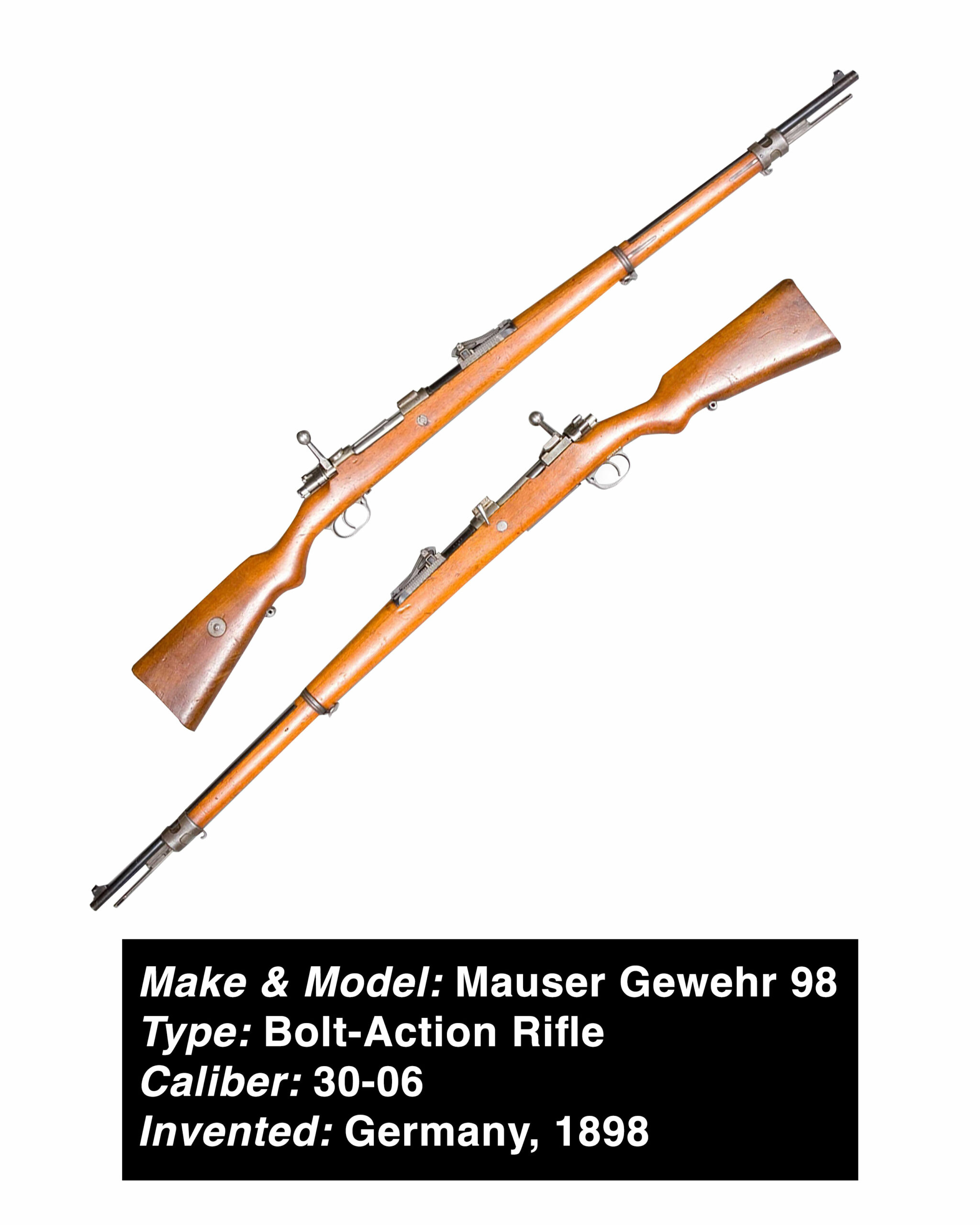
Bolt-action rifles load each round one at a time by manually working the bolt.
The rifles usually at the core of the gun debate are magazine-fed semi-automatic guns, in which the firearm itself automatically brings a new round into the chamber after each trigger pull — though, like a bolt-action, each trigger pull fires only a single round.
Automatic rifles, or machine guns, fire continuously until the magazine or belt is empty. They are already heavily restricted under U.S. law.
The ammunition used to kill Mr. Kirk, .30-06, is considered a high-powered cartridge, meaning it can deliver a more powerful punch at a longer range.
The AR-style rifles that have dominated the gun debate in recent years generally use what’s known as an intermediate cartridge, which is a balance between high-power ammunition and lower-powered ammo generally used in handguns.
Using a bolt-action rifle is a rarity in high-profile shooting crimes, though Lee Harvey Oswald used a bolt-action 6.5 mm Carcano rifle to assassinate President Kennedy in November 1963.
According to data compiled by The Smoking Gun website, a bolt-action rifle was present in only five of the 263 deadliest shootings in U.S. history and was almost always a secondary weapon, often never used. So-called assault weapons were used in 71 shootings, with AR-15-style rifles the choice in about half of those.
Mr. Kirk was talking about mass shootings during one of his signature “Prove Me Wrong” events at Utah Valley University on Wednesday when he was fatally shot.
Law enforcement recovered the bolt-action rifle that they say was used in the shooting from the woods near the school campus. It was wrapped in a towel.
A spent round was in the chamber and shell casings left beside the gun were etched with messages. Among the messages were “Hey fascist, catch!” and “If you read this you are gay, LMAO.”
On Friday, police arrested Tyler Robinson, 22, of Utah, in connection with the shooting death.
Mr. Robinson had confessed to a family friend, Utah Gov. Spencer Cox said. The friend contacted the Washington County, Utah, Sheriff’s Office.
Guns quickly became a focal point for many on the left in the wake of the slaying.
Some commenters online suggested a sort of justice in Mr. Kirk’s death, given his vehement opposition to gun control.
A clip of Mr. Kirk talking about the tradeoffs of gun control made the rounds: “It’s worth it to have a cost of, unfortunately, some gun deaths every single year so that we can have the Second Amendment to protect our other God-given rights. That is a prudent deal. It is rational.”
Members of Congress called for a renewed debate on restrictions.
“Pass some gun laws!” shouted Rep. Jahana Hayes, Connecticut Democrat, after the House held a moment of silence and prayer for Mr. Kirk.
Rep. George Latimer, New York Democrat, later told reporters outside the chamber, “Does it take shooting a conservative to start to realize the gun scourge? I hope they realize it.”
Second Amendment Foundation Founder Alan Gottlieb said Mr. Kirk’s shooting upends much of the rhetoric surrounding guns.
“Democrats treat all guns like they are ’assault weapons’ and want to ban them. Guns don’t have brains to hate with or fingers to pull their own triggers. Attacking gun ownership will not solve any problems,” Mr. Gottlieb said.
Originally published by Kerry Picket at The Washington Times.
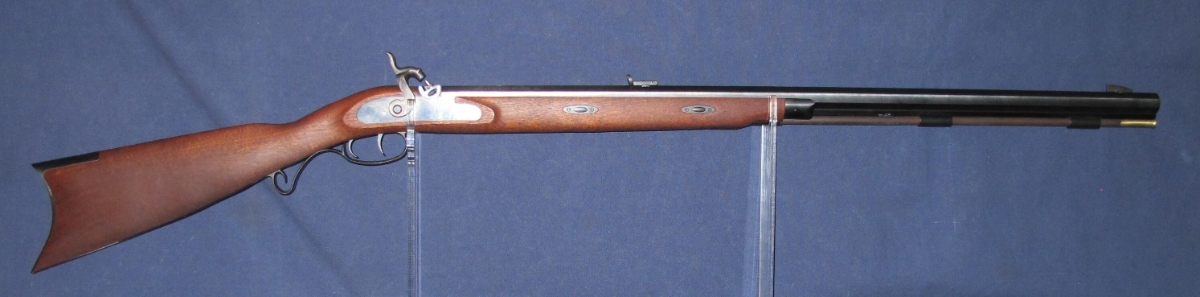
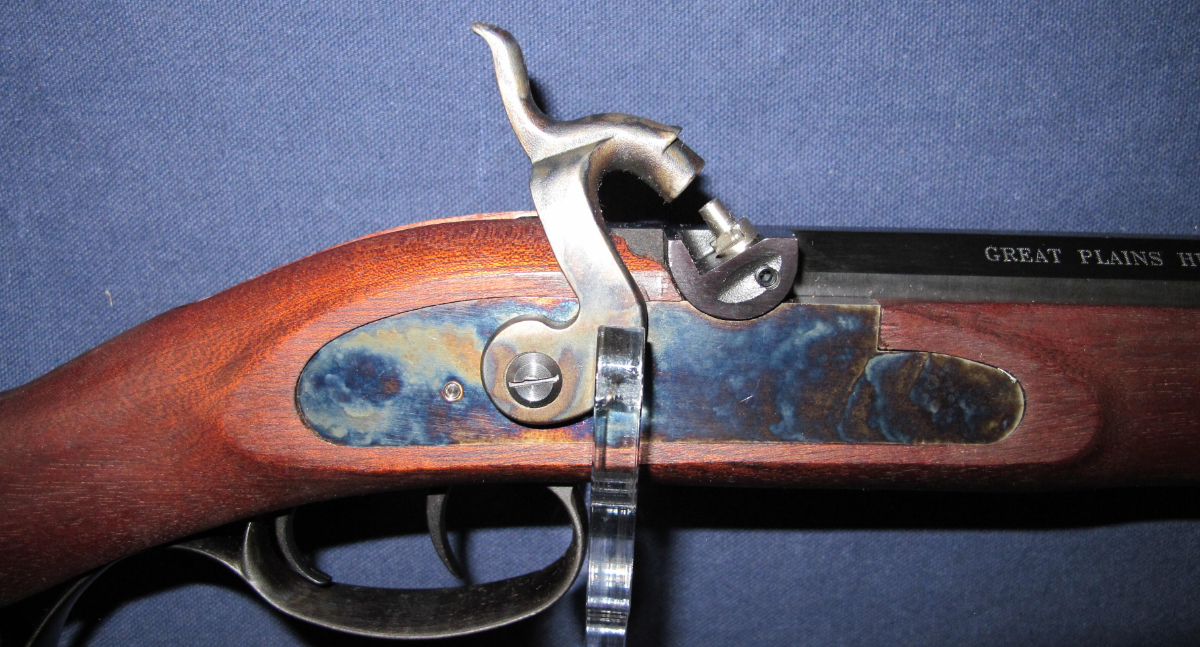
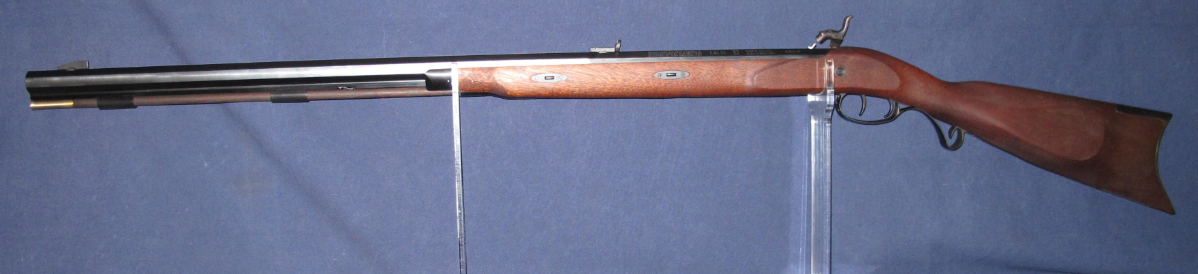
A Lyman Great Plains Hunter in caliber .54 Caliber Ball 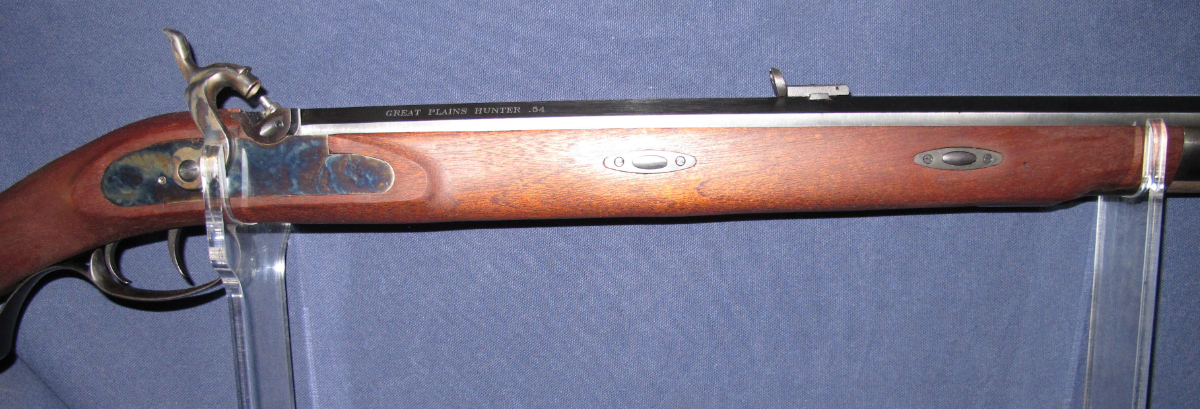

Categories