Category: All About Guns
Categories
KOREAN WAR SILENT NEWSREEL 71812

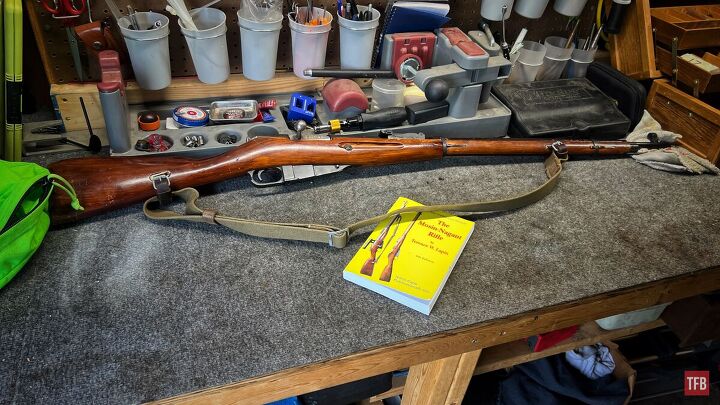
Welcome everyone to the TFB Armorer’s Bench! As mentioned in the little blurb below, this series will focus on a lot of home armorer and gunsmith activities. In this article, I finally picked up one of the trash pandas of the military surplus gun world, the Mosin Nagant. I always make sure to tear new used firearms apart and give it some proper maintenance before introducing them to the rest of the gun-safe family and while I was doing that I figured I could talk about all of the curious markings on my rifle. Luckily, I am one of those people who buys things because “someday I will have one” so I had a high-quality Mosin collectors book lying around. Let’s dive right into identifying Mosin Nagant markings!
Gun Specific TFB Armorer’s Bench Reading @ TFB:
- TFB Armorer’s Bench: Commentary on The Colt 1877 Revolvers
- TFB Armorer’s Bench: Diagnosing and Assessing a Remington 1858
- TFB Armorer’s Bench: Commentary on The Savage 1907 Pistol
- TFB Armorer’s Bench: Commentary on The 1915 Spanish Ruby Pistol
- TFB Armorer’s Bench: Commentary on The Marlin Model 60
- TFB Armorer’s Bench: Commentary on the Remington 74 Series
TFB Armorer’s Bench: Identifying Mosin Nagant Markings
Here, we at TFB hope to inform, entertain, and even inspire any would-be gunsmith or armorer out there. Ideally, with the information I provide and with the help of our sponsors, you can have some useful knowledge pertaining to the conservation and improvement of firearms technology while at the same time sharing experiences and teaching each other new tips and tricks along the way in the comments. Digging deep into what it is to be an armorer or gunsmith has significance but what is important is what those people do to show they’ve earned that title. I am happy to share my experiences and knowledge and hope it is informative!
Make your personal safety a priority:
- Practice proper gun safety. Always make sure before the firearm hits your bench that it is unloaded and safe to be handled.
- Wear the proper safety equipment. The main one would be safety glasses (decent ones) since parts are often under spring tension and you may work with high RPM tools. Other honorable mentions would be latex gloves or a respirator when working with potentially harmful solvents and oils. Also hearing protection when working with loud machinery or test-firing firearms.
- Modifications, alterations, and customizations will void your firearm’s warranty 9.5 times out of 10. Please take that into consideration before attempting any at-home gunsmithing.
- If you are unsure about proper safety practices, disassembly procedures, or warranty standards, stop, put down the tools, and consult a competent gunsmith.
Markings 101: Identifying Mosin Nagant Markings
There is a multitude of markings on guns. Some are standard for just about all commercial and military small arms. Military and imported stuff will usually have close to double.
Some examples of common everyday markings:
- Serial Number
- Brand/Manufacturer Marking – Spelled out name, acronym, or symbol
- Proof marks – Marking denoting not only that the firearm passed a proofing inspection but also where it was proofed.
- Caliber – Not always obvious with the military stuff.
Then of course with the military stuff, it can get uber-specific or extremely vague. It can have cryptic numbers and letters denoting something as simple as a rack number all the way to something like my Luger being so specific It marks the unit, regiment, and gun number. Beyond that the more boring stuff is the importer marks if it wasn’t smuggled in by some GI. These will typically have a spelled-out importer name, location, new serial number either replacing or next to the original, and a caliber.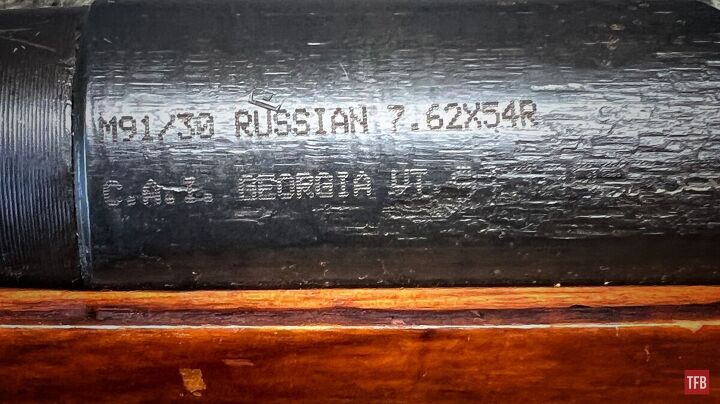
My Mosin Markings
Due to the nature of many mil surp small arms, some markings are hard if not impossible to read/identify. These were done on the fly and can come up shallow and half-done. With the help of an extremely helpful book; The Mosin Nagant Rifle by Terence W. Lapin and various internet sources here and there, I was able to determine most of my markings. Feel free to correct my research. I am by no means a Mosin aficionado.
Main receiver marking: This is a USSR Izhevsk factory marking. These popped up in 1928 and served through production. Below that is the year of manufacture – ‘1942’.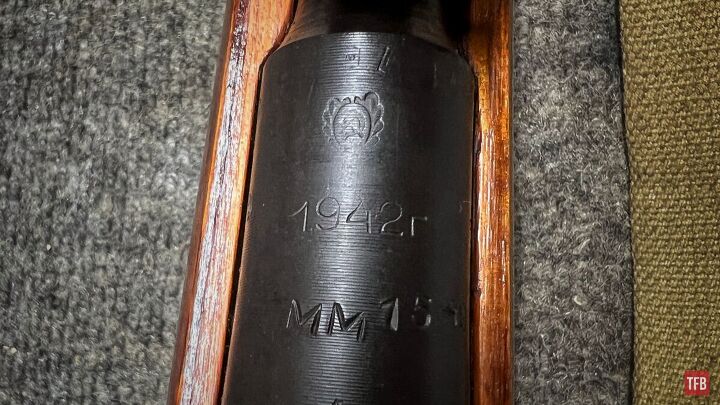
MM serial number prefix: This one I am less confident on but according to the book this is a Finnish marking.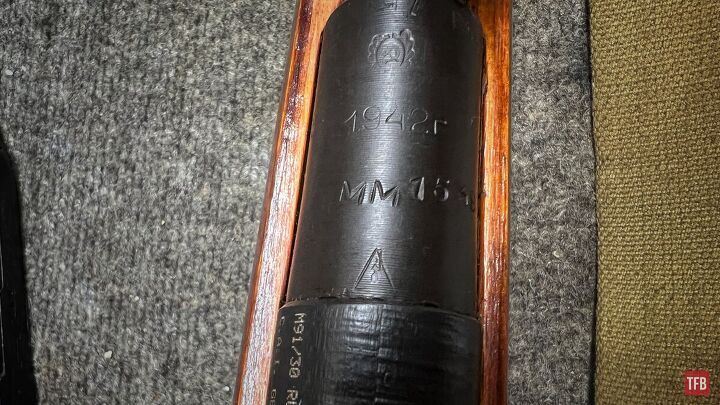
“Hut marking”: Not sure how else to describe this mark found on the right side of the receiver. From my digging, it may be either a black powder-proof mark, a final acceptance mark or perhaps the remains of an Izhevsk factory marking.
Circle “O” marking on the side of the receiver: This means it passed a bolt/receiver match-up inspection.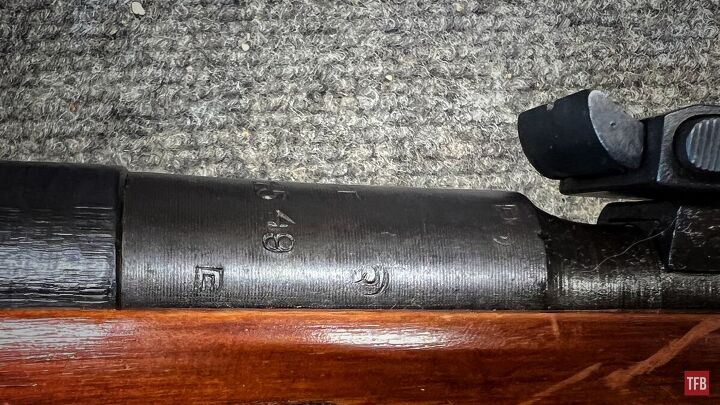
Square with slash stock marking: Indicates a post-WWII arsenal refurbished stock.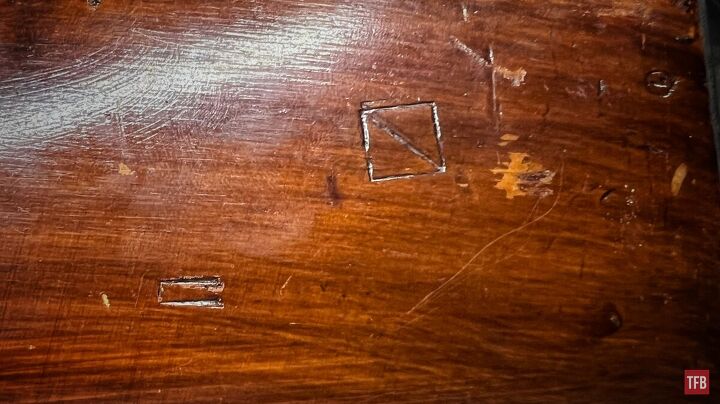
Barrel band markings: Triangle with arrow Izhevsk factory marking.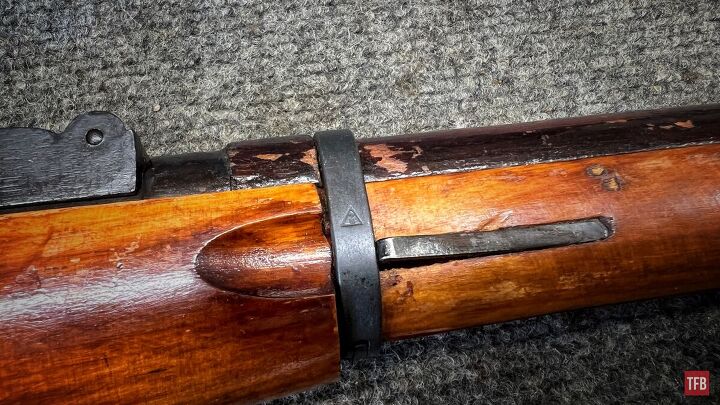
“K” on the side of the receiver: This means it passed an accuracy inspection.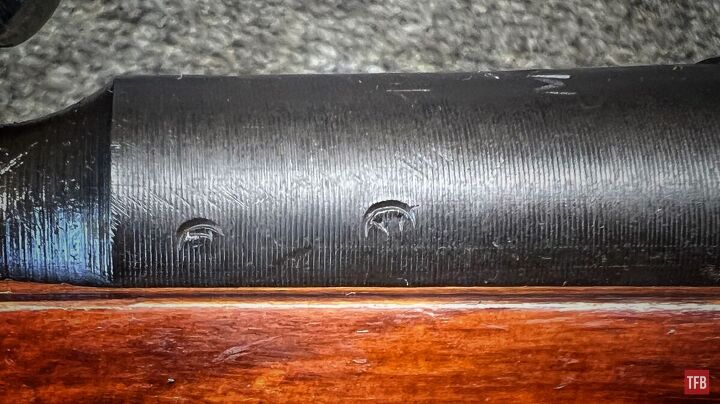
Marching Away from Mosin Markings
As we wrap up our journey through the markings on this Mosin Nagant, it’s clear that these rifles are more than just surplus firearms – they’re historical artifacts waiting to be deciphered. Each stamp, number, and symbol we’ve explored offers a glimpse into the weapon’s past, from its manufacture to its military service and beyond.
While we’ve unraveled some mysteries, others remain, inviting further investigation. For the dedicated collector or curious enthusiast, this process of discovery is part of the appeal of surplus firearms. So the next time you come across a well-worn Mosin or any other military surplus piece, take a moment to examine its markings. You never know what stories you might uncover, hidden in plain sight on wood and metal. Happy hunting, and may your next firearm bring you as much intrigue and historical insight as this one has.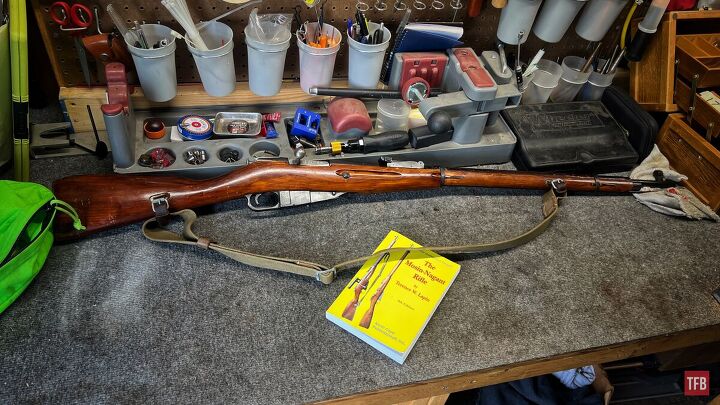

In this day of giant tanks, supersonic airplanes, devastating atomic explosions, does the Army value the man with a rifle?
by AMERICAN RIFLEMAN STAFF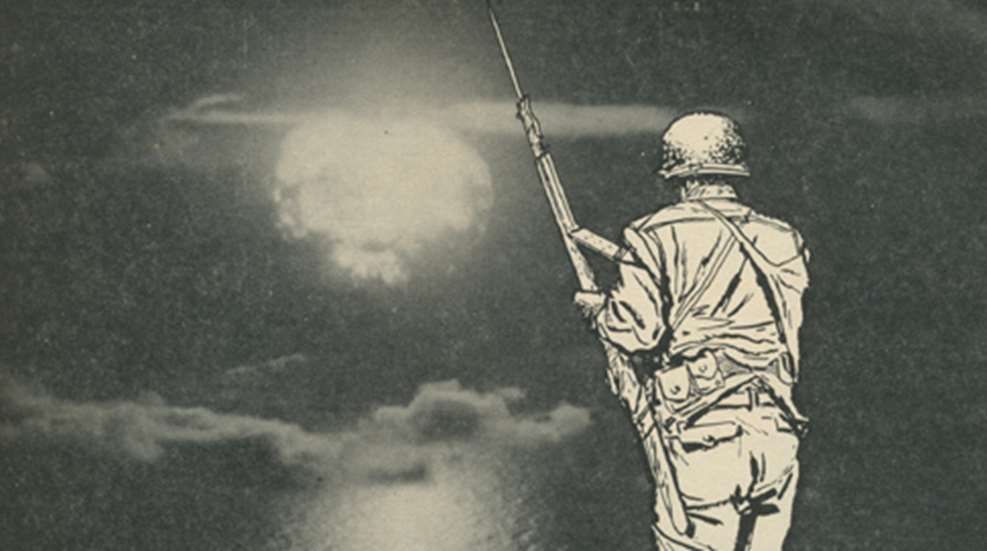
This article appeared originally in the March 1952 issue of American Rifleman.
The other evening I heard General J. Lawton Collins, Army Chief of Staff, say on the radio that atomic weapons for the U.S. Infantry would be ready ‘in the not too distant future.’ A few days earlier in Texas he had told a reporter that these newfangled weapons for the battlefield would be available ‘very soon.’ Gen. Collins
If what General Collins has said is true, what is to happen to the doughboy who lugs his M-1 Garand into battle?
I had first asked the question several years earlier at the Fort Benning, Georgia, Infantry School, at an orientation conference for reporters held by the Defense Department.
All during that day at Fort Benning our ears and eyes had been filled with the thunder and flash of mock battle, of rumbling tanks, of big mortars that made the earth shake, of ear-splitting artillery, of flamethrowers searing ‘enemy’ pill boxes.
In that smoke and dust, the rifleman seemed to have shrunk to an insignificant figure walking behind the thunder with his Garand. Where was the foot-soldier with his rifle?
Sitting in a big classroom later that day, with the Infantry School’s top brass in front of us, we reporters were supposed to ask questions about the day’s demonstrations of infantry weapons and tactics we had witnessed. I asked officers at the Infantry School the following questions:
What good is the rifle in modern warfare?
How many of the enemy does the rifle really kill?
Would it not be cheaper and just as effective to hand our men a lightweight machine gun that makes lots of noise and gives them a psychological lift?
What is the use of wasting money on expensive rifles and ammunition when the stuff is just sprayed around anyway and does not do much harm to the enemy?
I did not get satisfactory answers to these questions. It was apparent that little attention was being paid to the role of the rifle; the emphasis was on noisier weapons.
Upon my return to Washington, still seeking the answers to those questions, I started on a personal hunt in the Pentagon. No one in Army G-3 (Operations) seemed to care to analyze what the rifleman does in combat, what part he plays and whether he is still needed in the Infantry.
I searched through Army publications for articles about the rifle and the rifleman but found little to answer the question: What about the rifleman in the atomic age?
I was beginning to realize that I was looking for the forgotten man in the Army. I decided to see the Army’s top infantryman, General Collins himself.
General Collins is all soldier—erect in bearing; pressed, polished, and neat; remote and businesslike. He likes to get down to business at hand and get it over with in the time allotted on his daily calendar. he is cautious and restrained in his talk.
I started off by telling him of my bewilderment in this talk of fantastic weapons, atomic bombs, hydrogen bombs, guided missiles. I told him that I had read of the clamor for atomic bombs to replace infantrymen, of atomic bombs for the battlefield, of atomic bombs that make wars cheaper. I mentioned the air-power theorists who suggest that future wars can be won without men and their rifles.
“Are the rifleman really foredoomed as a military force?” I asked General Collins.
Grinning broadly at my gloomy forecast, General Collins leaned back in his leather chair thoughtfully.
“I don’t foresee the period where there will be no riflemen,” he said slowly. “It is possible that the need for riflemen may be reduced by new weapons in the dim distant future, but I feel strongly that we will always need men armed with shoulder weapons.”
“It was amply demonstrated in Korea that the basic tools of the infantry—the rifle, machine gun, and mortar—will continue to be necessary for warfare in the foreseeable future,” General Collins said. “You have to have rifleman as an integral part of the armed forces. You can’t stop an enemy by air alone. You can’t replace the rifleman by atomic weapons.”
General Collins conceded that new weapons like guided missiles or atomic bombs may be needed, particularly at the outset of war, to offset the ‘relative inferiority’ in forces in being. He said the chances are that we would be outnumbered in the beginning and we would use any weapon to overcome the enemy’s advantage in troop strength.
But, he emphasized, these new weapons, useful though they may be, cannot do away with the rifle or with the man on the ground. He noted that the history of warfare demonstrates this fact, despite innovations over the centuries. He observed that even an old-fashioned weapon like the bayonet, which appeared headed for a museum, made a dramatic comeback in hand-to-hand fighting in Korea.
General Collins stressed the importance of the rifleman in holding ground and taking ground from the enemy. He said Korea presents a graphic illustration of this classical axiom of warfare. He cited the vital role of the rifleman by recalling that more and more men are involved in warfare over the centuries, despite the development of new weapons and the technology of war. He said there may not be more troops at the front lines than in the past, but the complicated weapons have added more men in the rear to supply the men at the front.
The General broke in here with a little story. He recalled that when he visited the Korean battlefronts in July 1950, he talked with Maj. Gen. William F. Dean, missing commander of the hard-hit 24th Infantry Division, near Taegu. General Dean’s last words to him were, “I need more rifleman.” About a week later, Dean vanished in the fierce fighting at Taejon and just recently turned up as a prisoner of the Chinese communists.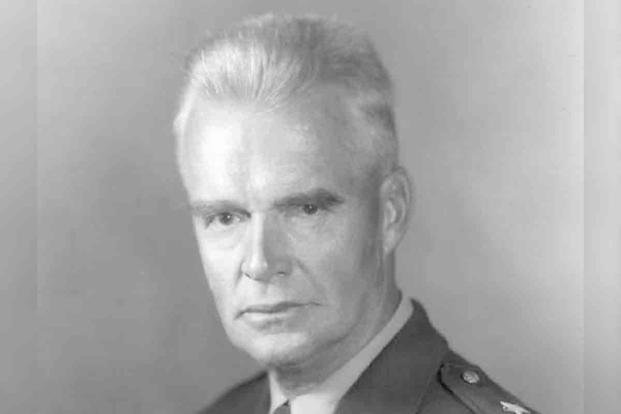 General Dean
By coincidence, the man who followed General Dean as commander of the 24th Infantry Division in Korea was leathery Maj. Gen. John H. Church, now commandant of the Infantry School at Fort Benning. As would be expected of a combat veteran of three wars, General Church is not ready to write off the infantryman or the rifle in favor of atomic weapons.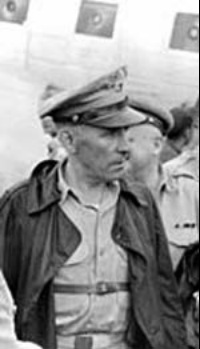 General Church
I had talked with General Church in the Pentagon and I had written him in my search for answers to the questions that had been troubling me. In his first comprehensive policy statement as the new commandant of the Infantry School, General Church emphasized the point that the rifle is not a ‘has-been’ in warfare.
General Church noted that the infantry is a balanced team consisting not only of the rifleman but of mutually supporting elements with tanks, machine guns, mortars, recoilless rifles, as well as supply, signal, engineer, ordnance, medical and other units.
He said that of the 18,804 men in each infantry division, slightly more than 7,000 are armed with rifles. Of these, only 1,944 are rifleman in rifle squads. He emphasized that this ratio of riflemen to the whole division is often used erroneously to support arguments seeking to detract from the importance of the rifleman.
“The incontrovertible fact remains that the rifleman is the heart and soul of the infantry team, and, in fact, of the combined ground arms team,” he said. “All of the other elements have but one mission—to support and assist the rifleman to move forward and seize and hold his assigned objective.
“The very weight of this support serves to emphasize the basic fundamental remains that it is the rifleman who, in the final analysis, carries the fight to the enemy and clinches the decision…None of this in any way minimizes the importance of the rifleman. Those who support him behind the lines and on the battlefield itself help to soften up the enemy, but it still remains for him to deliver the knockout blow.
“Remember, too, that in the fluid type of warfare being fought today there is no fixed front line,” General Church cautioned. “Infiltrating attacks in the rear areas require that cooks, supply and administrative personnel, and command post personnel take precautions for their own security, and they are frequently forced to fight as riflemen for their own defense. Infantrymen who make up the gun screws for mortars and machine guns and recoilless rifles defend themselves and their gun positions as riflemen if an attacking enemy reaches them.”
After all the kudos to the rifleman as the ‘heart and soul’ of the infantry, the question still remains: Is accurately aimed rifle fire and marksmanship training still important in warfare? Perhaps, it might be suggested, the rifleman can be just as effective by shooting helter-skelter with a ‘burp’ gun. Why bother with rifle marksmanship?
Both Generals Church and Collins, who have seen war closeup, are not ready to surrender the traditional American concept of rifle marksmanship.
“It cannot be denied,” said General Church, “that there are those who advocate a de-emphasis on training in rifle marksmanship. It is our unequivocal conviction that such thinking is wrong. The Infantry School, which is responsible for the formulation of Infantry doctrine throughout our Army, has not reduced the time or the emphasis given to this type of training.”
General Collins stressed in his talk with me that he has always been concerned with the waste of ammunition in warfare and in the tremendous cost of moving ammunition supplies to the front. He believes in frugality of ammunition use, of making ammunition count.
That’s why General Collins is adamant in his opposition to what he considers is the European tendency toward automatic weapons to replace the rifle. General Collins said that he favors switching, when conditions permit, to a lightweight version of the Garand rifle, with certain improvements, but his is solidly against suggestions that the Garand be made ‘solely’ a fully automatic rifle.
“My personal view,” General Collins told me, “is that we need a lightweight rifle that can be used for semiautomatic fire or, when required, full automatic fire. I am personally quite skeptical about making all weapons fully automatic. Automatic shoulder weapons waste too much ammunition. Of course, we need a Browning automatic rifle with each squad, but to arm every man with a fully automatic rifle would be foolhardy.
“From my experience in combat and from years as a weapons instructor, I would say that you can get more hits with a semiautomatic rifle than with a full automatic. I am confident that the automatic wastes ammunition. And it’s difficult enough to get ammunition to the front without wasting it.”
General Collins conceded that there is a special need for the ‘burp’ gun but he stressed that every soldier should not be armed with one. He said ‘there’s not use spraying the woods’ when aimed, accurate fire at a clump of bushes concealing the enemy would do the trick.
He said that the soldiers he has talked with in combat areas want the M-1 Garand rifle. They must have more striking power, not less, he said. They would lose hitting capability with an automatic rifle, he added.
The adoption of a rifle that can be fired fully automatically appears to contradict General Collins’ attitude favoring the more accurate fire of the semiautomatic Garand. If the semiautomatic rifle has greater hitting effectiveness and saves ammunition, the question arises, why have it turned into an automatic? It’s obvious that troops with a rifle that can be fired semiautomatically or fully automatically will have a great tendency to switch the selector to full automatic—turning it into a ‘burp’ gun, the very thing General Collins deplores.
From my personal observation in the Pentagon, I have decided that General Collins still objects to an automatic rifle for the foot solider but has been influenced to keep the door open for such a development in the future. It should be evident that if the Army turns to a shoulder weapon which can be fired automatically, accurate marksmanship will have to yield to the natural tendency with such weapons for helter-skelter spraying and a high waste of ammunition.
I also talked with General Collins about the values of civilian marksmanship and the part that could be played by civilian rifle clubs in supplying the Army with ready-trained marksmen. He replied that the Army likes to get well-trained rifle marksmen. He said youths coming from rifle clubs who already know how to shoot accurately could be used more readily as coaches in the Army training system.
“What I am afraid of is that people may get the idea that rifle clubs could be a substitute for universal military training,” General Collins commented when it was suggested that the rifle clubs in the United States could be tied into a system of marksmanship training for youths before they go into the Army, or for reservists on inactive status.
“What we need most is a system of universal military training,” General Collins declared. “When young men pass into UMT, that’s where we will teach them to shoot. We can do that in a relatively short time. The whole method of instruction in marksmanship has been worked out to perfection over a period of years. We can teach marksmanship effectively through UMT.”
General Collins make it clear that rifle marksmanship is merely one of many courses of instruction that the UMT trainee must learn and that marksmanship cannot be emphasized at the sacrifice of other vital training.
“Very frankly,” he said, “we are not going to spent too much money on this one aspect of training. We must weight our expenses carefully. We can’t spend as much as we have in the past.”
General Collins said he favored continuance of the civilian marksmanship program, and that the Army, to a limited extent, help finance this program. He conceded that early training in rifle marksmanship would help youths preparing for the Army. He emphasized, however, that the Army feels it can take a youth who has never fired a rifle before and train him quickly to become an effective rifleman.
He indicated that pre-introductory training in a civilian rifle club for youths entering the Army would not materially reduce the basic training course of the Army, or result in any appreciable saving of money.
General Collins said the Army has little need for rifle specialists ‘who can hit a gnat’s eye’ although he favored competitive shooting both in and out of the Army. Competitions, he said, create a healthy and widespread interest in rifle marksmanship, and frequently produce statistical and technical information of value to the services.
It was clear to me from what General Collins said, and from what he implied, that the Army continues its traditional jealousy of other agencies that might help it get its job done. The Army attitude appears to be that civilian marksmanship training is sort of a luxury which, although worthwhile, cannot do the Army’s job of training soldiers to shoot and handle firearms. But if it is true that the Army still needs rifles and riflemen, it seems to me as a military reporter and plain citizen that the Army should welcome every bit of help it can get.
And there may be some real money in the economy in training young men in civilian rifle clubs—thus saving time and money when they get into the Army. General Collins rejected this idea, saying that the saving would not be ‘appreciable.’ There is some question whether the Army is not taking a partisan view on this point.
In this atomic age, it is evident that the Army will need its riflemen, and perhaps because this is the atomic age the nation will need its civilian riflemen more than ever.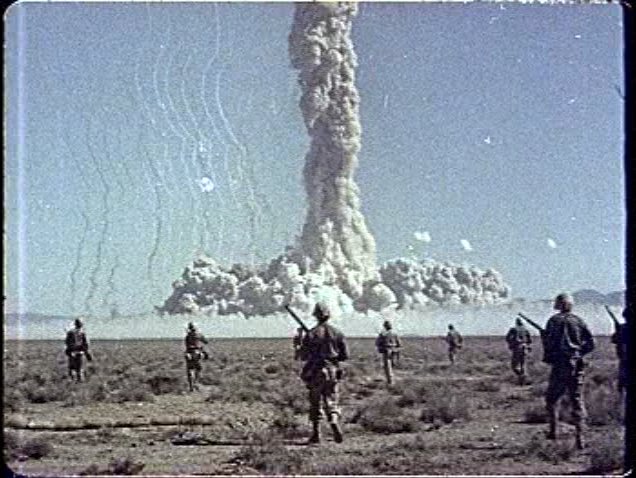
—Lloyd Norman
Categories