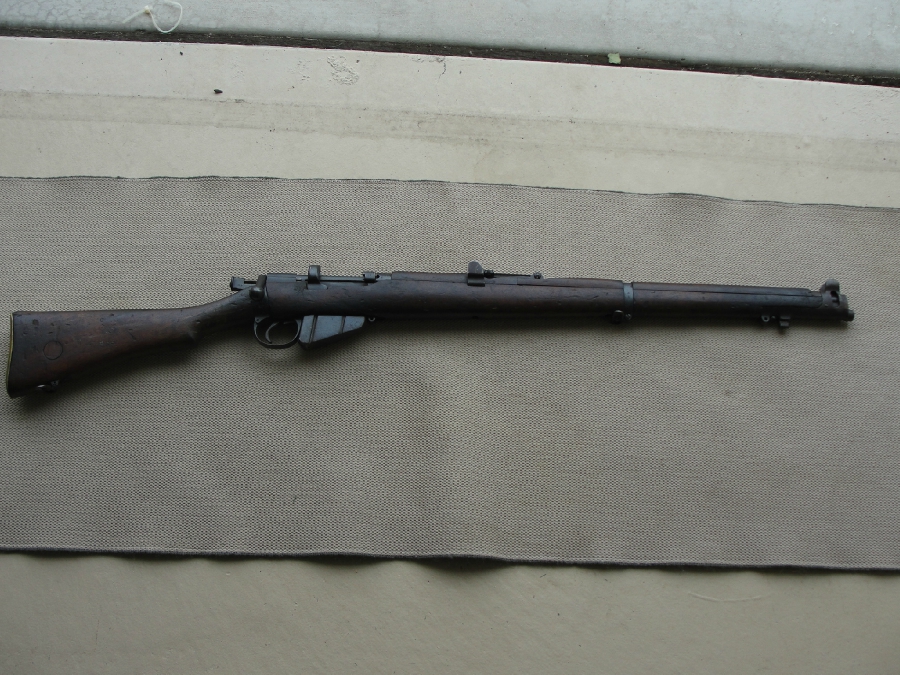
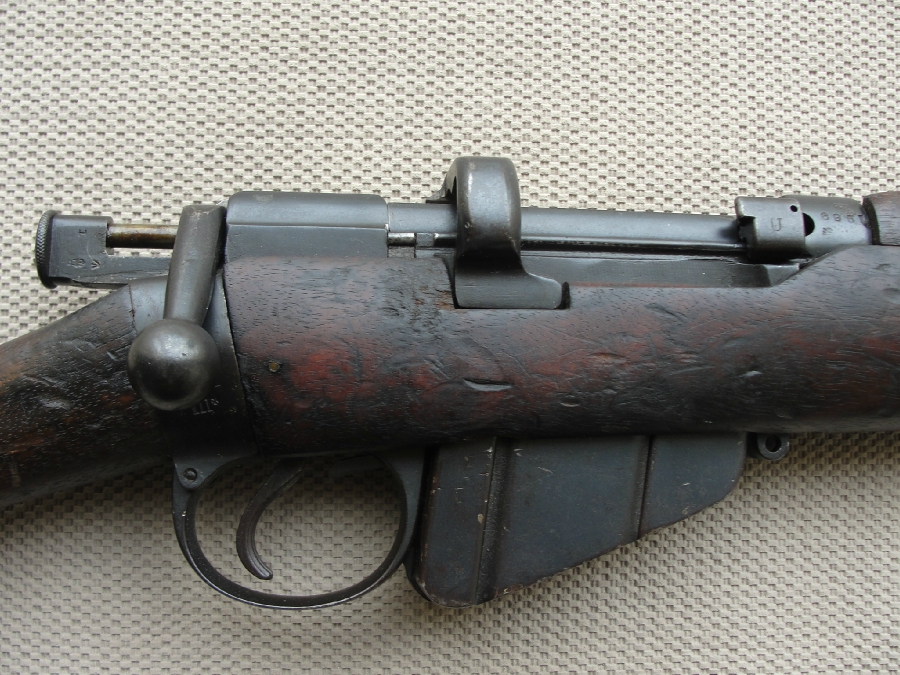
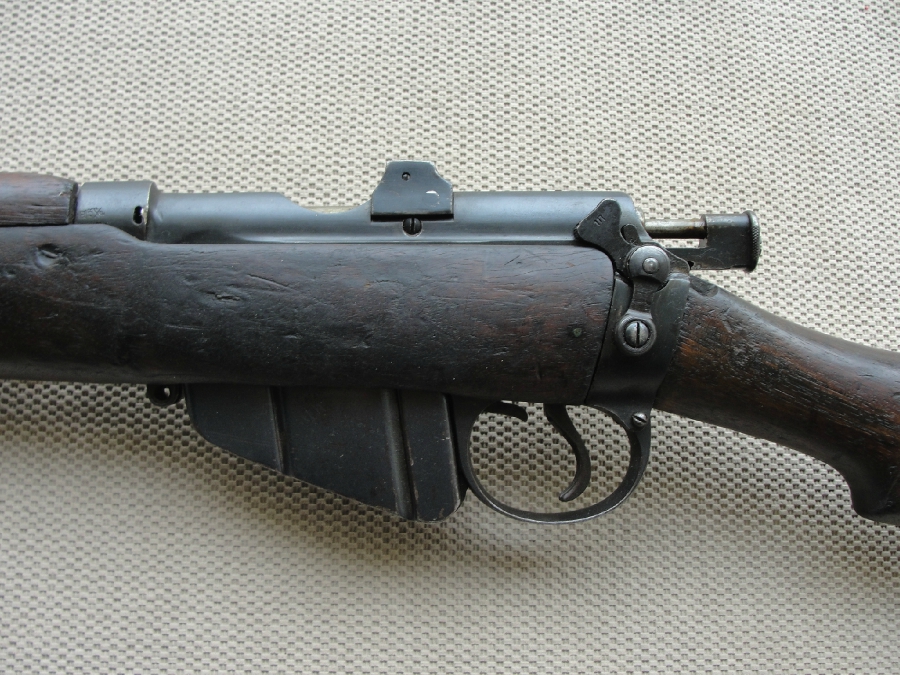
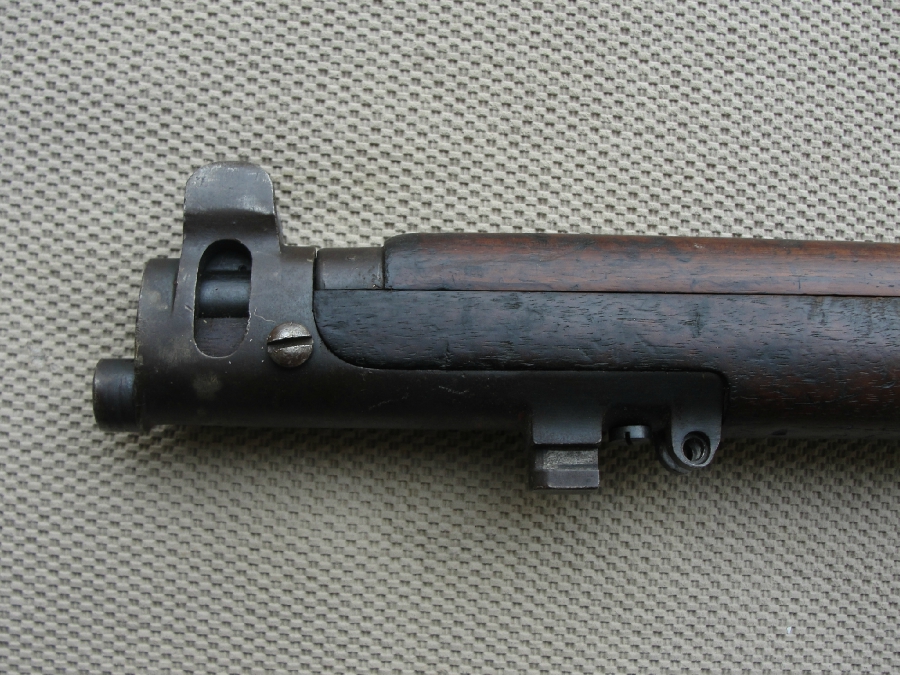
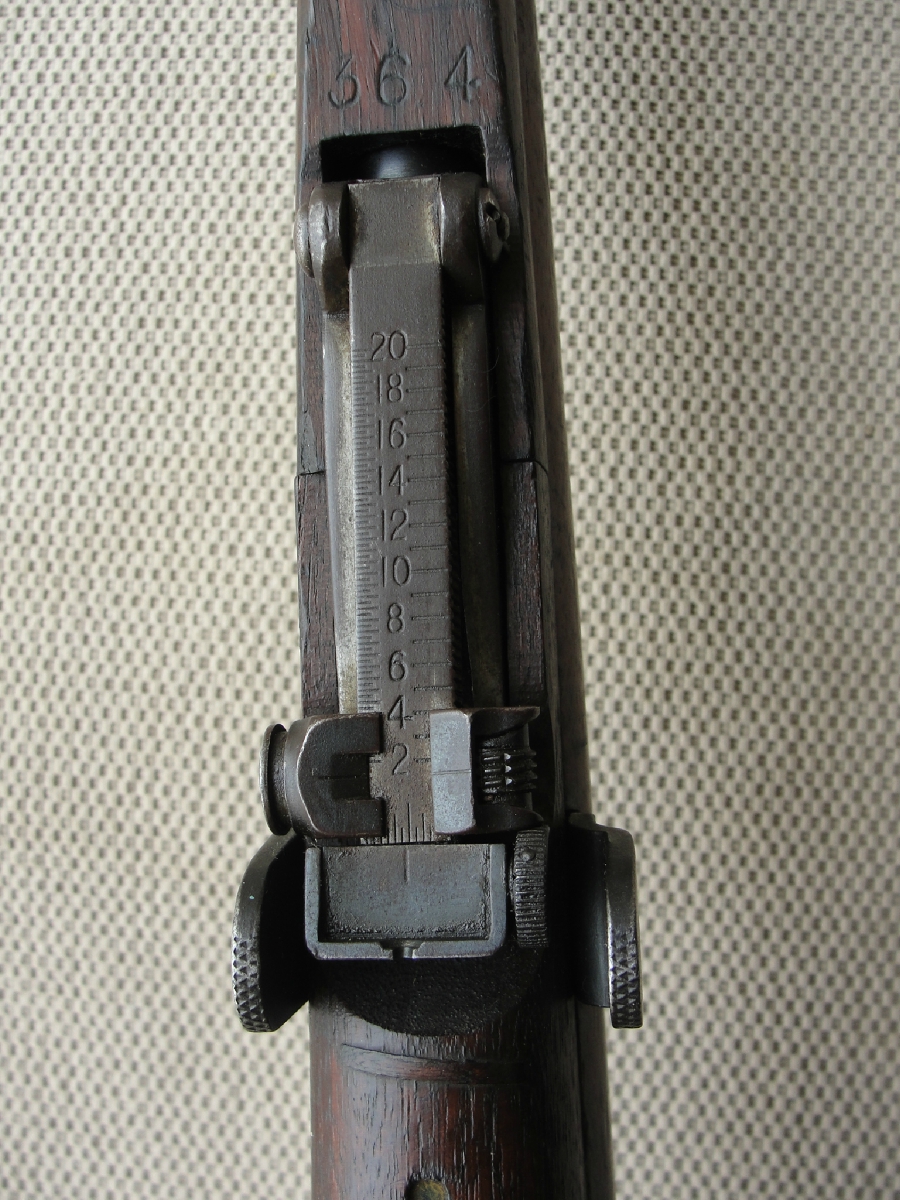
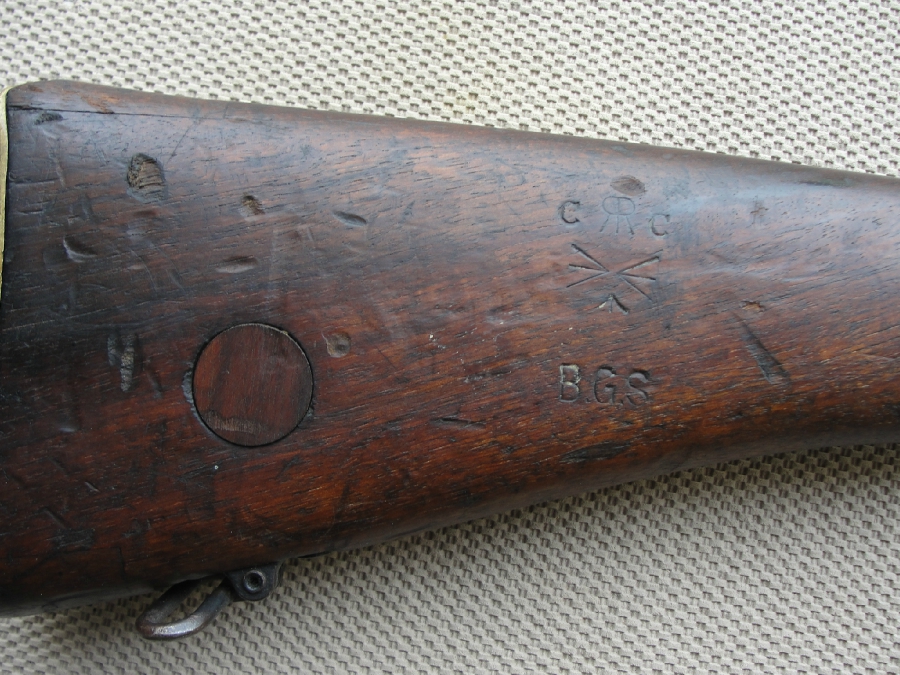
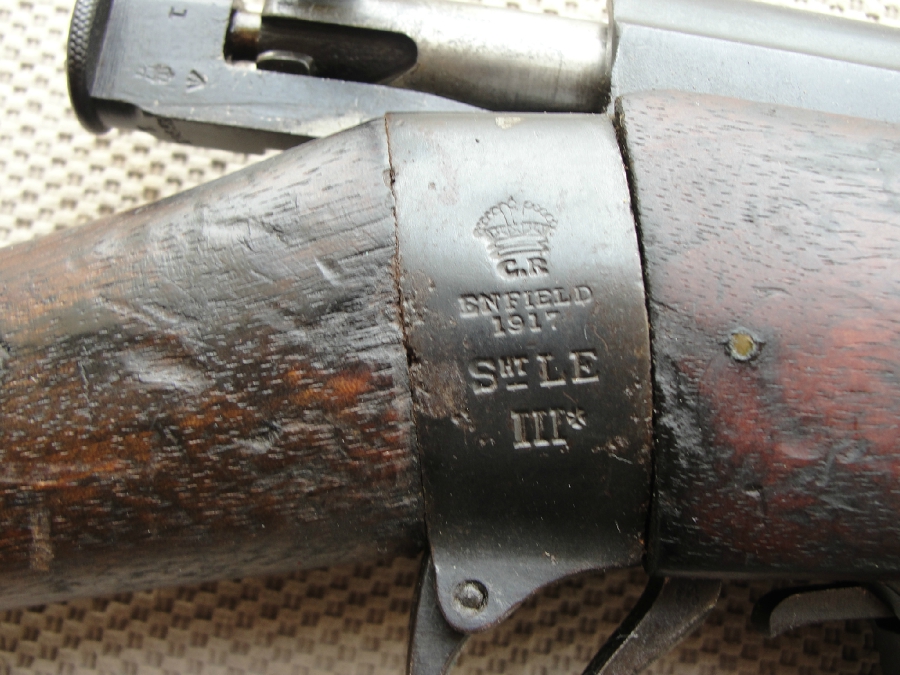

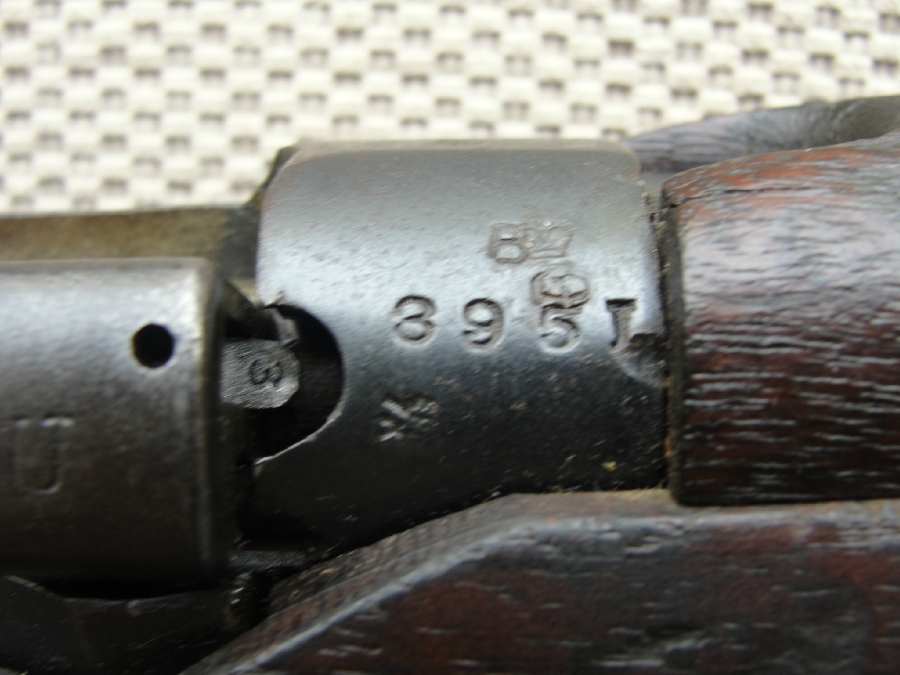
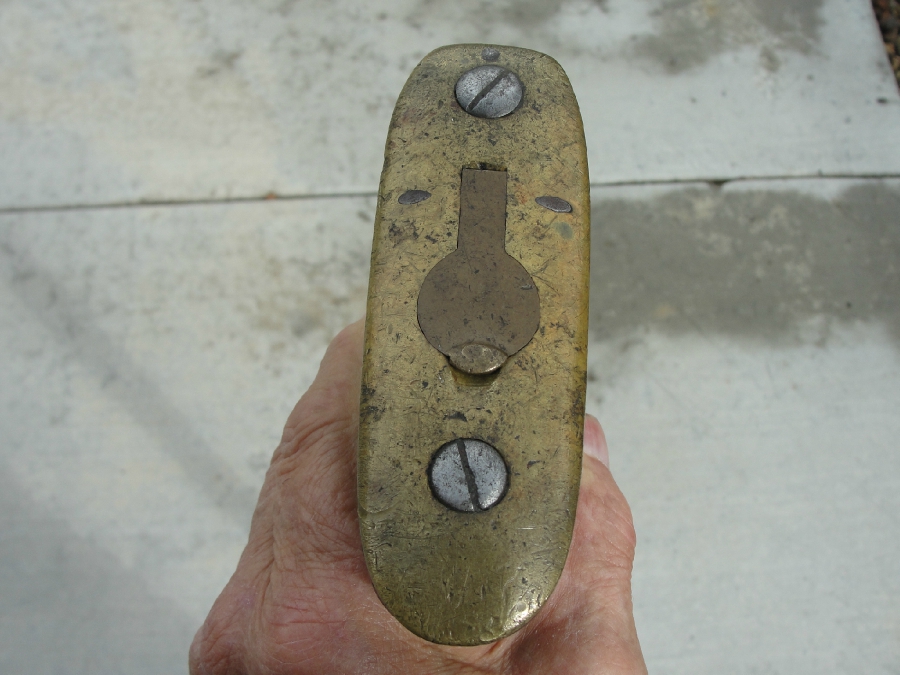
Imagine the War Stories this Old warrior could tell!



 |
|
| Subsidiary of CZ-USA | |
| Industry | Defense Products & Services |
| Founded | 1968 |
| Founder | Daniel B. Wesson |
| Headquarters | Norwich, New York, United States |
| Products | Firearms and law enforcement goods |
| Owner | CZ-USA |
| Website | danwessonfirearms.com |
Dan Wesson Firearms (DW), part of CZ-USA, is an American handgunmanufacturer. The corporate headquarters is in Kansas City, Kansas, and the customer service and manufacturing plant is located in Norwich, New York. Dan Wesson Firearms is known for its revolver expertise and for some types of ammunition it has introduced over the years.
[hide]
Daniel B. Wesson II (1916–1978) was the great-grandson of one of the founders of Smith & Wesson, where he worked from 1938 until 1963. He earned his degree in Material Science and Metallurgy and controlled the quality of his production strictly.[1]
After the purchase of Smith & Wesson by the Bangor-Punta manufacturing concern, Daniel B. Wesson set out to open his own manufacturing operation in order to produce high quality, American made revolvers for service as well as competition use. Dan Wesson Arms was incorporated in 1968, with its headquarters and production located in a former school building in Monson, Massachusetts.[1]
Wesson was aware of gunmaker Karl Lewis’ modular designs which had been proposed during Lewis’ tenure with Browning, and then further refined during a period spent with High Standard. Wesson signed a production agreement with Lewis, and began setting up the necessary machining and manufacturing equipment. Urging Lewis to prepare prototypes for display at major gun shows, Wesson began tirelessly promoting the company, while working to build a sales and distribution network in an extremely competitive market largely dominated by three or four manufacturers.
The new Dan Wesson revolver proved to be extremely accurate, though sales were limited – in large part due to the gun’s unorthodox appearance. After reworking the design to improve its aesthetics and correct some detail faults, Wesson introduced the revised model as the Model 15 in .357 Magnum and .22 Long Rifle calibers. This new version of the revolver again demonstrated the inherent accuracy of the threaded barrel design, and the Model 15 and its successor Model 15-2 became extremely popular with both civilian target shooters and hunters.[2] A large framed version in .44 Magnum caliber was introduced in 1980, and was also a success, particularly with competitors in IMSA metallic silhouette competition.[2] The new revolvers compared well in all respects in fit and finish to the best models offered by Colt and Smith & Wesson, using heat-treated, investment-cast 4140 chrome moly steel frames with a deep, highly polished blue finish. Later, Dan Wesson offered revolvers in stainless steel as well.[2] Barrels and shrouds were constructed of chrome moly steel.
Despite the success of the revised design and new caliber offerings, Dan Wesson Arms experienced significant upheaval and ownership changes after Wesson’s death in 1978. The original Monson facility and production equipment became outdated, and production costs of the gun reduced profits. The company declared bankruptcy in 1990. The corporation was initially moved to Palmer Massachusetts, and the name was changed to Dan Wesson Firearms. In 1995, poor sales led to yet another bankruptcy, after which Bob Serva purchased the corporation and its assets, moving the group to Norwich, New York, where it is currently located.[1]
Seeking to diversify its product line, the company introduced a popular series of high quality M1911A1-type pistols in various calibers. Dan Wesson revolvers also went back into limited production, though this required a substantial investment in new CNC tooling and equipment to replace the old worn-out tooling. Despite increased sales, the company faced further financial hardships, and in 2005 the company was purchased by the CZ Group’s American branch.[3]

Dan Wesson Revolver . 357 Magnum, barrels

Dan Wesson, barrel system
The double-action revolver design introduced by Dan Wesson was invented by Karl R. Lewis.[4] Lewis was responsible for a number of new firearms designs while working for various firearms manufacturers, including the Army’s 40mm break-open grenade launcher and the .357 caliber Colt Trooper revolver. Lewis had previously invented an interchangeable barrel system for revolvers, and this system was incorporated into the Dan Wesson prototype. While nearly all revolvers are constructed with a barrel screwed tightly to a frame (which must be removed and installed by an experienced gunsmith), Lewis’ idea was to house the barrel tube within a separate shroud secured by a nut at the muzzle, which places tension on the barrel and provides support at both ends of the barrel. By unscrewing the muzzle nut, the shroud and barrel could be removed and replaced with different barrel lengths and shroud configurations. The fact that the DW barrel is supported and placed under tension at both ends (along with the ability to fine-tune barrel-cylinder gap) resulted in markedly increased accuracy over conventional revolver designs.
Another difference in the new design was the placement of the cylinder release latch. Other revolvers place this latch on the frame, behind the cylinder. The Dan Wesson revolvers have the latch mounted on the cylinder crane, which was intended to increase the strength of the revolver by placing the locking mechanism at the point where the cylinder crane fits into the frame. Another change from most other existing designs was the use of a coil mainspring, which Lewis had pioneered with his design of the Colt Trooper .357. Revolvers with flat mainsprings must have a metal framework to anchor one end, while the other contacts the hammer. This framework generally forms the primary shape of the handgrip, to which the stocks are attached. The Dan Wesson design houses the coil mainspring inside a short extension of the frame, and the stock attaches to this extension with a screw inserted vertically through the bottom of the stock. The lack of a steel frame outline permits a wider amount of grip sizes and styles, since any grip that can accept the short mainspring housing can be used.
The first interchangeable barrel revolvers produced were the Dan Wesson Models W8, W9, W11, and W12, all medium-frame size frame revolvers chambered in .38 Special or .357 Magnum. The W8 and W11 had either a fixed rear sight, or a rear sight adjustable only for windage, while the W9 and W12 featured a rear sight fully adjustable for both windage and elevation. The barrels and shrouds for both models were interchangeable and used a large externally mounted nut on the muzzle end to secure the barrel and shroud. The shrouds on these early models had an elongated flange (known to collectors as “Pork Chop” shrouds) which mated with the front of the revolver’s frame. Initial barrel/shroud options were 2 1/2-inch, 4-inch, 6-inch, and 8-inches. A custom barrel nut wrench and feeler gauge were supplied with each pistol, and barrel changes could be accomplished in two minutes or less.[5]
In 1971, DW introduced the Models 14 (fixed sights) and 15 (adjustable sights) in .357 Magnum caliber. The new models still used the “pork chop” flanged barrel assembly, but the muzzle nut was redesigned and recessed inside the shroud to improve the gun’s appearance. As a result, barrel change tools for the Models 12 and 15 are non-interchangeable.[5]Another new feature was the introduction of a mechanical stop to prevent trigger overtravel, which reduces the effect of trigger movement on the gun itself while reducing trigger return time, thus increasing accuracy.[6] Models W11 and W12 were discontinued in 1974.
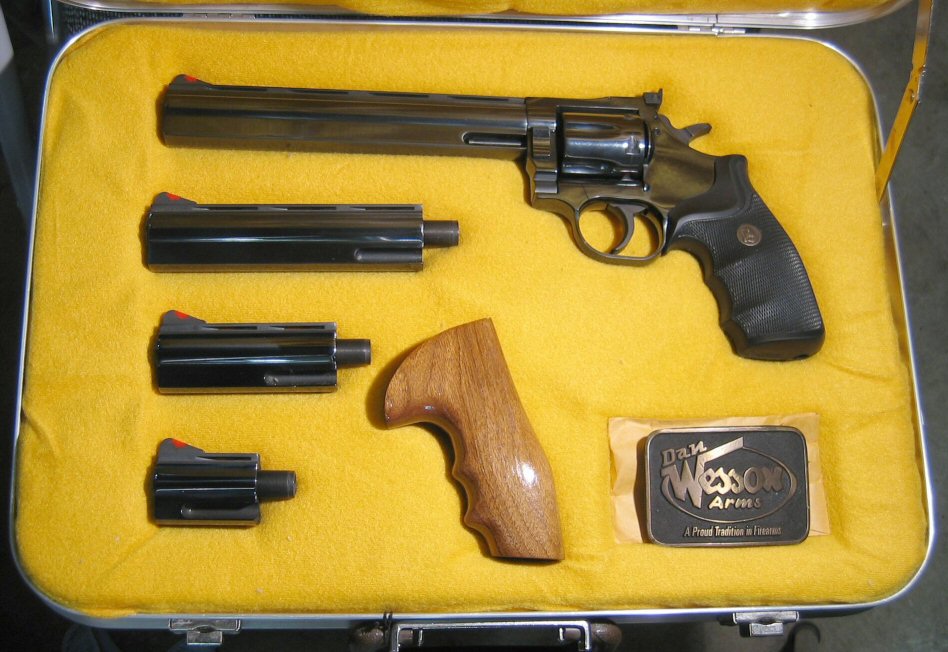
During 1975-1976, further refinements to the Models 14 and 15 were incorporated into production as the MOdels 14-2 and 15-2. The Model 15-2 became the most well known and the best selling Dan Wesson revolver model to go into production. The 15-2 used a roll pin inserted into the frame as a centering dowel combined with a precisely drilled hole in each shroud assembly to facilitate proper shroud centering and alignment, thus eliminating the need for flanged barrel shrouds. The 15-2 introduced more barrel and shroud options, including barrel/shroud lengths of 2.5, 4, 6, 8, 10, 12, and 15 inches, partial or fully lugged shrouds with choices of solid or ventilated ribs, plus removable and interchangeable front sights.[5] The Model 15-2 could be ordered as “Pistol Pacs” with 3 (initially) and later 4 (or more) barrel/shroud sets shipped inside a fiberglass briefcase with barrel changing tool and clearance gauges; however, most pistols were sold with only one barrel, with the buyers able to purchase other barrels later. All barrels and shrouds within a model series are compatible, thus a Model 15-2 frame from the 1970s may be equipped with a barrel from the 1990s and shroud made in 2016. The 15-2 increased sales markedly over the earlier models, and were often seen in use with both target shooters and hunters.
In late 1980, after three years of development the Dan Wesson company introduced a large-framed revolver in .44 Magnum/Special caliber, intended for hunters and target shooters (especially metal plate or silhouette target competitions).[2][7] Designed for extended use with full-power magnum loads, the new Model 44 used a larger and stronger frame than the Smith & Wesson Model 29 (M44 weight was 48 ounces with a 4-inch barrel), and featured a solid frame without a separate sideplate, which also increased strength.[8] In addition to the one-piece frame, the Model 44 incorporated other new features designed to increase accuracy, such as broached rifling and choke-bored barrels.[8]
The Model 44 or Large Frame Dan Wesson was initially offered with 4″, 6″, 8″, or 10″ interchangeable barrel/shroud options,[6] and most guns shipped with a 6-inch barrel. A 2 1/2″ barrel/shroud was later introduced, available as a separate option from the factory. Like the Model 15-2, the Model 44 could also be purchased with a variety of shroud configurations – either partial lug or full lug with a solid rib or ventilated-rib barrel. The Model 44 could also be obtained with a “Power Control” barrel compensator.[9] This was a stainless steel barrel drilled radially at the muzzle end with a series of small ports. Two small vents cut into the top of the barrel shroud vented excess gas and reduced apparent recoil of the gun, although this feature eliminated the option of using cast lead bullets due to lead and carbon accumulation. At the time, Dan Wesson M44 was the lightest recoiling .44 magnum ever produced.[2][7] Light recoil was a side benefit in IHMSA silhouette competitions. The Model 44’s high level of intrinsic accuracy, combined with an excellent trigger, and fast lock time, caused a surge in popularity of the M44 in heavy-caliber revolver competition, though the gun was also popular with handgun hunters and sportsmen who desired a gun for personal protection against bears or other large predators. The Power Control barrel and vented shroud were eventually dropped, though DW did experiment with an external shroud-mounted compensator in later models.
Within a few years, Dan Wesson introduce their Large Frame revolver in other calibers, including .41 Magnum (Model 41) and .45 Long Colt (Model 45). Stainless steel version of these guns were designated with a 7-prefix i.e. Model 744, 745 etc.
Later the company offered the Model 15-2 chambered in .32 H&R. A new Large Frame DW was offered in the Supermag series of cartridges – .357, .375, and .445 Supermag (later called the Alaskan Special. The Model 7460 was also produced in .45 ACP/.460 Rowland/.45 Winchester Magnum. A “Hunter Pac” could be purchased in all Magnum calibers which included a heavy vent-rib shrouded barrel, barrel changing tool, and Burris scope mounts in a travel case.[5]
In addition to current production of the Model 715 revolver in .357 Magnum, CZ still supports the Model 15-2 and Large Frame models with a variety of shroud and barrel offerings, replacement parts, and repair and refurbishment services.
While the traditional image of Dan Wesson has always been centered around revolvers, over the years the company has also developed and produced rifles, ammunition, and a popular line of Dan Wesson 1911 auto pistols in various calibers.
| Timetable | Company name | Production place | State | CEO | Owner | Notes |
|---|---|---|---|---|---|---|
| 1968–1978 | Dan Wesson Arms Inc. | Monson | Massachusetts | D.B. Wesson | D.B. Wesson | much development |
| 1978–1991 | Dan Wesson Arms Inc. | Monson | Massachusetts | various owners | various owners | |
| 1991–1995 | Wesson Firearms Co. | Palmer | Massachusetts | Seth Wesson | Wesson family | |
| 1996–2005 | Wesson Firearms | Norwich | New York | Bob Serva | New York International Corp. | new plant |
| 2005–present | Wesson Firearms | Norwich | New York | Alice Poluchová | CZ-USA |
DW patents concerning revolvers:
Lewis patents for revolvers:
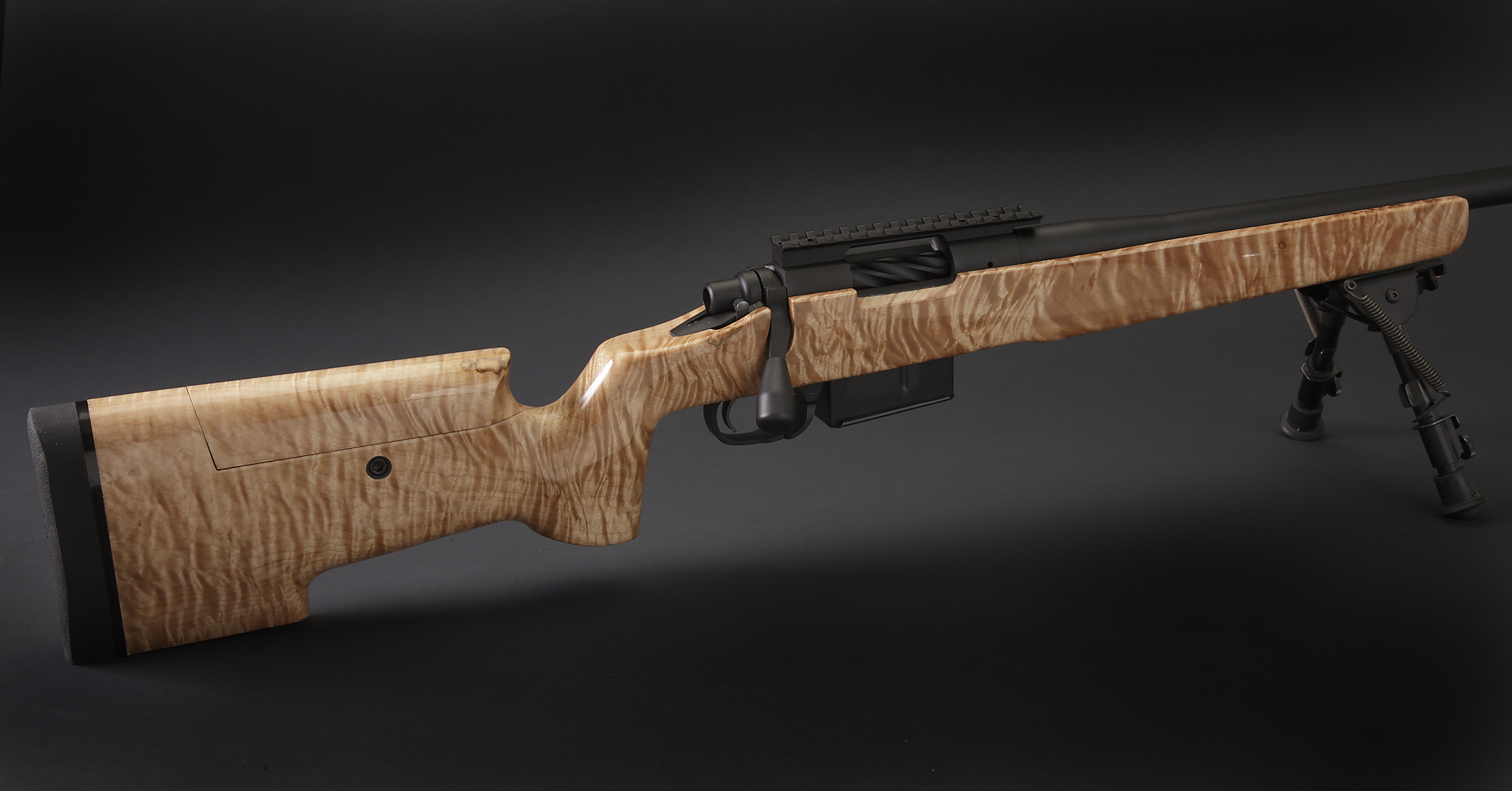
Now it’s obvious that somebody has spent a lot of time, effort and hard cold cash on this Remington 700! It looks like a Curly Maple Stock. It’s a pity that no one added any more information about it.
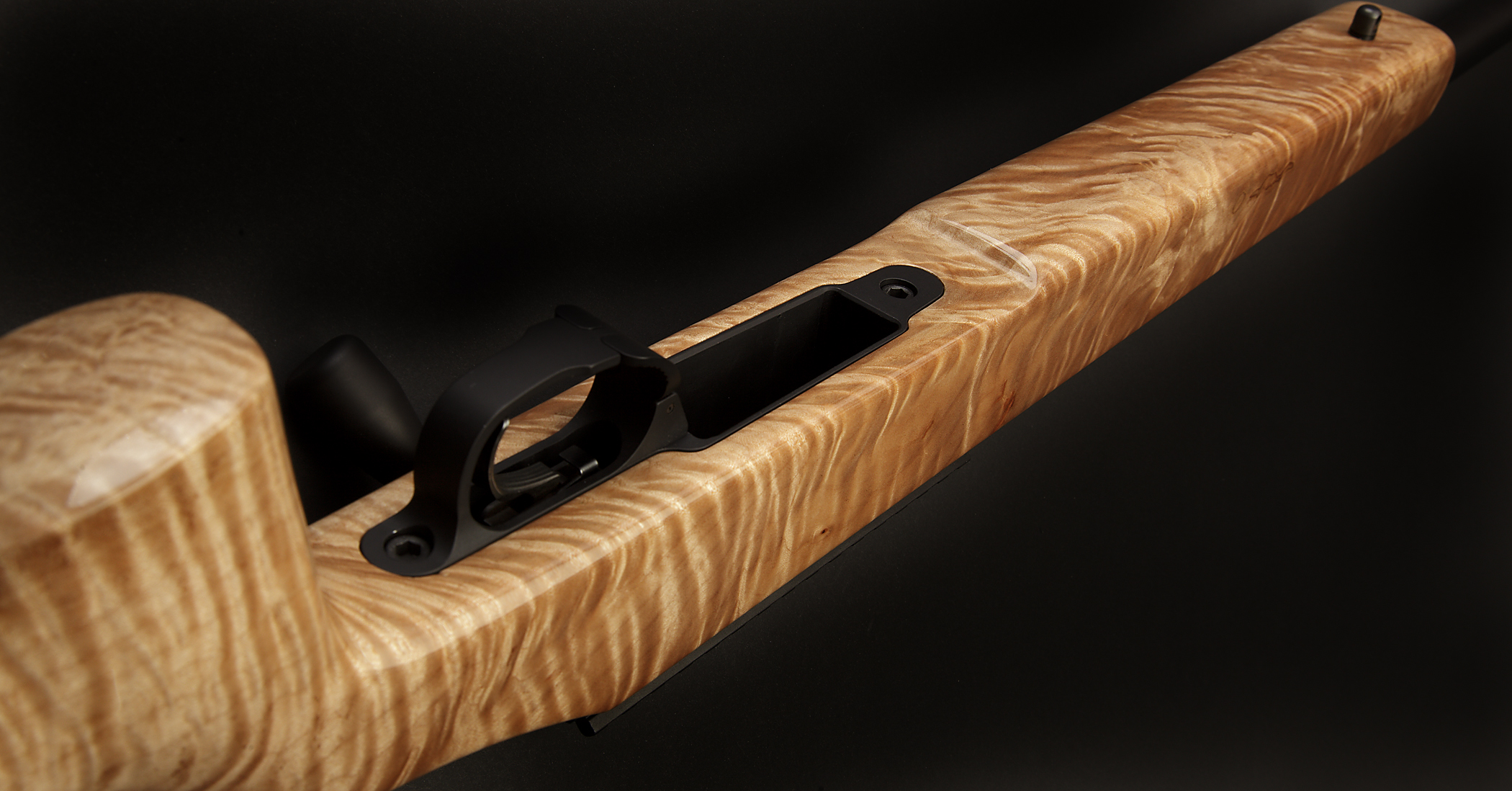
All I know is that I would not be getting rid of such a fine example of of American Workmanship!
Enjoy!
Grumpy


Ruger employs between 1,800 and 1,900 people around the country.
He declined to comment on the timeline for the layoffs.
Ruger has three manufacturing locations: in Newport; Prescott, Ariz.; and Mayodan, N.C.
It also has a precision metals branch in Earth City, Mo., according to Ruger’s website.
Reid shied away from commenting on whether a third-quarter sales decrease impacted the layoffs, but noted that the company has “been in a fluctuating market, which I don’t think is lost on anybody.”
Ruger, a publicly traded company, has seen its stock price decline for the past 12 months, reflecting weaker sales and lower profits. Stocks fell from a high of $68 per share in July to $53.35 at closing on Friday.
U.S. gunmakers enjoyed robust sales some five years ago following the massacre at Sandy Hook Elementary School in Newtown, Conn., amid fears that new gun-control legislation sought by then-President Barack Obama would be enacted.
However, since President Donald Trump took office, firearms sales have slowed. Reid on Friday noted that a Republican-led administration, under Trump, has meant “less fear of legislation,” which plays into the market.
Jordan Cuddemi can be reached at jcuddemi@vnews.com or 603-727-3248.
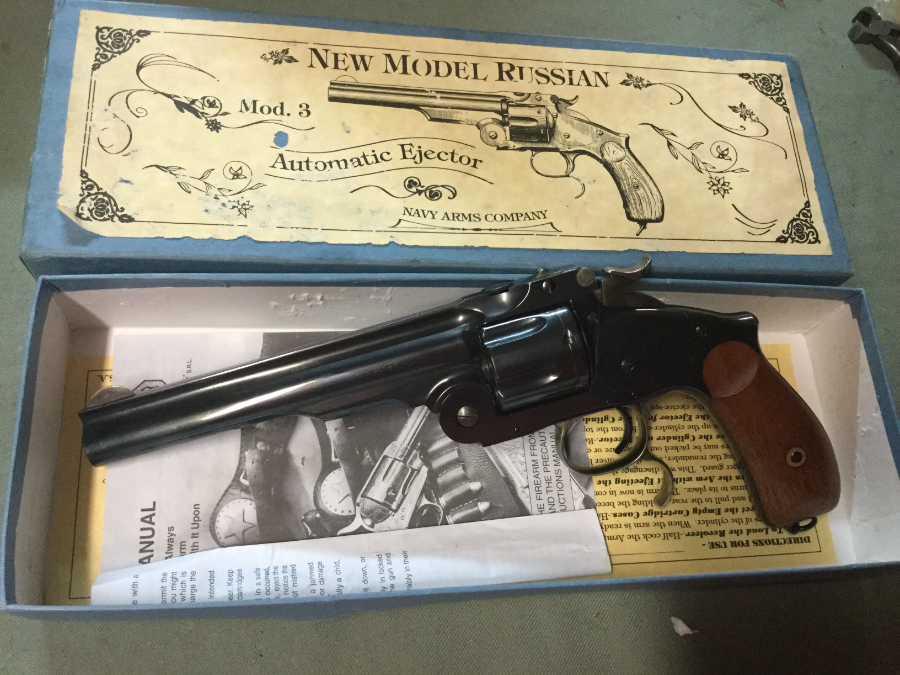
This a reproduction of the Gun that saved S&W after the Civil War. It is also the first large cartridge revolver that S&W put out. 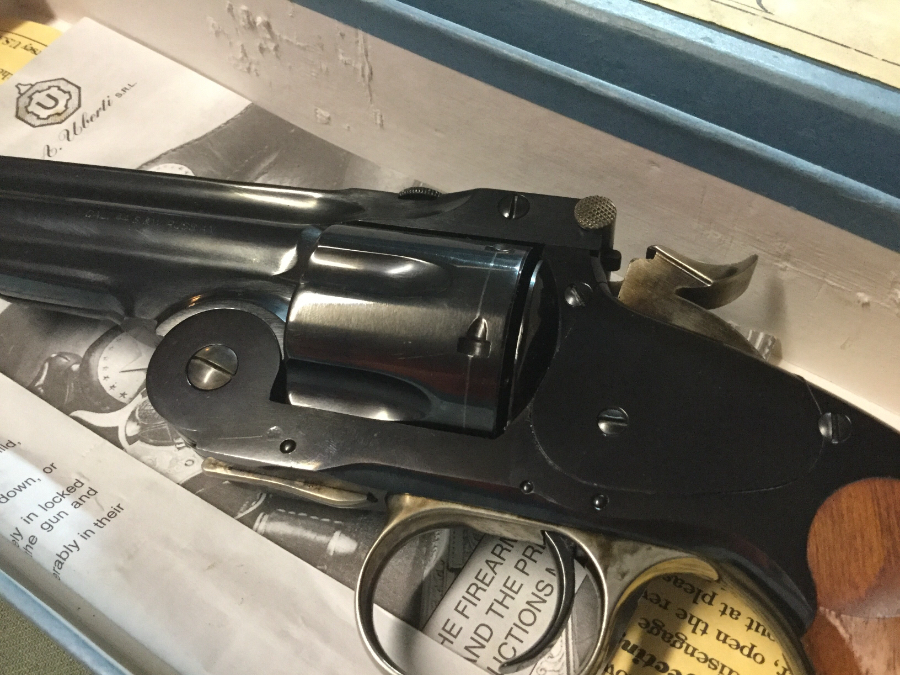
The Russians used 44 Russian though instead of the American version of 44.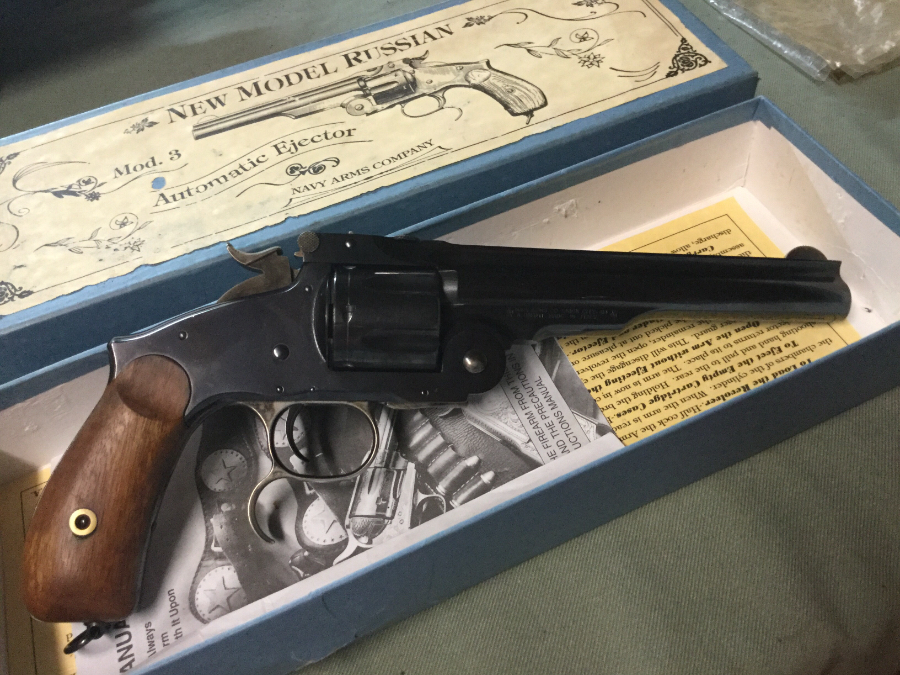
But both were & still are excellent target rounds. That give great accuracy for the time. It then led to birth of the 44 Special & 44 Magnum.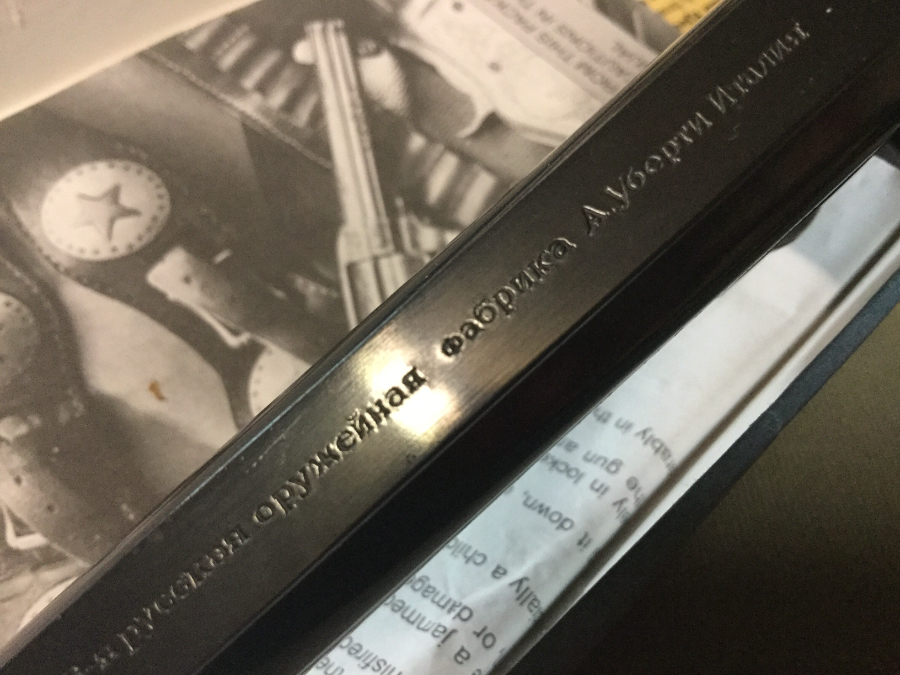 Note the Russian writing on the barrel


Is a rifle more or less accurate with a suppressor? There’s only one way to find out.
Would you rather be quiet or accurate? Do you have to choose between them or do this two concepts coexist like politicians and sex scandals?
Not so long ago, I competed in an F-Class match, shooting at a distance of 800 yards. One thing that stood out was the competitors’ finicky attention to muzzle devices, or more accurately, the lack thereof.
First, F-class allows none, so there’s that. Second, the chatter on the firing line was that muzzle devices like brakes, flash hiders, and suppressors only reduce the accuracy of a rifle. I have no reason to doubt that, but it did get me thinking.
Would my everyday rifle configurations be more or less accurate with a suppressor? These aren’t tweaked out F-Class race guns. I use them for plinking, less-rigid competition, home defense, and denting steel plates.
As an experiment, I decided to compare the accuracy of a couple of rifles outfitted with the standard muzzle device – a flash hider or brake – with the same rifles and ammo geared up with one of my suppressors.
Just to be clear, suppressors can help you shoot more accurately because they reduce the blast, noise, and smooth out recoil. That helps the shooter focus on breaking a perfect shot with less noise and distraction.
What I was looking for here was any “mechanical” impact on accuracy, not my ability to shoot better using a can.
To keep optical and wind error out of the picture, I shot a boatload of five-shot groups in each configuration at 100 yards. Yes, there might be some stabilization differences that show at longer distances, but then I would be adding more weight to other variables like wind and my eyes.
Again to try to minimize some variables, I aimed for “warm barrel” scenarios. After some sighters to get on paper, I alternated rifles to give each a chance to cool back down after each five-shot group. By resting the rifles and taking my time, I figured I would stay in the “warm” range and not run into accuracy issues from some groups coming from cold, warm, and smoking hot barrels.
Let’s take a look at some results.
OK, so maybe this isn’t an everyday rifle for plinking and home defense, but I like to shoot it. Don’t judge. On the other hand, it’s amazingly consistent. It’s also built from the ground up for pure accuracy. Potentially offsetting factors like weight and semi-automatic operation aren’t going to interfere with its accuracy mission. I had a hunch that this one might just shoot better out of the box before sticking a suppressor on the end but there was only one way to find out.
I used Sig Sauer’s brand new OTM Match Grade 6.5mm Creedmoor ammunition. Based on my previous experience with the accuracy of Sig’s match ammo, I had high expectations. This load with its 140-grain open-top boat tail projectile didn’t disappoint.

Sig Sauer’s brand new 6.5mm Creedmoor OTM Match Grade ammo shot like a champ from the Masterpiece Arms MPA BE Lite rifle. This is a five-shot group from 100 yards.
I shot a bunch of five-shot groups from 100 yards with only the default muzzle brake in place. As you can see from the photo, this brake is a beast. It’s about the size and weight of a grenade and makes a similar concussion. The Range Officer was convinced I was shooting a .338 Lapua Magnum until I showed him the comparatively small 6.5mm Creedmoor cartridges.
I also shot a bunch of groups after removing Brake-Zilla and adding a SilencerCo Specwar 762 suppressor. Also a quality piece of gear, this can makes a great impact weapon in a pinch. Over the years I’ve had it, I’ve found it to be consistent regarding point of impact shift and consistency.
Here’s what I found.
Shooting in the factory configuration, my overall average group size came out to 0.63 inches with a best five-shot group of just .44 inches. That ain’t shabby, and I have to say I was pleased with the performance of the new Sig 6.5mm Creedmoor ammo. For factory ammunition not sized to a specific chamber, that’s pretty darn good.

The Masterpiece Arms rifle seemed to shoot better without a suppressor.
After I added the suppressor, my group size actually increased as I suspected it might on this particular rifle. After all, it’s built just so for accuracy, and monkeying around with weight on the end of the barrel, as heavy as it is, probably isn’t going to help things. My overall average five-shot group size worked out to 0.90 inches with the smallest group of .80 and largest of 1.01 inches at 100 yards.

Perhaps the metric ton weight of Brake-Zilla kept the rifle stable…
Next, I decided to move to a more “everyday” rifle configuration. In past tests, I’ve found this Smith & Wesson M&P 10 Performance Center model to be a consistent and accurate rifle. I repeated the process, keeping the rifle in the “warm” range while firing all of my five-shot groups from 100 yards.
Because tinkering is fun, I had added a Smith Enterprise Vortex Flash Eliminator to this rifle, so I elected to leave that as the “default” instead of the factory flash hider. My overall average group size with the flash hider installed was 0.98 inches with the smallest group being 0.75 inches and the largest 1.14 inches.
I added the same SilencerCo Specwar 762 can that I used on the Masterpiece Arms rifle and proceeded to burn more Sig Sauer ammo. The overall group size? It was 1.03 inches with a smallest of 0.97 inch and largest of 1.12 inches.
To properly use the words “statistically the same” I would have to burn a few thousand round of ammo, but indications were that this rifle really didn’t care between these two configurations with the Sig Sauer 6.5mm Creedmoor ammo.
Being curious, I decided to informally expand my testing a bit on this one. I shot some group using American Eagle’s 140-grain Open Tip Match ammo with and without a Gemtech Tracker suppressor. The Tracker is a lightweight model designed for low-volume hunting applications so I figured I might see some more variance with that. I did. My unsuppressed group average was 1.09 inches while the Tracker suppressed groups averaged out to 1.255 inches.
Hmmm. So this rifle wasn’t as happy with a lightweight can. That didn’t surprise me. Next, I decided to go back to my original “heavy suppressor” configuration and swap ammunition. I had worked up a batch of handloads using the Hornady 140-grain ELD bullets, so I tried those unsuppressed and with the Specwar 762. Unsuppressed, my average group size was 1.02 inches. When I added the suppressor, the average group shrank to .65 inches.

I alternated rifles to keep them all in a “warm barrel” state.
It seemed there were conflicting results depending on the combination of rifle, suppressor, and ammo. Here’s how it all netted out.
| Rifle | Ammunition | Muzzle Configuration |
Average Group Size |
| Masterpiece Arms MPA BA Lite | Sig Sauer OTM Match Grade 6.5mm Creedmoor | Factory Brake |
.63” |
| Masterpiece Arms MPA BA Lite | Sig Sauer OTM Match Grade 6.5mm Creedmoor | SilencerCo Specwar 762 |
.90” |
| Smith & Wesson M&P 10 PC | Sig Sauer OTM Match Grade 6.5mm Creedmoor | Smith Enterprise Vortex Flash Eliminator |
.98” |
| Smith & Wesson M&P 10 PC | Sig Sauer OTM Match Grade 6.5mm Creedmoor | SilencerCo Specwar 762 |
1.03” |
| Smith & Wesson M&P 10 PC | American Eagle’s 140-grain Open Tip Match | Factory Flash Hider |
1.09” |
| Smith & Wesson M&P 10 PC | American Eagle’s 140-grain Open Tip Match | Gemtech Tracker |
1.255” |
| Smith & Wesson M&P 10 PC | Handload Hornady 140-grain ELD | Factory Flash Hider |
1.02” |
| Smith & Wesson M&P 10 PC | Handload Hornady 140-grain ELD | SilencerCo Specwar 762 |
.65” |
So let’s boil this down into some probable explanations and learnings.
First of all, there’s clearly no universal takeaway from this limited experiment. Will your rifle be more accurate suppressed? Maybe. Or maybe not. It all depends on the combination of ammo, rifle, and suppressor.
The whole subject of barrel harmonics and what happens when you add objects of different weight to the fiery end is pure VooDoo. In theory, if the barrel moves in exactly the same way every time you pull the trigger, then precision should always correspond with the overall quality of the bore. Since the MPA BA Lite outperformed the suppressor configuration with its factory brake, I’d assume the smart folks at Masterpiece Arms designed the barrel brake to play nicely together. They certainly do. That might explain why I got larger groups by adding the SilencerCo Specwar with this rifle but smaller ones on a different rifle.
This is pure theory on my part, but I have to think that the suppressor mount will come into play. The SilencerCo Specwar 762 is a rock-solid system, but it uses a quick attach and detach mounting system. The suppressor threads onto the SilencerCo muzzle brake (or flash hider depending on what you choose) and then locks into place. Given that I got better accuracy results with the Silencer attached I have to assume that nothing is moving up front as the bullet travels down the barrel. However, I also have to conjecture that a rigid direct thread mount on a quality suppressor might perform even better. That might have to be a future project for a head to head quick attach versus direct thread comparison using the same suppressor, rifle, and ammo combination.
The Gemtech results have me a little stumped. The Tracker uses a direct thread attach, so it’s solid on the barrel once installed. I wasn’t surprised that it was less accurate. But only because of some general notion of “lighter and less expensive.” Why was it? Perhaps there’s some buffeting business going on as the bullet travels past the baffles. While that expanding gas cloud will be behind the bullet, the projectile is going to be pushing air on its own as it travels through the can. Is there a measurable accuracy impact from that compressed air hitting the suppressor interior? Does a less expensive can have more variance in the baffle construction that interferes with the compressed-air column? Got me. If you have thoughts on the matter, I’d love to hear them.
While there’s not enough data here to prove the issue, I have to believe that quality and consistency of the suppressor itself will have a lot to do with the outcome. If there’s any merit to my buffeting theory, then the absolute consistency of the internal baffles would have an impact on precision shot to shot.
So, the answer is clear. Your rifle might be more accurate suppressed. Or it might not.
For more information about Smith & Wesson Performance Center, click here.
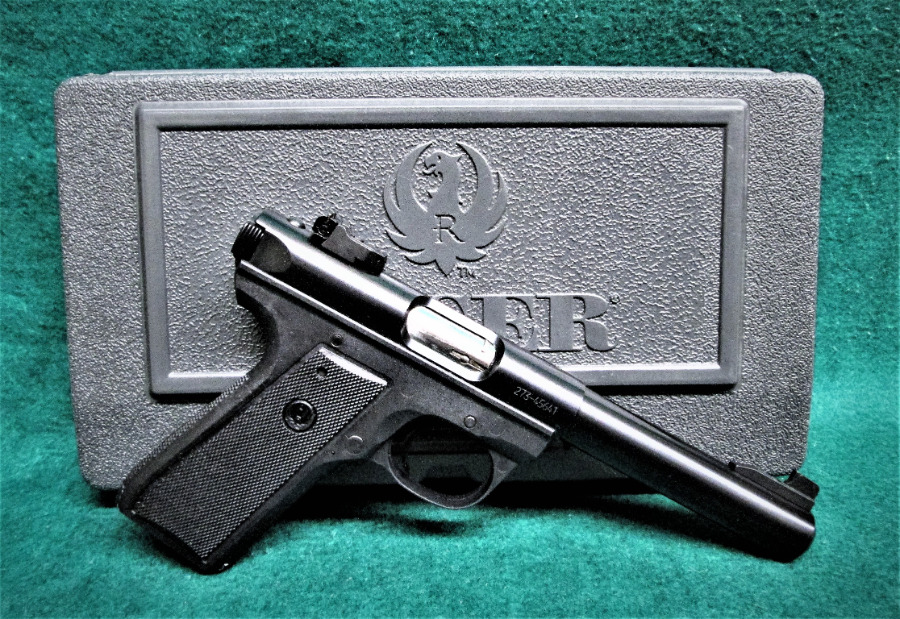
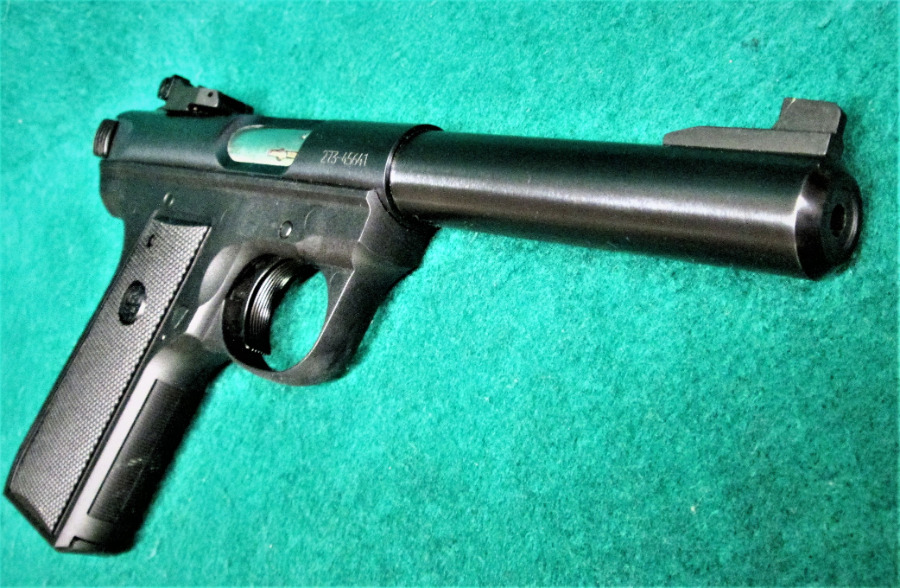
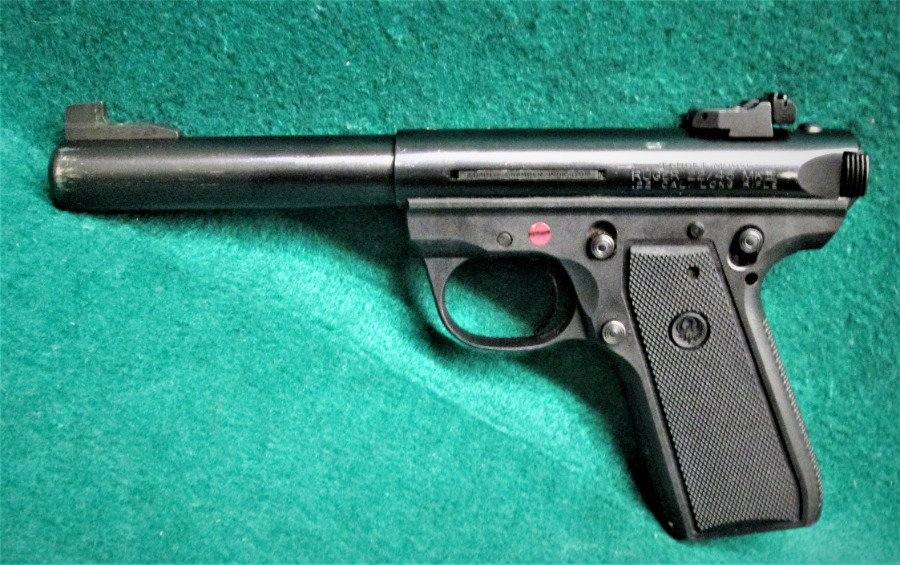
This is the pistol that put Bill Ruger on the firearms map! Since it was the first model of a pistol that he sold in the late 1940’s.
I have shot them many times and can safely tell you. That it is a great semiautomatic 22LR pistol!