


I have one of these and it’s a fine little pistol. I thought at first that it would have a nasty recoil. But I was wrong about that.
But it does have a sharp report (Noise) when I squeeze one off.
Also it printed out a very nice pattern at about 12 feet on paper at least for me. Just do NOT use Plus P ammo in it as it was NOT designed for it!
None the less I am very happy that I bought it when I had a chance. As it is a fine walking around gun.
Category: All About Guns
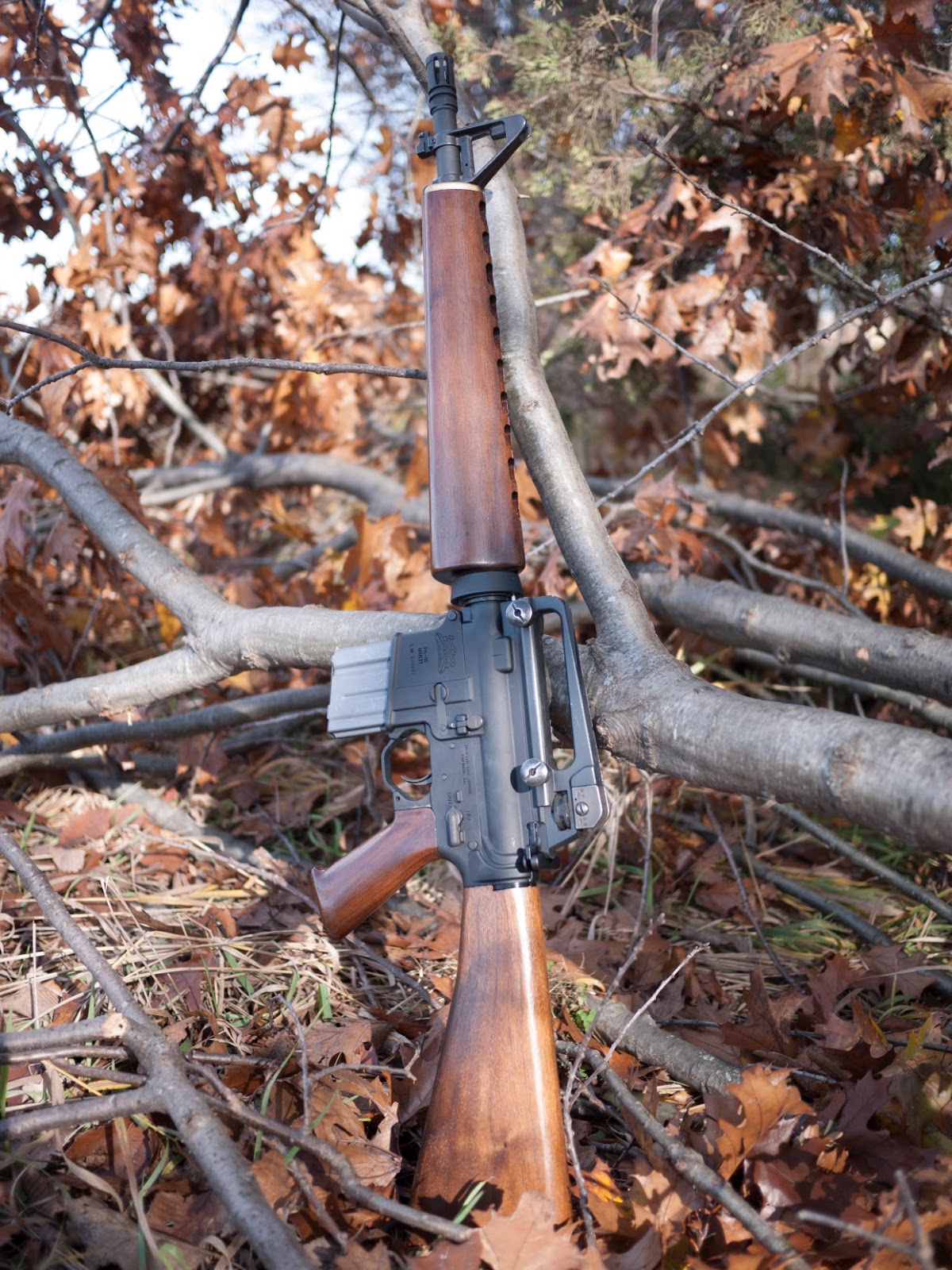
Categories
Dear Santa, I WANT ONE!!!! Grumpy
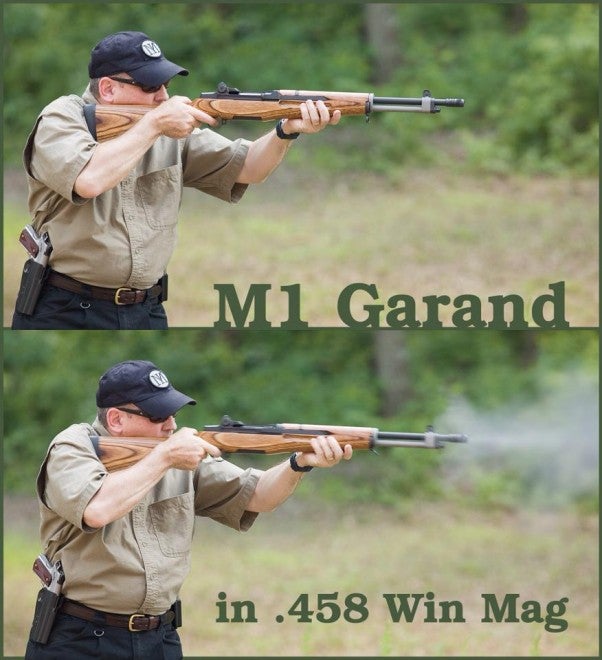
Back in early 2000’s, McCann Industries (known for their M1 Garand Gas Trap Adjuster) manufactured an M1 Garand in .458 Winchester Magnum.
Not made anymore after the passing of McCann’s primary gunsmith, the rifles are a fine example of ingenuity and practicality applied to big-game hunting.
At first, I flinched just thinking about it, but the few videos of it shooting shed some light on how this big-game cartridge is tamed.
While the base rifle was identical, McCann added an aggressive muzzle brake and a mercury cylinder to the stock to absorb and deflect the recoil.
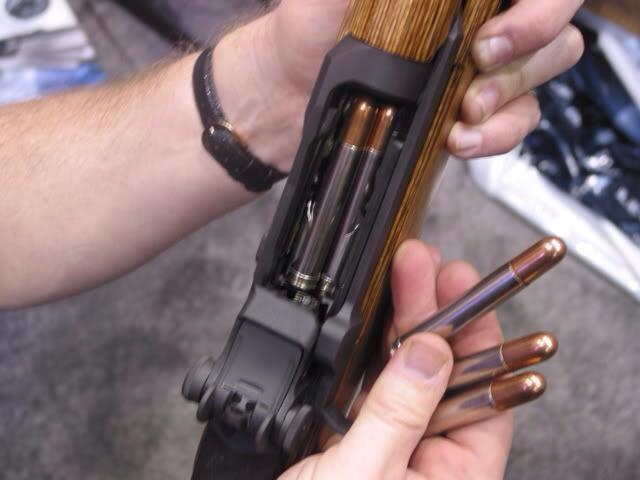
Not made anymore after the passing of McCann’s primary gunsmith, the rifles are a fine example of ingenuity and practicality applied to big-game hunting.
At first, I flinched just thinking about it, but the few videos of it shooting shed some light on how this big-game cartridge is tamed.
While the base rifle was identical, McCann added an aggressive muzzle brake and a mercury cylinder to the stock to absorb and deflect the recoil.
This poor thing obviously has seen some really hard service over the years.
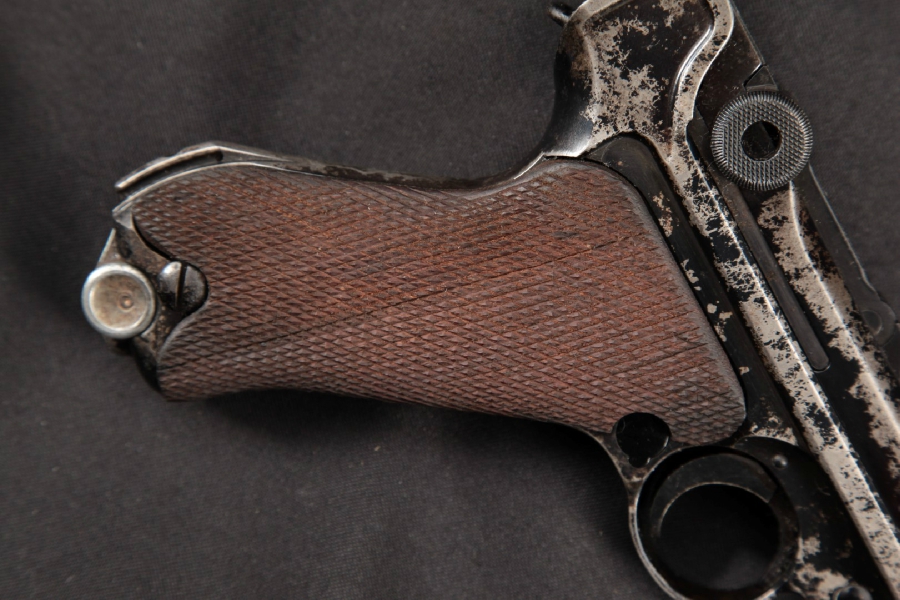
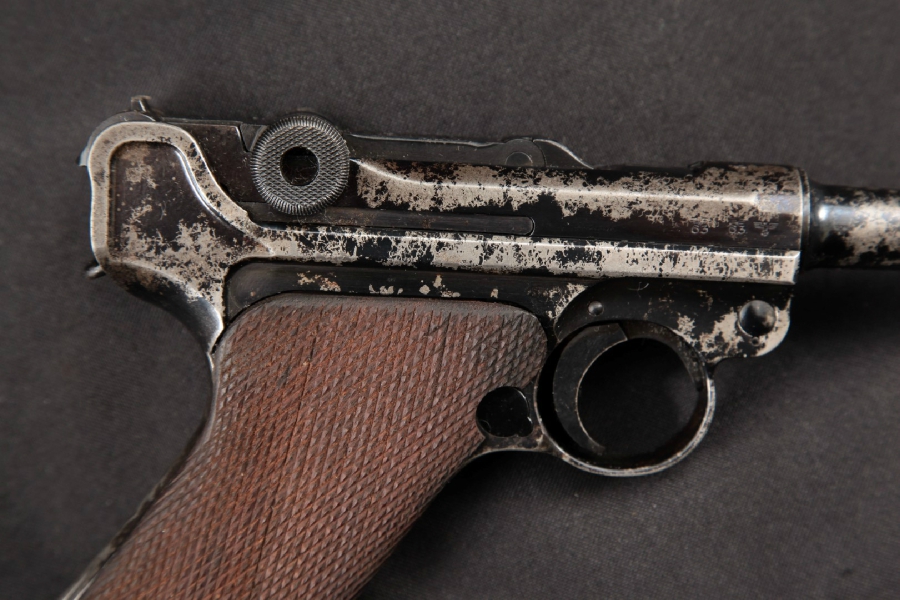
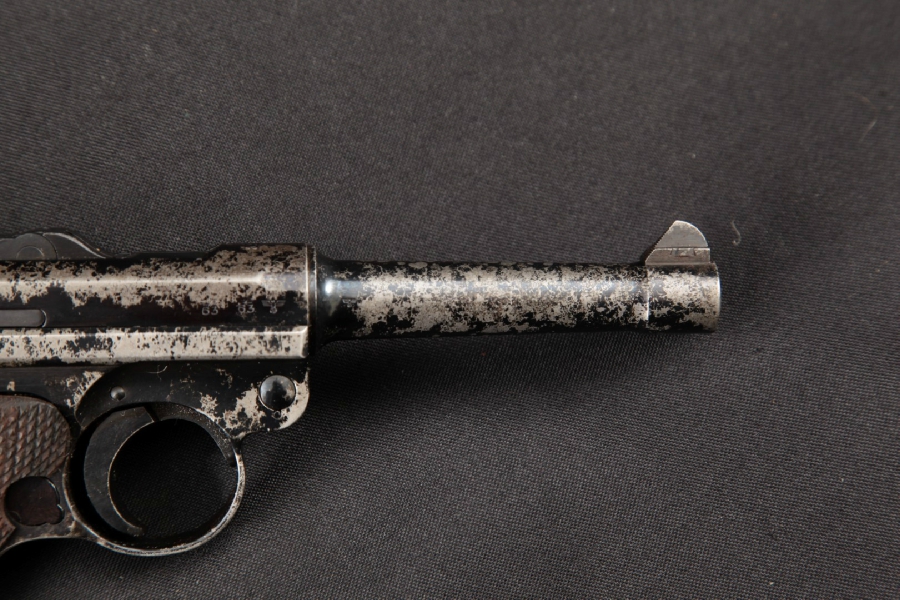
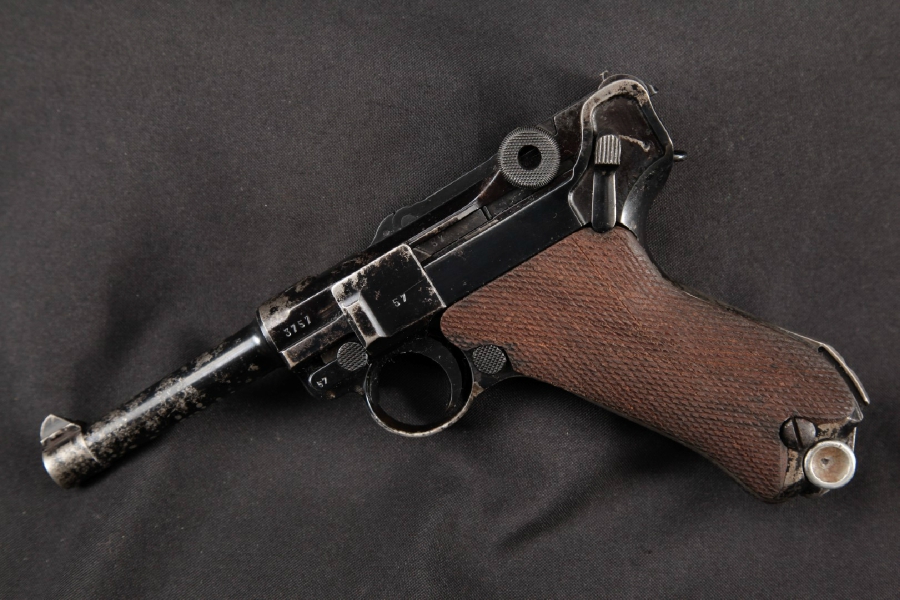
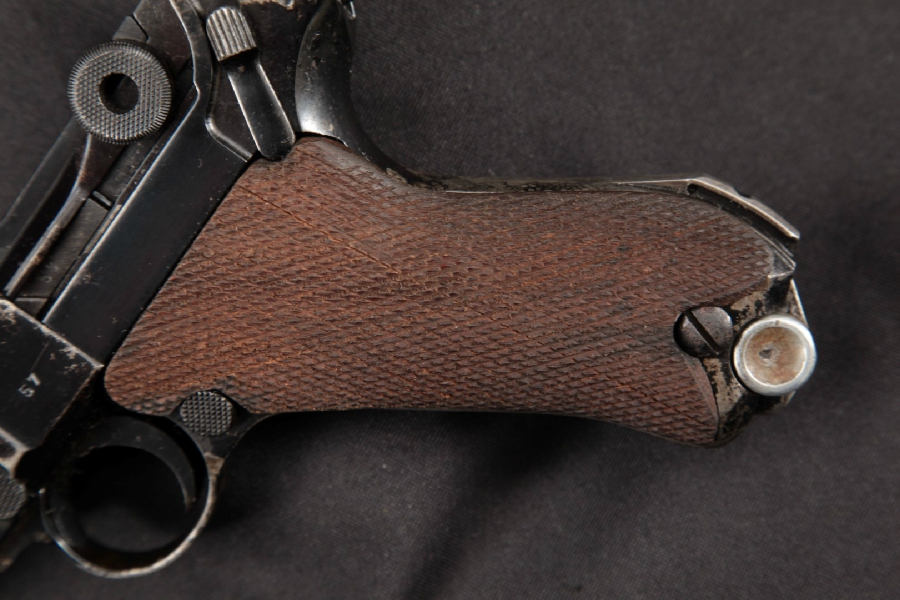
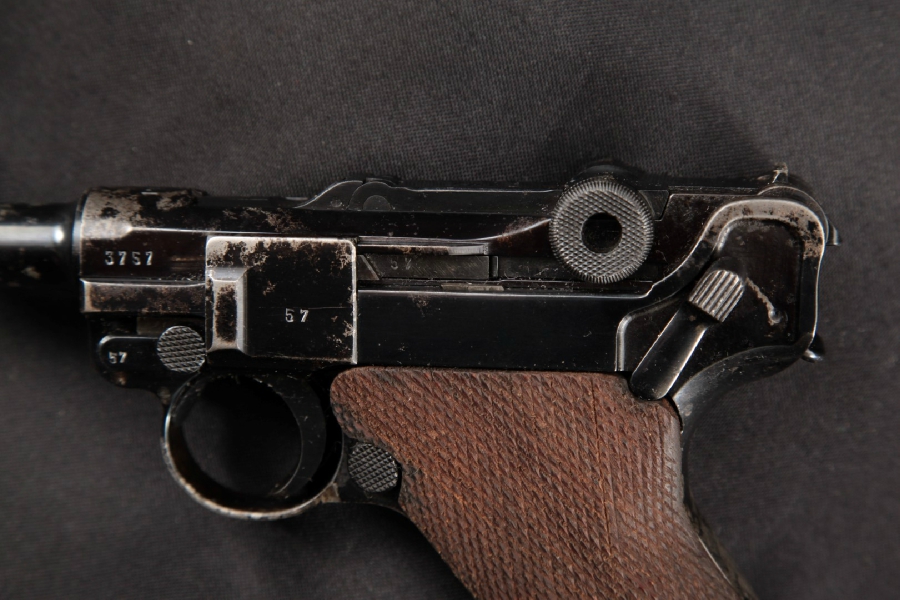
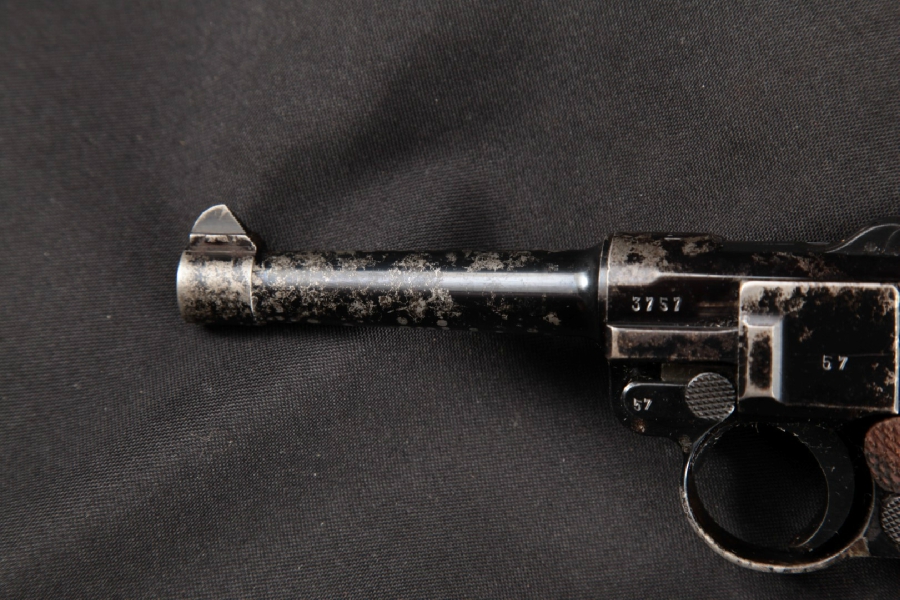
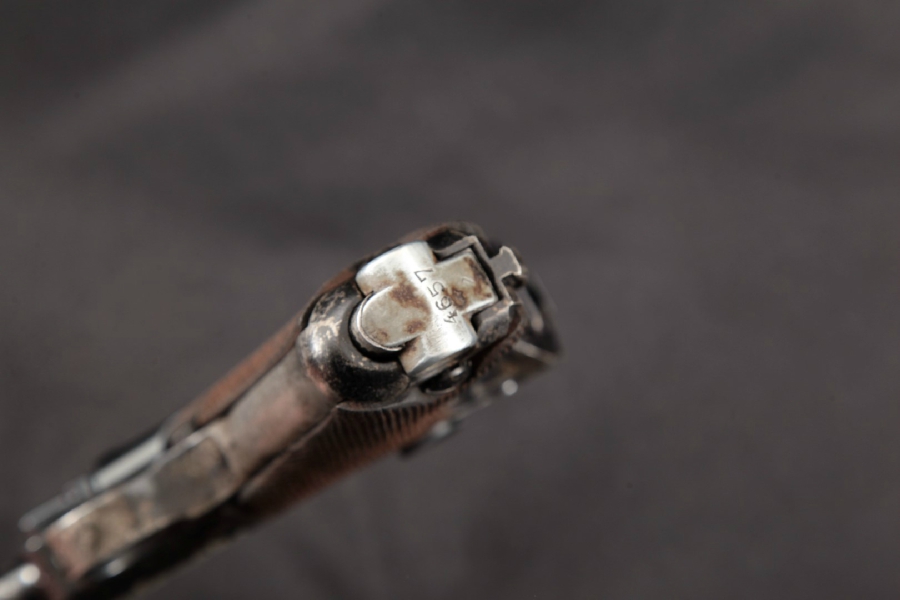
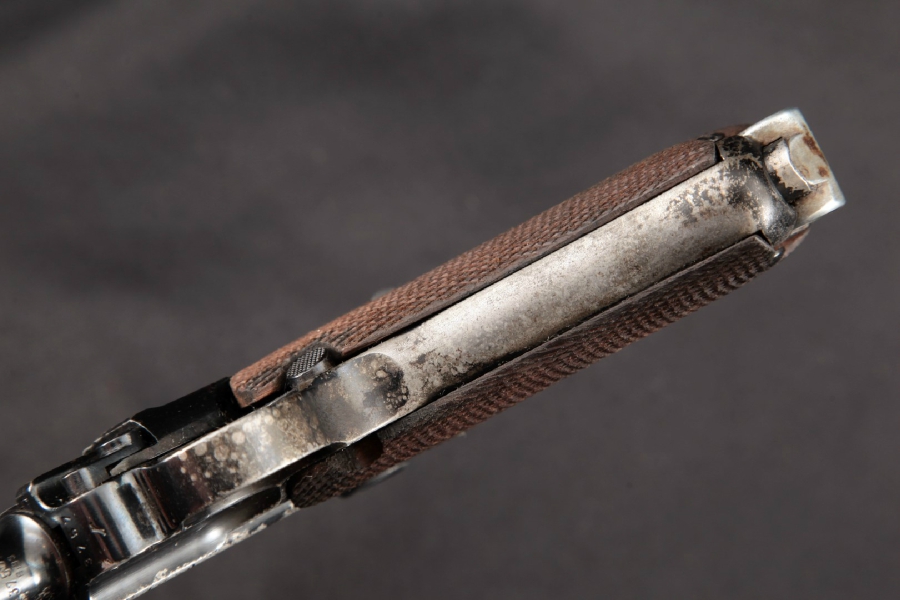
This gun also just goes to show us. The following, that guns are pretty tough and that the Germans just love stamping numbers on every part that the can.
I have been saving a few of these photos for a while. So I think that now is a good time to share them .
I hope that you like them!
Grumpy


I think that this a Drilling Gun


Your Best Hunting Partner!


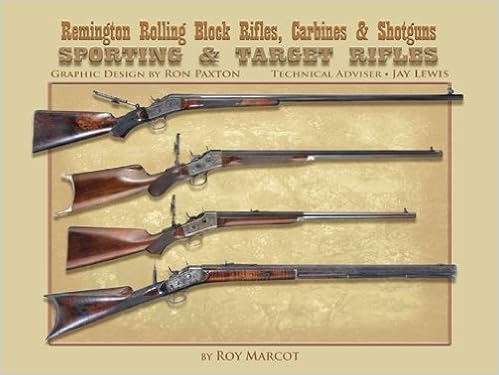
After the War between the States ended for the time being. A lot of Gun companies went belly up due to canceled Government contracts & demands.

For example – The US Army shrunk from over a Million men in 1865 to less than 40,000 in less than a couple of years. But then that was when we had some adults in the Government. Who took the Federal Budget as serious business.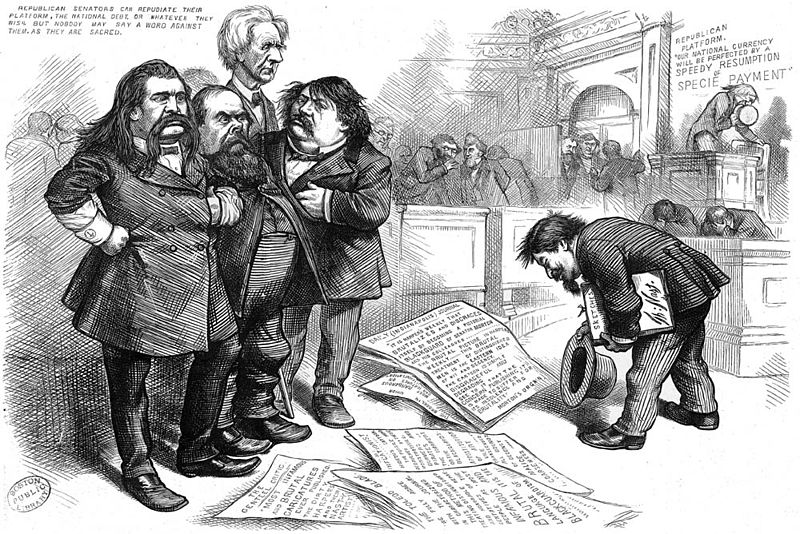

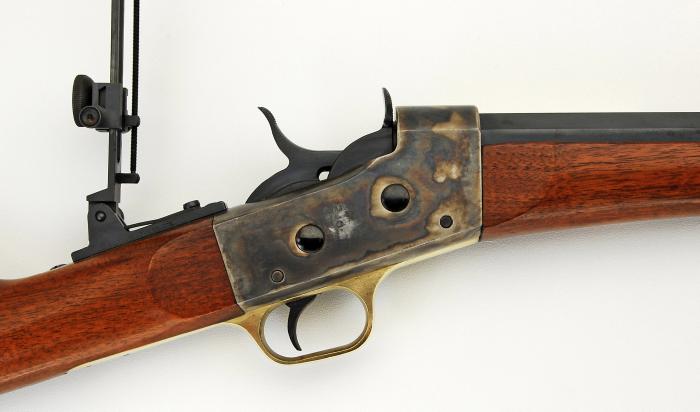
So what to do? Well Remington got very lucky and came up with the rolling block rifle / pistol. Heres some stuff about this tough, accurate gun.



Attachments area


Remington Rolling Block rifle
| Remington Rolling Block rifle | |
|---|---|
.jpg) |
|
| Type | Rolling block rifle |
| Place of origin | United States |
| Service history | |
| In service | 1867–1918[citation needed] |
| Wars | American Indian Wars, Franco-Prussian War, Russo-Turkish War, War of the Pacific, Philippine Revolution, Philippine-American War, Mexican Revolution, World War I, Italo-Turkish War |
| Production history | |
| Designed | 1864 |
| Manufacturer | Remington Arms Company |
| Specifications | |
| Weight | 9.25 lb (4.20 kg) |
| Length | 50.4 in (1,280 mm) to 53.3 in (1,350 mm) |
| Barrel length | 35.7 in (910 mm) to 37.4 in (950 mm) |
|
|
|
| Cartridge | .58 Berdan .50-70 .50-45 Carbine 12.7×45mmR Pontificio 12.17×42 mm RF 12.17×44mmR .45-70 .43 Spanish .43 Egyptian 10.15×61mmR 8×58mmR Danish Krag 8×50mmR .303 British 7.65×53mm Argentine .30-40 Krag 7.62×54mmR .30 Remington 7×57mm Mauser 6.5mm Daudeteau No. 12 .236 Remington 11 mm Danish Various Target/Sporting/Hunting Calibers |
| Action | Rolling block, Breech-loading, single-shot |
| Sights | Rear ramp & leaf sight, blade front sight |
The Remington Rolling Block rifle was a breech-loading rifle produced from the mid-1860s into the early 20th century by E. Remington and Sons (later Remington Arms Company). The action was extremely strong, and could easily withstand the increased pressure of the new smokeless powders coming into use by the late 1880s.
It was made in a variety of calibers, both rimfire and centerfire, including the 12.17×42 mm rimfire, 12.17×44 mm rimfire and 12.17×44 mm rimmed centerfire Swedish and Norwegian cartridges, .43 Spanish (11.15x58mmR), .50-70, .40-70, .45-70, and later in .22 caliber. Later models were produced in .30-06 Springfield, 7×57mm Mauser, and 8×50mmR Lebel.
Service rifle[edit]
In 12.17x42mmRF and 12.18x44mmRF (two cartridges that were interchangeable), and towards the end of its service life also 8x58mmR Danish Krag centerfire, it served as the standard service rifle of the Swedish Army from 1867 to the mid-1890s (when it was replaced by the Swedish Mauser) and in Norway as the standard service rifle from 1867 to the mid-1880s (when it was replaced by the M1884 Jarmann). In .43 Spanish it was the chief service arm of the Spanish Army from 1870–1893, and was used by reserve and militia forces for many years thereafter. Many Rolling Block rifles were used by Argentina before being replaced in 1891 by the new 7.65mm Mauser, and were also widely used by Egypt and Mexico. The Remington rolling block also became the standard service rifle of the Danish Army. During the Franco-Prussian War, France acquired 210,000 Rolling Block rifles to make up for a shortage of the standard-issue Chassepot.[1]

Remington Rolling-Block breech
Sweden and Norway (at that time in a union, the United Kingdoms of Sweden and Norway) adopted the rifle in 1867, being among the very first nations to adopt the Remington rolling block as their standard military rifle, and large numbers of Remington rolling block rifles and carbines were produced under license in Sweden and Norway. Around 250,000 military rifles and carbines and 85,000 civilian rifles in Sweden, were produced by Carl Gustafs Stads Gevärsfaktori (a government arsenal) and Husqvarna Vapenfabriks Aktiebolag, and about 53,000 military rifles in Norway by Kongsberg Vaapenfabrik.
During World War I, the British Royal Navy purchased 4,500 Rolling Block rifles in 7mm Mauser from Remington’s leftover stock after production had ended, issuing them to the crews of minesweepers and Q-ships.[2] In November 1914, production of the Rolling Block was resumed, in the form of a French contract for rifles in 8×50mmR Lebel, designated by France as “Fusil Remington modèle 1914”. 100,291 such rifles were delivered by 1916, and used to equip rear-line troops.[3]
Civilian use[edit]
Along with the Sharps rifle it was one of two rifles probably used more than any other by the buffalo hunters who hunted the American bison herds in the 1870s and 1880s.
Civilian Remington rolling block rifles, and later surplus military rifles, became very popular among hunters in Scandinavia, particularly for moose hunting, with ammunition for the rifles being commonly available on the civilian market into the 1920s-1930s.
Military users[edit]
 Argentina[1]
 Austria-Hungary[1]
 Belgium
 Brazil[1]
 Canada
 Chile[1]
 China[1]
 Colombia[1]
 Cuba[1]
 Denmark[1] ( 1867-1889 )
 Dominican Republic[1]
 Khedivate of Egypt[1]
 El Salvador[1]
 France[1]
 Kingdom of Greece[1]
 Guatemala
 Haiti
Haiti Honduras[1]
 Persia[1]
 Kingdom of Italy[1]
 Jamaica
 Japan[1]
 Mexico[1]
 Monaco: Compagnie des Carabiniers du Prince[4]
 Netherlands[1]
 Nicaragua
 Norway[1]
 Panama
 Papal States[1]
 Paraguay
 Peru[1]
 Puerto Rico[1]
 Philippines (1899): Katipunan[1]
 Spain[1]
 Sweden[1]
 United Kingdom[1]
 United States[1]
 Uruguay[1]
 Trinidad and Tobago
 Venezuela
 Yemen
Yemen


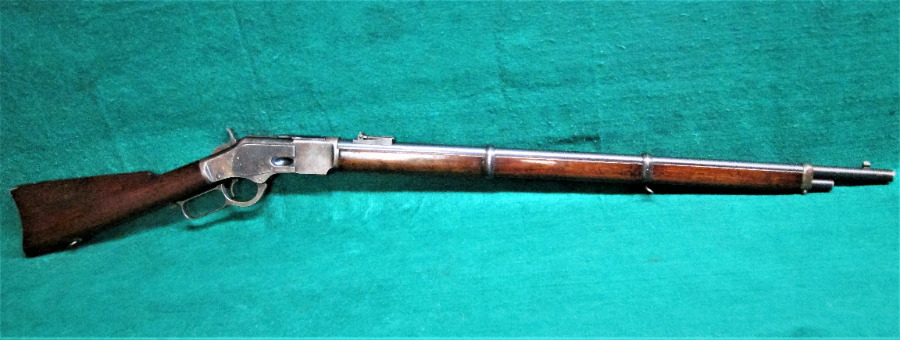
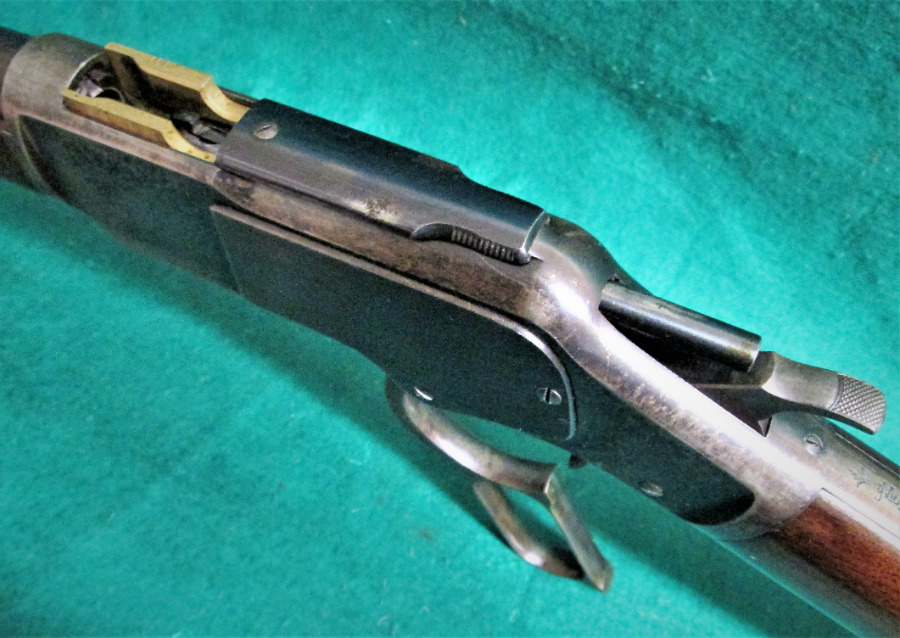
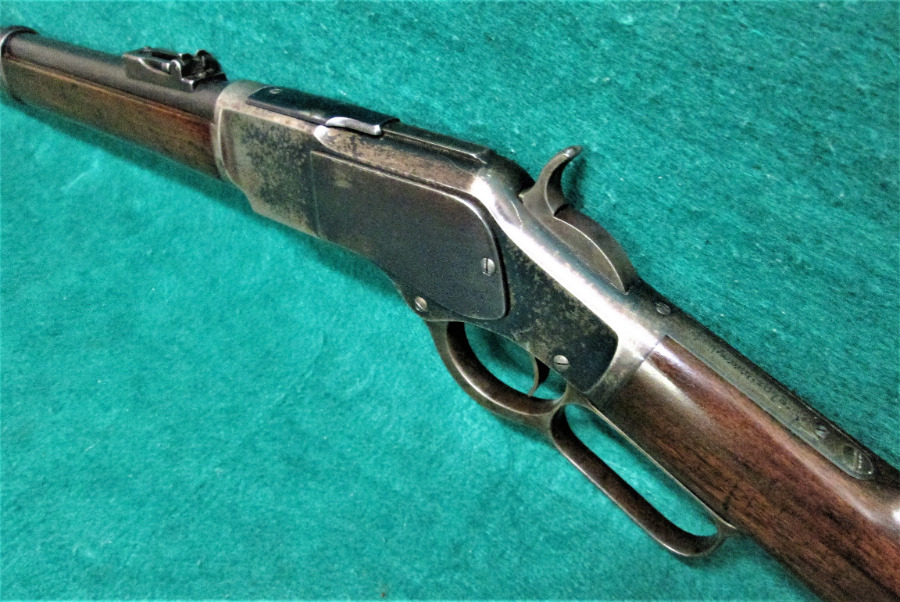
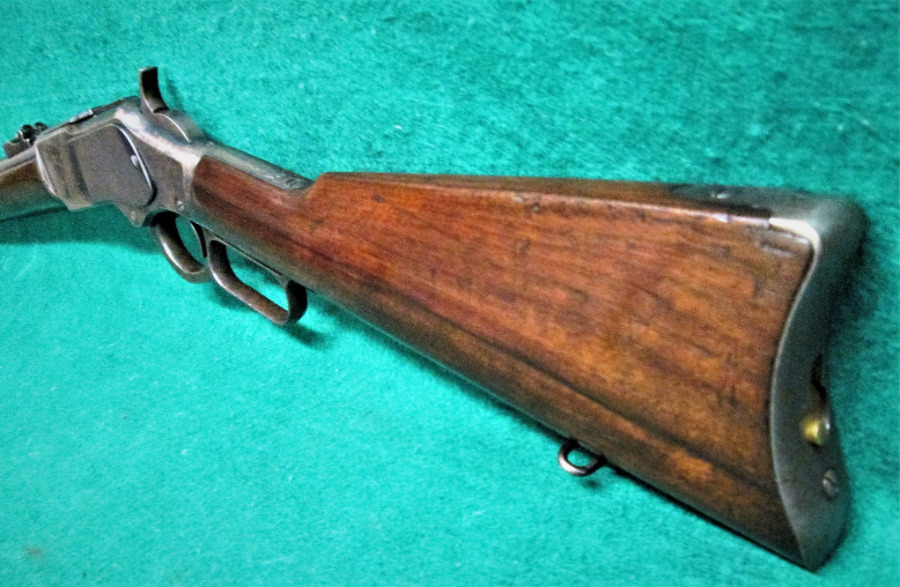
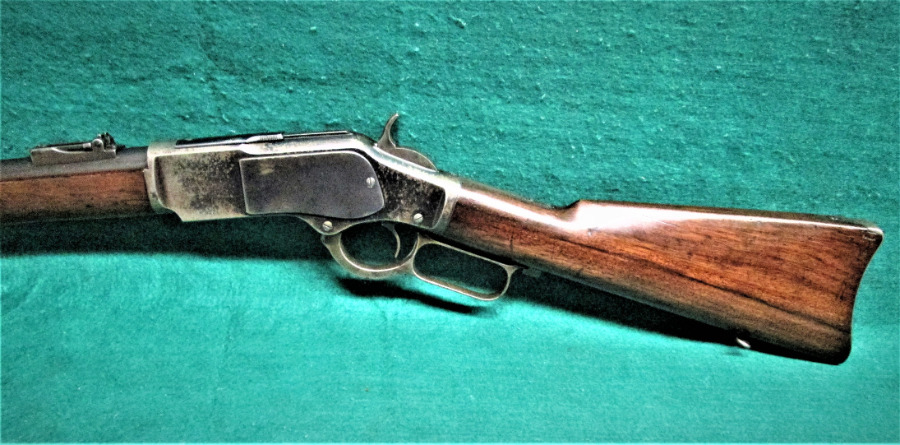
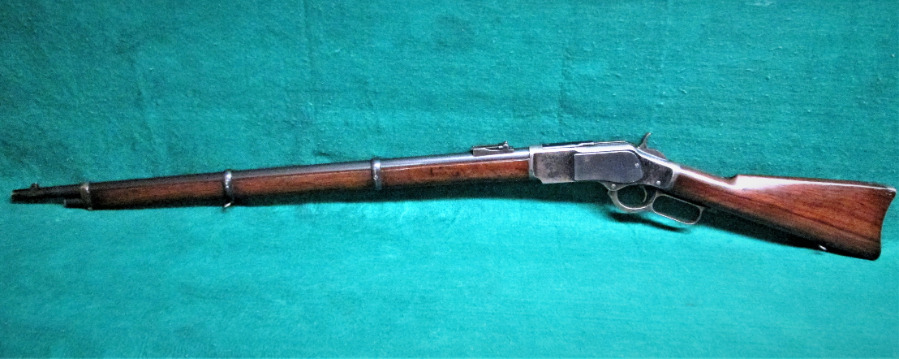
I am willing to bet that a 44-40 round would really hit from this rifle.
What will that extra long barrel to be able to provide space for all of the powder to burn off with no leakage. That a pistol would have.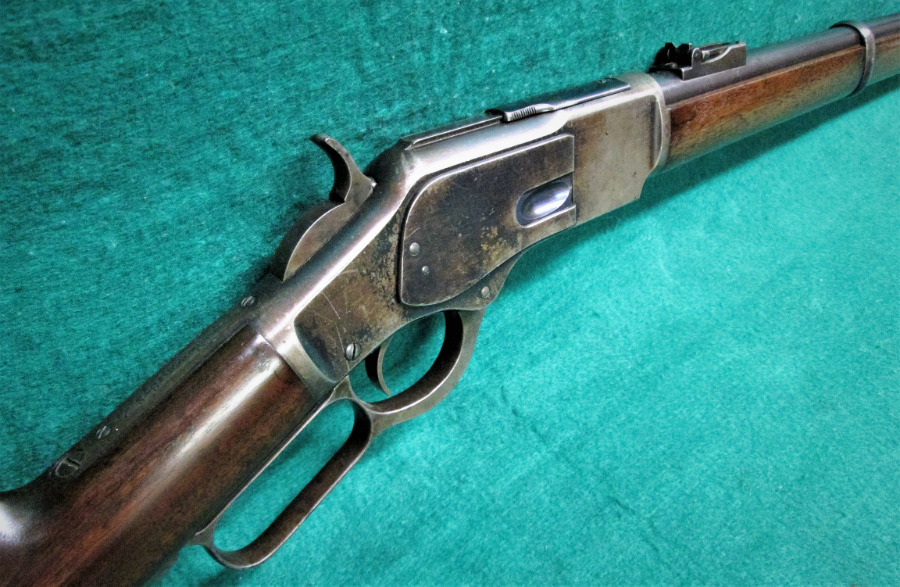
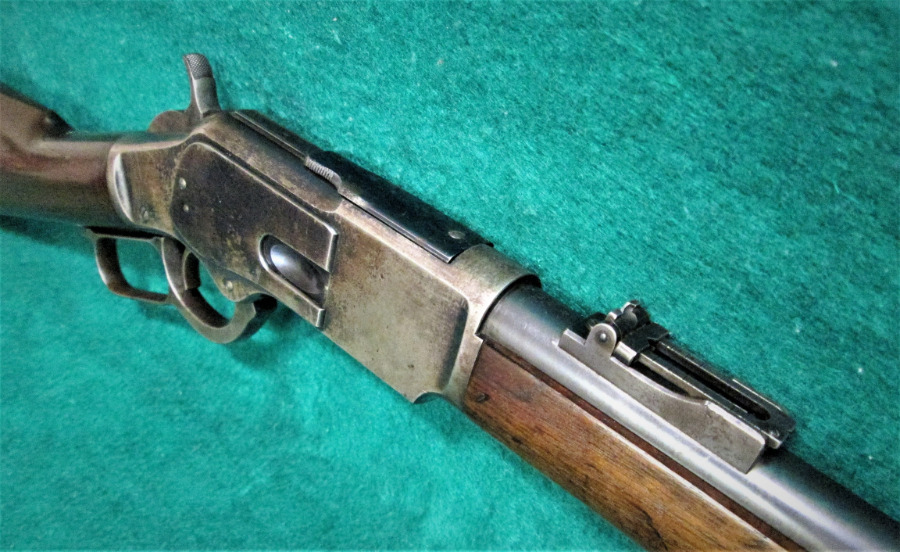
I like the rear sight also. As usually the the rear sight is the weak point of Winchester Lever Actions.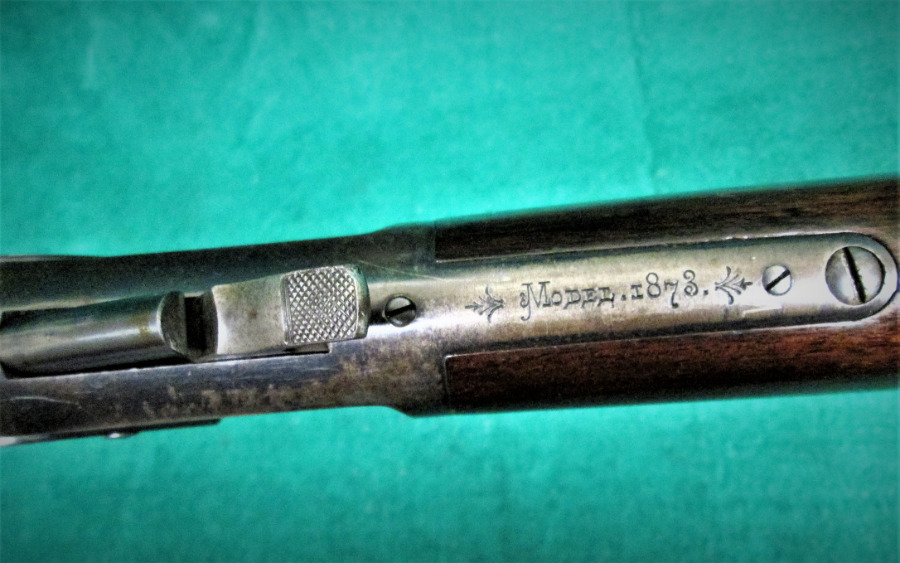
Categories
H&K Rifles

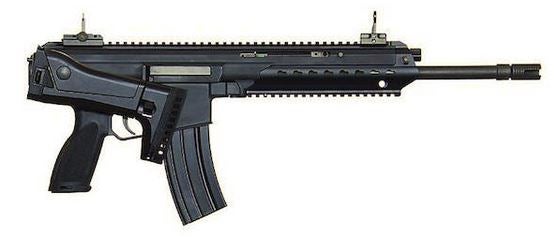

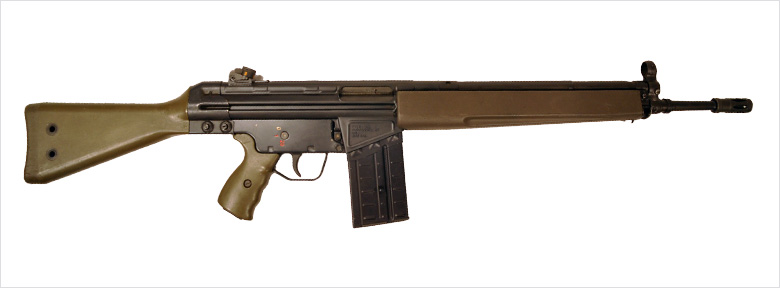
Now I have either owned, borrowed or shot most of the varieties of this very Germanic Rifle over the years now. So what I have found out about them is the following.
They are fun to shoot. So of course they are Illegal to own here in the Sunshine State.

They are very well built rifle. Even if they are a bit over engineered but heys it’s a German design.
They are pretty heavy. I am very happy that I did not have one in the Army!

But to be fair they do make a great pattern down range.
My Only real grip is that they are very expensive!
Here is some more information below
Thanks for everything!
Grumpy
G3
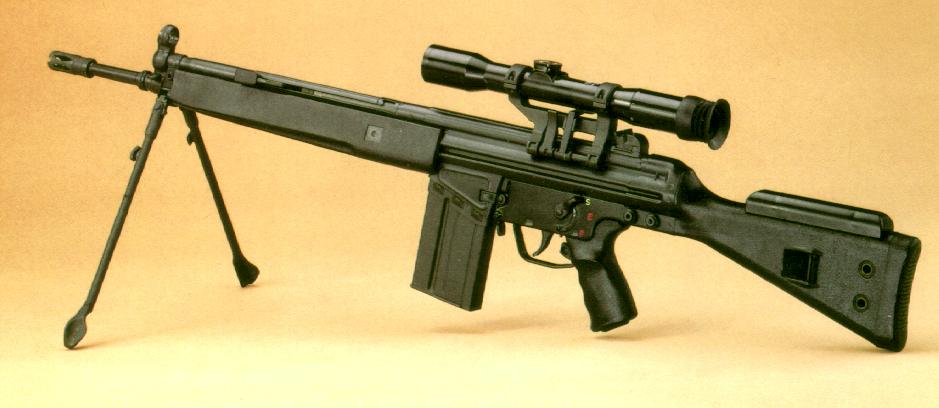
PTR Industries – PTR-91 Classic Wood HK-91 .308/7.62 HK91
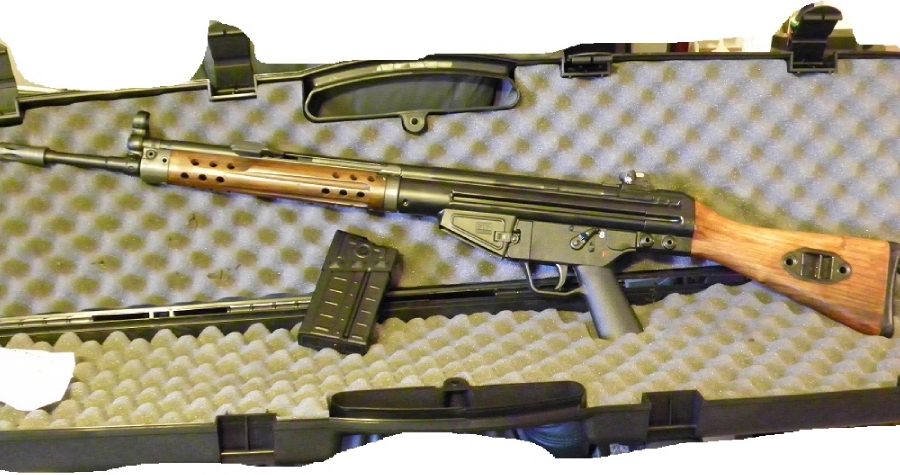
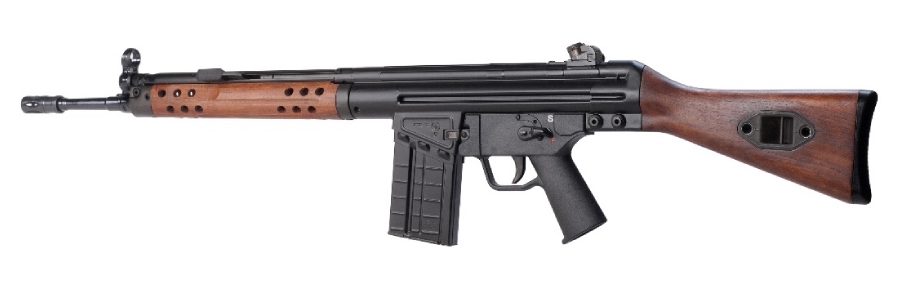
Heckler & Koch HK41
| Heckler & Koch HK41 | |
|---|---|

HK41 rifle with mounted scope
|
|
| Type | Semi-automatic rifle |
| Place of origin | West Germany |
| Production history | |
| Manufacturer | Heckler & Koch |
| Produced | 1964-1976 |
| Variants | HK41A2, HK41A3 |
| Specifications | |
| Weight | 10.9 lbs (4.95 kg) (empty magazine) |
| Length | 42.5 in (1,080 mm) |
| Barrel length | 19.7 in (500 mm) |
| Height | 8.26 in (210 mm) |
|
|
|
| Cartridge | 7.62×51mm NATO |
| Action | Roller-delayed blowback |
| Feed system | 5-round or 20-round double column, and 50 round single stack drum magazine detachable box magazine |
| Sights | Hooded post front, rotating diopter sight |
The Heckler & Koch HK41 is a semi-automatic version of the Heckler & Koch G3battle rifle; it was produced by Heckler & Koch for the civilian market in the 1960s.[1]
It is not to be confused with the similarly titled Heckler & Koch G41.
Contents
Current status
It is estimated that fewer than 400 HK41s were produced and even fewer imported into the U.S. for civilian consumption.
Today, HK41s can sell for anywhere between $3,000 and $6,000 depending on the condition and the economy at the time.
An original 1966 model with the push-pin hole in the receiver can sell for around $9,000. These are very scarce because most of them were used as hosts for full-auto conversions prior to the May 1986 machine gun ban.
A full-automatic converted HK41/HKG3 can sell for over $20,000.
Variants
There are two models of the HK41:
- HK41A2: Fixed stock and semi-auto “SE” trigger group.
- HK41A3: Retractable 1-position stock and semi-auto “SE” trigger group.
Versions of the HK41

1962 HK G3 semi-automatic receiver.
- (1962): There are 3 different date stamps from this year in the United States, all with differences. By far the most desirable, and also the rarest, are the 3/62. These models are identical to the G3 Automatic Rifle except for having a swing-down semi-auto “SE” grip assembly.
- It was literally able to be converted to a full-auto G3 by changing the trigger group and bolt, no need to change the location of the push pin or any of the other features. They were all marked G3. This is why it is the most desirable of all semi-automatic G3s, and they are also incredibly rare with less than 3 known to exist in the United States (known as Santa Fe “swing downs”) still in semi-automatic form. Most were registered as full-auto hosts.
- Their value as full auto hosts is no more or less than any other G3, it is their value as a semi-automatic which is extremely high in comparison to other G3s, having sold on Gunbroker for over $20,000 on two occasions, matching the prices of full automatic G3s. It might be one of the only examples of a fully automatic transferrable that is valued the same whether or not it is in the registry. 7/62 is the second most common date from 1962, and like the March labeled guns was marked G3. However, the push pin hole was moved so that a full automatic trigger pack could NOT be installed without major machine work. They were stamped G3. The most common of 1962s are the 11/62, which is identical to the 7/62 except that part of the batch were labeled HK41s. They had the altered location of the push-pin hole, therefore requiring substantial work to turn into a fully automatic G3. There is a mix of G3 and HK41 markings among these date stamps. H&K changed their name to “HK41” in an attempt to stay ahead of West-German Laws which prohibited civilian ownership of the G3 Automatic Rifle.
- (Early 1966): Unlike the 1962 Semi-Auto G3s, these 1966 models had the “push-pin” hole in the correct place and thus could be quickly converted to an automatic by replacing the grip assembly with a full-auto “SEF” trigger group. These had a magnesium phosphate parkerized finish, matching hardwood furniture (stock and forearm grip) and were date stamped “6/66”. Even though these versions have the push-pin hole in the receiver, they were grandfathered in as approved firearms after the passage of the Gun Control Act of 1968.

1966 model HK41 receiver.
- (1966–1973): These models have strips of metal welded into the receiver and matching cuts made in the “SE” trigger group to only allow the insertion of an “SE” trigger group. These versions still had the a functional “flapper” magazine release and the push-pin hole. These rifles had a matte black finish with a matching black stock and forearm grip, and were date stamped “11/66”. Very few of the 1966 models got into the U.S. However, between 1967 and 1974, none of these models were imported into the U.S, in part due to the Gun Control Act of 1968.
- (1974): These models had the locking-pin tabs eliminated on the front end of the grip assembly, and the corresponding locking-pin hole (“push-pin” hole) and bushing at the base of the receiver had a “U”-shaped piece of metal inserted to prevent the attachment of a full-auto “SEF” trigger group. This makes the “flapper” magazine-release paddle between the trigger guard and magazine well inoperative, making the redundant release button on the right-hand side of the receiver the only way to eject the magazine. It also had the cocking-lever endcap altered to prohibit the mounting of most models of the HK G3 bayonet and had the snap rings on the barrel removed so that it couldn’t fire rifle grenades. These were painted black with a semi-gloss finish and were date stamped “1/74”.

1974 model HK41 receiver.
United States Importers
- Golden State Arms Co., Santa Fe Division [Pasadena, CA] — From 1962 to 1966.
- Security Arms Company (SACO) [Arlington, VA] — From 1974 to 1975.
- Heckler & Koch [Arlington, VA] — Took over the US import business themselves in 1976
HK91 Variants
There are four models of the HK91:
- HK91A2: Fixed stock and semi-auto “SE” or “0-1” trigger group.
- HK91A3: Retractable 1-position stock and semi-auto “SE” or “0-1” trigger group.
- HK91A4: Fixed stock, semi-auto “SE” or “0-1” trigger group and Select Polygonal Bore.
- HK91A5: Retractable 1-position stock, semi-auto “SE” or “0-1” trigger group and Select Polygonal Bore.
There were only 50 HK91s imported in 1974. For these, H&K dropped the month from the date code and replaced it with the number “19” in order to completely spell out the year of manufacture. Since they were built on surplus HK41 receivers, the end result was “19/74”.
For the 1975 models, they stamped the year without the “/” in the middle. The reasons why Heckler & Koch renamed the HK41 in 1974 are unclear.
Part of their reasoning could have been that they wanted to change the perception of the rifle as being a semi-automatic sporting rifle instead of a paramilitary rifle.
Furthermore, gun laws that were adopted in West Germany around that time prohibited the civilian ownership of paramilitary rifles. (As a side note, HK41s that were sold in West Germany came without flash suppressors because they were prohibited under the West German gun laws).
As a result, Heckler & Koch modified the weapon with a plate welded inside the receiver to prevent the mounting of a full-auto “SEF” fire control group and re-designated the rifle as the Heckler & Koch HK91.[1][2]
Late pattern HK41s and HK91s are virtually identical in appearance (except for the receiver markings and the retaining hole of the cocking tube end cap) and all their parts are interchangeable. The last few HK91s that were delivered to the U.S. in 1989 were blocked by customs after
President George H. W. Bush issued an Executive Order banning the importation of “non-sporting” rifles. These were slightly modified, to remove “non-sporting” features like the flash suppressor, and the receivers re-stamped as the HK911, forming a transitional model between the HK91 and the HK SR9.

Greek-made HK91 copy with optional PSG-1 grip, bipod and 30-round magazine.
The HK91 is rather valuable in the United States firearm market since it was banned from further importation by executive order in 1989. Only 48,817 HK91s were imported into the U.S. prior to 1989.
The retail price for an HK91 in the late 1970s was roughly $380 for the standard A2 models and $50 more for the A3 version. Prior to 1979, H&K did limited production runs of HK91s with polygonal rifle barrels. These were only $10 more than their standard counterparts.
Today, original HK91s often fetch over $3500. The early 50 1974 “SACO” imports that are in good condition and have the old style “SF” marked grip frame housings can bring a premium and are very desirable among H&K collectors.
So are the 1988 and 1989 “Chantilly” models, which have the same satin semi-gloss black finish as the later HK SR9s.
Licensed copies of the G3 and HK-91 were produced in Greece by Hellenic Arms Industry or “EBO”, using factory tooling purchased from Heckler & Koch.
A small number of these HK-91 clones, which are functionally and aesthetically identical to the German-made rifles, were imported into America by Springfield Armory, Inc. and sold under the designation SAR-8.These rifles, which ceased being imported in 1994, are not to be confused with later Springfield-made SAR-8 model rifles which feature cast aluminum receivers and are considered of markedly lower quality, being valued at far less than the original Greek models.
As of today, HK-91 clones are available, such as the PTR-91 (Formerly JLD), which are built on the tooling used by arms-maker FMP to make the receivers of the Portuguese military’s versions of the G3, the M/961 and M/963.
Heckler & Koch’s receiver tooling was sold to the American company Ohio Rapid Fire, which was in the process of setting up to produce receivers until the passing of the company owner, Todd Grove. Ohio Rapid Fire has since closed its doors in 2010.
https://youtu.be/EU2HxW3eMXc
https://youtu.be/SLz4A_6XgzA


|
Sep 21 (3 days ago)
 |
|
||
|
||||

Attachments area

 |
Click here to Reply
|
