Category: All About Guns

For those of you who are fans of the combat Tupperware, the wait is over!
The Glock Gen 5 has arrived. GA team got their hands on the new Glock 19 and Glock 17 Gen 5. Aside from some cosmetic changes and few functional changes, they function just as we come to expect from Glock — flawlessly.
Updated Ergonomics
Goodbye to the finger grooves. The Gen 5 gets back to the roots of the original. Considering this is one of the first things requested when customizing, it just made sense. The Gen 5 grips look like a Gen 1 and Gen 4 hybrid. It has the texture of the Gen 4 with grip of the Gen 1.
Although similar to the Gen 4 models, it comes with the modular back straps and beavertail that allows users to swap out from two different sizes of back straps each with or without the beavertail.

A left side slide release makes the Gen 5 models finally fully ambidextrous, as it retains the Gen 4 reversible magazine release. I have only owned one Glock from the pre-finger groove times, so this is relatively new to me.
I don’t feel it is a huge difference, but I like the feel of the new model. The coating is a “nDLC” finish on the barrel and slide. According to Glock, this is more durable and tougher than previous finishes.
It’s currently exclusive to Gen 5 models.
The magazine well has been flared, which is nice for both tactical and competitive shooters. Looks like Glock caught the fever of the SIG P320X5 on this one, but it is a nice touch. Reloads with the Gen 5’s are a snap.
Competitive shooters are going to love this update, and it will pretty much make the purchase of a Gen 5 mandatory. For Production class add on magwells are a no-no. But if your gun happens to come from the factory that way — it’s good to go.
The new Glock Gen 5 magazines feature an orange follower and floor plate that is extended in the front for faster mag changes. These mags are also interchangeable with previous models.
Article Continues Below
 The biggest upgrade is what Glock calls the new “Marksman barrel.” This change supposedly halves the accuracy of the old Glock standard. Before, the barrels came from the factory with 4 inches at 25 yards as the standard. Now the bar has been raised to 4 inches at 50 yards.
Time will tell if this matters to most shooters, but it is nice to know the possibility is there. When I field tested the guns for accuracy against a Gen 4, the new model did have a slight edge.
It also remains to be seen, if Glock will make the new barrels in Gen 3 for all the poor people stuck in Commie-fornia. An interesting point is the new barrel drops the polygonal rifling in favor of regular rifling.
There have been major changes to the geometry of the safety plunger. This is the part that makes the Glock drop safe. It is now angled, which makes for a better trigger pull out of the box.
The entire trigger group has changed, meaning your 5-gallon bucket of disconnectors and different springs is now a boat anchor. No doubt the aftermarket will be scrambling to catch up. The Gen 5 is still not a custom-tuned single action, but it is an improvement.
The coating on the Gen 5 is a Glock proprietary finish called nDLC. This, we are told, is the toughest wearing finish every applied by Glock. I suppose it will take a few thousand draws from the holster to tell, in my experience the Glock finish was already among the best.

The internals got a bit of a facelift as well, with the return to a two pin rather than 3 pin frame. Glock says the Gen 5 will only be available in 9mm, and much of the old pin design was directly related to the 40 Cal.
As a believer in 40 S&W, this is a bit of bad news to me. The takedown lever has been fully redesigned, switching from a leaf spring to a coil spring. The striker has changed, along with the firing pin hole. It is now tear-drop shaped, to allow more tolerance for foreign objects in the firing pin channel.
This is supposed to offer a substantial decrease in the odds of a light strike due to grime. We were told that the Gen 5 Glock has set a new record in testing for mean stoppages between rounds at 11,000.
The Gen 5 comes with the Glock standard plastics sights, but also now offer Ameriglo tritiums as an option. I used these sights at the Glock Operators Course earlier in the month, and they are a great set up. If you plan on using your Gen 5 as a duty or carry gun, I recommend them highly.
Glock Operators Course

Earlier in the summer, I had the opportunity to run an abbreviated Glock Operators Course with the new Gen 5. The Glock Operators Course (GOC) teaches you to drive or “operate” a Glock. And at least the chief architect of the course can lay some claim to the word, my friend Joseph Parent.
Parent is an old hand from 2nd Force Recon, a former SOTG instructor, and a 3 Division USPSA Master class shooter. Parent can sling a pistol, as can all of his assistant instructors. He has assembled an all star cast of other gunfighters.
I really liked that his crew had a mix of U.S. military, police, and SWAT members. No one organization has a monopoly on the best training or ideas. Every one involved in GOC is a consummate professional, bringing years of experience to the venue. Or in the case of his instructor named “Gen1” four decades.
I hesitate to call the GOC a basic course because no one likes a basic course. The market demands a Level 54 Paladin with ninja stars and SWAT rolls course. A better description would be a course with something for shooters at all levels. It is not for new shooters that is certain. To even get in the door, you must be active Military, Police, an NRA instructor or a Glock Shooting Sports Foundation (GSSF) member.
 Much like my preferred teaching style, the course begins with a rapid overview of the basics. This is very important. You can’t build a foundation on sand. The overview is designed to offer tweaks to existing skills or identify missing parts. You would be amazed how many experienced shooters have chunk of knowledge missing. Every skill is both explained and demonstrated, then done at speed live fire.
The course involved lots of work from the draw, and we utilized BladeTech holsters. Every skill imaginable with a pistol is covered, from draws to one handed shooting, to shooting on the move. Our course was compressed from two days into one, so the pace was kept high.
There is enough here to challenge anyone, and if you carry a Glock, it is worth checking out.
For more information about the Glock Gen 5, click here.
To purchase a Glock pistol on GunsAmerica, click here.
What we have to put up with in California
Department of Justice (DOJ)
Approved Gun Safe Requirements for Transporting Firearms in California
“How do I legally carry firearms in my car, truck or motor home in the state of California?”
- Under California law a concealed handgun can legally be transported with a motor vehicle without a permit only by carrying it:
- Unloaded
- Locked in the vehicle’s trunk or in a separate locked container other than the utility or glove compartment
- If the vehicle does not have a trunk, it must be carried in a “locked container” separate from the utility or glove compartment.
- Penal Code Section 12026.1 defines “locked container” as a secure container that is fully enclosed and locked by a padlock, key lock, combination lock, or similar locking device. Locked container does not include the glove compartment or utility compartment.
- Ammunition cannot be attached to the handgun in any manner. Under most circumstances, a firearm is considered loaded when there is a live round of ammunition “…in, or attached in any manner to, the firearm, including, but not limited to: in the firing chamber, magazine or clip thereof attached to the firearm…” For example, a semi-automatic handgun with an empty firing chamber and a loaded magazine inserted in the magazine well is considered loaded. There is no prohibition in the state codes against also carrying ammunition within the same motor vehicle or compartment in the vehicle, as long as the firearms are not loaded and ammunition is not attached in any manner to the firearm. – Penal Code Sections 12025, 12026, 12031.
- “Utility compartment” is not defined in the Penal Code. A handgun should not be transported in the center console (even if locked) or in the storage area present behind the rear seat in most hatchback type automobiles. Because of the uncertainty in current California law, it is inadvisable to use the various storage compartments found in sport utility vehicles.
- While it is legal in California to carry an unloaded handgun in plain sight in the passenger compartment, it is not advised. It can lead to unfavorable attention and an encounter with the police. If the gun slips between the seats or otherwise out of sight, it is no longer “in plain sight” and therefore illegal.
- Penal Code Section 12026.2 states that carrying a handgun in your car even in a locked container is only for the purpose of transporting from one specific location to another (going to the range, going hunting, etc.). It is illegal to carry a firearm without a permit, even in a locked container in your car, for general purposes such as self-defense.
- These requirements for handguns also apply to the transportation of “assault weapons” and .50 BMG rifles.
- When driving a motor home, it is treated as a motor vehicle and all requirements listed above apply.
This information was obtained from the California Rifle and Pistol Association’s Summary of California Gun Laws and Basic Safety Rules, 38th Revision – 2010, and from Attorney Bruce Colodny, GunLaw.com. Be prepared with transporting a firearm in California. It’s serious business, and misunderstanding or not knowing the laws can land you in a spot you’d rather not be.
Categories
How NOT to Load an M1 Garand!
(Been there & saw it happen to somebody else! Bottom Line – A lot of Anglo-Saxon profanity was spoken!)
At long last, Springfield Armory has decided to join the 10mm resurgence. This week we got not one new 1911 TRP Operator chambered in 10mm, we got two! This is a great day for the Cult of the 10mm, of which I am a fully fledged disciple.

The wait is over! Pictured on top is the longslide TRP (Tactical Response Pistol) Operator with a 6-inch barrel. Below it is the 5-inch version. Both are chambered in 10mm.
Springfield Armory makes what I think are the best bang for your buck 1911s out there, offering base models from around $650 all the way up to $4,000 custom-shop jobs. Whatever pistol you decide to purchase, base model or competition piece, you know you’re getting your money’s worth. That’s a fact. For years, though, many of us have been clamoring for our friends in the Land of Lincoln to make a production 10mm. Sadly, those cries that fell on deaf ears — until now! Today, we have our new champions!
Worth the Wait

I proudly belong to the Cult of the 10mm.
You may ask, “Why did it take so long?” It has a lot more to do with engineering than marketing. Springfield Armory is a brand that I respect because they don’t bring half-baked ideas to market. They knew that a .45 ACP frame with a different slide would not take the abuse of full power 10mm. That is exactly the problem that reared its ugly head in the ’80s when 10mm was introduced. The 1911 frames of those day were cracking under 20,000 rounds, which is also part of the reason why 10mm fell from grace.
To correct this problem, Springfield Armory needed two things. The first was advances in metallurgy. If you have purchased a gun in the last 10 years, you know how much the game has changed. Not only are modern guns more durable than they have ever been, but you can pull a Minute of Angle rifle off the rack at Walmart with staggering regularity.
***Want to Win a Free TRP Operator 10mm? Springfield is giving one away! Click HERE to Enter***
The second thing they needed was to enhance the frame to take the punishment. As many of you know, 10mm operates at much higher pressures than .45 ACP. We’re talking a difference between 20,000 PSI in .45 ACP and around 35,000 PSI in 10mm. A tougher frame and slide are necessary to take on those heavy loads. Plus, 10mm has long been the domain of roll your own, and most of us leave the low recoil stuff to the candy asses at the FBI.
Specs 5-Inch/6-Inch Operator

How sweet it is. “S.A. 10mm”
- Caliber: 10mm
- Magazines: Two 8-Round Stainless Steel
- Barrel: 5- or 6-inch Stainless Steel Match Grade, Fully Supported Ramp Bushing / Fully Supported Ramp Bull
- Sights: SA Tactical Rack Rear, 3-Dot Tritium/ Fully adjustable, 3-Dot Tritium
- Trigger: Springfield Armory Gen 2 Speed Trigger
- Grips: VZ Alien Dirty Olive G-10
- Frame: Forged Steel, Accessory Rail, Octo-Grip Front Strap, Ambi Thumb Safety & Black-T Finish
- Slide: Forged Steel w/Ball Cut & Front Serrations, Black-T finish
- Recoil System: 18.5#
- Height: 5.5-inch
- Length: 8.6 inch/ 9.6-inch
- Weight w/ Empty Mag: 40 oz. / 45 oz.
- Price: $1,790/ $1,842
1911 TRP Operators

Overlaying the 5-inch version on top of the 6-inch.
The resulting creation is a work of art. Both new 10mm guns are what Springfield calls “Tactical Response Pistol (TRP) Operators” models. Basically, it means they have Picatinny rails on the dust cover. Not only does this add weight to absorb recoil, it also provides thicker steel on the dust cover.
Compared to a .45 ACP TRP Operator, the 10mm is thicker still for further longevity. It is almost boxy and has been widened all the way back to the trigger guard. The slide is also thicker comparatively, which combined with the smaller bore of the barrel, shows the difference between this and other 10mms.
The new TRP 10mm pistols are essentially identical, with a 5- and 6-inch barrel option. Why would they do that? Velocity. All us real 10mm nerds know, it is one of the rounds that gains speed significantly in longer barrels. A 1-inch difference means about 50 feet per second with factory ammo, more if you are building your own.

One of the differences between the two is the barrels. The 5-inch version features a normal barrel with a barrel bushing. While the longslide features a bull barrel, with a bushingless fit.
Since 10mm is a round with many purposes, it makes sense to have both options. The 5-inch model is almost exactly the same footprint of a full size 1911, with slight dimensional thickness differences. Still, this should make it a lot easier to find holsters. It makes for a great duty gun.
The 6-inch model is geared toward handgun hunters, or for use as a backwoods gun. Living where I do in Idaho, the potential of dealing with a bear or a mountain lion is very real. If that day comes, I want all the velocity I can muster. The 6 inch is obviously heavier, and looking at the two overlayed, you can see why. Not only is the dustcover longer, but the Picatinny rail was extended on the 6 inch. The difference in felt recoil is amazing. The 6 inch is tame enough for anyone, the 5 inch recoils noticeably harder.
Fit and Finish
Springfield Armory has built a couple of 1911s in their day, so it should come as no surprise that the fit and finish is fantastic. Both come with ambidextrous safeties, Springfield’s own crisp Gen 2 Speed Trigger, and Black-T on the frames and slides, which is a self-lubricating and corrosion-resistant finish. Both feature new dirty olive green G10 slabs from VZ Grips. The texture is very aggressive. Exactly what I want in a 10mm, and I also like that they are thicker than normal. Better purchase from more surface area, though any 1911 grip panel will work. The front strap and mainspring housing feature a new scallop style checkering, known as SA’s “Octo-Grip,” which is both pretty and functional. Extended beavertail safety and front/rear cocking serrations are also standard.

Sights are another place where the two versions differ.

Both have tritium, but the 5-inch has fixed rear sights whereas the 6-inch has fully adjustable ones.
The primary difference, aside from the barrel, is the sights. Specifically, the rear sights. Though both are tritium night sights, the rear is use-specific. The 5 inch features a fixed rear, with melted outside edges, and a shelf front for one hand use. The 6 inch features a target-style rear, which is adjustable. The 5 inch features a normal barrel with a barrel bushing. The 6 inch features a bull barrel, with a bushingless fit.

Trigger break on both models is 4.5-5 pounds.

Grips feature the Octo-Grip on the front strap and the VZ G10 slabs in Dirty Olive.
These guns are both beautiful and functional, a must have for the 10mm fan. I got to first shoot them over a month ago, at a release event in Vegas. From round one, I knew I was keeping at least one of these. So what does a proper 10mm Cult member need besides what comes in the box? Glad you asked.
Ammo & Mags

Each model comes with two stainless steel 8-round mags.
Step one, I like extended magazines for 1911s. I rarely carry a 1911 concealed, and I was leaning toward the 6-inch Joker gun, which would just be silly to stick in your pants.
From my USMC days, I prefer a 10 rounder for a duty gun. The factory magazines flush fit at 8 rounds, but why not have two more? 10mm single stack magazines are tricky, so I did a bunch of research. One brand really seemed to have it dialed in, Tripp Research. Looking at their offerings, they do seem to have very well- built magazines. For 10mm, they offered two lengths, both with a 10-round capacity. They had to do this in order to keep one model competition legal.
***Want to Win a Free TRP Operator 10mm? Springfield is giving one away! Click HERE to Enter***
ESP Class of IDPA has a box that pistols must fit in, with the magazine inserted. With a 10 round 1911 magazine, this is tight. The tradeoff is that magazine is so short it is more difficult to seat fully loaded than its bigger brother. The difference is about ¼ inch, but it matters. I ordered both, and both ran great. But if you don’t care about ESP, the longer of the two is what I recommend. So far I love these magazines, they were a great addition to the package.

To feed the beasts, look no further than Federal Premiums Vital Shock and Speer’s new Gold Dot.
Step 2, What to feed em? Fortunately for me, I know some people. Speer gave me early access to the new Gold Dot 10mm, and it proved to be an excellent option for these guns. This is the original projectile, scaled up for a man’s gun. I could not be happier with how these performed. The 200-grain bullets gave excellent penetration and expansion in freezing cold ballistics gel, going to about 15 inches. Velocity was roughly 1,100 FPS out of the 5 inch, 1,160 FPS out of the 6 inch.
Also on the testing block was Federal Premium Vital Shok, a 180-grain Jacketed Soft Point. This was designed as a hunting round. Personal protection and hunting have different needs, as animals tend to be thicker than humans. The Vital Shok gave an insane 38 inches of penetration. Out of the 5-inch gun, velocity averaged 1,300 FPS, while out of the 6, we got 1,360 FPS. That is some serious energy on target!

All 38 inches of penetration from the Federal Vital Shok.
For my personal needs, I plan on staggering these rounds in a magazine. A tag team of Gold Dots and Vital Shoks should solve any critter or biped problem I am likely to face.
And I Purchased the…
At a retail price of around $1,800, these 10mm guns are loaded with features, so much that I had to have one. I have elected to buy the 6 inch, though both guns are excellent choices. Sometime in the next 6 months, look for a follow up as I try to burn the barrel out with my secret stash of Centimeter Candy.

X Marks the Spot! Two fantastic production guns. You really can’t go wrong with either.
Visit Springfield Armory to learn more about these Operators chambered in 10mm.
Shop GunsAmerica to buy your new Springfield 1911 today.
Categories
M3A1 GREASE GUN caliber .45 ACP
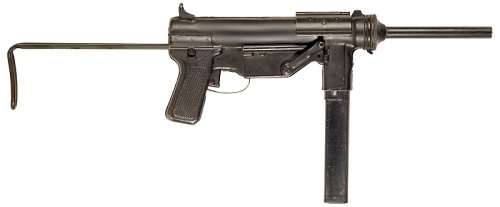
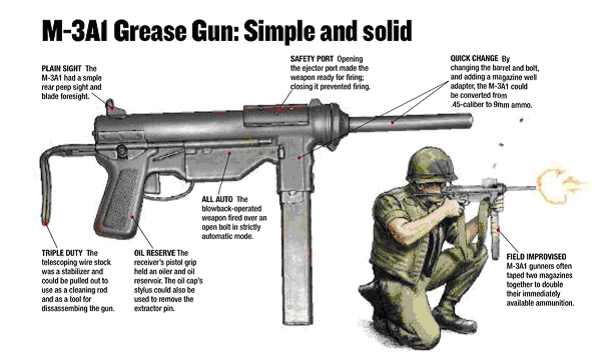
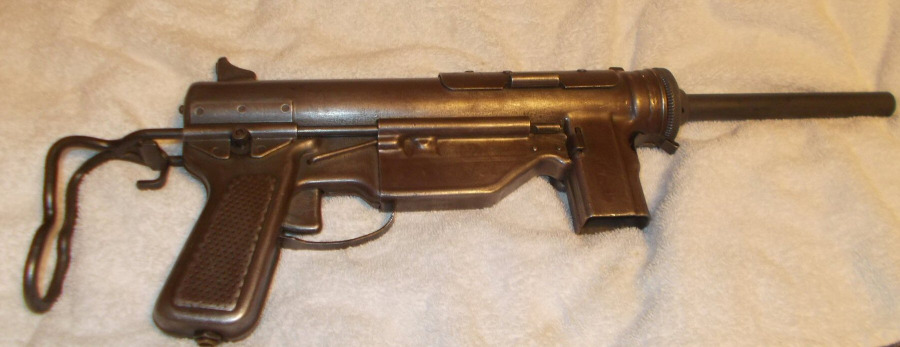
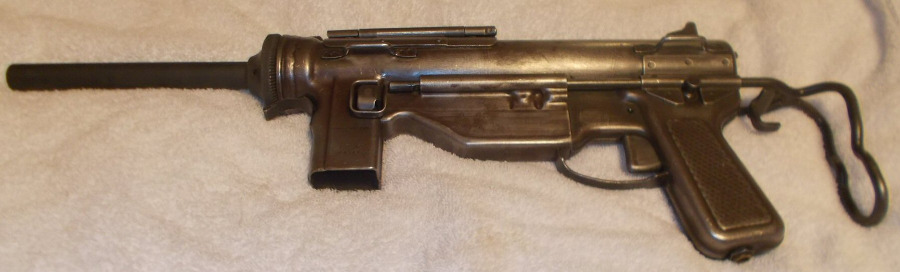
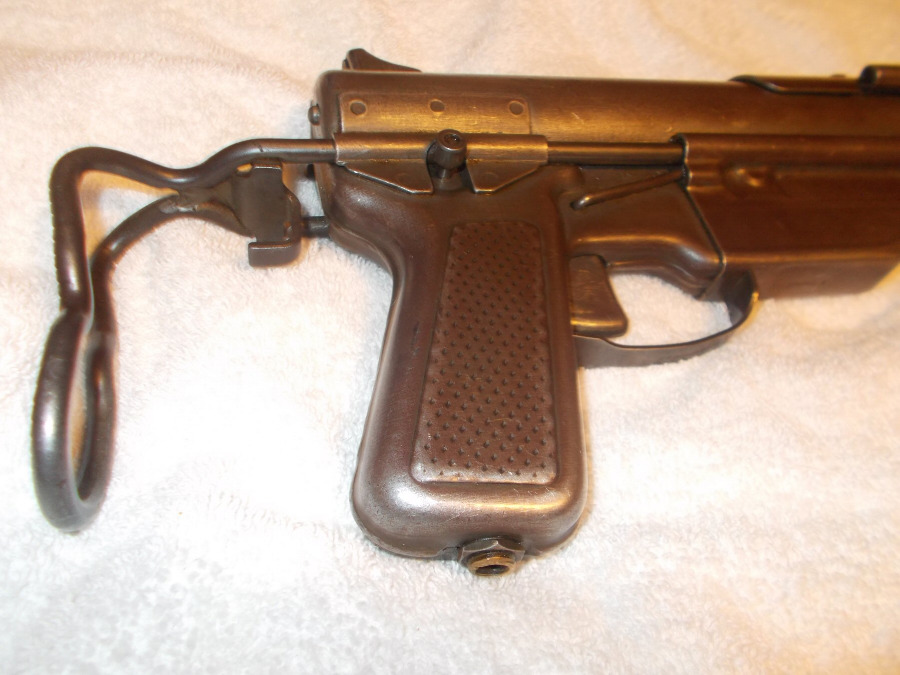
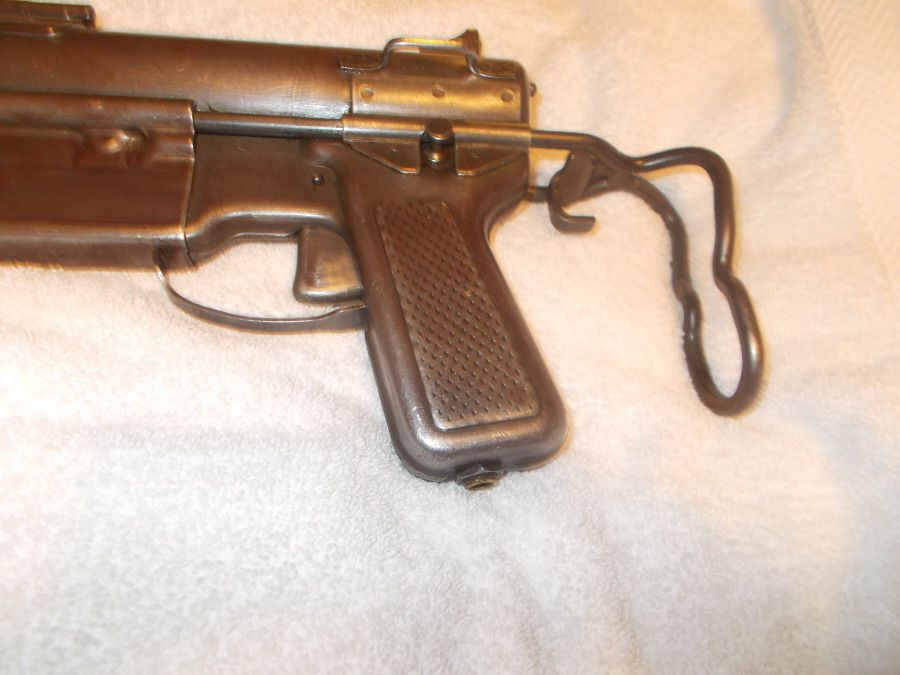
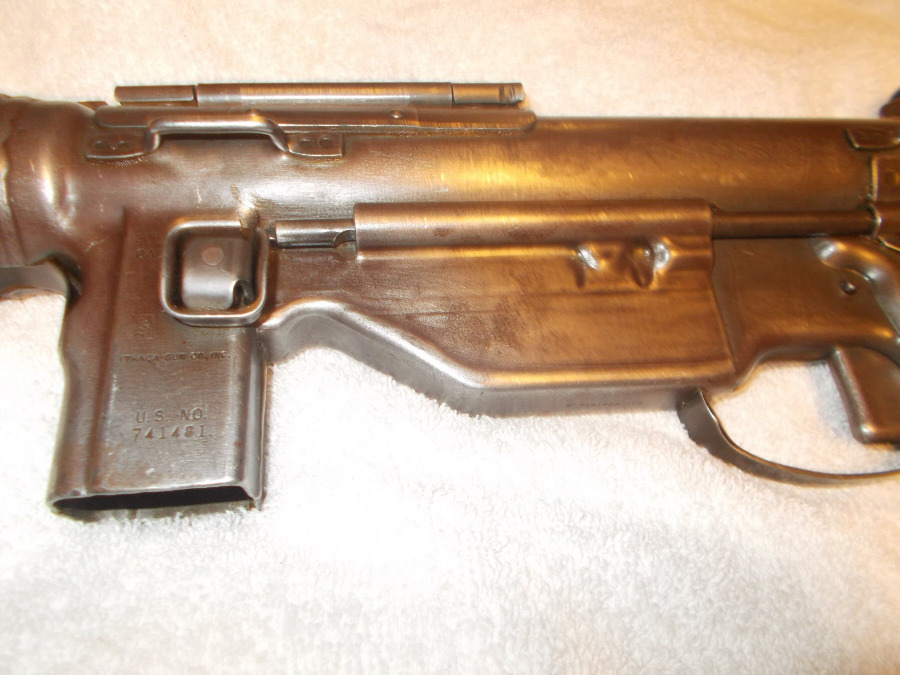
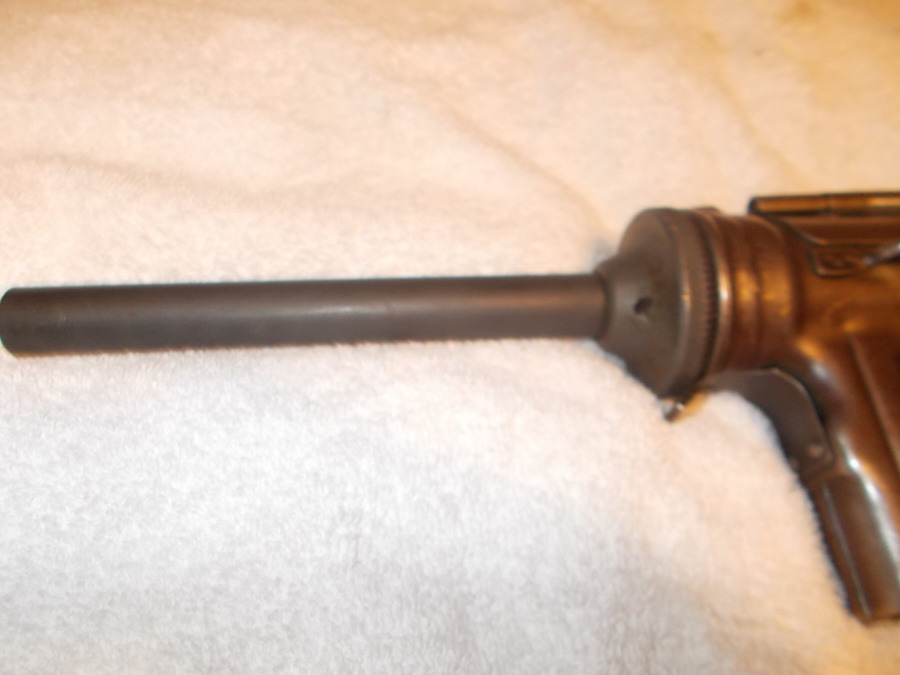
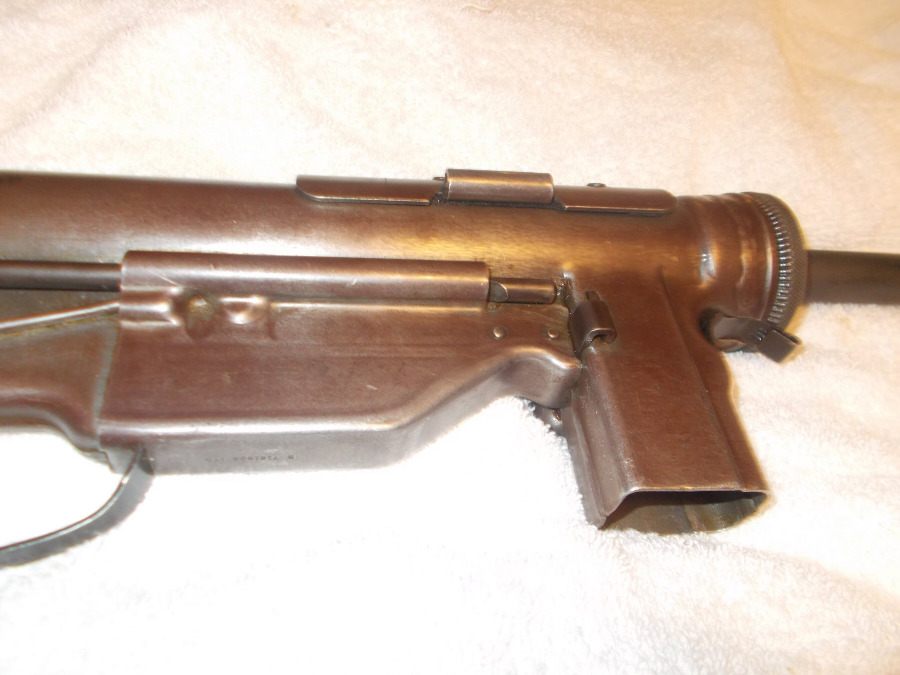



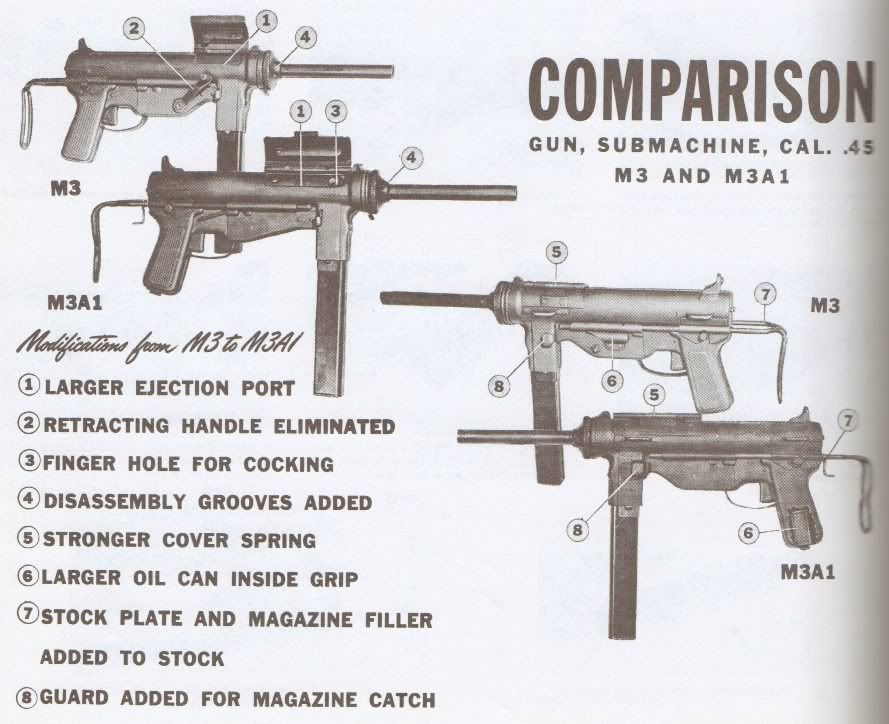

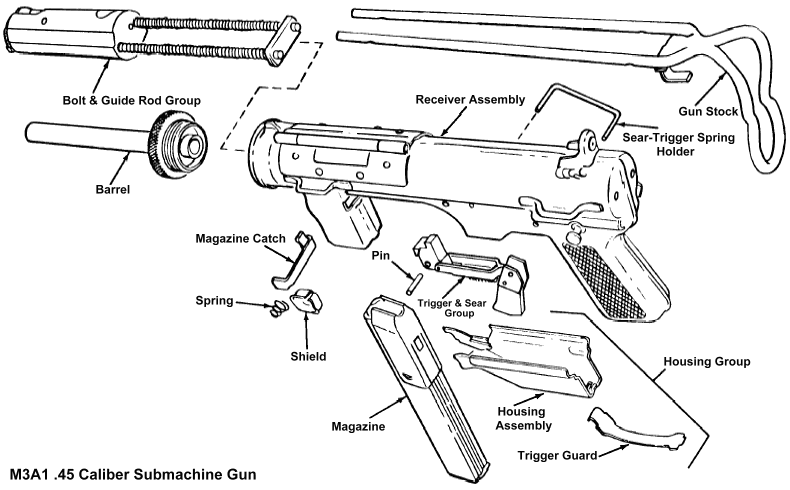
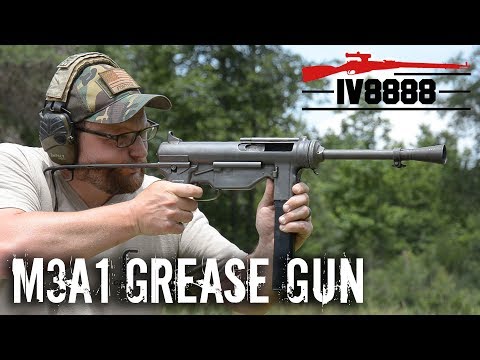


I have been able to fire off a couple of rounds with this sturdy rifle. From which I found that is a well built and fairly accurate rifle for me. considering that they had iron sights.

The only reason why I do not go out and buy one. Is that the ammo is too hard & expensive to shoot. Oh well!
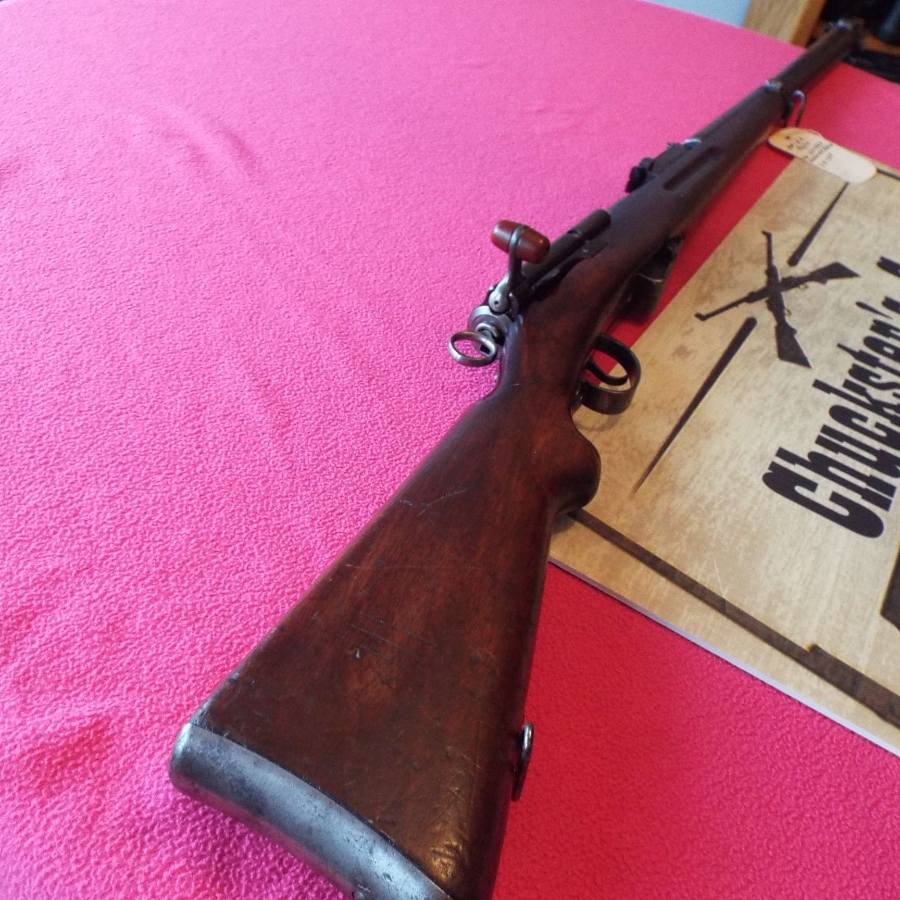
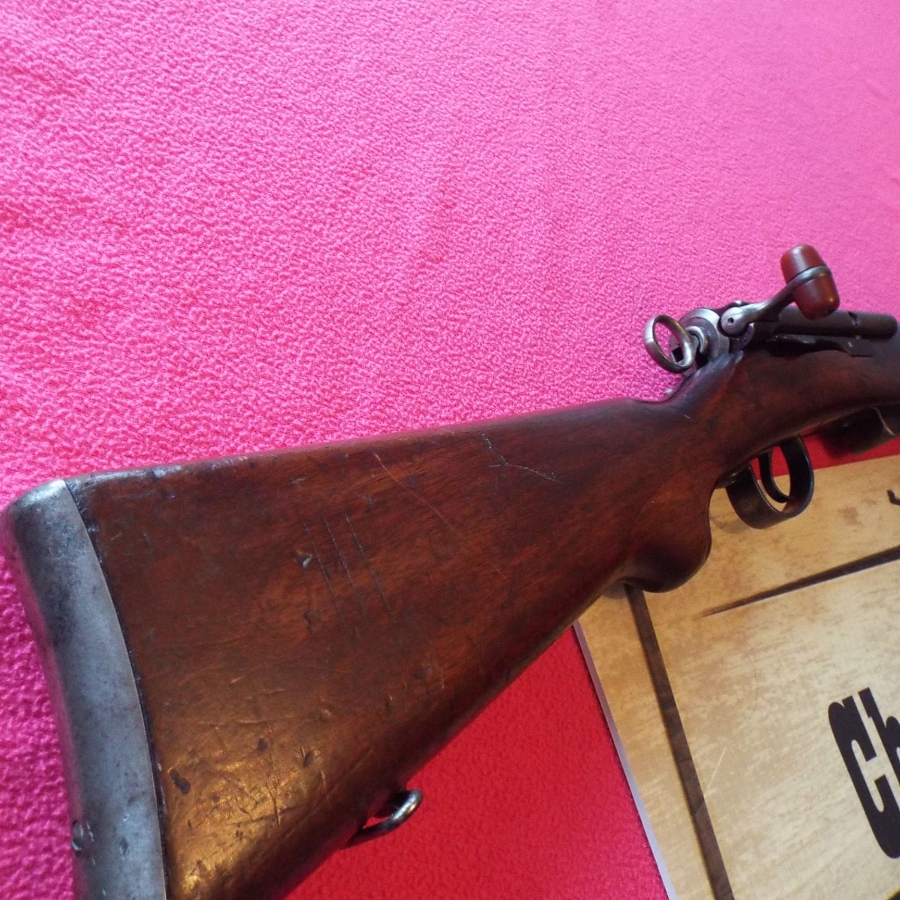
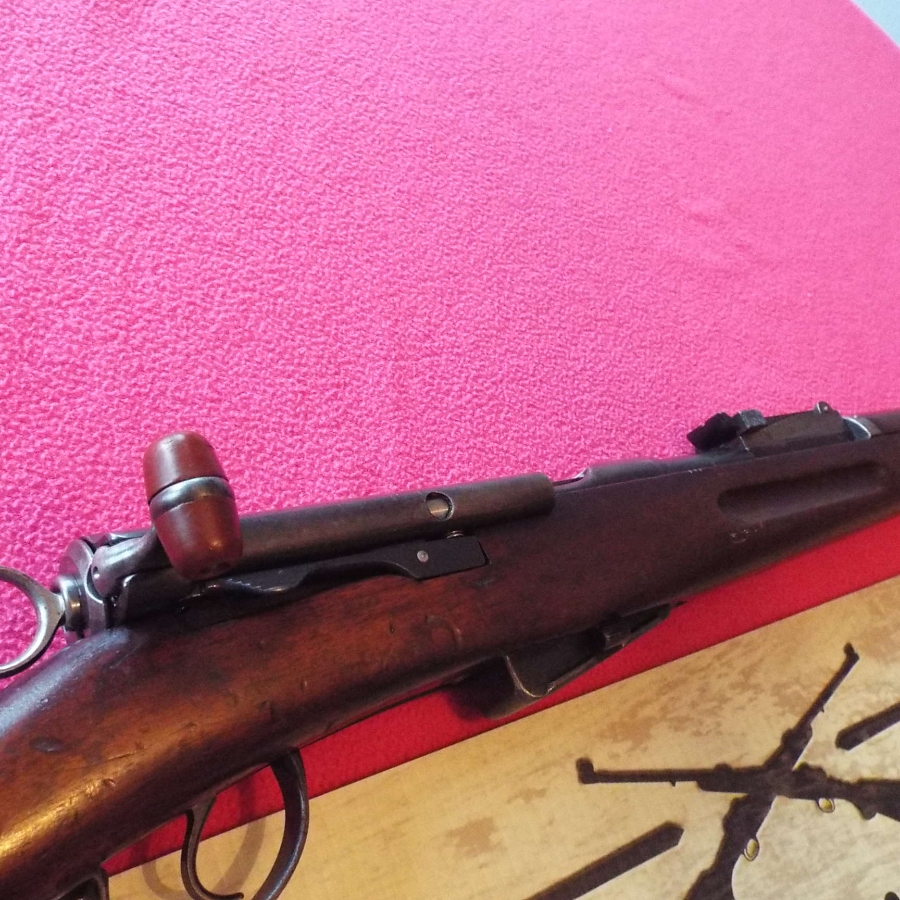
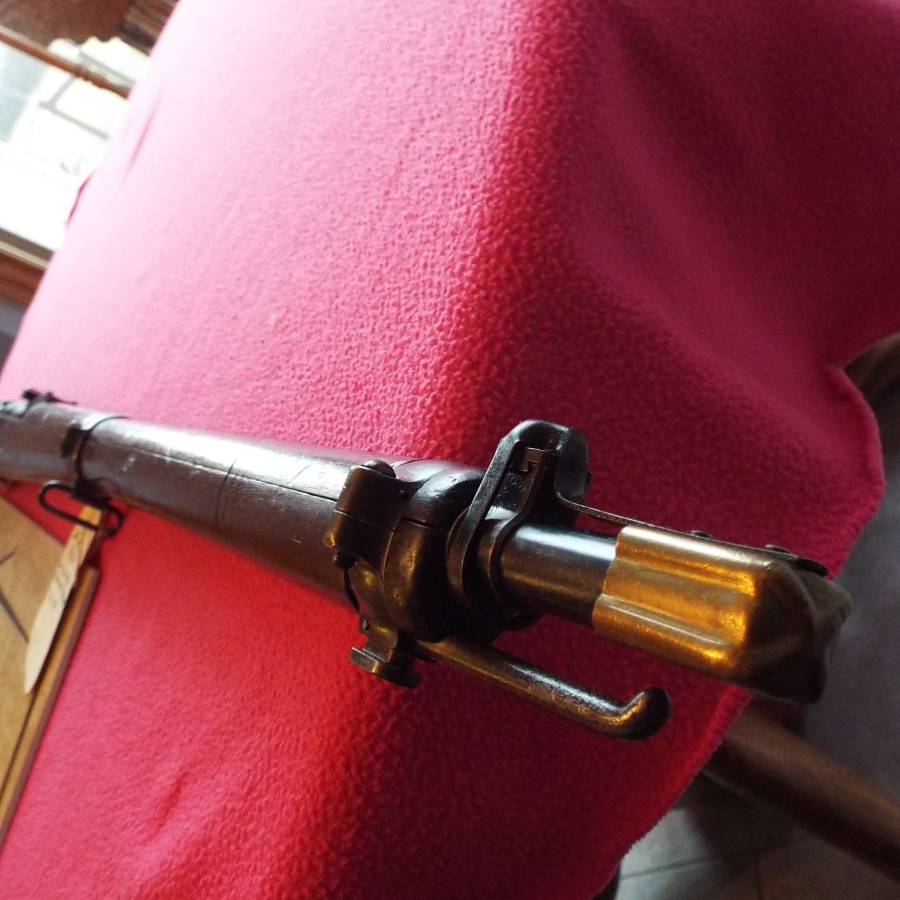
That is a substantial muzzle cap there!
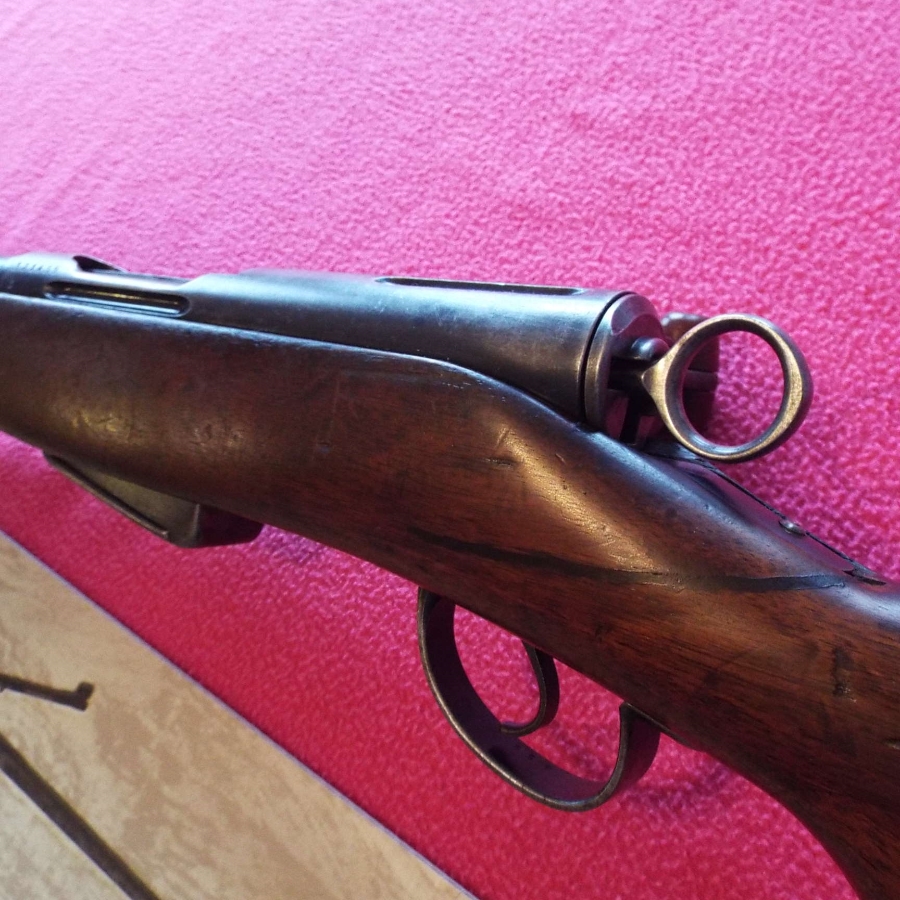
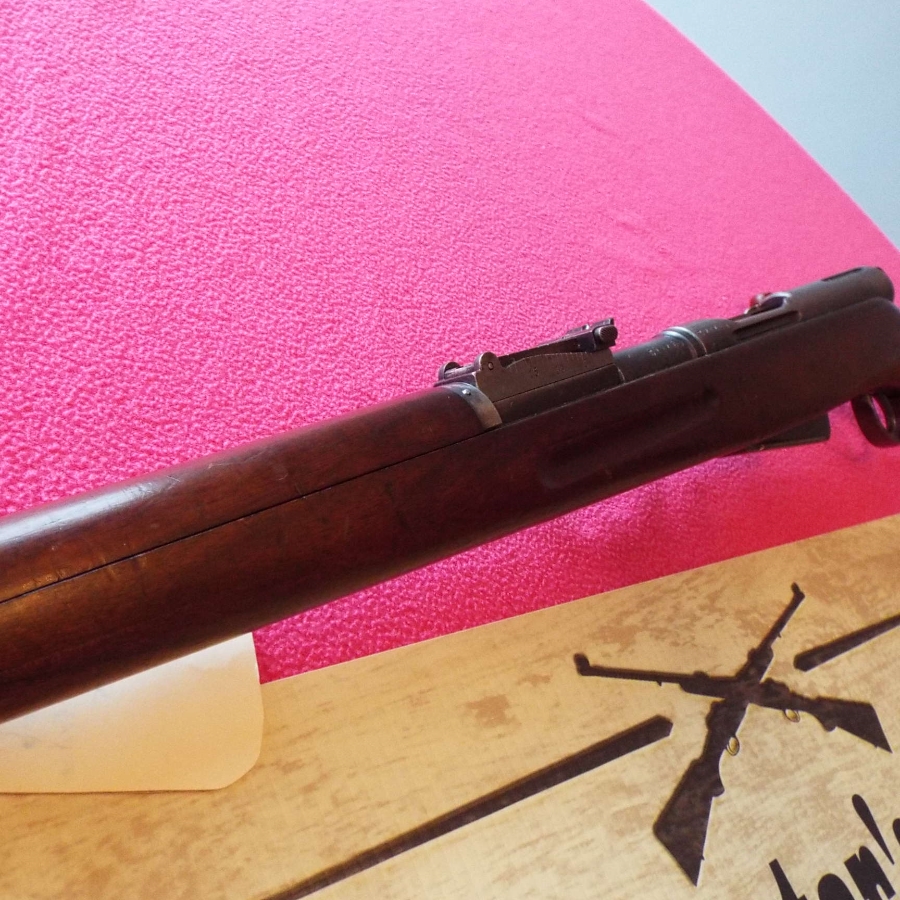
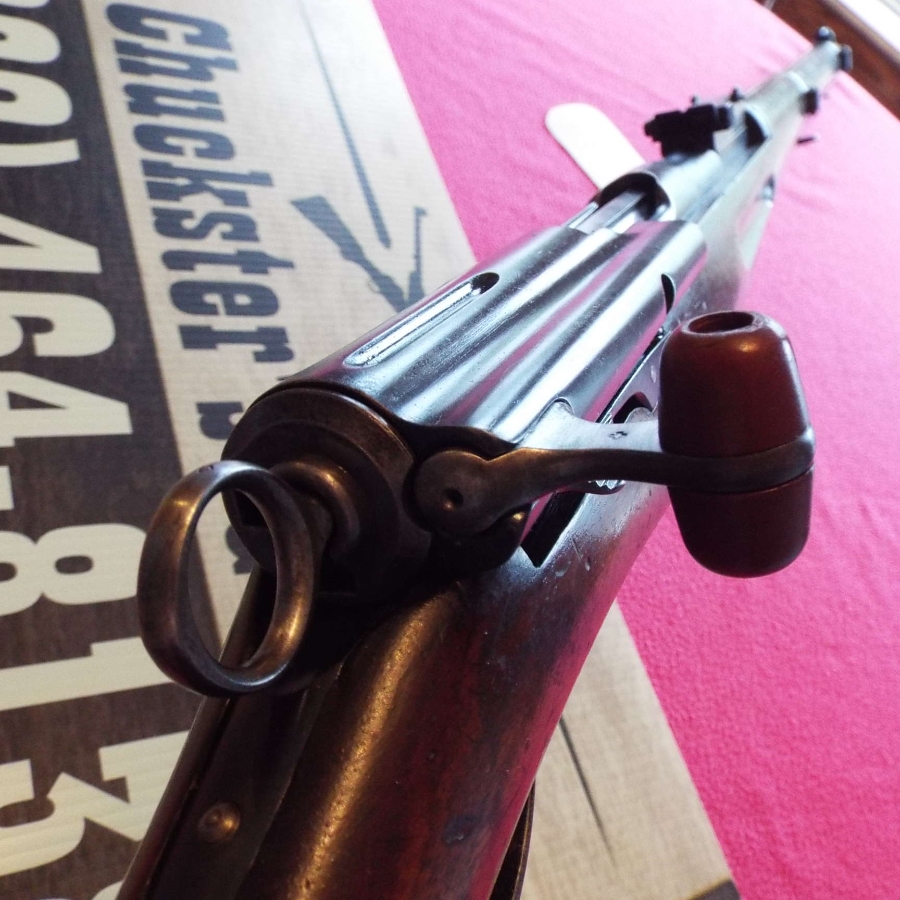
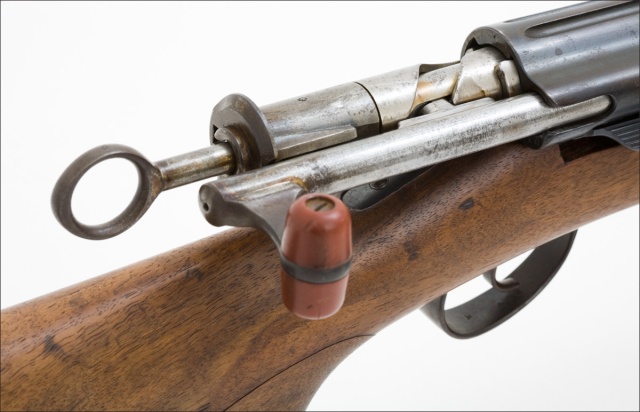
The action reminds of the Marines straight pull Lee Rifle in a way.