Today we have the brief but ‘stranger than fiction’ account of how a Russian T-90A tank named ‘Maestro’ ended up briefly ‘abandoned’ at a gas station in Louisiana several weeks ago, after the truck towing it to a U.S. army testing site “broke down”. The tank was left sitting overnight with no security in the parking lot of Peto’s Travel Center and Casino, on I-10 near Roanoke, Lousiana.
Its name, Maestro, is written on the left side of the turret.
On April 14th, a lone battle-scarred, T-90A “Vladimir” obr. 2004 loaded on a truckbed was spotted at a truckstop on the Interstate 10 (I-10) near Roanoke, Louisiana. Pictures immediately surfaced on Reddit’s /TankPorn/:
This report will pull from the wonderful thread by Twitter user @T_90_M (https://twitter.com/T_90_M/status/1648594266162176001), who is a tank expert that did a deepdive on this happenstance. In fact, the only reason I even chose to cover it rather than simply posting his exhaustive thread is for the sake of having this very strange piece of history saved here for posterity incase the Twitter user gets banned in the future, since it seems Twitter accounts are so capriciously disposable, even under Musk’s tenure.
The tank in question was said to be captured by the AFU’s 92nd Separate Mechanized Brigade from the Russian 27th Separate Motor Rifle Brigade, under the elite 1st Guards Tank Army, near Kurylovka, Kupyansk region. The tank was said to be captured in October, seen here:
The tank is a T-90A, which is an older variant not to be confused with the modern Russian upgrade known as T-90M. The clearest way to distinguish that is by the Shtora dazzler the ‘A’ version still has. Shtora are the famous ‘glowing eyes’ of the T-90s which were meant to confuse and overload the laser guidance systems of ATGMs, as seen here:
These dazzlers were later deemed obsolete and taken out for the T-90M versions, which still include a ‘Shtora’ suite which detects laser guidance but instead warns the crew, automatically disperses smoke, and also can automatically turn the turret and ‘lock onto’ the target which is ‘painting’ the tank.
@T_90_M here identifies the precise model of the tank:
The T-90A has been in production from 2004 to at least 2010, and four major modifications can be IDed from externally visible differences to the sights and APS’s dazzlers (the famous T-90’s “red eyes of death”): obr. 2004, 2005, 2006 and 2010.
Second hint is the cooling grid, which on obr. 2006 models was altered in order to better dissipate heat. Since these factory modifications are rarely retrofitted to already delivered MBTs, it means that the T-90A in Louisiana is either an obr. 2004 or obr. 2005.
Luckily, T_90_M appears to conclude that the tank is in fact the oldest obr. 2004 version of the T-90A.
The reason this difference is critical is because obr. 2005 introduced a brand new gun:
According to Vasiliy Fofanov the improved 2A46M-5 gun was put into service only in 2005, while the older T-90A obr. 2004 still sports a similar, but less capable 2A46M-2 gun.
And this is important because only the obr. 2005 gun (2A46M-5 variant) can shoot the latest Russian rounds 3BM59 Svinets-1, 3BM60 Svinets-2:
The newer much longer round compared to older 3BM42 Mango.
If captured, these rounds also used by Russia’s latest T-90M would give the US a better understanding on Russian APFSDS actual performances. According to various estimates, Svinets-2 rounds penetrate anything from 600 to 830 mm of steel at 2 km.
However, T_90_m may have missed the fact that this very tank appears to have been video reviewed by this well-known Ukrainian tank expert’s youtube channel, which does reviews on captured tanks. This was posted back in November, shortly after it was captured. You can see the ‘Maestro’ written on the side of the tank.
He explains right in the opening that the barrel is in fact a 2A46M-4, rather than the -2 or -5 models previously discussed, and how to distinguish between them. It’s unclear whether that makes the -4 compatible with the previously described latest ammunition, as I couldn’t find that specific information on it. However, other expert commenters under the video do appear to confirm the tank as an ob. 2004 model of the T-90A.
One writes the following:
Absolutely right. Hull rev.184 (T-72B but rev.1989), turret from rev.187 (he did not go into production). The place of the driver without NVD or TPV and escape through the lower hatch is not realistic. Transporter under the commander’s and gunner’s place. In 1997, I received the first information about him. Interested at first. But as information was received (until 2004), I established that this was essentially a T-72B with a change in components from ob.219-T-80U. The first cast turret T-90s were just the T-72B with K5 and Shtora. Since the 2000s, they went with a turret from ob.187. They are 90A. I finally got acquainted personally with the 90A in August of this year. And all conclusions remained fixed.
So now that we likely know what it is, the question is: where is it headed and what does the U.S. intend to do with it?
A photo from the barrel of the tank taken at the Louisana rest stop shows the tank is being transited to Aberdeen Test Center in Maryland:
Which is a proving ground for the U.S. Army’s armor and vehicles:
Provide test, and test support, services for authorized customers within and outside of DoD, including Government and non-Government organizations, domestic, and foreign.
Perform comprehensive test and training, both real and simulated.
Exploit emerging technologies.
Develop leading-edge instrumentation and test methodologies.
It’s interesting by the way, that the U.S. army could not ship the tank directly to Maryland, but apparently had to ship it to a port Beaumont, Texas:
Its port of destination was Beaumont, Texas, about 90 miles west of where the tank wound up. The “ultimate consignee” on the label is Building 358, 6850 Lanyard Rd., Aberdeen Proving Ground. That’s the home of the U.S. Army Aberdeen Test Center (ATC).
Then truck it across the country to Maryland with a Dayton, Ohio based AAA Trucking service. It’s unclear why they did that, but is an insight into American military ‘logistics’ inefficiencies.
As @T_90_M explains:
But even if the US got the older T-90A obr. 2004, they can still learn a couple of things from it: I’m mainly referring to its automated target tracking and laser warning capabilities, as well as testing their weapons against its composite and reactive armor.
I’ve already talked about Shtora’s ability to detect, calculate and then locate the source of a laser beam with quite good accuracy. The US will indeed be very curious to put Shtora APS to scrutiny, if they haven’t done that already.
They will also be able to test the tank’s automated target tracking, which the latest Abrams still lacks: this system has the thermal sight locking on heat signatures – even men’s heat – and automatically laying the gun on them. The gunner only has to fire the gun.
So, as @T_90_M explains, even the oldest T-90A still has an automated tracking system that the latest Abrams does not have, which the U.S. would be enthused to put through its paces.
More from TheDrive:
So while we have some answers about where the tank appears to be headed, many more questions remain unanswered. Whether this vehicle will be used for destructive testing — such as testing weaponry against it — or to familiarize troops with foreign equipment, or some other sort of foreign materiel exploitation (FME) use, we just can’t say at this time.
Some Ukrainian supporters rabidly ridiculed the ‘interior condition’ of the tank:
Until they were politely informed that the tank was captured in September-October and operated under the AFU for nearly 6 months. In fact, the AFU was even said to have made some modifications to it. So on whom does its condition really fall?
Woops.
Apparently it’s such ‘junk’ that the U.S. went out of their way shipping it to their latest proving grounds to study and scrutinize it. With that said it is the absolute oldest, most obsolete copy of the T-90A, which Russia hardly uses anymore and is upgrading all of them to the T-90M standard anyway. The T-90M remains far superior and more advanced. Plus, TheDrive’s article claimed that the tank may have been more stripped than it looks. Not only did they mention that it wasn’t “fully kitted out” and was stripped of its machine guns, but they even said:
It also notably lacks some Western fire control components, which some T-90As have been equipped with in the past.
And in fact, at 2:45 of the youtube video you can even see the confirmation (with autotranslate) that the most advanced thermal sensors were removed.
And if you’re a tank fan, make sure to follow @T_90_M on Twitter for a lot of detailed SMO tank deep-dives.
If you enjoyed the read, I would greatly appreciate if you subscribed to a monthly/yearly pledge to support my work, so that I may continue providing you with detailed, incisive reports like this one.
The mainstream media is like a dog chasing a squirrel. Talking heads pontificate about the crisis du jour, while public figures rend their clothes while wearing sackcloth and ashes before the klieg lights and cameras. There is something fresh, new, and horrible every single day. It is predictable. That’s a great way to earn clicks but a really bad way to shape government policy.
According to them, our country’s greatest existential crisis is assault weapons. Now we all know that it’s not even possible to define a “semiautomatic assault weapon,” much less control its proliferation and nefarious use via legislative fiat. However, reality has never stopped the Left from throwing ineffective laws at a problem. As it relates to the Second Amendment in general and an assault weapons ban in particular, it behooves us to appreciate a few inconvenient facts.
Everytown for Gun Safety is a rabidly anti-gun political activist organization. Let’s give them the benefit of the doubt and assume their numbers are accurate. Everytown defines a mass shooting as a rampage event wherein four or more people are killed with firearms excluding the shooter. They counted an average of nineteen mass shooter events per annum between 2009 and 2020, with a total of 1,363 fatalities. Of these tragedies spread over 12 years, firearms that could be defined as “assault weapons” were used in 30 shootings, resulting in 347 deaths.
Gun banners would have you believe that this is responsible for the
deaths of thousands of innocent Americans. That’s just not true.
Ours is a nation of 328 million people. In 2019, 364 Americans were killed with rifles of all sorts. That’s 364 unimaginable tragedies. I do not for a moment trivialize that. However, there is the issue of scale.
In that same year, we lost 480,000 Americans to cigarettes. Of those 480,000, some 41,000 were innocent non-smokers killed by secondhand smoke, mostly children with breathing disorders. That same year, 1,476 Americans were killed with knives, 600 were beaten to death with fists, and 397 died from attackers wielding clubs and hammers (statista.com). More people were murdered with knives in that single year than were killed in mass shootings between 2009 and 2020. People are just bad.
The images are undeniably heartrending. No normal person can gaze upon the pictures of terrified survivors streaming out of a school or shopping center without being viscerally moved. However, isolated images are no basis for sound policy.
As horrible as these diabolical events are in the grand scheme, the cold absolute numbers are still fairly small. By contrast, there is a flip side to the Second Amendment question that is typically completely overlooked in the national discourse. Just how many lives are saved by America’s unique infatuation with these implements of violence?
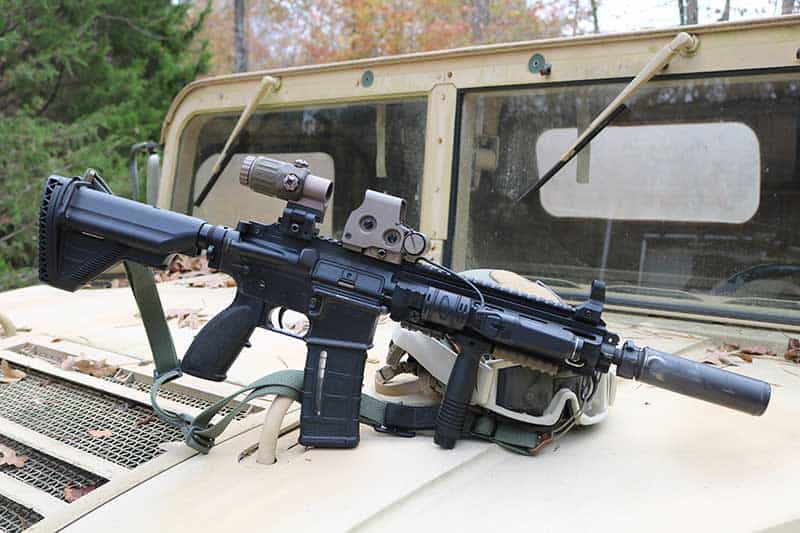
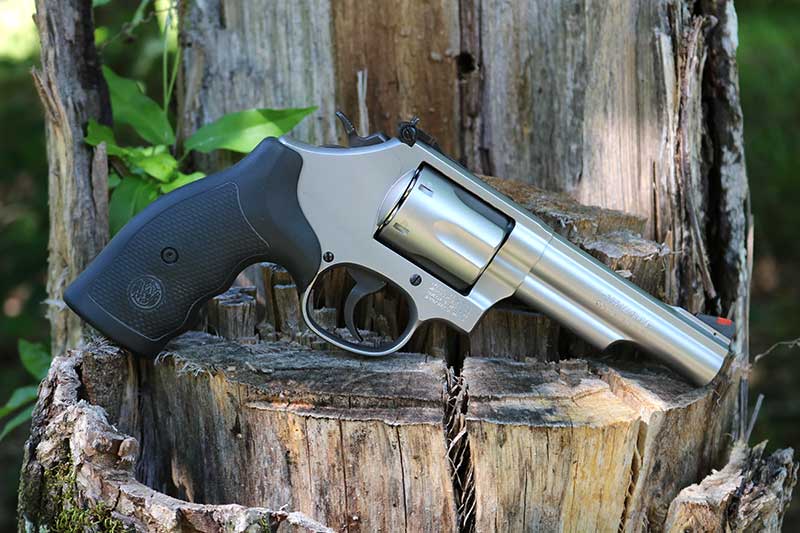
Lots more folks are hurt by thugs wielding unimposing handguns than black rifles.
Gunfacts.info estimates that guns are used to prevent crimes some 2.5 million times per year in America. That’s an average of 6,849 incidents every day. The same researchers assert that guns are used to avert a life-threatening crime 400,000 times per year. These numbers are amply footnoted, but statistics are readily manipulatable. I take all those things with a grain of salt. Today, I’d like to think a little bigger.
Our great republic has served as a beacon of freedom and democracy to an oft-enslaved world for some 245 years now. Ours is the most resilient, long-lived, and productive democracy in human history. We are also a gleaming exception. Time after time after time, governments have their day in the sun but then devolve into blood-soaked despotism. That cycle is a lamentable part of the human condition.
Cambodia suffered unimaginably under Pol Pot (2 million dead). Germany had Hitler and the Nazis (21 million dead). China had Mao (45 million dead). And then there’s Putin (pushing half a million dead total).
The real body counts don’t come from mass shooters. The serious body counts come from governments. And the only thing standing between the United States government and something similarly ghastly, as has been the case with democracies throughout human history, is a well-armed populace.
If you really want to make a dent in violence then figure out a way to
control the proliferation of these things. Knives are used to kill way more
people in America than scary black rifles.
An armed population is absolutely ungovernable without their consent. Those great wise old guys who drafted the U.S. Constitution knew that to be the case. That’s why the right to own a weapon was enshrined right behind the right to gripe about the government and attend the church of your choice.
I have a dear friend who is alive today because he had a gun on a remote deserted road late at night. The cops were never notified, and the incident never made it into any statistical database. However, I’m sure glad he traveled with a weapon. It’s a scary world.
The American phenomenon is unique in human history. The unhinged rantings of revisionist activists notwithstanding, we have been the greatest force for liberty in the history of the planet. And that could all be gone in a generation. We are not fundamentally different from the Germans, the Cambodians, the Russians, and the Chinese. We simply can’t let short-sighted witless agendas undo two centuries of profound, timeless wisdom.
Based on the majority of snooze stories, I was chalking up the Louisville bank shooting to workplace violence. Multiple reports had it that he had been, or was about to be, fired. Not so much, apparently.
[Some asshole] made three key points in the manifesto, which is in the hands of the police: he wanted to kill himself, he wanted to prove how easy it was to buy a gun in Kentucky and he wanted to highlight a mental health crisis in America.
Hmm. On the one hand, he seemingly thought that there’s some much “gun violence” that guns must be further restricted. On the other hand, apparently there wasn’t enough gun violence, so he had to stage some himself.
What the SOB really was… was a terrorist. No different than a psycho suicide bomber.
(A)involve violent acts or acts dangerous to human life that are a violation of the criminal laws of the United States or of any State, or that would be a criminal violation if committed within the jurisdiction of the United States or of any State;
(B)appear to be intended—
(i)to intimidate or coerce a civilian population;
(ii)to influence the policy of a government by intimidation or coercion; or
Good riddance.
Victim disarmers will probably — secretly — consider him a martyr. The Daily Mail report seems to; given the way they use his case to illustrate why he was “right” and Kentucky gun laws are dangerously lax. Why if you aren’t a known criminal, and haven’t been ruled mentally ill, or use illegal drugs, or any of the other restrictions on gun possession, and if you’re old enough… why, you can go to a gun store, undergo a background check (to confirm all the above) and by a gun.
* I won’t give him the post mortem fame he wanted by using his name, unless it’s necessary for research. Clearly, the Daily Mail doesn’t agree; they give his name 33 times in just that one report.