Categories
Category: All About Guns
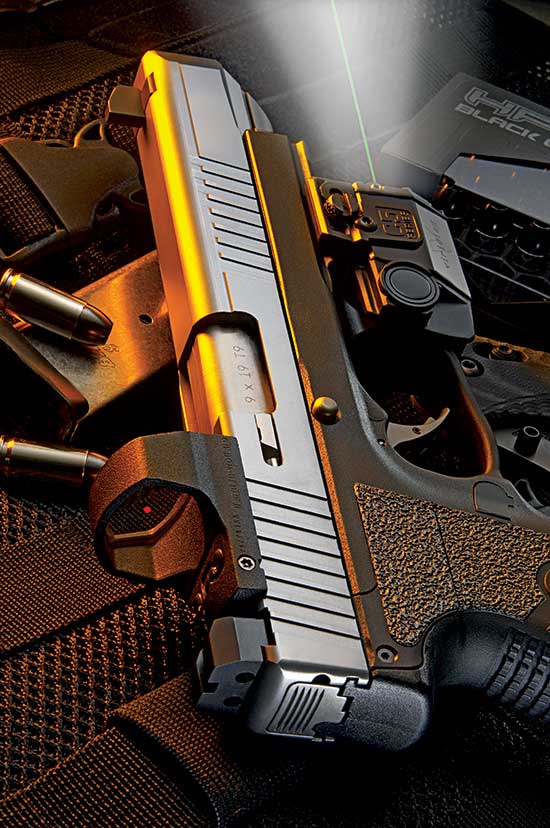
When Justin Moon started Kahr, it was mostly due to his own frustration at not having a suitable 9mm-style auto in a small enough package to be convenient to carry. Justin put his engineering expertise toward making sure his new company did just that — create something entirely new in the concealed carry market. It was the early 1990’s. In 1995, Kahr introduced the K9 9mm semi-auto. The industry — and shooters everywhere — sat up and took notice.
The stars were in alignment for this to happen. Kahr’s parent company had a 15-year head start building a reputation for excellence in manufacturing and R&D in precision metal working. Using CAD, CNC and brilliant design work, Justin’s team raised the bar for small auto design to tippy-toe heights. At around 25 ounces and of all-steel construction, the first K9 made everyone begin to re-think possibilities for the genre. But it was a bit heavy (a Walther PPKS is about 23 ounces, for perspective, and has a reputation of being a bit heavy). The market almost immediately asked for a lighter version. Please?
Kahr responded with new designs, polymer frames and more. As time passed, Kahr grew from a relative unknown into one of the premier makers in the industry. Which is what I was thinking about as I handled our test gun, the remarkable TP9 GEN2 Premium. The world has gone from a tiny handful of mainstream gun makers just 20-odd years ago, to a new generation of savvy, quick thinking — and quick to market — gun makers, each with their own strengths. For Kahr, I think the strength is design excellence, high quality manufacturing ability and shrewd market sense.
What’s It All About?
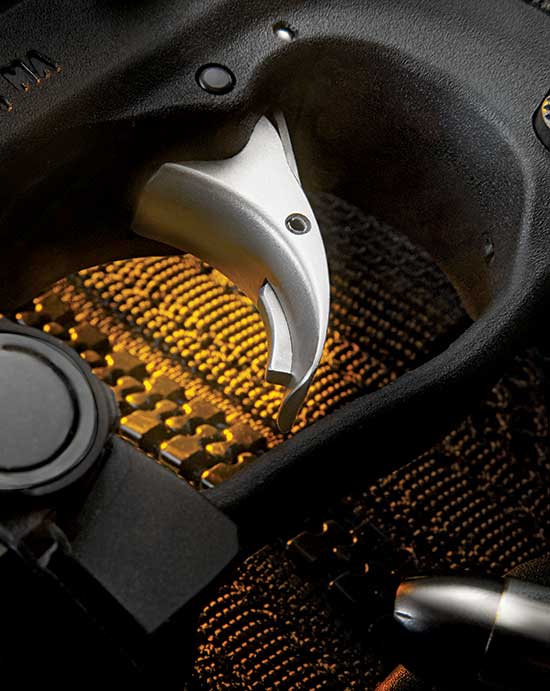
A bit of design history will bring you up to date. The base concept of Kahr’s line of autos is built upon their ground-breaking action design. Several patents cover the unique cocking-cam trigger system and locking, firing and extraction systems. The result is a safe and very reliable DA-only action which also “cocks” the firing pin and unlocks the passive safety prior to tripping the sear-like lobe assembly. The trigger pull is familiar to any revolver shooter, but some “auto-only” shooters find the longish DA and reset take some getting used to. Frankly, I like it a lot and feel right at home with it. Plus, the long DA pull is as safe as any revolver’s DA action.
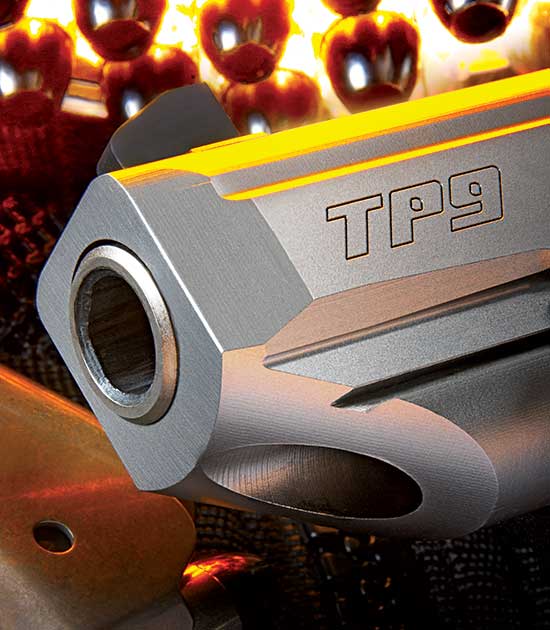
Their sort of “strange to see at first” off-set barrel system is there so the trigger unit sits tightly next to the barrel locking lug. This allows a very high shooter’s grip, closer to the bore’s center, which helps to alleviate muzzle flip. Think: HKP7 feel (if you’re familiar with it) and you’ll know what I mean. The grip is also nice and slim and has aggressive texture on all their models.
Something else singular is their patented extractor which they call “self-cleaning.” I’ll be honest and tell you after looking at it, I still can’t figure out how they do it, but apparently the design serves to blow powder residue and gunk from beneath the extractor claw so it keeps, um … extracting.
Something else. The slide, barrel (True Lothar Walther barrels, of polygonal rifling in the Premium line and standard in the Value line), slide stop and other bits are machined from bar stock steel — no MIIM or cast here. Indeed, they run 10,000-round tests regularly to check for wear and toughness. Interesting enough, in the “this doesn’t make sense” department, nearly 75 percent of the steel in the billet used to make a barrel is simply machined away. Not economical — but it’s the way you get tank-tough parts.
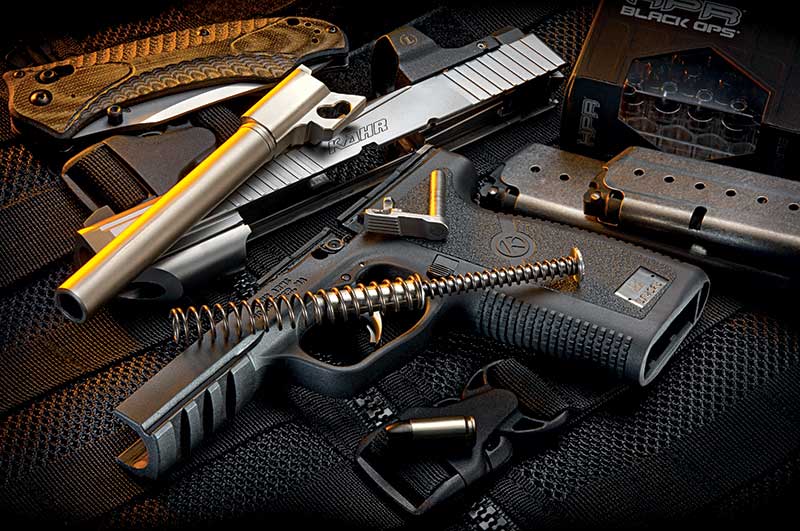
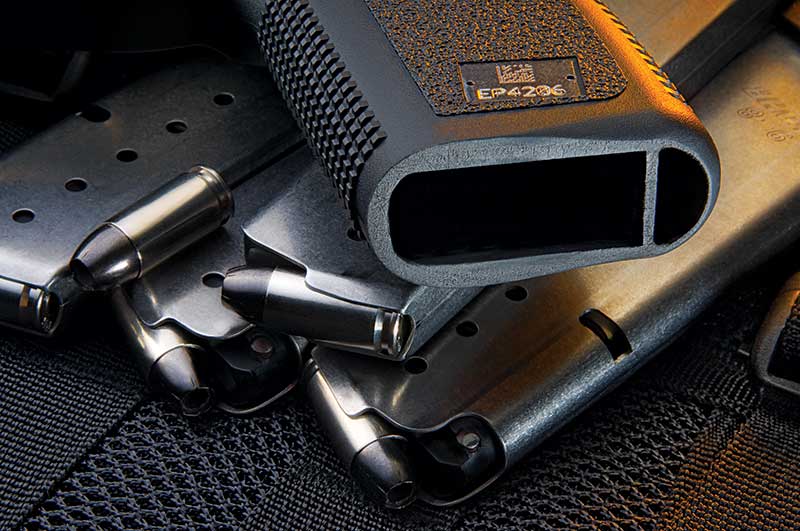
The little things are important too. The magazines are stainless steel, plasma welded for smoothness, then tumbled to make sure they are silky to the touch. The polymer magazine follower has a steel insert to engage the slide stop, neatly avoiding this weak point in many plastic followers today. Also, on polymer-framed pistols, the polymer frame rails have metal inserts to make sure the stainless slide rides on steel — not plastic.

Some Differences
Our test gun comes from their “Premium” line, differing from the Value line in a few regards. The Premium models have the famous Walther rifling and barrel, slides are machined with more detailing (a dovetailed front sight, for instance) and are machined from one of the highest grades of stainless used in the firearms business. Even small parts, like the slide stop, are machined from bar stock, and many of the small, internal components are plated with some sort of magical coating for wear resistance and easy cleaning.
The same engineering and manufacturing expertise goes into each product line, but the Premium simply upgrades the features and design touches. And keep in mind, as our own John Connor says in his “Shoot Off” between a Value CT series model and a Premium model which were otherwise identical designs (“Kahr’s Fraternal Twins,” Jan/Feb 2016): “I’d carry either one into a fight, anytime.”
There you go.
The Action
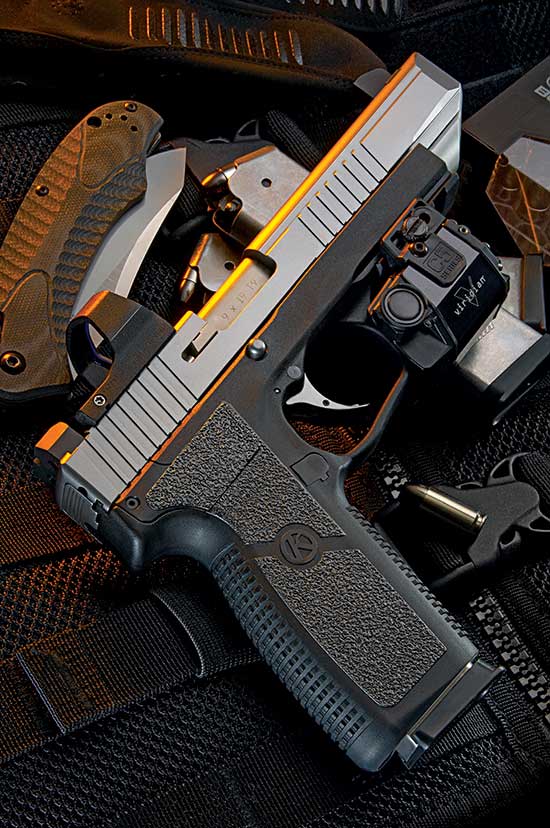
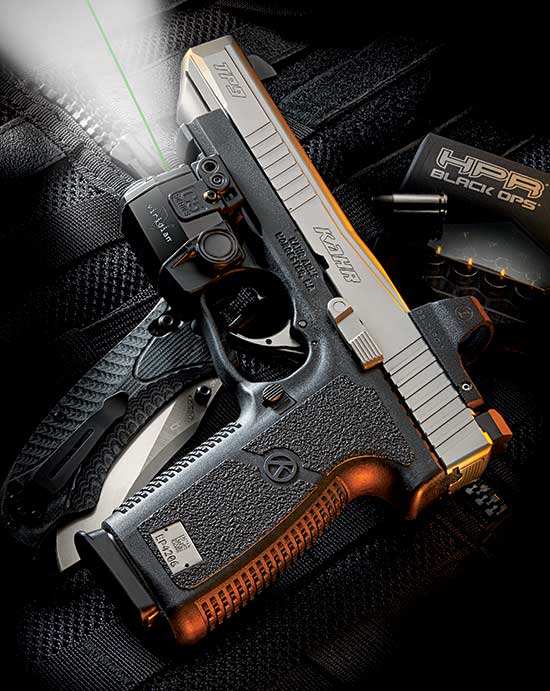
Our test gun, a brand new fancy model — so new in fact, it lacked the muzzle compensator now available on some barrel lengths — exhibited the design elements ranking it as a Premium model. The forward serrations, tall sights (to index with the Leupold Deltapoint on our gun) and new “Trigger Safety, Enhanced Trigger” (delivering a 30 percent shorter throw) makes it easy to spot this as a Premium model.
The inner workings are essentially a Browning locked-breech design with a striker-fired action. It’s an honest hammerless design, but the cam-action when you press the trigger cocks the firing pin that last bit, making it a real double action. The passive firing pin safety design is robust but very simple, allowing the pin block to be located further toward the rear of the slide, away from powder fouling. Justin Moon was awarded one of five patents on these guns for this feature. By the way, this same system is used on all the Kahr designs, regardless of the model.
The distinctive arrangement of the trigger action and barrel also allows a very slim design, with Kahr autos being among the slimmest full-caliber autos around. One of my favorite models is the tried and true T9 — think of it as a “full-sized” holster gun, but easily concealed too. It’s all-steel but still only weighs a lightweight 26 ounces for the breed — and gracefully slim in the hand. It’d be a perfect duty holster gun for a small-statured officer, for instance, and I’ve shown no-end of ladies how to manage a 9mm auto with this gun. Part of its success is the slim grip and low muzzle profile, making the guns easy to control.
The test TP9 shows its heritage — but taken to the next level.
The TP9 Premium
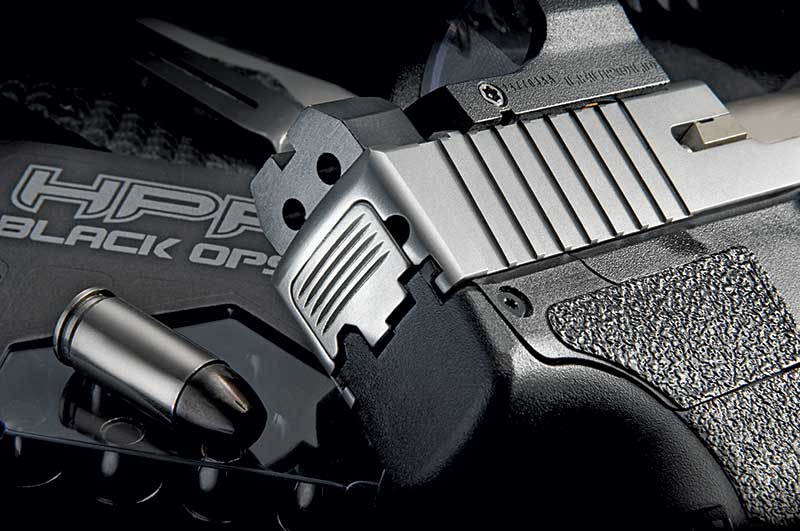
When I was first shown this model I was immediately attracted to it since I am comfortable with the T9. Seeing the machine-cut for the red dot sight, tall sights and obvious fit and finish, I was taken in. The test gun delivered everything I had hoped for and lived up easily to my expectations. Out of the box, this gun can compete, protect, hunt small game, plink and take on targets way out there. On Kahr’s website, there is a video of Justin shooting both a 9mm and a .45 version of this gun at 215 yards. I watched the effortless strike after strike on the metal plate.
It inspired me (during the recommended 200-round break in phase) to take on my own 100-yard gong, a 16” steel plate. I sighted in the Leupold Deltapoint at 25 yards, then once I got the range, held the point of the dot on the top edge of the target then hit the gong eight times in a row easily. The DA-only trigger is easy for this old revolver shooter, but with some practice milking the action, anyone with good trigger skills could easily duplicate the test. This gun is accurate.
At the 25-yard sighting-in phase, I used everything from ultra-lightweight 95-gr. 9mm ammo to heavy 147-gr. sub-sonic stuff. The gun ran fine, but I did clean and lube it well and held it with a very firm grip. Groups were almost embarrassingly easy to hold at the 1″ mark or so with most loads, and I found I could index the black fixed sights and run groups slightly tighter than using the dot. The more precision possible with the irons is the cause. However, the difference was so slight as to be essentially meaningless.
Speaking of red dot sights, at the time of our test, Kahr was still deciding on how to offer the final pistol package. They were not sure if they would supply it with a red dot sight, or just allow the factory-supplied mounting point to be used by shooters to mount their own favorite sight. We’ll just have to see what they decide. This Leupold Deltapoint is tough as nails, and the unusual triangular “dot” allows you a pretty precise aiming point if you rest the top point of the angle on your target. It also “stays on” all the time. From what I can glean, the battery life is something like five years, so burn-out is nothing to worry about. Some cops are actually carrying red dot sights on their duty holster autos these days.
I hope they offer this with the Leupold as a package deal. This way there’s no fussing around and you can buy the “kit” and go right to work with a high quality gun and optic.

Shooting Thoughts
Another of my “favorite” guns is a Kahr P45 (see this issue’s “What Do We Carry” feature). I’ve had it for some years and, like every other Kahrs I’ve shot, it shoots like a laser beam. I’ve let friends shoot it and they invariably go find their own. It’s one of my “general” guns I can do just about anything with, in spite of its smallish size. Take a 100-yard shot? You bet. Shoot a plate rack? No problem. Pop the boar rooting in the pasture? Done. This sort of “everyman’s” gun concept is sound and I found myself thinking about the TP9 in the same way.
Initially I was sort of doubtful of the red dot. I thought, “Oh, it’s big, it’s in the way, the battery will die, it catches on stuff, etc.” But after living with it for a few months now, I don’t even notice it, and the red triangle pops right up when I lift the gun into firing position. And, unlike some others I’ve seen, it indexes virtually perfectly right on the top of the front sight (depends upon where you sight it in, of course). And if the dot goes dead, so what? The irons are right there.
I had some great fun shooting on my plate rack just before sitting down to write this. Run after run showed me the dot just dances from target to target as you time your trigger squeezes. I also rested on my E-Z-Go ATV at about 50 yards and could quite easily hit the head zone on a steel torso target. Clang after clang.
I have a pond on my property and since it’s fall as I write this, there are leaves aplenty floating on the surface. From about 25 yards, it was fun and easy to nail ’em time after time. Bang, splash … bang, splash. I think I found a new game. It’s a fun gun to shoot — and this helps to keep you shooting.
I also noticed after the 600 or so test rounds through the TP9, the trigger smoothed out nicely. It was a tad gritty at first, and right at 6 pounds solid, but I knew from past experience they tend to smooth out with use. After the test, it was still a solid 6 pounds, but smoother. I imagine there are pistolsmiths out there who work on these actions, and this is always an option if you think you need it.
Take-down is typical Kahr but there’s a couple of things to keep in mind. First, when you try to put the recoil spring and guide rod back in, install the barrel into the slide, then face the front of the slide toward you (as it lays on a table in front of you) and use both hands and fingers to slowly “roll” the recoil spring guide rod around until it lines up just right as you press it home. It will take a few tries but you’ll eventually get the hang of it.
Also — and this is very important — once you put the slide release back in make sure you’ve captured the tiny spring in the frame which puts pressure “down” on the release. This assures it will only lock open on an empty magazine. Many people forget this step and complain about the slide locking unexpectedly. Keep an eye on this and you’ll have no issues.

Final Thoughts?
For anyone — and especially for those with smaller hands — this “full-sized” 9mm (and .45 ACP version) may be your ticket to fun shooting. The predictable DA trigger pull is a delight for a semi-auto and once you’re used to it, you’ll wish your other guns had it too. The rail allows lights and lasers to be mounted, the double recoil spring set-up is sure and reliable, and barrel lengths of 5″ (our test gun) and 6″ (with built-in comp) help to make it versatile. The ability to quickly install a dot sight changes the game and is a well-sorted feature on the TP9 Accurate.
If you’re limited in your handgun battery, the TP9 could easily be the “one” gun you compete with at weekend matches, take target shooting, plink with, carry concealed and keep on the bedside table (with a light on the rail) to defend your family. It feels good in the hand and frankly, is friendly to use, so you keep wanting to pick it up and go shooting.
And this is what it’s all about — right?
Categories
IWI TAVOR SAR
President Joe Biden and the Department of Justice announced a proposed rule to change who will need a federal firearms license (FFL) to sell firearms.
The long-awaited rule was hailed by anti-gun groups like Everytown for Gun Safety, Giffords, and Brady United as a way of closing the “gun show loophole” and the “internet loophole.” Anti-gun organizations claim this is a step towards universal background checks, a centerpiece of the Biden Administration’s anti-gun policy.
The proposed rule is powered by the Bipartisan Safer Communities Act (BSCA), which was a law championed by Chris Murphy (D-CT) and John Cornyn (R-TX). The BSCA changed the law’s wording to describe who the federal government considers a gun dealer. The bill altered the language of Section 921(a) of Title 18, United States Code.
The BSCA changed the definition of someone “engaged in the business” of selling guns from “with the principal objective of livelihood and profit” to the ambiguous statement of “to predominantly earn a profit.” Now, the Biden Administration is exploiting that change through the upcoming rule. At the time, some Republicans who backed the law blew off the concerns that an anti-gun administration would exploit the language. The change read:
(22) The term `to predominantly earn a profit’ means that the intent underlying the sale or disposition of firearms is predominantly one of obtaining pecuniary gain, as opposed to other intents, such as improving or liquidating a personal firearms collection: Provided, that proof of profit shall not be required as to a person who engages in the regular and repetitive purchase and disposition of firearms for criminal purposes or terrorism.
The new rule will also affect those that sell multiples of the same type of firearms. This section means that anyone who liquidates a collection of Glock pistols must acquire an FFL before they can liquidate the guns. Many people collect certain guns, and this would prevent the legal transfer of those firearms without an FFL.
Unlicensed sellers who sell through “online auctions” would be required to obtain an FFL under the proposed rule. This section is a targeted shot at sites like Armslist.
These websites do not sell firearms and currently do not have to get an FFL. The new rule seems to change that. This has long been a goal of the Biden Administration, which has put out false narratives about online gun sales, such as buyers not having to go through background checks for guns purchased online. The rule reads:
“In addition, it clarifies the term “dealer,” including how that term applies to auctioneers, and defines the term “responsible person.” These proposed changes would assist persons in understanding when they are required to have a license to deal in firearms.”
“These examples are provided to clarify for unlicensed persons that firearms dealing requires a license in whatever place or through whatever medium the firearms are purchased and sold, including the Internet and locations other than a traditional brick and mortar store.”
Armslist is specifically called out in the rule. Armslist is a firearms version of “Craigslist List.” Armslist has been the target of anti-gun groups for years who keep launching and losing lawsuits against the website. Many think this is a concerted effort to hurt the website’s business by stating up to 25% of people selling on the site will require an FFL under the proposed rule. The rule reads:
“To better estimate both online and offline sales, ATF assumed, based on best professional judgment of FIPB SMEs and with limited available information, that the national online marketplace estimate above may represent 25 percent of the total national firearms market, which would also include in-person, local, or other offline transactions like flea markets, State-wide exchanges, or websites within each of the 50 States.”
The rule would make it so that anyone who rents a table at a gun show will be assumed to be in the business of selling firearms, meaning that private citizens will no longer be able to sell their firearms at any gun show.
Also, if someone advertises their firearms for sale, they could be assumed to be in the business of selling firearms, which will shut down most private sales. The rule reads:
“Based on this decades-long body of experience, the proposed rule provides that, absent reliable evidence to the contrary, a person is presumed to have the intent to “predominantly earn a profit” when the person: (1) advertises, markets, or otherwise promotes a firearms business (e.g., advertises or posts firearms for sale, including on any website, establishes a website for selling or offering for sale their firearms, makes available business cards, or tags firearms with sales prices), regardless of whether the person incurs expenses or only promotes the business informally;94 (2) purchases, rents, or otherwise secures or sets aside permanent or temporary physical space to display or store firearms they offer for sale, including part or all of a business premises, table or space at a gun show, or display case;95 (3) makes or maintains records, in any form, to document, track, or calculate profits and losses from firearms purchases and sales;96 (4) purchases or otherwise secures merchant services as a business (e.g., credit card transaction services, digital wallet for business) through which the person makes or offers to make payments for firearms transactions;97 (5) formally or informally purchases, hires, or otherwise secures business security services (e.g., a central station-monitored security) system registered to a business,98 or guards for security99) to protect business assets or transactions that include firearms; (6) formally or informally establishes a business entity, trade name, or online business account, including an account using a business name on a social media or other website, through which the person makes or offers to make firearms transactions;100 (7) secures or applies for a State or local business license to purchase for resale or to sell merchandise that includes firearms; or (8) purchases a business insurance policy, including any riders that cover firearms inventory. 101 Any of these nonexclusive, firearms-business-related activities justifies a rebuttable presumption that the person has the requisite intent to predominantly earn a profit from reselling or disposing of firearms.”
By requiring more people to get FFLs, it will prevent a lot of Americans from selling guns. The secondary market has been an excellent way for those less fortunate to acquire the means of protection. Those who choose to get an FFL will be subject to unannounced warrantless inspections. These inspections have been used to revoke gun shop’s FFLs under the Biden Administration’s zero-tolerance policy.
FFL revocation is up between 350% and 500% and is currently at a 17-year high. The amount of record keeping, cost, and hostile environment created by the ATF could mean that many will not get an FFL to sell their firearms, which could be part of Biden’s plan.
The government’s argument is most criminals do not get their guns from gun dealers. That fact is true, but most criminals do not get firearms from legal transactions. Most guns used in crimes are obtained illegally through such means as theft, which means this rule will not prevent criminals from getting firearms.
“The U.S. Sentencing Commission reports that “88.8 percent of firearm offenders sentenced under §2K2.1130 [of the United States Sentencing Commission GuidelinesManual (Nov. 2021)] were [already] prohibited from possessing a firearm” under 18U.S.C. 922(g). These individuals would thus have been flagged in a background check,would have therefore been prohibited from buying a firearm from a licensed dealer after their first offense, and would not have been able to commit the subsequent firearms offense(s) if their seller had been licensed.”
There will be an exception for gifting firearms between family members. Although this type of transfer only makes up a small portion of transfers. There will be a 90-day comment period once the proposed rule is posted to the federal registry. After the comment period, a final rule will be unveiled.”
AmmoLand News is currently reaching out to those Republicans who backed the BSCA to get comments.
Categories
Sadly my Dad never had one

Categories