Categories
All About Guns

Civil War Revolvers 1861 to 1865 – A short history

Categories
All About Guns

Some Guys are having too much fun! Hickok45 – The Swiss K31 Woods Walk

https://youtu.be/px2odDxXQwM

Categories
All About Guns

The Colt New Service: A Look Back by DAVE CAMPBELL

newservice_4.jpg

As early as 1857, Colt was working on the concept of a double-action revolver. The company even patented a design for a trigger-cocking revolver, but this design never saw production. William Mason, a patternmaker and engineer at Remington, patented a swing-out cylinder with a star-type ejector operated by a rod in the center of the cylinder that ejected all of the cases in the cylinder in 1865, patent number 51,117.

Mason came to work at Colt in 1866 from Remington and began a 16-year stint as one of the company’s leading engineers and gunsmiths. He, along with Charles Richards, developed the Richards-Mason Conversion of percussion revolvers in 1871. Mason and Richards are also credited with engineering a topstrap for additional strength on the Model 1871-72 “Open Top” revolver that became the famous 1873 Peacemaker. A few years later, he patented a double-action design that became the Model 1877 Lightning.

Mason later teamed up with Carl J. Ehbets to combine the double-action revolver with a swing-out cylinder and integral star-type ejector. Though he left Colt in 1882, Mason gets credit for helping develop the Colt Model 1889 double-action revolver.

This was the first double-action revolver with what would become the familiar profile of such revolvers—one with a flatter and more lightweight recoil shield, a swing-out cylinder operated by a sliding thumb latch on the left side of the frame and a grip frame contour that transferred recoil more directly into the shooting hand. A year later, the U.S. Navy adopted the .38-cal. Model 1889 revolver, and three years after that, the Army adopted it.

Shooters, lawmen and especially the Army were simply not satisfied with the .38 Long Colt cartridge. A 150-gr. lead round-nose bullet at 777 fps generates a paltry 210 ft.-lbs. of energy at the muzzle and can’t be depended upon to stop an assailant, be it a Moro tribesman or a critter larger than a rabbit.

In 1898, to address these concerns, Colt debuted a new large-frame double action revolver chambered in the more popular and effective cartridges like .38-40, .44-40, .44 Russian, .44 Spl. and .45 Colt. Colt christened the revolver as the New Service. Barrel lengths ranged from 4″ to 7 1/2″. Stocks were made of rubber or walnut, and the metal was available as blued or nickel plated. To foreign markets, Colt chambered the New Service in .450 Boxer, .455 Webley, and .476 Enfield.

The New Service was an immediate hit. Backcountry travelers and law officers liked the robust revolver and its hard-hitting cartridges. By 1909, Colt had made some lockwork changes, replacing several of the smaller leaf springs with coil springs, thus minimizing breakages.

A bar of steel was added between the hammer and the frame—Colt called it the “Colt Positive Lock”—to prevent unwanted discharges in the event that the hammer was struck or the gun dropped. The Army adopted this Model 1909 revolver chambered in .45 Colt with a case that had a slightly larger rim to ensure extraction. After a small change in the grip profile, the Marine Corps ordered a small quantity of this iteration of the New Service.

Because of the abject failure of the .38 Long Colt cartridge, and the limited manufacturing capabilities in turning out the 1911 pistol, the New Service was drafted as a military pistol during World War I. The Model 1917 Colt was similar to the 1917 Smith & Wesson—a large-frame, fixed-sight revolver chambered in .45 ACP and issued with half-moon clips to facilitate extraction from a revolver’s cylinder.

At first, the cylinders were bore straight through, and these revolvers could not fire a cartridge without the half-moon clips. Sometime later a “lip” was machined into the cylinder allowing the case to headspace on its mouth as it does in the 1911 pistol. The cylinders of these latter 1917s were also machined at the rear to accommodate the half-moon clips. This modification was done to allow the 1917 to be fired whether the soldier had half-moon clips or not.

By 1918, Colt had sent 151,700 Model 1917 revolvers to the Army. Between the world wars the 1917 revolvers—both Smith & Wessons and Colts—lay in storage, though some were used by federal agencies, including the Border Patrol, Post Office, Justice and Treasury Departments. During this time, Colt dropped .44 Russian, .450 Boxer, and .476 Enfield chamberings and added the .38 Special. In 1936, the .357 Magnum was added to the New Service stable of cartridges.

The New Service found favor outside the United States. In Canada, the New Service replaced the less-than-stellar Enfield Mk II revolver. The hoplophobic Brits pined for New Service revolvers during World War I, chambered for the proper British .455 Webley cartridge, of course.

Once hostilities ceased, the Brits could not get these revolvers back to the U.S. fast enough, hence the surplus market of New Services chambered in .455 Webley. Even the Cuban government purchased New Service revolvers chambered in .45 Colt before and after World War I to issue its army and the Guardia Rurales.

When World War II rolled around, as is typical, gun warehouses were raided for anything that shoots, and some 96,000-plus Model 1917 Colts were reconditioned and issued to military police and training units. Production of the New Service ceased in 1946, with about 357,000 revolvers made.

Colt also made a target version of the New Service. Manufactured from 1900 until 1940, it featured adjustable front and rear sights atop a flat-top frame and was chambered in .44 Special, .44 Russian, .45 Colt, and .45ACP. Most were made with a 7.5″ barrel, but a few were assembled with 6″ barrels. The trigger and backstrap were checkered on the target version.

Grips were black rubber until 1913, then checkered walnut with an inlaid silver medallion until the end of production. Nickel-finished New Service Targets are very rare, but a few were made. A very highly sought after variant, the New Service Shooting Master, was a high-grade variation of the Target. Made from 1932 until 1940, the Shooting Master exemplified some of the finest gunmaking and finishing craftsmanship to ever come from Colt. It had a 6″ barrel and was chambered in .38 Spl., .357 Mag., .44 Spl., .45 Colt, and .45 ACP.

Colt did not offer a shrouded ejector rod until the 1970s on any of its double-action revolvers. The New Service was Colt’s only large-frame double-action revolver until the Anaconda was introduced in 1990. Like all vintage Colts, the New Service commands quite a premium to collectors of such art that shoots.

Categories
All About Guns You have to be kidding, right!?!

I ❤️ 500 Magnum

Categories
All About Guns

A Mauser C96 Model 1930 Broomhandle in calibrt 7.63x25mm


Categories
All About Guns

A Smith & Wesson S&W Model 57 in caliber .41 Mag with a 8 3/8″ barrel


Categories
All About Guns Ammo

.577/450 Martini-Henry 10 rounds rapid (video collaboration)

Categories
All About Guns

Some Charcoal Burner Pistols


Categories
All About Guns

Case Hardened Colt Series ’70 Government Model

Categories
All About Guns Ammo Fieldcraft

These are the best deer hunting ammo options Brady Kirkpatrick

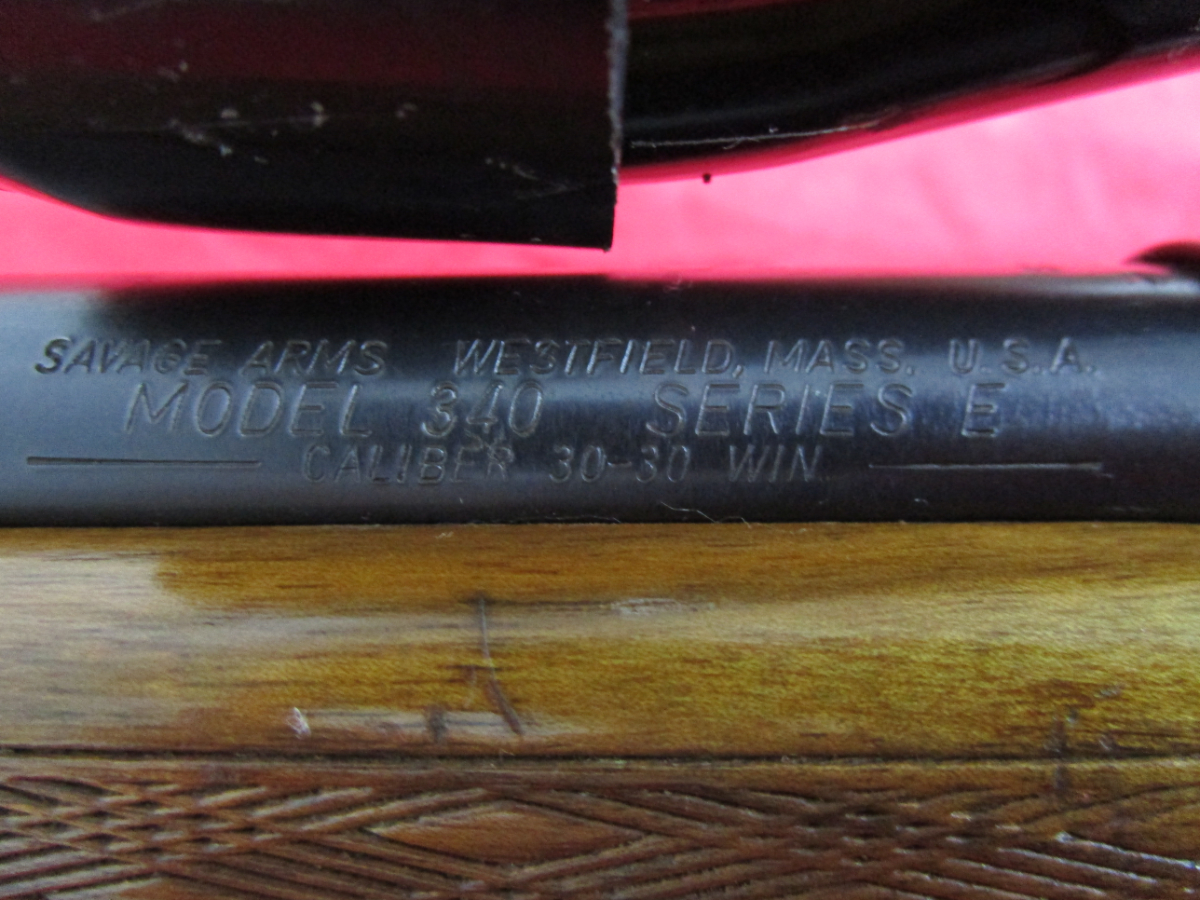
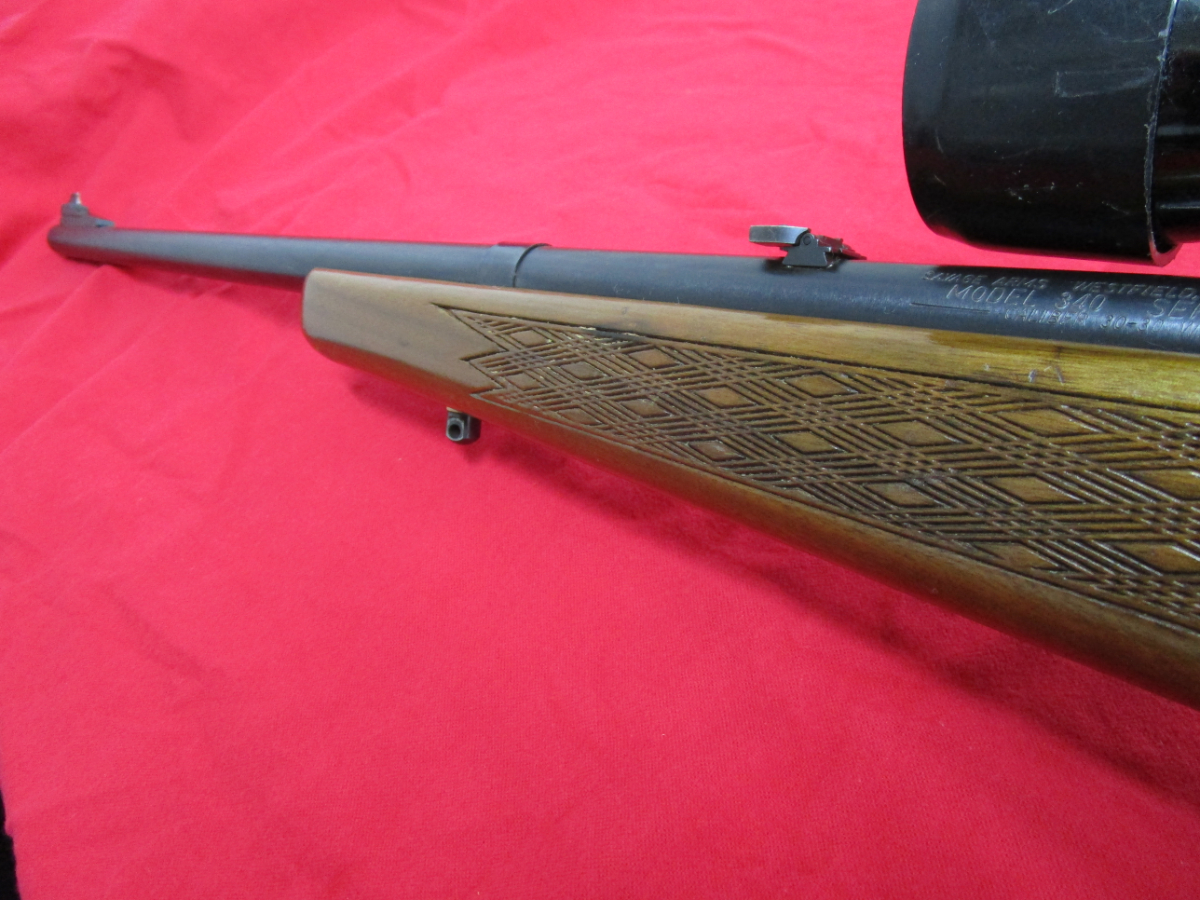
With close to a dozen more modern choices, the .30-30 Winchester remains the best deer hunting ammo. If you grew up hunting, you have likely used .30-30 Winchester rounds at some point. It is one of the most used types of ammunition for deer hunting due to its history and reliability. Hunters have used lever-action .30-30 rifles to hunt deer for over 125 years. Yet, a lever action rifle may not be your preferred type of rifle. You may also want ammo suited for longer ranges. Other considerations when choosing the right ammo for deer hunting include muzzle velocity, energy, recoil, and compatible rifles.

Here are the best deer hunting ammo options based on your needs

.30-30 Winchester – Best Overall 

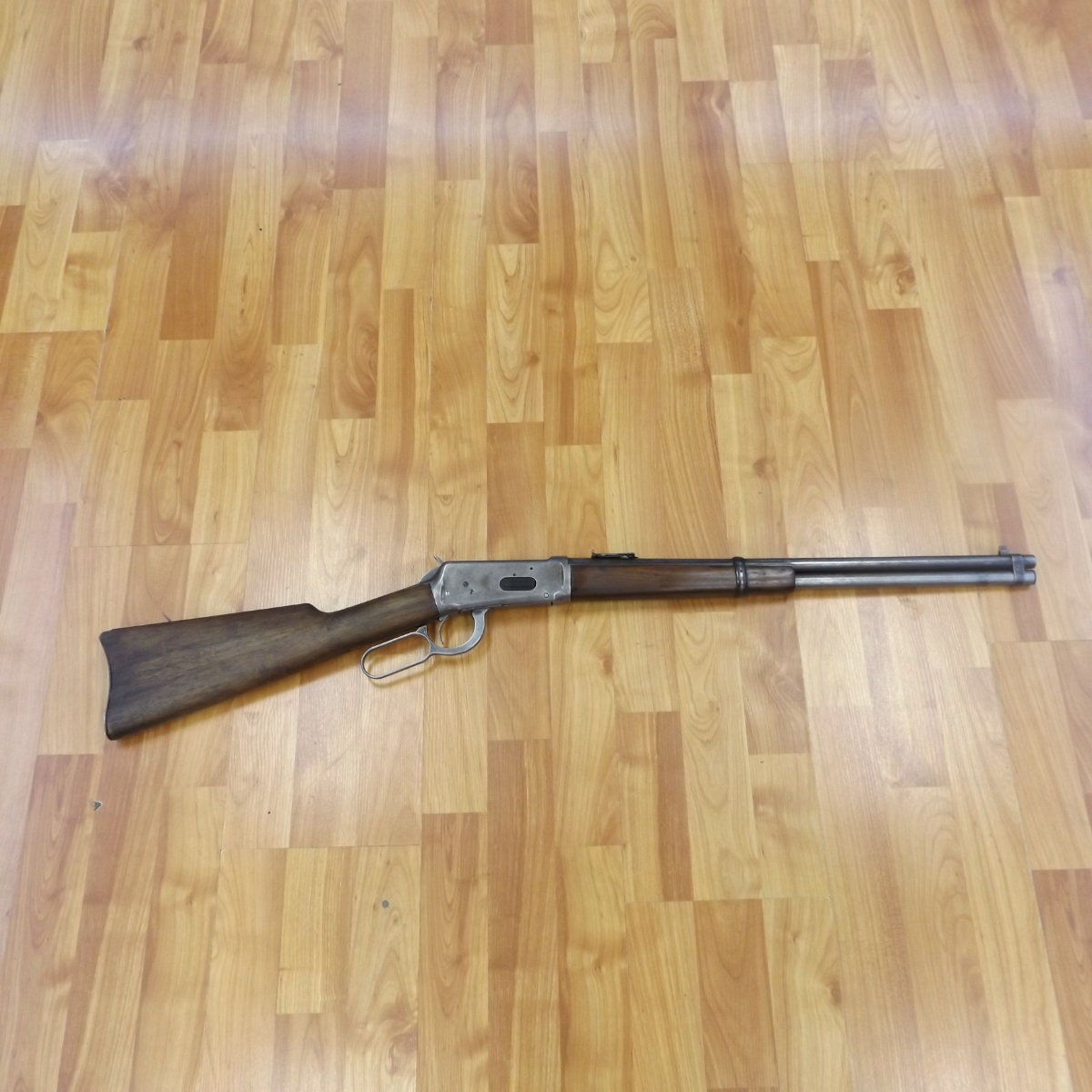
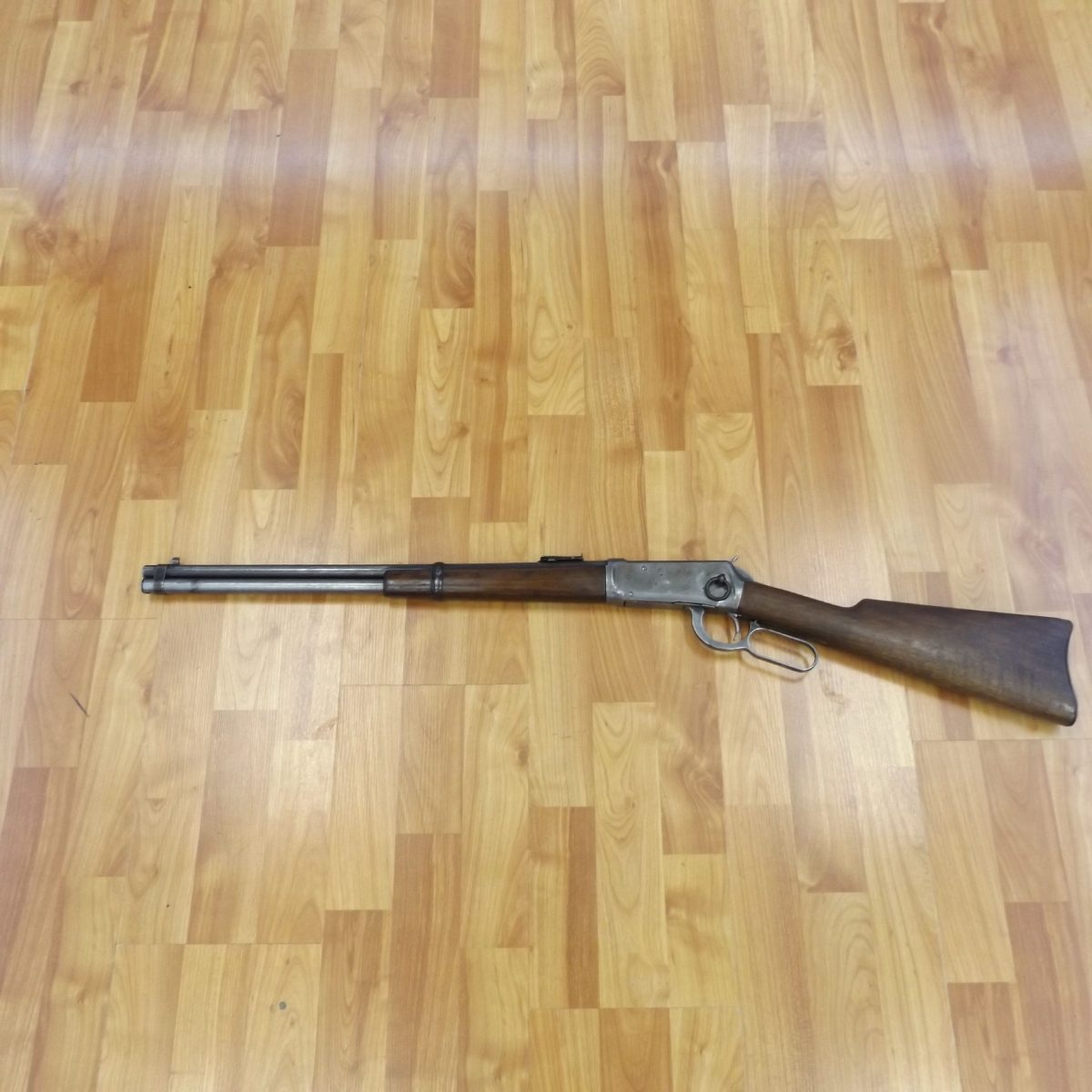
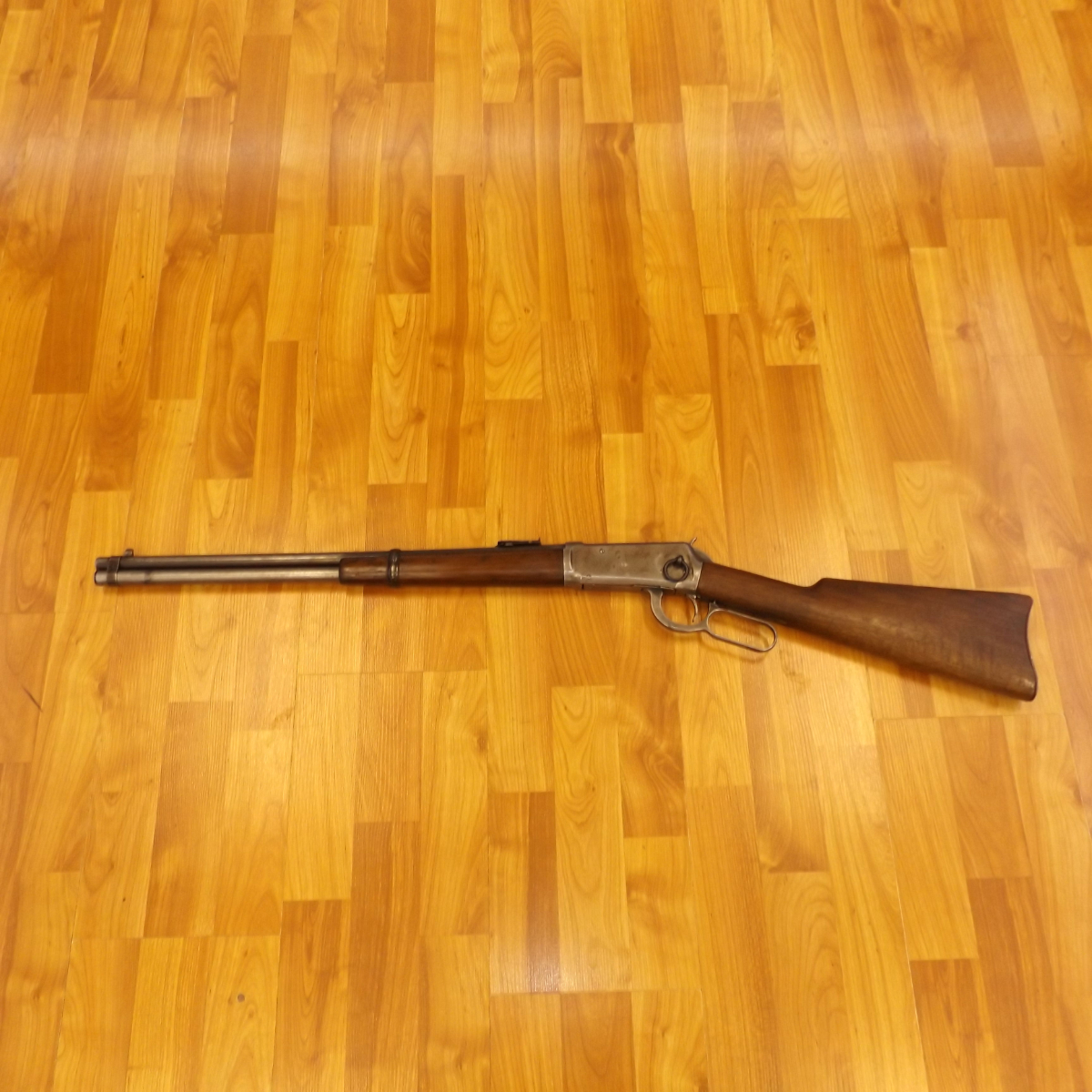
The .30-30 Winchester is the best overall choice when it comes to deer-hunting ammo. It was used in the Winchester Model 1894 lever-action rifle, making it one of the oldest types of ammo still produced. The 30-30 remains popular due to its limited recoil. The average 150-grain or 160-grain 30-30 rounds produces 9 pounds to 11.7 pounds of recoil while the typical rifle produces up to 15 pounds of recoil. The lack of recoil allows you to stay on target. You can also enjoy deep penetration, which is important for taking down your target with a single shot. 30-30 Winchester is a great choice for deer hunting but isn’t ideal for large game hunting, such as moose and elk. It’s also not often used for long-range hunting, as 30-30 rounds are commonly found in lever-action rifles made for close-range and medium-range targeting.

Pros

  • Deep penetration
  • Limited recoil

Cons

  • Not typically used for long-range hunting
  • Offers less stopping power

.243 Winchester – Best deer hunting ammo for Reduced Recoil 

Using .243 Winchester cartridges is a great alternative to the .30-30 Winchester for those with a bolt-action rifle that still want limited recoil. The .243 Winchester rounds are used in bolt-action rifles and offer a little less recoil compared to the 30-30 rounds. You can find .243 Winchester in lightweight, bolt-action rifles with great accuracy. It’s a good choice for younger hunters and those that are new to hunting. However, it lacks the power and energy needed for long-distance shooting. The barrel of the typical .243 rifle is often shorter compared to larger caliber rifles. Yet, the .243 Winchester is a top recommendation for distances up to a few hundred yards.

Pros

  • Significantly less recoil
  • Great accuracy
  • Found in lightweight rifles

Cons

  • Limited stopping power for big game
  • Not often used for long-range targeting

.308 Winchester – Most Affordable Deer Hunting Ammo 

Purchasing .308 Winchester cartridges can save money compared to other rounds. The .308 is one of the most affordable cartridges available. The low cost of this ammo may appeal to those that hunt frequently or spend time honing their shooting skills.

.308 Winchester rounds also produce a lot of energy. They have a total energy of about 2,600 pounds per foot and drop just 15 inches at 300 yards. .308 Winchester rounds may be more accurate in medium ranges of 300 to 500 yards compared to the previous types of ammo.

The drawback to using .308 Winchester rounds is the recoil. These rounds produce more recoil compared to the .30-30 and .243 cartridges, which can slow your firing rate.

Pros

  • Most affordable option
  • Well-suited for medium-range hunting

Cons

  • Produces more recoil
best deer hunting ammo fort campbell
Fort Campbell Public Affairs Office photo.

6.5 Creedmoor

The 6.5 Creedmoor cartridge is manufactured by Hornady, which is an American company based in Nebraska. The company specializes in making high-quality ammunition. 6.5 Creedmoor rifles are suited for big game hunting while the previous options lack the stopping power needed to take down larger animals. These rounds are also made to maintain energy across long distances, making them well-suited for targeting animals at further ranges. A rifle with 6.5 Creedmoor should have an effective range of about 1,000 yards. However, other options may provide a little more accuracy for long-distance shooting.

Pros

  • Suited for deer and larger animals
  • Offers an effective range of 1,000 yards

Cons

  • Less accuracy compared to other long-range ammo

Conclusion about the best deer hunting ammo options

The .30-30 Winchester is a common choice for deer hunting, as it’s the ammo used in one of the most traditional lever-action deer-hunting rifles. It works well for close-range and medium-range hunting but tends to drop significantly at longer ranges. Using .243 Winchester rounds is an alternative to .30-30 rounds. Instead of lever-action rifles, the .243 rounds are often used in bolt-action rifles. Bolt-action rifles tend to offer greater accuracy. 308 Winchester is one of the most affordable options. If you spend a lot of time at the range between hunting trips, you may prefer using cheaper ammo. 6.5 Creedmoor cartridges are lightweight and made specifically for long-range shooting. It’s a heavier caliber compared to the previous options, making it more versatile. Along with deer hunting, you can use 6.5 Creedmoor for hunting larger animals, such as moose.