Categories
Category: All About Guns

Throughout the 19th and 20th centuries, certain pistoleros stand out as either famous or infamous wielders of the wheelgun, be they exhibition shooters, or in this case, a serious practitioner of fighting pistolcraft. Periodically on Wheelgun Wednesday, we will take a quick look at such personalities. This week, let’s find out a little bit more about NYPD’s Jim Cirillo.
Serious Shooting
For those not familiar with the name, Jim Cirillo was one of the members of New York City’s “Stakeout Squad”, a team tasked to tackle the explosion of violent crime plaguing the city back in the 1960s. Jim and his colleagues would use the old-fashioned analog version of predictive analytics, otherwise known as good detective work, to choose a business that was likely to be robbed and “stake it out.” This involved waiting either inside or outside the location for the robbery to begin. Often it ended in gunfire, with the perpetrator/s dead or wounded.
Cirillo’s techniques and persistent practice with his wheelguns paid serious dividends. Over his career, he was involved in over 20 gunfights, a lot of them resulting in the offenders’ deceased. Due to his gunfights taking place in the cramped corner stores common to NYC, Jim had to be hyper-aware of his target and what lay beyond it. His instinctive shooting style paid dividends, however, and hitting criminals, not bystanders was a quality of his.
Weapon of choice
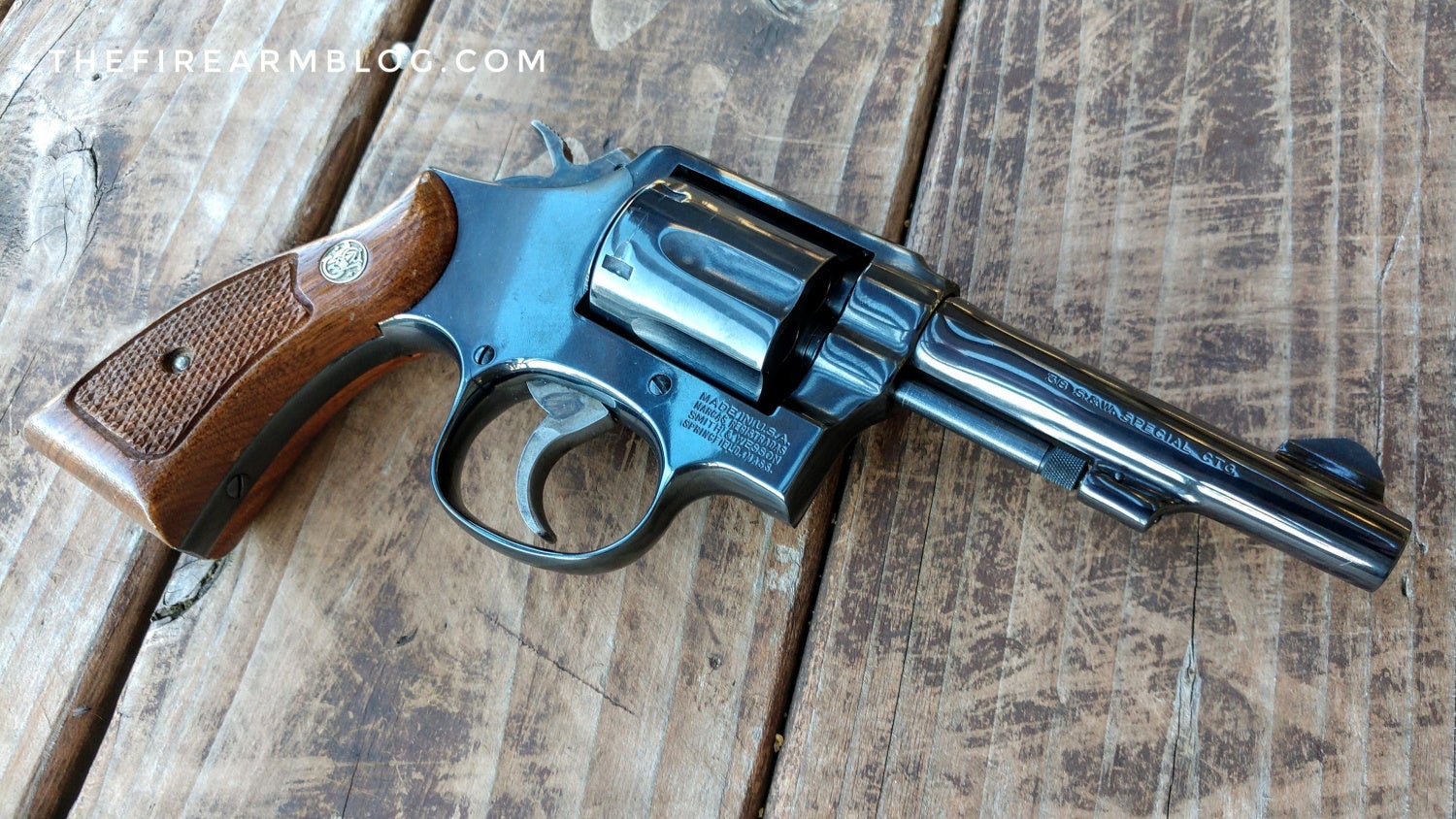
In the 1960s, the issued revolver of the day for the NYPD was S&W’s Model 10 chambered in .38 Special. Cirillo would regularly carry at least one Model 10, usually having another one on him as an authentic “New York reload”. Another revolver he was fond of was a 2″ Colt Cobra, also chambered in .38 Special. Cirillo would modify his primary revolver by wrapping the grips in electrical tape to better match the contour of his hand. He has written in his books that the gunfights were so fast and in such close quarters that when he ran out of ammunition in his primary revolver, often it was faster to draw his backup revolver and resume firing.
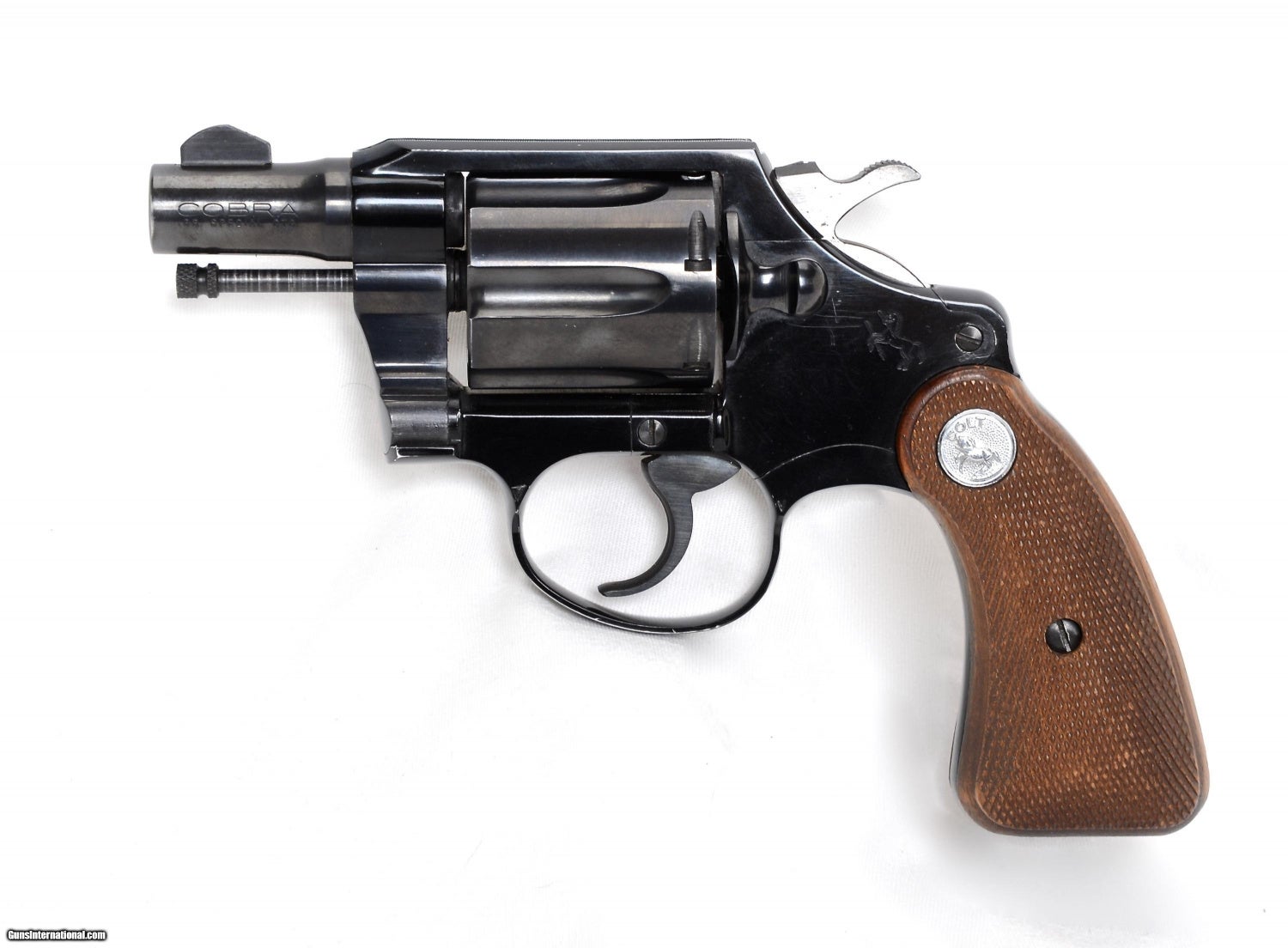
Colt Cobra. Image Credit: Gunsamerica
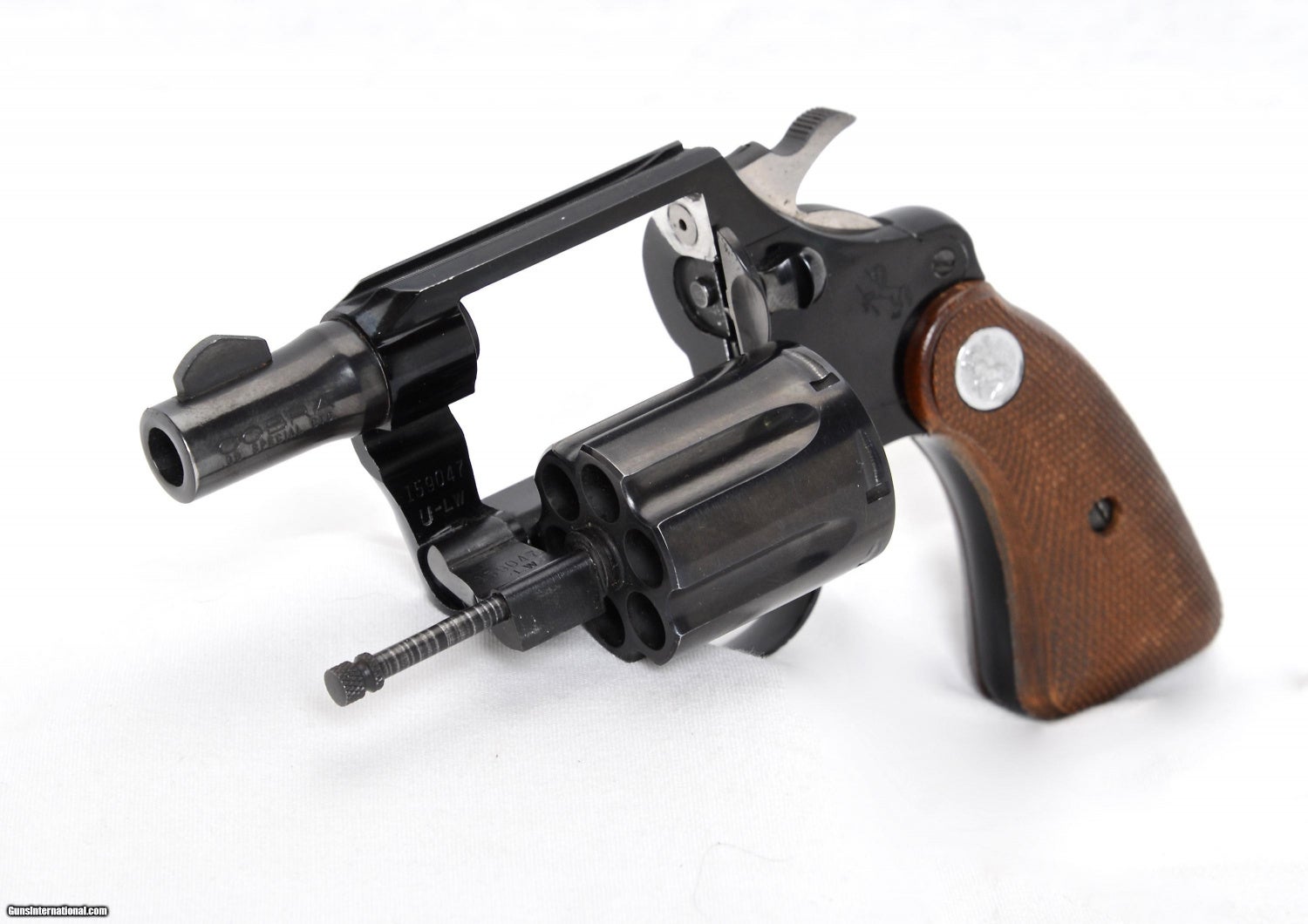
Colt Cobra. Image Credit: Gunsamerica
Further Reading
Though firearms and especially ammunition technology has dated some of Cirillo’s equipment preferences, his career story and firearms techniques are a wealth of information from someone who has been in so many gunfights in close quarters, and is highly recommended reading for anyone who carries a firearm, be it for work or self defense. Though Jim passed away a number of years ago, his wisdom lives on. If you haven’t yet, I highly recommend you read one of the biographies of this wheelgun wizard.

There are few who will argue that the Walther PP and PPK pistols are among the most iconic handguns of their type ever to have been devised. Sleek looks, smooth double-action triggers, superb quality and top-notch reliability—not to mention being the chosen sidearm of secret agent James Bond—really puts the PP series in a class of its own.
It might come as a surprise then to discover that, prior to the PP/PPK, Carl Walther’s establishment in Zella-Mehlis, Germany offered a sleek little 7.65 mm Browning (.32 ACP) hideout, the Model 4, that was every bit as highly regarded in its time as its descendants are in theirs.
Walther’s first entry into the pocket pistol market was the diminutive Model 1. Appearing in 1908, this .25 ACP-chambered pistol thrived due to a number of unique features that distinguished it from many other derivative designs of the time. The Model 2, also a .25, was introduced some months later, followed by a Model 3 in 1910, the latter being little more than a slightly upscaled Model 2 chambered in .32 ACP.
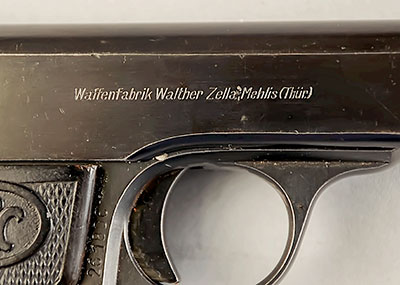
The same year, an even larger .32 was unveiled by Walther. The Model 4, which, size-wise, was similar to the later PPK and was intended for holster carry—primarily as a police sidearm—rather than as a vest-pocket piece. Retaining many of the design features of the Model 3, the Model 4, though incorporating basically the same slide as its predecessor, had the butt lengthened in order to accommodate eight rounds rather than the six offered by the Model 3, and the barrel extended by almost an additional inch.
Featuring an internal hammer and bayonet-lock-retained recoil spring surrounding the barrel assembly, this 5.94″-long, 18.42-oz. blowback-operated single-action became immediately popular with law enforcement, civilians and the military. The safety was a rather fiddly rotating lever located on the left side of the frame, snugged up against the rear of the slide. Not particularly suitable for single-handed operation, the safety was one of the gun’s few drawbacks. Another was a left-side ejection port that was not greatly appreciated by some right-handed shooters who objected to empties being tossed in front of them when the pistol was fired.
The Model 4 was rugged, easy to take down and possessed a very simple mechanism—all features endearing it to the German army, which, in the first months of the Great War, presented Walther with a contract for some 250,000 Model 4s to be used as officers’ pistols. Apparently only about 75,000 actually saw service. Martially used 4s (also often referred to as the Model 1914) can be distinguished by German military-acceptance stamps, along with the usual “crown/N” proofmarks. Stocks on civilian and military versions were checkered hard rubber with an intertwined “CW” logo.
After World War I, Walther continued to build Model 4s. Production ceased in 1929, the year the firm introduced the ground-breaking PP. Over its production period the Model 4 underwent a quartet of slight variations, mostly involving differences in markings, a few cosmetic alterations and minor mechanical changes.
The pistol shown here is in NRA Excellent condition. The serial number, in the 261,000 range, places its date of manufacture sometime in the mid-1920s. The frame is stamped “MADE IN GERMANY” indicating this was an export piece, probably sold in the United States. Value is $475. If it were a World War I military-issue pistol, its worth would be about 20 percent greater.
Gun: Model 4
Manufacturer: Waffenfabrik Walther
Chambering: 7.65 mm Browning (.32 ACP)
Manufactured: c. 1925
Condition: NRA Excellent (Modern Gun Standards)