Category: A Victory!

Many circuit courts have said that law enforcement can hold your property for as long as they want. D.C.’s high court decided last week that’s unconstitutional.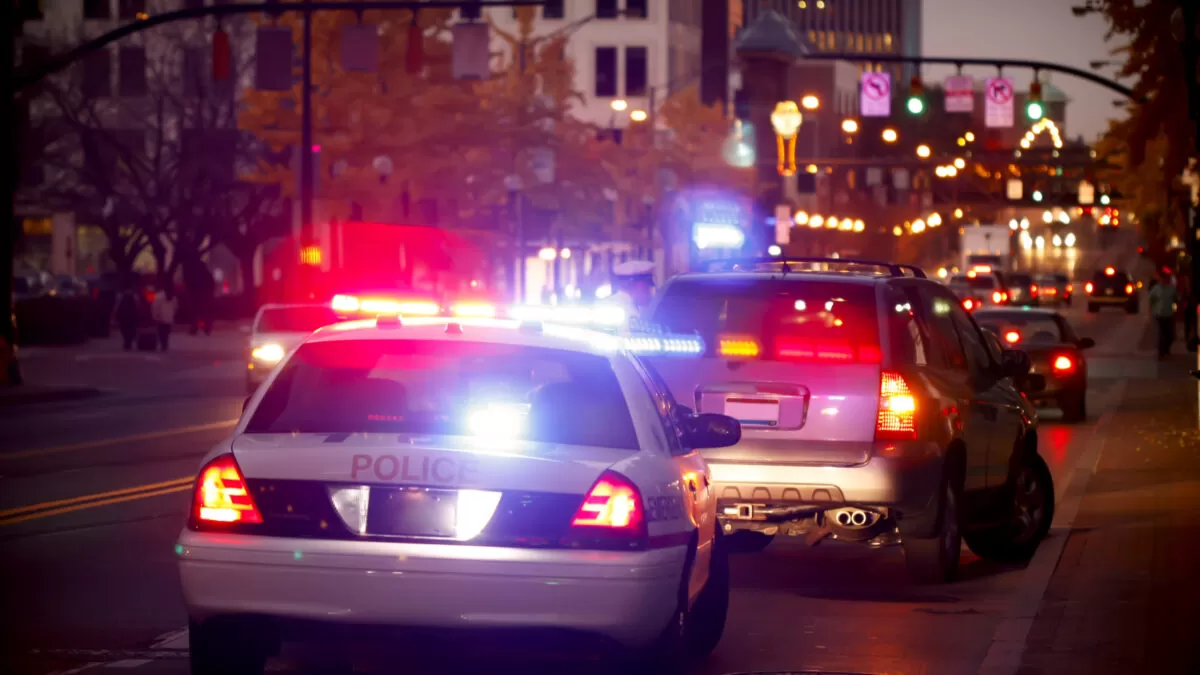
The Fourth Amendment’s protection against unreasonable searches and seizures extends to the length of a seizure, a federal court ruled last week, significantly restricting how long law enforcement can retain private property after an arrest.
“When the government seizes property incident to a lawful arrest, the Fourth Amendment requires that any continued possession of the property must be reasonable,” wrote Judge Gregory Katsas of the U.S. Court of Appeals for the District of Columbia in a unanimous ruling.
Most courts of appeal to pass judgment on the issue—namely, the 1st, 2nd, 6th, 7th, and 11th circuits—have held that, once an item is seized, law enforcement can retain the item indefinitely without violating the Fourth Amendment. These precedents have allowed police to retain personal property without clear legal grounds, effectively stripping people of their property rights merely because they were arrested. The D.C. Court of Appeals’ ruling complicates this general consensus.
Though law enforcement does not have to return property “instantaneously,” Katsas wrote, the Fourth Amendment requires that any “continuing retention of seized property” be reasonable. So while police can use seized items for “legitimate law-enforcement purposes,” such as for evidence at trial, and are permitted some delay for “matching a person with his effects,” prolonged seizures serving no important function can implicate the Fourth Amendment, the court ruled.
Given that the D.C. court finds itself in the minority on the question, some say that the case may be primed for the Supreme Court if the District chooses to appeal. “This case has potential to make national precedent,” Paul Belonick, a professor at the University of California, San Francisco law school, tells Reason. “The influential D.C. Circuit deliberately intensified a circuit split and put itself in the minority of circuits on the question, teeing it up cleanly for certiorari.”
The plaintiffs each had their property seized by D.C.’s Metropolitan Police Department (MPD). Five of the plaintiffs were arrested during a Black Lives Matter protest in the Adams Morgan neighborhood of D.C. on August 13, 2020.
As they were arrested, MPD officers seized their phones and other items. Though the protesters did not face any charges and were, in Katsas’ words, “quickly released,” MPD retained their phones for around a year. Some of the plaintiffs had to wait over 14 months to get their property back.
In the meantime, the plaintiffs say that they were forced to replace their phones and lost access to the important information on the originals, including personal files, contacts, and passwords. “The plaintiffs have alleged that the seizures at issue, though lawful at their inception, later came to unreasonably interfere with their protected possessory interests in their own property,” Katsas explained.
“MPD is aware of the ruling and will continue to work with our partners at the United States Attorney’s Office to ensure that our members are trained appropriately to ensure compliance with recent rulings,” a spokesperson for MPD tells Reason.
“Practically, this case is important because police have been exploiting a gap in the Fourth Amendment,” Andrew Ferguson, a professor at American University’s Washington College of Law, tells Reason. “In situations where there is a lawful arrest, but no prosecution, there are no clear rules on retaining personal property. In these cases, police have been confiscating phones to punish protestors.”
Michael Perloff, the lead attorney for the plaintiffs, agreed that the D.C. Circuit’s decision could set an important precedent going forward.
“Nationally, we’ve seen litigants attempt to challenge similar practices only to fail because the court concluded that the Fourth Amendment does not limit the duration of a seizure,” he tells Reason.
“Moving forward, we are hopeful that the D.C. Circuit’s opinion will lead courts to reconsider those rulings and, instead, enforce the Fourth Amendment as fully as the framers intended.”


 Even Big Tex, an icon of the Texas State Fair, is wondering what the heck is up with the fair’s new policy to exclude legally carried firearms. The move, quite simply, isn’t very Texan. Shutterstock Photo
For most people considering what they will do if things in America truly go to hell in a handbasket, most figure, we’ll just go to Texas, one of the last bastions of seeming common sense and traditional American values such as toughness, self-reliance and common sense. That’s certainly what hundreds of thousands of Californians did during the Covid pandemic when it was clear their state was going to total, taxable crap. Well, now maybe we need to think about that. Seems, Texas may be going the way of the rest of softer America is going, which it feels like it’s going to hell in a handbasket.
Few things have highlighted this more than the recent decision by the State Fair of Texas to prohibit firearms on its fairgrounds, a move that has ignited a fierce backlash from Texas House Republicans and gun rights advocates, who argue that the new policy compromises public safety and infringes upon the rights of law-abiding citizens. The fair’s decision, which comes in the wake of a shooting incident at last year’s event, has been met with widespread criticism and threats of legislative action.
Last week, State Fair officials, in collaboration with law enforcement, announced the updated policy banning all firearms, including those carried by licensed holders, from the fairgrounds. This decision marks a significant shift from previous years when licensed concealed carry was permitted at Fair Park. The new policy, which also includes the installation of weapons detection technology at entrances, aims to enhance security following last year’s shooting, in which three people were injured at the fair’s food court. (Always somebody who has to ruin it for the rest of us.)
However, the ban has been met with swift opposition from 71 Texas House Republicans and Republican House nominees, according to The Texas Tribune. The Republicans signed a petition urging the State Fair to reverse its decision. The petition argues that “gun-free zones are magnets for crime because they present less of a threat to those who seek to do evil,” and criticizes the fair’s new policy as being unrepresentative of Texas values. As many as 98 percent of all mass shootings occur in gun-free zones. The lawmakers warned that if the ban goes into effect, they would consider pursuing legislative measures to protect firearm rights on publicly managed lands.
The National Rifle Association’s Institute for Legislative Action (NRA-ILA) has also raised concerns about the legality of the firearm ban, given that the City of Dallas owns Fair Park, where the State Fair is held. According to Texas law, firearms prohibitions on government property are tightly regulated, and wrongful exclusions by state agencies or political subdivisions could result in fines. The NRA-ILA’s statement questioned the fair’s authority to enforce such a ban on government-owned property, despite the State Fair being operated by a private not-for-profit organization.
Texas Gun Rights, a prominent advocacy group, echoed these concerns, with President Chris McNutt stating that “Gun-Free Zones don’t work” and that the fair’s decision is a “feel-good attempt” that does nothing to improve safety. The group has called on the State Fair to reconsider its policy, emphasizing that it undermines the rights of law-abiding gun owners while failing to deter criminal activity.
As the State Fair of Texas prepares to open on September 27 in Dallas, the controversy surrounding its new weapons policy continues to escalate. With both sides entrenched in their positions, the issue is likely to remain a contentious topic leading into the next legislative session, where the potential for new laws addressing firearm rights on public lands could, and should, take center stage.


* Back when this building hadn’t burn down! 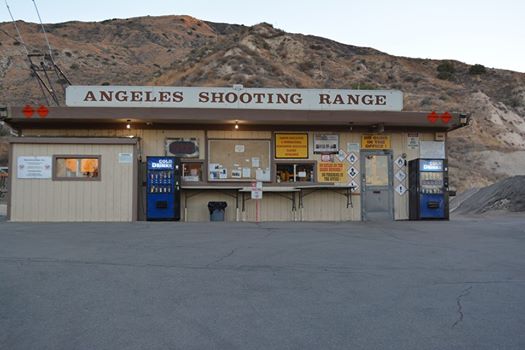

What a great day that must of been! Grumpy