




Impressive but what is your pattern like afterward? Asking for a friend Grumpy


The law of inverse or unintended consequences refers to outcomes that are the reverse of the planned or expected results. As described in another context, “the law of unintended consequences could create a perverse effect contrary to what was originally intended and ultimately making the problem worse.”
Back in 2015, Pete Holmes, the then City Attorney, wrote about Seattle’s “inventive” new way to address violent crime. “In a Seattle summer marred by random gunfire, the City Council unanimously approved, and Mayor Ed Murray signed, the ordinance that, come January [2016], will levy a $25 tax on businesses for each firearm sold at retail within City limits to provide a sustained local revenue source for research and prevention programs.
In addition, the City will impose a 2-cent tax for every round of .22 caliber ammunition sold and a 5-cent tax for every other round of ammunition sold.” Describing this so-called “common sense step designed to reduce gun violence,” Holmes said, “This City acted to control its own destiny.”
At the time the ordinance was passed, the City Budget Office estimated that the gun tax would generate revenue of “between $300,000 and $500,000 a year.”
Seattle Police Department data on crime shows there were 3,830 violent crime incidents in 2015, of which 26 were homicides. Violent crime incidents have increased each year since, reaching 5,630 in 2022 (including 52 homicides). The department’s most recent annual report reveals that Seattle’s overall violent crime rate reached a 15-year high in 2022, with homicides up by 24% and aggravated assaults (including shots fired and non-fatal shootings) “continu[ing] to be the highest reported in the last 10 years.”
Analyzing the numbers for shootings and shots fired specifically, police data for 2015 indicates there were 54 “shots fired” incidents, 16 shootings (nonfatal) and no shooting fatalities. By 2022, this had climbed to 79 “shots fired” incidents, 34 non-fatal shootings, and six “fatal injury” shootings. So far, 2023 looks to be at least as violent, with 84 “shots fired” incidents, 15 non-fatal injury shootings, and four fatalities already, a scant three months into the year.
Residents who may have looked to console themselves with what, by now, was supposed to be a multi-million dollar stash of cash generated by the gun tax for prevention programs were in for another rude shock. According to one source, the first full year of gun tax collection yielded just $103,766, with $93,220 collected for 2017, $77,518 in 2018, and $85,352 in 2019 – a four-year total that failed to reach the midpoint, even, of the city’s predicted revenue for a single year.
To get the real financial impact of the gun tax, though, Seattle’s extreme overestimates have to be viewed in the larger context of actual lost revenues. At the time the gun tax was proposed, the proprietor of one of Seattle’s gun stores described what he called the city’s “grossly unsound” reasoning and revenue projections. Seattle, he added, had only two dedicated gun stores, plus a few big box sporting goods stores and pawnshops, but had “plenty more” located a short way out of the city. Rather than “just tighten the belt and hand over the money,” consumers would shop elsewhere and “Seattle gun stores would simply go out of business.”
The result? No gun tax income and the city would lose the sales tax, other revenue and jobs the businesses had been generating until then. In his case – because he moved his business to the suburbs outside Seattle when the gun tax was passed – Seattle lost close to $64,000 in sales taxes that his business paid in his new location in 2017.
Another large gun retailer, the owner of Seattle’s Outdoor Emporium, was interviewed in late 2016 and blamed the gun tax for his “$2 million hit” in lost sales, a 32% drop in his customer count, and an estimated $600,000 loss of potential sales tax due to his plummeting sales.
If these figures are accurate, Seattle accomplished the unbelievable financial equivalent of cutting off its nose to spite its face by collecting, in 2016, a little over $100K in gun tax revenue but losing at least seven times as much in sales tax dollars alone. Driving these figures even further into the red, in 2017 the city reportedly spent more on defending a failed lawsuit on the tax (over its refusal to disclose the 2016 revenue collected) than it obtained that year in total gun tax income.
It’s not just a case of the usual wonky progressive math. Civic politicians have hurt city taxpayers, to be sure, but taking “control” of the city’s destiny with this “inventive” ordinance has correlated with violent crime rates reaching record highs. The same ordinance has created an uncompetitive business climate for gun retailers, so residents who need the means to protect themselves and their families from the burgeoning crime wave are forced to go outside Seattle. Even apart from the gigantic question mark on how the gun tax revenues have been spent and to what end, it’s difficult to interpret these outcomes as anything other than a complete and dismal failure.
From The NRA

North Korea’s leader Kim Jong Un has put an entire city under lockdown after 653 bullets went missing during a military withdrawal, it has been claimed.
The dictator’s officials have searched house-to-house in the city of Hyesan, which has a population of around 200,000 people, for the ammunition, two sources told Radio Free Asia.
‘The city… will remain on lockdown until all 653 bullets are found,’ a resident of the northern province of Ryanggang, where Hyesan is located, anonymously told RFA’s Korean Service.
The assault rifle ammunition was discovered missing on March 7, when soldiers with the Korean People’s Army 7th Corps were pulling back from the area surrounding the city, which lies on the border with China.
They had been deployed there in 2020 to enforce the border closure at the start of the Covid-19 pandemic.


‘They withdrew completely between February 25 and March 10, but an extensive investigation is underway because of a loss of bullets during the evacuation process,’ the Ryanggang resident said.
When it happened, the soldiers did not initially report it but tried to find the missing bullets themselves, according to the source.
‘But when the missing bullets could not be found, they notified the residents and began a rigorous search,’ he said.
The police and military launched an investigation, sealed off the whole city, and began searching house to house, the source said.
‘Those who have seen or picked up any number of bullets are required to report them as soon as possible.’
Those who fail to report any bullets they found could be punished, the source said.
‘There have been no clues even after ten days have passed since this investigation began,’ the source said.
Residents had been looking forward to the army’s withdrawal from the area, but during the investigation they will have even less freedom of movement, a Ryanggang province official, who requested anonymity to speak freely, told RFA.
‘Last week, orders were issued to factories, farms, social groups and neighbourhood watch units in the province to actively cooperate with the ammunition-related investigation,’ the official said, adding that when the bullets were not recovered after ten days, the investigating authorities resorted to lying to spread fear among the public.
‘They tried to put pressure on the residents by bluffing that the withdrawal was a manoeuvre related to the safety of the Supreme Dignity from reactionary forces,’ the official said, using an honorific to refer to the country’s leader.


A federal judge is blocking a California law that would mandate certain safety features for semiautomatic handguns.
U.S. District Judge Cormac Carney on Monday ruled in favor of the California Rifle & Pistol Association (CRPA) and four individuals who had said the law violates the Second Amendment right to keep and bear arms since no new guns being manufactured complied with it, Reuters reported.
The plaintiffs noted that gun buyers in California were de facto limited to purchasing models from before 2013, the year when the law fully took effect.
California’s Unsafe Handgun Act, enacted in 2001, requires new semiautomatic weapons to have an indicator showing when there is a round in the chamber and a mechanism to prevent firing when the magazine is not fully inserted in case to prevent an accidental discharge, according to Reuters.
The state law also requires handguns to implement microstamping, where a serial number will be stamped on each bullet fired.
Carney, who was appointed by former President George W. Bush, also said in his ruling that the state failed to point out any historical parallels for its law, adding that residents “should not be forced to settle for decade-old models of handguns.”
CRPA President Chuck Michel celebrated the court ruling in a statement saying: “If we can hold on to this great Second Amendment win, people will be able to choose from among thousands of the latest, greatest and safest handguns made today.”
Carney noted that the state has 14 days to appeal his ruling, Reuters reported.
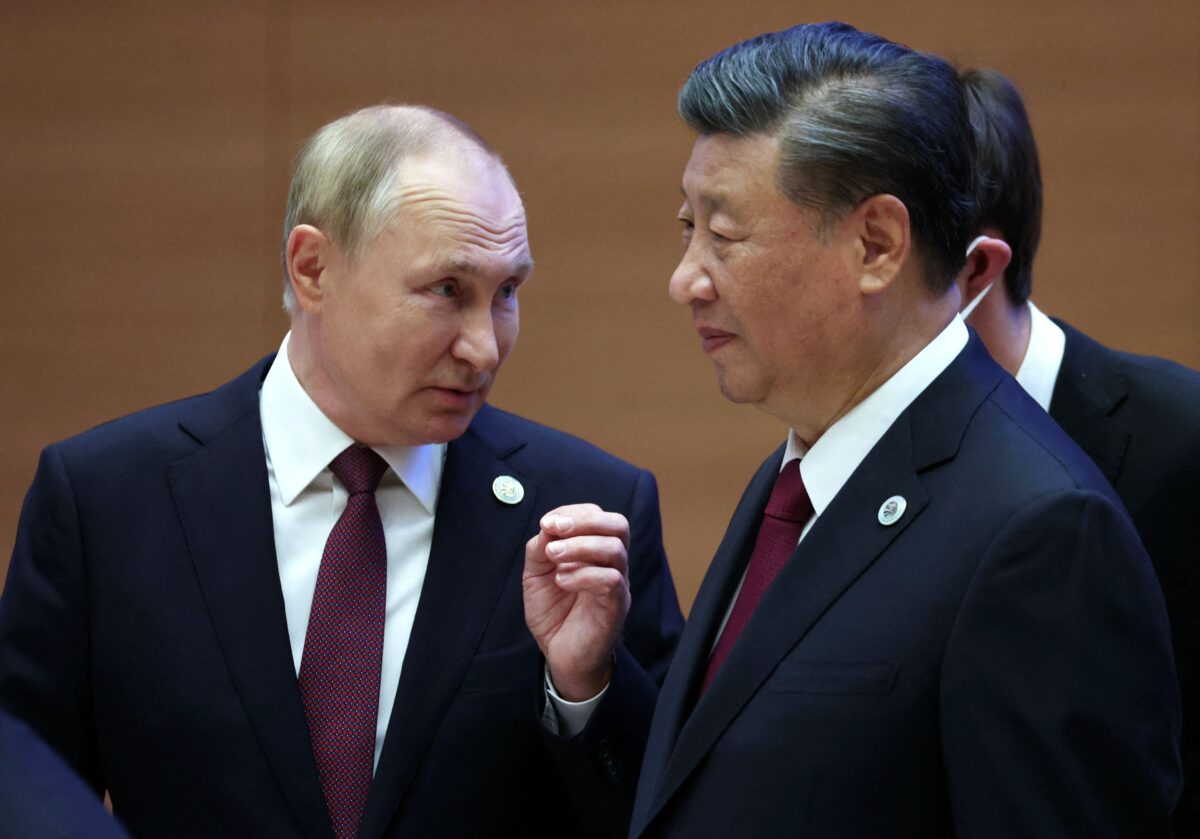

Chinese leader Xi Jinping’s meeting with Russian President Vladimir Putin is aimed at furthering the Chinese Communist Party’s (CCP) designs against the United States, according to analysts.
Xi’s March 20 to March 23 visit to Moscow is his first to the country since Putin’s February 2022 invasion and comes on the heels of Beijing’s brokering a resumption of diplomatic relations between Iran and Saudi Arabia. Weeks before Russia’s invasion of Ukraine, Xi and Putin declared a “no limits” partnership, and ties between the two countries have only deepened since then.
The meeting was announced on Friday, incidentally not long after the International Court of Justice issued an arrest warrant for Putin for war crimes.
The timing of the visit is critical for both Xi and Putin, experts say.
“I think that Beijing—like most of the rest of the world—is worried that the conflict might escalate to nuclear warfare that would harm their own plans as much as anyone else,” said Brandon Weichert, a U.S.-based geopolitical analyst and author of the book “Winning Space: How America Remains a Superpower.”
“At the same time, though, Beijing doesn’t mind seeing their two biggest competitors, Russia and the U.S., bleeding each other in Europe while China has free reign in the Indo-Pacific,” he told The Epoch Times.
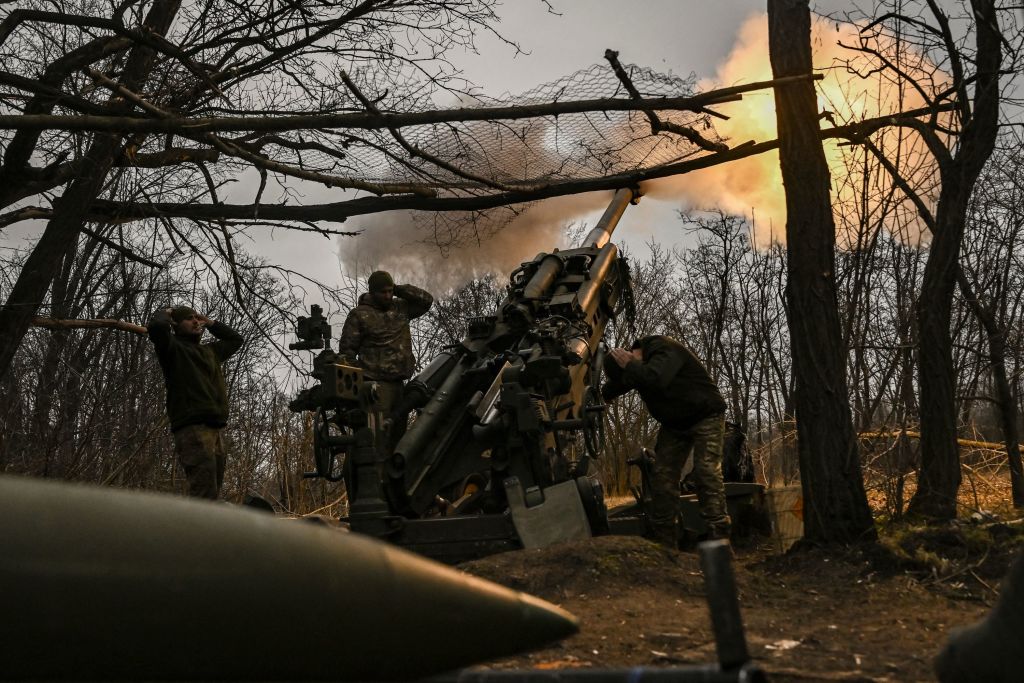
The meeting comes as Russia slowly makes advances in its monthslong operation to capture the eastern Ukraine city of Bakhmut. The bloody battle has led to massive losses on both sides, especially the Russians.
Madhav Nalapat, a strategic affairs analyst and vice chair of the India-based Manipal Advanced Research Group said that Xi and Putin are meeting at a time when the war in Ukraine is entering a stage where it can either end conclusively or can drag out into a stalemate.
“Putin is under pressure from his commanders to unleash the full fury of Russian weapons against Ukraine rather than have the war get prolonged,” Nalapat told The Epoch Times. “Xi clearly wants to know whether Putin will go all out or continue with the present tactics.”
To Frank Lehberger, a Germany-based Sinologist, Xi and Putin’s “hasty arrangement” and secret get together” on Monday is because the Russian military is on the “brink of collapse” in Ukraine.
“Xi Jinping, who is since last week the sole autocrat of China, is anxious not to let this happen, because a military rout of Russian armies in Ukraine would be the end of Putin’s autocratic and anti-Western regime of Russia,” Lehberger told The Epoch Times in an email.
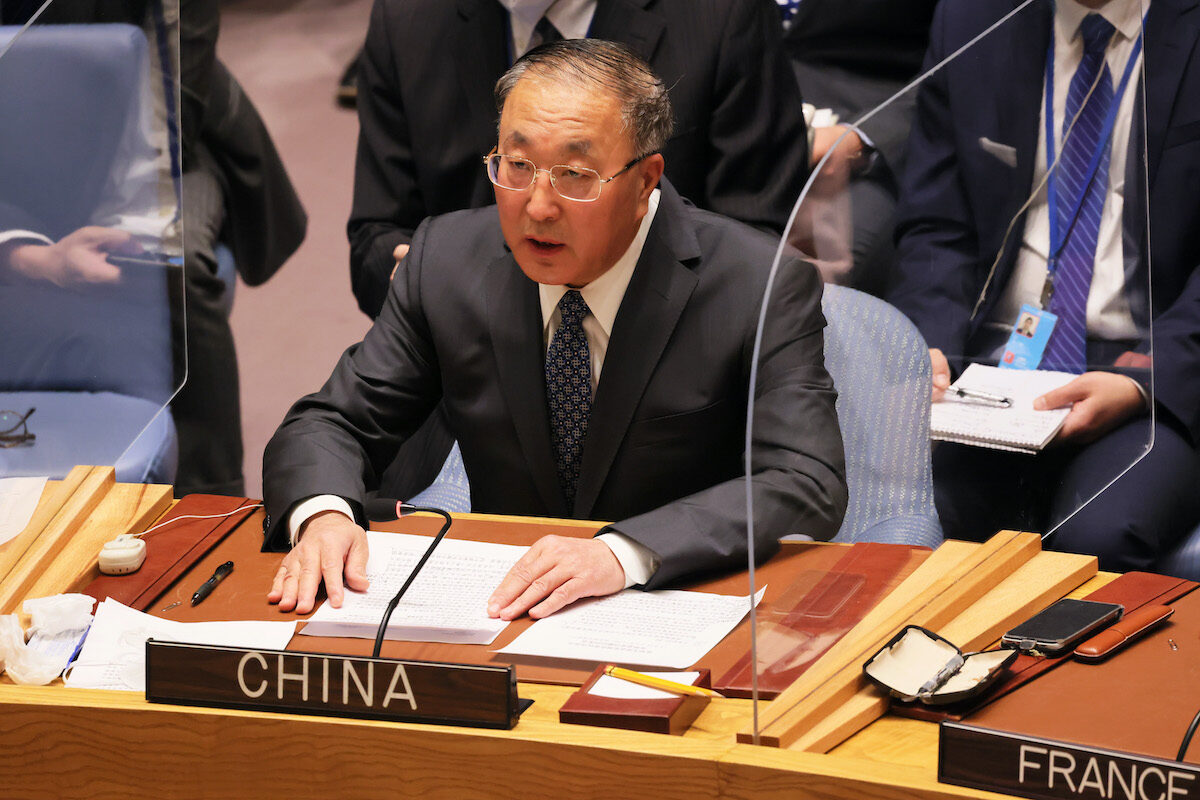
The Russian army has lost nearly 200,000 soldiers in the war, according to Western officials, and at least 500,000 Russians have fled the country since the war started. Lehberger said that Russian elites and nationalist hardliners are angry with Putin and hold him responsible for the situation, wanting an end to Putin’s dream to recreate a Russian empire in Europe.
“Putin desperately needs Xi to come now and pledge his help, or it will be too late for Putin and his dreams of an autocratic empire,” said Lehberger.
“Xi knows all this, and he also desperately needs Russia to fight on ….not only against Ukrainians but by association against the entire democratic West or NATO, which are the CCP’s existential enemies.”
Nalapat said that Russia losing a war to Ukraine would weaken China’s position significantly in the international order and the timing of the meeting is mindful of that.
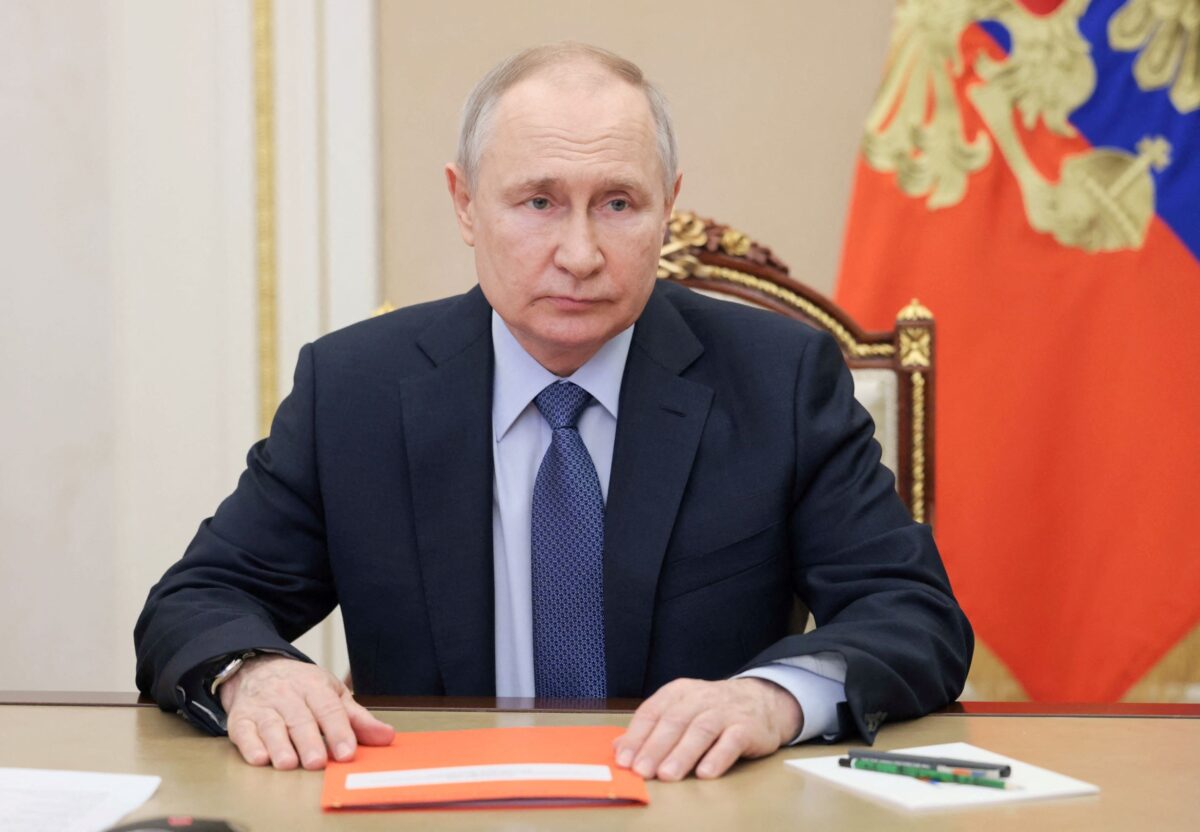
There has been rising apprehension about China supplying military assistance to Russia. Secretary of State Anthony Blinken said last month that China is already providing “non-lethal” weapons to Russia during the war and is considering supplying lethal ones. Beijing denies these claims.
While much has been made of Xi’s purported role as peacemaker in the conflict, experts said that this is just a smokescreen, pointing to Beijing’s supply of “dual-use” equipment to Moscow that aids its military efforts.
Weichert said that China has long been providing “vital support and supplies” to Russia.
“The Biden administration knows full well that there are Chinese ‘technicians’ working alongside Wagner Group units in Bakhmut, helping them to maintain the drone fleets that Chinese drone makers have sold to the Russians,” he said, referring to the private mercenary group.
The Wagner Group purchased more than 2,500 Chinese drones in a deal between the mercenary group and Russian and Chinese intelligence, British media outlet Daily Mirror reported, citing a UK intelligence report.
Nalapat said that misleading the enemy is a “standard operating procedure” for the CCP, noting that the regime is supplying arms to Russia through discrete channels.
“Do you believe that the flood of weapons, many sophisticated, coming to Russia from North Korea and Iran have all been made in those two countries?” he said.
According to a recent Politico report citing customs data, Chinese firms have exported 1,000 assault rifles and other equipment to Moscow that could be used in the conflict.
In June 2022, for example, Russian firm Tekhkrim imported rifles from China North Industries Group Corporation Limited, a large state-owned defense contractor. The data also showed that Russian companies received 12 shipments of drone parts and over 12 tons of body armor from China via Turkey in late 2022.
In response to this report, White House National Security Council spokesperson John Kirby told The Epoch Times that the administration couldn’t confirm that China has in fact provided lethal aid to Russia.
Lehberger said that “All these activities are in contravention of current international sanctions,” adding that the reported efforts are only the tip of the iceberg.
In addition to Iran and North Korea, China is also sending arms to Russia through other countries like Myanmar, Serbia, Turkey, and Russia’s staunch ally in Europe, Belarus, according to Lehberger.
After his summit with Putin, Xi will talk via satellite link to Ukrainian President Volodymyr Zelenskyy for the first time since the invasion. Lehberger termed this as Xi’s “make-believe peace mission.”
According to the expert, Xi will aim at a temporary cease-fire to earn recovery time for Putin’s depleted army and Russia will “at a later time” attack Ukraine more fiercely.
Lehberger said that the CCP will continue to supply arms to Russia for at least another two years, because he believes that Xi has plans to take over Taiwan in 2025 and would thus wish to use prolonged Ukraine-Russian conflict to stun or weaken the United States and other Western powers.
Experts said that China has long-term economic agendas vis-a-vis the Russia-Ukraine war and its economic goals over the next decades are linked with Beijing’s subjugation of the Russian economy.
“Russia is squarely in the camp of China’s new empire; the vast Russian wilderness will become protein for which the dragon can feed on as it rises over the next decade, and Putin will become a powerful vassal prince under Xi Jinping,” said Weichert, adding that fusing the Chinese and Russian economies would be a major victory for Xi and for that, it would need Russia to be ensnared in a protracted conflict with Ukraine.
Nalapat said that Russia has become China’s most important supplier of industrial raw materials at discounted prices. The two countries want to work together to topple the U.S. dollar as the global reserve currency.
“A weakened U.S. dollar would in their view boost their own currencies, especially the RMB [Chinese yuan]. For some time, much of U.S. deficit funding has come from increases in overseas purchases of USD as a reserve currency, and a dollar reset would significantly crimp the ability to spend of the U.S. government,” he said.
Xi wants the United States to not only be weakened but also be deprived of reliable and functioning allies within Europe, according to Lehberger who sees the Ukraine war as vital to Beijing’s economic game plan against Washington.
“A weak E.U. will then be earmarked to become an economic dependency of China,” Lehberger said.