Category: A Victory!
I also heard a rumor that he got robbed too! Anyone out there know more about this? Thanks Grumpy

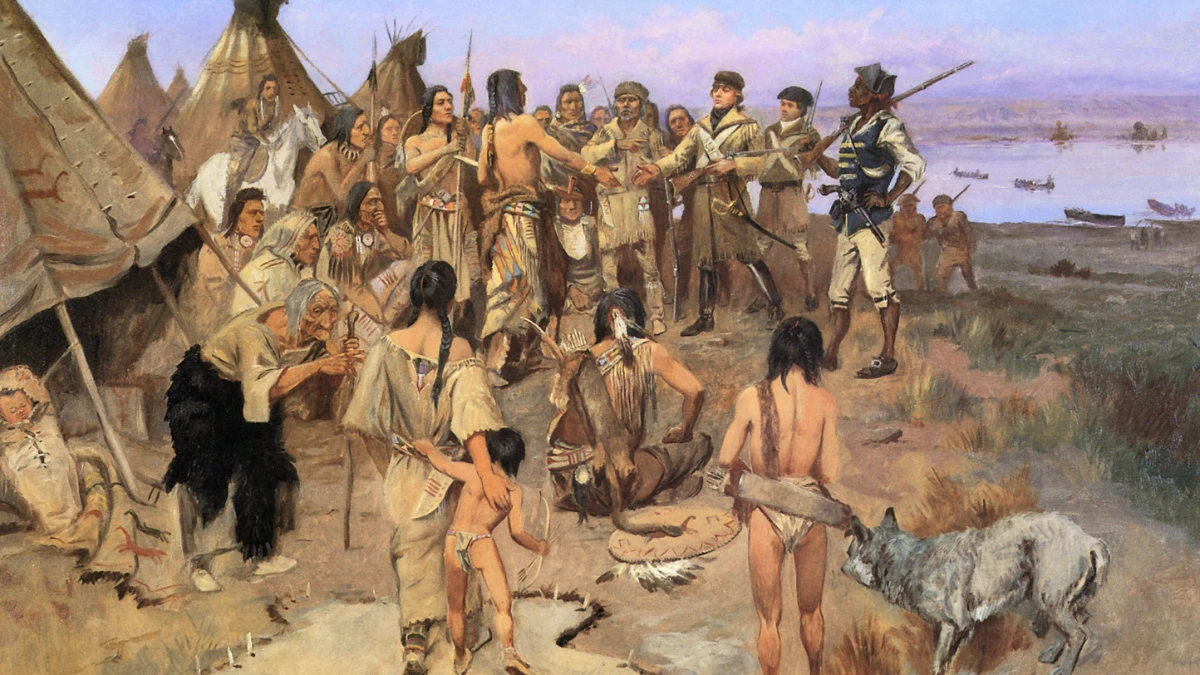 There’s a difference between book smart and bar smart. You may not be book smart, but this series can make you seem educated and interesting from a barstool. So, belly up, pour yourself a glass of something good and take notes as we go under the covers of Lewis and Clark’s famed expedition.
Prior to embarking across the continent with the Corps of Discovery, Meriwether Lewis trained under Dr. Benjamin Rush, whom President Thomas Jefferson considered to be the best physician in the nation. Following the two-week crash course on medicine, Lewis stocked up on over 5,000 doses of drugs, including laudanum to treat coughs, opium to treat pain, calomel to treat worms, and mercury to treat syphilis.
Syphilis was common among the tribes of the Missouri River, and so were sexual encounters with white travelers. Lewis packed accordingly: The mercury was used copiously throughout the expedition.
In one journal entry, Lewis wrote that multiple tribes had a “curious custom” of offering wives and daughters to traders. Plains Indians believed that spiritual powers were passed between people during sex, and that a husband could become a better hunter or more knowledgeable of medicines if his wife had sex with a powerful man, and then had sex with him.
Clark’s black slave, York, was a novelty to the tribes and did as much spiritual power passing as anyone. While visiting the Arikara tribe, a warrior volunteered to stand guard outside a lodge all night while York and his wife were inside. On one evening with the Mandan tribe, York was offered four women.
Other tribes pimped out their women for more worldly possessions. In the Pacific Northwest, multiple groups bartered with sex. One tribe that often visited their camp had a lower price tag than most, Lewis noted. “They do not hold the virtue of their women in high estimation, and will even prostitute their wives and daughters for a fishing hook or a strand of beads.”
That wasn’t all the expedition would leave behind, though. Nine months after the crew departed the Nez Perce in Idaho, an elder’s daughter gave birth to a son that was said to be Clark’s. Similar stories are told by the Teton Sioux, Sioux, and Salish, who claim to have decedents of Lewis and Clark in their tribes.
While some experts question their authenticity, most believe the expedition leaders weren’t exempt from the urges that the rest of the crew acted upon. As my favorite Corps of Discovery historian, Frances Hunter, put it, “I believe that Lewis and Clark were professionals who always put safety, discipline and their mission above everything else. That said, it stretches credibility to think they kept their buckskins buttoned up the whole time.”
Feature image via Charles M. Russel.
_________________________________________________ This expedition also was a major cause on why huge swathes of the Tribes were wiped out by the diseases that the Lewis & Clark troops carried with them. That their European / African ancestors had & of whch they were immune to but not the Indians.
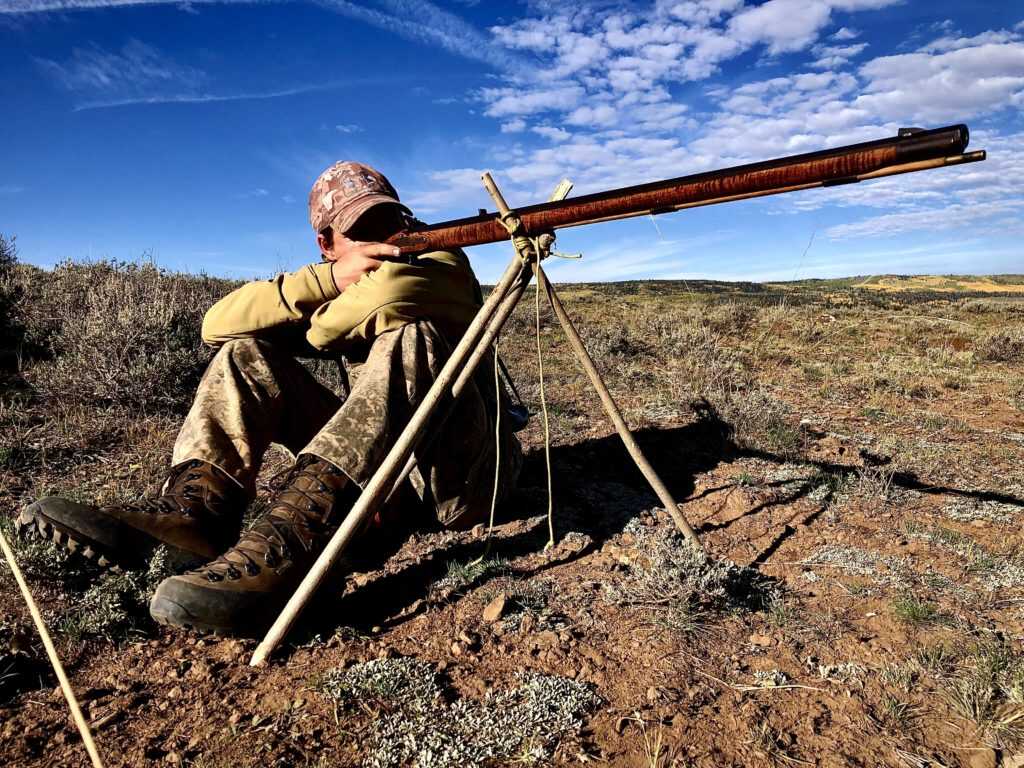
A young hunter stalks within easy range of a big antelope, but the buck is facing him and he’s shooting a 1700s-era patched round ball. Should he take the shot?
As a lifelong hunter, some of my favorite experiences in the field have come while watching and helping youngsters and new hunters learn the ways of the woods. This experience was one of those, yet a little different too. I could see that my 14-year-old son had become a skilled hunter who no longer required my help. It was the first time I haven’t been at his side when he shot a big game animal (though he’s killed lots of coyotes on his own). Let me tell you, it was cool to watch.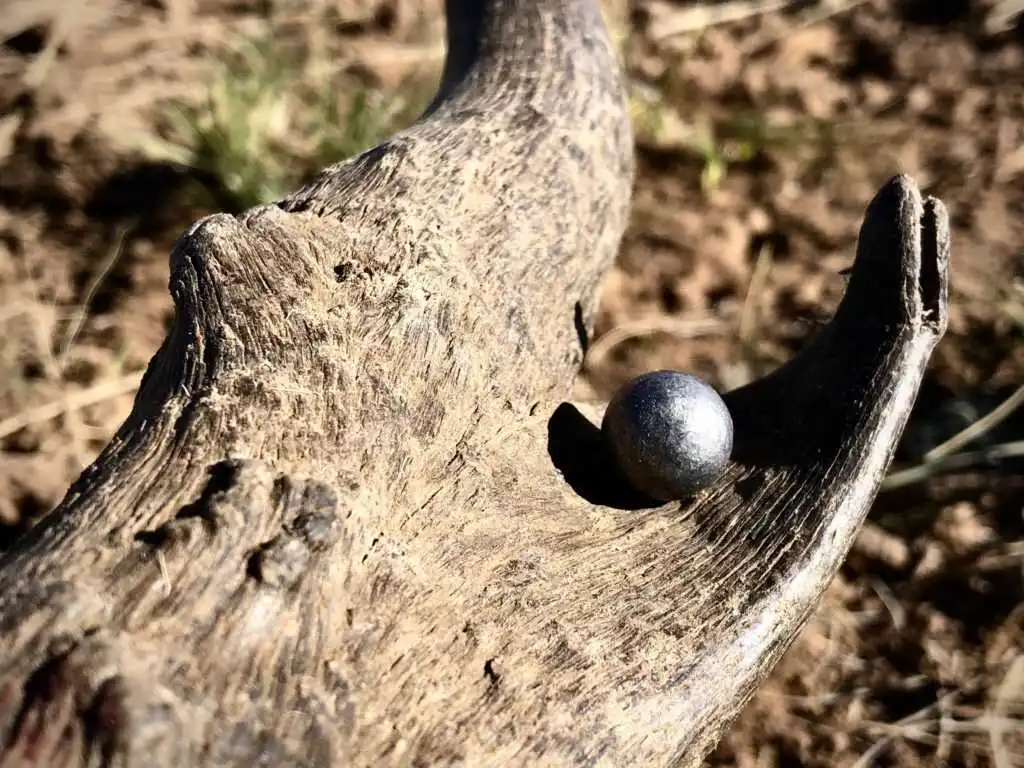
RIFLE AND AMMO
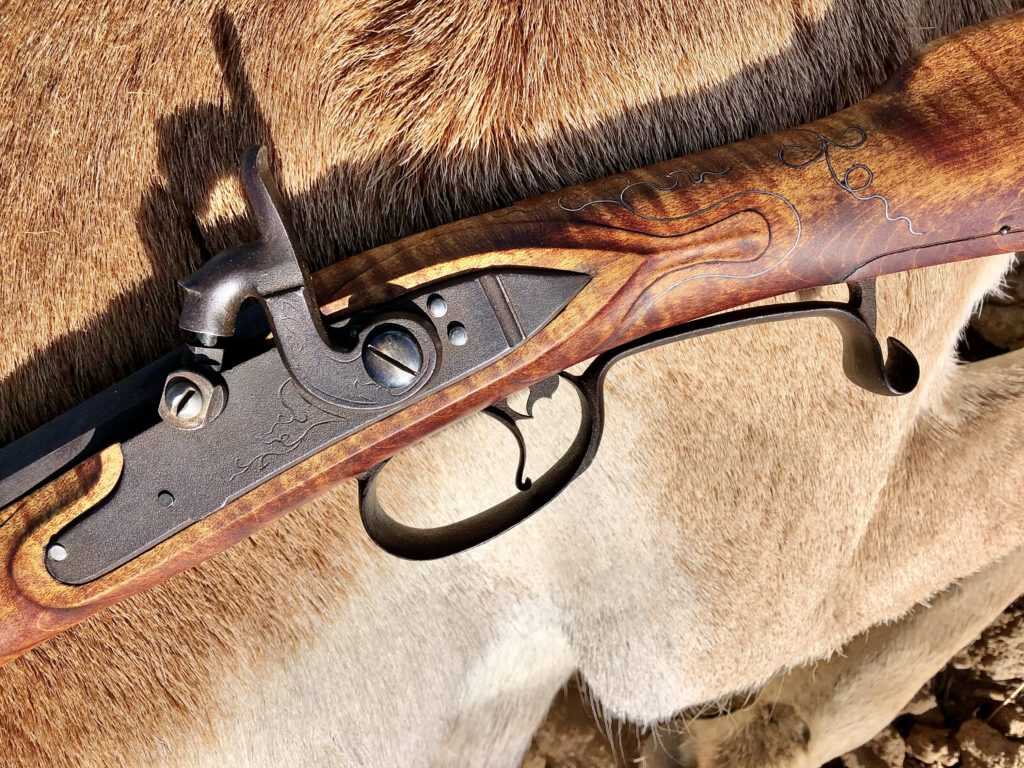
Josiah had drawn a Limited Entry muzzleloader pronghorn tag in Utah. Rather than using a scoped modern synthetic-and-stainless inline muzzleloader, he chose to hunt with a traditional .50 caliber long rifle that I made for my wife Trina years ago. It’s a beautiful piece with a 36-inch Green Mountain barrel, Siler caplock, hand-carved trigger, and fixed iron sights. Josiah shot it extensively before his hunt, and when shooting from a sitting position over cross-sticks was lethal out to 125 yards.
The load he used consisted of a 170-grain .490” swaged lead round ball made by Hornady shrouded in a .0018 thick linen patch and seated atop 70 grains of 3F Goex Black Powder. That’s not a super potent load, and I don’t have a velocity to share with you, but it shot very accurately and surprisingly flat out to 125 yards.
For optics, Josiah was using one of Leica’s new Geovid Pro 32 Binocular/Rangefinder units in 10X32 power. I watched from a distance through an old Zeiss spotting scope. I filmed the hunt on my phone through that spotter with the use of a Phone Skope attachment.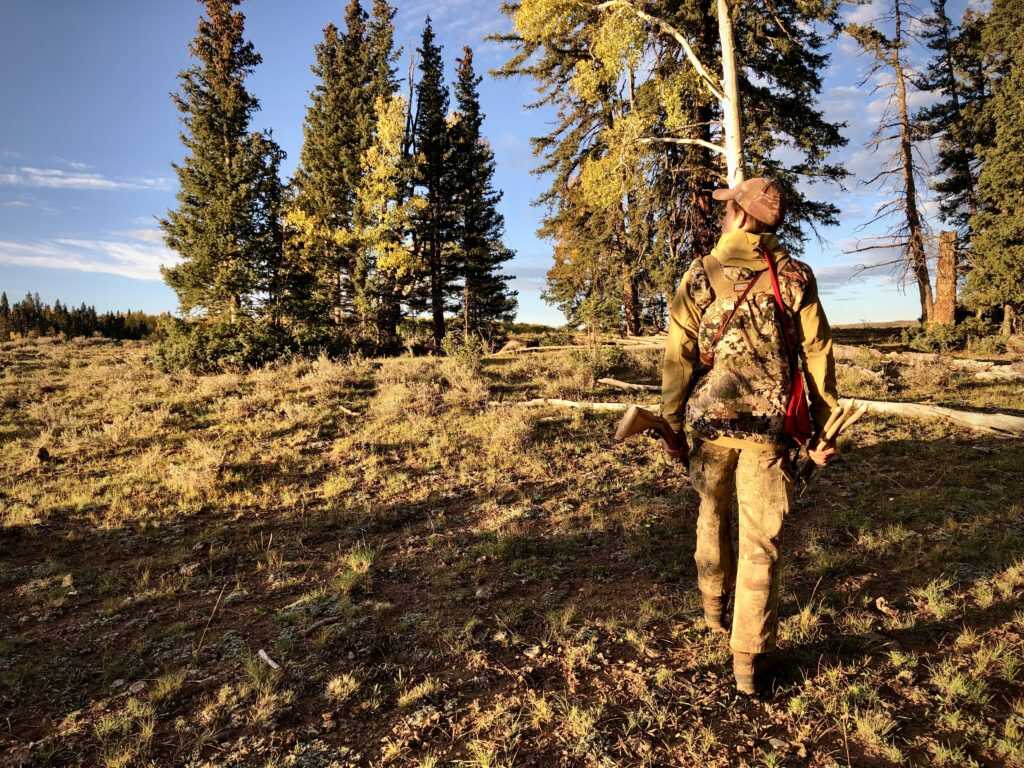
THE HUNT
The pronghorn unit Josiah had drawn features high-elevation rolling sage flats and swales, broken by timbered draws and ridges. It’s a ways from the nearest town, and the roads aren’t very good. A busy summer hadn’t left us any time to scout, but I’d hunted the area before and knew where the antelope like to hang out and how they like to travel. On the afternoon before the opening day, our truck groaned and complained as we eased along a rough two-track, working our way into a secluded campsite in the heart of our hunting area. Josiah counted roughly sixty pronghorn en route, including several nice bucks.
We talked about his goals for this hunt, and both agreed that considering the fact that he was hunting with one of the most primitive weapons available, and that pronghorn antelope are notoriously difficult to stalk, he should shoot the first nice buck he had a good opportunity at. We expected it to take several days and many stalk attempts before he managed to close within his effective range.
We set up camp in a patch of timber, pitching our tent and gathering a pile of firewood under a tarp against an anticipated rainstorm. Josiah began to ready his muzzleloader and gear to hunt the next morning. That’s when he discovered that he’d left home the Bog Pod shooting sticks he’d done all his practicing with. We both stomped around and growled for a minute, but then he cut a couple of finger-sized saplings and fashioned them into a set of cross-sticks. He was ready to rock and roll.
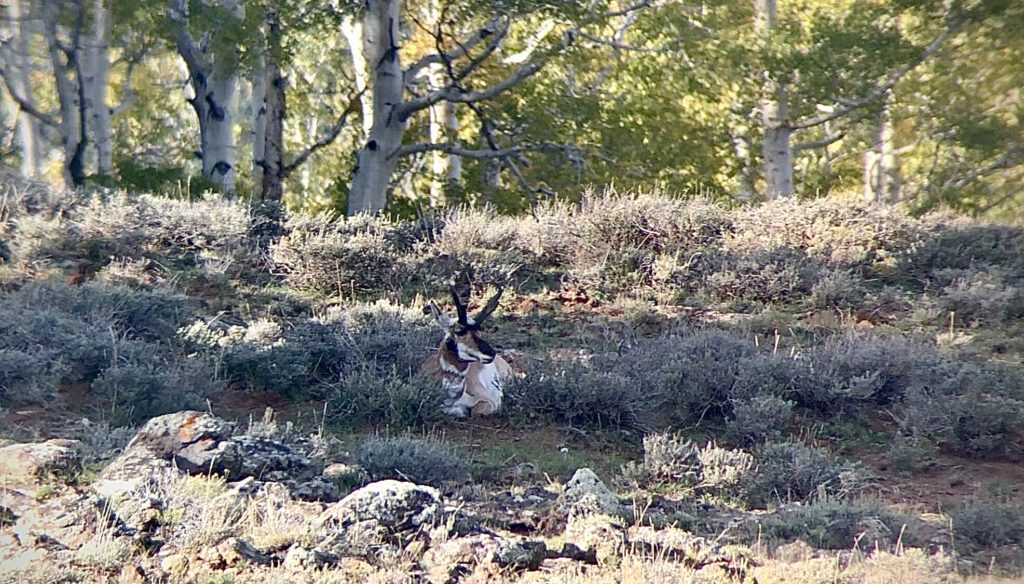
Daylight found us moving slowly toward a big swale where we’d seen a big buck tending his harem the night before. Good shooting light had just arrived when we spotted four pronghorn in the distance, one of them a really nice buck. They moved out of sight across a low ridge, and the stalk was on.
The antelope split up, with three disappearing down a draw and the fourth – the big buck – feeding up the opposite side of a gentle swale. Whenever he put his head down to feed we would move closer, keeping together and trying our best to look like a beef cow feeding in the sage.
More than an hour passed and the buck finally bedded, 265 yards away with no cover at all between us. Had Josiah been hunting with a modern rifle or even a modern muzzleloader his hunt would have been over right there, but with a primitive muzzleloader, it was just the beginning of the stalk.
Sometimes antelope are very curious and can be “flagged” in with a white handkerchief or similar, so we hunkered down and waved my yellow silk scarf above us. The buck was interested but seemed more calmed by the sight than stimulated. I attribute this to the scarf being similar in hue to a pronghorn’s side, and I believe the movements made the buck think another antelope was feeding at our position.
Time passed, and eventually, Josiah decided to try to stalk across the intervening swale and close within shooting range of the buck. He mimicked an animal feeding and kind of meandered in the general direction of his quarry on all fours, pretending to stop and feed along the way. It worked; the buck ignored him most of the time. Whenever he became nervous I would wave the yellow scarf and he would relax and resume chewing his cud.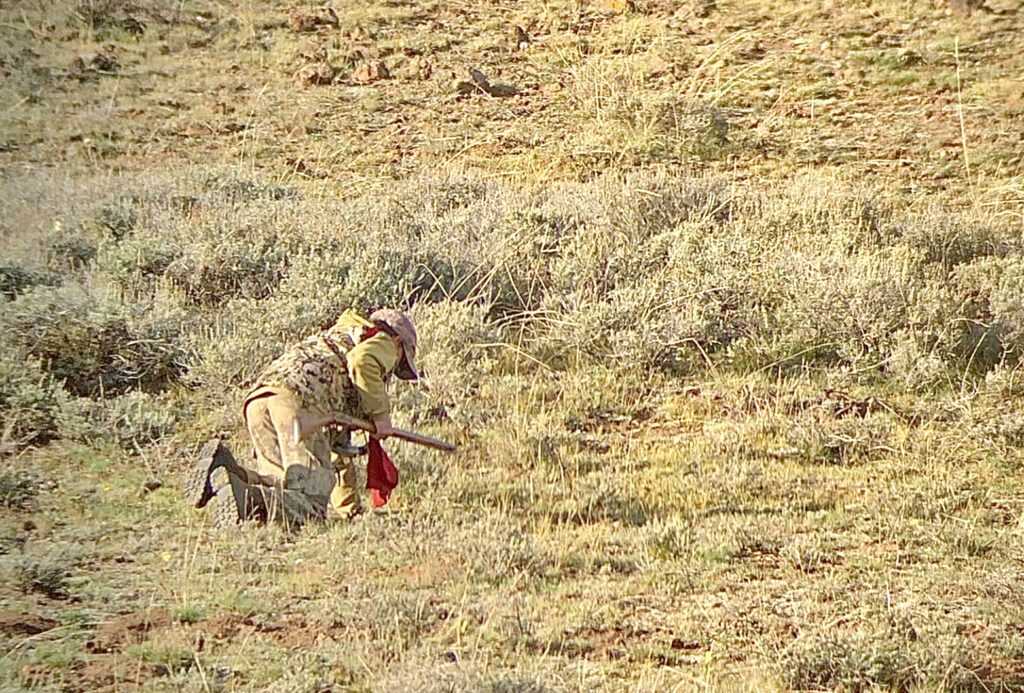
Josiah managed to crawl to just under 100 yards of the buck and set up his shooting sticks. He didn’t have a shot because the buck was bedded, and I saw him looking back at me. He told me later he considered waiting there till the buck moved and gave him a shot, but decided to stalk closer because it would be more fun and challenging. Crawling slowly, he managed to keep under cover of the low sage and a few rocks and closed to 50 yards. I was on pins and needles while watching, amazed that he was getting so close to the buck. Finally, he sat up, rested his rifle across his homemade shooting sticks, and whistled. I knew then that he needed the buck to get up before he had a clean shot at it. I stood up and let the antelope see me, and then made my best rendition of a coyote howl. That did the trick; the buck stood up and stared in my direction. He was facing dead-on to Josiah.
WOULD YOU TAKE THE SHOT?
Put yourself in Josiah’s shoes; after practicing all summer with your primitive rifle you’ve traveled 500 miles, slept on the ground, and then managed to stalk within easy range of a big pronghorn buck on the first stalk of your very first day. It should be an easy shot, but the buck is facing you dead on. What are you going to do – will you take the shot?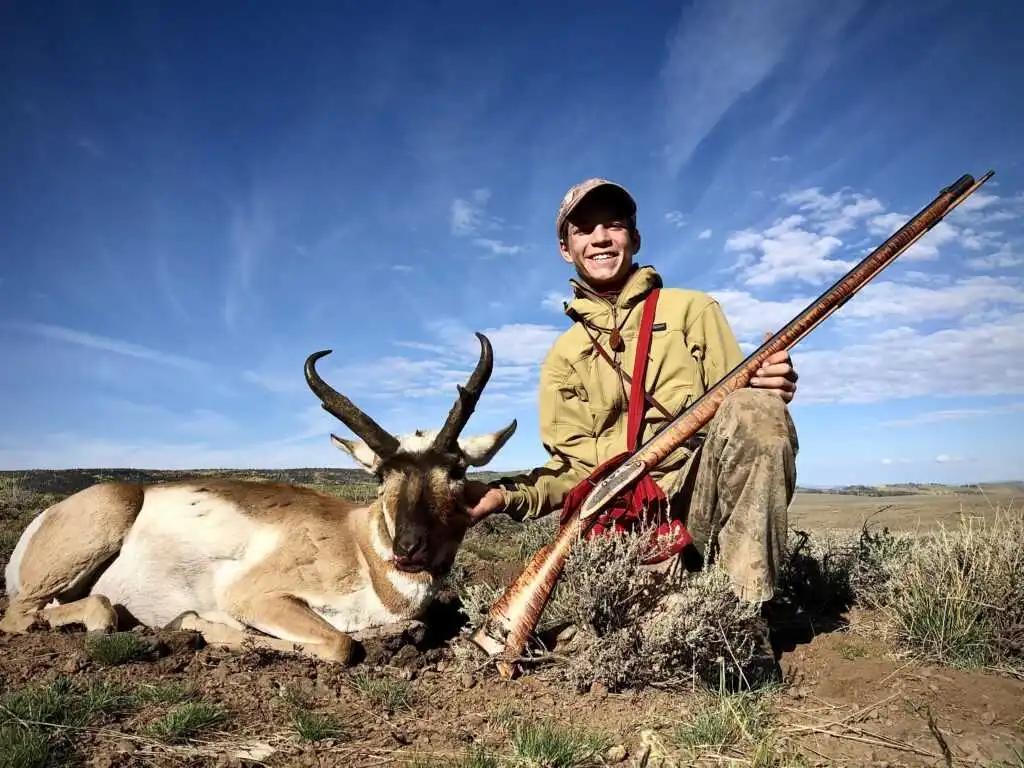
HERE’S WHAT HAPPENED: TRUE STORY
From his sitting position with the long rifle rested across his shooting sticks Josiah could only see the tips of the buck’s horns 50 yards away. He whistled to try to get the buck to stand, with no response. Then I made a coyote howl and the buck stood, fully alert. Josiah placed the iron sights on the buck’s chest and squeezed the trigger. You can watch the result in the accompanying video – it’s spectacular. The round ball entered the buck’s chest and exited through its backbone, dropping it in its tracks.
CONCLUSION
Josiah worked hard to be ready with that primitive rifle, choosing to hunt with it rather than a modern muzzleloader because of the extra fun and challenge it offered. He’s a very good shot and has exceptional eyesight, which enabled him to be lethally accurate with the iron sights. And he executed a perfect stalk, putting him within easy range with the old smoke pole.


 Can you blame him!?! Grumpy

The AC-130 gunship is one of the most unusual — and feared — special operations aircraft employed by the U.S. Air Force. It is a close air support aircraft designed to loiter over a battlefield and offer ground forces an amazing amount of firepower. In addition to force protection duties, the planes can provide air interdiction — hitting the enemy at night using its advanced reconnaissance technologies to first find and then rain fire on the enemy. In this article, Dr. Will Dabbs tells us what the AC-130 gunships are and how they’ve been used by U.S. forces in Grenada, during Operation Desert Storm and more.

Afriend was an infantry officer during Operation Just Cause, the 1989 invasion of Panama. He told me this story as gospel. He claimed that his unit was tasked to move along a certain road to secure a certain objective. Along the way, they encountered a Panamanian unit tasked to secure the road against any American advance. There resulted a timeless quandary. An unstoppable force was arrayed against an immovable object. Both elements consisted of tooled-up young men with weapons. The foundation was laid for something truly horrible.

Not wishing to precipitate unnecessary bloodshed, the American commander retrieved a Spanish-speaking troop to act as an interpreter. He called a confab with his opposite number and explained his predicament. His Panamanian counterpart felt disinclined to move. By now, it was getting dark. The American CO spoke into his radio and directed the Panamanian officer’s attention toward an empty barn in a distant field.

Counting down from five, the barn exploded in a massive flash just as he reached zero as though touched by the very finger of the Almighty. The Panamanian officer purportedly dismantled his roadblock. This tidy little battle had just been won by a single 105mm howitzer round fired from an unseen AC-130 gunship orbiting in the darkness above.
The Plane
The AC-130 project began in 1967 as a replacement for the AC-47 Spooky gunship. The AC-47 was called Project Gunship I. The subsequent AC-130 was something altogether new and remarkable.

The first AC-130 was converted from a standard A-model Hercules and carried four M61 Vulcan six-barrel 20mm rotary cannon alongside another four GAU-2/A 7.62x51mm miniguns. Aerial gunnery is the very embodiment of physics. An RAF exchange officer named Tom Pinkerton scratchbuilt the first analog fire control computer used by the AC-130 while working at the USAF Avionics Laboratory at Wright-Patterson Air Force Base.

During operational testing in the Vietnam War, it was determined that the miniguns lacked the necessary range to optimize the platform, so they were deleted. This space was filled with a pair of 40mm L/60 Bofors cannons. I’ve been told that the most precise weapon on those early variants was the 40mm autocannon. In the early 1970s, these aircraft were fitted with a 105mm M102 howitzer near the aft ramp.

The latest versions of the AC-130 carry a single 25mm rotary cannon, a single L/60 Bofors 40mm, and the M102 105mm howitzer. AC-130s in current service can also deploy AGM-176 Griffin missiles, AGM-114 Hellfires, GBU-39 Small Diameter Bombs, or GBU-44/B Viper Strike munitions along with drones and other classified ordnance. While the weapons are always the sexiest part of the equation, what really makes the aircraft such a dominating force on the modern battlefield is its unparalleled sensor suite.

The aircraft has always carried low-light TV and infrared sensors. These advanced avionics have been steadily upgraded since the introduction of the platform. Even back during the Vietnam War, the AC-130 could detect an unshielded ignition coil in a truck from a typical engagement altitude of 7,000 feet. Nowadays, the aircraft carries the AN/APQ-180 multimode attack radar similar to that used on the F-15E Strike Eagle along with a state-of-the-art Raytheon FLIR (Forward-Looking Infrared) and a Lockheed Martin AN/AAQ-39 Gunship Multispectral Sensor System.
The AN/AAQ-39 can see most anything anywhere day or night and includes a variety of laser range finders and automatic target designators. Modern American combat uniforms and helmets typically include a small bit of reflective material on the top to make friendly troops stand out to the AC-130’s sensors at night.

The weapons on the AC-130 are mounted on the port side of the aircraft and are fired by the pilot. By flying pylon turns, a skilled pilot can maintain a steady stream of fire on a point target for as long as the fuel and ammunition holds out. As modern variants are capable of air-to-air refueling, their missions are typically limited solely by the availability of darkness and ammo. I literally cannot imagine how horrible it would be to find oneself on the receiving end of one of these angry birds.
Operational History
These gunships have been employed in every major military engagement in which the United States has been involved from Vietnam to the present day. None have been exported. We are their sole operators.

Six AC-130s were brought down during the Vietnam War by hostile action. Two were lost to surface-to-air missiles, while the remainder fell to anti-aircraft artillery. One AC-130 was shot down by a MANPADS (Man-Portable Air Defense Systems) shoulder-fired missile in 1991 and crashed off the coast of Kuwait. This aircraft, callsign Spirit 03, was lost when its crew made a conscious decision to remain in action in daylight because the Marines they were supporting desperately needed them.

An eighth one was brought down 200 meters off the coast of Kenya while supporting combat operations in Somalia. This last aircraft suffered an in-bore detonation of a 105mm round that severely damaged the left wing. Eight of the fourteen crewmembers aboard survived the crash.
A Most Satisfying Mission
I have a buddy here in town who flew AC-130s operationally. One afternoon after church I asked him to relate his most remarkable combat experience in the plane. Without hesitation, he said it was one particular mission wherein he fired nary a shot. I bid him to proceed.

He was tasked to support a small five-man Special Forces team that had been compromised by the Taliban while on a recon mission in Afghanistan. These poor guys had been awake and on the run for several days. They were just about spent.
While the AC-130 is an undeniably fearsome weapon platform, it is also quite vulnerable. The aircraft is not terribly useful in contested airspace. Its relatively slow speed and long loiter times are benefits against targets bereft of air assets, but these attributes become liabilities in a battlespace liberally populated with MiGs and S-300 air defense systems. In Afghanistan, where the primary anti-aircraft threat was MANPADS, that just meant they flew only at night.

My buddy found the team easily enough and could tell from their first transmission that these guys were at the end of their rope. He took a long slow orbit around the area to ensure there were no bad guys in close proximity and then simply told the team leader to shut down and get some rest. There was no need to put out security. He would take care of that.
The Green Berets bedded down for some well-deserved shuteye, while my pal simply flew circles in the night keeping an eye out until he hit bingo fuel. At the end of the evening the SF guys were well-rested and my buddy returned to base with a full load of ordnance. Nobody got killed, and the special operators got a good night’s sleep.