Category: A Victory!

One of LA’s most important benefactors also spent time in San Quentin
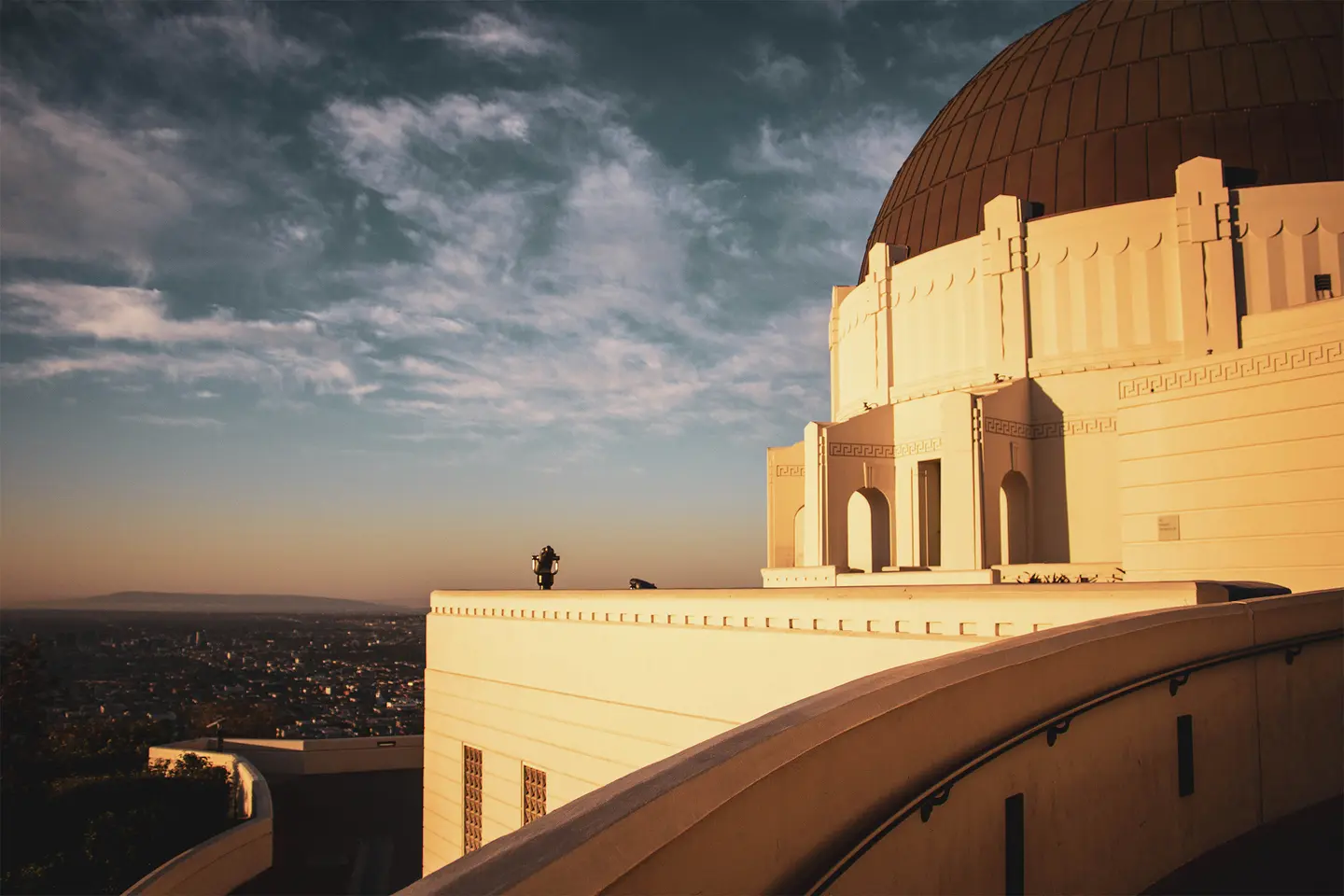
East side of Griffith Observatory in the city of Los Angeles.
Lena Wagner/Getty Images
By ,
To get a sense of what Griffith J. Griffith achieved for Los Angeles, all you have to do is hike up to the summit of Mount Hollywood, the second-highest point in the 4,210-acre urban wilderness park that bears his name.
“I find it a miracle that you look out over the basin and then you turn around and you look over the San Fernando Valley, and there is all of this urban and suburban sprawl, and some way, somehow, in the middle of it, there is this 4,000 acres for all of us,” said Mike Eberts, a professor of mass communications at Glendale Community College and author of a 1996 history book on Griffith Park published for the park’s centennial. “And Col. Griffith made that happen.”
“If there’s a list of people who’ve really made Los Angeles a great place to live, Griffith would be very high on that list,” Eberts, a board member of the Griffith Charitable Trust, continued.
In 1896, Griffith donated a massive piece of land to the city to be used as a public park, which today remains both a key city landmark and one of the largest municipal parks with urban wilderness in the United States. (For context, it is more than four times the size of San Francisco’s Golden Gate Park.)
The park likely wouldn’t exist today if it weren’t for Griffith’s foresight to set aside the land as green space in the city’s booming early days; he declared it “a place of recreation and rest for the plain people.” But while Griffith’s name is now emblazoned on the park, an observatory and a major boulevard, his legacy is complicated.

Construction of Griffith Observatory in Los Angeles, 1934.
Corbis/Getty Images

General view of the Hollywood Sign above Lake Hollywood on April 4, 2025, in Hollywood, Calif.
AaronP/Bauer-Griffin/Getty Images
In 1903, Griffith shot his wife in the face in a jealous rage and spent two years at San Quentin.
“He was a flawed man,” Eberts said, adding, “I like to think of him as someone who rose above his flaws.”
Col. Griffith J. Griffith was born in Wales in 1850 and moved to the United States as a teenager, later starting a career as a journalist covering mining in California.
He started working for mining companies as a side gig while still reporting on them (if you’re unfamiliar with journalism, that’s what’s called a conflict of interest) and eventually dropped the writing gig to manage mines full time.
In 1882, he moved to Los Angeles and purchased Rancho Los Feliz, 4,071 acres of a former land grant, all while dabbling in real estate and ranching and generally moving up into the city’s more elite circles.
Col. Griffith J. Griffith was also, notably, not a colonel. While he’d served as a major of riflery practice in the California National Guard, the colonel title was “apparently self-bestowed,” according to Eberts.

Portrait of Griffith J. Griffith circa 1910.
Calisphere/Los Angeles Public Library
In 1887, then-36-year-old Griffith married 23-year-old Mary Agnes Christina (“Tina”) Mesmer, daughter of an elite and wealthy Los Angeles family; “Union of Two Very Wealthy Los Angeles Families,” a headline proclaimed at the time.
Their relationship had developed while Tina was set to receive a large inheritance, something Griffith would have been aware of when the two first met, according to “Enlightened Egomaniac: The Life, Times & Crime of Griffith Jenkins Griffith,” a book by Miguel Llanos.
Griffith donated most of his rancho to the city in December 1896 (the press dubbed it a Christmas gift to Los Angeles) with much pomp and circumstance.
“Recognizing the duty which one who has acquired some little wealth owes to the community in which he has prospered … I am impelled to make an offer, the acceptance of which by yourselves, acting for the people, I believe will be a source of enjoyment and pride to my fellows and add a charm to our beloved city,” Griffith wrote in a letter to the mayor and city council.
At the time, the land “wasn’t really recognized as anything significant,” because it was so far away from downtown Los Angeles, according to Marian Dodge, board member at Friends of Griffith Park. To sweeten the deal, Griffith threw in land along the Los Angeles River, including the water rights.
Back then and in the years since, allegations and rumors have swirled that Griffith had other motives when making his generous donation — perhaps because previous business ventures at the rancho hadn’t panned out as planned, or to stop paying taxes on a huge piece of undevelopable property.
But regardless of motives, the giant parkland was set aside for generations of Angelenos, a slice of wilderness that dwarfs New York City’s Central Park several times over, set right in the middle of what became the nation’s second-largest city.
That massive swath of protected land means a chunk of the Santa Monica Mountains has been left undeveloped for over a century, while in other parts of the mountain range, conservation groups have had to fight to protect small pieces of habitat bit by bit, Dodge said.
“Griffith spoke of ‘taking time by the forelock, err it be too late,’ and so he really did see that this kind of frontier town, which we were when he donated the land in 1896, he envisioned it growing into a great city all around this park,” Eberts said.

Hotel Arcadia in Santa Monica, Calif., 1891.
Calisphere/Huntington Library
Then, amid his peak of local celebrity and reverie, Griffith committed a violent crime. Griffith and Tina were staying at a hotel in Santa Monica with their teenage son when an inebriated Griffith became paranoid and suspicious of Tina, accusing her of infidelity and asking if she was poisoning him (accusations she denied).
As the fight escalated, Griffith asked Tina to kneel, place a hand on a prayer book and answer his questions.
“His (last) question was: ‘Have you always been faithful to your marriage vows?’ I said: ‘As God is my judge, I have.’ As I answered the last question, he shot me,” according to a 1903 statement from Tina.
Tina survived but lost an eye and was disfigured by her injuries. She swiftly moved to divorce Griffith, and the judge granted the divorce in less than five minutes.
The day after the shooting, Griffith went right back to business around Los Angeles, including stops at his downtown office and a luncheon at the Jonathan Club.
When confronted by reporters about his wife’s injuries less than 24 hours prior, Griffith said that “the whole thing was purely accidental” and that Tina’s injuries were more from a fall out of the window than from the shot (Tina had jumped out of the hotel window to escape Griffith after he shot her).

Mug shots of Griffith J. Griffith, April 5, 1905.
California Department of Corrections and Rehabilitation
Griffith was ultimately found guilty of assault with a deadly weapon and sentenced to two years in San Quentin. When he emerged, he became an outspoken advocate for prison reform. Griffith J. Griffith “tells horrors of prison life” and “wages humanitarian crusade throughout country,” proclaimed one Los Angeles Herald headline in 1908 after Griffith’s release.
He also doubled down on securing his legacy as a wealthy yet generous member of the Los Angeles elite by offering $100,000 to the city to build a new observatory in Griffith Park.
Some city officials balked at taking more money from a man convicted of such a crime, and the efforts were slowed by litigation and debate for years. “The city still wanted his land, they still wanted his money, but they’re keeping him a little at arm’s length,” Eberts said.
Ultimately, Griffith left money to the city in his will for the construction of what became the Griffith Observatory and the nearby Greek Theatre, both of which opened in the 1930s, over a decade after Griffith’s death.

Helicopter point of view of Griffith Park Observatory in Los Angeles.
Getty Images/iStockphoto

Hiking path leading up to Griffith Observatory, with several hikers in the distance and trees on the edge of the path.
Lena Wagner/Getty Images
Griffith’s large donations appear to have memorialized him as a generous benefactor for the city, mostly overshadowing his violent crime.
In 1996, as part of Griffith Park’s centennial anniversary celebrations, a 14-foot bronze statue of Griffith was erected near the park entrance at the corner of Los Feliz Boulevard and Crystal Springs Drive.
The statue came after members of the Griffith Charitable Trust realized that “there was no dedication to the man who’d given the city this extraordinary gift,” according to nonprofit Friends of Griffith Park.
So the controversial figure now looms large over a busy intersection just outside the park, with a quote from Griffith that reads, “Public parks are a safety valve of great cities and should be made accessible and attractive where neither race, creed nor color could be excluded.”

The quote is attributed to Colonel Griffith, permanently cementing Griffith’s long con in stone.
———————————————————
As you see from this California & especially LA has always been a weird, violent and fun place to live.
.gif)
ROSWELL, Ga. (WANF/Gray News) — A man was bitten on the face and hands by a raccoon he tried to save this weekend.
It later tested positive for rabies, according to the Chattahoochee Nature Center.
——————————————————
THE NEXT TIME !! Grumpy
After-action inspections found 263 bullet holes in his F9F-5 Panther.
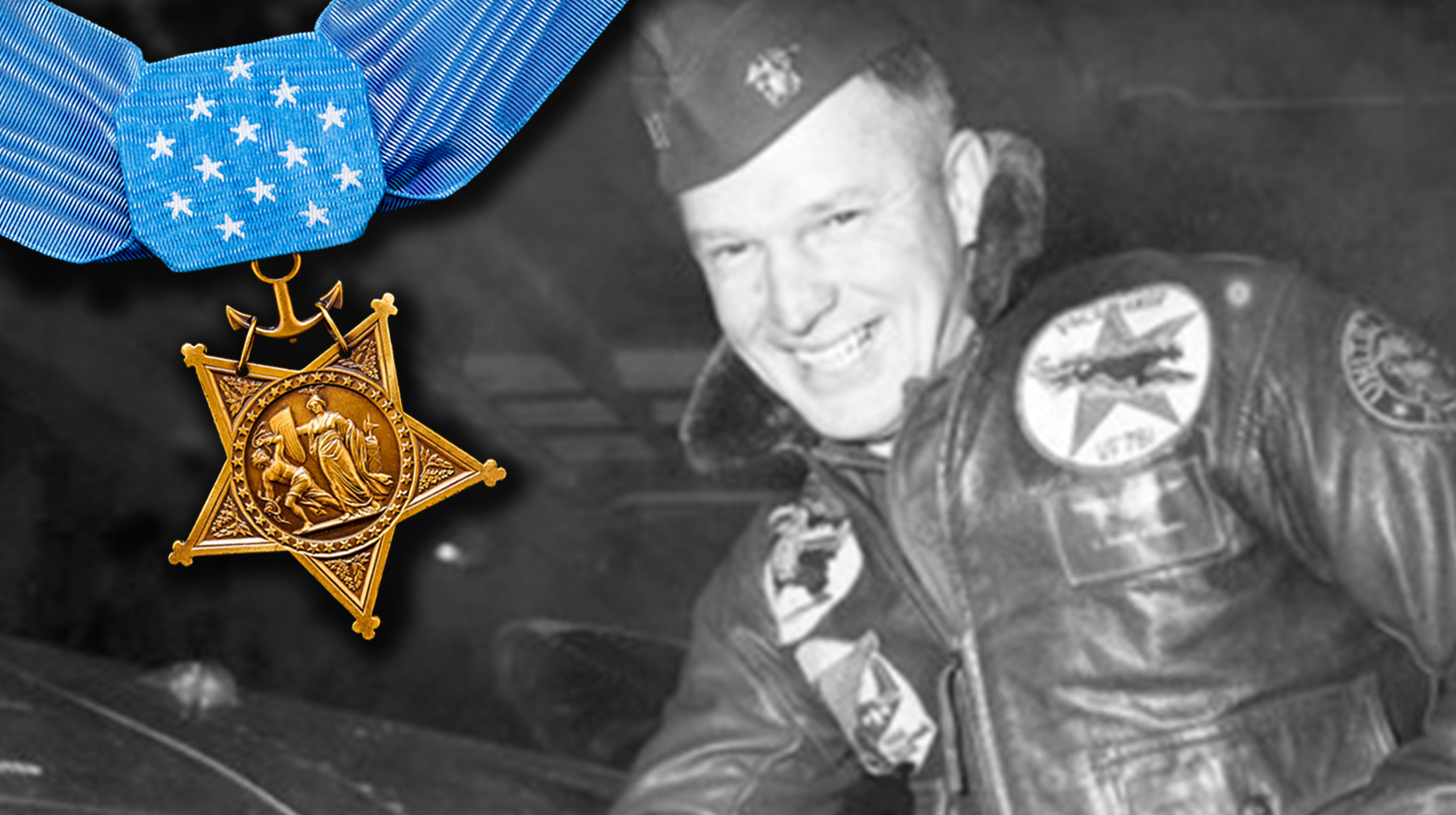
Legendary Navy aviator Royce Williams, who shot down four Soviet MiG-15 fighters in 1952, is the inspiration for legislation that would make it easier for troops and veterans to be awarded the Medal of Honor. Photos via the U.S. Naval Institute and the Congressional Medal of Honor Society.
More than 70 years after he took part in the longest dogfight in Navy history, scoring four aerial victories, Royce Williams might finally get the Medal of Honor.
Over the weekend, Congress released the text for the compromise National Defense Authorization Act, the annual defense policy bill outlining spending plans and goals. This year, it is a record $901 billion. Nestled into the large defense appropriations bill is Sec. 591, which would upgrade Williams’ Navy Cross to the Medal of Honor for “acts of valor during the Korean War.”
Those acts involve taking on seven Soviet MiG-15s in a 35-minute dogfight almost single handedly, in a battle that was kept under wraps for years despite Williams’ achievements.
On Nov. 18, 1952, Williams — then a Navy lieutenant flying in his Grumman F9F-5 Panther for his second mission that day — was with three other aviators over the Sea of Japan when seven Soviet Air Force fighter planes emerged.
Two of the American planes had to return to their ships due to mechanical issues, leaving just Williams and his wingman in the skies as the Soviets closed in. As they flew by, Williams let out a burst of his F9F’s guns, scoring a hit. One MiG went down, with Williams’ wingman breaking off to chase it. Royce Williams was now alone, against six Soviet pilots in jets that were more advanced than his.
Over the course of 35 minutes, Williams banked and weaved his Panther, trying to avoid getting in the MiGs’ sights. He quickly downed a second Soviet jet, and kept using his maneuverability to line up passing shots with his limited ammo. He took out a third. Then he heavily damaged another that was eventually lost.
“In the moment I was a fighter pilot doing my job,” Williams told Task & Purpose in 2022. “I was only shooting what I had.”
Eventually, he ran out of ammunition and was forced to break off. He flew back to the Navy task force — which fired on him at first, mistaking him for the many more Soviet planes that had outnumbered him — and managed to land. After-action inspections found 263 bullet holes in his Panther. Somehow, Williams and the plane survived.
For his actions in the wild dogfight that day, Williams was awarded a Silver Star. But his actions were covered up — and his official victories listed as downing one enemy plane and damaging another — over fears it could heighten U.S.-Soviet tensions.
So for the rest of his career, which included actions in Vietnam and commanding a ship, his record stayed that way, the truth kept hidden. It was only in the 21st century that retired Capt. Williams’ story came out.
For more than a decade, there has been a push to get Williams the Medal of Honor, with backers including retired Rear Adm. Doniphan Shelton and members of Congress.
Three years ago, in December 2022, then-Secretary of the Navy Carlos Del Toro upgraded his Silver Star to a Navy Cross, saying that Williams “clearly distinguished himself during a high-risk mission and deserve[s] proper recognition.” Williams received the award in January 2023.
The text in this year’s defense spending bill would authorize awarding Williams, who is now 100, the Medal of Honor and waive any time limitations on presenting him with the award.
Voting on the bill is expected this month.