Categories
A Victory!

The 300 Win Mag vs 45/70 Goverment


It is probably a good thing that I am at the stage of life. Where I can not shoot these high caliber Big Boys anymore. As only the Good  Lord knows what I would hit or destroy with them . But it would of been fun trying!
Grumpy

Categories
A Victory! Soldiering War

The Forest

U.S. soldiers climbing up a hillside in the Hürtgen Forest (Photo: U.S. Army)
U.S. soldiers climbing up a hillside in the Hürtgen Forest (Photo: U.S. Army)
After the breakout from Normandy, the Allies raced through France and the end of World War II seemed to be close. Capturing Berlin by Christmas seemed a real possibility. There was a general feeling that the Germans were already beaten and they were no longer able to put up a significant fight. This complacency on the Allies’ side led to several mistakes: Operation Market Garden, the attempt to cut through the Netherlands before winter set in; the Battle of the Bulge, when the Allies failed to anticipate a strong German counterattack – and the Battle of Hürtgen Forest.

Germany’s western border was protected by the Siegfried Line, an extensive network of bunkers, minefields and “dragon’s teeth” tank barriers. The Allies’ first attempt to break through this line was at the German city of Aachen, were the outnumbered defenders quickly started to put up a surprisingly tenacious defense against the U.S. First Army led by General Courtney Hodges.

U.S. soldiers during the street fighting in Aachen (Photo: U.S. Army)
U.S. soldiers during the street fighting in Aachen (Photo: U.S. Army)

The Hürtgenwald is a thick fir forest, roughly 50 square miles in area and pockmarked by numerous valleys, located just to the south of Aachen. It was not a particularly important location in a strategic sense, but nevertheless, Hodges decided that it must be cleared of German troops and secured. This was a highly dubious decision.

Hodges claimed that if the forest was left in German hands, the Nazis might use it to launch attacks at the American flanks as Allied forces moved deeper inside Germany. This, however, was an unlikely scenario: the forest was too thick to allow tanks and other vehicles through in any real numbers, so a potential German attack out of the forest would have been easily contained. On the other hand, any American attack into the forest was also going to be extremely difficult for the same reason.

An M29 Weasel freeing a jeep from the mud in the Hürtgen Forest (Photo: U.S. Army)
An M29 Weasel freeing a jeep from the mud in the Hürtgen Forest (Photo: U.S. Army)
To be generous, there was one possibly reasonable goal to go into the forest for: the Rur River on the far side of it. (This river is not to be confused with the Ruhr Valley, where the Dambusters famously destroyed several dams, and which is located in a different part of Germany.) The Rur had several dams on it which were holding back a large reservoir. The Germans had the option to open the dams and flood the plains near Cologne, stopping the Allied advance for two weeks. Capturing these dams was a valid strategic goal, but one that Hodges and his staff didn’t seem to be actually interested in; the operation in the Hürtgenwald only shifted toward this goal late in the battle, and then it was too late, and the Germans did flood the plains. The fact remains that when General Hodges decided to occupy the forest in September, he did it largely just because some German forces happened to be there, with not much thought given to the wider context of the plan.
A view of a section of the forest (Photo: histomil.com)
A view of a section of the forest (Photo: histomil.com)
The attack into the forest began on September 19, and Hürtgen Forest quickly earned its American nickname: the Green Hell. Vegetation was so dense that visibility in many places was reduced to a few yards. The Germans had built a labyrinth of bunkers and barbed wire obstacles throughout the forest. Tanks were largely restricted to narrow paths. Firebreaks and clearings were mined and registered for highly accurate artillery strikes. The thick growth of 100-foot-tall trees and the many valleys made radio communications spotty at best. Even the weather seemed to be against U.S. troops: fog and low clouds prevented the Allied air force from supporting ground troops, while mud bogged down soldiers and vehicles. American soldiers used white tape to mark safe passages through minefields, but the tape was regularly blown away by winds, or (as the year was drawing to a close) covered by snow.
American soldiers examine a captured German machine gun position in the forest (Photo: U.S. Army)
American soldiers examine a captured German machine gun position in the forest (Photo: U.S. Army)
German artillery represented a particular danger due to their treetop bursts. German shells were set to explode in the air, showering the ground below with high-speed shrapnel and large splinters broken off from the trees. This was lethal to American infantrymen, who were trained to hit the ground when artillery was incoming: a man lying prone on the ground ended up exposing his entire torso and his limbs to the deadly payload from above. Survivors quickly learned to run to the nearest tree instead and hug it tightly, since this minimized their profile from above. By mid-October, the 1st Army advanced a mere 3,000 yards into the forest at the cost of 4,500 casualties – that’s one man for every two feet of advance.
German heavy mortar firing at American troops in the Hürtgen Forest (Photo: Bundesarchiv)
German heavy mortar firing at American troops in the Hürtgen Forest (Photo: Bundesarchiv)
The initial force, the 9th Infantry Division, was badly mauled after the first month of fighting, so a new unit was brought in to replace them: the 28th Infantry Division led by Major General Norman Cota. “Dutch” Cota was the hero of Omaha Beach and a rising star in American military circles. Omaha was the most hardly contested of the D-Day landing beaches. It was Cota’s personal presence on the beach from early on, and hands-on, lead-from-the-front attitude that allowed U.S. forces to break out from the beach and secure the area without suffering even more casualties.
Major General Norman “Dutch” Cota (Photo: U.S. Army)
This time, however, Cota’s problems weren’t only the Germans in front of him, but also General Hodges behind his back. Hodges was a “mustang”: a soldier who started his career as a private, and was brought into the officer corps from the outside, without traditional schooling. He was known to care for his men very much, and was sometimes seen standing by a road and openly weeping at the sight of the dead and wounded being carried through. Unfortunately, he also had a strategic mindset largely set on “frontal attack”, no appreciation of logistics, and zero tolerance for subordinates who showed initiative and didn’t do exactly as they were told.

In this case, Hodges drew up the plans for Cota’s push into Hürtgen Forest, and Cota’s reservations and doubts were brushed aside. And it was a bad plan.

Layout of the general area. Blue: the Kall river, red: the Kall supply trail (Source: LTC (ret) Thomas G. Bradbeer)
Layout of the general area. Blue: the Kall river, red: the Kall supply trail (Source: LTC (ret) Thomas G. Bradbeer)
Cota, whose forces were located near Germeter on the map above, was to use the three regiments of his division as three equal forces. One regiment was to head north and capture the village of Hürtgen. The second was to push south and capture Simonskall and Steckenborn. Both of these, however, were just supporting operations intended to protect against German counterattacks coming from these two directions. The big effort was for the third regiment to move down the center, secure Vossenack, cross the Kall river (blue on the map) and move on and liberate Schmidt.
Infantrymen of the 28th Division advancing through the Hürtgen Forest (Photo: U.S. Army)
Infantrymen of the 28th Division advancing through the Hürtgen Forest (Photo: U.S. Army)
This was a fundamental mistake in assigning forces. General military wisdom holds that supporting advances must be performed by the minimum force necessary to leave more men for the main push. Cota was forced to only use one third of his men for the most important advance, and Hodges refused to budge on the matter.

Cota also made his own mistakes, though.  For reasons which are not quite clear, he seems to have lost the initiative he had shown in Normandy. He failed to send scouts into the forest to map out German positions. He failed to check out the route which was supposed to supply his forward units. In fact, he spent almost all of the battle in his command headquarters 10 miles away from the frontline, relying on spotty radio messages for information.

Warning sign for troops at the edge of the forest (Photo: U.S. Army)
Warning sign for troops at the edge of the forest (Photo: U.S. Army)
His lack of attentiveness (and, let’s add, Hodges’s fundamentally bad plan) led to the deaths of many American soldiers. The red line in the map above marks the supply trail for the push to Schmidt. It was a muddy dirt trail only nine feet wide, barely enough for a single Sherman to fit through. Any tank that stopped would hold up every other vehicle behind it. The trail descended into the steep, deep gorge the Kall river runs through, crossed a bridge, then ascended on the other side with numerous switchbacks. These were so sharp that the otherwise nimble M29 Weasel cargo carriers couldn’t pull an ammunition trailer up the path. The trailers had to manually unhitched, work up around the needlepoint turn, then hitched back to the carrier – and this had to be done at every single turn.
American tank destroyers on the supply trail (Photo: U.S. Army)
American tank destroyers on the supply trail (Photo: U.S. Army)
As the saying goes, “when it rains it pours”. Unknown to the Allies, they had one more problem to contend with. Walter Model, one of Germany’s best defensive commanders, who had just defeated Operation Market Garden in the Netherlands, was staying in the nearby city of Cologne to organize a wargame for staff officers. The subject of the game? A theoretical American attack into the Hürtgen Forest. As soon Cota’s push began, Model started using actual reports from the forest for the wargame and sending back orders from some of Germany’s best and brightest officers.
Model (third from left) near Aachen a few days before the Battle of Hürtgen Forest began (Photo: Bundesarchiv)
Model (third from left) near Aachen a few days before the Battle of Hürtgen Forest began (Photo: Bundesarchiv)
The 28th Division moved out on November 2 and were immediately thrown into a meatgrinder. The regiment on the left flank ran into a minefield after 300 yards of advance, got pinned down by mortar and artillery fire, and was harassed by German counterattacks. They took a mile of ground two days, then had no choice but to dig in and stay in one place while casualties mounted.

On the right flank, heading south, the regiment failed to gain a single yard on the first day due to heavy German defenses. After a week of fighting, they were reported as “no longer an effective fighting force”.

American soldiers marching past a group of dead Germans who were all killed by a single grenade. The Germans were equipped with a captured American .30 caliber Browning machine gun. (Photo: U.S. Army)
American soldiers marching past a group of dead Germans who were all killed by a single grenade. The Germans were equipped with a captured American .30 caliber Browning machine gun. (Photo: U.S. Army)
Miraculously, the main push in the center fared better, at least at first. Vossenack was taken (though the area was not cleared of German presence), and the men marched on. They crossed the gorge of the Kall river, took Kommerscheidt, and captured Schmidt after a brief battle against some very surprised German defenders. By this time, however, they were exhausted, wet from crossing the Kall, and had barely any sleep over the last 72 hours. They ostensibly dug in and prepared to hold Schmidt against German counterattacks, but their defenses were flimsy. During the night, they received a supply shipment of anti-tank mines. Instead of properly digging them into the ground, they were content with just placing them on the hard surface roads entering the town from the west, northwest and southwest.
German mortar position near Schmidt, manned by very young soldiers (Photo: Bundesarchiv)
German mortar position near Schmidt, manned by very young soldiers (Photo: Bundesarchiv)
Meanwhile, the supply trail across the Kall predictably broke down. One Sherman tank ran onto a mine, one veered off course and plunged off the trail, and three had thrown their tracks. There was a general lack of a sense of urgency among the tank crews, and the vehicles were only pushed off the trail and into the gorge on the morning of November 5. A bulldozer sent to clear away some large boulders and wide the trail broke down after half an hour. Military engineers started to work on the rock with shovels and pickaxes. And meanwhile, the units holding Schmidt were not getting ammo or other supplies.
Modern photo of tank tracks embedded in the ground in the Hürtgen Forest. They were laid down during the battle to increase traction for other vehicles. (Photo: historytrips.eu)
Modern photo of tank tracks embedded in the ground in the Hürtgen Forest. They were laid down during the battle to increase traction for other vehicles. (Photo: historytrips.eu)
Meanwhile, German tanks approached Schmidt along the roads, easily avoided the highly visible mines, and fell on the American defenders. Without supplies, the latter had no way of holding the town and retreated to the north. At least one company fled in the wrong direction amid the confusion and ran into German lines where they were captured. Not content with recapturing Schmidt, the tank force then headed north toward Kommerscheidt. They were only stopped by a small force of Shermans and tank destroyers that managed to drive down the supply trail before it became plugged.
A medic writing a medical tag for a wounded GI during the battle (Photo: histomil.com)
A medic writing a medical tag for a wounded GI during the battle (Photo: histomil.com)
By this point, Cota had lost control of the battle. Initial reports of the main advance triggered jubilation and congratulatory telegrams from other high-ranking officers along the front. However, reports started to become sporadic, confused and confusing as the attack slowed down and turned into a desperate defense against German counterattacks. The division’s officer corps was getting gutted on the battlefield, with a surprisingly high ratio of officer casualties. After several more grueling days, Cota finally got Hodge to authorize a retreat to the northwest side of the Kall river. The order reached the American holdouts, who were pressed on all sides by then, on the 8th. The nighttime evacuation was just as nightmarish as the days of combat preceding it. Exhausted men slugged through mud in the darkness, each having his hand on the shoulder of the man in front so the group would stay together in the dark. Some men tread on the wounded, too tired to lift their feet higher. Of the 2,000 men who fought on the south side of the Kall, only 300 returned. Some of those 300 ran into German pickets, and only made it home because the Germans simply decided to let the miserable men go.
Cota (right) reporting to Eisenhower during the battle. ““Well, Dutch, it looks like you got a bloody nose” – Ike remarked on the occasion (Photo: U.S. Army)
The next day, American forces started digging in along the north side of the Kall. Thousands of wounded, from both sides, were exchanged between November 7-12 after a German regimental doctor by the name of Günter Stüttgen negotiated an unofficial ceasefire. Fighting eventually resumed, but events elsewhere had taken over the Hürtgen debacle. Further to the north, Hitler ordered his last great counterattack against the Western Allies in the Ardennes, and Hürtgen Forest lost its importance. Nevertheless, it took the Allies until the end of February 1945, a full month after winning the Battle of the Bulge, to finally secure the Green Hell where 55,000 Americans and 28,000 Germans died, were wounded or captured in a battle that never needed to be fought in the first place.
Bernard J. Ray, one of the men who received a posthumous Medal of Honor for their actions during the battle. (Photo: cmohs.org)
Bernard J. Ray, one of the men who received a posthumous Medal of Honor for their actions during the battle. (Photo: cmohs.org)
However, neither the mistakes made by commanders nor their eventual defeat should be taken a slight to the infantrymen and tankers who fought with utter gallantry in the Green Hell. Their heroic effort is proven by the 12 Medals of Honor that were awarded for actions in or in the vicinity of Hürtgen Forest. It is hard to pick one act of heroism out of so many, but we will mention 1st Lieutenant Bernard J. Ray by name. On November 17, Ray’s company was stopped by enemy fire and a wire barrier. He picked up several explosives and wrapped a primer cord himself for easy of carry, then made a dash for the wire, attracting the undivided attention of German mortarmen. He was hit and seriously wounded by an explosive shell just as he setting up the explosive. Ray felt that he didn’t have the strength to finish the job before succumbing to his wound. He quickly finished the setup and pushed down on the charger handle while the primer cord was still wrapped around his body and the explosives right next to him. He immediately died in the explosion, but his sacrifice blew a hole in the wire barricade, allowing his men to get through.

H/T to Robert in Cullman

Categories
Darwin would of approved of this! You have to be kidding, right!?!

Oh Hell NO!!!!!!!!!!!!!!!!!!!

Categories
A Victory! All About Guns

Alabama House committee approves permitless pistol carry bill Brian Lyman Montgomery Advertiser

An Alabama House committee Wednesday approved a bill that would allow the permitless carry of pistols in the state, sending an Alabama House GOP priority bill to that chamber.

The 8 to 5 vote on the bill from Rep. Shane Stringer, R-Citronelle, took place after an hour of contentious debate that crossed party lines..

Stringer argued that the legislation would allow law-abiding citizens to carry weapons without fear of legal retribution, and said permit laws did not deter crime.

“The fact of the matter is criminals don’t adhere to laws,” Stringer said. “They don’t obey the laws we have now. We cannot legislate an evil heart from Montgomery.”

RELATED:Permitless carry bill sparks emotional debate in Alabama House committee

The bill passed with an amendment that would require gun owners to declare that they were carrying firearms when asked by a police officer. But there was confusion about a second amendment proposed by Rep. Proncey Robertson, R-Mount Hope, that appeared to create separate penalties for bringing firearms in areas where they are currently restricted and led Stringer to call Rep. Mike Jones, R-Andalusia, not a member of the committee, to explain it.

Rep. Allen Farley, R-McCalla, a retired assistant sheriff for the Jefferson County Sheriff’s Office, said getting rid of the permits would amount to “defunding the police” and endanger law enforcement officers.

“It amazes me that you’ve got a bill like this that has gone back and forth between attorneys, and the sponsor of the bill can’t explain it,” he said.

Rep. Allen Farley during discussion in the House Judicial Committee meeting at the Alabama Statehouse in Montgomery, Ala., on Wednesday March 31, 2021.

Stringer’s bill says there is no “general prohibition on the carrying of a pistol without a permit.” It would not get rid of gun permits, which would still be needed in certain areas or when crossing state lines. It would also keep existing restrictions on carrying pistols on private property and at schools. A person with a concealed weapon would need the explicit permission of a private property owner to do so. But it would drop the legal liabilities for carrying a concealed weapon without a permit.

The bill would also drop a provision of the law that requires those without a concealed carry permit to keep firearms unloaded and secured when driving.

The bill has drawn strong support from gun access groups, who note that Alabama is already an open carry state and argue the permit requirement infringes on the Second Amendment. Law enforcement officials, the Association of County Commissions of Alabama and gun regulation groups oppose the measure, citing an increase in gun violence around the state and saying it would take away a tool used to detain people who have committed serious crimes.

“That tool is very effective and allows us to do that,” said Lee County Sheriff Jay Jones, who attended Wednesday’s hearing. “If the permit requirement goes away, then that going to remove that tool from our law enforcement officers around the state of Alabama.”

Stringer dismissed similar arguments in committee, saying the presence of a firearm did not necessarily mean the owner had committed a crime.

“In the United States, we are innocent until proven guilty, and the mere presence of a weapon does not justify a crime,” Stringer said.

Rep. Rex Reynolds, R-Madison County, is sworn in during the Alabama Legislative session on Wednesday, March 28, 2018, in Montgomery, Ala.

The committee did approve an amendment from Rep. Rex Reynolds, R-Huntsville, a retired law enforcement officer, that would require individuals to declare that they had weapons upon questions from a law enforcement officer. Reynolds abstained on the final vote for the bill.

Rep. Chris England, D-Tuscaloosa, said the adoption of the Reynolds amendment acknowledged that the bill “creates some dangerous trends.”

“While there is an overall acknowledgment that this does create danger on traffic stops, the political concerns are outweighing the actual safety concerns,” he said.

Eight Republicans – Dickie Drake of Leeds; Tracey Estes of Winfield; Tommy Hanes of Scottsboro; Phillip Pettus of Killen; Robertson; Randall Shedd of Fairview and Stringer voted for the bill. It was Shedd’s first day on the committee.

Farley joined England and three other Democrats – Thomas Jackson of Thomasville; Jeremy Gray of Opelika and TaShina Morris of Montgomery – in voting against the bill. Reynolds and Rep. Harry Shiver, R-Bay Minette, abstained.

According to the Centers for Disease Control and Prevention, Alabama had the fifth-highest rate of death from gun violence among the 50 states and the District of Columbia in 2019. There were 22.2 gun deaths per 100,000 people in Alabama that year. 1,076 Alabamians died by guns that year, compared to 804 in New York, a state with four times Alabama’s population.

Contact Montgomery Advertiser reporter Brian Lyman at 334-240-0185 or blyman@gannett.com.

Categories
A Victory! Cops

I just hope some Assist. DA with an agenda does not press charges on these Folks!

Armed Good Samaritans Provided Cover Fire, Rescue Wounded Deputies

Peaceful Valley, WA – The sheriff released more details about what led up to the shooting of two Whatcom County Sheriff’s Office (WCSO) deputies on Thursday and thanked the armed good Samaritans who came to the wounded heroes’ aid and kept them safe until backup arrived.

The Bellingham Police Department (BPD) said the incident began at about 3 p.m. on Feb. 10 when a homeowner started burning a trash pile outside their home and the smoke bothered a neighbor, 60-year-old Joel B. Young, KGMI reported.

Police said Young became enraged and went outside and yelled at the neighbor burning trash, claiming that smoked had blown through the windows into his home, the Bellingham Herald reported.

The neighbor responded with an expletive, according to police.

Young had been drinking and he became enraged, KGMI reported.

So he grabbed his shotgun and went outside and fired birdshot into the air near the neighbor who was burning trash, according to police.

Then he went back inside his home and had another beer.

Then he retreated to a position of cover nearby.

A neighbor called 911 and reported that Young was outside firing his 12-guage shotgun into the air, the Bellingham Herald reported.

Two Whatcom County sheriff’s deputies responded to the address near Peaceful Valley and State Route 247 in the Maple Falls area, KGMI reported.

Deputies arrived on the scene at about 4:30 p.m. and when Young heard them announce themselves, he went outside yelling and waving a gun, the Bellingham Herald reported.

“Sheriff’s Office — drop the gun!” the deputies ordered Young.

Young ignored the deputies’ commands and opened fire on them instead, the Bellingham Herald reported.

One deputy was shot in the head and fell to the ground.

The second deputy put himself between Young and the wounded deputy and returned fire, the Bellingham Herald reported.

Young opened fire on the second deputy and shot him, too.

Police said that was when good Samaritans armed with their own weapons stepped forward and fired multiple shots in the direction of Young to provide cover for and protect the wounded deputies, the Bellingham Herald reported.

The good Samaritans told KING that they were military veterans and they weren’t going to sit still and watch law enforcement officers be murdered so they took their children inside their homes and came back out with their own guns.

Other neighbors jumped in to assist the first good Samaritan and they were able to pull the wounded deputies into a garage and out of the line of fire.

The good Samaritans immediately began performing first aid on the wounded heroes as they waited for an ambulance to arrive, the Bellingham Herald reported.

Both wounded deputies were transported to nearby hospitals for treatment as soon as backup arrived.

One deputy remained under observation at St. Joseph’s Hospital in Bellingham and the other was transferred to Harborview Medical Center in Seattle for treatment by a specialist, the Bellingham Herald reported.

Whatcom County Sheriff Bill Elfo said both deputies were in “stable” condition, KGMI reported.

Backup arrived from multiple law enforcement agencies and the Bellingham police called in the SWAT team and surrounded Young’s home.

Bellingham Police Department Spokesperson Claudia Murphy told the Bellingham Herald that Young surrendered to deputies just after 6 p.m. and was taken into custody without incident.

He was booked into the Skagit County Community Justice Center and charged with two counts of first-degree attempted murder.

The investigation is being headed up by the Law Enforcement Mutual Aid Response Team (LEMART) and the Whatcom County Prosecutor’s Office.

“We are ever so grateful the WCSO deputies are in stable condition and that no residents were injured,” Bellingham Police Chief Flo Simon said in a statement. “The members of the LEMART team are working tirelessly to ensure there is a thorough and complete investigation delivered to the prosecutor’s office.”

“Our thoughts and prayers go out to the WCSO deputies, their families, and the entire Whatcom County Sheriff’s Office. We wish them a speedy recovery,” Chief Simon said.

Sheriff Elfo posted a statement to Facebook on Sunday that applauded his deputies’ bravery and the heroics of the good Samaritans that came to their aid.

The sheriff wrote that “despite being seriously wounded and impaired by their injuries, both deputies courageously followed their training, stayed in the fight and took care of each other and area residents.”

“Second, we are extraordinarily blessed that several armed citizens came to the deputies’ assistance at the critical moments when they were most vulnerable,” the sheriff continued. “I have contacted all three of the good Samaritans and expressed appreciation on behalf of myself and all members of law enforcement and their families. There will be a more formal recognition of these humble citizen heroes once more details of their actions can be released.”

Categories
A Victory! Soldiering The Green Machine

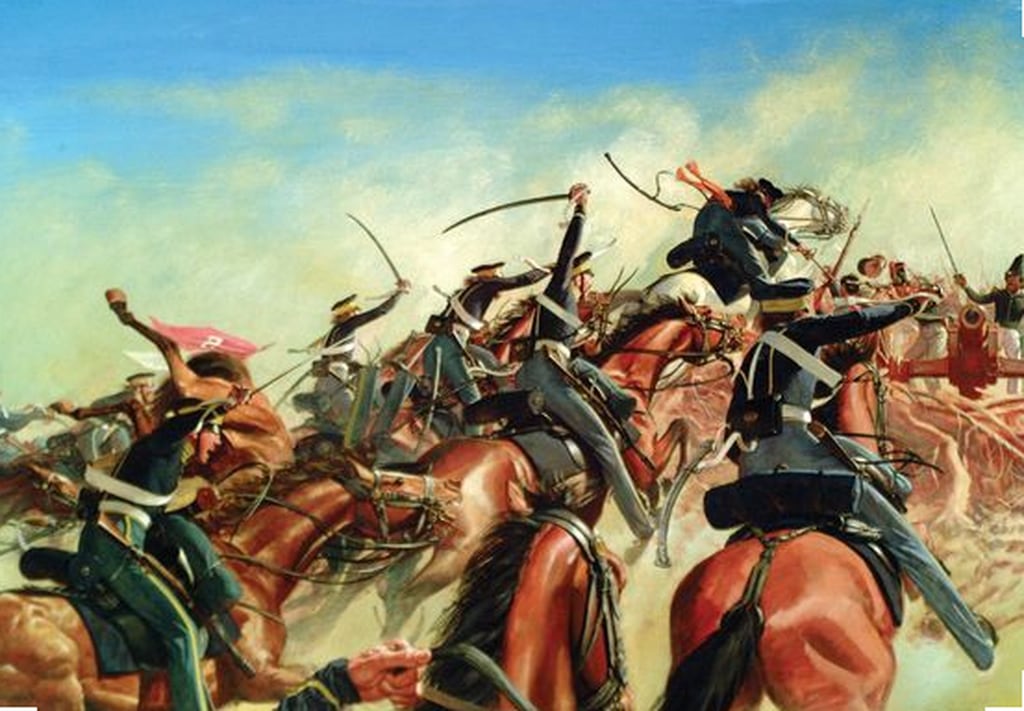
Remember Your Regiment, a squadron of the 2d Dragoons led by Captain Charles A. May slashes its way through the Mexican lines during the American victory at Resaca de la Palma, 9 May 1846. Army Art Collection.

US Dragoons during Mexican-American War
Categories
A Victory! Well I thought it was funny!

I always liked watching Selleck

image.png

Categories
A Victory! Well I thought it was neat!

Private Enterprise does it again! As the price of going into space has gone way down.

Categories
A Victory! All About Guns Allies

5th-graders learn to shoot guns by using school gym as target range, Wyoming photos show BY MITCHELL WILLETTS

A school district in Wyoming recently used a gymnasium as a shooting range, training fifth and sixth grade students in marksmanship during PE. Hot Springs County School District #1, in the small town of Thermopolis, shared photos of the sharpshooting session in a Feb. 2 Facebook post, and it quickly caught the attention of thousands. McClatchy News has obtained a screengrab of the Facebook post, which is no longer publicly available. In the pictures, the children are seen aiming air rifles across the gym at a set of targets propped up against the bleachers with what appears to be plywood.

Often a child’s introduction to the world of firearms, air rifles generally use gas stored in a small canister to propel a BB or pellet out of the barrel at relatively high speed. While far less lethal than true firearms, they can cause serious harm in some circumstances. “All students passed their safety test and have been sharpening their skills,” the post said. $2 f

As of the morning of Feb. 8, the post had garnered 13,000 reactions and 5,700 comments and had been shared over 60,000 times. For perspective, the population of Thermopolis is around 2,700. “This is what America needs more of,” one comment read. “Education and responsible firearm ownership.” “This is so awesome! Probably one of the safest schools in the country too,” a commenter wrote. “I need to find a school like this for my son once he’s old enough!” “CA masks their kids, Wyoming teaches marksmanship,” said another. Of the nearly 6,000 comments, most are in support of the district.

Still, many expressed concern and anger. “America is a dystopian hellhole,” a commenter said. Some suggested that by teaching kids to work a gun, the school could be setting itself up for tragedy. “Do they go straight from their gun marksmanship training to their active shooter drills?” asked another.

In a statement to McClatchy News, district superintendent Dustin Hunt and board chairman Sherman Skelton said that while they regret if anyone was offended by the post, the three-week air rifle course is practical for Hot Springs students. “One of the many beauties of public education is that locally elected school boards help shape curriculum to match community norms and needs,” the statement read. “In Wyoming, the vast majority of households have firearms. It is important for students to safely learn about and respect things they will encounter in their everyday lives.” Hunt and Skelton added that students are not required to take part if they don’t want to, and an “alternative assignment” is available. “To date, no students have requested an alternate unit or assignment,” the statement said. With students so often the victims and the perpetrators of mass shootings, the idea that guns of any kind would be welcomed in a school is jarring to some. But across the country, school districts have trap shooting clubs and teams, or JROTC programs that train members to shoot and compete with air rifles.

Such programs have come under increased scrutiny since 2018, after Marjory Stoneman Douglas High School student Nikolas Cruz shot and killed 17 classmates and staff members. Cruz was a member of the school’s JROTC rifle team. Despite the backdrop of gun violence on campus, school-affiliated clay shooting teams and clubs are flourishing, Time Magazine reported in 2019. Even in states with strict gun policies like New York, such teams aren’t just lingering on, they’re growing in popularity. Like any sport, shooting can be fun and even build confidence, students told Time. “It took me out of my bubble,” 19-year-old Sydney Gilbertson, who joined her team at 13, said. “It’s the best thing I did in high school. If this were taken away from kids … I don’t know what I would have done.”

Read more at: https://www.miamiherald.com/news/nation-world/national/article258174698.html#storylink=cpy

Categories
A Victory!

Here is something to remember when you think that your life is as f*cked as a Football Bat

image.png

By the way happy Birthday Mr. President, You are still a Giant of a man!