Executive summary: Ex-boyfriend gets nasty, girl’s brother comes to her defense, and ex-boyfriend assumes room temperature soon thereafter. The details?
“[Ex-boyfriend] Giles had been in a previous relationship with the sister,” Kennedy said. “It was reported that Giles had been physically abusive to her in the past … The residents reported that during the day Saturday Giles made threats to come to the apartment. Giles later arrived at the apartment, broke down the door, entered, and began physically assaulting the sister. As this was occurring, her brother armed himself. The brother fired his weapon and Giles was struck, and did not survive.”
Military service is not all glamor and shaving cream ads. I’m kidding.
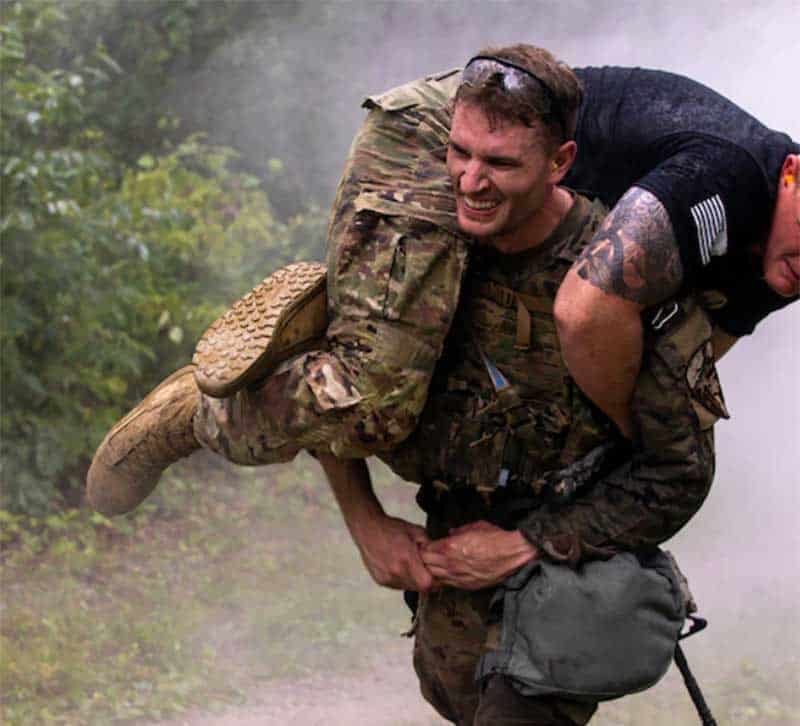
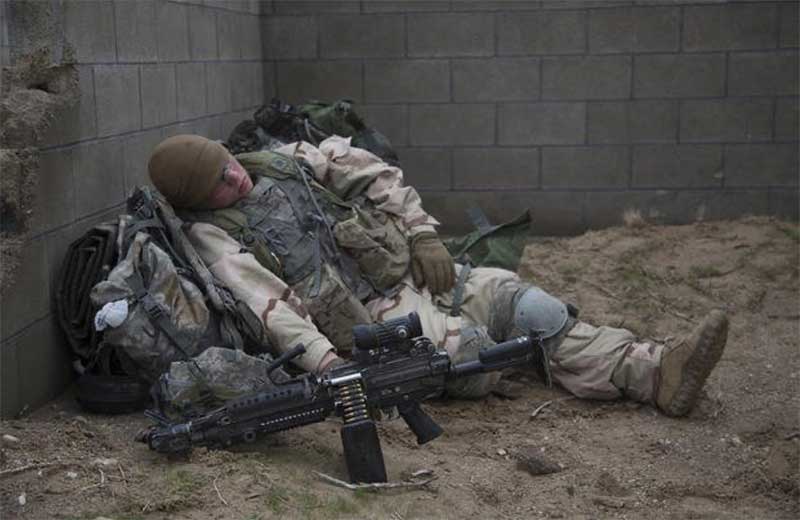
An incontinent toddler in a loincloth is cleaner than a grunt after a couple of weeks of living in the woods. (Photo: U.S. Army by SGT Michael West)
In military parlance, an Observer/Controller is like an umpire during war games. Harvested from other tactical units for a period of temporary duty, O/Cs are simply soldiers of comparable rank and experience who serve to interface the evaluated unit with the evaluating facility.
I have served as an O/C many times and have always strived to be helpful and supportive. I tried to be ever mindful that I was no smarter than those being evaluated and made it my mission to facilitate the success of the evaluated unit. In keeping with the Biblical adage, “Do unto others,” it just seemed the reasonable course. Unfortunately, not everyone enjoyed my sense of altruism.
Some people are quite simply jerks. It is hard to discern the unfathomable nature versus nurture question when it comes to abrasive personalities. Perhaps some people are genetically predestined to be obnoxious. Maybe others start out amicable before being dropped on their heads as children.
One O/C, in particular, seemed to believe himself supernaturally awesome. He was just another captain like me who served as the operations officer for his unit on the other side of the world. His regular job, training, and experience mirrored my own, with the exception that he was privy to the god net for the duration of this exercise.
The god net was a system of secure radios that connected all the O/Cs with the exercise evaluators. The radio itself was a small Motorola that affixed to an O/Cs tactical vest with a handheld microphone on a curly cord. Transmissions were effected by placing one’s lips against the microphone and whispering so as to avoid passing any information of value on to bystanders.
Via the god net, the O/Cs always had foreknowledge of pending attacks, logistics shortfalls, and the general mayhem that the OPFOR (Opposing Forces) sadistically visited upon evaluated tactical units. An O/C was never surprised and always stayed a step or two ahead of those in the hot seat.
Being a soldier is all about camaraderie, mutual trust, and fellowship, and then there was this O/C guy… (Photo: U.S. Army)
A wise and compassionate O/C tried to stay out of the way and be helpful whenever possible. By contrast, ours interrupted during an attack to offer helpful quotes from doctrinal manuals and point out the way they did it back where he came from. He also went to the rear areas for a shower and a bed with sheets every night. After three weeks of filth and misery, everybody hated this guy.
Tim was a towering blonde, Nordic-looking fellow from Minnesota. When we were deployed, he would shovel snow for the wives of other guys in my unit to keep the post snow-shoveling Nazis from leaving them nastygrams. Tim was a genuinely great guy. Three weeks in the field without a shower, however, and he smelled ripe unto spoilage.
One reaches a certain stasis after a couple of weeks of chronic filth. There is so much dirt on your body that old dirt has to fall off to make room for new dirt. A soldier can remain in this condition essentially indefinitely. So long as his mates are in a similar state, all are blissfully unaware of their wretched nature. Introduce someone else who is freshly clean, however, and the contrast can be surprisingly stark.
When I think back to my time in the combat arms, I remember
being tired a lot. (Photo: U.S. Army by SPC Tracy McKithern)
Our O/C had just made his morning appearance, pink and refreshed after a blissful repose in the palatial opulence of the post bachelor’s officer quarters. Stripping off his tactical vest/radio and arranging it in a folding chair inside our command post, he announced to anyone who cared that he was retiring momentarily to the porta-john. He had apparently missed his opportunity to use the porcelain and running water back at the Q’s.
As soon as he left the tent, we all rolled our collective eyes in disgust and returned to our tasks. Tim, however, strolled over to our O/C’s gear and unzipped his flight suit. Taking the microphone from the O/C’s god radio, Tim thrust it deep into his underwear, rubbing it vigorously around his chronically unwashed filthy crotch before carefully replacing it on the chair.
The laughter had diminished somewhat when the O/C returned from his sabbatical and donned his gear. For the rest of the exercise, every time our weasel of an O/C snickered into his radio about how we were not doing things the way they did back where he came from, all I could think of was how that radio microphone had been so intimate with Tim’s nasty crotch. The message indeed enjoys universal applications. One should ever strive to be nice to people because you can’t always keep an eye on your radio.
The Wooden hand of Captain Jean Danjou the most sacred icon of the FFL.
The Battle of Camarón, (30 April 1863). Was a defensive action fought with suicidal courage during France’s ill-fated intervention in Mexico. The Battle of Camarón founded the legend of the French Foreign Legion.
Violette Szabo was a spy. Her exploits during the Second World War were the stuff of legend.
There were forty-one female agents who worked for Section F of the British Special Operations Executive during World War 2. They ranged in age from 20 to 53. These exceptional women were aggressively trained in spycraft and covertly deployed into Axis-occupied territory. Their missions typically involved intelligence gathering and coordinating resistance operations. The Germans despised them.
Twenty-six survived the war. Of those who were lost, a dozen were captured and executed by the Germans, two perished from disease while imprisoned, one drowned when her ship was sunk, and another died of natural causes. I once met one of the survivors. Her name was Eve Gordon. She was the most compelling speaker I have ever heard.
Arguably the best-documented of the lot was Violette Szabo. A hero of the highest order, Violette’s story reads like an adventure novel. She ultimately gave her life for the cause of freedom.
Origin Story Of Violette Szabo
Violette was born on 26 June 1921, in Paris. Her father was English, and her mother was French. She was the second of five children and the only girl. She lived in France until age 11. Surrounded as she was by boys, she grew up shooting, ice-skating, and long-distance bike riding. Once she moved to England she had to relearn English.
Etienne and Violette Szabo were destined to have a fairly tragic marriage.
Violette was cursed with a hyperdeveloped sense of patriotism. With the onset of war, she volunteered for the Women’s Land Army and was dispatched to pick strawberries in support of the war effort. From there she transferred to an armaments factory in Acton where she met her future husband, Etienne Szabo. Etienne was Hungarian but served as an NCO in the French Foreign Legion. They dated for 42 days and were married. At the time Violette was 19, and Etienne was 31. After a one-week honeymoon, Etienne deployed to fight the Vichy French in Senegal, South Africa, Eritrea, and Syria. War is hell.
Violette bounced through a couple of jobs before enlisting with the Auxiliary Territorial Service. Hers was the first coeducational antiaircraft battery in the British military. She was posted to Frodsham, Cheshire, near Warrington. Etienne returned home briefly on leave before deploying yet again, this time to North Africa to face Rommel’s Afrika Korps. Soon after he left, Violette discovered she was pregnant.
Violette and Etienne’s daughter Tania never really knew her parents. The exigencies of total war stole them from her.
On 8 June 1942, Violette gave birth to a daughter, Tania. Once the child was old enough, Violette sent her away to be raised in safety by childminders while she took a job in an aircraft factory. On 24 October of that year, Etienne was killed during the Second Battle of El Alamein. Tania never met her father. The rage that Etienne’s death ignited in Violette led her to F-section of the British Special Operations Executive.
The Girl Becomes a Spy
F-section oversaw a series of clandestine underground networks in occupied Europe. 470 SOE agents served in France. 104 of them died. Of the fifty individual networks operating during the war, thirty-one were broken by the Germans.
Violette Szabo badly injured her ankle during parachute training. This injury was to come back to haunt her.
Little is known of Violette’s recruitment to the Dark Side. Those records, if ever they existed, were eventually lost. Her mastery of the French language and French customs no doubt played a large part as did her service with the 481st Heavy (Mixed) Antiaircraft Battery. She trained in spycraft for several months in 1944. There she mastered weapons, demolitions, cryptography, communications, parachuting, navigation, and fieldcraft. Her classmates adored her for her courage and good humor. Her instructors passed her but only just.
The master cryptographer Leo Marks described her as, “A dark-haired slip of mischief….She had a Cockney accent which added to her impishness.”
One of her instructors said, “She lacks ruse, stability, and the finesse which is required and…she is too easily influenced…[but] she set an example to the whole party by her cheerfulness and eagerness to please.” Regardless, by the Spring of 1944, Violette was declared ready to go to war.
Seeing the Elephant
Violette Szabo was a beautiful woman. This mystical attribute could be weaponized under the right circumstances.
On the night of 5 April 1944, Violette and another SOE operative named Philippe Liewer parachuted into France near Cherbourg from a British Halifax bomber. Violette was cute, gregarious, and small at only five foot three inches tall. As such, she could move more freely than might a more intimidating military-age man. She travelled along the coast prior to the invasion assessing the state of Resistance cells and the local war industry. Her reports aided Allied planners in establishing pre-invasion bombing targets.
The Lysander was a short takeoff and landing utility aircraft used by the RAF for covert operations in occupied Europe.
Three and one-half weeks after her insertion, Violette was extracted by an RAF Lysander piloted by Bob Large. The plane was badly damaged by antiaircraft fire on the trip back to England, losing a tire in the process. The plane was dark, the ride rough, and the landing without one tire all the more so. Tucked away as she was in the belly of the plane, Violette thought they had gone down in occupied France. When Large, who had bright blonde hair, went back to check on her after landing, Violette thought he was a German and attacked him. When she realized her mistake he earned a kiss.
Playing for Keeps
The B-24 Liberator was the most-produced American aircraft of the war. It was used for a wide variety of missions ranging from heavy bomber to maritime patrol to covert parachute insertions.
After two attempts aborted due to foul weather, Szabo and three other agents parachuted out of an American B-24 Liberator bomber into a landing zone near Limoges on 8 June. It is suspected that Szabo exacerbated her old ankle injury on this jump. Finding the local Maquis cells in poor shape to fight, the SOE commander dispatched Szabo to make contact with a better organized Resistance cell in the Correze and Dordogne.
The 2d SS Panzer Division Das Reich engaged in a reign of terror as they struggled to cross Normandy and get into the fighting.
Szabo had 62 miles to traverse, and the area behind the invasion front was frenetic with enemy activity. Specifically, the 2d SS Panzer Division was gradually making its way forward through the same area while being continually harassed by Allied air assets. Despite a general prohibition by the Germans against the use of automobiles by French civilians, one of her Maquis contacts insisted upon taking a Citroen rather than a bicycle given the distances involved. This was a terrible mistake.
The British Sten submachine gun was supplied to Resistance troops by the thousands in occupied Europe.
Szabo was dressed in light clothing and wore flat-heeled shoes. She carried a Sten submachine gun and eight 32-round magazines. Violette found herself in the small car with two members of the French Resistance when they encountered an SS roadblock outside Salon-la-Tour.
The Firefight
When unleashed against unarmed civilians, Das Reich spilt a river of blood.
Local Resistance fighters had previously captured Sturmbannfuhrer Helmut Kampfe, a battalion commander in the 2d SS Panzer. The SS troopers were out for blood. Kampfe was eventually executed, sparking a brutal crackdown that resulted in the deaths of 643 innocent French men, women, and children.
The details of what came next have been disputed. Some historians claim it didn’t happen at all. However, SOE personnel who were there alleged that one of the Maquis fighters leapt from the moving car and escaped to warn his comrades. It was claimed that Szabo and the remaining fighter, a young man named Dufour, exited opposite sides of the vehicle. In the ensuing gun battle, an innocent French woman was cut down by the Germans as she peeked out of a nearby barn.
This is a scene from the 1958 movie Carve Her Name with Pride, a biopic about Violette Szabo’s exploits.
With German armored vehicles and reinforcements arriving quickly, Dufour and Szabo vaulted a gate and sprinted toward a nearby copse of trees. Along the way, Szabo badly twisted her already injured ankle. Now unable to run, Violette refused assistance and directed Dufour to flee to safety. She then dragged herself to cover behind an apple tree at the edge of a cornfield. In this position, she held the attacking SS troopers at bay for a full half an hour until she ran out of ammunition. According to SOE sources, her sacrifice allowed Dufour to escape.
Nazis Just Suck
This snappy-dressing psychopath is Reinhard Heydrich, a plank holder with the SD. Czech partisans dispatched this scumbag to hell in the summer of 1942.
SS Sturmbannfuhrer Kowatch of the Sicherheitsdienst or SD, the SS Security Service, tortured the captured girl mercilessly for four days in an unsuccessful effort to extract details about her resistance cells. Eve Gordon’s description of her experience with the SD was enough to make me vaguely ill when I heard her speak of it back in 1989. Eventually, with Patton’s 3d Army rapidly approaching, the Germans shipped Szabo and the rest of her captured female SOE counterparts to Ravensbruck concentration camp.
In an environment dominated by Allied air power, the trip by rail took eighteen days. During this time Violette and her comrades were given little to no food or water. During one air attack, the Germans temporarily abandoned the train, allowing Violette to retrieve some water from a lavatory for herself and her friends.
Violette and her female counterparts were assigned to work as slave labor building Heinkel bombers. When she refused to work on German munitions she was remanded to digging potatoes. Eventually, she was put to work felling trees in the winter of 1944 without proper clothing. Many of her comrades literally froze to death. With minimal food and bone-breaking work, Violette grew steadily weaker. Throughout it all, she still schemed ways to escape.
Violette’s Story Comes To An End
Around 5 February 1945, SS-Rottenfuhrer Schult dragged Violette Szabo out of her cell to a spot known as Execution Alley at the Ravensbruck camp. There he forced her to kneel and shot the pretty girl in the back of the head. Her body was burned in the camp crematorium. Szabo was 23 when she died.
Violette Szabo’s adventures were dramatized in Carve Her Name with Pride. The specific details of her final moments of freedom have been lost to history.
Violette Szabo was only the second woman ever awarded the George Cross for gallantry. Some of the details were clearly confused in the interim, but here is the citation—
St. James’s Palace, S.W.1. 17 December 1946
The KING has been graciously pleased to award the GEORGE CROSS to: —
Violette, Madame SZABO (deceased), Women’s Transport Service (First Aid Nursing Yeomanry).
Madame Szabo volunteered to undertake a particularly dangerous mission in France. She was parachuted into France in April 1944 and undertook the task with enthusiasm. In her execution of the delicate researches entailed she showed great presence of mind and astuteness. She was twice arrested by the German security authorities but each time managed to get away.
Eventually, however, with other members of her group, she was surrounded by the Gestapo in a house in the south-west of France. Resistance appeared hopeless but Madame Szabo, seizing a Sten gun and as much ammunition as she could carry, barricaded herself in part of the house and, exchanging shot for shot with the enemy, killed or wounded several of them.
By constant movement, she avoided being cornered and fought until she dropped exhausted. She was arrested and had to undergo solitary confinement. She was then continuously and atrociously tortured but never by word or deed gave away any of her acquaintances or told the enemy anything of any value. She was ultimately executed. Madame Szabo gave a magnificent example of courage and steadfastness.
This is Tania Szabo, Etienne and Violette’s daughter, wearing her parents’ medals.In adulthood, Tania Szabo became a vocal proponent of her mother’s exploits.
Violette Szabo was a rare patriot. She could have just left well enough alone and whiled away the war years picking strawberries. Instead, she volunteered to parachute deep into enemy-held territory to take the fight to the hated Nazis.
Amidst a veritable ocean of tragedy and pain, the Nazis brutally stole one little girl’s parents. The orphan Tania Szabo subsequently devoted herself to telling her mother’s amazing story. Violette’s inspiring tale of selfless sacrifice in the face of unimaginable hardship should inspire all of us today. Violette Szabo was indeed a true hero.
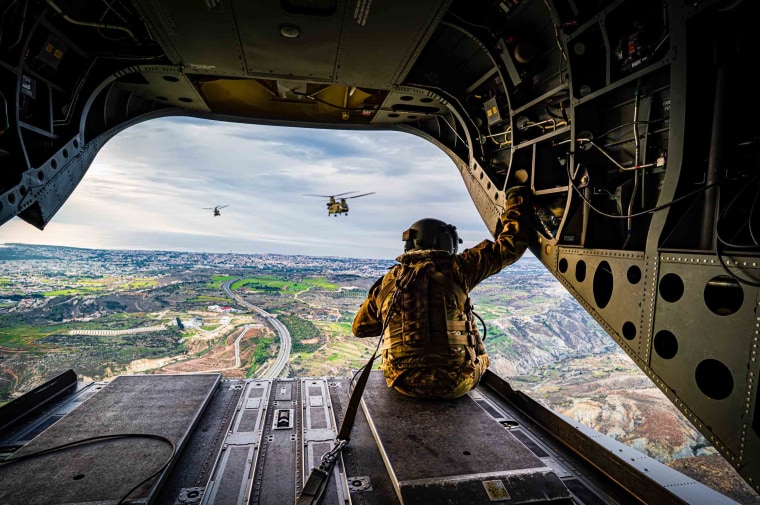
A CH-47 Chinook flight engineer during a training session over Cyprus in 2020.Maj. Robert Fellingham / 12th Combat Aviation Brigade / U.S. Army, file
Hundreds of Army aviation officers who were set to leave the military are being held to another three years of service after they say the branch quietly reinterpreted part of their contract amid retention and recruitment issues.
The shift has sparked an uproar among the more than 600 affected active-duty commissioned officers, including some who say their plans to start families, launch businesses and begin their civilian lives have been suddenly derailed.
“We are now completely in limbo,”said a captain who had scheduled his wedding around thinking he would be leaving the military this spring.
That captain and three other active-duty aviation officers who spoke to NBC News spoke on the condition of anonymity out of fear of retaliation.
As part of a program known as BRADSO, cadets commissioning from the U.S. Military Academy or Army Cadet Command from 2008 and 2020 were able to request a branch of their choice, including aviation, by agreeing to serve an additional three years on active duty.
For years, the Army allowed some aviation officers to serve those three years concurrently, and not consecutively, along with their roughly contracted seven or eight years of service.
In a phone call with reporters Thursday, Army officials admitted “errors” in the system, which they noticed a few months ago, led to the discrepancy.
“We are fixing those errors, and we are in communication with the unit leadership and impacted officers,” said Lt. Gen. Douglas Stitt, deputy chief of staff of G-1, which is in charge of policy and personnel.
“Our overall goal to correct this issue is to provide predictability and stability for our soldiers while maintaining readiness across our force,” Stitt added.
In letters the Army sent this month to the affected aviators as well as to members of Congress, which were obtained by NBC News, it said it “realized” after conducting a “legal review of this policy” that the three-year BRADSO requirement has to be served separately.
“This is not a new policy, but we are correcting oversights in recordkeeping that led some officers with an applied BRADSO to separate from the U.S. Army before they were eligible,” the letter said.
Thursday’s media roundtable came after more than 140 aviation officers banded together to demand answers after learning one by one that they were being denied discharges due to outstanding BRADSO obligations beginning last fall.
More than 60 of them signed a letter to Congress outlining how they had been misled by the Army for years about the exact length of their service contract.
“It has been this unanimous uprising of emotions and frustrations,” said another Army aviation captain, who is newly married and wanted to begin having children.
He called the reversal of a precedent an “injustice” to an already burnt-out department still regularly deployed despite the end of the longest war in American history.
“Yeah, the war on Afghanistan ended. There’s still a high demand for Army aviation,” he said, while en route to another deployment. “We have units still in constant training or deployment rotations.They’re failing to recognize the human aspect.”
The newlywed said it has been difficult for him and his wife to accept a three-year delay in starting a family.
“That was the big kick in the gonads,” he said. “We wanted to start having kids, and we no longer can. It’s a stressor we didn’t plan to deal with.”
Documents obtained by NBC News show officers were given conflicting information about their service obligations.
From NE Austin (TX) — not to be confused with the City of Austin — comes this cheery news:
According to the Austin Police Department, at around 5:31 a.m., officers responded to a call in the 7600 block of Bethune Avenue, where a female resident reported a man attempting to break into her home through the door and a window. The caller then stated that the male suspect had entered the home, followed by the sound of gunshots.
Upon arrival at the scene, the APD officers and EMS medics found the male suspect dead. APD says the preliminary investigation indicates that the suspect was shot by one of the residents in self-defense.
The interesting part of the story to me is that the dead goblin is not, as one might think, a teenage choirboy, but a sixty-something asshole. Whatever. Asshole is asshole, regardless of age, and dead is dead. (Thankee, Reader Brad for the alert.)
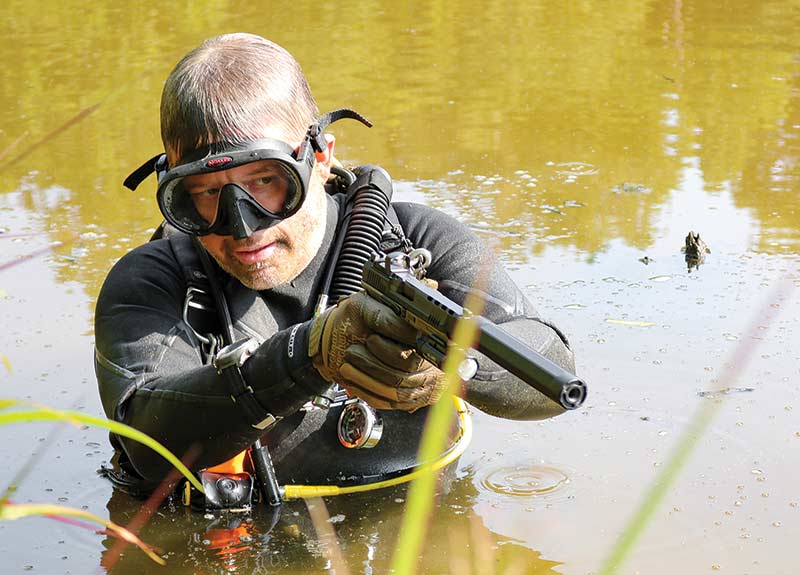
The Canik TP9 SFx METE holds its own with the finest combat
handguns in the world at a very sweet price — definitely secret agent stuff.
I am an unrepentant fan of the Canik TP9 family of pistols. I bought my first copy back in 2012. There was a cavorting dolphin on the side. The thing looked like a Walther P99 had a baby with a brick. I still enjoy shooting it.
Today’s most recent offerings are both uber-svelte and sexy-cool. They include a feature set that eclipses the big-name guns. The new TP9 METE takes combat pistols to a previously unexplored space.
The Canik TP9 METE pistols are thoroughly awesome unadorned right out of the box.
However, they readily lend themselves to some proper accessorizing.
The Canik TP9 METE pistols came in a truly epic box. Will tricked
his out with all the cool-guy stuff he could find.
The Operator
The crew of the International Space Station was shocked when the hatch to the supposedly unmanned SpaceX Dragon resupply capsule opened, and Duke Sterling floated in behind his signature disarming grin. The ISS crew consisted of three experienced cosmonauts and Mission Specialist Dag Nilsen from Norway.
“Forgive my unexpected visit,” Sterling said in unaccented Russian. “Unfortunate international circumstances dictate I impose upon you briefly.” Mission Specialist Nilsen heard the words in Norwegian.
One of the cosmonauts was the preternaturally gorgeous Svetlana Fedorov, formerly principal dancer at the Bolshoi. She subsequently earned a PhD in astrophysics while simultaneously raising her twin nephews orphaned in a tragic catfish noodling accident. Her two male comrades were hardened Spetsnaz veterans.
Sterling quickly settled into the routine of ISS life. He dominated the Russian card game of P’yanitsa despite never before having played. Forty-eight hours later, the four scientists counted Sterling among their dearest friends.
On day three, Sterling glanced at his watch and said, “I must be going. Thank you for your hospitality.” Before anyone could react, he was in his EVA suit, a sleek armored case connected to his waist via an aluminum carabiner.
Svetlana leaned toward him and whispered, “Am I pregnant?”
Sterling could always tell. Though he had not physically touched her, Svetlana Fedorov would not be the first woman to find herself with child simply from being in the same room with Duke Sterling. Smiling sweetly, Sterling said, “Nyet.”
In one practiced movement, Sterling was in the airlock. He glanced at his watch a final time, waved at his new friends and exited the ISS. When the moment was right, he pushed off vigorously toward earth.
Two hours and 27 minutes later, Sterling deployed his parachute. A quarter-hour after that, he touched down noiselessly in total darkness on the horse track of the Ryongson Residence north of Pyongyang, North Korea. Sterling removed his space helmet and soaked up the silence. Despite having just HALO’d into North Korea from the International Space Station, his heart rate loitered in the high 50s.
Sterling’s dark camouflage fatigues rendered him invisible in the darkness. He popped open the case and ran his fingers over its contents in the darkness. In 30 seconds, he had his Canik TP9 SFx METE fully assembled. He slipped the sinister weapon into its custom fit-and-lock retention holster before stowing his spacesuit, parachute and dunnage behind the stable. He then activated his NVGs and pressed toward the foreboding enormity of the main edifice. It was showtime.
The new Canik TP9 METE pistols are as refined as human craftsmanship and engineering can make them. They are simply magnificent combat handguns.
The Canik TP9 SFT METE is the standard service pistol. Though beautifully
tricked out, this gun occupies the same space as a GLOCK 17 or HK VP9.
Avoiding the North Korean guards was not a challenge. Sterling had both an otherworldly proximity sense and an uncanny ability to blend in with foliage, furniture and household decor. In moments, he stood poised outside the Supreme Leader’s master bedroom. With grim determination, Sterling readied his Canik, flipped up his goggles and pressed through the door.
The rotund North Korean despot sat at a massive ornate table. In one hand, he held an adorable squirming beagle puppy. In the other, he grasped a dental tool. Shock and surprise registered on his moon-like face. Without a moment’s hesitation, the highly trained CIA Special Activities Division operative raised his customized Canik handgun and shot the short fat man three times in the chest.
He was answered by a shower of sparks and the acrid smell of burned electrical components. Kim fell heavily out of his chair, his gaze disconjugate and his limbs writhing wormlike. So, Kim Jong-un actually was a robot. Sterling had long suspected.
Sterling dropped the abused puppy into his cargo pocket and made his way next door to the suite of Kim Yo-jong, Kim Jong-un’s psychotic nutjob sister. He used his simply breathtaking romantic powers to convince the 33-year-old under-tyrant to fetch him a helicopter. Ninety minutes later, he landed the North Korean Mi-24 Hind gunship at Camp Humphries in South Korea to great fanfare. At the same instant, Kim Yo-jong was also pondering her pregnancy status. Sterling had not touched her, either.
Sterling retired to the BOQ’s at Humphries with his new dog. He cleared and stowed his Canik before curling up with the grateful little beagle. Another day, another despot.
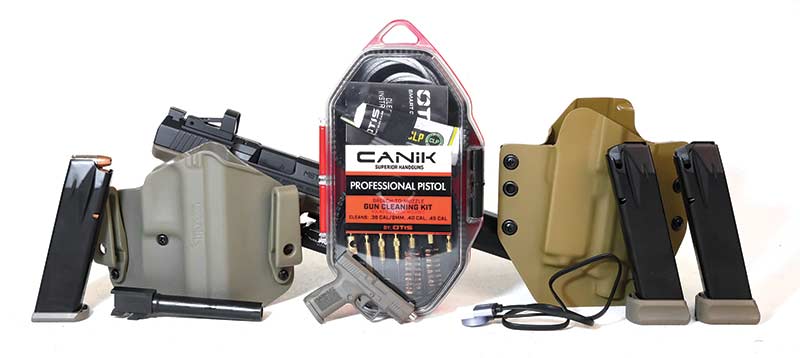
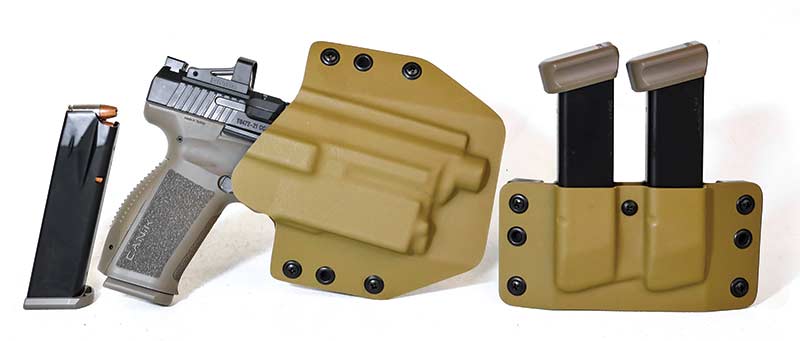
The pistols come with everything you could possible need — all in the box.
Unlike many “combo” kits, the holsters and magazine carriers are
solid pieces of gear and ready for daily use.
The Gun
METE is a Turkish given name. It means, “brave,” “valiant” or “hero.” The word is pronounced “Met-ay.” METE is actually a deformed variation of Mo-du, which is a version of the classic Mongol honorific Baghatur. The literal translation of METE into English would be “freaking awesome.”
Using the basic yet superlative TP9 chassis as a foundation, the skunk works at Canik accumulated literally everything anyone might possibly need to optimize a combat handgun. The case mine came in is adequate to survive atmospheric re-entry. We reviewed both the TP9 SFT and the TP9 SFx. Amazingly the MSRP for each kit is $519.99 and $574.99, respectively.
All TP9 pistols include a fiber-reinforced polymer frame with interchangeable backstraps and a Picatinny rail on the dust cover. The slide release is replicated perfectly on both sides. The magazine catch is readily reversible and sports various-sized buttons for a custom fit. There is a loaded chamber indicator and a striker status button, both of which are accessible by feel in hard dark.
The fire controls are nickel plated for a beautiful trigger experience. The base finish is Tenifer. The slides are further Cerakoted as well. The ample trigger guard is oversized to accommodate gloves. This all comes standard.
The TP9 METE guns include an optics-ready slide with several mounting plates for common red dots. The superb steel 3-dot sights are designed to co-witness with a red dot. The rear sight is angled for one-handed charging should life truly go sideways. The integral magwell is flared for fast mag changes
The Canik TP9 SFx METE is part race gun, part rugged combat tool.
Will’s shoots like a tuned target pistol.
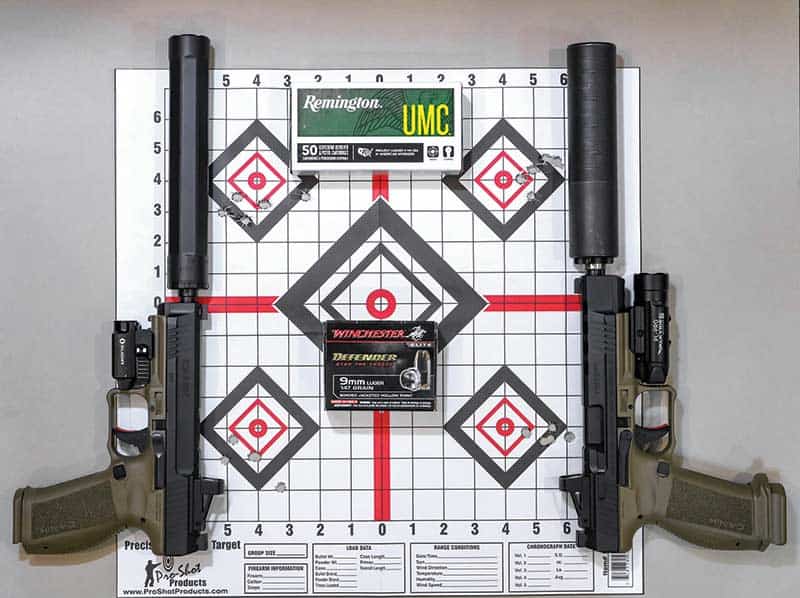
At 15 meters from a simple rest both of these guns shoot great.
The TP9 SFx METE (right) and Will got along particularly well on the range.
METE-mazing
The full meal deal is fairly incredible. The gun includes a superlative fit-and-lock Kydex holster. This rig is reversible for either IWB or OWB carry. There are two magazines. One packs 18 rounds, while the other carries 20. There is an applique flared magwell adaptor that secures with an Allen screw.
These guys really did think of everything. The pushpins are all dimpled for easy disassembly. Each pistol comes with the most adorable little tool kit that looks like a miniaturized version of the pistol. This rig includes the fasteners for your red dot as well as a bit driver and accessories. There is also a premium OTIS cleaning kit. The package includes a rugged punch and sundry support kit as well.
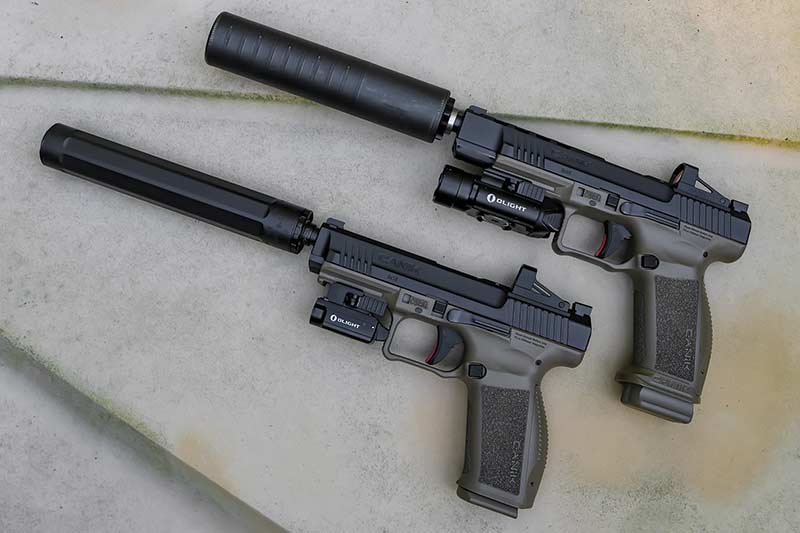
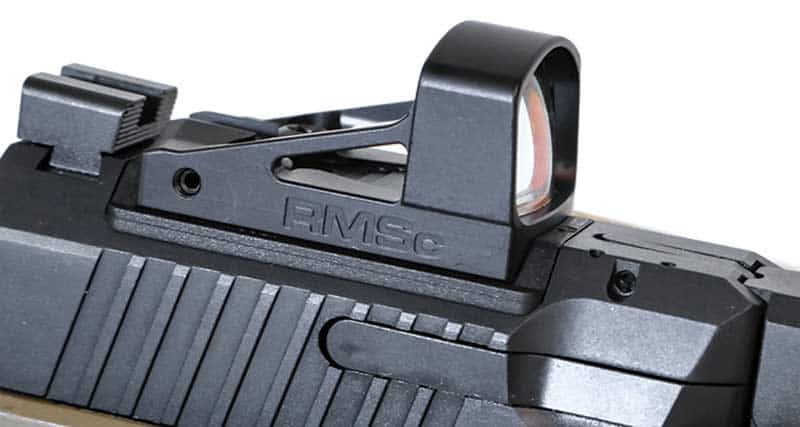
I tricked my guns out with factory extended threaded barrels that are a drop-in fit. Shield RMSc red dots and custom rechargeable OLIGHT tactical lights round out the package. Century offers holsters for the gun/light combination as well.
The Shield RMSc red dot is automatically on every time you grab the gun.
It will ruin you to conventional iron sights.
OLIGHT makes the most extraordinary rechargeable weapon lights.
The units can be recharged via a magnetized charging cable without
removing them from the gun.
Decisions, Decisions …
The TP9 SFT sports an unthreaded 4.46″ barrel. The SFx version comes with a longer 5.2″ tube and a slide extended to match. The slides on both guns are serrated both front and rear. That of the SFx is also skeletonized up front for lighter weight, faster lock times and general cool points.
The polymer frames are interchangeable. The trigger guards are as aggressively undercut as physics and geometry might allow. This equals superb recoil control, minimal muzzle flip and faster follow-up shots.
The SFT is the standard bedside concealed carry service pistol. It packs like any other high-end duty pistol, only better. The plethora of included accessories just mean there’s substantially less to buy when it comes time to trick the gun out for service.
The SFx is a holy melding between a defensive pistol and a race gun. The extended snout helps tame the chaos, while the added mass keeps the sights on target. Both guns run like a toddler after a Twinkie.
The applique magwell extension fits in place using the included tools.
Ruminations
My SFx METE performs like a tuned target gun. However, a defensive pistol isn’t much good if you can’t keep it handy. I tricked out my TP9 SFx METE longslide with its Shield RMRcc sight and got it arranged in the included IWB holster underneath my surgical scrubs.
The resulting package is undeniably bulky. However, I gutted through 12 hours at the clinic and 43 sick people, with none of them realizing I was armed. I also got home without any undue back strain.
Should life go sideways at home, at work, in North Korea or aboard the International Space Station, you really won’t find a better
defensive tool.


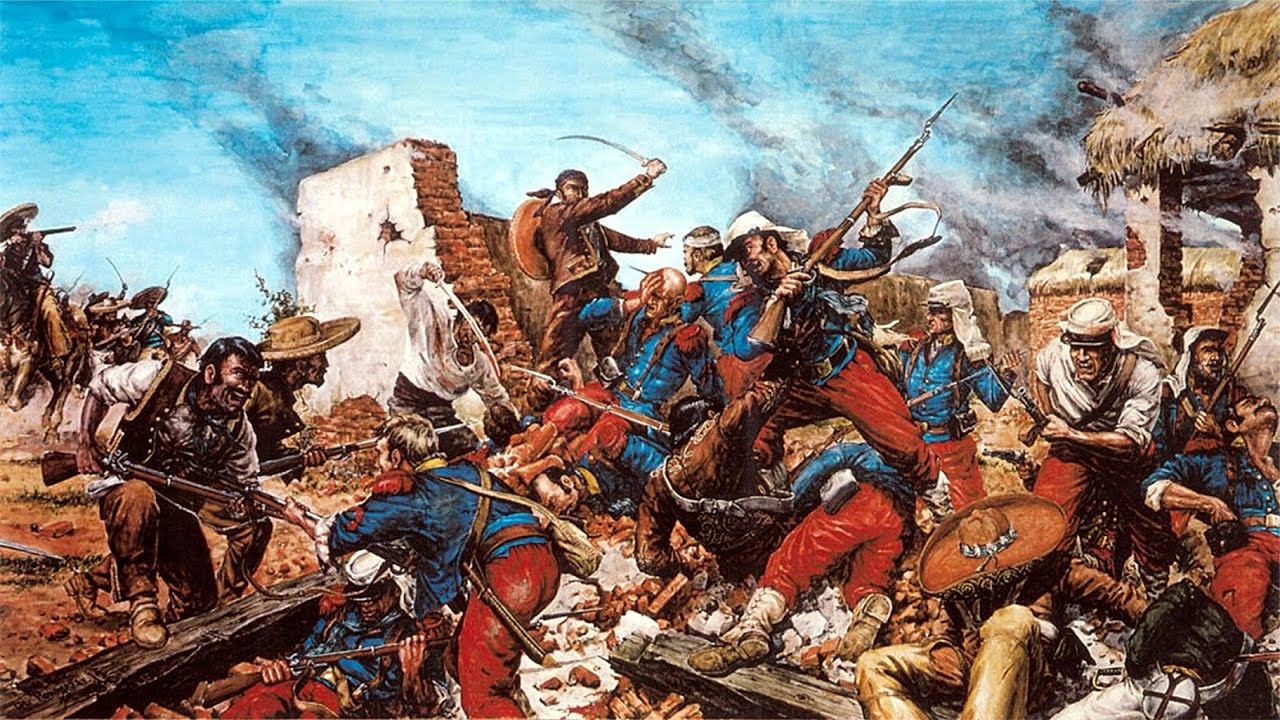

 The Battle of Camarón, (30 April 1863). Was a defensive action fought with suicidal courage during France’s ill-fated intervention in Mexico. The Battle of Camarón founded the legend of the
 .jpg)