Author: Grumpy
.webp)
.gif)
.png)
.gif)
.gif)
.jpeg)
.gif)
.gif)
.gif)
.gif)
.gif)
 Just a quick show of hands, who here loves paying taxes? That is, of course, a rhetorical question. The only folks who enjoy paying taxes are New York socialists and Bernie Sanders, a man whose only extra-governmental real jobs were as an aide in a psychiatric hospital and a part-time carpenter. The rest of us think taxes pretty much suck.
The federal income tax rate in America ranges from 10 to 37%. State taxes are a wildly mixed bag. Alaska has reverse taxes. They actually pay people to live there. Eight predominantly-red states levy no income tax at all. California is naturally the worst at 13.3%. Every state charging above 9% is a Democratic stronghold. I’m sure that’s just a coincidence.
So, why all this talk of infernal revenue, might you ask? Because I have finally found something that makes me glad to pay my taxes. The AGM-114R-9X is the coolest weapon since the Roman gladius. Folks in the know call this the Ginsu Missile or the Ninja Bomb. Uncle Sam won’t reveal what these bad boys cost, but they’re worth every penny.
AGM-114 Hellfire Details
The AGM-114 Hellfire was first introduced in 1984. Hellfire stands for Helicopter-Launched, Fire and Forget. The Hellfire missile weighs about 100 pounds and is 64 inches long. Today’s Hellfires are precision guided via a semi-active laser homing system or a millimeter-wave radar. Max effective range is somewhere around 11 kilometers. The Hellfire was originally intended as a dedicated anti-armor weapon to be used on AH64 Apache gunships. However, they’ve gotten way cooler since then.
The problem in the modern era of ubiquitous camera phones is proportionality. The days of leveling a city to undermine a nation’s capacity to wage war or kill one seriously evil dude are over. We need weapons that will whack the bad guys without unduly cluttering up the place.

The basic AGM-114 isn’t bad. The Hellfire employs a top attack profile wherein the round climbs to a high altitude and then plunges down toward a target from above at around Mach 1.3. The intent is to defeat the thinner roof armor of most modern armored vehicles, and the Hellfire is magnificent at that. A single conventional Hellfire missile costs between $99,600 and $150,000 per round dependent upon the particulars. They are otherworldly accurate.
Hellfire warheads weigh about 20 pounds and come in a wide variety of flavors. Current rounds are equipped with a tandem HEAT (High Explosive Antitank) charge designed to defeat explosive reactive armor systems. However, when used against individuals, this shaped charge warhead is still fairly untidy.
The AGM-114R-9X first saw service in 2017. The Hellfire 114R-9X doesn’t have a warhead at all. Instead of explosives, this vicious little monster deploys half a dozen steel blades out of its central chassis immediately before impact. Now imagine a 100-pound swirling steel salad shredder coming at you at 1,000 miles per hour. As this is well above the speed of sound, you won’t even hear it coming.
The Dude
Abdullah Abd al-Rahman Muhammad Rajab Abd al-Rahman was also known as Ahmad Hasan Abu al-Khayr al-Masri. His friends, if ever he had any, would have called him Abu Khayr al-Masri. The general deputy to the notorious al-Qaeda leader Ayman al-Zawahiri, Abu Khayr al-Masri was a proper psychopath.

I’ll spare you the gory details, but this reprobate guy blew stuff up and murdered people across a couple of continents because his dark god told him to. For this reason and some others, Donald Trump rightfully determined that al-Masri needed to die.
On February 26, 2017, al-Masri was toodling along in a car alongside another unwashed, bloodthirsty terrorist in the Syrian province of Idlib. Orbiting silently overhead was a General Atomics MQ-9 Reaper drone equipped with AGM-114R-9Xs.
There was a loud bang, and al-Masri’s car swerved to a stop amidst a massive shower of sparks. Bystanders rushed up to see what had happened. What they found was pretty tough to unsee.
The Aftermath
Photos of what remained of Abu Khayr al-Masri’s car were fascinating. We hit the vehicle with two of these weapons, leaving a pair of matching star-shaped holes in the roof.
The windshield wipers remained intact. At least one round punched all the way through and left a crater in the ground. The car rolled a short distance past the impact point prior to stopping. Suffice to say, Al-Masri’s gory encounter with the U.S. military didn’t enhance his vehicle’s resale value.
Thanks to the AGM-114R-9X, the United States of Freaking America can puree pretty much any Bad Guy on Planet Earth. Think of the Ginsu Missile as a supersonic Cuisinart that will pulverize the enemies of our great nation most anyplace in the world. I’d gladly pay taxes for that.


The Ruger Vaquero was introduced in 1993 and significantly changed in 2005 with the intro of the New Model Vaquero.
These custom New Models are a matched set the author had made for himself and a friend by Tyler Gun Works.
There are certain things in life you will only screw up one time: calling someone an “ex-marine,” telling your wife or girlfriend the truth when she asks if her pants make her look fat, and making reference to an “Old Model” Ruger Vaquero at the range.
While the first two are universally considered “fighting words,” using the incorrect terminology to distinguish the two major iterations of the Vaquero will certainly incur the wrath and scorn of the firearms grammar police. Ask me how I know!

The differences between the New Model and the original version are easily seen when side-by-side.
The New Model (left) is smaller but has a larger hammer spur, along with several other changes both mechanical and cosmetic.
Photo: Alan Garbers
The Cowboy Gun Built for a New Era
When Ruger introduced the original Vaquero in 1993, they weren’t simply nodding to Old West nostalgia. Instead, they were catering to the rapidly growing sport of Cowboy Action Shooting (CAS). The CAS competitors wanted guns that looked period-correct but didn’t possess the metallurgical fragility — or cost — of genuine 19th-century Colts.
Ruger delivered in typical Ruger fashion: they built the Vaquero on the same robust frame as the Blackhawk. It strongly resembled the popular archetype of a six-shooter and was strong enough to handle heavy “Ruger-only” .45 Colt loads that would grenade any antique Colt Single Action Army.

The size difference—and strength—of the different cylinder models is striking. The larger original cylinder is on top, the New Model is on the bottom. Photo: Alan Garbers

The original Vaquero cylinder (right) is longer, stronger and sharper on the forward end,
something which shooters soon noticed due to holster wear. Photo: John Taffin
The original Vaquero was a substantial chunk of steel — more working ranch hand than Hollywood gunfighter. Slightly oversized proportions compared to the SAA, thicker cylinder walls and a tank-like presence made it a favorite among those who wanted a gun they could not break, even when they tried.
Most importantly, it featured Ruger’s transfer-bar safety system, allowing shooters to safely carry all six chambers loaded. For CAS shooters and horsemen negotiating rough country who wanted a traditional-looking single action, it was a genuine game-changer.
The Vaquero went merrily along for years, but there were rumors and innuendos floating out in the sagebrush.
The original model was a great gun but lacking in several areas: it had an ugly barrel roll stamp safety warning on the barrel, the cylinder tended to wear on holsters because the forward edge wasn’t beveled, the ejector rod head wasn’t the traditional crescent shape, and overall, the gun was visibly larger than the “proper” SAA.
By the early 2000s, a subset of shooters — particularly those who prized historical accuracy — wanted something closer in size and feel to the Colt Single Action Army. Ruger listened.
Focus on Authenticity
In 2005, they introduced the New Model Vaquero, a thorough redesign scaled down to Colt-like dimensions, with sleeker lines and improved ergonomics.
And here’s where you should tread carefully: some aficionados get downright unhinged if you refer to the original Vaquero as an “Old Model.” These self-appointed keepers of True and Holy much prefer “original,” “first-generation,” or “large-frame” Vaquero. Use the wrong term and you’ll hear about it faster than you can say “four-click hammer.”

The New Model Vaquero is modeled on the Colt Single Action Army and provides a great canvas for customization, such as Brent’s New Model done by Tyler Gun Works in Texas.
Key Differences
Frame
Original Vaquero: Built on the Blackhawk frame. Overbuilt. Handles heavy “Ruger-only” .45 Colt handloads with ease. It’s been said whatever you can stuff into a cartridge, the original Vaquero can handle it.
New Model Vaquero: Scaled to near-Colt dimensions with intentions of becoming a lookalike twin of the ubiquitous Single Action Army. It is strong but is definitely intended for standard-pressure loads only. The late John Taffin noted in the pages of GUNS Magazine: “I see no reason to exceed 1,000-1,100 fps muzzle velocity with a 260-grain bullet in the New Vaquero. This load shoots comfortably, is very accurate, and, short of really big game, will handle any sixgun chore most of us will ever have.”
Handling & Feel
Original: It is heavier, beefier, and slightly bulkier in the hand. Side-by-side with a New Model (or SAA), the visual difference is obvious.
New Model: Has a better balance and many feel a more natural pointability due to the refined grip shape. The hammer spur is noticeably taller on the New Vaquero (except for Bisley variants), giving quicker, more sure thumb engagement. Many love it, but some hate it.
Mechanical
The New Model uses a shorter cylinder pin than the original and several other redesigns, including a new, larger ejector rod head.
Aesthetic
Original: Wears the lawyer-friendly safety warning right on the barrel where everyone could see it.
New Model: The warning was discreetly relocated — finally giving the gun the clean, period-correct look it always deserved.
It’s been said the New Vaquero is essentially the revolver Ruger might have built back in 1953 during the last major pop culture cowboy craze if Cowboy Action Shooting had existed.

The New Model Vaquero is visually similar to the legendary Colt Single Action Army but at a better price and, some argue, with better quality. It also provides a great canvas for customization.
To P or Not to +P
One thing Ruger didn’t do well was to consider the follow-on effects from significantly changing the pressure-handling capabilities without giving the gun a whole new name. The original and New Model Vaquero are very similar but not the same in terms of what they can handle in terms of pressure.
As I noted, the original model was built on essentially a .44 Magnum frame and can handle virtually anything you can throw at it. Meanwhile, the New Model is mechanically on par with the Colt Single Action, which was designed during the black powder cartridge era and thus can’t handle pressures the original model could easily laugh off. There have been instances of New Model Vaqueros doing an impression of a hand grenade with hot ammo.
This difference is why some reloading manuals will list “Ruger Only” loads, which are intended to be used only in the original Vaquero. Furthering the confusion are .45 Colt +P and even +P+ loads available from some manufacturers.
There are various claims on the internet that Ruger says the New Model can handle +P loads, but to make it clear, I can’t find any credible evidence of this aside from claims on internet forums.
Interesting side note: there is no SAAMI specification for .45 Colt +P and +P+ loads, so essentially you’re outside any official guardrails of case pressure, which is another reason not to fire the high-pressure loads in your relatively weaker New Model.
Fortunately, most respectable manufacturers like Buffalo Bore make it clear you should only fire their hottest .45 Colt loads in the original Vaquero.

Good guns need — not want — good leather. This is Brent’s custom Gunsite-themed rig by Rob Leahy’s Simply Rugged Leather for his custom New Model Vaquero.
Why the Vaquero Endures
More than 650,000 Vaqueros have been built, and demand remains strong to this day. CAS competitors love them, collectors chase rare variants while hunters and outdoorsmen — those with a bit of romantic frontier spirit left, such as Very Truly Yours, keep carrying them because they offer something polymer pistols simply don’t: a mechanical soul.
The original, large-frame Vaquero (if you can find one) appeals to shooters who want brute strength, big loads and a gun that feels hewn from bedrock.
The New Model Vaquero appeals to those who want authenticity, elegance and the kind of natural handling that made the 1873 Colt a legend.
In my book, there’s no winner — just two distinct philosophies. Pick your poison; just don’t ever choose an “Old Model” Vaquero!
Categories
How I Do Barrel Break In
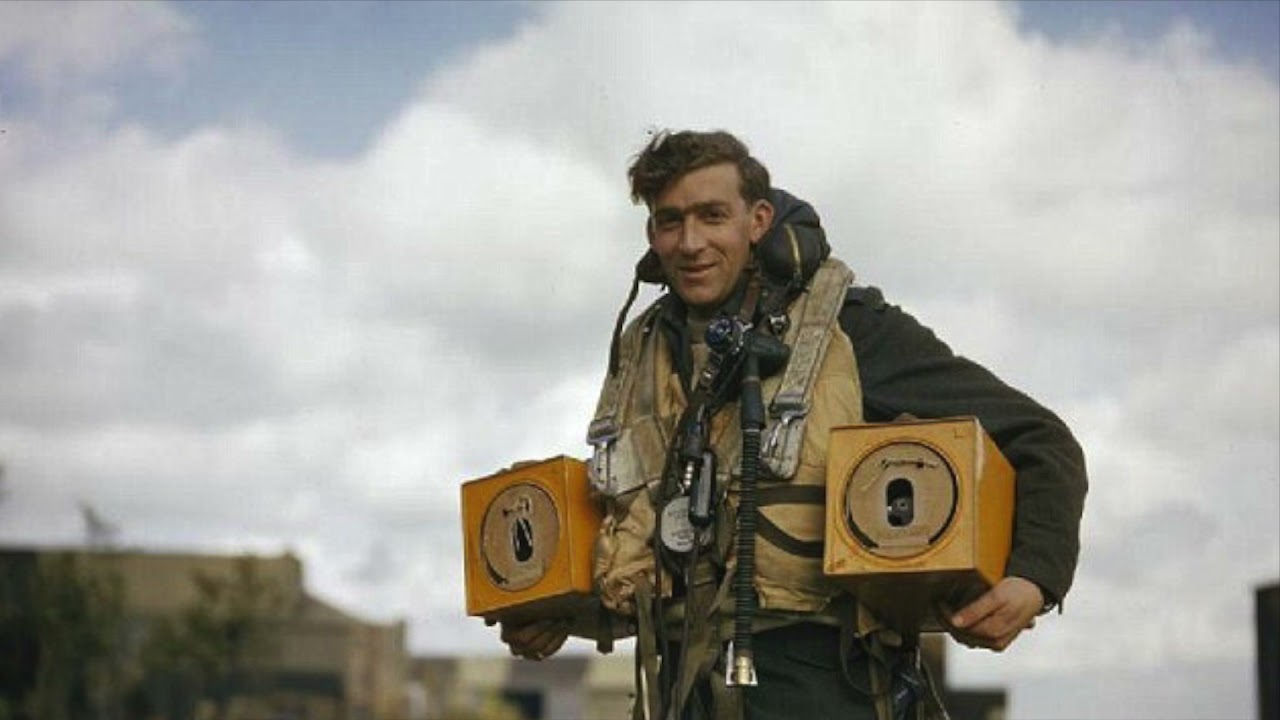 It’s December, the year 1941 is coming to a close as the Nazi Party led by Adolf Hitler, along with its Axis partners, declare war against the United States. There is about to be a dogfight in the skies, but it won’t be fought solely between Luftwaffe and P-51s. There is another battle going on in the European air.
Germany has found tremendous success using their radio intelligence to crack British naval ciphers, putting Churchill on his heels, and making the Allies more cautious than ever with their communication to the frontlines. To prevent any more leaks, the Allied forces dropped nearly 200,000 carrier pigeons into occupied territories, to communicate with soldiers and to gather intel directly from the combat zones.
The plan was a success. While not all flights carried valuable information, in fact only about 10% of the birds returned to England, the ones that did gave the allies key intel that allowed Britain to go on the offensive. Information such as bombing raids, troop positions, and even a country estate used by highly ranked Nazi commanders. All was going according to plan until the British soldiers spotted suspicious activity going on along the English coast.
Air Superiority
Just as the carrier pigeons were crossing over the English Channel, suddenly casts of peregrine falcons would swoop in, picking off the pigeons one by one. It was a slaughter, as the allies watched what could have been valuable intel fall to European waters by raptor carnage. Perhaps the most perplexing observation was that these predator birds had never been seen in numbers like this before.
It didn’t take long before rumors quickly floated around the London war rooms that the Nazis must have weaponized these falcons to patrol the coast of France, trained with only pigeon blood hunger.
It appeared the rumors were true, when mysterious birds of prey were found just west of Bournemouth, owned by suspected members of the fascist movement. The Nazis had adapted and quickly won the upper hand as the British remained clueless as to what their next move would be.
Hunting Nazi Birds
Sir David Petrie, Director General of MI5 at the time, had a somewhat taboo plan that may have just been crazy enough to work. MI5 organized a group of sharpshooters with a “license to kill” any predator birds they spotted interfering with their carrier pigeons off the English coast. It was officially called the Falcon Destruction Unit.
Thus the high-stakes bird hunting began. My vision of shooting birds over big water typically brings my mind to places like western coast, tucked in a boat blind leading heavy sea ducks at around 30 yards.
Picking off enemy-trained raptors, capable of diving over 240 miles per hour, all while feeling the pressure of protecting critical intel from falling—a far greater challenge than birds not working into my decoys, to be sure. Still, the sportsman in me wishes for a time machine just to spend one morning hunting with that group.
The program had its successes and failures. Eventually, it evolved into a counterattack unit, where the Allies would train their own groups of hawks and falcons to fight the Nazi birds.
To this day, MI5 claims that it is the only group they have given a license to kill. If the Falcon Destruction Unit ever does make a comeback, and they’re looking for recruits, I know a lot of people in Arkansas, Kansas, and Mississippi who will jump at the opportunity—including myself. Just so long as I can bring my A5 and some TSS 9 shot.