Categories
All About Guns

The CZ 550 American Safari Magnum in .375 H&H — Full Review by PHIL MASSARO

  Safari. The mere mention of the word obtains my undivided attention. it is the concept of a hunting adventure in the wild places of Africa. It’s undoubtedly my happy thought.
The word safari is taken from the Kiswahili dialect of East Africa. It simply means ‘journey.’ It represents the challenge of shooting a big-bore rifle.
It also represents being in an environment where there are animals large enough to take your life with ease. The CZ 550 American Safari rifle is, in and of itself, a journey. It has its roots in the Czechoslovakian Brno ZKK 602 rifle, and has come a long way to get to the current inception.
That ZKK 602 is still revered among those who enjoy the big bore bolt-action rifles. The action is considered as rock-solid and reliable as a Mauser 98.
The action itself is very strong, making a perfect platform for the popular rimless safari cartridges: like the .375 Holland & Holland Belted Magnum, the .416 Rigby and Remington Magnum, and the .458 Winchester and .458 Lott. Today’s CZ 550 is a worthy descendant of the ZKK 602.
Because it is a true controlled round feed action, it has the same large magazine capacity as the 602, and offers the reliability needed for those who are among dangerous game on a daily basis.

Bolt Action Rifles

In the last century, bolt-action rifles become the consummate blend of reliability and affordability when it comes to dangerous game rifles. Yes, I am a fan of the double rifle and all of its baggage, including the logistic and romantic virtues.
However, if I need a rifle capable of handling the world’s game and I need it on a budget, the bolt rifle will get the nod every time. The Mauser 98 action, developed at the end of the 19th century, remains to this day a staple among bolt rifle designs.
There’s a good reason for this. Its design is simple, strong, and fully functional at the worst of moments. Mauser 98 clones are still the basis for fine dangerous game rifles. And the CZ 550 action is a proud descendant of that honored German design.
The 550 is a controlled-round-feed action. This means the bolt face uses a claw to grasp the cartridge rim directly out of the magazine and will control that cartridge all the way into the chamber.
While having been debated for decades, this feature is usually a universal requirement among the Professional Hunters who use a bolt-action rifle.
I personally insist on it – though I know those who do not and have lives to tell the tale – for my own dangerous game guns, and the CZ 550 action is properly equipped with this feature, again a carryover from the Mauser 98 design. The 550 also uses a blade ejector, one of the strongest and most reliable designs on the market.
Those two features alone should warrant the choice of a CZ 550 as a safari gun, but there’s much more offered that adds to the list of benefits of this rifle.

CZ 550 Ergonomics

If you prefer iron sights for dangerous game work, and that’s a perfectly viable sighting system, the CZ 550 is well equipped. Express sights, built around a fixed rear sight for 100 yards and undershooting, features a wide V and a vertical white line in the classic safari tradition. Additional leaves, marked for 200 and 300 yards, flip up to extend the range of the rifle.
All these possibilities mate up with a fine barrel-band front sight bead, hooded for protection. The hood has a nice little window cut in the top to allow the natural light to flow to the front bead. The sights align very naturally, and though that small bead can be a bit tricky on a dark background, it allows for precise shot placement.

SPECS

  • Cartridges: .375 H&H (tested), .416 Rigby, .458 Winchester Magnum, .458 Lott, .505 Gibbs
  • Capacity: 5 + 1 rds.
  • Overall Length: 46.5 in.
  • Barrel Length: 25 in. Hammer-forged steel; 1:12-in. twist
  • Trigger: 2 lbs., 4 oz.; single set
  • Stock: Turkish walnut
  • Weight: 9. 4 lbs.
  • Sights: Express three-leaf iron sights, receiver milled for Talley scope mounts
  • Safety: Two position
  • MSRP: $1,215
  • Manufacturer: CZ

Features

The CZ 550 differs from the Mauser design in its safety, which is a two-position affair. Flip it forward to fire. It’s located on the right rear portion of the receiver. The forward position puts the rifle into battery, and allows the operator to work the bolt.
The rearward position blocks the sear and the bolt together. To remove the bolt from the action, a small spring-loaded tab is depressed on the rear left side of the receiver, and the bolt pulls out of the action.
The CZ 550 also has a handy maroon colored cocking indicator at the rear of the bolt. I like these little visual reminders of the status of a rifle, especially when I’m after dangerous game. A hinged floorplate with its release located on the muzzle side of the trigger guard is a smart idea.
It releases the cartridges in the magazine for unloading. That magazine is another of the positive features of the CZ 550. My test rifle was chambered in .375 Holland & Holland Belted Magnum. It held five cartridges in the magazine and one in the chamber. That is a very reassuring number.


The CZ 550 American Safari Magnum uses a 25-inch hammer forged barrel in .375 H&H. The battle is of a rather heavy contour, keeping the weight forward. The rifle’s trigger is a proprietary CZ design and is a single set trigger.
In the standard mode of operation, the trigger breaks at 2 pounds, 4 ounces. When the trigger is pushed forward, you get the ‘set’ mode, where it will break at a mere 11.5 ounces.
A good trigger will make or break a rifle, and the CZ 550 has a good trigger, for certain. Coupled with the capabilities of the .375 H&H cartridge, this makes for a solid setup.

American vs. European Safari Stocks

The CZ 550 American Safari Magnum is designated as such due to the configuration of its stock. The CZ550 Safari Magnum – what I would call the European counterpart – has a significant drop at the heel in comparison to the American Safari Magnum, which is stocked with a straight comb, perfect for use with a scope.
The stock is Turkish walnut, with two crossbolts to combat the effects of recoil. CZ has opted to go with a sling stud on the forend of the stock, rather than the traditional barrel band location.
This could pose an issue with a hard-recoiling caliber like the .458 Lott, but I found it to pose no problem with the lighter recoiling .375 H&H.
A pliable, 1-inch black recoil pad helps to take the sting out of the big safari cartridges. My test rifle had a length of pull measuring 14 ¼ inches, which just so happens to fit me perfectly.
For reasons I cannot firmly ascertain, rifles of European design tend to run longer than do our American rifles. I’ve found they fit me better, especially in serious cartridges.

One Complaint—

If I had to file a complaint about the CZ 550 American, it would be in the size of the stock. Simply put, it’s huge.
Now, when it comes to a hard-recoiling rifle, I’d certainly want a stock that’s too thick than one that is under-built and would risk a break or crack at the most inopportune time, but I firmly believe the CZ 550 would balance and carry much better if the stock were put on a diet.
It feels, well, swollen, for lack of a better term. It feels a bit thick through the wrist and pistol grip, and is certainly bigger than any of the other safari guns I’ve spent time with. Again, mechanically this poses no problem.
I usually like things over designed, but in comparison to other stock designs, it’s definitely shopping in the plus-sized department.
I suspect the stocks for the whole line are cut to the same dimensions, so on a .375 H&H it would feel large. That said, the overall shape of the stock, if chunky, is good, and helps to keep recoil to a minimum.

Mounts

The CZ 550 action uses an integral scope base cut into the receiver. This is good, as less moving parts equals less opportunity for something to shoot loose or for a screw to be sheared off. For my dangerous game guns, I like Talley rings. They have tight tolerances, and when they machine apart, they machine it right.
I’ve yet to need to lap their rings.  The detachable models, as I installed on the CZ 550, return to zero each and every time. I’ve used them on rifles as big as the .500 Jeffery and .505 Gibbs and they’ve yet to fail in any aspect. In those Talley rings, I mounted a Riton 1-5x24mm riflescope, with a 30mm tube and an illuminated reticle.
Now Riton isn’t exactly a household name, but I’ve seen their scopes around. I was as eager to test their glass. I’m usually not much of an illuminated reticle guy, but considering the caliber and the possible uses of this firearm – Cape buffalo, which are a black target in the shadows, or perhaps a leopard at last light, or even black bear – I thought it’d be fitting.

Off to the Bench

The .375 H&H Magnum has the reputation it does for very good reasons. It is, in the opinion of this author, the single most useful cartridge ever developed. It was designed to use bullets weighing between 235 grains and 300 grains, all at respectable velocities. With a good spitzer bullet, the .375 H&H will mimic the trajectory curve of the .30-’06 out to any sane hunting range.
It will do so with considerably more horsepower. Modern bullet developments have done nothing but augment the capabilities of the cartridge, including monometal designs, and commercial heavyweight offerings up to 350 grains. I grabbed a pretty diverse selection of factory ammunition for testing, wired up the ol’ Oehler 35P, and headed to work.
For testing, I chose the Nosler Custom with 260-grain AccuBonds, the Federal Cape Shok Premium Safari with 300-grain Trophy Bonded Bear Claws, Norma American PH with the 300-grain Oryx bullets, and the Norma African PH ammunition with 350-grain Woodleigh soft points and full metal jacket bullets.
This covers a pretty broad spectrum of hunting situations, from plains game, elk or moose out to 300 yards. It could go even more with the 260s, general hunting with a .375 with the 300 grainers. The pair of Woodleighs would be absolutely perfect for hippo, buffalo and elephant. Well, it turns out this CZ 550 is a shooter.
First, all the ammunition both fed and extracted perfectly, a very important point for a dangerous game rifle. Even unfired ammunition cycled out of the rifle without issue, which is something all hunters should check in their rifle, should you have a misfire that needs to be cleared quickly. Recoil was more than manageable, and I’ll attribute that to a rifle on the heavier side of average and a well-proportioned stock.


Categories
Well I thought it was funny!

Me too!

Image result for funniest gun memes
Flashbacks can be fun at times!

Categories
All About Guns

Handgun Etiquette for Beginners

Attachments area
Categories
All About Guns

WTF is it? Besides being Sen. Feinstein's worst nightmare

Categories
All About Guns

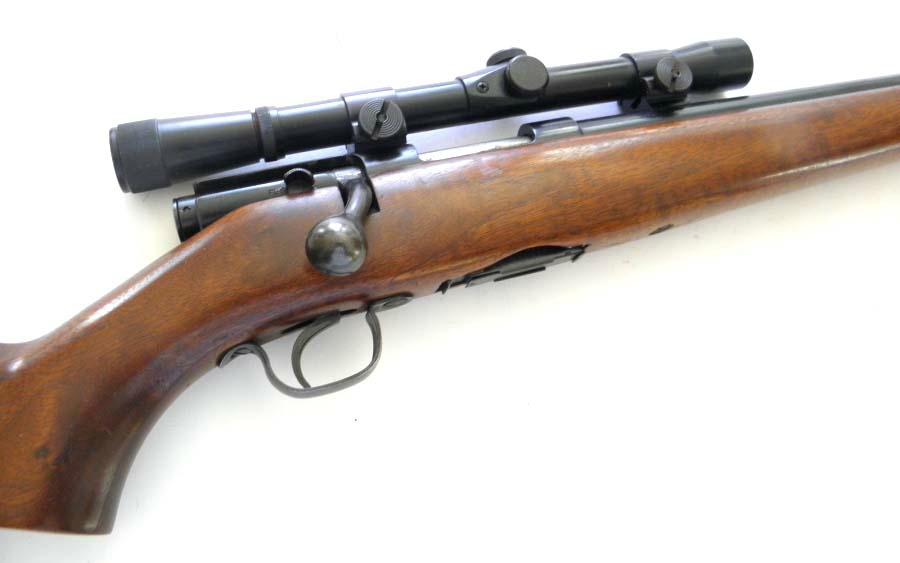
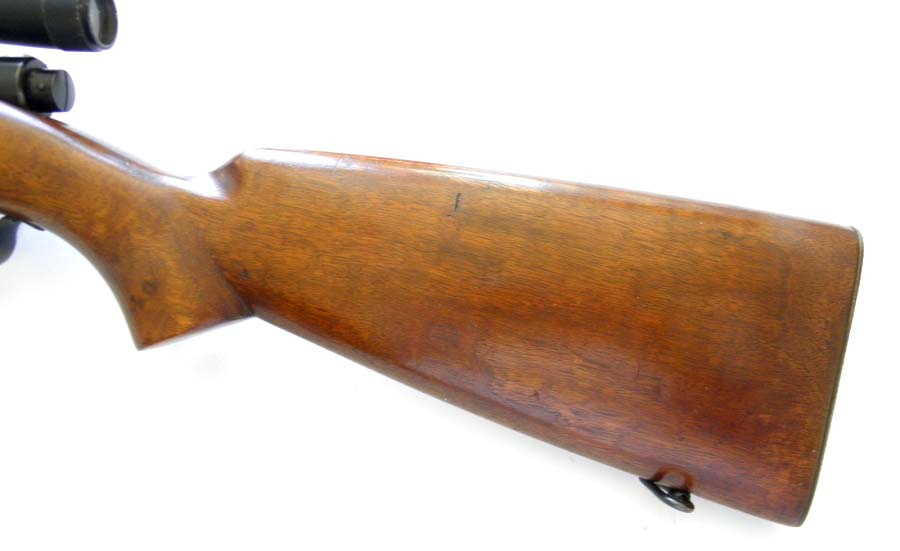
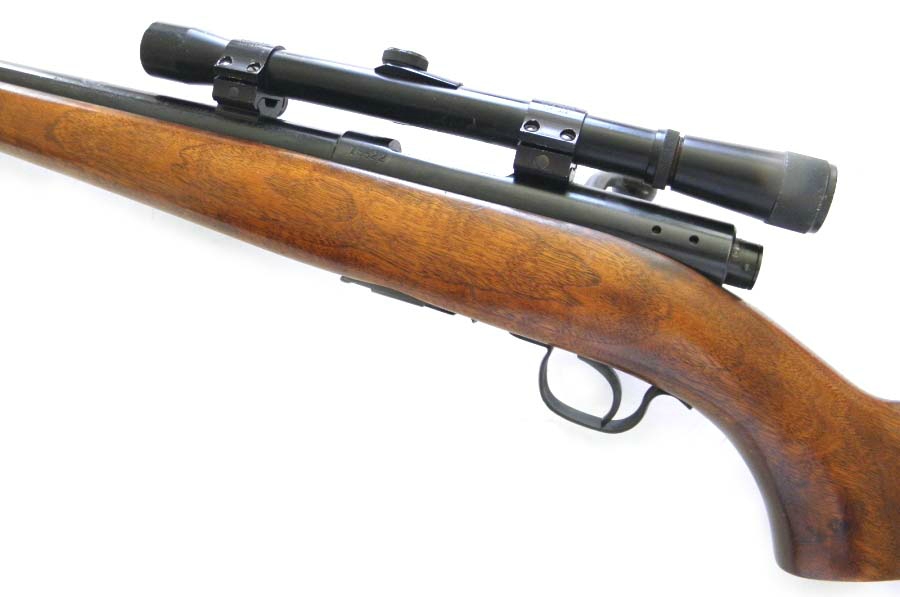
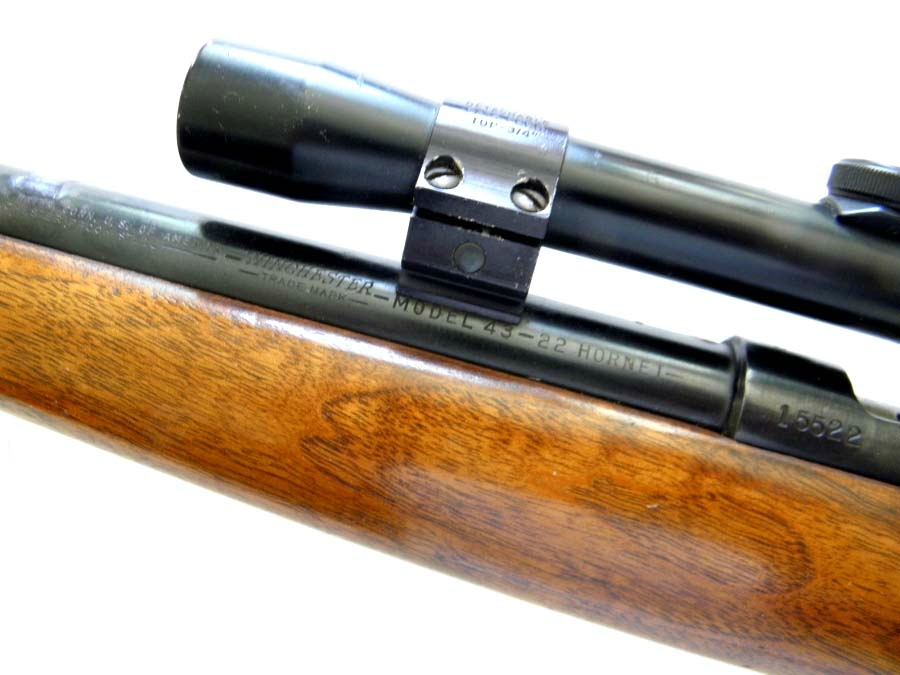
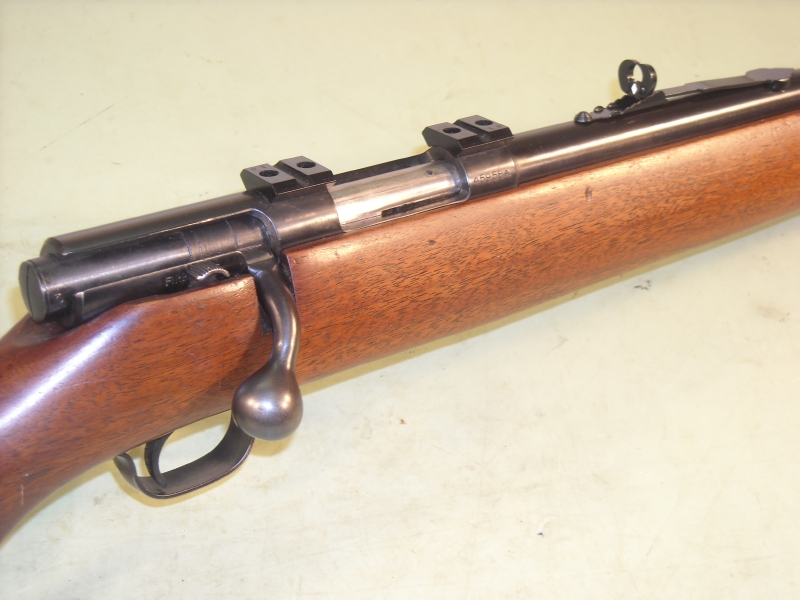
WINCHESTER Model 43

Image result for WINCHESTER Model 43
WINCHESTER - Model 43  A Rare one! Take a l@@K... - Picture 2
WINCHESTER - Model 43  A Rare one! Take a l@@K... - Picture 3
WINCHESTER - Model 43  A Rare one! Take a l@@K... - Picture 5
WINCHESTER - Model 43  A Rare one! Take a l@@K... - Picture 6
WINCHESTER - Model 43  A Rare one! Take a l@@K... - Picture 7
Related image
Image result for WINCHESTER Model 43
I had one of these in 218 Bee until the price of ammo became unreal and extremely hard to find. Someday I would like to get one in 22 Hornet.

Categories
All About Guns

It must be nice! Larry Potterfield & his guns

Image result for Larry Potterfield
As I have said before. I like this man and respect him a lot. As it takes a lot of guts to go out and start a business here in the USofA.
But I do have some ideas about his videos. In that I do NOT have a large building and enough money or time to outfit a personal gunshop. Nor do I have the talent. My skill level  being that to be able to say.”This looks like I needs a bigger hammer for this project”
But his videos are fun to watch and I have learned a lot from him. So in conclusion God bless and keep up the good work Larry.
Here are some of his better videos:

Attachments area
Preview YouTube video The Mauser 98 Project — Interview with Larry Potterfield

Preview YouTube video The Nearly Perfect Safari Rifle — Interview with Larry Potterfield

Preview YouTube video MidwayUSA’s Larry Potterfield explains his passion for guns

Preview YouTube video Gunsmithing – How to Checker a Gunstock Presented by Larry Potterfield of MidwayUSA

Preview YouTube video Gunsmithing – Amateur Versus Professional Gunsmithing Presented by Larry Potterfield of MidwayUSA

Preview YouTube video Reloading – Reloading 10 Gauge Brass Shotgun Shells Presented by Larry Potterfield of MidwayUSA

Preview YouTube video Gunsmithing – Stock Finishing with Bar Top Varnish Presented by Larry Potterfield of MidwayUSA

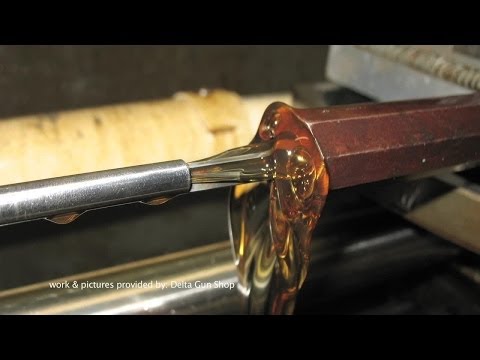
Preview YouTube video Gunsmithing – How to Rebore a Rifle Barrel Presented by Larry Potterfield of MidwayUSA

Categories
N.S.F.W.

Unannounced NSFW for my Loyal Readers!

Inline image 1
Inline image 3
Inline image 2
Inline image 1
Inline image 3
 

Categories
Other Stuff

The Arsenal of Venice – Birth of the Modern Industrial Military Complex

Inline image 1
Now a days. Folk if & when they think of the military and its toys. Would be shocked to know that up to quite recently. The State had very little to do with the making of the weapons of war.
Inline image 5
Inline image 6
  It wasn’t until the Venetians of all folks thought up of the idea of the state being the font of armaments. Now Venice today is a vastly different pace from being the Tourist stop of Today.
Image result for venetian military
  Back a few centuries ago. It was a major player in the Balance of Power in Europe. Especially with its vast wealth from its trade with the Near East.Image result for venetian medieval military
  Also since it was a small population country. It had to be a very cunning bunch of folks. So being no fools, They set up the Arsenal. Which was the place for the building of warships and all the stuff they required.Image result for venetian medieval military
It was here that the idea that was to bring forth the Industrial revolution was to spring forth from. Like this scene from WWII.Inline image 7
 Which allowed a small, mosquito infested bunch of islands to punch way above their weight. What with gear, ships and weapons of a standard issue for its armed forces. Which in US Army terminology a force multiplier.
Go figure! It will be here that I endth the lesson.
Inline image 2
Inline image 3Inline image 4
Here is some more information about this neat place!

Venetian Arsenal

From Wikipedia, the free encyclopedia

The Porta Magna at the Venetian Arsenal.

Stone Lion above the Portale at the Arsenale

Entrance to the Arsenale. Ca. 1860/70. Photo by Carlo Ponti.

Radicchio at a street market near the Arsenale, 2017

The Venetian Arsenal (ItalianArsenale di Venezia) is a complex of former shipyards and armories clustered together in the city of Venice in northern Italy. Owned by the state, the Arsenal was responsible for the bulk of the Venetian republic‘s naval power during the middle part of the second millennium AD. It was “one of the earliest large-scale industrial enterprises in history”.[1]

Overview[edit]

Construction of the Arsenal began around 1104, during Venice’s republicanera.[2][3] It became the largest industrial complex in Europe before the Industrial Revolution,[4] spanning an area of about 45 hectares (110 acres), or about fifteen percent of Venice.[2] Surrounded by a 2-mile (3.2 km) rampart, laborers and shipbuilders regularly worked within the Arsenal, building ships that sailed from the city’s port.[5] With high walls shielding the Arsenal from public view and guards protecting its perimeter, different areas of the Arsenal each produced a particular prefabricated ship part or other maritime implement, such as munitions, rope, and rigging.[6] These parts could then be assembled into a ship in as little as one day.[7] An exclusive forest owned by the Arsenal navy, in the Montello hills area of Veneto, provided the Arsenal’s wood supply.
The Arsenal produced the majority of Venice’s maritime trading vessels, which generated much of the city’s economic wealth and power, lasting until the fall of the republic to Napoleon‘s conquest of the area in 1797.[8] It is located in the Castello district of Venice, and it is now owned by the state.[2]

History[edit]

The Byzantine-style establishment may have existed as early as the 8th century, though the present structure is usually said to have been begun in 1104 during the reign of Ordelafo Faliero, although there is no evidence for such a precise date. It definitely existed by the early 13th century.
Initially the state dockyard worked merely to maintain privately built naval ships, but in 1320 the Arsenale Nuovo (ItalianNew Arsenal) was built, much larger than the original. It enabled all the state’s navy and the larger merchant ships to be both constructed and maintained in one place. The Arsenal incidentally became an important center for rope manufacture, and housing for the arsenal workers grew up outside its walls.
Venice developed methods of mass-producing warships in the Arsenal, including the frame-first system to replace the Roman hull-first practice. This new system was much faster and required less wood. At the peak of its efficiency in the early 16th century, the Arsenal employed some 16,000 people who apparently were able to produce nearly one ship each day, and could fit out, arm, and provision a newly built galley with standardized parts on a production-line basis not seen again until the Industrial Revolution.

View of the Entrance to the Arsenal by Canaletto, 1732.

The staff of the Arsenal, who were united by their distinct professional identity,[9]also developed new firearms at an early date, beginning with bombards in the 1370s and numerous small arms for use against the Genoese a few years later. The muzzle velocity of handguns was improved beyond that of the crossbow, creating armor-piercing rounds. Arsenal-produced arms were also noteworthy for their multi-purpose utility; the Venetian condottieri leader, Bartolomeo Colleoni, is usually given credit as being the first to mount the Arsenal’s new lighter-weight artillery on mobile carriages for field use.
The Arsenal’s main gate, the Porta Magna, was built around 1460 and was the first Classical revival structure built in Venice. It was perhaps built by Antonio Gambello from a design by Jacopo Bellini. Two lions taken from Greece situated beside it were added in 1687. One of the lions, known as the Piraeus Lion, has runic defacements carved in it by invading Scandinavian mercenaries during the 11th century.
In the late 16th century, the Arsenal’s designers experimented with larger ships as platforms for heavy naval guns. The largest was the galleass, already used at the Battle of Lepanto against the Ottoman Turks, and developed from the old merchanting “great galley”. It was huge, propelled by both sails and oars, with guns mounted on wheeled carriages along the sides in the modern fashion. It was slow and unwieldy in battle, however, and few were ever built. The galleon, also developed at the Arsenal, was an armed sailing ship, a slimmer version of the merchant “round ship“. It was useful in major naval battles, but not in the small bays and off the extensive lee shores of the Dalmatian coast.
Significant parts of the Arsenal were destroyed under Napoleonic rule, and later rebuilt to enable the Arsenal’s present use as a naval base. It is also used as a research center and an exhibition venue during the Venice Biennale, and is home to a historic boat preservation center.

Mass production[edit]

The Venetian Arsenal’s ability to mass-produce galleys on an almost assembly-line process was unique for its time and resulted in possibly the single largest industrial complex in Europe prior to the Industrial Revolution. So much so, that it was mentioned in Dante‘s Inferno:

As in the Arsenal of the Venetians
Boils in winter the tenacious pitch
To smear their unsound vessels over again
For sail they cannot; and instead thereof
One makes his vessel new, and one recaulks
The ribs of that which many a voyage has made
One hammers at the prow, one at the stern
This one makes oars and that one cordage twists
Another mends the mainsail and the mizzen…[10]

The Arsenal’s capacity for production was rare in a time when “most of Europe had no manufacturing abilities more efficient than the guild system, the slow and tradition-bound way craftsmen had of passing on skills to their sons or apprentices while monopolizing production and sale of craft pieces in a given region… The Arsenal was something different, a harbinger of future times.”[11]
The Venetian Arsenal was not the mass production facility that it was to be until about 1320 with the creation of the Arsenale Nuovo. The Arsenale Nuovo was simply a larger and more efficient version of the original. Prior to this time the Arsenal had served mainly as a place to maintain privately built ships. With the creation of the Arsenale Nuovo, and the development and introduction of the Great Galley, the Venetian Arsenal would start to take on its industrial form. The invention of the Great Galley itself is significant because they were able to be built frame-first. This process used less timber than the earlier hull-first building system, resulting in much faster build times. This was crucial to the process that would lead to the Arsenal becoming a mass-production center. By the 16th century, the Arsenal had become the most powerful and efficient shipbuilding enterprise in the world. Not only did it supply ships, rigging, and other nautical supplies, it was also a major munitions depot for the Venetian navy and was capable of outfitting and producing fully equipped merchant or naval vessels at the rate of one per day.[11]
In the rest of Europe the production of a similar sized vessel could often take months. This large production capacity was a result of the massive number of people that the Arsenal employed, almost 16,000, and the streamlining of production within the Arsenal itself. Production was divided into 3 main stages: framing, planking and cabins, and final assembly. Each stage employed its own workers who specialized in that particular stage of production as well as using standardized parts to produce an almost assembly-line process. The Arsenal often kept up to 100 galleys in different stages of production and maintenance. That way, once a galley was launched, another could be immediately put into the finishing stages of production. The layout of the Arsenal itself was modified to enable minimal handling of materials during the stages of production. The Arsenal also saw the use of standardized, interchangeable parts.
One revolutionary aspect of the Arsenal was its employment of the moving assembly line. The galleys, through the use of a canal, were moved along during their stages of construction, allowing them to be brought to the materials and workers, instead of the materials and workers going to the galley itself. This assembly approach was repeated in the rest of the world only starting from the early 20th century when Henry Ford began using the modern assembly line.

Galileo and the Arsenal[edit]

Statue of Galileo Galilei.

In 1593, Galileo became a consultant to the Arsenal, advising military engineers and instrument makers and helping to solve shipbuilders’ problems, many of them relating to matters of ballistics. He was also responsible for creating some major innovations in the production and logistics of the Arsenal. As a result of his interactions with the Arsenal, Galileo published a book later in his life addressing a new field of modern science, that concerned with the strength and resistance of materials. This science largely saw its roots in the knowledge of the shipwrights of the Venetian Arsenal. It is also supposed that Galileo‘s initial visits to the Arsenal were as a result of his initiative to further investigate Aristotle‘s questions concerning shipbuilding and navigation, found in the Mechanical Questions of Aristotle. As a result of these investigations, which were pursued by observing the work of the shipwrights, Galileo was asked to help in resolving a specific problem with the rowing units of the galleys. As a result of his study of Aristotle, and in particular Question 4 regarding the propulsion of ships by oar, Galileo was able to produce a response to this question and ended up becoming a major source of information for the shipbuilders of the Arsenal concerning matters of rowing, instruments, and ballistics.[12]

Venice’s naval power[edit]

Venice‘s wealth and power rested in its ability to control trade in the Mediterranean. This would not have been possible without an extremely large navy and merchant force. By 1450, over 3,000 Venetian merchant ships were in operation, both as supply ships for Venetian merchants and as warships for the Venetian navy. The fleet required constant maintenance and outfitting. The Venetian Arsenal was not only able to function as a major shipyard, but was also responsible for these routine maintenance stops that most Venetian galleys required. This required financing, for which the Venetian government spent almost 10% of its revenues. This naval power resulted in the domination of Mediterranean commerce. Venice’s leading families, largely merchants and nobleman, were responsible for creating some of the grandest palaces and employing some of the most famous artists ever known. This opulence and wealth would not have been possible without the naval force constructed by the Arsenal. With the creation of the Great Galley and the mass production capacity of the Arsenal, “the fleets of Venice were the basis for the greatest commercial power the European world had yet seen”.[13]

Greece[edit]

The Venetian arsenal at Govino Bay, Corfu

Venice built an arsenal in Corfu as part of a network of Venetian arsenals, serving primarily the purpose of repair, and naval stations in Greece, including shipyards in the Aegean SeaEpirus, the Peloponnese and the Kingdom of Candia (modern Crete). Aside from Corfu, such locations in Greece included MethoniKoroniChalkisPrevezaChania and Heraklion.[14]
The arsenal at Gouvia in Corfu was supposed to be used for ship repairs during the winter after the two fleets stationed on the island had returned from their yearly campaign during peacetime.[15][16] The arsenal was also used as storage for the Venetian ships.[17] However, the Venetian Senate, in order to protect the operations of its own arsenal in Venice, chose to limit the kind of repair activities undertaken at the Corfu arsenal.[16] Consequently, the shipyard operations at Gouvia were restricted to basic maintenance such as cleaning and caulking,[15][16] and many captains instead of repairing their damaged ships at the arsenal chose to sink them.[15] As time went on, the number of ships being serviced at the location declined.[15]

Categories
All About Guns

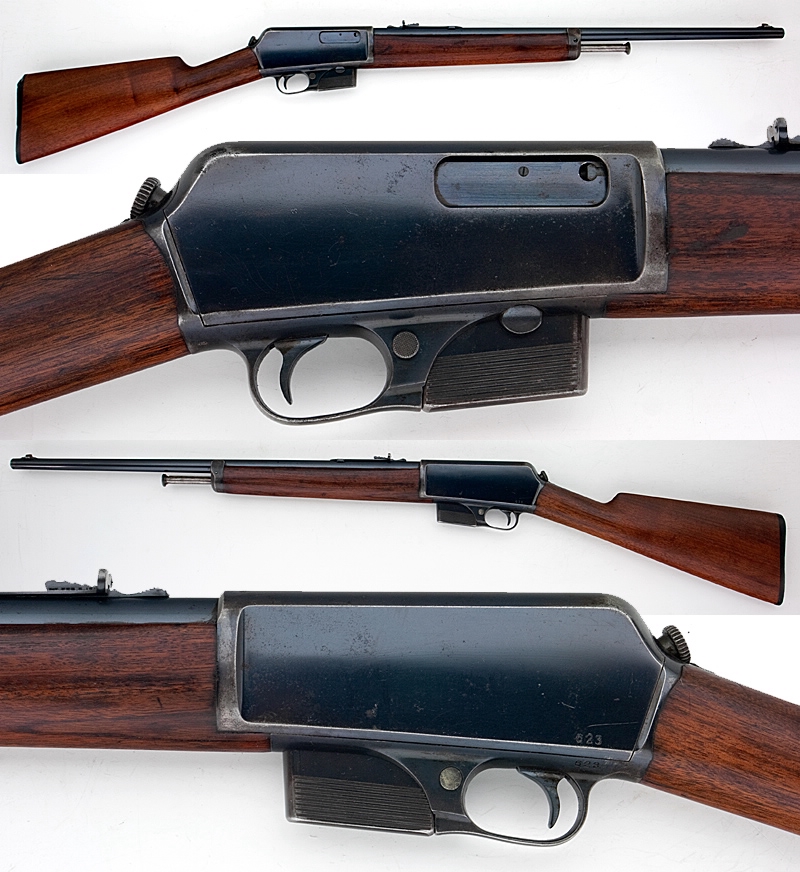
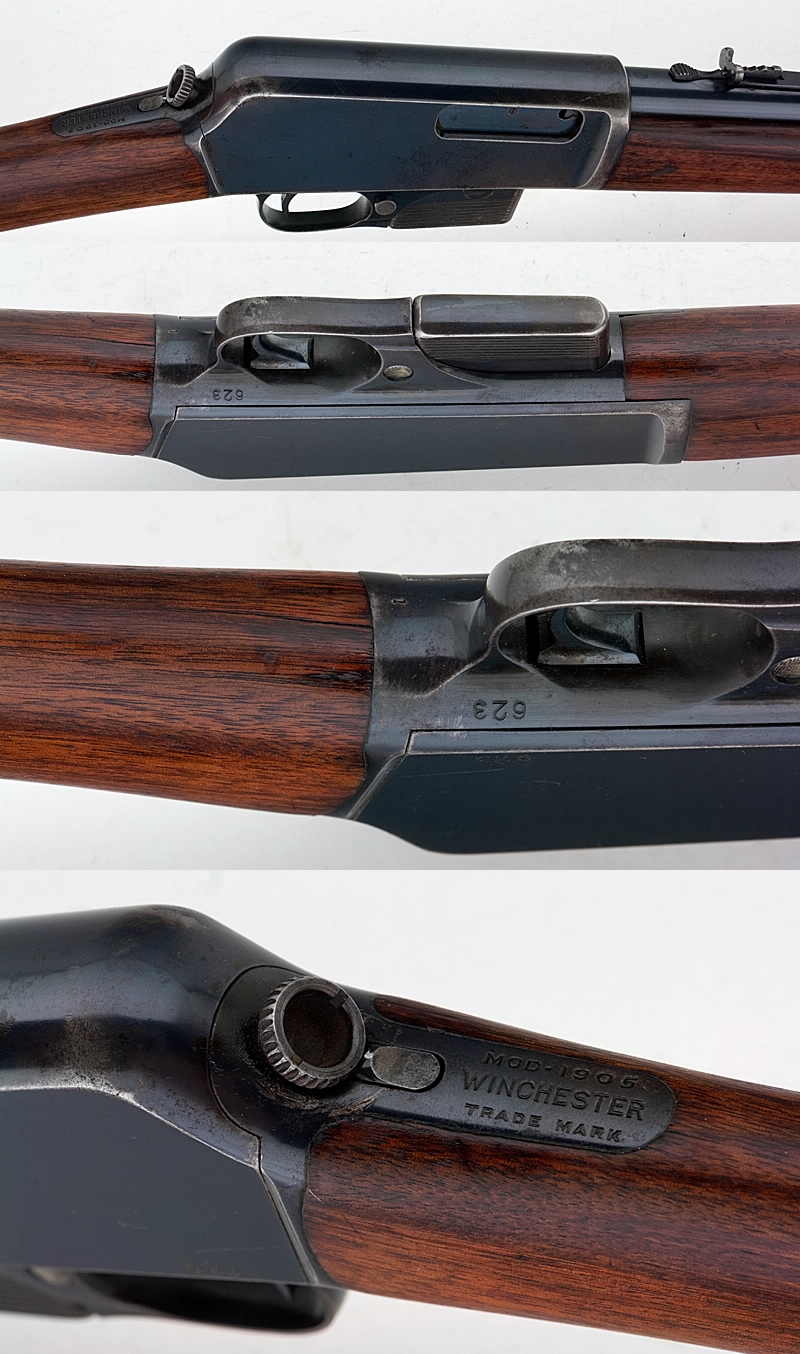
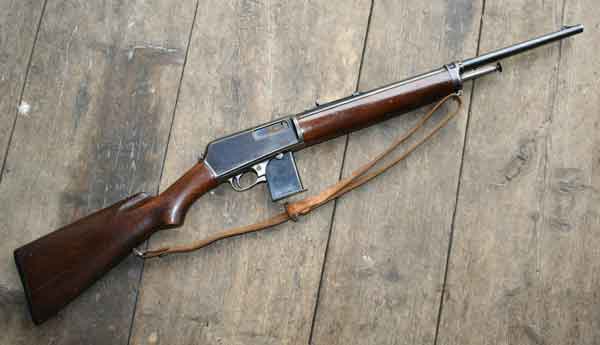
Winchester Self Loading Model 1905

Image result for WINCHESTER MODEL 1905
Related image
Image result for WINCHESTER MODEL 1905


Winchester Repeating Arms Company - WINCHESTER MODEL 1905 DELUXE SPORTING RIFLE - Picture 4

Attachments area
Preview YouTube video How To Takedown a Winchester Model 1907 Rifle .351 Caliber

Preview YouTube video Winchester Self Loading Model 1905

Winchester Model 1905

From Wikipedia, the free encyclopedia
Winchester Model 1905
Winchester Self Loading Mod 05.JPG
Type Semi-automatic rifle
Place of origin United States
Production history
Designer T.C. Johnson
Manufacturer Winchester Repeating Arms Company
Produced 1905 to 1920
No. built 29,113
Variants “Plain” and “Fancy Finish” Rifles
Specifications
Weight 7 lb (3.2 kg) to 8 lb (3.6 kg)
Length 40 in (1,000 mm)
Barrel length 22 in (560 mm)

Cartridge .32SL and .35SL
Action Blowback
Rate of fire Semi-automatic
Feed system Detachable 5 and 10-round box magazines
Sights Open iron sights and optional tang or receiver-mounted aperture sights

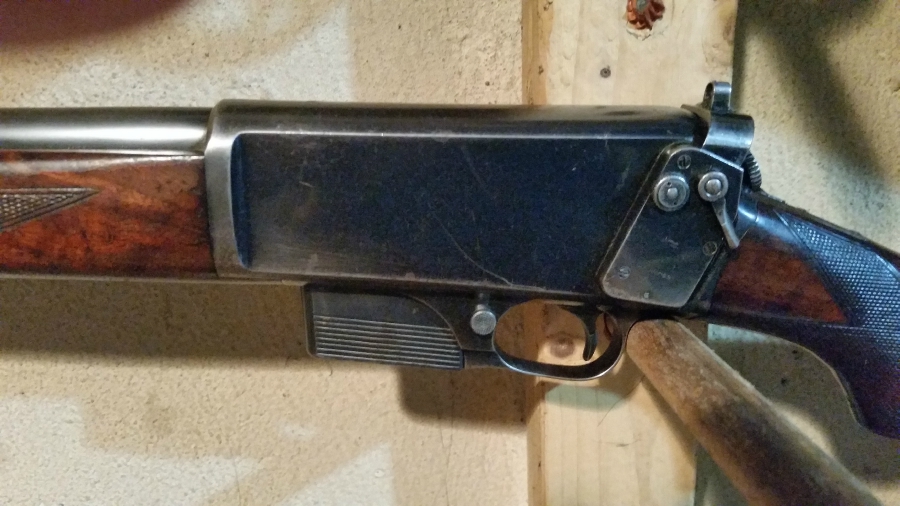
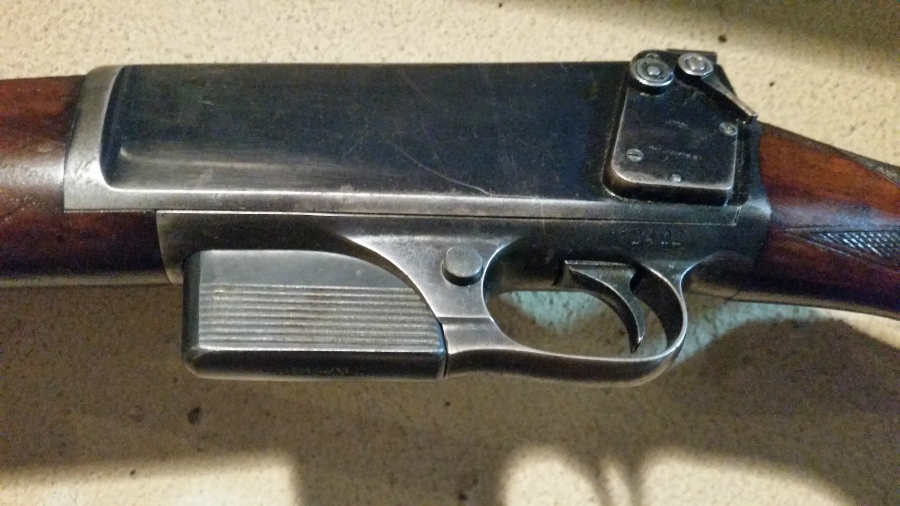
The Winchester Model 1905 (also known as the Model 05), is a blowback-operatedsemi-automatic rifle produced by the Winchester Repeating Arms Company beginning in 1905 and discontinued in 1920. This rifle loads cartridges from a 5 or 10-round capacity, detachable box magazine located immediately forward of the trigger guard. Winchester offered factory chamberings in .32SL and .35 Winchester Self-Loading (.35 WSL).[1]
Notably, a Model 1905 in .35 WSL was used by Harry Payne Whitney on an arctic expedition. The rifle proved reliable in extreme low-temperatures, yet insufficiently powerful enough for taking of large game such as musk ox.[2]
The basic design for the Winchester Model 1905 is covered by U.S. Patent 681,481 issued August 27, 1901 and assigned to Winchester by Thomas Crossley Johnson, a key firearms designer for Winchester. This patent was initially used to protect the design of the rimfire Winchester Model 1903, but came to be applied toward the centerfireWinchester Self Loading rifle series, which includes the Model 1905Model 1907 and Model 1910.[3]

Variants[edit]

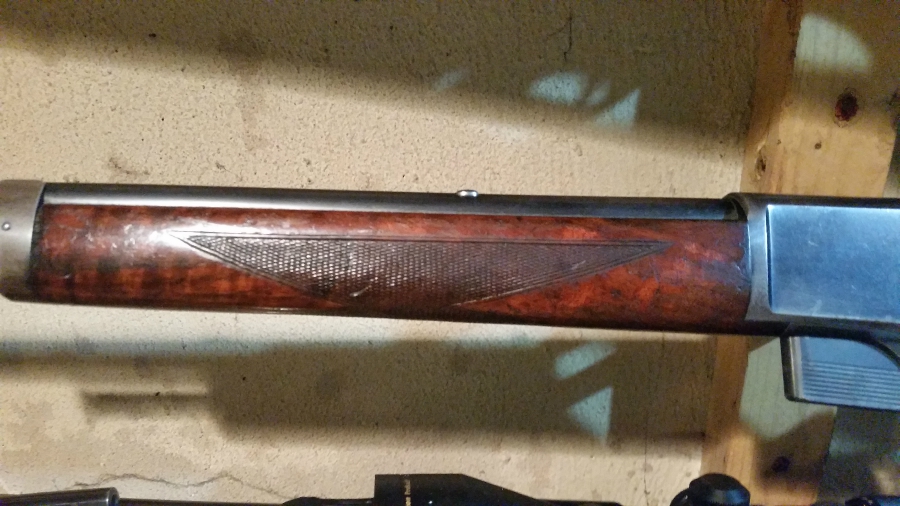
In addition to the standard or “plain finish” model, a deluxe or “fancy finish” model was offered with pistol grip stock and checkering on the forearm and wrist of the stock. The plain finish rifles were offered in 1905 at a list price of $28, the fancy finish rifles for $43.[4]

References[edit]

  1. Jump up^ West, Bill R. (1964) Winchester For Over a Century Stockton Trade Press, p. III-3
  2. Jump up^ Stebbins, Henry M. (1952) How to Select and Use Your Big Game Rifle Combat Forces Press, p. 82
  3. Jump up^ US Patent Number 681481: http://patft.uspto.gov/netacgi/nph-Parser?patentnumber=681481
  4. Jump up^ Winchester Repeating Arms Company 1905 Guns Catalog Reproduction by Cornell Military Publications. Brighton, MI 48114


Categories
Uncategorized

"What's in a Name"

Attachments area
Preview YouTube video Gun Gripes Episode 23: “What’s in a Name”