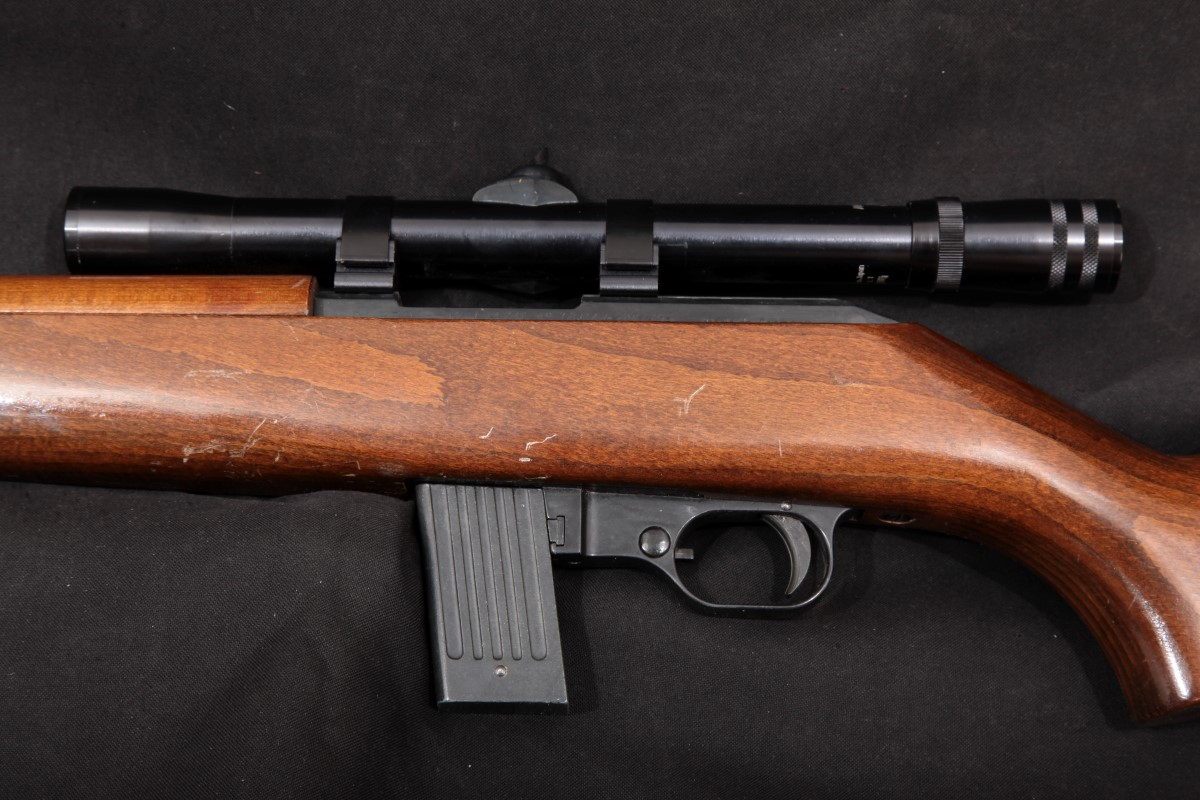
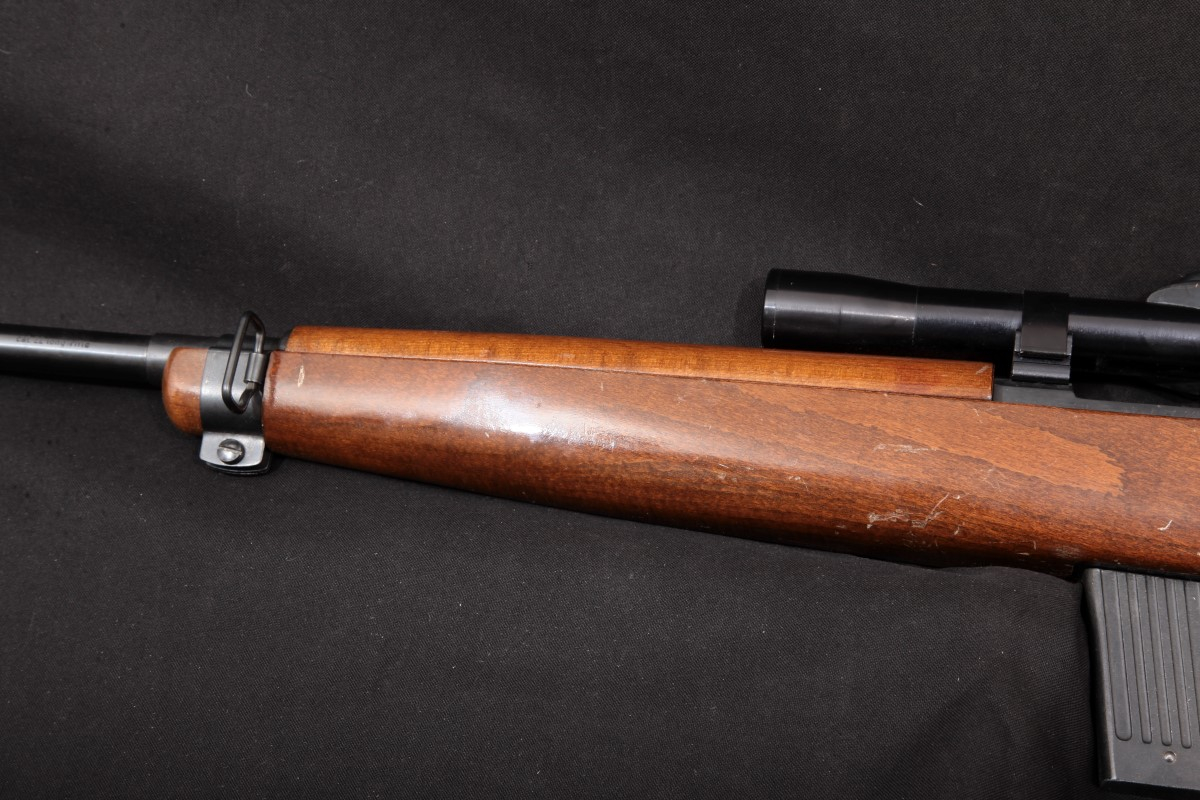
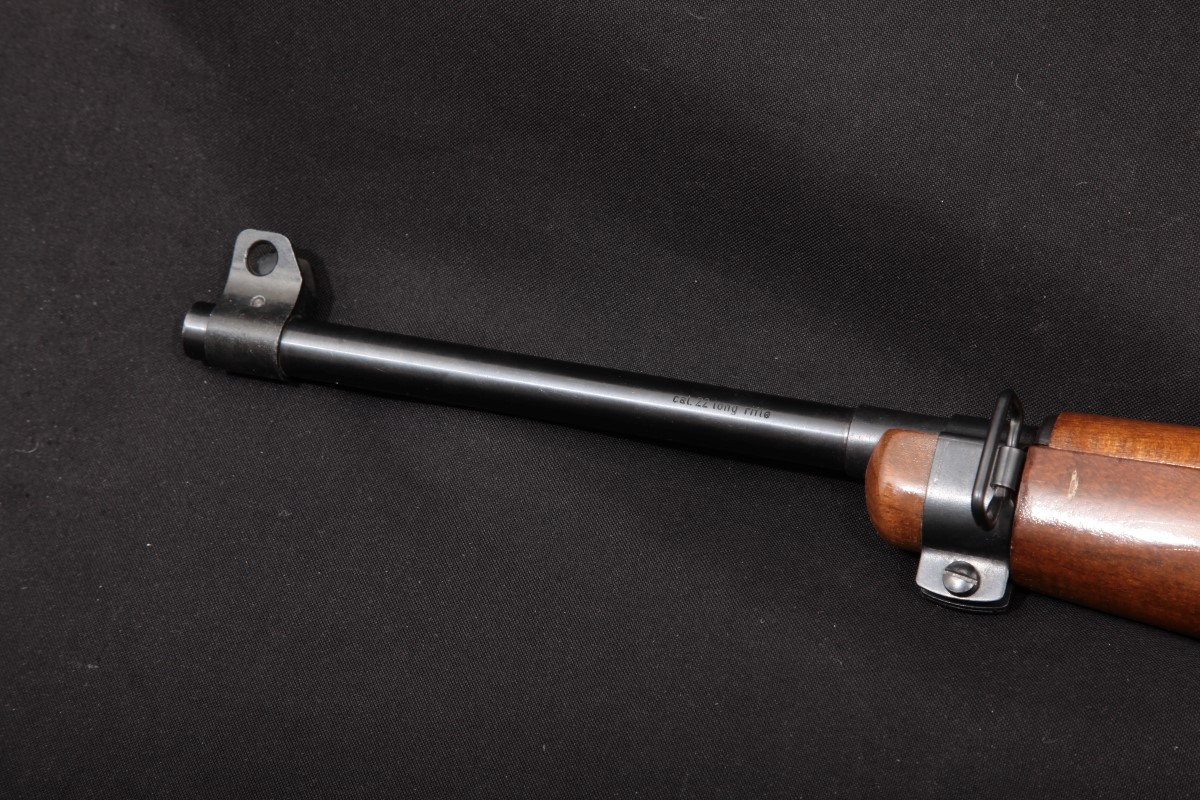
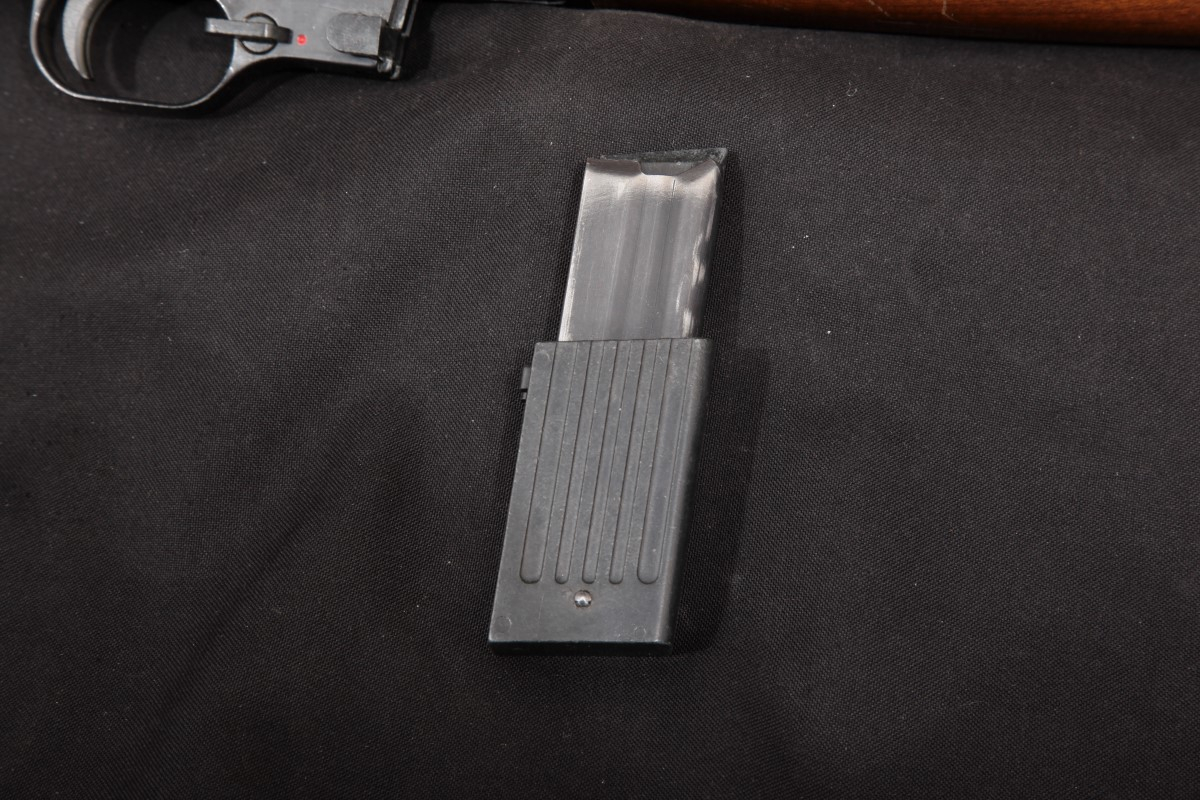
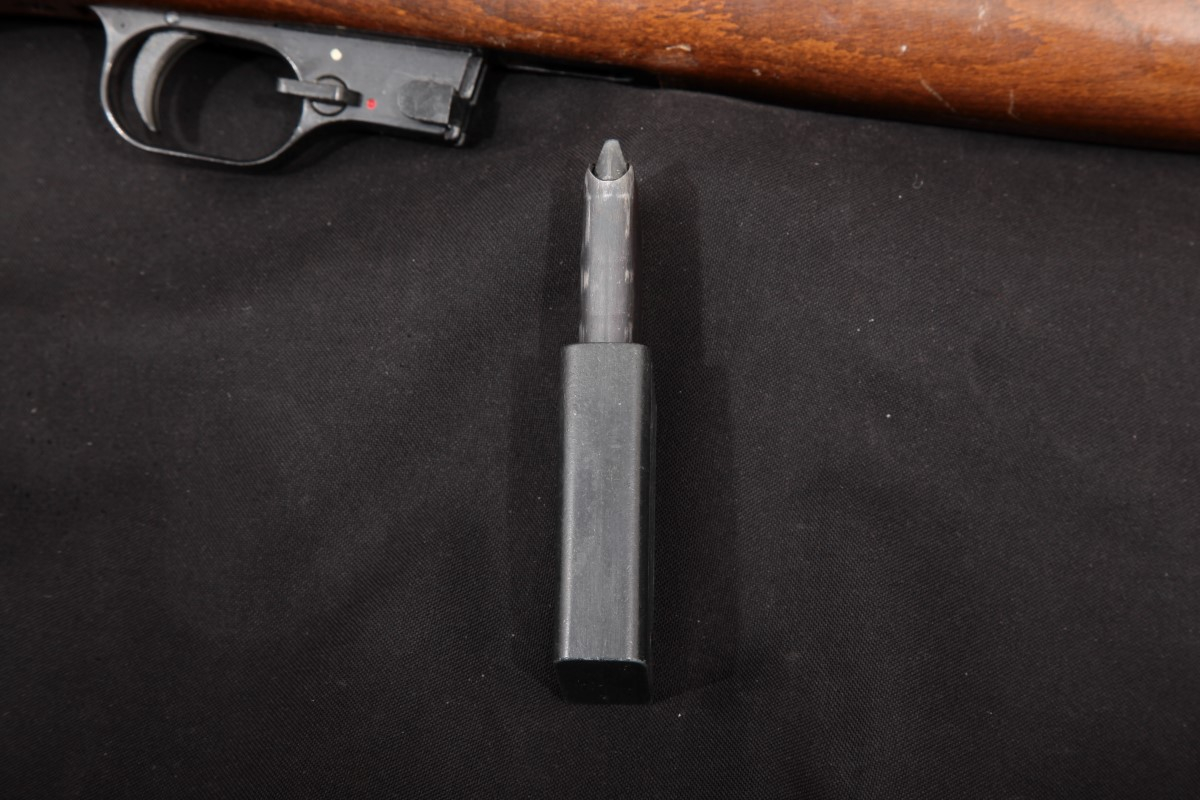
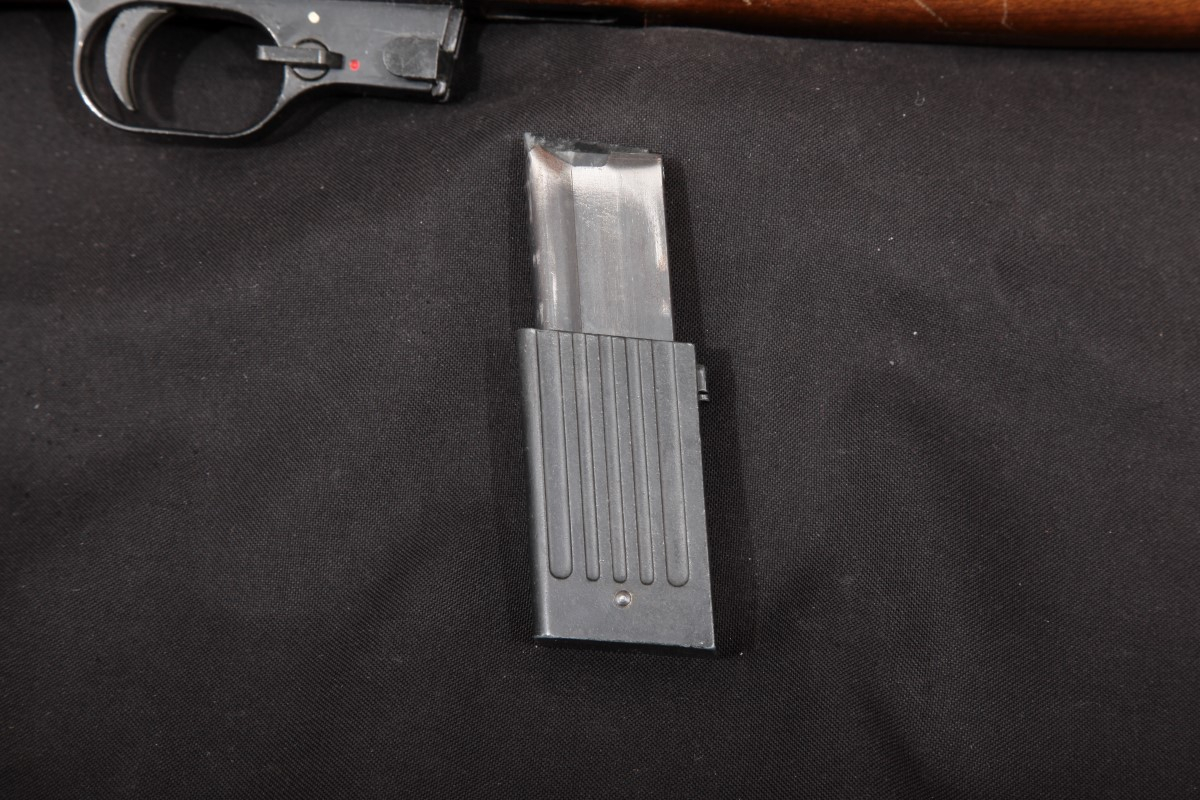
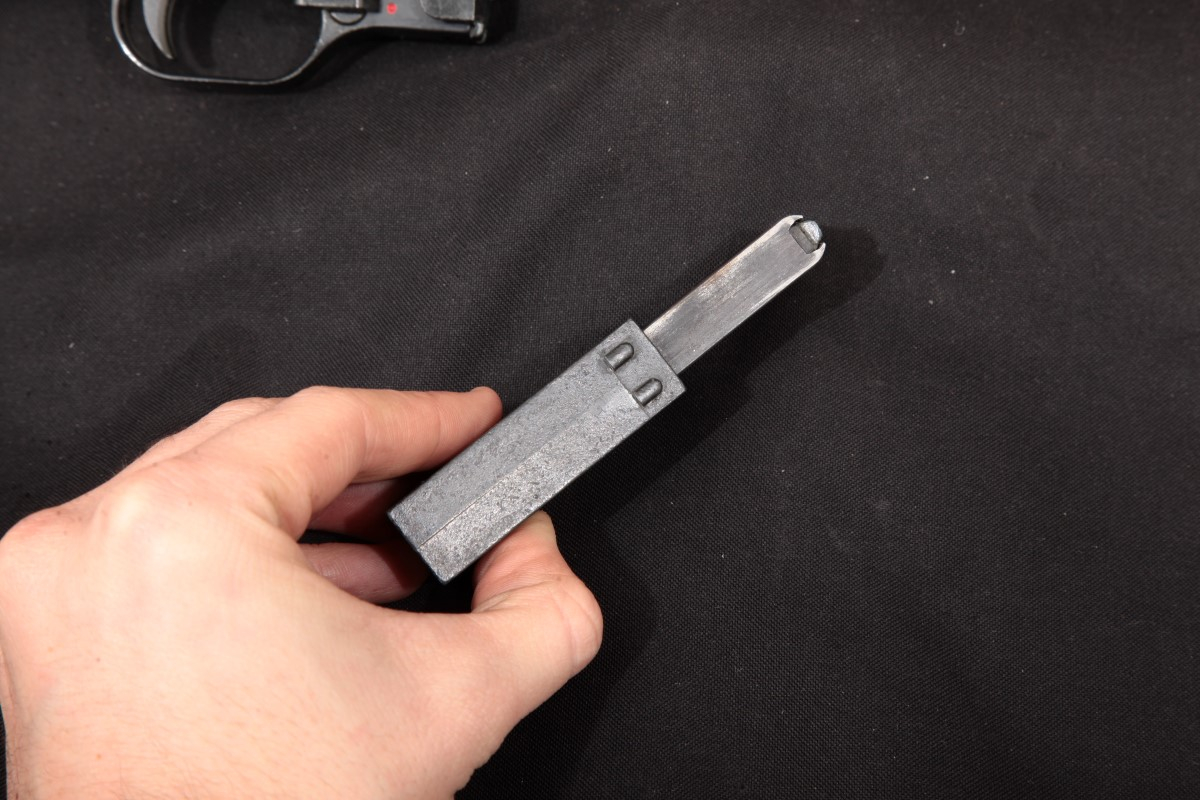
Guns.com sat down and worked through the California Department of Justice’s assault weapon list of some registered 145,253 firearms, as well as the politics of the ban. The full report is here, but keep scrolling through a list of images supplied by DOJ of some of the weapons that are banned in the state. Enjoy!
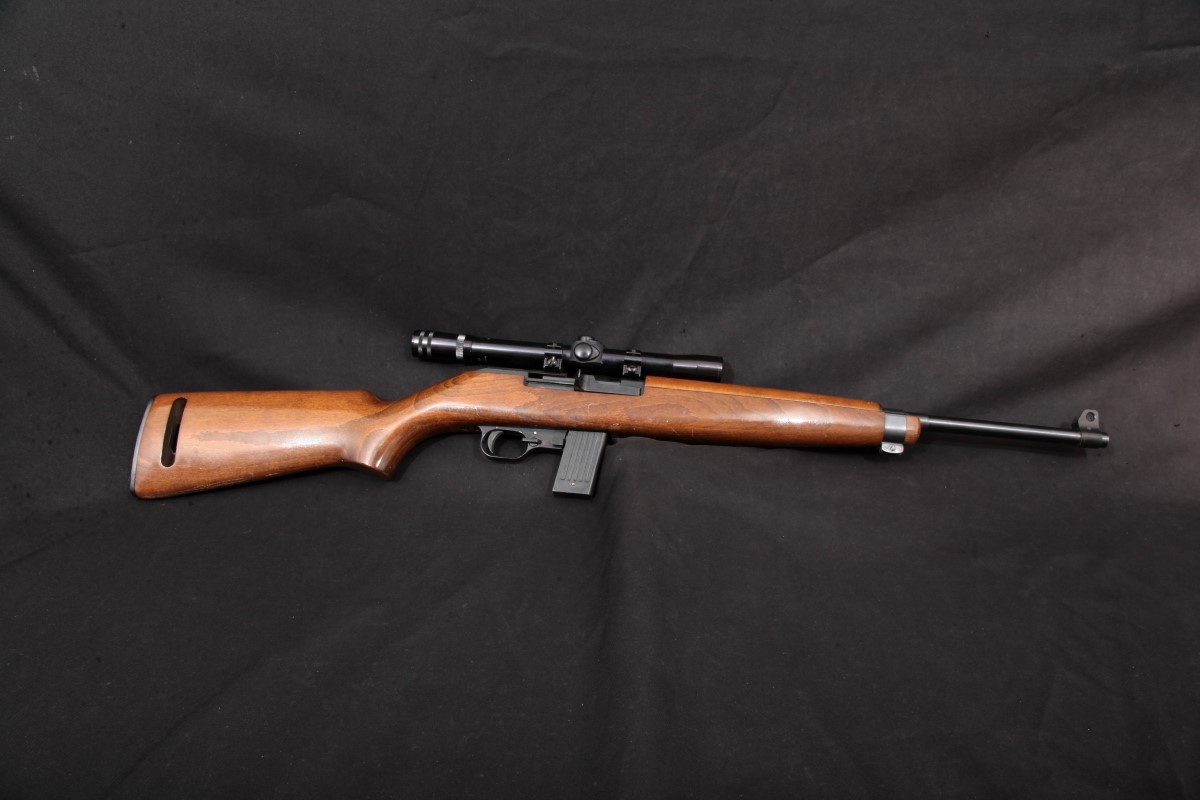
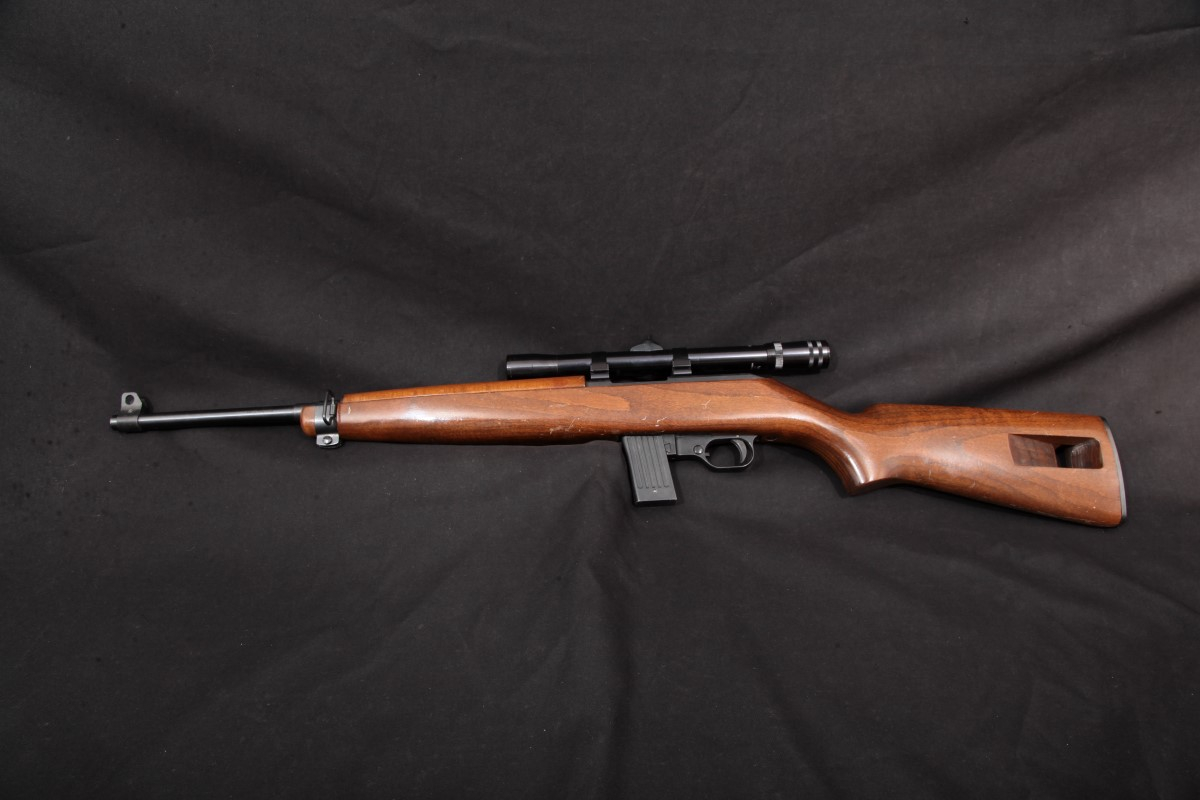
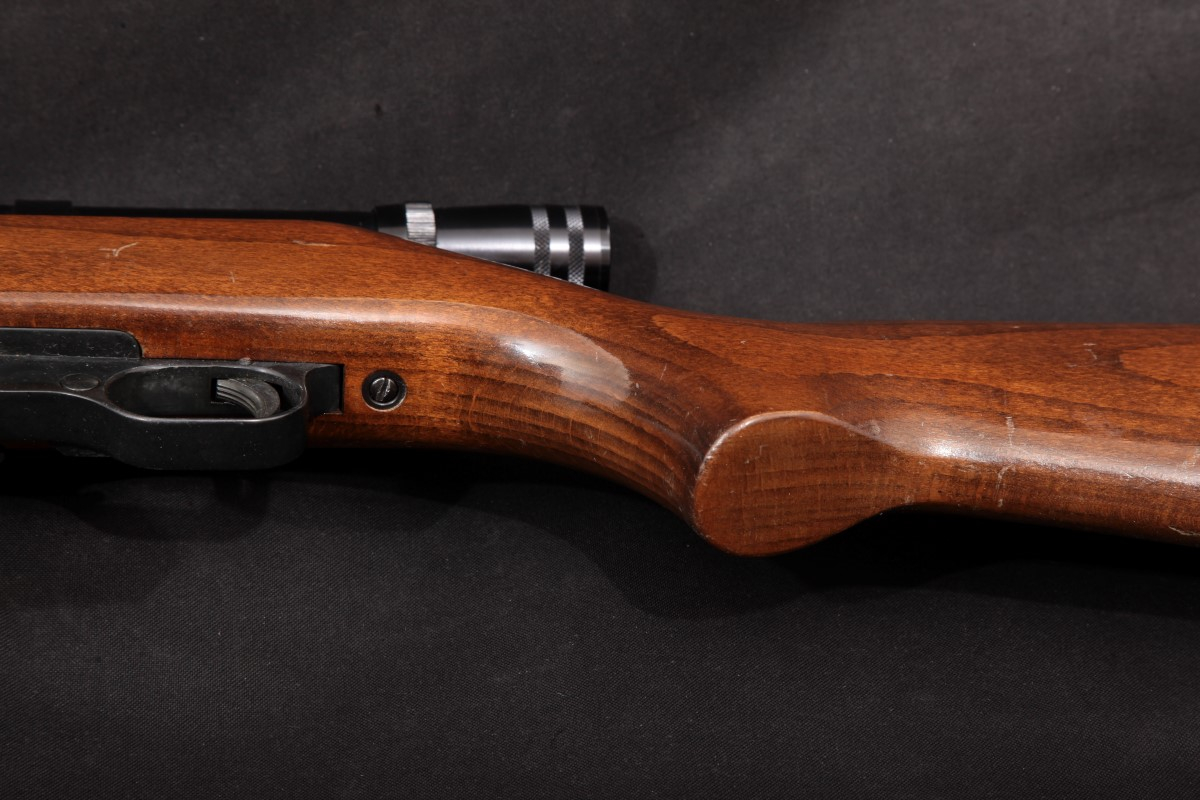
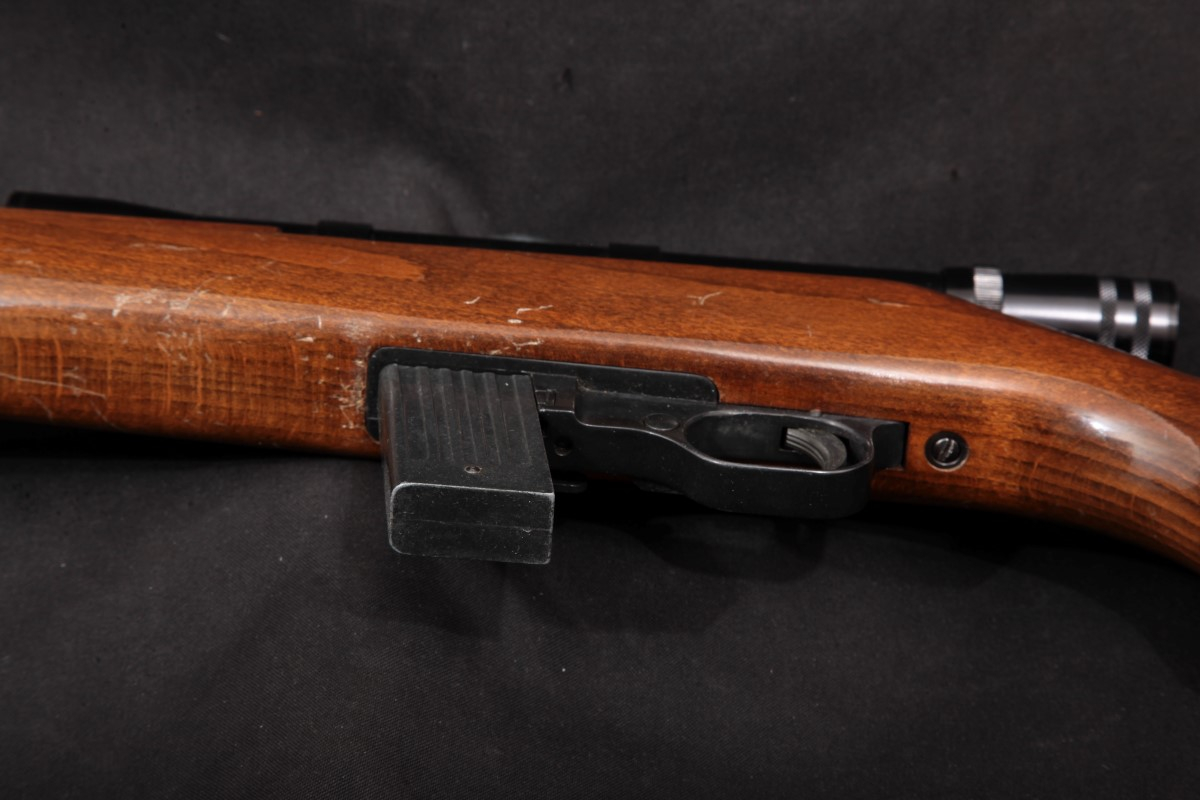
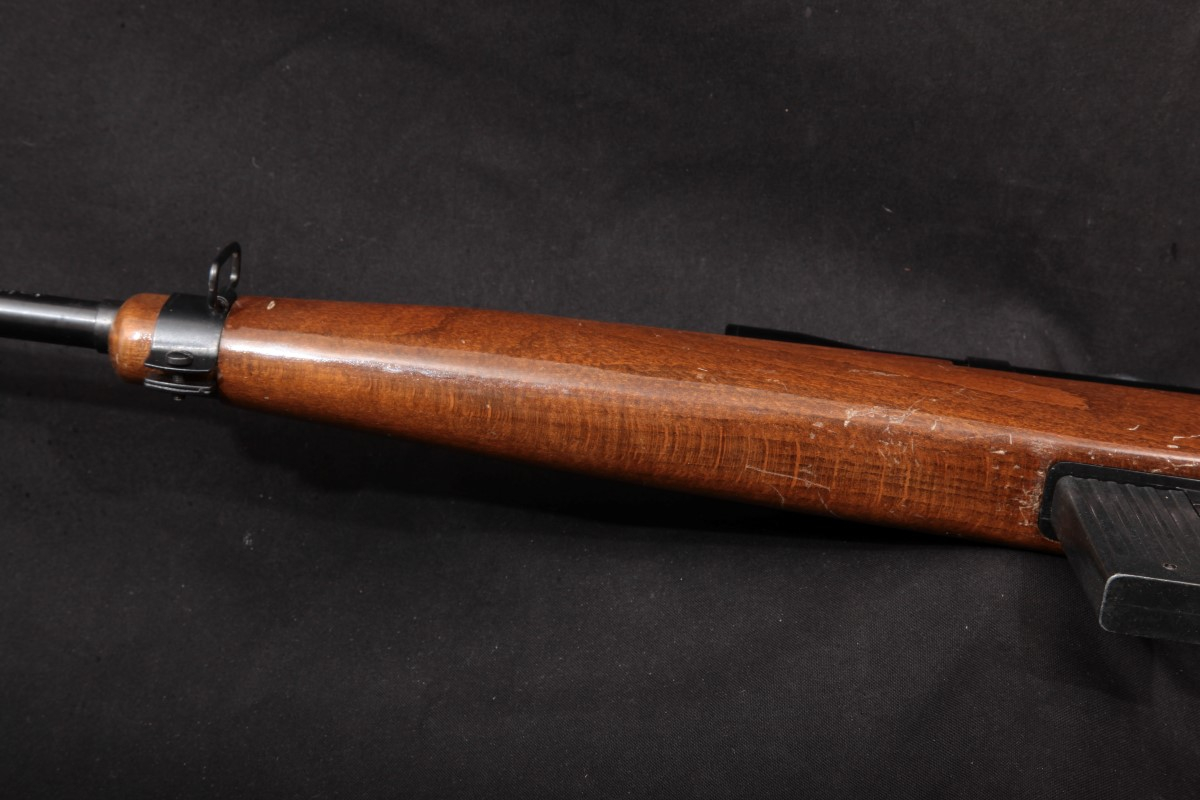
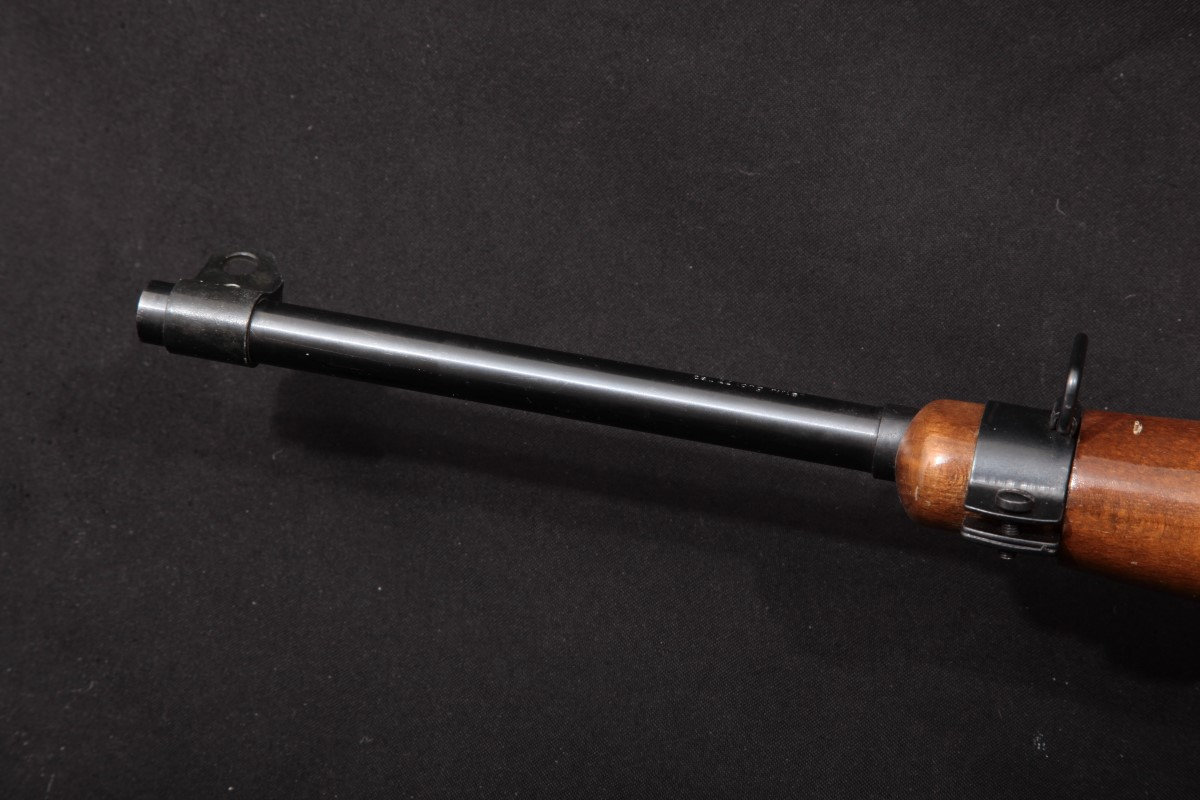
There are 77 homely Weaver Arms Nighthawks on the California DOJ list
The Finnish Valmet, based on the AK47, is banned in California
Valmet M78
Ever seen a Valmet M71? In California they have 49 registered
The UZI, in its pistol and carbine versions, account for about 3 percent of the registered “assault weapons” in California
Mini Uzi
The unloved TEC-9
Although vilified, the Striker 12 shotgun takes up very few spaces on the DOJ list
Like the Striker, Streetsweeper shotguns are few and far between in California
The Sterling MK6 carbine
And the Mk7 pistol
The SIG SG 510/550 series joins older Swiss guns on the list…
Such as the SIG PE57
And SIG AMT
The Franchi Spas 12
When an SKS gets a detachable magazine in California, its illegal, such as this D-series spiker that accepts AK mags. There are 3,000 such guns on the DOJ registry
An even 12 Sites Spectres are on the list
Springfield Armory SAR48
Springfield Armory Italian-imported BM59
HK PSG-1. There are but 7 of these registered in California
The Norinco Model 86 bullpup.
The MAS223, a semi auto FAMAS rifle. 11 Are on the DOJ list
MAC type carbines
MAC type pistols
Two J&R M-68 9mm carbines are on the list, Noah’s Ark style
The Franchi LAW12
The HK94 was a semi-auto carbine version of the MP5 and is banned in California
The HK91 and HK93 make up most of the German 7.62mm guns on the DOJ list
The Galil
The FN FNC
The FN FAL, big brother of the FNC in 7.62mm
There is just one Encom MP9 (in 9mm) and one Encom MP45 (guess what caliber that is in) on the DOJ registry. We are betting the same guy has both.
Over 1,300 Daewoos are on the DOJ list
Colt AR series
CETME sporter (AKA the Spanish wooden stocked HK91)
The Daewoo K2
The Calico M950 pistol with its distinctive 50-round helical magazine. Can you say non-California legal?
The M900 rifle
This is the illustration the California DOJ has for Bushmaster rifles
And Bushmaster pistols
AR series pistols
Some 1,00 Steyr rifles, mostly AUGs such as the above, are on the list
The AR-180
The rare (in California) Beretta AR-70
AR series rifles
AR series rifles
AR series rifles. Some 50,000~ of these are on the DOJ registry
It does a very good look at the Mighty Garand. Plus its does not cost a fortune either. It is readily available too at Midway USA or Amazon.
Know your Broomhandle Mausers by RJ Berger
And
Know your 45 Auto Pistols by E J Hoffschmidt
Both are solid works and in easily to understand terms
The Hunting Rifle by Jack O’Connor (Its just 1st rate)
The Man could really write well and clearly!
Mister Rifleman By Col. Townsend Whelen & Bradford Angier
Now I have owned this book since Xmas of 1969, When my Wonderful Uncle Max and Aunt Doris gave me this copy. I have found it a wealth of really useful information & is one of my all time favorite books.
I cannot recommend this book high enough! Especially for those out there who are interested in the 1903 Springfield and the Old Krag- Jorgenson Rifle. The man really lived a full and interesting life. That and he could write oh so well.
Now finding a copy will be hard and expensive. But it will be well worth the efforts and cost in my humble opinion.
Cartridges of the World Frank C. Barnes
Now this is a reference Book. But is just packed with some of the best information about the complex universe of Ammunition. It is also very easy to get a copy and does not cost a fortune either.
All I know is that I learned a lot from it. But then I have always been a dim light.
Now I have been told by Friends that I trust. Who do reload. (I do not because I do not trust myself enough) That is a a very useful book
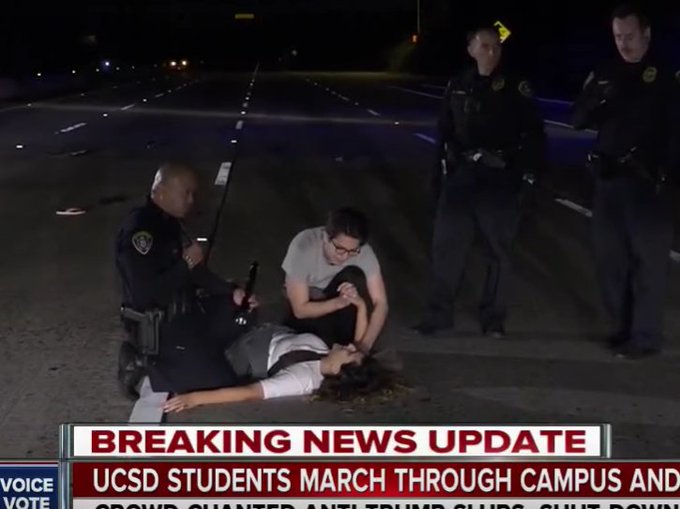
The University of California-San Diego is now embroiled in a personal injury lawsuit after an election protest gone wrong.
Mariana Flores, a sophomore at UCSD, was demonstrating against Donald Trump’s victory on a busy San Diego freeway when a vehicle hit her. The accident crushed her pelvis, fractured her leg, and caused other serious injuries, reported The Guardian campus newspaper.
Flores, in her suit filed in late November, partly blames campus officials for her injury, arguing they should have stopped the protest before it got dangerous, according to news reports.
Flores’ attorney did not respond to requests from The College Fix seeking comment. A UC San Diego spokesperson said that the university could not comment on pending litigation.
The Nov. 2016 protest had began at “Library Walk” and journeyed through campus. Next, demonstrators ended up on the I-5, a very large and busy eight-laned freeway that cuts through San Diego.
The car that stuck Flores had gotten around an emergency vehicle that had been attempting to block traffic so authorities could shut down the freeway, according to the Los Angeles Times.
In an interview with The Guardian, Gene Sullivan, Flores’s lawyer, asserted that the university planned, organized and knew the protest was happening for hours and did nothing to stop it.
“According to Sullivan, not doing anything and failing to act is legally the same thing as supporting the protest,” the newspaper reported. “Sullivan further alleged that the protest was encouraged by people in positions of authority at the university, and that ‘if anyone that is in authority with the university – a [Residential Advisor] – says ‘let’s go,’ the university would be responsible.’”
The complaint also lists the University of California Regents, the city and county of San Diego, the state of California, and the driver of the vehicle as defendants in the lawsuit.
When asked about the lawsuit by the Los Angeles Times, Sullivan said “We think it’s a case of shared responsibility of the school, Maria and the driver, and we’re not saying that anybody is without fault or fault-free. We think other people bear some responsibility as well.”
In addition, Sullivan explained that if any person representing the university, even if that person is simply a Residential Advisor, encouraged students to go to the protest, then the university would bear responsibility.
While Sullivan admits that Flores is partially responsible for her injuries, he claims that, under the doctrine of comparative responsibility, the jury will get to decide what percentage of the injury is the fault of the plaintiff and what percentage of the injury is the fault of the defendant. Damages will be levied based on percentage.
The lawsuit seeks attorneys’ fees, court costs, and unspecified damages, the Timesreports.
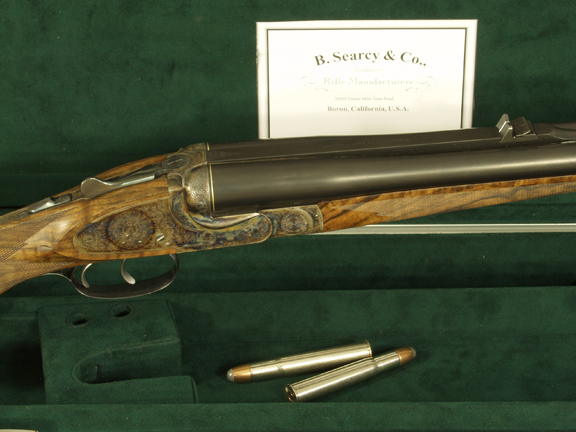
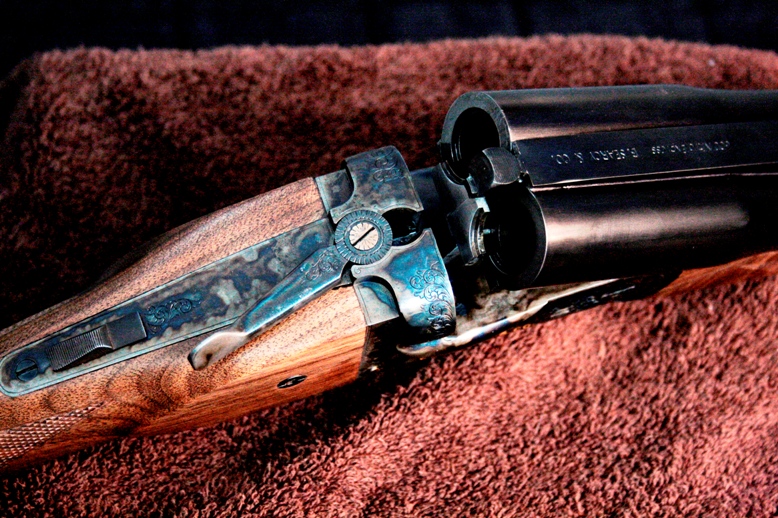
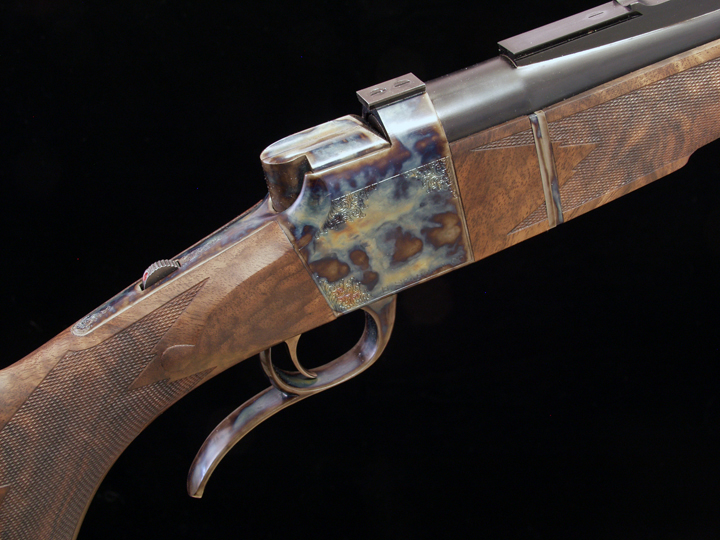
In my humble opinion this is some just fantastic work here. That & this outfit is located here in the High Deserts of California! I gotta get up there one day.
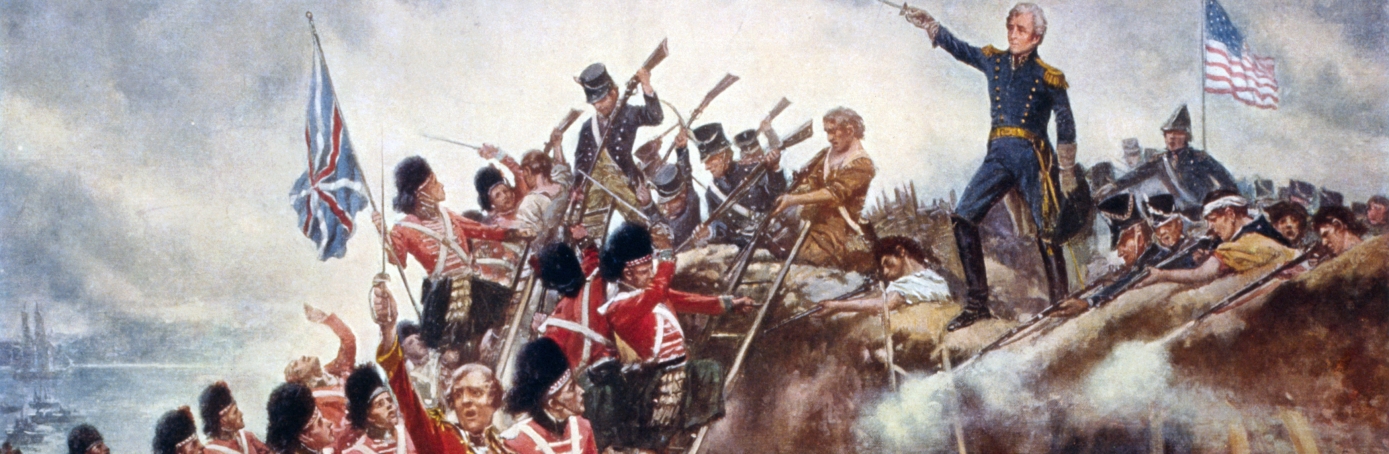
Today is the 203rd Anniversary of the Battle of New Orleans.
On December 24, 1814, Great Britain and the United States signed a treaty in Ghent, Belgium that effectively ended the War of 1812.
News was slow to cross the pond, however, and on January 8, 1815, the two sides met in what is remembered as one of the conflict’s biggest and most decisive engagements.
In the bloody Battle of New Orleans, future President Andrew Jackson and a motley assortment of militia fighters, frontiersmen, slaves, Indians and even pirates weathered a frontal assault by a superior British force, inflicting devastating casualties along the way.
The victory vaulted Jackson to national stardom, and helped foil plans for a British invasion of the American frontier.
Although the Ruby pistol became a procurement nightmare, it nevertheless armed French troops and scores of others throughout World War I and beyond.
STORY AND PHOTOS BY ROB REED
The “Ruby” pistol is the result of France’s desperate need for arms in the early days of the Great War. By 1915, much of the French industrial heartland was under German control, and what remained under allied control was producing critically needed material such as rifles, machine guns, and artillery.
As the conflict grew beyond even the most pessimistic expectations, the sheer volume of troops sent into battle literally exhausted the meager stores of small arms.
To meet this rising demand for pistols for the trenches, the French contracted with the Spanish firm of Gabilondo y Urresti-Eibar for their Ruby semiauto pistol.
The Ruby made use of a prewar design largely copied (without license) from the Browning Model 1903. Among the changes are the deletion of the grip safety and a relocation of the manual safety closer to the trigger guard.
The resulting Ruby is a direct blowback pistol chambered in 7.65 (.32 ACP). The pistol features an internal hammer and a frame-mounted safety that goes down for “FIRE.” The original magazine capacity was nine rounds.
The original contract called for the firm to produce 10,000 pistols a month, but the insatiable French demand for handguns saw the production numbers increased in stages until the incredible target of 50,000 pistols a month was set. THIS IS WHERE THE STORY of the Ruby gets messy. Since Gabilondo y Urresti-Eibar could not hope to meet that production quota, they licensed out manufacture of the pistol to other companies.
Although only four other manufacturers were originally contracted to produce the pistol, the firm eventually partnered with seven companies to meet French demand.
At the same time, French purchasing agents were individually contracting with other Spanish firearms makers to also produce the guns.
By the time all the contracts were signed, roughly 50 companies were producing the pistol, either for Gabilondo y Urresti-Eibar or directly for the French. Soon, multiple companies (both legally and otherwise) were producing the pistol across the continent, making it a truly European weapon.
The result was chaos. The quality of the pistols produced varied widely from manufacturer to manufacturer. Some were good, others substandard, while others yet were simply unsafe to fire.
At first the French tested every pistol, but soon went to batch lot testing instead. Even among the pistols deemed acceptable to issue, problems would arise after the guns broke in with use. Some references list the expected service life of the Ruby at only 500 rounds.
A left-side view reveals the manufacturer’s barrel markings (including the “GU” for “Gabilondo y UrrestiEibar” beside the grip) and the occasionally problematic safety lever.
As you can imagine, parts interchangeability – so vital for a service weapon – was lost as the number of manufacturers involved grew.
Parts and magazines from one manufacturer would not work in another manufacturer’s pistol, and often parts would not interchange even within pistols made by the same manufacturer.
Features such as barrel length and magazine capacity also varied from source to source as different manufacturers put their own spin on the design.
All in all, the Ruby became a textbook example of what not to do for small arms weapon procurement.
Still, the pistols were desperately needed, and almost as fast as they were produced they were sent to the front to be engulfed in the horrors of trench warfare.
Records show that the French military had accepted an estimated 700,000 to 900,000 pistols by war’s end.
The large number of pistols produced has made the Ruby available in the U.S. collector’s market for decades. Some came home as souvenirs after WWI or WWII, while others found their way across the ocean in various import lots over time.
The modern U.S. collector is unlikely to know the exact origin of his pistol, as many were imported prior to import marks became mandatory in 1968. ALTHOUGH I’VE NEVER OWNED a Ruby pistol, I’ve had several opportunities to fire them. Their best attribute is their simplicity. Unlike other pistols from the same time frame they are a “modern” design with a one-piece slide and breech block and what we would consider conventional controls.
The safety lever is relatively easy to use, as is the European-style heel mag release. The pistol does not have a slide stop/slide release. On some examples I have seen, a rivet was installed to keep the safety from moving to the “safe” position. My understanding is that this is a post WWI French military modification.
The gun in the accompanying photos is an actual Gabilondo y Urresti-Eibar-produced pistol and owned by a friend. Recently, I was able to fire several magazines of modern-production .32 ACP FMJ through this particular pistol. Surprisingly (based on reputation alone), the pistol fired 100 percent of the time, with no misfires, failures to feed, or failures to eject.
This is not always the case with these little pistols as, in addition to their hurried manufacture, they have by now seen an additional 100 years of often hard use.
Obviously, it is important to have a qualified gunsmith check out any Ruby-type pistol before attempting to fire it. Besides the original manufacturing issues listed above, other problems may have arisen in the decades since these pistols were produced.
The condition of the original magazine is especially important, as a bad feed lip or worn-out springs will cause problems. Since most pistols only come with one mag, and magazine interchangeability is spotty at best, a bad mag can deadline an otherwise functional pistol.
The tiny sights make the pistols better suited for point shooting than precise aimed fire. The combination of the steel frame and low-powered .32 ACP cartridge reduces the felt recoil considerably.
I was not able to bench test this particular pistol, but we were able to keep a full magazine inside a paper plate out to 10 yards. Accuracy began to drop considerably at 25 yards, and the best either of us could do was to keep about half the shots on a plate at that distance. The tiny sights and gritty trigger on this particular pistol made us work for even those results.
Although not rare by any means, except in certain variants, the Ruby pistol remains an interesting historical artifact. And even though it was hurried into production to meet insatiable wartime needs, the gun I tested still functioned as intended a century after it was produced.
If nothing else, shooting a Ruby pistol is a way to make a tangible connection to the time when the French struggled to survive during “the war to end all wars.” ASJ
Here’s a review from Youtuber MilSupPros.








 The University of California-San Diego is now embroiled in a personal injury lawsuit after an election protest gone wrong.