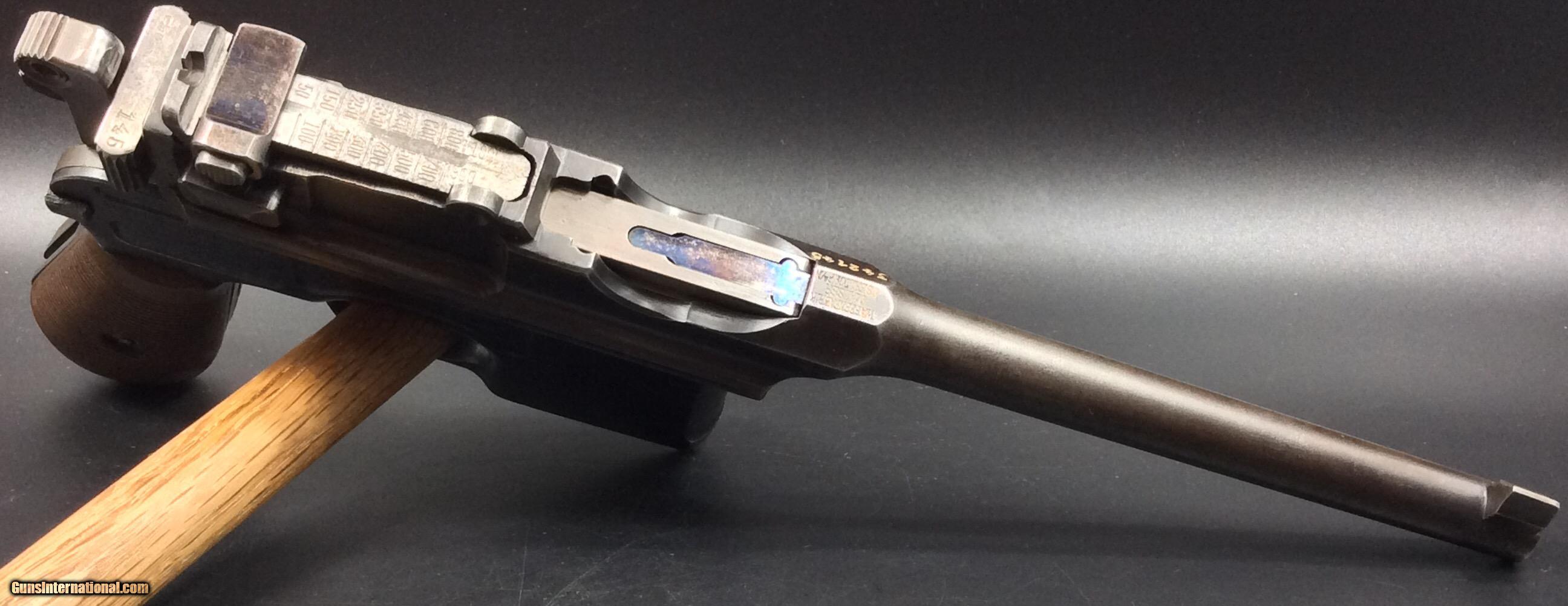
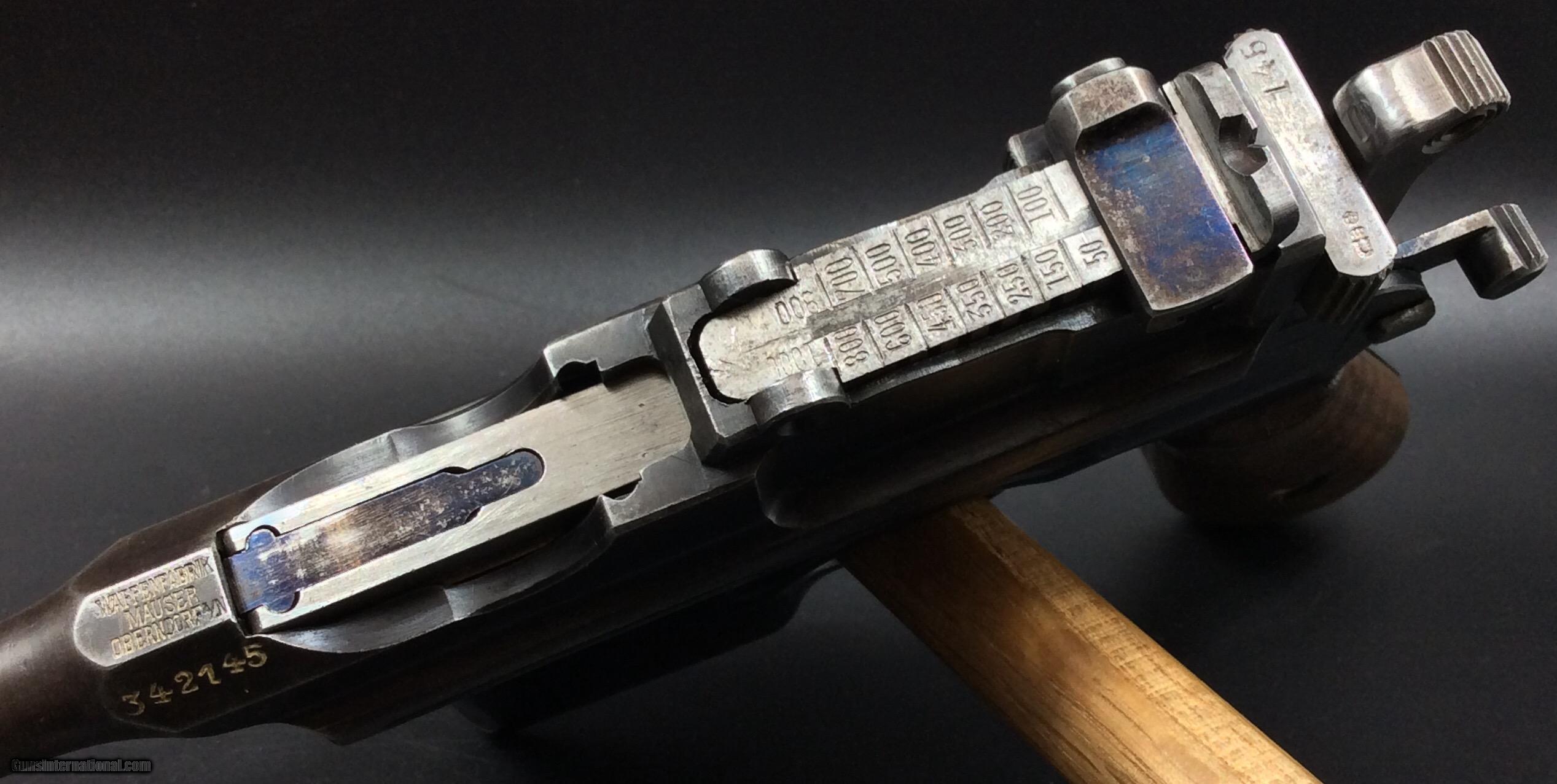
Guns can get expensive very quickly and there are quite a few guns out there than can cost more than a new car, or even a house. Though many of these ridiculously expensive guns are rare or custom made, there are quite a few off the shelf guns out there that can quite literally “break the bank.”
Some of the choices on this list of expensive guns are difficult to accurately price because they are so rare. In these cases, I did my best to estimate the cost using the commonly available resources and I attempted to provide a price range for a firearm in “new” or “like new” condition when possible.
It isn’t necessary to spend a ton of money and buy a really expensive gun, but it sure is fun sometimes.
Check out our choices for the 12 most ridiculously expensive guns you’ll never afford, and let us know what other firearms are out there that we should have included.
1. Pre-1964 Winchester Model 70 in .458 Winchester Magnum, .35 Remington, or .300 Savage
$3,000 – $6,000
It really says something about the high price of the guns on this list when a Pre-64 Winchester model 70 is least expensive gun on it.
In 1964, Winchester made a number of modifications to their iconic Model 70 rifle to made it cheaper and easier to manufacture. Though they made many changes, the primary difference was that rifles produced after 1964 no longer had a Mauser style “controlled round feed” bolt. At the time, many American shooters judged the new model 70 to be of inferior quality compared to the pre-64 Model 70.
As a result, all pre-64 Model 70s are in high demand among collectors and shooters all over the world. However, Model 70s chambered in .458 Winchester Magnum, .35 Remington, and .300 Savage, which were the least common calibers in pre-64 Model 70s, command an especially high premium.
$3,500+
A Howdah is a large platform placed on the back of an Indian Elephant. During the time of the British rule in India, it was very stylish for well-to-do Englishmen to hunt tigers and other types of big game from a howdah. However, the British quickly realized that a tiger is very capable of leaping up on the back of an elephant and attacking the hunter at close range.
Hunters then started carrying large caliber, multi-barreled pistols with them on their hunts for close range protection from angry tigers. Though they were originally developed for use in India, Howdah Pistols were used by hunters all over the British Empire.
Most Howdah Pistols were custom made in the same caliber as the rifle that the hunter carried, though this was not always the case. Unfortunately, most Howdah Pistols were chambered for black powder cartridges (which are prone to corrosion), so finding a Howdah Pistol in pristine condition today is difficult and an original Howdah Pistol in excellent condition will command a high price.
$5,000 – $7,500
A staple of action movies and video games, the Desert Eagle is characterized by its large frame and powerful recoil. Designed by Magnum Research and Israeli Military Industries, the Desert Eagle is a gas operated pistol currently manufactured in .357 Magnum, .44 Magnum, and .50 Action Express.
However, a few hundred Desert Eagles with titanium gold finishes were manufactured chambered in the rare .440 Cor-Bon cartridge. Developed by necking down a .50 AE cartridge to .44 caliber, the .440 Cor-Bon is more powerful than both the .50 AE and .44 Magnum, while producing less recoil than the .50 AE. However, the .440 Cor-Bon never really caught on with shooters so very few Desert Eagles were produced in that caliber. As a result, those pistols are very rare and highly sought after by gun collectors all over the world.
$8,000 – $9,000
The poster child of gun control advocates all over the world, the semi-automatic Barret M82A1 was designed by Ronnie Barrett in the 1980s as a long range sniper rifle that takes advantage of the awesome power of the .50 BMG (12.7x99mm) round.
The United States military adopted the M82A1 under the designation M107 and Army and Marine snipers have used them very successfully in Iraq and Afghanistan. Using the M82A1, a highly skilled shooter can successfully engage targets at ranges in excess of 2,000m.
Surprisingly, the recoil generated when shooting the M82A1 is quite manageable due to its heavy weight (in excess of 29 pounds) and the rifle’s muzzle break. Though the M82A1 is still currently being produced, they are still quite expensive and somewhat difficult to purchase. That hasn’t stopped people from using them on the occasional hog hunt though.
$10,000 – $15,000
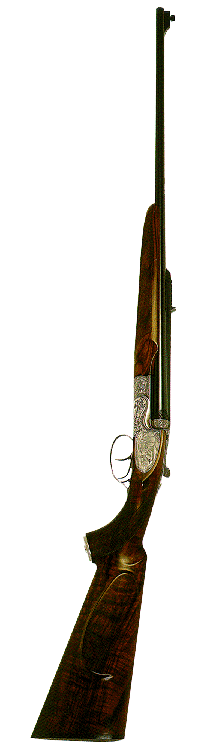
Derived from the German word “drei” for the number three, drillings are break action, three barreled firearms that usually consist of two shotgun barrels and one rifle barrel (though this may vary).
Carrying a firearm designed in such a manner allows a hunter to be properly equipped to hunt everything from birds to big game without having to purchase or carry multiple firearms. Many different gun manufacturers have produced drillings over the years and there are literally dozens of variations out there.
That being said, the most common variation has TWO shotgun barrels (typically 12 or 16 gauge) on top with the rifle barrel (most often in 6x57mm, 7x57mm, .30-06 Springfield, or 9.3x74mm) on bottom. However, this may vary and it’s not uncommon to encounter drillings with two rifle barrels (often one rimfire and one centerfire) and one shogun barrel.
In addition to their high quality craftsmanship and beautiful appearance, Krieghoff firearms are also accurate and reliable. Not surprisingly, there is a premium attached to these rifles and Krieghoff drillings are correspondingly expensive.
The Sharps Rifle Company produced a line of extremely accurate rifles chambered in large bore cartridges during the heyday of buffalo hunting in the 1870s. The long barreled, single shot, breech-loading Sharps rifles were capable of hits at very long range in the hands of a capable marksman and gained a reputation as excellent long distance rifles.
Popularized by the movie Quigley Down Under, the Sharps rifle has made quite a comeback in popularity in recent years and companies such as Shiloh Rifle Manufacturing Company have started to produce replicas of the legendary Sharps Model 1874 Creedmore. As a result, an original Creedmore in good condition will fetch an incredible sum.
$20,000 – $25,000
When the United States Army was considering a replacement for the 1903 Springfield in the late 1920s, John Pederson developed a revolutionary new semi-automatic rifle design along with an accompanying cartridge.
Though neither the rifle or the cartridge ended up being adopted for use by the United States Army, they significantly influenced the design of the M-1 Garand, which Army and Marine Corps eventually adopted. Indeed, the Garand was originally chambered in .276 Pederson, and nearly adopted by the Army until it was decided to modify the design to shoot the .30-06 Springfield cartridge, which was then the standard cartridge in use by the Army and Marine Corps.
$25,000+
That’s right: a 1903 Springfield rifle chambered in .30-03, not .30-06. Have you ever wondered why the 1903 Springfield shoots the .30-06 Springfield cartridge (which was not introduced until three years after the rifle)? Well, here’s your answer.
The 1903 Springfield was originally designed to shoot the .30-03 Springfield round, which fired a 220gr round nosed bullet at 2,200 feet per second. However, US Army officials quickly realized that the .30-03 was far outclassed by other cartridges in Europe firing new high velocity, “spitzer” (pointed) bullets (like the 7mm Mauser). So they designed a new cartridge firing a high velocity, 150gr pointed bullet: the .30-06 Springfield. After the adoption of the new round, virtually all of the 1903 Springfield rifles then in existence were modified to shoot the new .30-06 Springfield cartridge and only a handful chambered in .30-03 still remain.
$28,000 – $30,000
Developed in the 1800s for use by European hunters on dangerous game in Asia and Africa, a double rifle was considered an essential element of any dangerous game hunter’s equipment. It gives the hunter the ability to fire a follow up shot without having to work the action, thus saving valuable time during an encounter with dangerous game.
Double rifles are difficult and expensive to produce since both barrels are aligned to hit at precisely the same spot at a given range. This, plus the elaborate engraving that they usually have, ensured that wealthy hunters were by far the most common users of double rifles.
Over the years, the development of smokeless powder has allowed ammunition manufacturers the ability to produce ammunition that is both more compact and more powerful than the old large bore “express” cartridges of the late 1800s and early 1900s. As a result, gun makers can produce magazine fed rifles that give hunters the ability to fire a third, fourth, or even fifth shot without having to reload, a clear advantage over a two shot double rifle. However, the double rifle has hung on as a stylish throwback to the golden age of African hunters in the hands of wealthy hunters.
$50,000 – $80,000
Like the Winchester Model 70, the Winchester 1886 is quite popular with collectors. When Winchester released the Model 1886 rifle in the late 1800s, the rifle quickly caught on with the shooting and hunting communities. In addition to being an exceptionally beautiful rifle, the 1886 also had an incredibly strong action that was capable of safely shooting many of the most powerful cartridges of the day, like the .50-110 Winchester, and was the first true American “express rifle.”
Though the .50-110 Winchester was the most powerful American cartridge in existence when it was designed, it was introduced after the peak of American Bison hunting in the 1870s and 1880s. As a result, the cartridge was not practical for most hunting and was not very popular.
Though Winchester 1886s chambered in any caliber are in high demand, rifles chambered in .50-110 Winchester are extremely rare. Unfortunately, since the rifle was originally introduced to fire black powder cartridges, many 1886s on the market today are in pretty rough shape. An 1886 in good condition, especially one in .50-110 Winchester, will demand a high premium indeed.
$106,800
Yes, you read that right: a shotgun that costs over $100,000. Beretta is probably best known for making extremely high quality shotguns. Beretta shotguns, double barreled and otherwise, are renowned for being the best in the world and are often used by Olympic champions in skeet and trap.
As with anything else, you’re paying for the name as much as for the quality of the actual product. The bottom line is that since so many of the top dogs of the shotgunning world often use Bretta shotguns, lots of other people do as well. The Imperiale Montecarlo is the top of the line side by side shotgun that Beretta produces, featuring amazing engraving and craftsmanship as well as outstanding performance, and is priced appropriately.
$228,000+
It’s true that money can’t buy happiness. However, money can buy you a Holland & Holland Royal Deluxe Double Rifle and I don’t know about you, but I’ve never seen a sad person shooting an H&H double.
Only an incredibly wealthy person could afford to purchase a rifle that costs nearly twice as much as my first house did, but apparently there are enough of them out there that Holland & Holland produces a special line of ridiculously expensive rifles just for them.
Are these rifles overrated? Maybe, but all Holland & Holland firearms are made by hand by master gun makers and they advertise that 850 man hours of work go into making one of their Royal Side by Side Shotguns to ensure that they are the finest guns that money can buy.
It’s true that H&H firearms are extremely reliable and accurate. However, just like Beretta (and many other companies), Holland & Holland firearms are among the most expensive guns in the world due to their reputation and exclusive clientele. They count the British Royal Family among their many happy clients, in addition to other famous hunters such as Theodore Roosevelt and Frederick Courtney Selous.
$15,000+
The TrackingPoint Precision Guided Firearm system combines several advanced technology features that allow shooters to make long range shots with ease regardless of whether you’re hunting antelope in Africa or ISIS terrorists in Syria.
The scope contains a computer that tracks the target and computes a ballistic solution from data obtained from an integrated laser rangefinder. The trigger is wired into the scope and is designed to eliminate error from improper trigger squeeze. This particular model rifle is designed to hit targets moving as fast as 20 miles per hour at ranges out to 1 mile (1,760 yards). The system also contains an integrated camera that captures still photographs and video from the scope, which can then be transferred to a tablet, smartphone, or even a proprietary set of space age shooting glasses. Like what you see here? You can read more great articles by John McAdams on his hunting blog. Follow him on Twitter @TheBigGameHunt or check out one of his Alberta bear hunts. NEXT: THESE ARE THE 6 BEST HANDGUNS FOR HUNTING
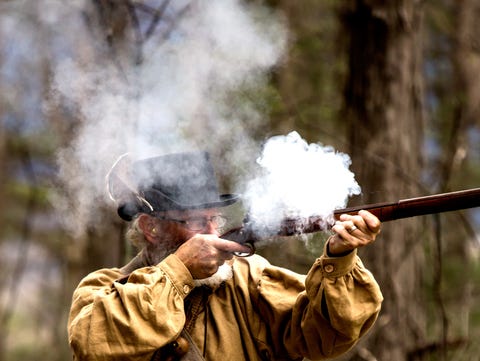
Once a year, a retired dairy farmer rigs up an elaborate target course on his 300-acre patch of woods and invites friends and family to shoot their way through it using 19th-century-style muzzleloaders.
Fifty people stand in the gravel driveway staring at the foot-thick log, fifteen inches across, propped on its side in the yard. It’s maybe thirty feet away, and its ringed face is covered with soft, rotten scars left by lead balls fired by primitive guns. The man who built this particular target—the man whose gravel we’re standing on, the man who invited us all here today—somehow attached an axe blade (no handle), cutting edge toward us, to the center of the face of the log. He’s driven two nails into the face, one on either side of the blade, and he’s hung orange clay pigeons on the nails, rusty after all these years, so that if a person were to fire a rifle and the bullet were to strike the blade dead on, the blade’s edge would bisect the bullet, sending each half flying into one of the dangling clay pigeons, shattering them.
We stand there, still as mounted trophies, only the shuffling of feet beneath craning necks, amplified by the gravel, cutting into the quiet. Men and women in a variety of leather, Under Armour, and canvas, dirt and grass from the Vermont morning across the tops of our boots. The overcast gray threatens rain. At the front of the crowd, two men. Shoulder to shoulder, one’s rough flannel next to the other’s flowing and tasseled tunic. Powder horns, bullets, and primers hang around their necks, necessities when shooting muzzleloading black-powder rifles, technology outdated by a century and a half.
“IS THAT A PROPANE TANK?” “IT IS. I SURE HOPE IT’S EMPTY.”
These men, Gary Perkins and Eric Bye, both local guys, work through the measured preparation of their guns, finishing with the definitive rap of the ramrod. They look at each other, then to the axe blade. Perkins packs away his normal cheer someplace deep within him and shrinks his world to that sharp metal edge. He steps past Bye, raises the rifle to his cheek, stoic, eyes clear as they look down the iron sights of the gun, lining up the small bead between the arms of the V inches from his nose. The crowd’s silence peaks, momentarily exciting the gravel. The entirety of this competition—the year’s bragging rights—depends on the bullet he packed spinning down the rifling of the barrel, flying true, and splitting in half on the edge of the blade.
This is Paul Bunyan stuff. Billy the Kid, man. It seems fine in those tall tales, but now? This can’t be 2017, right? A bunch of teachers and electricians and laborers out here in the yard on a Saturday afternoon? With pizza later? And yet, something about those tales comes through, the exceptional skill, the dogged hard work, the pride. Insurmountable challenges and those bold enough to face them, confident enough to conquer them. They’re stories of our national identity, stories we aspire to. So when you happen to own a rifle and your friend sets up an impossible course every year and invites you to come try your hand . . . well, you come. Perkins shoots. Muffled thunder of burning gunpowder, the boom of a rocketing bullet, the cloud of smoke obscuring the gun, its tip as steady as if it rested upon a fence post.
The crowd stares into the smoke, waiting for it to blow away, looking for the orange clays.
Grice loads his rifle beside his daughter Heather Carnevale.
MATT KIEDAISCH
One year before. On the outskirts of Middlebury, Vermont, I knocked on the door of Harley Grice’s white farmhouse, hands buried in my pockets, half hoping he wouldn’t answer. When a friend of mine, the college librarian, told me she was shooting black-powder rifles, I asked her to teach me. She said something about not being able to get out of work, and she gave me Harley’s address.
He was expecting me. I stood there in his kitchen, cabinets painted with apple trees growing hearts, intimidated by the white-bearded, enormous-boot-wearing octogenarian who skipped small talk. But a few minutes in, his smile rearranged the wrinkles beneath his thick glasses, and a chuckle puffed out of his chest. Then he put a gun in my hands. Harley’s the type of man you could imagine breaking the West, or gracing the back of a quarter, his life the pride of an entire state. He worked the dairy farm he grew up on for more than five decades. When he feels restless, he drives his camper out to the Rockies. On any given morning he’ll wake up, read his Bible, and split enough wood for the week before I’ve pulled the blanket over my eyes. He keeps a room decorated in honor of his late wife, Marilyn, keeps his daughters close, and befriends most all he meets, even clueless kids from the local college.
Every year for the past five years, Harley picks a day and invites all his friends, some he went to Middlebury Union High School with in the early ’50s, some he met the week before, to his house for a black-powder rifle shoot: eighteen stations, eighteen handmade targets, spread over the 300 acres of his farm. Every man, and a handful of women, shooting for themselves, recording hits and misses—X’s and O’s—on crumpled paper with an inevitably dull pencil. Some years he makes age brackets, or men’s and women’s. But the 2017 shoot would be different: Only the top six shooters of the day would be recognized. After eight months without practice, I was pretty sure I wouldn’t be one of them.
Harley had spent weeks welding and experimenting with new targets, covering them all with neon orange spray paint that lingered in patches across his lawn. He prepared guns for those who couldn’t bring them, passing hours in his basement beside his overflowing gun rack, naked lightbulb shining down on his thick fingers running cleaning patches through already pristine barrels, counting out bullets, filling a fleet of powder horns. He cleaned the bedrooms on the second floor of his house for those, like me, who would be coming from afar: Boston, Canada, the edges of the Vermont border. A stack of sheets, towels, and a fresh bar of soap greet every guest.
I had graduated college by this point, and would be traveling back to Vermont for the shoot. On the last mile of my three-hundred-mile trip, I practiced the slow finger pull of a trigger above my steering wheel. Imagining shots near his swamp, or over the corner of his pond, hoping to avoid flinching or some other embarrassment. The windows of the house Harley built with Marilyn from plans in a magazine cast shadows of light across the graded dirt of Halpin Road.
At the dining room table with his daughter, son-in-law, and two-year-old grandson, Harley turned toward the opening door. Behind him, dozens of eyes looked out from the living room, the largest from an elk with a six-foot-wide rack. With a grin, he got up from the kitchen table and moved toward the door with the eighty-one-year-old shuffle-jog-step he does when he moves quickly. Massive hands and broad shoulders wrapped me in a tight bear hug.
“James is here!”
MATT KIEDAISCH
Rifles crow the dawn, a few early guests getting ready for the day. By mid-morning, they gather across the street at Harley’s daughter Penny Curler’s house and rest their guns on the beds of trucks, handmade wooden racks, and boot toes to shake hands, slap-hug, meet new folks, and catch up.
Ernie Malzac, a friend of Harley’s from elementary school, drove from a few doors down in his CR-V. It’s the same truck he and Harley used to pull a deer out of the woods last winter. A friend from the street over arrives with a muzzleloading pistol wedged between his chest and the immobile sleeve of a sling from a recent roofing mishap. Eric Piccioni gets out of his camper and introduces himself to the others with an earnest grin and plumb-line nose, his wife beside him. They met Harley a few months before at a shoot close to the Canadian border, and came all the way from Lacrombe, Quebec, just for the invitational. Joe Church, white beard beneath his top hat with two halves of a playing card he shot tucked into its band, drove in fifty miles this morning. Gary Perkins, eyes disappearing into smile lines behind small glasses, emerges from his FJ Cruiser. It’s only a moment before someone asks him about the goats he’s raising. In three years they’ll be trained to carry deer out of the woods on hunting trips. But when they were infants he had to wake up every three hours to feed them, says it was worse than raising a kid.
About half the crowd dresses as if they bought their pants with their muzzleloaders. Bowler hats, blanket coats, various articles of handmade clothing and repurposed material. “You don’t go out and buy, you make do until you can make better,” one of them tells me, recounting the recycled purse he once carried bullets in. These are the descendants of Ethan Allen and the Green Mountain Boys, living an older, non-disposable way of life.
John Curler, one of Harley’s sons-in-law, fires a small cannon to grab the crowd’s attention. Harley steps up front, says hello to his friends, and offers a prayer: “Lord thank you so much for this day. For the sunshine that is about to appear. We ask you, Father, for safety in the day and good fellowship. We ask it all in Jesus’s name, Amen.”
The collective exhales an “Amen,” gives final well wishes, and splits into groups of six to eight that head for stations throughout the woods. The goal is to hit the target at all eighteen. Throughout the morning, they’ll pat another group on the back for its successes, maybe, and they’ll give helpful tips when they can.
But here’s the thing: They’ve got scorecards in their pockets, and they remember who won last year, and the year before.
Marshall Curler, Grice’s grandson, uses a spotting scope to check the paint on a hit target.
“Is that a propane tank?”
“It is. I sure hope it’s empty.” The targets are cobbled together from bits and pieces scavenged from the farm. An old spring, an ancient plow, thin strips of steel, bowling pins, golf balls, metal daisies, swinging chains, a bent pipe that bounces bullets around a corner, and, in this case, a swinging propane tank.
Overtly aware of our mortality, and hoping the invitational doesn’t turn into a memorial, we begin to load our guns.
Rather than simply inserting a bullet into the breach, muzzleloading is a multistep process. Its success, and your safety, depends on an exact order that Harley hammers into the head of new shooters with the mantra: “Powder, Patch, Ball.” It isn’t easy. You wear the tools around your neck. First down the barrel, fifty grains, about a spoonful, of black powder poured from a hollowed-out cow’s horn. Then a greased cotton patch with a bullet, slightly smaller than a marble, pushing into it. A wooden-ball starter, a palm-size sphere with a dowel sticking out, pushes them a few inches down the barrel, a ramrod finishes the job. Each shooter’s motions are choreographed—two taps here, an extra push there. Consistency is accuracy.
These steps, the necessity for precision, are what draw many of them. They grew up shooting and hunting with modern rifles, but muzzleloaders are different. It’s like driving stick, or listening to vinyl. When you have to work with the tool, be involved with every step of its success, you feel a deeper connection. Each shot, absent modern aids or scopes, must be perfect. There is no second chance at a fleeing buck. They all have stories, and trophies, of the single bullet that took down the deer, elk, or bear.
I step up to my eighth station of the day, boot touching an orange stake, the official shooting line. I raise the gun to my shoulder. The long octagonal barrel dances about, my left arm struggling to calm it. My sheet has more X’s than I expected by this point, and I can feel the jury of real Vermonters, real men, behind me, looking out to the target for even a glancing hit. Mind on my scorecard, I pull the trigger slowly, the hammer snaps, the explosion obscuring sight and sound, a swift shove into my shoulder.
Miss.
“Low and to the left,” the men behind me say as I draw the gun off my shoulder. A guy named Tom McElhaney walks over, asking about the carved deer antler I used to measure out powder. I hand it to him. “I’m borrowing it from Harley,” I say. He takes it in his hands, turns it over, and nods faintly.
“I think I made it for him . . . ten years ago? Yep, right there, that’s where I repaired it when a piece of the carving fell off.” He hands it to me and wanders back to another conversation. People talk about gear, new guns, leather bags, handmade tools. I ask Joe Church, playing card still perched in his hat, about his gun.
“I make all my guns. This one is the first I ever made. I make maybe two or three a year.”
Ralph, next to him: “I made my gun, too, close to forty years ago.”
Brian, a feather sticking out of his floppy leather hat: “Me too, I’ve built nine.”
I felt shabby in my synthetic jacket, my clothes conspicuously clean and untorn, tags attached, phone bulging from my chinos. More than any desire to hit a target, I want to live up to these men and women covered in things that hadn’t existed until they realized they needed them. To build, to make, to not rely on the store’s medium rack. At least to have the confidence to try.
Another member of the group shoots at the propane tank. Dead center, it bangs from tree to tree, an enormous dent in its front.
“I guess it’s empty.”
THERE IS NO SECOND CHANCE AT A FLEEING BUCK.
The next group put a hole in its side, and the tank spun about like a deflating balloon, propane hissing from its side.
Some years, the winner misses only one target. Perfection seems attainable. At that level, the challenge isn’t hitting targets, but rather not missing them. After each shot, it’s either the ring of flattening lead or a muffled curse. As groups pass the same call goes out, “How you guys doing, anyone perfect?” No one checks their cards, they already know. “No. No. Nope.”
Anyone could take the lead. As the number of stations dwindles, some participants stop and reach into leather satchels for cleaning patches and solvents to clear the residue of burnt powder from their barrel. They do this half to avoid any malfunction in these crucial last stations, and half to calm the mind. The day’s chatter quiets. Everyone wants to finish strong. The last thing you want in your head as you look down the barrel at a target is the image of dirt jumping up beside the last one you missed.
Three left, two left. Passing groups silently nod, not wanting to jinx their friends, not wanting to jinx themselves.
One station left.
If it weren’t for the racks of guns and strong smell of gunpowder, it could be a church picnic. Slices of pizza, from the one parlor in town, float through the air on paper plates clutched in storytelling hands. People talk. Many lean over Perkins’s shoulder, bedamning their missing readers, squinting down the length of his arm at photos of goats.
John moseys to the front of the crowd again, cannonless, and, yelling a few times, gets their attention. Next to him sits a stack of trophies, wooden discs Harley cut from a decades-old fence post, hand-painted with the optimistic script of a 1950s advertisement. The participants get their first looks, and a few remark how handsome they are. Each of us silently decides what will have to come off the mantel, replaced by this new prize. Looking at the stacks of crumpled paper in his hands, sloppy X’s and O’s, John begins to read off the winners. A mix of camaraderie and competition, the men and women cheer for their friends, but wait for their own names. The successful make their way to the front trying to hide sheepish grins, beards more effective than force of will. The stack shrinks, brows furrow, the crowd laments missed targets and remarks on the trophy bearer’s great shots. John pauses, two discs remaining, and looks at the papers again. With only two misses each, Gary Perkins and Eric Bye tied for first.
There will have to be a shoot-off. The axe.
MATT KIEDAISCH
Their friends push the men to the front. They wipe pizza grease off their fingers, soaked up by napkins, flannel shirts, and the legs of Carhartts, and pick up their guns. They stand next to each other, the careful measurement of powder interrupted as they laugh at shouted jokes and encouragements.
Perkins steps up, Bye leans on his rifle. Perkins raises the barrel, looking down the sights beneath the brim of an olive-green baseball cap. Steady. He pulls the trigger.
The ringing clang of metal hitting metal, shearing metal. The clays on either side shatter, and the silence of the crowd. Small pieces of orange skitter down the face of the stump. Perkins lowers his gun, and calmly steps to the side. Bye smiles at him, and steps to the line. A miss means he loses, a hit means they’ll both have to shoot again.
He raises his gun, quiets himself.
Perkins reloads, ready for Bye to make the shot.
Clang. The skitter of two broken clays.
The afternoon has turned into an exhibition. The cheering crowd forgets their missed shots, hang fires, faulty flints, itchy socks, and focuses on this bit of extraordinary in the afternoon. Perkins steps up to the line again.
Clang.
Two broken clays, wide eyes, open mouths. Perkins can’t help but smile. He steps to the side. His goats grow forty feet tall.
Bye cheers with the rest of the crowd, then steps back up to the line and raises his gun. Steady, eyes focused—he pulls the rifle off his shoulder, makes an adjustment, slowly brings it up again.
Ping.
Orange rushes off one side of the stump. Its opposite sits unbroken. The bullet deflected off one side of the axe.
The crowd surrounds the two men. They are already recounting the incredible shots, a story they won’t tire in retelling. Bye walks over to Perkins, smiling, congratulating him. John walks over to both and hands them their trophies. Arms around each other, they smile genuine smiles into a camera.
The crowd buzzes as it spreads back across the yard. There is more shooting, and more eating, and more camaraderie, but soon the crowd will disperse, back to their trucks to clean guns and head home. Before they do, they’ll make their way over to Harley, the patriarch, and thank him. He’ll hug them, step back, and shake their hand, looking into their eyes with an iridescent shine in his own. Not letting go of the grip, he’ll carefully choose each word, passing them through a constant smile, and make plans to see them again, next week, in a few months, next year. To shoot, to say hello.
The prayer for fellowship is answered. Even if the sun never did break through the clouds.
Only a few pizza munchers remain in the yard. Perkins puts down his award, picks up his gun. There’s a third bullet already loaded—preparation in case Bye had forced another round. Standing alone now, absent the forward-leaning crowd, Perkins raises the muzzle of his gun, and aims it squarely, slowly, at the axe blade. He steadies himself, his body motionless for a quiet second.
I saw this and just figured that I would throw it into the pot. I hope that you like it. Pity that I can’t have one as I have no need for it. What with being basically a city kid.
So enjoy!
Grumpy
Everyone has heard of Lamborghini exotic super cars.But not everyone knows that Farucio Lamborghini started out by making tractors.
Here is a beautifully restored 1960 Lamborghini 5C Cingolato tractor. https://youtu.be/6ZABZqTcBq0
Now the sword even today is a very powerful symbol. It is a sign of Power, Rank and of the idea of Swift Justice.
It is also a symbol of the Cross to Christians and of Islam the crescent of the scimitar sword . It all depending on the shape of the Blade.
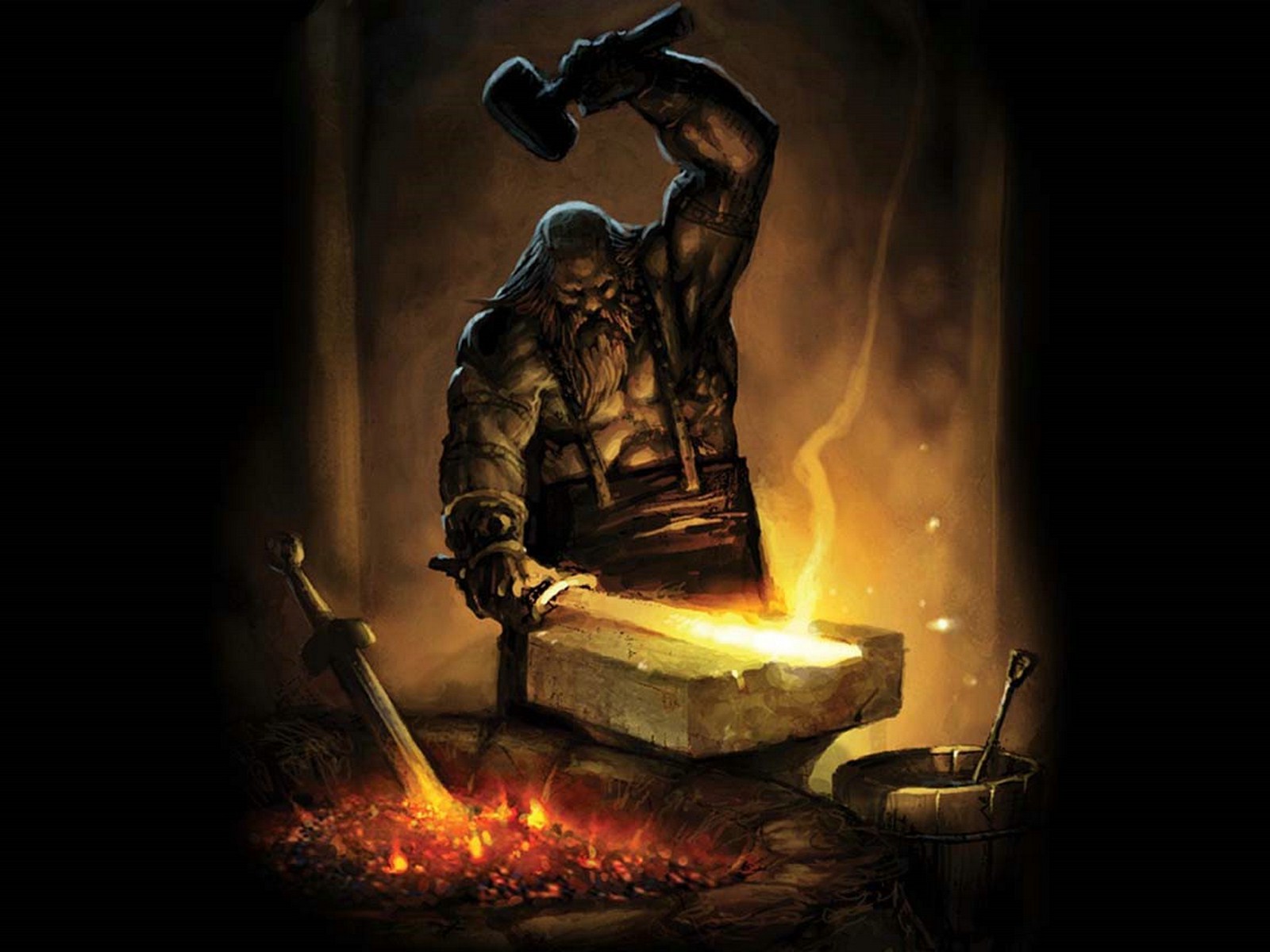
Moving right along smartly now. The Sword is also a very complex thing in of itself. As one should not think of it. Of being just a large chunk of sharpen steel like a wrecking bar.
Because your basic fighting sword is a very complex and sophisticated blend of iron, steel and other alloys.
That will allow it to be used in both the attack and defense mode.
Plus the added bonus of holding a razor sharp edge.
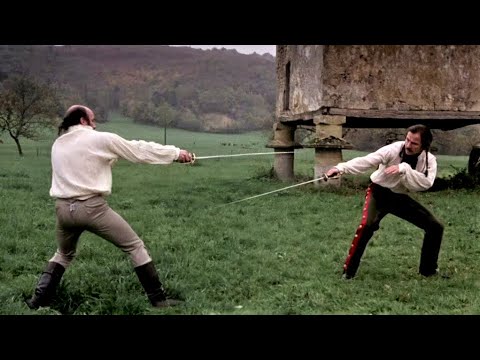
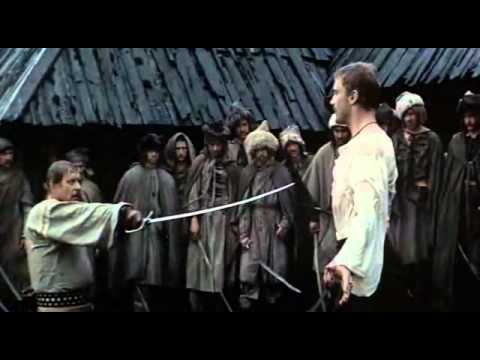
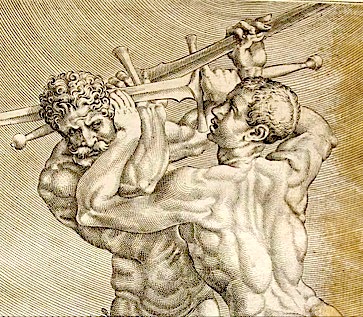
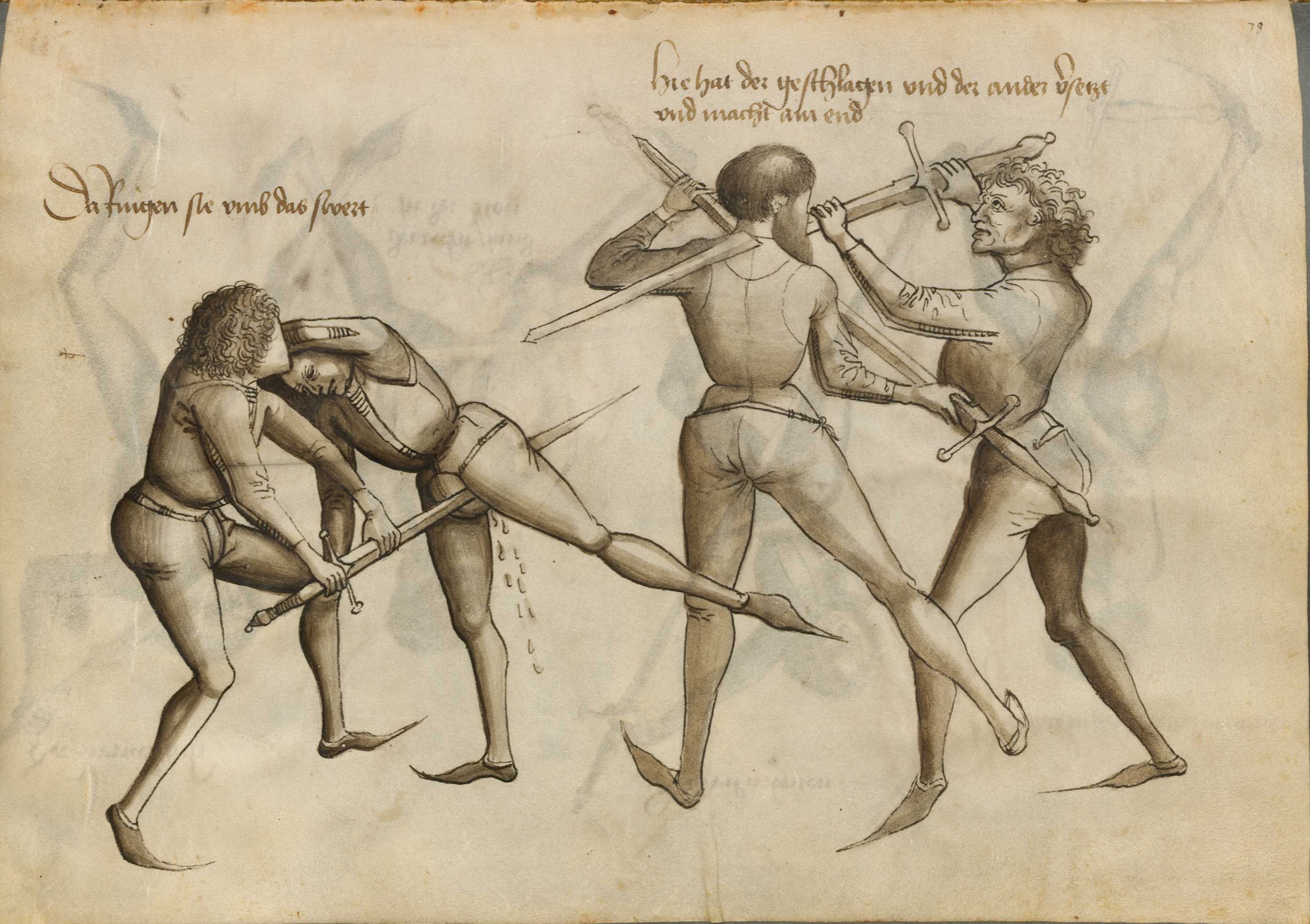
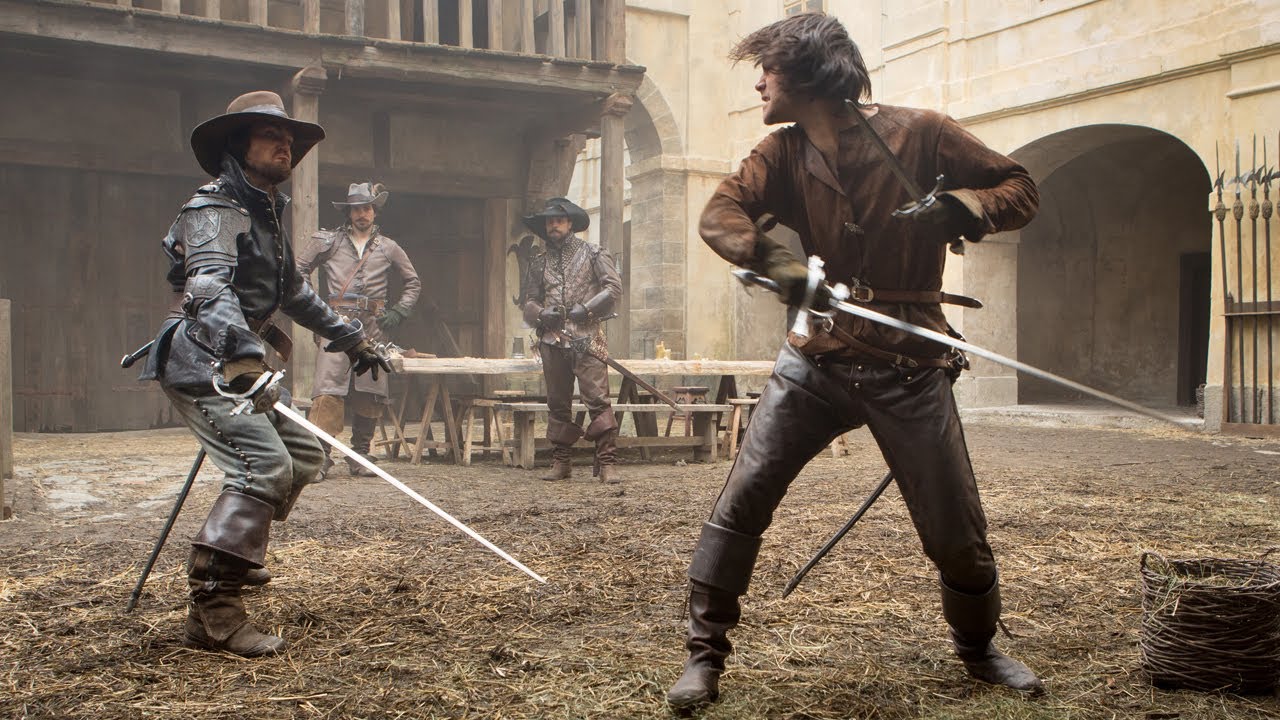
Sword fighting also is another complex subject. That it was & is a very expensive skill to acquire.
Which contrary to the Movies. Was a skill that was restricted to a very small group of folks. Because of the time and expense involved. Also the Rich did not want the poor to know how to fight as well as they did!
That and most folks back then were mostly concerned with growing crops.
Since in the bad old days. Famine was a constant worry for everyone.
Which in Queens English means this.
If the crops failed and they did from time to time. Except for the King and some of the High Clergy. Everyone else went hungry for the rest of the year. Then things got really ugly & very fast!
A sword is a bladed weapon intended for slashing or thrusting that is longer than a knife or dagger. The precise definition of the term varies with the historical epoch or the geographical region under consideration. A sword consists of a long blade attached to a hilt. The blade can be straight or curved. Thrusting swords have a pointed tip on the blade, and tend to be straighter; slashing swords have sharpened cutting edge on one or both sides of the blade, and are more likely to be curved. Many swords are designed for both thrusting and slashing.
Historically, the sword developed in the Bronze Age, evolving from the dagger; the earliest specimens date to about 1600 BC. The later Iron Age sword remained fairly short and without a crossguard. The spatha, as it developed in the Late Roman army, became the predecessor of the European sword of the Middle Ages, at first adopted as the Migration period sword, and only in the High Middle Ages, developed into the classical arming sword with crossguard. The word swordcontinues the Old English, sweord.[1]
The use of a sword is known as swordsmanship or (in an early modern or modern context) as fencing. In the Early Modern period, western sword design diverged into roughly two forms, the thrusting swords and the sabers.
The thrusting swords such as the rapier and eventually the smallsword were designed to impale their targets quickly and inflict deep stab wounds. Their long and straight yet light and well balanced design made them highly maneuverable and deadly in a duel but fairly ineffective when used in a slashing or chopping motion. A well aimed lunge and thrust could end a fight in seconds with just the sword’s point, leading to the development of a fighting style which closely resembles modern fencing.
The saber (sabre) and similar blades such as the cutlass were built more heavily and were more typically used in warfare. Built for slashing and chopping at multiple enemies, often from horseback, the saber’s long curved blade and slightly forward weight balance gave it a deadly character all its own on the battlefield. Most sabers also had sharp points and double edged blades, making them capable of piercing soldier after soldier in a cavalry charge. Sabers continued to see battlefield use until the early 20th century. The US Navy kept tens of thousands of sturdy cutlasses in their armory well into World War II and many were issued to marines in the Pacific as jungle machetes.
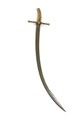
Non-European weapons called “sword” include single-edged weapons such as the Middle Eastern scimitar, the Chinese dao and the related Japanese katana. The Chinese jian is an example of a non-European double-edged sword, like the European models derived from the double-edged Iron Age sword.
The first weapons that can be described as “swords” date to around 3300 BC. They have been found in Arslantepe, Turkey, are made from arsenical bronze, and are about 60 cm (24 in) long.[2][3] Some of them are inlaid with silver.
The swords found together with the Nebra skydisk, ca. 1600 BC.
The sword developed from the knife or dagger. A knife is unlike a dagger in that a knife has only one cutting surface, while a dagger has two cutting surfaces. when the construction of longer blades became possible, from the late 3rd millennium BC in the Middle East, first in arsenic copper, then in tin-bronze.
Blades longer than 60 cm (24 in) were rare and not practical until the late Bronze Age because the tensile strength of bronze is relatively low, and consequently longer blades would bend easily. The development of the sword out of the dagger was gradual; the first weapons that can be classified as swords without any ambiguity are those found in Minoan Crete, dated to about 1700 BC, reaching a total length of more than 100 cm. These are the “type A” swords of the Aegean Bronze Age.
One of the most important, and longest-lasting, types swords of the European Bronze Age was the Naue II type (named for Julius Naue who first described them), also known as Griffzungenschwert (lit. “grip-tongue sword”). This type first appears in c. the 13th century BC in Northern Italy (or a general Urnfield background), and survives well into the Iron Age, with a life-span of about seven centuries. During its lifetime, metallurgy changed from bronze to iron, but not its basic design.
Naue II swords were exported from Europe to the Aegean, and as far afield as Ugarit, beginning about 1200 BC, i.e. just a few decades before the final collapse of the palace cultures in the Bronze Age collapse.[4] Naue II swords could be as long as 85 cm, but most specimens fall into the 60 to 70 cm range. Robert Drews linked the Naue Type II Swords, which spread from Southern Europe into the Mediterranean, with the Bronze Age collapse.[5] Naue II swords, along with Nordic full-hilted swords, were made with functionality and aesthetics in mind. [6]The hilts of these swords were beautifully crafted and often contained false rivets in order to make the sword more visually appealing. Swords coming from northern Denmark and northern Germany usually contained three or more fake rivets in the hilt.[7] Sword production in China is attested from the Bronze Age Shang Dynasty.[8] The technology for bronze swords reached its high point during the Warring States period and Qin Dynasty. Amongst the Warring States period swords, some unique technologies were used, such as casting high tin edges over softer, lower tin cores, or the application of diamond shaped patterns on the blade (see sword of Goujian). Also unique for Chinese bronzes is the consistent use of high tin bronze (17–21% tin) which is very hard and breaks if stressed too far, whereas other cultures preferred lower tin bronze (usually 10%), which bends if stressed too far. Although iron swords were made alongside bronze, it was not until the early Han period that iron completely replaced bronze.[9]
In South Asia earliest available Bronze age swords of copper were discovered in the Harappan sites, in present-day Pakistan, and date back to 2300 BC[citation needed]. Swords have been recovered in archaeological findings throughout the Ganges–JamunaDoab region of India, consisting of bronze but more commonly copper.[10] Diverse specimens have been discovered in Fatehgarh, where there are several varieties of hilt.[10] These swords have been variously dated to times between 1700–1400 BC, but were probably used more notably in the opening centuries of the 1st millennium BC.[10]
Iron became increasingly common from the 13th century B.C. Before that the use of swords was less frequent. The iron was not quench-hardened although often containing sufficient carbon, but work-hardened like bronze by hammering. This made them comparable or only slightly better in terms of strength and hardness to bronze swords. They could still bend during use rather than spring back into shape. But the easier production, and the better availability of the raw material for the first time permitted the equipment of entire armies with metal weapons, though Bronze Age Egyptian armies were sometimes fully equipped with bronze weapons.[11]
Ancient swords are often found at burial sites. The sword was often placed on the right side of the corpse. However, there are exceptions to this. A lot of times the sword was kept over the corpse. In many late Iron Age graves, the sword and the scabbard were bent at 180 degrees. It was known as killing the sword. Thus they might have considered swords as the most potent and powerful object.[12]
By the time of Classical Antiquity and the Parthian and Sassanid Empires in Iran, iron swords were common. The Greek xiphos and the Roman gladius are typical examples of the type, measuring some 60 to 70 cm (24 to 28 in).[13][14] The late Roman Empire introduced the longer spatha[15] (the term for its wielder, spatharius, became a court rank in Constantinople), and from this time, the term longsword is applied to swords comparatively long for their respective periods.[16]
Swords from the Parthian and Sassanian Empires were quite long, the blades on some late Sassanian swords being just under a metre long.
Swords were also used to administer various physical punishments, such as non-surgical amputation or capital punishment by decapitation. The use of a sword, an honourable weapon, was regarded in Europe since Roman times as a privilege reserved for the nobility and the upper classes.[17]
The Periplus of the Erythraean Sea mentions swords of Indian iron and steel being exported from India to Greece.[18]Sri Lankan and Indian Blades made of Damascus steel also found their way into Persia.[18]
In the first millennium BC the Persian armies used a sword that was originally of Scythian design called the akinaka (acinaces). However, the great conquests of the Persians made the sword more famous as a Persian weapon, to the extent that the true nature of the weapon has been lost somewhat as the name Akinaka has been used to refer to whichever form of sword the Persian army favoured at the time.
It is widely believed that the original akinaka was a 14 to 18 inch double-edged sword. The design was not uniform and in fact identification is made more on the nature of the scabbard than the weapon itself; the scabbard usually has a large, decorative mount allowing it to be suspended from a belt on the wearer’s right side. Because of this, it is assumed that the sword was intended to be drawn with the blade pointing downwards ready for surprise stabbing attacks.
In the 12th century, the Seljuq dynasty had introduced the curved shamshir to Persia, and this was in extensive use by the early 16th century.
Chinese steel swords made their first appearance in the later part of the Western Zhou Dynasty, but were not widely used until the 3rd century BC Han Dynasty.[9] The Chinese Dao (刀 pinyin dāo) is single-edged, sometimes translated as sabre or broadsword, and the Jian (劍or剑 pinyin jiàn) is double-edged. The zhanmadao (literally “horse chopping sword”), an extremely long, anti-cavalry sword from the Song dynasty era.
During the Middle Ages sword technology improved, and the sword became a very advanced weapon. It was frequently used by men in battle, particularly during an attack. The spatha type remained popular throughout the Migration period and well into the Middle Ages. Vendel Age spathas were decorated with Germanic artwork (not unlike the Germanic bracteates fashioned after Roman coins). The Viking Agesaw again a more standardized production, but the basic design remained indebted to the spatha.[19]
Around the 10th century, the use of properly quenched hardened and tempered steel started to become much more common than in previous periods. The Frankish ‘Ulfberht‘ blades (the name of the maker inlaid in the blade) were of particularly consistent high quality.[20]Charles the Bald tried to prohibit the export of these swords, as they were used by Vikings in raids against the Franks. Wootz steel which is also known as Damascus steel was a unique and highly prized steel developed on the Indian subcontinent as early as the 5th century BC. Its properties were unique due to the special smelting and reworking of the steel creating networks of iron carbides described as a globular cementite in a matrix of pearlite. The use of Damascus steel in swords became extremely popular in the 16th and 17th centuries.[nb 1][21]
It was only from the 11th century that Norman swords began to develop the crossguard (quillons). During the Crusades of the 12th to 13th century, this cruciform type of arming sword remained essentially stable, with variations mainly concerning the shape of the pommel. These swords were designed as cutting weapons, although effective points were becoming common to counter improvements in armour, especially the 14th-century change from mail to plate armour.[22]
It was during the 14th century, with the growing use of more advanced armour, that the hand and a half sword, also known as a “bastard sword“, came into being. It had an extended grip that meant it could be used with either one or two hands. Though these swords did not provide a full two-hand grip they allowed their wielders to hold a shield or parrying dagger in their off hand, or to use it as a two-handed sword for a more powerful blow.[23]
In the Middle Ages, the sword was often used as a symbol of the word of God. The names given to many swords in mythology, literature, and history reflected the high prestige of the weapon and the wealth of the owner.[24]
A Japanese wakizashi of the 17th century, with its koshirae and shirasaya.
Chinese dao and scabbard of the 17th–18th century
As steel technology improved, single-edged weapons became popular throughout Asia. Derived from the ChineseJian or dao, the Koreanhwandudaedo are known from the early medieval Three Kingdoms. Production of the Japanesetachi, a precursor to the katana, is recorded from ca. 900 AD (see Japanese sword).[26]
Japan was famous for the swords it forged in the early 13th century for the class of warrior-nobility known as the Samurai. The types of swords used by the Samurai included the ōdachi (extra long field sword), tachi (long cavalry sword), katana(long sword), and wakizashi (shorter companion sword for katana). Japanese swords that pre-date the rise of the samurai caste include the tsurugi (straight double-edged blade) and chokutō (straight one-edged blade).[27] Japanese swordmaking reached the height of its development in the 15th and 16th centuries, when samurai increasingly found a need for a sword to use in closer quarters, leading to the creation of the modern katana.[28]
Western historians have said that Japanese katana were among the finest cutting weapons in world military history.[29][30][31]
Khanda is a double-edge straight sword. It is often featured in religious iconography, theatre and art depicting the ancient history of India. Some communities venerate the weapon as a symbol of Shiva. It is a common weapon in the martial arts in the Indian subcontinent.[32] Khanda often appears in Hindu, Buddhist and Sikh scriptures and art.[33] In Sri Lanka, a unique wind furnace was used to produce the high quality steel. This gave the blade a very hard cutting edge and beautiful patterns. For these reasons it became a very popular trading material.[34]
Even though Congress repealed Obama’s Social Security Disability (SSI) gun ban in 2017, a bill in Congress would effectively take that principle and expand it to the broad range of entitlements — Social Security old age, Medicare, Medicaid, CHIP, ObamaCare subsidies, etc.
Here’s how that would happen.
The Cornyn-Schumer-Feinstein-Blumenthal-Murphy legislation, S. 2135, would bribe the states and force federal agencies to send every possible eligible name to the national gun ban list, NICS.
This “Fix NICS” bill means that a whole lot of decent Americans (like seniors) are going to be added into the system.
Some people claim that S. 2135 — and its counterpart in the House — are really not that bad. After all, they say, the bills don’t contain the words “traffic tickets,” “veterans,” “senior citizens,” and so forth.
But that’s the problem. Legislators like Chuck Schumer are not going to tell you this up front.
There’s more to it than just reading the bills
Remember the 2007 NICS Improvement Amendments Act that harmed so many veterans? That legislation NEVER contained the word “veteran.”
But GOA knew what legislators were up to … we knew how veterans were going to be impacted … and so we renamed the legislation, more accurately, as the Veterans Disarmament Act.
Sadly, more than 257,000 veterans have now been disarmed, proving that GOA’s analysis of that disgraceful law was accurate.
The key is this: You always have to read the legal code and the implementing regulations that are being amended by any particular piece of legislation.
Many gun owners don’t realize that NICS is already denying gun purchases to people who have unpaid traffic tickets — even though you won’t find the words “traffic” or “tickets” in the federal firearms code.
To read more about this, you’ll definitely want to see what a Massachusetts cop told GOA about how an unpaid traffic ticket can lead to a gun ban.
And you can click here to see Shannon Bream of Fox News quoting GOA to help viewers sift “fact from fiction” in December in regard to the Traffic Ticket Gun Ban.
Again, the reason Cornyn-Schumer is so horrible is that it bribes states and forces agencies to achieve 100% compliance with current statutes and regulations — and this is going to result in gun bans for lots of decent Americans whose names are not already in the NICS system.
Seniors at Risk under Fix NICS (S. 2135)
If you have a terrible — but unenforced — statute and you come along with legislation to mandate enforcement, is that a bad thing?
Obviously, it is.
And the unenforced statutes and regulations surrounding the 1968 Act (18 U.S.C. 922(g)), the 2007 Veterans Disarmament Act, and the regulations implementing them are so sucky that they, if fully enforced, would disarm millions — perhaps tens of millions — of decent Americans.
The Code of Federal Regulations disarms you if a “lawful authority” determines you are a “danger” or are unable to manage your checkbook (see 27 CFR 478.11). “Lawful authority” means a psychiatrist who determines whether a person is eligible for federal benefits. Under these provisions, over 257,000 veterans have lost their guns.
And, in 2016, Barack Obama promulgated regulations which would trawl the SSI disability rolls to do the same for perhaps millions of people on disability. Congress was shocked, the regulations were overturned at the start of the Trump administration.
But guess what?
The next anti-gun president could do the same with Social Security, Medicare, Medicaid, the children’s health insurance program, ObamaCare recipients, etc.
It doesn’t matter that Congress repealed Obama’s Social Security Disability gun ban in 2017, using their Congressional Review Act (CRA) authority. Under the legal principle that the “later statute trumps the earlier statute, to the extent it is inconsistent,” the Cornyn-Schumer-Feinstein bill will clearly overturn any protections from the CRA resolution.
A future anti-gun president could add more Americans into NICS — sending the names of people with guardians, or people suffering from ADHD, PTSD, post partem depression, regular depression, OCD, or even Alzheimer’s, which currently affects upwards of 40 million people according to a studyfinanced by the National Institutes of Health. The latter would, no doubt, jeopardize the inheritance of many valuable gun collections.
And Congress would not be able to generate the 2/3 vote in both chambers to overturn the veto from the next anti-gun president.
6.5 mm (.264″) bullets, in general, are known for their relatively high sectional density[7] and ballistic coefficients, and have seen success in rifle competition. For some loads the 6.5mm Creedmoor is capable of duplicating the muzzle velocity[2] or trajectory[9] of the .300 Winchester Magnum while generating significantly lower recoil, based on lighter projectile weight. As this cartridge is designed for a bolt face diameter of .473 inches (roughly 12 mm), conversion of a short action rifle to another caliber (such as the .22-250 Remington, .243 Winchester or .300 Savage) with similar bolt face diameter generally requires little more than a simple barrel change.
This is a medium power cartridge often compared to the .260 Remington and 6.5×47mm Lapua.[10] Three hundred yard energy using 129 grain Hornady SST bullets is listed by an independent reviewer as 1641 ft. lbs.[11] For the 140 grain bullet at 2700 feet per second initial velocity another reviewer reports an MPBR[12] for a six inch high target of 265 yards and reports a manufacturer claim of “almost 1600 ft. lbs.” of retained energy at 300 yards using a 24-inch barrel.[13] SAAMI test data confirms 6.5 mm Creedmoor (fifteen feet from muzzle) velocity of 2,940 fps for the 129 grain bullet and 2,690 for the 140 grain bullet (which compares to .300 Winchester magnum data of 2,930 fps for a 200 grain bullet and 2,665 fps for a 210 grain bullet).[2] Long-range shooter Ray “RayDog” Sanchez summarized the bolt-actionTubb 2000 rifle in 6.5mm Creedmoor as “boringly accurate” at 1000 yards (914.4 metres). He asserted the rifle and ammunition combination he used was able to maintain sub-MOA groups at 1000 yards (914.4 metres).[14]
Only the very longest 140gr bullets will even reach the neck shoulder junction. Right to left: is a 123gr A-Max and Remington 140gr. Calipers are set to magazine length.
Handloading cost for the 6.5 Creedmoor is roughly equivalent to other 6.5mm cartridges, such as the 6.5×47mm Lapua, due to the availability of Lapua small primer brass for both cartridges.[15][16] Norma now makes brass for the cartridge and as of 2017 Norma brass is available through several major retailers at approximately the same cost as Lapua brass. Lapua brass for 6.5×47 lasts about 12 to 20 reloads.[17] Starline sells brass cases with either large or small primer pockets, with small pocket brass costing slightly more.[18] When the 6.5 CM was first introduced it was advertised as a 60,000 psi capable case.[6]However, when it was placed into production Hornady listed it as 62,000 psi and had it SAAMI registered as such. For this reason many hand loaders have had poor experiences reloading for it. Blown primers on the first shot at 62,000 psi is not uncommon. Early shooting articles listed the ammo as loaded to 58,000 psi[19] but later ones list it as 57,000 psi.[20] This is because Hornady reduced the loads in its factory ammo because of complaints that it was often blowing primers.[21]Lapua delivered Creedmoor brass at Shot show 2017,[22] and production quantities became available via major retailers in second quarter 2017. The Lapua version has a small primer pocket.[15][23] Thus, loads from a Lapua Creedmoor should not be used in another manufacturer’s Creedmoor brass that features a large primer pocket without applying proper hand loading test for pressure first. Also the use of a smaller diameter decapping rod is required to size and decap.
From left: 6mm Creedmoor, 6.5mm Creedmoor, .308 Winchester
The 6mm Creedmoor is a necked-down version of the 6.5mm Creedmoor using 6mm (.243 inch) bullets, which are lighter than 6.5mm bullets with similarly reduced recoil. John Snow at Outdoor Life designed it in 2009. As of May 2018, Savage Arms offers 3 bolt action rifles and 1 semiautomatic rifle chambered in 6mm Creedmoor.[24] As of May 2018, Hornady offers 87 gr Varmint Express, 103 gr Precision Hunter and 108 gr Match ammunition in 6mm Creedmoor.[25]
In October 2017, U.S. Special Operations Command tested the performance of 7.62 NATO, .260 Remington, and 6.5 Creedmoor cartridges out of SR-25, M110A1, and Mk 20 sniper rifles. SOCOM determined that 6.5 Creedmoor performed the best, doubling hit probability at 1,000 meters, increasing effective range by nearly half, reducing wind drift by a third and having less recoil than 7.62 NATO rounds. Because the two rounds have similar dimensions, the same magazines can be used and a rifle can be converted with a barrel change. This led to its adoption and fielding by special operations snipers to replace the 7.62 NATO cartridge in their semi-automatic sniper rifles, planned in early 2019. In response to SOCOM’s adoption, the Department of Homeland Securityalso decided to adopt the round.[26][27]










_katana.jpg)