Categories
Author: Grumpy
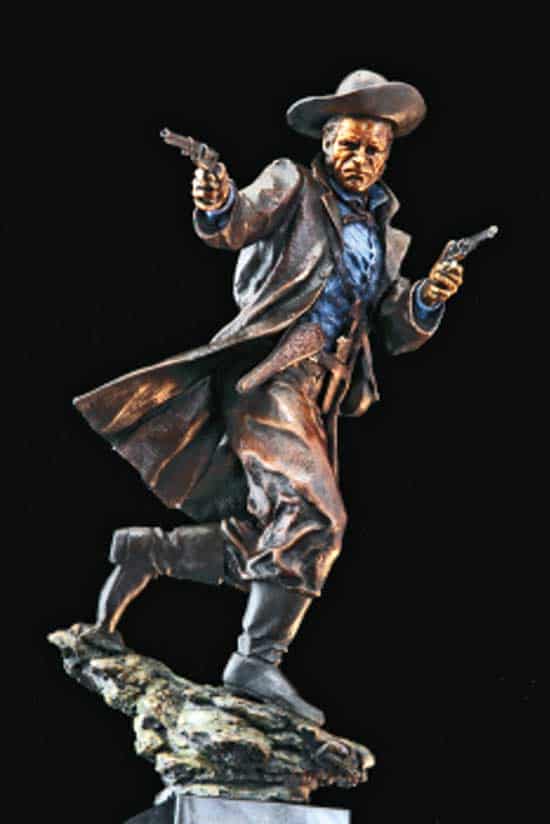 December 19, 1854 was a cold day in California’s Sierra Nevada Mountains. Three prospectors carefully traversed a rough trail in aptly named Rocky Canyon in El Dorado County, near the North Fork of the American River.
Unknown to them, 14 heavily armed bandits lay in ambush ahead. Unknown to both parties, three miners watched from a nearby hilltop. They were about to become witnesses to what historian John Boessenecker calls, “The single most extraordinary feat of self-defense by an American civilian in the annals of frontier history.”
Jonathan R. Davis was born in Monticello, S.C. in 1816. Following his education at the University of South Carolina, he enlisted in the Palmetto Regiment of Volunteers and was quickly promoted to lieutenant.
Davis fought with distinction in several battles in the Mexican War. He was wounded at Churubusco in 1847, along with over 1,100 other American casualties. In those days, simply surviving one’s wounds and the inevitable infections was too much for all but the toughest of men. Jonathan Davis proved to be made of boot leather and barbed wire—a tough man indeed.
Davis mustered out of the Army in 1848 with the honorary rank of captain, and, along with hundreds of other veterans, cast adrift after the war; he later headed for the gold fields of California. There, his soldierly demeanor, skills with arms and unblemished character earned the respect of his fellow prospectors. He was known as a superior marksman, and described by a friend as “second to none in the state as a fencer.” He was never seen without his two Colts and a big Bowie knife.
The Gold Rush drew dreamers, dilettantes and desperadoes from all nations, either to seek their fortunes in the streambeds and hills, or to prey upon those who did. Since most honest prospectors were armed and determined, the predators frequently formed murderous gangs and operated by raid and ambush.
One such gang was made up of two Americans, five Australians, two Britons, four Mexicans, and a Frenchman. In just the two days previous to December 19, they had robbed and murdered six Chinese and four Americans. Ambushing three men in a lonely canyon must have seemed like plucking flowers. But one of those men had never been anybody’s daisy.
Ambushing The Wrong Party
As Davis, his good friend Doctor Bolivar Sparks, and James McDonald picked their way along the trail, all 14 bandits leaped from cover and opened fire. McDonald was killed instantly, dropped before he could even pull his revolver. Dr. Sparks got off two shots as he fell, his fire apparently going wild.
Jonathan Davis drew his Colts and commenced firing until they ran dry. It is unknown if any of his slugs missed, but when the firestorm ended, seven of his attackers lay dead or dying, and the rest had also run out of ammo.
The fight wasn’t over. Four of the bandits charged, one with a short sword, the other three with knives. Davis drew his Bowie and engaged. In seconds, he had killed three and grievously injured the gang’s leader, among other wounds, cutting off his nose and a finger. The three surviving bandits ran for their lives. And those three miners on the hilltop saw it all.
Davis had suffered two flesh wounds, but he immediately began tearing strips from his shirt and bandaging not only his good friend Dr. Sparks, but also three mortally wounded but still breathing bandits, trying to save their lives as well. He won, they had lost, and as the victor, mercy was his duty to give.
When the witnesses came running up the trail, Davis leaped to McDonald’s body, grabbed his loaded revolver and shouted “Halt!” John Webster, Isaac Hart and P.S. Robertson identified themselves and explained they had been out hunting game and had seen the entire fight. They assisted Davis in tending the wounded, then returned to their camp, bringing back 15 others to witness the bloody scene and help dig graves.
As the sun went down, three wounded bandits died. The noseless leader confessed to his gang’s 10 murders on the 17th and 18th. He died the following day. One of the miners counted six bullet holes in Jonathan Davis’s hat and 11 more through his shirt and coat.
The bandits’ bodies yielded $491 in gold and silver coins, nine watches (two silver and seven gold), and 4 ounces of gold dust. Davis informed the group that Dr. Sparks, who was still clinging to life, had a home and family in Coloma; he urged that all the ill-gotten plunder should go to Dr. Sparks’. They agreed.
The Aftermath
The next day, all the dead were buried. Being law-abiding men, the group formed a coroner’s jury, wrote out a report of the incident, citing all evidence and witnesses statements, and concluded Davis’s party acted in self-defense. Seventeen of them signed it and it was sent to Placerville, the county seat. Davis carried his friend Bolivar Sparks to his home in Coloma, where the doctor passed away on December 26th.
In the months following, many people expressed doubt about Davis’s deed, and city folk proclaimed it wild exaggeration. Davis sought neither publicity nor notoriety, but was stung by the challenges to his honor, and felt it was disrespectful to his dead friends. Finally, Davis and the witnesses appeared before Judge R.M. Anderson and a court of inquiry, where detailed depositions and comparisons of statements set the matter to rest.
Jonathan Davis said, “I did only what hundreds of others might have done under similar circumstances, and attach no particular credit to myself for it.” Indeed, hundreds of others might have—but would they have done it so well?
Categories
A Marlin 1895 in 45-70 Govt.
Categories
Swords Not Words
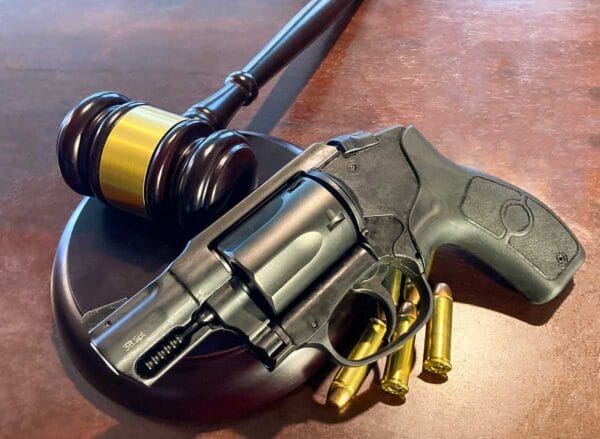
On December 16, 2025, the United States Department of Justice (DOJ) filed a major lawsuit in the District Court of the Virgin Islands, St. Thomas and St. John Division, against the Government of the Virgin Islands, the Virgin Islands Police Department (VIPD), and Police Commissioner Mario Brooks.
The Justice Department accuses the defendants of systematically violating the Second Amendment rights of law-abiding citizens through unconstitutional policies and practices related to firearm licensing. The complaint, spanning 12 pages, seeks declaratory and equitable relief under the Violent Crime Control and Law Enforcement Act of 1994 to restore these fundamental human rights.
The lawsuit hinges on the assertion that the Second Amendment, affirmed as a “fundamental right” by the Supreme Court in New York State Rifle & Pistol Ass’n, Inc. v. Bruen, protects the right of individuals to keep and bear arms both at home and in public for lawful purposes, such as self-defense. This right, extended to the Virgin Islands under 48 U.S.C. § 1561, has been upheld in cases such as McDonald v. City of Chicago and District of Columbia v. Heller. However, the U.S. alleges that the Virgin Islands defendants have defied these rulings, rendering the constitutional right to bear arms “a virtual nullity” within the U.S. territory.
Central to the complaint are several specific grievances. The VIPD, under Commissioner Brooks’ supervision since January 23, 2025, enforces laws that require applicants to submit to warrantless home searches and to install safes bolted to their floors or walls as conditions for obtaining a firearm permit. These requirements, deemed unconstitutional by Heller, which struck down similar restrictions, impose significant financial burdens and privacy invasions. Additionally, the processing of applications is delayed by several months to a year, with no probable cause to justify home inspections. Non-compliance results in de facto denials, further obstructing citizens’ rights.
The complaint outlines three counts of violation under 34 U.S.C. § 12601. Count I addresses “Unconstitutional Conditions,” arguing that requiring warrantless searches and safe installations violates the Second Amendment by conditioning the right to bear arms on waiving constitutional protections against unreasonable searches and imposing financial expenditures. Count II, “Unreasonable Delays,” highlights excessive wait times and the lack of status updates, which deny applicants timely access to firearms and compel them to administrative exhaustion.
Finally, count III, “Unconstitutional ‘Proper Reason’ Requirement,” challenges the Virgin Islands’ law, mirroring the New York statute struck down in Bruen, which mandates applicants prove a “proper reason” for carrying a firearm, a discretion left entirely to the Commissioner.
The regulatory framework in the Virgin Islands exacerbates these issues. Possession of a firearm is a crime unless licensed, with permits valid for three years and tied to specific firearms, and permits require annual inspections.
The undefined “good moral character” and “proper reason” criteria allow arbitrary denials, while penalties for unlicensed possession include up to 10 years’ imprisonment and fines of $10,000 to $15,000. These stringent measures, combined with the VIPD’s pattern of denying licenses to those with “too many” firearms, create a formidable barrier to exercising Second Amendment rights.
Factual allegations, based on accounts from multiple permit applicants, detail the arduous process. Applicants must provide a purpose for ownership, undergo mandatory home inspections without legal justification, and install costly safes even in shared households.
The VIPD’s reliance on “character vouchers” and its discretionary power to define “proper reason” further conditions rights on external approval, contradicting Bruen’s rejection of “special need” requirements.
The U.S. seeks a declaration that these practices violate federal law, a permanent injunction against implementing offending Virgin Islands statutes in this manner, and additional relief as justice requires. This action underscores a broader effort to ensure that law enforcement practices align with constitutional protections, particularly in territories where local policies may diverge from federal standards.
The lawsuit’s timing, filed on the same day as its documentation, reflects the urgency of addressing these alleged violations. Led by U.S. Attorney Adam Sleeper and Assistant U.S. Attorney Angela P. Tyson-Floyd, with support from the Civil Rights Division under Assistant Attorney General Harmeet K. Dhillon, the case pits federal authority against territorial governance. The outcome could set a precedent for the administration of Second Amendment rights across U.S. territories, potentially reshaping firearm licensing nationwide.
For residents of the Virgin Islands, this case represents a critical juncture. The alleged bureaucratic hurdles and unconstitutional conditions have long frustrated law-abiding citizens’ ability to defend themselves, a right the Supreme Court has repeatedly affirmed.
As the legal battle unfolds, it will test the balance between the U.S. Virgin Islands government’s wants and individual liberties, with implications that may extend beyond the Caribbean to the mainland United States.
This lawsuit is a bold assertion of federal oversight to protect constitutional rights in the Virgin Islands.
By challenging the VIPD’s practices, the U.S. aims to dismantle what it describes as a coordinated effort to nullify Second Amendment protections through unconstitutional means.
As the case progresses, it will likely draw significant attention from legal scholars, gun rights advocates, and policymakers, offering a potential roadmap for resolving similar disputes elsewhere.
About John Crump
Mr. Crump is an NRA instructor and a constitutional activist. John has written about firearms, interviewed people from all walks of life, and on the Constitution. John lives in Northern Virginia with his wife and sons, follow him on X at @crumpyss, or at www.crumpy.com.