Author: Grumpy

Categories
Well I was amused by them!
.JPG)
.jpg)
.JPG)
.JPG)
.JPG)
.JPG)
.JPG)
.PNG)
.png)
Categories
Make mine a single malt please!

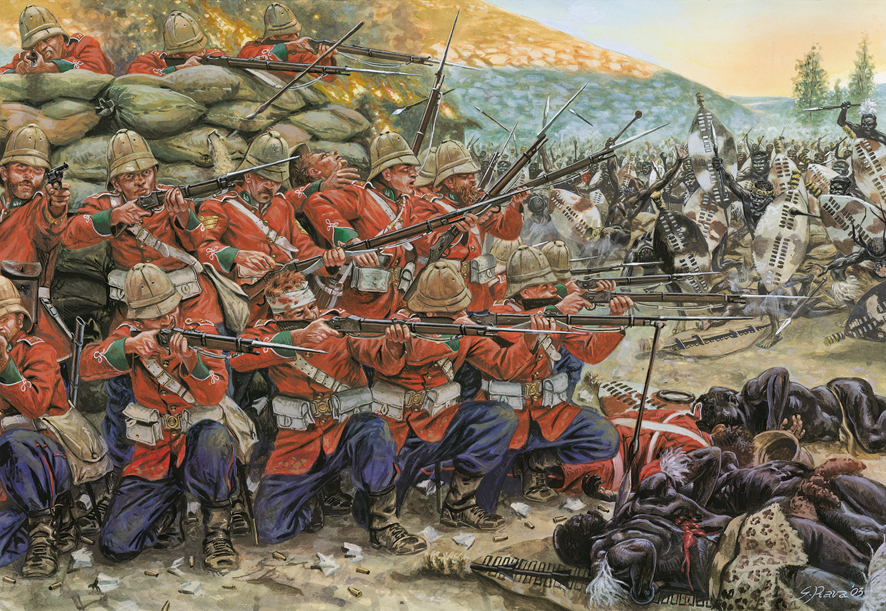 Rorkes Drift 1879, 1st Anglo-Zulu War South Africa

Or how to talk a classic design and make it look like it has a factory mistake on its front sight. Grumpy
Categories

Joe Raedle/Getty Images
In the coming years, it is likely you will encounter people in San Francisco carrying concealed weapons.
A Supreme Court ruling from last year forced localities to soften permitting rules. In short, the court ruled that “may issue” laws — in which officials have broad discretion to deny a person seeking a concealed weapon permit — violate the Second Amendment. Areas with “may issue” laws must now transition to “shall issue” laws, in which the permit-seeker is entitled to a permit unless they are deemed unfit to carry a weapon.
As a result, San Francisco has begun the process of granting new licenses. Previously in the city, an individual had to demonstrate “good cause” for obtaining a permit, such as working in areas with high rates of violent crime. The city seldom found that individuals met the “good cause” standard, which resulted in very few concealed carry permits in San Francisco.
That “good cause” standard has now been replaced by a more lax interim policy with only four requirements. First, the individual — whether a San Francisco resident or a resident of another county who works in San Francisco — must legally own the firearm they seek to carry. From there, if the individual can complete a firearms safety course, as well as pass both a psychological test and a background check, they will be granted a permit.
The San Francisco Sheriff’s Office told SFGATE that the psychological exam consists of a multiple choice test and an interview conducted by Law Enforcement Psychological Services (LEPS), a screening service the city uses for police and other law enforcement officers. LEPS did not immediately respond to an SFGATE request for a copy of the multiple choice test.
For the background check, the sheriff’s office will not only conduct the standard California Department of Justice background check used for firearm purchases, but, according to the new policy, will also review “materials such as citations, arrests, convictions, civil lawsuits, employment discharges, military discharges, license denials, license revocations, other actions indicating a possible propensity for violence or moral turpitude, drug and/or alcohol abuse, carelessness with weapons, and/or dishonesty to determine whether the applicant is a law abiding, responsible citizen.”
Unless something comes up in that background check that calls into question “whether the applicant is a law abiding, responsible citizen,” the city must issue the permit. San Francisco Sheriff Paul Miyamoto told KGO that the city is currently reviewing 72 permit applications, and expects between 100 and 200 over the next year.
Lawmakers at both the city and state level are seeking restrictions on where individuals with permits can carry concealed firearms. At the state level, Gov. Gavin Newsom has thrown his support behind legislation that would raise the minimum age for acquiring a permit from 18 to 21 and add new training and storage requirements.
Of course, any of those restrictions could be struck down by the courts as well. On age requirements, the 9th Circuit of Appeals has already invalidated a previous California requirement that individuals be 21 to purchase semiautomatic weapons. It’s not a stretch to believe that reasoning could apply to concealed weapons permits as well.
In addition to softening permitting rules for concealed carry, last year’s Supreme Court ruling prescribed a new test for lower courts in Second Amendment cases: For a gun control measure to be constitutionally permissible, it must be “consistent with this Nation’s historical tradition of firearm regulation.”
UCLA law professor Adam Winkler, one of the country’s leading Second Amendment scholars, told SFGATE last summer that in the case last year, New York City had provided historical analogues used to justify its permitting rules.
“The court says they’re looking to history and tradition, but New York presented plenty of history on restrictions on concealed carry that the court dismissed as outliers or not historically relevant,” he said. “The court claimed it was using history, but it looked like politics as usual to me.”

If you shape your worldview at the local cineplex, and, distressingly, many do, then you might expect gangs of bank robbers wielding full auto HK G36 assault rifles to be lurking behind every parking meter in whatever little metropolis you call home. However, I have it on reliable information that movies are not technically real. The reality, by contrast, paints a very different picture.

Automatic weapons (not to be confused with “semiautomatic assault weapons,” whatever they actually are) have been heavily regulated in the United States since 1934. Thompson submachine guns and Browning Automatic Rifles were really the only automatic weapons in circulation back then, and they were used precious few times in actual crimes. However, then as now blood and sex sell newspapers, so the public became convinced that machinegun-related crime was an existential threat to our American way of life.

As a result, legislators did what legislators do. Interestingly, back in 1934 lawmakers actually read the document they were sworn to support and defend. They appreciated that they lacked the constitutional power to ban anything. What they subsequently did was to simply tax machineguns out of existence. As $200 in 1934 is about $3,000 today, levying a $200 tax on the transfer of machineguns effectively shut down commerce in these items.

Now fast forward to the 1980s and $200 was not the lofty sum it once was. Private ownership of automatic weapons, therefore, began to accumulate a proper following. In 1986 a Democratically-controlled congress slipped the Hughes Amendment into the ironically-titled Firearms Owners Protection Act. President Reagan daftly signed the thing, and the new production of automatic weapons for sale to civilians was gone never to return. Resulting market forces pushed prices of transferable automatic weapons into the stratosphere. The M16 I bought for $600 in 1987 would cost twenty grand to replace today.

As of 2016, the BATF reported that there were 175,977 transferable automatic weapons in the National Firearms Registry and Transfer Record. A few of these guns are still in Law Enforcement arms rooms or museums, but most of them are owned by folks like us. Since 1934 there have been two cases wherein the legal owner of a registered machinegun committed a crime with his weapon. Only one is well documented.
The Shooter

In 1988 Roger Waller was a thirteen-year veteran of the Dayton, Ohio, police department. He also owned a gun shop and was active in paintball. His Law Enforcement job was to manage the Drug Hotline Volunteer Program. His duties included training and scheduling volunteers to man a telephone hotline wherein local citizens could call in tips about suspected drug dealers. Officer Waller would correlate the information and occasionally travel to the locations reported to observe for evidence of trafficking.

If Officer Waller saw something suspicious his mandate was to report it for further investigation. Waller was not to speak with anyone at these locations or attempt to buy drugs. Though he carried a 9mm handgun, Officer Waller’s duties were administrative in nature.
Wow, Just Wow

On September 15th 1988, Officer Waller was spending his day off having a new furnace installed by an HVAC specialist named Dennis Michael. Waller told Michael that he was a police officer who investigated drug dealers. Michael informed Waller that there was a house in his neighborhood that he suspected of harboring drug activity. Once the furnace was installed Waller and Michael drove to Michael’s neighborhood for a look-see.

Despite being off duty, Waller carried his 9mm service pistol and badge along with his legally registered .380ACP MAC-11 submachine gun in a shoulder holster. His new buddy the furnace installer also brought along a shotgun. Once Michael identified the dwelling the two men kept it under surveillance for about half an hour. Observing nothing out of the ordinary Officer Waller announced that he had “decided to go down and try to make a buy at the door.”

As he approached the home a young girl emerged. Waller flashed his badge and advised her to leave as he “was going to bust this house.” Waller then walked to the screen door and addressed the two men inside.

Lawrence Eugene Hileman and Jerry L. Smith were inside the home. When Officer Waller announced that he was there to buy crack cocaine Hileman and Smith laughed. They then invited Waller and Michael inside stating that they didn’t sell crack cocaine. Waller and Michael entered the house and Waller identified himself as “drug enforcement.” Officer Waller then announced, “You know, somebody is going to go to jail here if we don’t find out where the drugs are.”

The details are fuzzy, but at this point apparently something bad happened. Officer Waller shot Hileman in the chest with a long burst from his submachine gun. Waller later claimed it was an accident, but I read that the guy was hit thirty times. Dennis Michael, the furnace repairman, then shot Jerry Smith twice with his shotgun. Hileman died in short order. Smith was grievously wounded.
The Gun

Gordon Ingram was born in California in 1924. A World War 2 veteran, he returned home from the war and began the design of his first submachine gun.

The result, the Ingram Model 6, was a .45ACP weapon built around a tubular receiver. The Model 6 was designed as an inexpensive replacement for the Thompson that was both heavy and spendy to produce. The Model 6 was available with either a horizontal or vertical foregrip and included a novel fire selector in the trigger, not unlike that of the Steyr AUG. A short pull produced semiauto fire, while a long pull produced full auto. Alas, in 1949 the world was awash in submachine guns, so after a run of 20,000 copies, the Model 6 died a natural death.

In 1964 Ingram designed his masterpiece. The M10 submachine gun was available in either 9mm or .45ACP chamberings and was produced predominantly via steel stampings. These guns were less than a foot long with their flimsy wire stocks retracted and weighed 6.26 pounds. However, the M10’s diminutive dimensions produced an abbreviated bolt travel and subsequent breathtaking rate of fire in excess of 1,000 rpm.

In 1969 Ingram joined SIONICS, an American arms-producing company founded by the flamboyant former OSS/CIA officer Mitch Werbell III.

SIONICS stood for “Studies in the Operational Negation of Insurgents and Counter-Subversion.” This has got to be the coolest acronym ever contrived by man.

Ingram joined his tiny subgun to a novel two-stage sound suppressor designed by WerBell and proceeded to try to sell the combination to everybody in the free world.

In 1972 Ingram and WerBell, now under the mantle of the Military Armaments Corporation (MAC, the second coolest acronym in human history) released the M11. This was a scaled-down version of the M10 chambered in .380ACP. The M11 was not much larger than a 1911 pistol and weighed a paltry 3.5 pounds. This spunky little bullet hose cycled at between 1,200 and 1,600 rpm and fed from either 16 or 32-round magazines. This was the weapon Officer Waller used to kill the unfortunate Mr. Hileman. Though both guns are frequently referred to as either the MAC-10 or MAC-11, this designation was never formally endorsed by the company.
How Do They Run?

The M10 weighs almost as much as an M16A1, but it is undeniably compact. With a sound suppressor installed and the stock extended I can keep my bursts from a 9mm M10 inside a paper plate at fifteen meters. Without the can and with the stock collapsed the gun looks undeniably cool but becomes an area weapon system.

The M11 is more controllable, though trigger discipline becomes an even greater issue given the profligate rate of fire. You can actually hold a tuned M11 sideways at head height, squeeze the trigger, and empty the gun before the first case hits the ground. That’s a dandy parlor trick but doesn’t have much practical application. Great care must be exercised with both guns in the absence of a sound suppressor to avoid the errant inadvertent defingering.
The Rest of the Story

Ingram and WerBell wanted desperately to convince Uncle Sam to replace all of his 1911 pistols with MAC submachine guns. The mind boggles at the number of shot-off digits that might litter military firing ranges today had they been successful. As it was they did sell a smattering around the globe at about $120 apiece back in the seventies but eventually gave up and quit. Semiauto variants of Ingram’s guns are still in production today.

Officer Waller and his furnace-installing civilian deputy Dennis Michael both pled guilty and were sentenced to eighteen years in prison. The deceased Mr. Hileman had served as a past police drug informant and was indeed apparently a pretty vile guy. There were even rumors that Waller had killed him intentionally, perhaps as a contract hit. The details are lost to time.

Prior to 1986, anybody with $200 and a Dremel tool could file a BATF Form 1 and legally build a machinegun in their basement. 175,977 machineguns ended up in private hands under this system. With the exception of Officer Waller and one other guy, in 86 years nobody criminally misused any of those weapons.


A native of the Mississippi Delta, Will is a mechanical engineer who flew UH1H, OH58A/C, CH47D, and AH1S aircraft as an Army Aviator. He has parachuted out of perfectly good airplanes at 3 o’clock in the morning and summited Mount McKinley, Alaska, six times…always at the controls of an Army helicopter, which is the only way sensible folk climb mountains.
Major Dabbs eventually resigned his commission in favor of medical school where he delivered 60 babies and occasionally wrung human blood out of his socks. Will works in his own urgent care clinic, shares a business build-ing precision rifles and sound suppressors, and has written for the gun press since 1989. He is married to his high school sweetheart, has three awesome adult children, and teaches Sunday School. Turn-ons include vintage German machineguns, flying his sexy-cool RV6A airplane, Count Chocula cereal, and the movie “Aliens.”