

It was November of 1974 in Fort Lauderdale, Florida. While the weather in such places as North Dakota and Illinois was already abysmal, the legendary Florida sunshine still kept things warm and cheery. This day, however, there was some serious mischief afoot.

The names of the two bad guys have been lost to history, though I have read that they were originally wanted for burglary. We know that they were stopped by Officers Mike Gilo and Gary Jones of the Fort Lauderdale Police Department while driving a flashy Chevrolet Camaro. In 1974 the gas crisis had not yet castrated American muscle cars, so the Camaro still had ample spunk.

Things got tense, and Officers Gilo and Jones retrieved their long guns. In a veritable fit of stupidity, the passenger side perp produced a handgun and fired. Shooting at well-armed police officers seldom ends well.

Officer Jones leveled his issue slide-action 12-gauge shotgun and cut loose with a load of buckshot. The resulting cloud of 0.33-inch lead balls tore up the hot rod but otherwise failed to connect. Officer Gilo, however, wielded something else entirely.

Mike Gilo hefted his fully automatic American 180 .22-caliber submachine gun, jacked the bolt to the rear, and took a bead on the car. Squeezing the trigger he unlimbered a fusillade of zippy little 40-grain lead bullets at some 1,200 rounds per minute into the vehicle’s rear window.

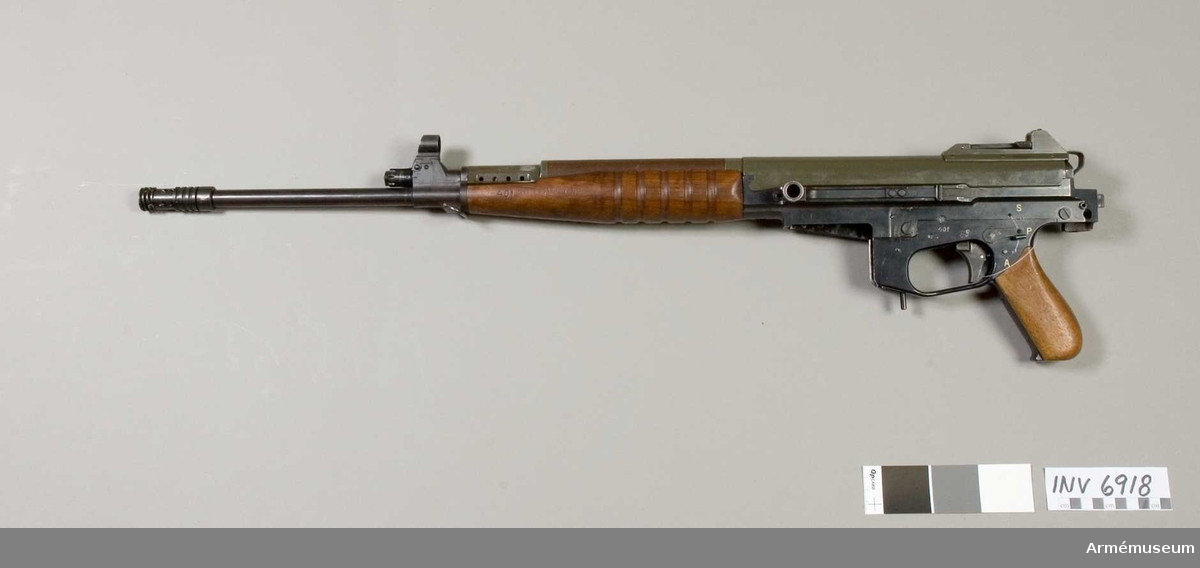
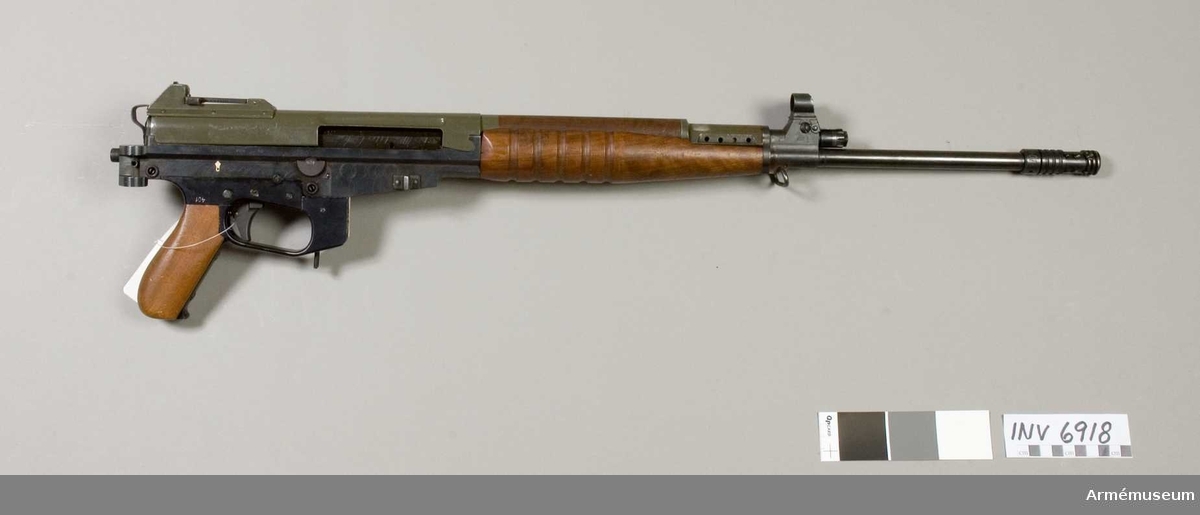
The American 180 was an open-bolt, selective-fire .22-caliber submachine gun loosely patterned upon the American-designed and British-produced Lewis machinegun of WW1 fame. The father of the American 180 was Richard “Dick” Casull. His original Casull Model 290 was a semiauto .22 rifle that fed from an enormous drum magazine located atop the weapon.

The 1960’s-era Model 290 was both expensive and cumbersome. Eighty-seven hand-built copies saw the light of day before the project died a natural death. Filipino dictator Ferdinand Marcos owned one. However, by the 1970s other manufacturers in the US and Austria took up and built upon the design.

Dick Casull was a gunsmith from Utah who also developed the monster .454 Casull cartridge along with the big-boned revolver that fired it. The .454 Casull was basically a grotesquely up-engineered .45 Long Colt round that developed nearly 2,000 foot-pounds of muzzle energy.

Casull along with Wayne Baker also pioneered Freedom Arms in 1978 to develop miniature single-action revolvers. Eventually, North American Arms acquired the production rights and covered the country in a thin patina of these adorable well-built compact stainless steel wheelguns.

The American 180 SMG weighs 5.7 pounds empty and 10 pounds loaded with a 177-round drum. Original magazines carry either 165 or 177 rounds, though larger capacity drums of up to 275 rounds are still in production today. 275-round drums effectively occlude the weapon’s sights. However, E&L Manufacturing, the current producer of American 180 drums, includes an elevated front sight along with your first 275-round drum purchase.

The American 180 bolt incorporates a series of grooves in the sides to channel crud out of the mechanism. The British L2A3 Sterling submachine gun features similar stuff. The body of the drum spins on top of the receiver as it empties, which is kind of weird.


There is a captive screw underneath the forward aspect of the receiver that allows the gun to break down quickly into two handy components. The stock removes with the push of a button like that of the M1928 Thompson submachine gun. The bulky pan magazine produces a cluttered sight picture, but the gun is just a ton of fun on the range.

You can die of old age while loading these drum magazines. There is supposedly a mag loader available, though I’ve never seen one. The process really is spectacularly tedious and is best executed in front of some Netflix. A single common spring-powered motor (the detachable mechanical bit in the center) can be used on multiple drums.

The American 180 was originally designed to be used in conjunction with a primitive bulky helium-neon gas laser designator. These early laser sights were enormous contraptions that ran about two hours on a single set of batteries. Oddly, there was also the option of operating the sight off of wall power. That would, of course, presuppose an exceptionally cooperative target.

A single .22LR round isn’t particularly awe-inspiring, but twenty of them in a single second will absolutely rock your world. Even at 1,200 rounds per minute recoil is inconsequential, so the gun is easy to control. The original marketing literature claimed that the American 180 would munch through concrete walls, car doors, and body armor. To eat through body armor with a full auto .22 necessitates a remarkably open-minded miscreant. The gun’s manufacturers claimed that you could place the contents of an entire 165-round magazine within a three-inch circle at twenty yards in the span of eight seconds. Wow.

I found the gun to be finicky. However, the youngest civilian-legal machinegun in the registry is some thirty-four years old by now. None of these things were designed to last for generations.

The spring-driven motor for the drum magazine has to be tuned a bit. Too little tension and the gun chokes. Too much and the gun chokes. Get it just right, however, and the American 180 is every bit as cool as you might think it would be.

Burst management requires a bit of discipline, but the onerous loading cycle serves to motivate. Given an adequately expansive piece of paper, you really could write your name with the thing. Take your time and hold your protracted bursts on a single spot, and the American 180 will indeed eat through some of the most remarkable stuff.

Running the gun intimates an element of precision that is likely illusory at best. The lack of over-penetration in urban areas, when compared to centerfire offerings, was one of the biggest selling points for the gun. However, a gun that cycles at 1,200 rounds per minute is the stuff of nightmares if wielded in a slipshod fashion in a congested area. Truth be known this might not actually be markedly more hazardous than a 12-bore chucking buckshot, but both guns do demand a lot of practice for safe employment.

Though the 12-bore failed to connect, the 180 reliably did the deed. Officer Gilo unleashed a 40-round burst that took all of two seconds. These forty little rimfire bullets chewed through the back window of the car, and the car crashed in short order.

One of the bad guys was already toasted, his critical bits thoroughly rearranged courtesy the prodigious swarm of little 40-grain slugs. His partner in crime fled the scene but was apprehended soon thereafter sporting an unhealthy collection of small caliber bullet wounds of his own.

In the 1970s there were apparently not quite so many lawyers as is the case today. In an era wherein folks sue cops over some of the most inane stuff, I suspect a .22-caliber machinegun that rips along at twenty rounds per second would likely not satisfy any modern Law Enforcement agency’s risk management department.

The American 180 was produced for a time in Utah and was formally adopted by the Utah Department of Corrections. The Utah DOC bought quite a few laser units as well. When wielded from a guard tower at their state penitentiary I suspect these puppies reliably kept the cons in line.

The Rhodesian Special Air Service used a few of these weird little weapons operationally in Africa. A similar gun produced in Slovenia and titled the MGV-176 was purportedly fairly popular in the sundry wars that took place thereabouts.

It’s tough to imagine what the American 180 might bring to the table that a proper 9mm subgun might not, but it is nonetheless a thought-provoking concept. I personally wouldn’t be comfortable relying upon the cumbersome drum feed system in an austere environment.

The company’s marketing efforts focused on LE sales, and I recall their advertisements in gun magazines back in the Dark Ages. Like all legal machineguns, transferable examples command a premium these days. Many of the guns available to civilian shooters today were traded out of LE arms rooms as departments grew weary of them.

The American 180 is one of the most unusual combat weapons ever imagined. Under controlled circumstances as our hapless Florida burglars discovered, the American 180 can indeed be devastatingly effective. At this point, however, the American 180 is little more than an historical footnote and recreational range beast.


Loading drums would befuddle Job the prophet, and the gun eats ammo like a monkey after Sugar Babies. However, you’d be hard-pressed to conjure a more delightful way to turn .22 rimfire ammo into noise. Novel, unique, and oddly effective within its admittedly narrow applications, the American 180 is an artifact of the golden age of gun design.

Technical Specifications
American 180 Submachine Gun
Caliber .22LR/.22 Short Magnum
Weight 5.7 pounds empty/10 pounds loaded w/177 rounds
Magazine Capacity 165/177/220/275
Length 35.5 inches
Barrel Length 8/18.5 inches
Action Blowback, Open Bolt
Rate of Fire 1,200 rounds per minute


Colt was on top of the world with the Single Action Army revolver and took aim at the lever action rifle market. Its entry? The Burgess rifle, released in 1883.
The Burgess failed to find traction and was never a challenge to Winchester’s legendary Model 1873, the rifle that was the “gun that won the west” yin to the Colt Single Action Army’s yang. Colt discontinued the Burgess after 16 months and after a mere 6,403 were made. Winchester was selling about 15,000 Model 1873s per year.
Then, lightning struck for Colt.


The company introduced the New Lightning Magazine rifle in 1884 that used a pump action to cycle rounds. The company made more than 185,000 Lightning rifles between 1884 and 1904.
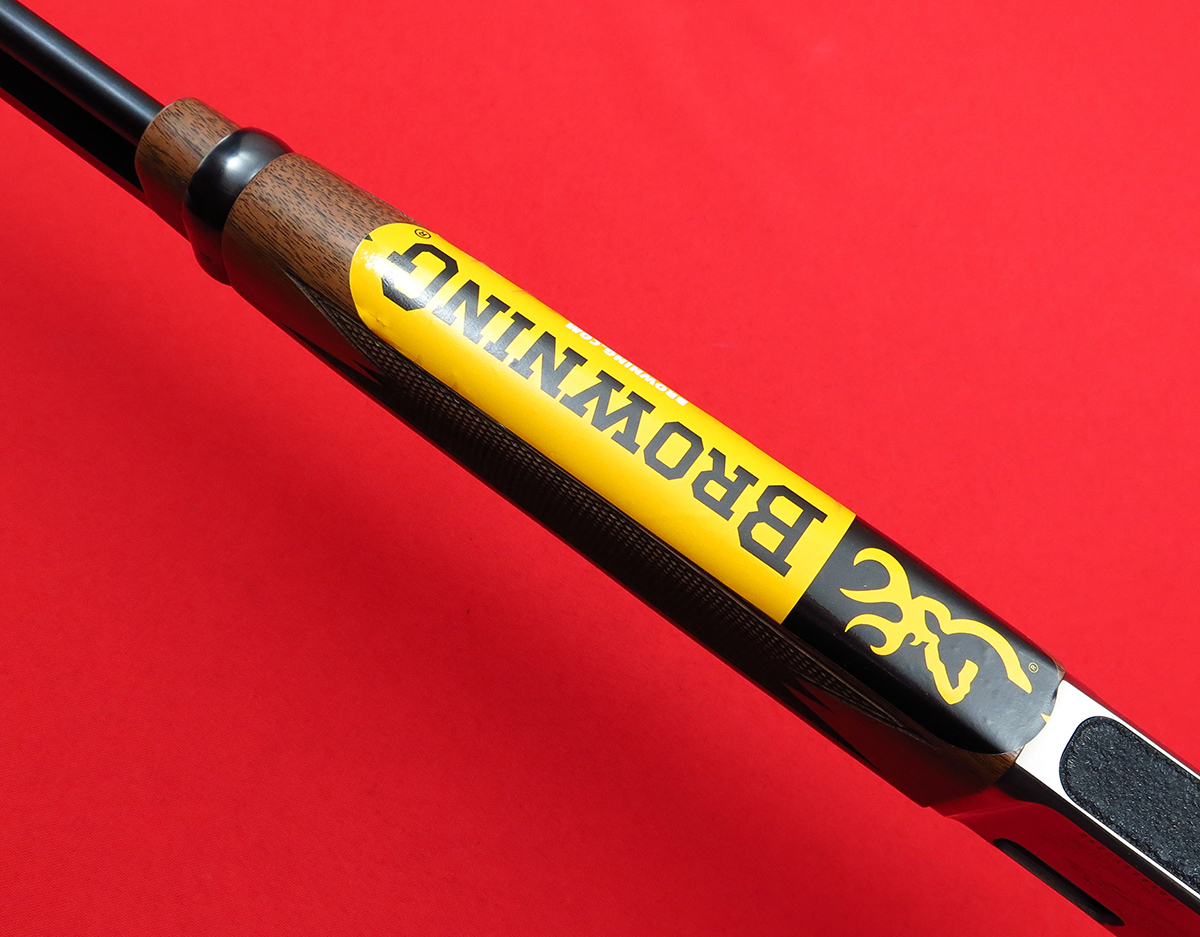
The Colt Lightning, like the carbine gifted for Christmas to Carrie Adell Strahorn, Queen of the Pioneers, was produced in three models and offered in a number of calibers. Rock Island Auction Company has six of the Colt Lightning rifles on offer in its May 13-15 Premier Auction. Three are medium frame models and three are large frame models that are chambered in heavier calibers.
Legend has it that after the Burgess was introduced, Winchester officials approached their opposites at Colt about making a revolver and competing in that arena, offering up samples of what their pistols would be like. That led to a gentleman’s agreement between the companies that they wouldn’t intrude on each other’s market.
That didn’t stop Colt from buying the patent for a pump action rifle from a dentist who dabbled as an inventor. Dr. William H. Elliot’s design had a sliding forend that replaced the conventional lever used with the Burgess and Winchester rifles.
Elliot wasn’t someone who caught lightning in a bottle with his pump action design. He earned more than 130 firearms patents in the second half of the 19th century. His most successful design was a Remington double-barrel pocket pistol. Manufactured between 1866 and 1935, more than 150,000 of the over-under guns were produced.

An engraved model of the double derringer, as it was called, and its factory original box is on offer in Rock Island Auction Company’s May Premier Auction.
A warning here — don’t confuse the Lightning rifle with the original Colt “Lightning.” The Colt Model 1877 double action revolver in .38 caliber was unofficially called “Lightning,” first. The M1877, Colt’s first double action revolver, was given nicknames of “Lightning” for .38 cal versions and “Thunderer” for the .41 caliber model by Benjamin Kittredge, one of Colt’s major distributors. An early .32 caliber model wore the moniker, “Rainmaker” as well. Two Colt Lightning revolvers are also on offer in the May Premier Auction.

Kittredge, who came up with at least nine Colt Model trade names. also gave Colt’s first large frame double action revolver, the Model 1878, a nickname, too, calling it the “Omnipotent.

Colt engineers honed Elliot’s design before the Lightning – the rifle – was released it in 1884. The gun was described as reliable, easy to use, and extremely fast. Holding the trigger and using the pump allows the rifle to be fired very quickly – or slam fired, according to a Colt advertisement of the time. The Winchester 1897 might be more famous for slamfiring in the trenches of the Great War, but the Colt Lightning did it first.
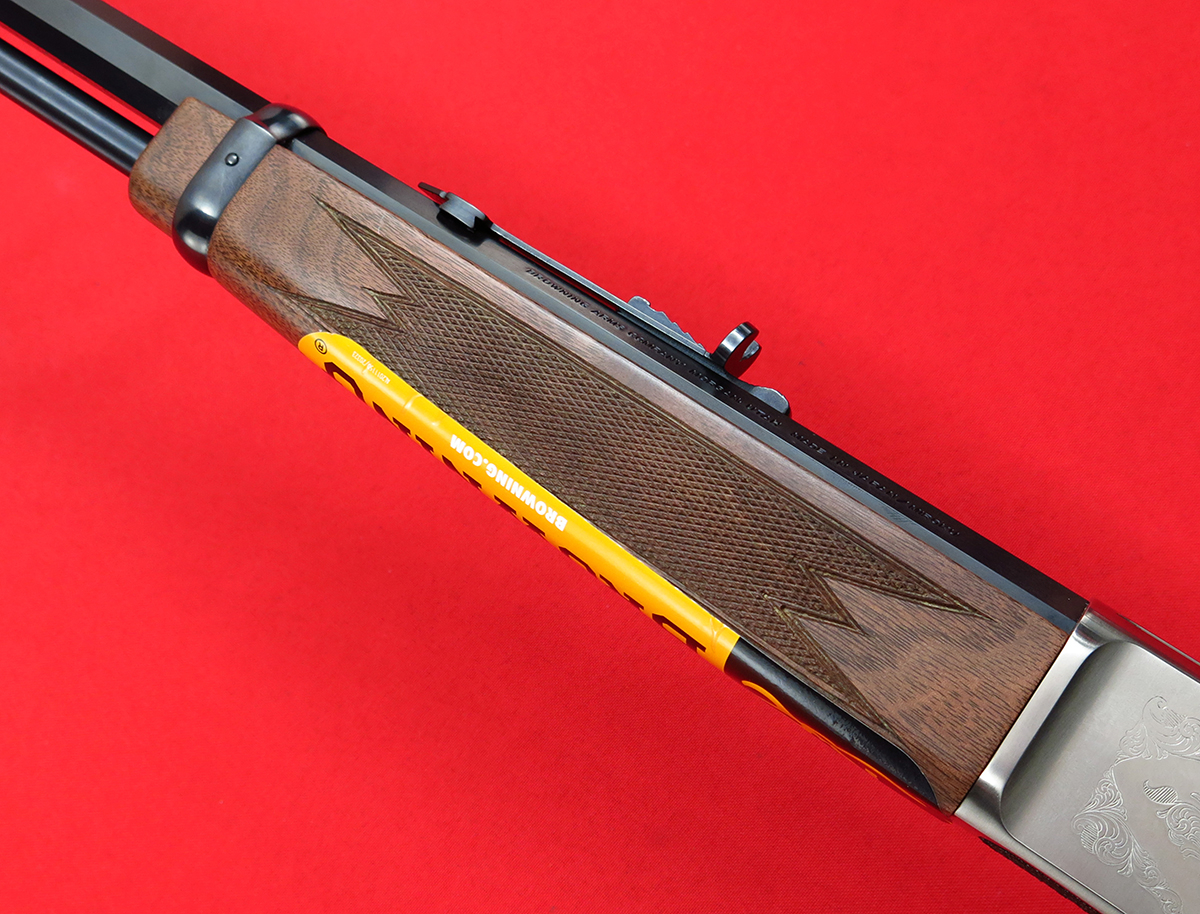
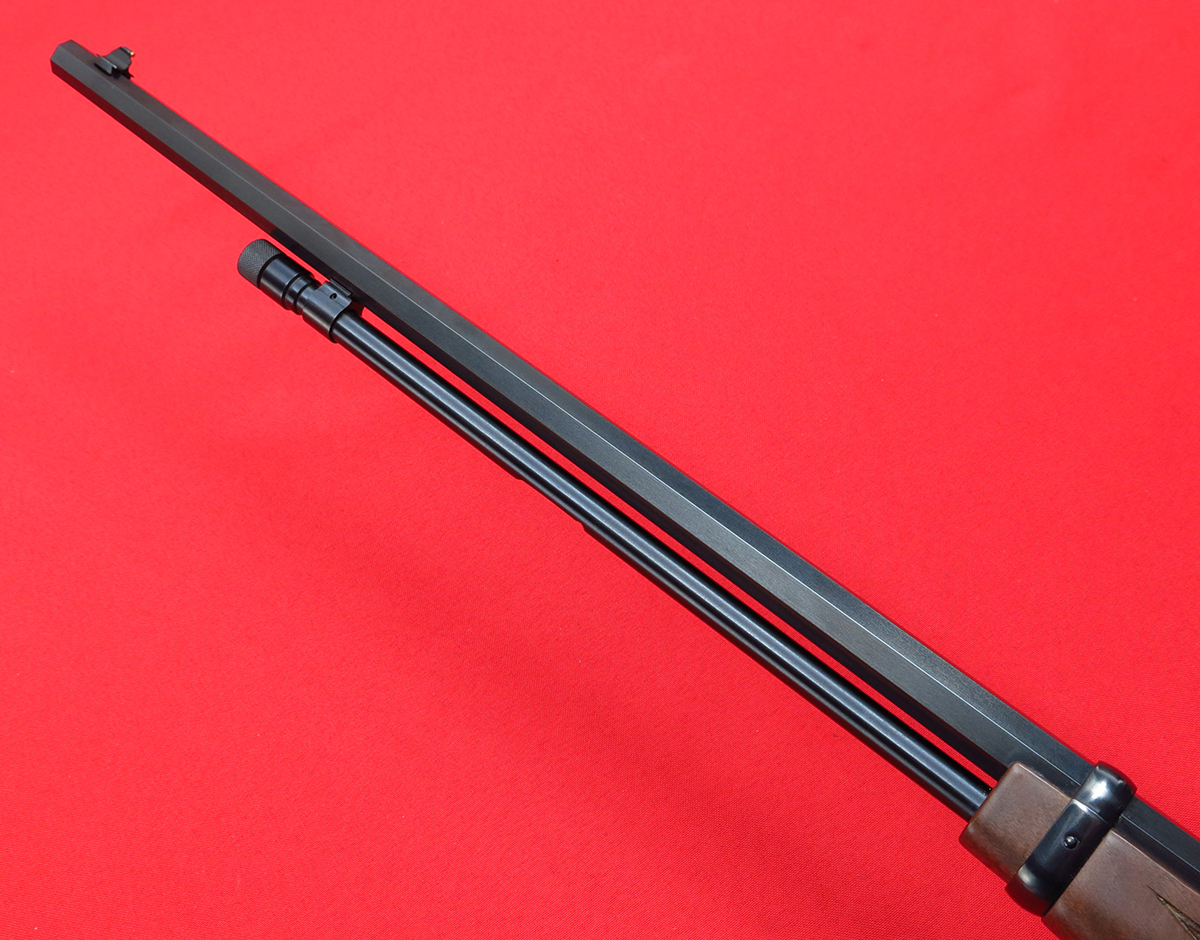
The rifle was also light, weighing about 6.5 lbs. Over the three versions, they were offered in a deep-blued finish with a case-hardened hammer, a walnut stock, and forend and open rear and front sights. One of the medium frame Lightning rifles on offer features a rare case-hardened finish.

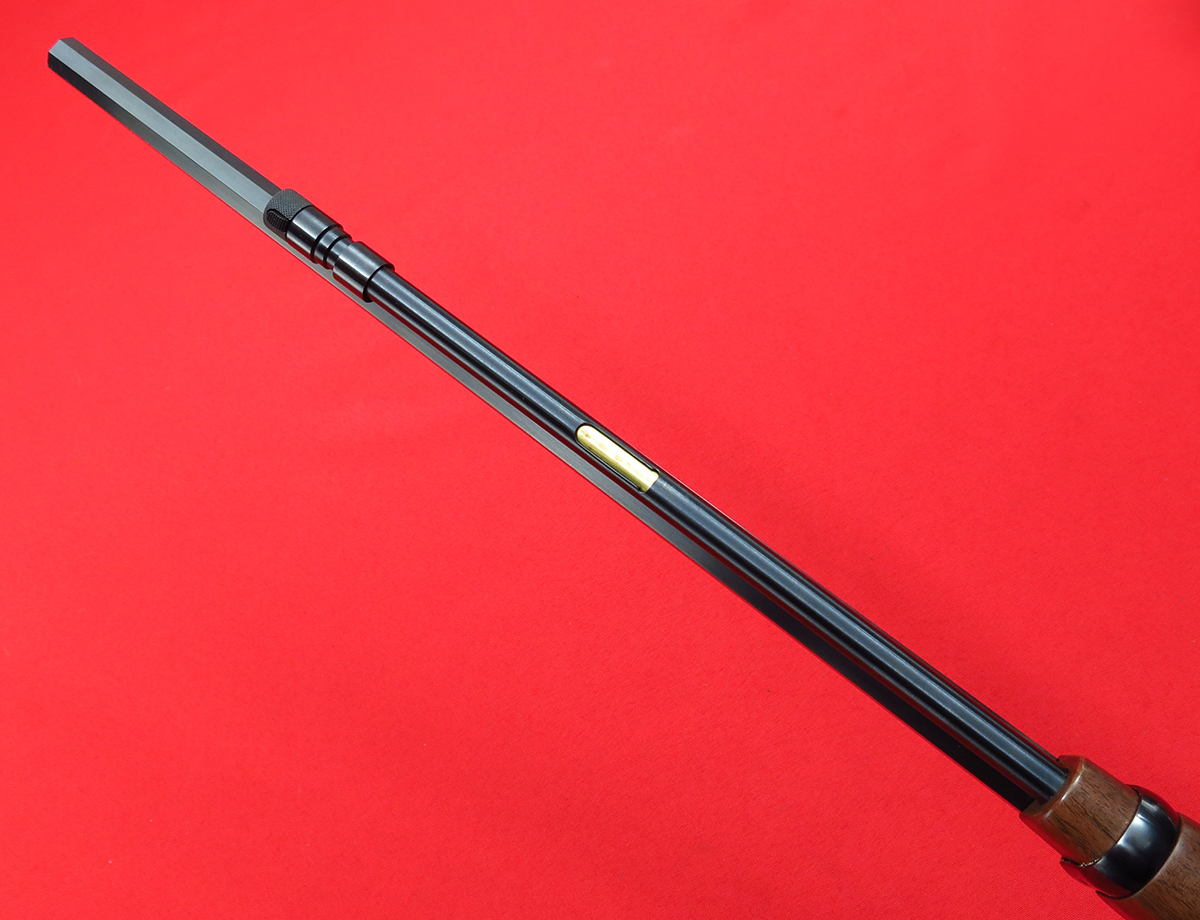
The Lightning was introduced with a number of calibers, including the .44-40, the same as the Colt Single Action Army’s frontier model. This model, considered the medium frame Lightning, was also chambered in .32-20, and .38-40, with a 15-round tube magazine. Colt made 89,777 medium frame rifles.
Three years later, the small frame and the large frame Lightning rifles were introduced.
The small frame Lightning, chambered in .22 rimfire, gained popularity as a carnival gun and with backyard marksmen. It was the most popular model, with 89,912 manufactured. The rifle was offered in a 24-inch barrel with a tube magazine holding 15 rounds – 16 if it was loaded with short ammunition. Many of the small frame rifles had rubber butt plates while the rest had iron.

The large frame Lightning, known as the Express because it could carry .50-95 Express ammunition, was made for big game hunting. A 28-inch barrel rifle and a 22-inch barrel carbine were produced. It was only made until 1894 and is the scarcest of the three models with just 6,496 manufactured. It was also chambered in .38-56, .40-60, .45-60, and .45-85 as well.

The medium frame was popular with law enforcement for its firepower. The Colt Lightning most sought-after by collectors is the 401 medium frame rifles sold to the San Francisco Police Department in 1898 that carried a special number series and are stamped “SFP.”
Colt discontinued the Lightning after making more than 186,000 of the rifles to focus manufacturing capacity on its pistol lines, according to author James E. Serven, who wrote a history of the company.
Since it was often overshadowed by Winchester’s ubiquitous rifle the Colt Lightning doesn’t get much screen time. It did find its way into the spaghetti western “For a Few Dollars More,” wielded by the deadly Col. Douglas Mortimer, played by Lee Van Cleef, and a few others.

Returning to the apocryphal agreement between Colt and Winchester, more basic economics might have been at play with discontinuing the Burgess and pursuing the Lightning, according to Samuel L. Maxwell Sr., who wrote a book about the Colt Burgess rifle.
Burgess rifles, introduced in 1883, were priced at $24 for a 20-inch carbine model and $27 for a rifle with a 25.5 inch octagon barrel and had some shortcomings, including a lack of a dust cover over the action that came standard on the Winchester 1873.
A Winchester 1873 was priced less expensively and could be had for about $20 in the 1880s, but the company had been dropping prices to fend off competition. Colt on the other hand was financially well-positioned with the success of the Single Action Army, released in 1873, and its double action revolvers.

Colt priced the Lightning at $20.50 to $19 depending on the barrel length and whether they were round or octagonal barrels, according to Colt advertisements at the time. The success of the Lightning left Colt with little reason to continue with the Burgess lever action rifle. Production ended in 1884
Maxwell posits that Winchester was struggling to stay profitable while already competing with Marlin and Whitney. Trying to break into the pistol market, Winchester would face stiff competition from not only the venerable Colt brand but the already established Smith & Wesson and Remington, too. Meanwhile, Colt didn’t price the Burgess rifle competitively against Winchester so it didn’t have a problem discontinuing the model.
That left the companies at an impasse and back to doing what they do best, Maxwell argued, Colt making pistols and Winchester producing rifles.

Despite its short history, manufactured from 1884 to 1904, the reliable and fast pump-action Colt Lightning proved to be a respectable challenger to the lever action rifles of the time. When the Lightning was discontinued, Colt had turned to developing a semi-automatic handgun. Six examples of the Colt Lightning rifle– three medium frame and three large frame — are on offer in Rock Island Auction Company’s May 13-15 Premier Auction.
Sources:
A Fist Full of Double Trouble, by Phil Sprangenberger, truewestmagazine.com
Colt Lightning Rifle, by Jon C. Branch, revivaler.com
Colt Firearms 1836-1959, by James E. Serven
Colt-Burgess Magazine Rifle, by Samuel L. Maxwell Sr.
J. Edgar Hoover, the top crime fighter in American for nearly half a century as the director of the FBI from its founding in 1935 to his death in 1972, is one of the most controversial figures in modern American history.
He launched the FBI into the crime-fighting juggernaut it is today, taking steps to modernize its capabilities as it grew from just 700 special agents in the late 1930s. Now, the bureau has 35,000 special agents. However, under his leadership the bureau gathered information on friends and enemies to use against them if necessary.
Staunchly anti-communist, Hoover kept an enemies list and compiled files on hundreds of thousands of Americans, including celebrities like John Lennon, Malcolm X, Eleanor Roosevelt, and Martin Luther King. Under Hoover’s watch, the FBI also monitored groups like the American Communist Party, Nation of Islam, Black Panther Party, and MLK’s Southern Christian Leadership Conference.

While he had supporters in the White House, like Presidents Franklin Roosevelt, Dwight Eisenhower, and Lyndon Johnson, there was also distrust from the Oval Office.
“… We want no Gestapo or secret police. The FBI is tending in that direction. They are dabbling in sex-life scandals and plain blackmail. J. Edgar Hoover would give his right eye to take over, and all congressmen and senators are afraid of him,” wrote President Harry Truman.
Announcing Hoover’s death, President Richard Nixon said, “Every American, in my opinion, owes J. Edgar Hoover a great debt for building the FBI into the finest law enforcement organization in the entire world.” His private comments about Hoover were far less kind and unrepeatable.
A pre-war/post-war Colt Single Action Army .357 Magnum revolver presented to Hoover, a towering figure of American law enforcement whose policies and procedures often skirted the law, is on offer in Rock Island Auction Company’s May 13-15 Premier Auction.
Hoover grew up in Washington, D.C., and first worked at the Library of Congress as a clerk before joining the Justice Department’s War Emergency Division. As the United States entered World War I in 1917, he was tasked with overseeing the alien enemy office, tracking German immigrants.
In 1919, he moved to the Justice Department’s Bureau of Investigation where he served in the General Intelligence Division, also known as the Radical Division for tracking and disrupting the work of domestic radicals. He became assistant director of the Bureau of Investigation in 1924 and then director a short time later. After he was named director of the Bureau of Investigation, he fired a number of agents considered political appointees or unqualified. He also fired all female agents and prohibited them from being hired in the future.

Background checks, interviews, and physical testing for new agent applicants became the norm as well as requiring legal or accounting training. He consolidated all fingerprint records into an Identification Division and established the Laboratory Division to apply scientific principles to investigations.
When the FBI was created in 1935, he became its first and only director for the next 37 years.
In the 1940s and 1950s the bureau focused on fighting Nazi and communist espionage, and, despite the growth of the mafia, the FBI mostly ignored organized crime. In the 1960s, the FBI monitored the civil rights movement and anti-Vietnam War protests. Hoover was reluctant to tackle civil rights crimes, putting the bureau’s focus on civil rights leaders, instead.

As director of the Radical Division, Hoover oversaw the Palmer Raids of 1919, so named for U.S. Attorney General A. Mitchell Palmer who ordered the roundups following public outrage over a series of bombings.
The raids, primarily aimed at Russian immigrants, included mass deportations. The largest of the raids occurred in 1920 when anywhere from 3,000 to 10,000 across 30 cities were arrested, far exceeding the number of arrest warrants issued. Many who were rounded up were only guilty of having a foreign accent as most were American citizens.
However, the raids now gave Hoover and the bureau the names of attorneys willing to represent radicals. One of those attorneys was Felix Frankfurter, a founder of the American Civil Liberties Union and a future Supreme Court justice. Hoover, a former library clerk knew that something that was misfiled would be difficult to locate, so items like a file about Frankfurter were simply mislabeled or misfiled. Frankfurter’s file was squirreled away under a larger group, the National Popular Government League, a group of lawyers that opposed the Palmer Raids, rather than placing it in an individual file. Files that couldn’t be found couldn’t be shared with other agencies or used as discovery at trial.
Hoover amassed a card index of 450,000 names with 60,000 that Hoover considered the most dangerous given detailed biographical notes.
The mass arrests chilled the leftist movement in the United States. At its height, the American Communist Party had 80,000 members but fell to less than 6,000 after the Palmer raids.
During the actions of the House Committee on Un-American Activities in the 1950s, Hoover would leak information about government officials he believed were secretly communist party members.

The FBI under Hoover collected information on all America’s leading politicians. It was later claimed that Hoover used this incriminating material to make sure that the eight presidents he served under would be too frightened of what he could release to fire him.
In 1949, Judith Coplon was arrested on a charge of espionage, believed to be a Soviet asset who worked in the U.S. Justice Department passing documents to the Russians. She was convicted, but the convictions were overturned on appeal after it came out that FBI agents used illegal wiretaps.
In 1950 at the outbreak of the Korean War, Hoover gave Truman a plan to detain 12,000 Americans suspected of disloyalty. Truman didn’t act on the plan.
There wasn’t just surveillance of these individuals and groups but also harassment. At one time, the FBI sent Martin Luther King Jr. a letter claiming to be from a former supporter with evidence of sexual infidelity which urged the civil rights leader to commit suicide.
Clyde Tolson, assistant director of the FBI and rumored to be Hoover’s lover, arranged for the destruction of all Hoover’s private files when the director died. A senate report in 1976 was highly critical of Hoover and accused him of using the organization to harass political dissidents in the United States.
Hoover was a reluctant warrior against organized crime and focused the bureau on rooting out radicals. Mobster Meyer Lansky claimed to have photographic evidence of Hoover’s homosexuality and used it to stop the FBI from looking into his activities.
In the 1930s, Hoover persistently denied the existence of organized crime, either simply ignoring its influence or choosing not to acknowledge it. Toward the end of the 1950s, Hoover had nearly 500 special agents spying on communists and only four investigating the mafia in the New York City field office.
“Before the Apalachin summit changed everything, Supreme Court Justice Felix Frankfurter had a [personal file] card, but not Brooklyn crime boss Joe Bonanno,” wrote Gil Reavill in `Mafia Summit: J. Edgar Hoover, the Kennedy Brothers, and the Meeting That Unmasked the Mob.’ “In Sicily, one of the nicknames for the police is la sunnambula, the sleepwalkers. Hoover fit the bill perfectly.”
The Apalachin (New York) summit was a November, 1957 meeting of mafia bosses from across the country to discuss the recent ascent to power by Vito Genovese in New York City as well as the many facets of organized crime ̶ racketeering, loan sharking, drug trafficking, and bribing public officials.
An eagle-eyed police officer spotted the many shiny Cadillacs parked at the meeting and quickly identified the hoodlums. Roads were blocked, police swept in, mobsters fled into the woods. Sixty were arrested.
The meeting and its implications toward national organized crime was an embarrassment to Hoover who had claimed for decades there was no such nationwide mafia.
Within days of the meeting, Hoover formed an anti-mob initiative, the Top Hoodlum Program to investigate through human intelligence, wiretaps, both legal and illegal, and other methods. Congress passed a number of anti-organized crime bills in the following years, giving the FBI better tools to fight organized crime.
Following his death, Tolson and Hoover’s assistant were able to remove Hoover’s private files, but people were aware of how he operated and that things had to change at the FBI. A Congressional investigation showed that FBI headquarters had developed more than 500,000 domestic intelligence files on individuals and groups. Those files focused on groups and people who had revolutionary, racist, or extremist viewpoints, but in the 1960s included the civil rights, anti-war, and women’s rights movements.
Guidelines implemented in 1976 placed specific limits on FBI investigative procedures and how informants could be used. It was at this time that the FBI director was limited to a term of 10 years.

The first generation Colt Single Action Army presented to Hoover is an excellent example of a scarce pre-World War II .357 Magnum revolver with a 1940 serial number that was assembled and finished after the war. It was kept in the factory until 1948 when it was sent to Colt President G.H. Anthony. Since the FBI was always procuring new arms, it only seemed right to foster a good relationship with the people who made decisions about what arms to purchase. The gun was presented to Hoover by Colt vice president Albert Foster.
The revolver, chambered in .357 Magnum with pearl grips, has a two-toned finish with a blued 5 1/2 inch barrel, cylinder, and trigger guard, and a casehardened frame. This revolver presented to Hoover, one of the most influential yet controversial figures of 20th century American history, is the finest, most historic Pre-war/Post War Single Action Army, and stands as a remarkable piece of memorabilia from the pinnacle of American law enforcement.
Sources:
‘J. Edgar Hoover: The Man and the Secrets,’ by Curt Gentry
How J. Edgar Hoover used the Power of Libraries for Evil, by Alana Mohamed, Lithub.com
A 1957 Meeting Forced the FBI to Recognize the Mafia and Changed the Justice System Forever, by Lorraine Boissoneault, Smithsonian Magazine
Britannica.com