THE PENTAGON — The Air Force HAS announced a new medal, the National Place Saver Medal, which has been approved and will be awarded starting Jan. 1, 2023. Air Force leaders say the rapid approval came in response to the Pentagon’s decision to discontinue awarding the National Defense Service Medal at the end of the year.
“When we realized that starting next year some Basic Training graduates will only be eligible to wear from one to three medals, we sprang into action,” said Lt. Gen. Mark McAllister, an Air Force spokesman. “We like our best airmen to be decorated like leaders of a third world junta. With the National Defense medal going away, we needed to do something.”
“Plus, the feng shui of a single ribbon is just terrible.”
To earn the award, the Air Force member must have been honorably serving and breathing at any time starting this January.
“We didn’t want our newest graduates to feel left out,” said Lt. Col. Meredith Tanner. “Imagine reporting to tech school and only having a single ribbon on your rack. How humiliating.”
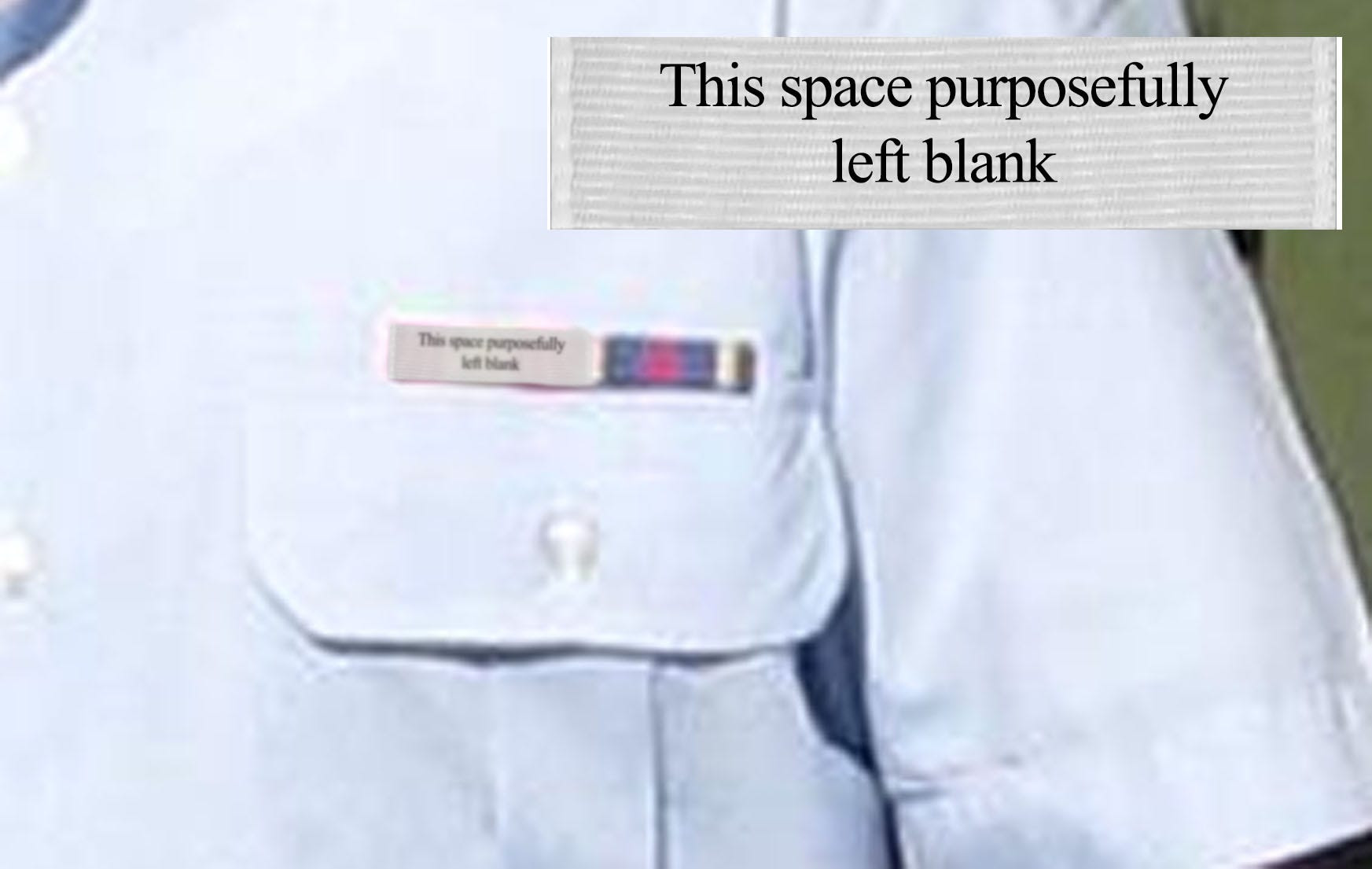
The medal is a subdued, off-white color. Unlike any other, however, the ribbon for this medal has the words “This space purposefully left blank” inscribed on it.
“The medal isn’t meant to be a permanent award, given in perpetuity,” said Clyde Baskins, who works on awards and decorations at the Air Force Personnel Center. “Once we get another national emergency and the NDSM comes back, the NPSM will be set aside until needed.”
This isn’t the only new award that airmen may qualify for.
“Air Force leaders were concerned by the decision to narrow who qualifies for the Global War on Terror medal,” said Baskins. “That’s why airmen may soon get to wear a new ‘I Took the ASVAB medal’ right next to their Air Force Training ribbons. It will look glorious!”
W.E. Linde (aka Major Crunch) writes a lot. Former military intelligence officer, amateur historian, blogger/writer at DamperThree.com. Strives to be a satirist, but probably just sarcastic. Twitter @welinde
The list of available rifle cartridges is a long one, even if we only consider those that the rifle companies currently chamber for. Thumbing through a volume like “Cartridges of the World” will show that the historical list is indeed dazzling. While scouring the gun shops, I’ve found a few gems that fire an older, obscure cartridge, but not yet one of the ones I dream about. I’ve picked five cartridges here, that may whet your appetite to learn more about the ammunition of yesteryear, and maybe you’ll find a rare rifle that fires one of the cartridges that has been pushed out of the limelight.
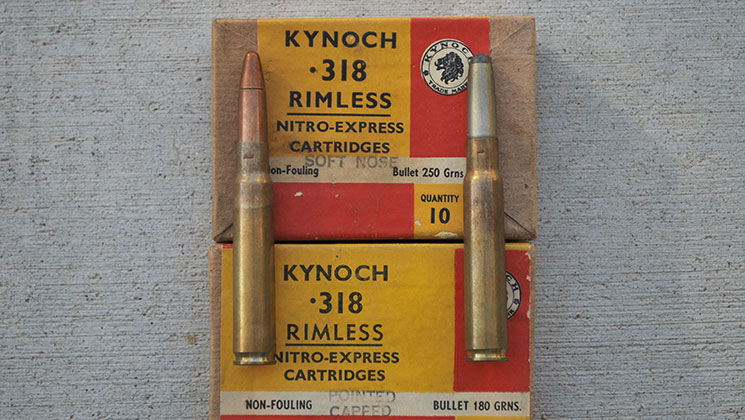
.318 Westley Richards This is a particular favorite of mine, and although the firm of Westley Richards still makes rifles and ammunition, the one-time star of the African Game Fields has been shoved off the stage. Introduced in 1910, using a case similar to the .30-’06 (but a bit shorter and with a smaller rim diameter), it uses a .330” diameter bullet, and in British fashion is named for land diameter, instead of groove diameter. The 250-grain bullet is driven to 2,400 fps, and quickly made a reputation as a great big game caliber (slight similarity to the .338-06, eh?) and the lighter 180-grain load worked well on smaller antelope and deer. The .318 took a bashing when some folks got trampled and gored trying to use it against elephant and buffalo, and this cartridge probably had a good hand in the “.375 minimum” we have all come to accept. It is a classic African medium, and would make a fantastic rifle to have in ones cabinet.
.275 Holland & Holland Mag.
Released in the same year as the famous .375 H&H, the 7mm variety of the H&H belted case looks and performs very much like our popular 7mm Remington Magnum. Having a case length of 2.50”, it was the first belted case to be of .30-’06 length, preceding the Winchester quartet (.264, .300, .338 and .458) by more than 45 years. I really can’t conclude the reason it never caught on; the ballistics are certainly there, perhaps the fact that it was never a military cartridge may have played a part. You can easily see where Winchester got the idea for their series of long-action magnums.
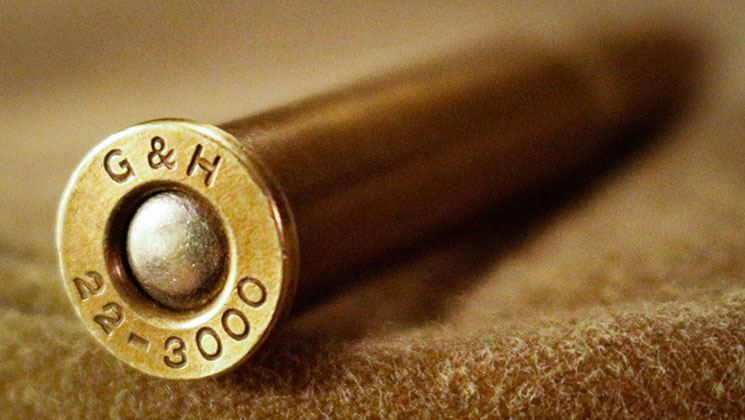
G&H .22-3000
This cartridge, a proprietary cartridge from the esteemed firm of Griffin & Howe, was—legend has it—developed by Harvey Donaldson, and correct headstamped brass cases were produced by Winchester. The .22-3000 case is based on the .25-20 Winchester Single Shot, and pushes a 50-grain bullet to just over 2,700 fps. Griffin & Howe offered a service in which they would rebarrel the Winchester Model 70 or Model 54. There isn’t a ton of information available, but the .22-3000 shows the early stages of development of the uber-fast .22 centerfires.
8.15x46R
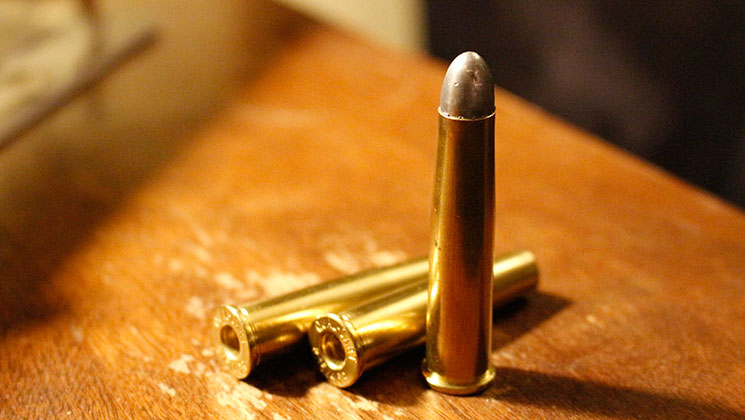
My buddy Pat Lane received an antique German stalking rifle as a birthday gift from his brother; a sweet-handling falling block rifle chambered to 8.15x46R, a cartridge I’d never heard of, and I deal with a lot of oddball calibers. The 8.15 is a rimmed cartridge, introduced at the end of the 19th Century, and will push a 150-grain lead bullet to somewhere around 1,500 fps, making it a light game cartridge. If you find one, be sure to slug the bore, as it can vary from .315” all the way up to .323”, so some care must be taken.
.280 Ross
The first two decades of the 20th century saw some radical cartridge design. Some of those became household names, such as the .30-’06 Springfield and the .375 Holland & Holland Magnum, and others met a different fate. The .280 Ross falls into the latter category. A Canadian cartridge released in 1906, the Ross case achieved ballistics very similar to our modern .280 Remington. The Ross got a bad reputation not due to its design, nor its accuracy, but from the velocity. Simply put, the bullets weren’t strong enough to handle the game they were trying to pursue. George Grey was killed by a lion he had wounded, when the bullets failed to penetrate, however any 7mm is questionable for lion. Although the .280 Ross made a good sniper rifle, the rot was in as a hunting round, and it faded into obscurity.
Vietnam has a hidden history of weapon development not known to many. Throughout the conflict, the United States military invested heavily in a wide variety of projects that aimed to better equip conventional forces for an unconventional war. This effort led to a great many projects being developed, but few that proved effective enough to move forward. One of the few is the subject of today’s article: the Quiet Special Purpose Revolver, aka the Tunnel Weapon.
The war in Vietnam was a brutal example of asymmetric warfare. One of the biggest challenges for American troops was the broad and effective use of tunnels by Vietnamese communist forces. These holes allowed enemy forces to hide themselves, their weapons, and more from American forces on the ground and in the air, creating a strategic advantage for the North Vietnamese. From a tactical perspective, the use of tunnels was genius. American forces weren’t ready for it, and it was a simple, inexpensive solution to a massive problem that was America’s superior military might.
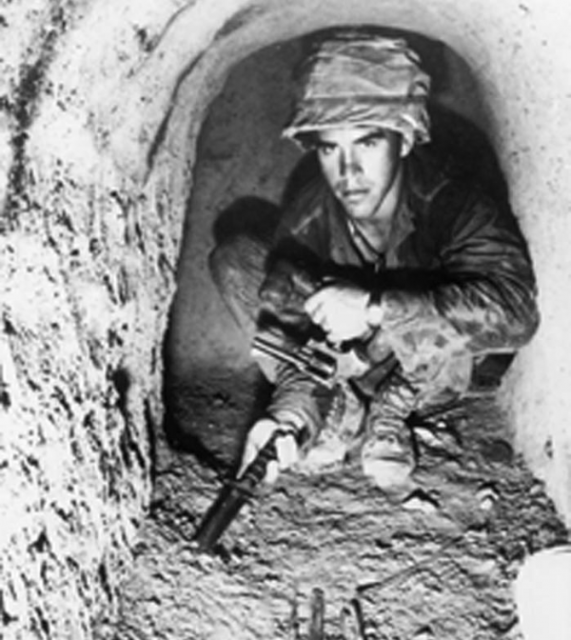
American forces didn’t have any other option but to take to the tunnels, where the defenders had the advantage and the fighting became ultra-close and generally quite brutal. To become more efficient at storming these tunnels, American troops lneeded specialized weapons, and one such weapon was the Quiet Special Purpose Revolver.
The sidearm of choice for American troops at the time was the M1911A1, and by all accounts, the general issue 1911 served well but wasn’t great for the tunnels. Tunnels did require a handgun, there was no doubt about that. Most of the time, the soldier storming the tunnel crawled on their hands and knees, which made the use of a long gun impossible. Accuracy was also an issue. Get on your hands and knees in a dark, tight tunnel and see how accurate you can be with a handgun in a firefight… it was probably even harder for the incredible men who climbed into these tunnels than we can even really appreciate now.
To make matters worse, handguns are tough to shoot well in general, and in a tunnel, any gunfire is extremely loud. In a dark tunnel, the flash is also quite bright. In these types of situations, a shotgun might be best… but good luck handling a shotgun in such tight quarters. So the Pentagon set about built a handgun-sized weapon that fired multiple projectiles at a time, with additional requirements to reduce both its sound and muzzle flash.
These special requests led to the development of the Quiet Special Purpose Revolver.
AAI, or Advanced Armament Industries, worked with the Army to develop the QSPR in 1969. The requirements were simple. The weapon would fire multiple projectiles at a reduced sound level and be effective out to 50 feet. The weapon needed to be a repeater, be reloadable, and weigh less than 40 ounces.
When we say repeater, we don’t necessarily mean semi-automatic. We mean a weapon capable of firing more than a round before it needs to be reloaded. A revolver qualifies as a repeater, so it seems logical that a very big and (later on) very famous revolver became the basis for the Quiet Special Purpose Revolver.
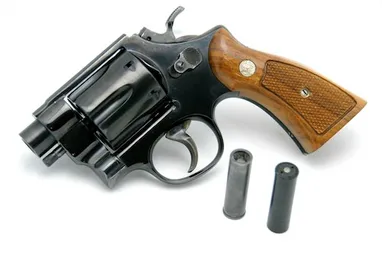
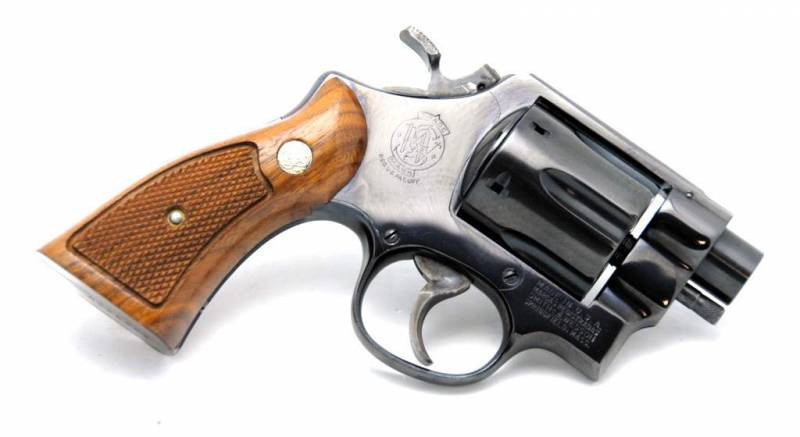
With these requirements in mind, the engineers took an S&W Model 29 revolver and went to work. If you’re familiar with Dirty Harry, the movie detective with a bad attitude who famously wielded the big 44 Magnum pistol, then you’re already familiar with what would become the Quiet Special Purpose Revolver. The S&W Model 29 was a modern design for the time and featured a swing-out cylinder for quick reloading and a double-action design for easy follow-up shots. The S&W 29 held six rounds, and so would the QSPR.
First, they cut the barrel down to nearly nothing and eliminated its unnecessary rifling entirely. In fact, the pistol was purposefully turned into a smoothbore weapon.
The nature of the ammunition ensured that a standard automatic cartridge could not be used. But no one could get away with calling the 44 Magnum round small. You can actually credit the case length of a 44 Magnum for ensuring the length of the cylinder was enough to handle a multi-projectile round.
The new round, called 10mm QSRP, dramatically reduced both flash and noise. Each shell contained ten pellets contained within a sabot. AAI hermetically sealed each round, and each case acted as its own disposable suppressor. A primer ignited gun powder which pushed a piston which then propelled the sabot full of shot through the outer seal.
The piston then resealed the cartridge, which contained most of the noise and reduced sound and almost entirely eliminated flash. The Quiet Special Purpose Revolver ended up weighing 38 ounces while being fairly short in overall length.
According to numerous Army reports, a few weapons were built and sent to Vietnam for testing. Apparently, one ended up with MACVSOG, according to heavily redacted documents. It’s tough to find much in the way of field reports, but the Army Progress reported that it worked seemingly more or less just the way it was designed—good up close, but not great from a distance.
Digging through archives, I found a report from when Ranger team Oregon engaged seven to ten Vietnamese fighters. A Ranger armed with the QSRP engaged one enemy at 15 feet and immediately dropped him to the ground. That same Ranger fired twice at another enemy at 40 feet, but the enemy escaped.
The report called the weapon the .44 Mag tunnel weapon, and outlined a number of pressing issues that still needed to be worked out, including malfunctions and misfires caused by the new ammunition.
Another July 1972 report suggests that these issues were resolved by adding a “helper spring” and making changes to the ammunition’s design.
“A secondary or helper spring was added to the weapons mainspring that provided a 50 increase in firing pin energy and eliminated mainspring degradation. The ammunition was redesigned with fewer parts and the primer was repositioned and exposed at the base of the round for direct contact by the firing pin as in conventional ammunition. These design improvements resulted in not a single misfire throughout the development, assurance, and acceptance tests associated with this program.”
The result was so successful that this report seemingly granted the new gun its Quiet, Special-Purpose Revolver (QSPR) title along the way:
“The results of this evaluation indicated that the weapon system was well received primarily because the low firing noise permitted use of the weapon without giving away the users position,” the report reads.
“In addition to its tunnel exploration role, the weapon was used in ambush situations and in search and destroy operations. Because of this, the weapon is now designated the Quiet, Special-Purpose Revolver QSPR. “
Around this time, the war was ending, and as such, the QSPR project got sent to the back burner. When the war finally ended, so did any interest in a special-purpose revolver designed for the sort of fighting no one ever hoped to have to do again. Three samples exist to this day, two in Army Museums and one in the ATF reference collection. Despite how valuable such a weapon could be to the few who would need to wield it, the Tunnel WEapons was one of the many projects that started and stopped within the confines of the Vietnam war.
While the Tunnel Weapons might not have been successful, several more of those Vietnam efforts ultimately were. The list includes the beginnings of the M203, the Mk 19, and suppressors for special operations use. The QSPR revolver and its what-if history fascinates me.