Steve Dettelbach, the Director of the Biden Administration’s Bureau of Alcohol, Tobacco and Firearms (ATF), told Congress that he’s “not a firearms expert” during a House Appropriations subcommittee meeting last Tuesday.
Dettelbach was responding to Texas Rep. Jake Ellzey (R) who asked him, “In 15 seconds, would you define an ‘assault weapon’ for me?”
Dettelbach would not define what an “assault weapon” is, despite indicating that he would support a sweeping ban on them.
“I’ll go shorter than that, because honestly, if Congress wishes to take that up, I think Congress would have to do the work,” Dettelbach replied, punting on the question.
“But we would be there to provide technical assistance. I, unlike you, am not a firearms expert to the same extent as you maybe, but we have people at ATF who can talk about velocity of firearms, what damage different kinds of firearms cause… so whatever determination you make would be an informed one,” he added.
Dettelbach’s admission of his own ignorance is nothing new. He unsuccessfully ran for the Attorney General of Ohio in 2018, discussing gun control during campaign events without defining the term even then.
Reactions to Dettelbach’s statements were, understandably, met with incredulity.
Attorney Kostas Moras wrote on Twitter, “He admits he isn’t a firearms expert, and I appreciate that honesty. But then, why is he head of the ATF? Does he know a lot about alcohol or tobacco or something?”
Townhall.com writer Derek Hunter also joked, “’If it looks like anything Stallone, Schwarzenegger, Statham or Willis ever held in a movie it is scary and needs to be banned.’”
Rep. Troy Nehls, R-Texas, agreed, “Joe Biden’s ATF Director just testified in a Congressional hearing that he’s not a firearms expert. Wow. Maybe the ATF shouldn’t be regulating your firearms then.”
Retired Army engineer officer Lt. Col. Charles “Sherm” Mills with his M1903 Springfield rifle purchased from the NRA for $14.50. During his assignment to Springfield Arsenal, the “CAL .30” rifle was professionally restored by fellow “Artificers.” Photo: Chip Lohman
First, some history: From the 50-plus weapon and ammunition arsenals created since the birth of our nation, you’ll recognize a few of the names that have been proudly adopted by firearm-related companies, such as Frankford Arsenal (reloading supplies) and gun manufacturers like Springfield Armory, Rock River and Redstone, not to mention the ubiquitous Picatinny Rail.1
Our nation’s firearm manufacturing industry began in 1777 when patriot colonists established “The Arsenal at Springfield.” By the War of 1812, additional federal arsenals had been approved by the Continental Congress, including: Springfield and Harpers Ferry Arsenals that manufactured small arms; Watervliet Arsenal in New York for the production of artillery equipment and ammunition; Watertown Arsenal in Massachusetts for artillery gun carriages and small arms and the Frankford, Pa., arsenal that fabricated ammunition. Later, Rock Island Arsenal in Illinois produced artillery recoil mechanisms, followed by the Picatinny Arsenal in New Jersey for artillery ammunition.
“Arsenals were typically staffed by a small cadre of military personnel and a large number of skilled civilian “artificers.” Although the Ordnance Department was officially tasked with [the]responsibility to design weaponry after 1834, new models of all types were normally brought to the Department by entrepreneurs or commercial companies for testing and evaluation.” From The Arsenal Act: Context and Legislative History by Daniel H. Else.
Springfield Arsenal’s original main building now houses a museum of the largest American gun collection in the world.
Springfield Arsenal: The Nation’s first Ordnance Arsenal is located in the city of Springfield, Mass., and was the main source for the manufacture of United States military firearms from 1777 until its closing in 1968. It was the first federal armory and one of the first factories in the United States dedicated to the manufacture of weapons. Today, the site is preserved as the Springfield Armory National Historic Site, and features the world’s largest collection of historic American firearms.
So how did retired Army Lt. Col. and decorated Vietnam veteran “Sherm” Mills find himself in receipt of orders to close the doors on this iconic institution? During an interview with this modest Dumfries, Va., veteran, his story was told for the first time.
As a Distinguished ROTC graduate of Dartmouth College in 1957, Mills entered the Army with a regular commission, thus bypassing the typical two-year probationary period as a reservist. His first duty assignment was platoon leader and later commanding officer of Delta Company, 91st Combat Engineer Battalion, Camp Dumfries (which would later become Fort Belvoir, Va.). After studying at the Army Engineering Center, Mills’ career included a return to the Center as an instructor in 1969. Mills later put himself through night school at George Washington University to earn a master’s degree in engineering administration.
During two tours in Vietnam, Mills was awarded three Bronze Star medals—one with the V device for heroism; the Air Medal; the Meritorious Unit Commendation and the Vietnam Gallantry Cross with Palm, among several other awards earned during his 22-year career. It was after his first tour in Vietnam that then-Capt. Mills received orders to Springfield with the assignment to de-commission the storied arsenal.
Q: So what was your first impression of those orders, Lt. Col. Mills? A: I thought it sounded interesting, even though I did not yet know the magnitude of the assignment. I was sent to a two-week Post Engineer School en route to Springfield to learn the technical aspects of the job.
Q: Once you reported-in to Springfield Arsenal, who did your team consist of and what was their morale, having learned that the arsenal would be closing? A: While the entire group exceeded 200 civilian craftsmen, I worked primarily with each of the section heads of various union-organized plumbers, electricians, millwrights (move machinery) and carpenters who worked in 65 buildings spread out over four campuses. (Laughing) I did a lot of walking in those days to supervise the line and keep an eye on the details.
Then Maj. Mills, after his assignment to Springfield Arsenal and return from a second tour in Vietnam.
Springfield Arsenal had been the principle employer for generations of families in the area, so naturally there was some disappointment. However, the Army went to great lengths to retrain and place those employees who chose not to retire. I don’t recall the numbers, but many of the 200 personnel under my watch transferred to other arsenals.
They were a very talented group of tradesmen, and I remember one particularly challenging job for the millwrights was to move a very large piece of machinery and drop it precisely into a narrow area of the shop. Another interesting aspect of the job was that, having been built in the early 1900s, the electricity to power the machinery was a unique 380 volts, rather than the standard 220/440 volts you see today. So that presented some unique maintenance challenges for our electricians.
Q: What was a typical day for you at the arsenal? A: Every single piece of machinery or tool had a serial number, so that was a large part of the two-year project—accounting for everything; annotating where it was shipped; or whether it was disposed of or sold. We hired a contractor to help move all the equipment, which required detailed coordination. Because most of my crew were union members, there were restrictions on workload, scheduling and so-on. So organizing the equipment moves to make efficient use of people’s time was a large part of our planning effort. I submitted weekly reports to my boss and worked closely with the transportation officer once we had the machines inventoried and ready for shipment.
Aerial view of one of the four Springfield Arsenal campuses that then-Capt. Mills was tasked with transitioning.
Each day began with a campus-wide bugle call for reveille and ended with evening taps. So, despite the large number of civilian employees, the arsenal retained certain military traditions. Once reveille and the morning flag raising were completed, my day began with a one-minute walk from my quarters to my office—not a very long commute! Amidst the daily planning and inventory tasks, we continued to manufacture items such as M14 stocks and barrels. And of course we had to keep everything running, so I organized a system of work orders to keep up with breakages and repairs while everything else was going on. I also had the collateral duty of safety officer with two full-time inspectors overseeing the operation. The bottom line for my job was: keep track of everything, and keep it running until it was shipped, sold or scrapped.
———————————————————————————————————————–
Following his assignment, Mills was promoted to major. This extract from his efficiency report while assigned to the arsenal helps explain the promotion.
He has personally supervised and coordinated this effort which required that much detailed information be furnished as to stock numbers, nomenclature, condition code, availability dates, age of equipment, etc. … Captain Mills presents a trim, sharp military appearance and sets a fine example for the employees who work under his supervision by his fine personal appearance, his aggressive direction of the Post Engineer activities and his firm but amiable approach to getting a job done in a timely manner … .
As Mills reminisced about the two years spent at Springfield Arsenal, he recalled occasional, brief meetings with a distinguished staff member whose name you may recognize. Mills spoke respectfully about this consultant—a Mr. John Garand2—of whom Mills said, “He was a very nice gentleman who lived in the Springfield area and was helping with the design of the M14 rifle at the time.”
How else would a retired engineer organize his personal wine collection? Photo: Chip Lohman
Following his retirement in 1979, Mills and his wife, Caroline, settled in Springfield, Va., followed by a move in 2005 to Dumfries, Va., just 20 minutes south of Fort Belvoir—their first duty station of nearly three decades prior.
As we were looking through his gun collection, we passed by a climate-controlled room in Mills’ basement. Given his organizational skills at Springfield Arsenal, it was no surprise to see how Lt. Col. Mills inventoried his retirement hobby of wine collecting.
Postscript What follows are a few of the hallmarks of our nations’ military might, spread over the Revolutionary War, the War of 1812, two World Wars, the Korean War, Vietnam and our continued presence in the Middle East.
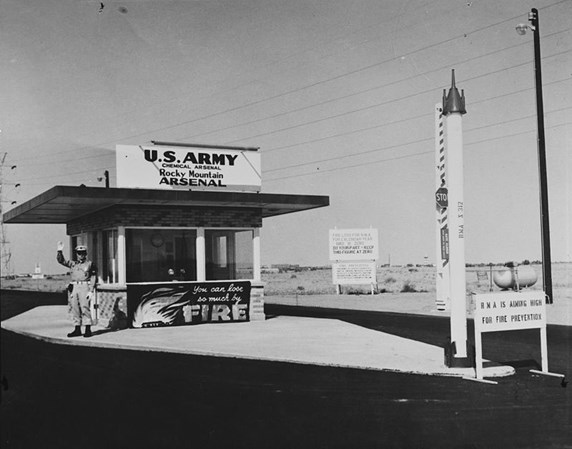
Rocky Mountain Arsenal: The Rocky Mountain Arsenal was a United States chemical weapons manufacturing center located near Denver, Colo. The site was completed in 1942, operated by the U.S. Army throughout the later 20th century, and was controversial among local residents until its closure in 1992. Much of the site is now protected as the Rocky Mountain Arsenal National Wildlife Refuge.
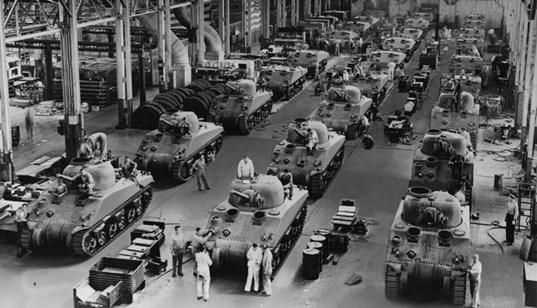
Detroit Arsenal: Detroit Arsenal was the first manufacturing plant ever built for the mass production of tanks in the United States. Established in 1940 under Chrysler, this plant was owned and managed by the U.S. government until 1952, when management of the facility was turned over to the Chrysler Corp. Chrysler’s construction effort was one of the fastest on record.The first tanks rumbled out of the plant, even before its construction was completed.
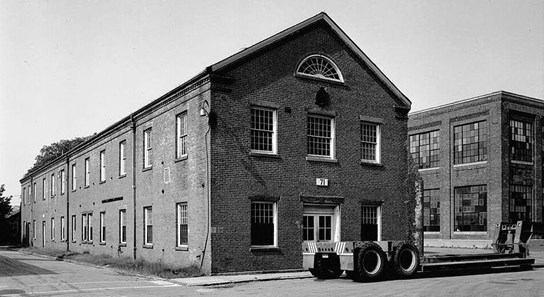
Watertown Arsenal: Established in 1816-1968, the Watertown Arsenal was a major American arsenal located on the northern shore of the Charles River in Watertown, Mass. During the Civil War, a new commander’s quarters was commissioned by then-Capt. Thomas J. Rodman, inventor of the Rodman gun3.
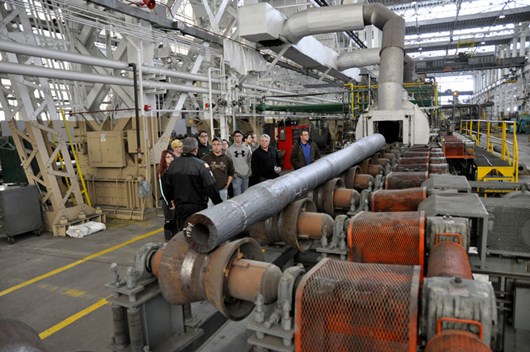
Watervliet Arsenal:“The Big Gun Shop.” Built in 1813 in Watervliet, N.Y., on the west bank of the Hudson River, it is the oldest continuously active arsenal in the United States. The arsenal was founded to support the War of 1812, and was designated as the Watervliet Arsenal in 1817. Today, Watervliet produces much of the artillery for the U.S. Army, as well as gun tubes for cannons, mortars and tanks. It has been a National Historic Landmark since 1966.
Footnotes: 1The rail is named after the Picatinny Arsenal in New Jersey, which was tasked in 1992 to develop a standardized mounting system after the U.S. Army was dissatisfied with available products on the market.
2John C. Garand created the semi-automatic M1 Garand rifle that was widely used by the U.S. Army and U.S. Marine Corps during World War II and the Korean War.
3 The Rodman gun was a class of Civil War–era coastal fortification artillery pieces designed to shoot shell and shotmunitions.
Violette Szabo was a spy. Her exploits during the Second World War were the stuff of legend.
There were forty-one female agents who worked for Section F of the British Special Operations Executive during World War 2. They ranged in age from 20 to 53. These exceptional women were aggressively trained in spycraft and covertly deployed into Axis-occupied territory. Their missions typically involved intelligence gathering and coordinating resistance operations. The Germans despised them.
Twenty-six survived the war. Of those who were lost, a dozen were captured and executed by the Germans, two perished from disease while imprisoned, one drowned when her ship was sunk, and another died of natural causes. I once met one of the survivors. Her name was Eve Gordon. She was the most compelling speaker I have ever heard.
Arguably the best-documented of the lot was Violette Szabo. A hero of the highest order, Violette’s story reads like an adventure novel. She ultimately gave her life for the cause of freedom.
Origin Story Of Violette Szabo
Violette was born on 26 June 1921, in Paris. Her father was English, and her mother was French. She was the second of five children and the only girl. She lived in France until age 11. Surrounded as she was by boys, she grew up shooting, ice-skating, and long-distance bike riding. Once she moved to England she had to relearn English.
Etienne and Violette Szabo were destined to have a fairly tragic marriage.
Violette was cursed with a hyperdeveloped sense of patriotism. With the onset of war, she volunteered for the Women’s Land Army and was dispatched to pick strawberries in support of the war effort. From there she transferred to an armaments factory in Acton where she met her future husband, Etienne Szabo. Etienne was Hungarian but served as an NCO in the French Foreign Legion. They dated for 42 days and were married. At the time Violette was 19, and Etienne was 31. After a one-week honeymoon, Etienne deployed to fight the Vichy French in Senegal, South Africa, Eritrea, and Syria. War is hell.
Violette bounced through a couple of jobs before enlisting with the Auxiliary Territorial Service. Hers was the first coeducational antiaircraft battery in the British military. She was posted to Frodsham, Cheshire, near Warrington. Etienne returned home briefly on leave before deploying yet again, this time to North Africa to face Rommel’s Afrika Korps. Soon after he left, Violette discovered she was pregnant.
Violette and Etienne’s daughter Tania never really knew her parents. The exigencies of total war stole them from her.
On 8 June 1942, Violette gave birth to a daughter, Tania. Once the child was old enough, Violette sent her away to be raised in safety by childminders while she took a job in an aircraft factory. On 24 October of that year, Etienne was killed during the Second Battle of El Alamein. Tania never met her father. The rage that Etienne’s death ignited in Violette led her to F-section of the British Special Operations Executive.
The Girl Becomes a Spy
F-section oversaw a series of clandestine underground networks in occupied Europe. 470 SOE agents served in France. 104 of them died. Of the fifty individual networks operating during the war, thirty-one were broken by the Germans.
Violette Szabo badly injured her ankle during parachute training. This injury was to come back to haunt her.
Little is known of Violette’s recruitment to the Dark Side. Those records, if ever they existed, were eventually lost. Her mastery of the French language and French customs no doubt played a large part as did her service with the 481st Heavy (Mixed) Antiaircraft Battery. She trained in spycraft for several months in 1944. There she mastered weapons, demolitions, cryptography, communications, parachuting, navigation, and fieldcraft. Her classmates adored her for her courage and good humor. Her instructors passed her but only just.
The master cryptographer Leo Marks described her as, “A dark-haired slip of mischief….She had a Cockney accent which added to her impishness.”
One of her instructors said, “She lacks ruse, stability, and the finesse which is required and…she is too easily influenced…[but] she set an example to the whole party by her cheerfulness and eagerness to please.” Regardless, by the Spring of 1944, Violette was declared ready to go to war.
Seeing the Elephant
Violette Szabo was a beautiful woman. This mystical attribute could be weaponized under the right circumstances.
On the night of 5 April 1944, Violette and another SOE operative named Philippe Liewer parachuted into France near Cherbourg from a British Halifax bomber. Violette was cute, gregarious, and small at only five foot three inches tall. As such, she could move more freely than might a more intimidating military-age man. She travelled along the coast prior to the invasion assessing the state of Resistance cells and the local war industry. Her reports aided Allied planners in establishing pre-invasion bombing targets.
The Lysander was a short takeoff and landing utility aircraft used by the RAF for covert operations in occupied Europe.
Three and one-half weeks after her insertion, Violette was extracted by an RAF Lysander piloted by Bob Large. The plane was badly damaged by antiaircraft fire on the trip back to England, losing a tire in the process. The plane was dark, the ride rough, and the landing without one tire all the more so. Tucked away as she was in the belly of the plane, Violette thought they had gone down in occupied France. When Large, who had bright blonde hair, went back to check on her after landing, Violette thought he was a German and attacked him. When she realized her mistake he earned a kiss.
Playing for Keeps
The B-24 Liberator was the most-produced American aircraft of the war. It was used for a wide variety of missions ranging from heavy bomber to maritime patrol to covert parachute insertions.
After two attempts aborted due to foul weather, Szabo and three other agents parachuted out of an American B-24 Liberator bomber into a landing zone near Limoges on 8 June. It is suspected that Szabo exacerbated her old ankle injury on this jump. Finding the local Maquis cells in poor shape to fight, the SOE commander dispatched Szabo to make contact with a better organized Resistance cell in the Correze and Dordogne.
The 2d SS Panzer Division Das Reich engaged in a reign of terror as they struggled to cross Normandy and get into the fighting.
Szabo had 62 miles to traverse, and the area behind the invasion front was frenetic with enemy activity. Specifically, the 2d SS Panzer Division was gradually making its way forward through the same area while being continually harassed by Allied air assets. Despite a general prohibition by the Germans against the use of automobiles by French civilians, one of her Maquis contacts insisted upon taking a Citroen rather than a bicycle given the distances involved. This was a terrible mistake.
The British Sten submachine gun was supplied to Resistance troops by the thousands in occupied Europe.
Szabo was dressed in light clothing and wore flat-heeled shoes. She carried a Sten submachine gun and eight 32-round magazines. Violette found herself in the small car with two members of the French Resistance when they encountered an SS roadblock outside Salon-la-Tour.
The Firefight
When unleashed against unarmed civilians, Das Reich spilt a river of blood.
Local Resistance fighters had previously captured Sturmbannfuhrer Helmut Kampfe, a battalion commander in the 2d SS Panzer. The SS troopers were out for blood. Kampfe was eventually executed, sparking a brutal crackdown that resulted in the deaths of 643 innocent French men, women, and children.
The details of what came next have been disputed. Some historians claim it didn’t happen at all. However, SOE personnel who were there alleged that one of the Maquis fighters leapt from the moving car and escaped to warn his comrades. It was claimed that Szabo and the remaining fighter, a young man named Dufour, exited opposite sides of the vehicle. In the ensuing gun battle, an innocent French woman was cut down by the Germans as she peeked out of a nearby barn.
This is a scene from the 1958 movie Carve Her Name with Pride, a biopic about Violette Szabo’s exploits.
With German armored vehicles and reinforcements arriving quickly, Dufour and Szabo vaulted a gate and sprinted toward a nearby copse of trees. Along the way, Szabo badly twisted her already injured ankle. Now unable to run, Violette refused assistance and directed Dufour to flee to safety. She then dragged herself to cover behind an apple tree at the edge of a cornfield. In this position, she held the attacking SS troopers at bay for a full half an hour until she ran out of ammunition. According to SOE sources, her sacrifice allowed Dufour to escape.
Nazis Just Suck
This snappy-dressing psychopath is Reinhard Heydrich, a plank holder with the SD. Czech partisans dispatched this scumbag to hell in the summer of 1942.
SS Sturmbannfuhrer Kowatch of the Sicherheitsdienst or SD, the SS Security Service, tortured the captured girl mercilessly for four days in an unsuccessful effort to extract details about her resistance cells. Eve Gordon’s description of her experience with the SD was enough to make me vaguely ill when I heard her speak of it back in 1989. Eventually, with Patton’s 3d Army rapidly approaching, the Germans shipped Szabo and the rest of her captured female SOE counterparts to Ravensbruck concentration camp.
In an environment dominated by Allied air power, the trip by rail took eighteen days. During this time Violette and her comrades were given little to no food or water. During one air attack, the Germans temporarily abandoned the train, allowing Violette to retrieve some water from a lavatory for herself and her friends.
Violette and her female counterparts were assigned to work as slave labor building Heinkel bombers. When she refused to work on German munitions she was remanded to digging potatoes. Eventually, she was put to work felling trees in the winter of 1944 without proper clothing. Many of her comrades literally froze to death. With minimal food and bone-breaking work, Violette grew steadily weaker. Throughout it all, she still schemed ways to escape.
Violette’s Story Comes To An End
Around 5 February 1945, SS-Rottenfuhrer Schult dragged Violette Szabo out of her cell to a spot known as Execution Alley at the Ravensbruck camp. There he forced her to kneel and shot the pretty girl in the back of the head. Her body was burned in the camp crematorium. Szabo was 23 when she died.
Violette Szabo’s adventures were dramatized in Carve Her Name with Pride. The specific details of her final moments of freedom have been lost to history.
Violette Szabo was only the second woman ever awarded the George Cross for gallantry. Some of the details were clearly confused in the interim, but here is the citation—
St. James’s Palace, S.W.1. 17 December 1946
The KING has been graciously pleased to award the GEORGE CROSS to: —
Violette, Madame SZABO (deceased), Women’s Transport Service (First Aid Nursing Yeomanry).
Madame Szabo volunteered to undertake a particularly dangerous mission in France. She was parachuted into France in April 1944 and undertook the task with enthusiasm. In her execution of the delicate researches entailed she showed great presence of mind and astuteness. She was twice arrested by the German security authorities but each time managed to get away.
Eventually, however, with other members of her group, she was surrounded by the Gestapo in a house in the south-west of France. Resistance appeared hopeless but Madame Szabo, seizing a Sten gun and as much ammunition as she could carry, barricaded herself in part of the house and, exchanging shot for shot with the enemy, killed or wounded several of them.
By constant movement, she avoided being cornered and fought until she dropped exhausted. She was arrested and had to undergo solitary confinement. She was then continuously and atrociously tortured but never by word or deed gave away any of her acquaintances or told the enemy anything of any value. She was ultimately executed. Madame Szabo gave a magnificent example of courage and steadfastness.
This is Tania Szabo, Etienne and Violette’s daughter, wearing her parents’ medals.In adulthood, Tania Szabo became a vocal proponent of her mother’s exploits.
Violette Szabo was a rare patriot. She could have just left well enough alone and whiled away the war years picking strawberries. Instead, she volunteered to parachute deep into enemy-held territory to take the fight to the hated Nazis.
Amidst a veritable ocean of tragedy and pain, the Nazis brutally stole one little girl’s parents. The orphan Tania Szabo subsequently devoted herself to telling her mother’s amazing story. Violette’s inspiring tale of selfless sacrifice in the face of unimaginable hardship should inspire all of us today. Violette Szabo was indeed a true hero.