Author: Grumpy
A 140 lbs. former newspaperman from New York, a cigar clenched in his teeth, was the tip of the spear for Operation Overlord.
Capt. Frank Lillyman, of the 101st Airborne’s Pathfinders, is credited as the first Allied soldier to parachute into France shortly after midnight on D-Day, June 6, 1944. He commanded the first “stick” – or unit – of Pathfinders that parachuted into Normandy, tasked with helping mark landing zones for the 13,100 paratroopers that would soon follow in the early morning darkness.
Medals, ribbons, and patches, including a Distinguished Service Cross and Purple Heart for Lillyman’s actions on D-Day, will be on offer at Rock Island Auction Company’s May 13-15 Premier Auction.

Paratrooper after Recruiter
Lillyman grew up in the Southern Tier New York town of Binghampton where he worked for the local paper covering sports and working elections before joining the army in 1934. Serving in the infantry, he was stationed in China and Hawaii before returning to New York where he served as a recruiter in Syracuse.
Lillyman longed to join the fight with the start of World War II and became a paratrooper in 1942. He made 47 training jumps before his first combat jump into the dark Normandy night.

Pathfinders needed
Following a disastrous paratroop mission in Sicily that scattered airborne soldiers over miles of terrain and limited their fighting effectiveness, it was determined that a lead force needed to be inserted that could guide the larger force to drop zones.
The Pathfinders were born.
Pathfinder missions were considered suicidal with a fatality rate of 80 to 90 percent. Many of the men who volunteered for the role were considered mavericks – insubordinates and undesirables who were trying to stay out of the brig or rehabilitate their service record.

Lillyman fit the bill, considered by at least one superior as an “arrogant smart-ass.”
While mavericks and insubordinates may not be the best in the regular army, they were just what the Pathfinders needed. That showed on June 6.
War Paint and Special Equipment
Many of the men in Lillyman’s stick put war paint on their faces for the nighttime jump. Some wore Mohawk haircuts.

The paratroopers carried special equipment to help guide the planes to the drop zones. First were the radio transponders, called Eurekas that transmitted to special receivers in the planes called Rebeccas. The Rebeccas calculated the range to the Eurekas based on the timing of the return signals and its position using a highly directional antenna. In the early hours of D-Day, Lillyman’s men placed the Eureka transmitters in a church steeple and in a tree. The second bit of special equipment were specially-designed lamps to show the jump zone.
Because of the extra equipment, many of the paratroopers ditched their reserve parachutes under their benches on the plane, going against procedure.
Might As Well Jump
Lillyman hurt his leg in training a few days prior to D-Day. He hid the injury and tried to ignore the pain so he would be able to lead his unit. He jumped with his signature unlit cigar held tightly in his teeth, carrying 70 lbs. of equipment and his Tommy gun.
“On my first jump I happened to have a cigar,” Lillyman explained. “So I’ve done it ever since. Now the boys attach a lot of importance to that cigar.”
The overcast sky troubled the plane’s pilot, missing landmarks on approach and coming in low. Lillyman and his squad missed their jump zone by about a mile, parachuting in from 450 feet. All but one of the Pathfinder units missed their jump zones that night.

Make the Best of It
When Lillyman landed he tried to determine his position. As he did, he spotted a shape off in the darkness. Was it moving toward him? He racked his gun only to find out he was targeting a cow.
Collecting his unit, Lillyman improvised a drop zone in a field deemed big and open enough. As the men set their equipment in place a machine gun barked at them in the dark. The captain sent two soldiers to take care of the nest.
The Pathfinders also reconnoitered a nearby farmhouse, learning a German officer was there. The owner pointed to where the man was asleep, a bottle of champagne on the nightstand. The soldiers dispatched the German and made off with the bubbly.

Lillyman and his men heard the planes of the main paratrooper force at 12:40 a.m., less than 30 minutes after they landed. The first plane flew over their position at 12:57 a.m. on D-Day.
The weather troubled the main force of paratroopers, too, scattering them across the peninsula. Despite the Pathfinders, only 10 percent of the U.S. airborne forces hit their drop zones and 50 percent of the troops landed one to two miles from their drop zones.
After setting up the improvised drop zone and guiding in their fellow paratroopers, they checked where reconnaissance aircraft had spotted a gun emplacement that could hammer Utah Beach. They discovered it bombed out.
Lillyman’s unit was called on to set up another drop zone but this time for the second wave of gliders. On the evening of D-Day, Lillyman’s unit waited for the gliders, code-named Keokuk, to arrive. The Germans were also waiting near the landing zone. As the gliders coasted in, the Germans opened fire.
Lillyman’s unit returned fire at the nearby German gun nest, forcing the Germans to withdraw. The captain heard one last burst of gunfire and felt the sting on his arm. He glanced down. His uniform was chewed up and blood pulsed out. His legs gave way. He fell to the ground as mortar splinters hit him in the face. His injuries would get him shipped back to England for convalescence.

Back In
After a couple days in the hospital, Lillyman was restless and ready to get back to the fight.
“I didn’t like the idea of staying in a hospital, so I found some clothes in a supply room and shoved off,” Lillyman said. “I forgot to tell anyone where I was going or what my intentions were, but after two days, I ended back here in France.”
He went absent from the hospital without permission, talked his way onto a supply ship, and by June 14 reported back to duty in France. That didn’t sit well with his commanding general who moved him to another unit. Lillyman was a pathfinder no more.

Market Garden and More
Lillyman, like his band of brothers in the 101st Airborne, still found plenty of action.
His unit jumped into the Netherlands as part of Operation Market Garden in September, 1944 fighting for roads and bridges. The 101st was caught up in the Battle of the Bulge and was “the hole in the doughnut” as the Germans laid siege to Bastogne in December, 1944. Lillyman and his comrades were pulled off the line in February, 1945.
Returned to the line in early April, Lillyman’s unit captured Berchtesgaden. As the war ended the paratroopers took up occupation duties and started training for deployment to the Pacific Theater. The war ended before the 101st Airborne could get to the Pacific.
Lillyman returned home having been wounded three times and wearing 12 decorations, including the Distinguished Service Medal for his D-Day leadership.

After The War
During a quiet moment, Lillyman wrote a fanciful letter to a New York City Hotel about his dream homecoming in October, 1945.
“I desire a suite that will face east so the sun will wake me in the morning,” he wrote. “I do not desire to know in advance what dishes will be served, but I do not want a dish repeated. If meals are served after dark in the suite, I would like tapers for table lighting. I desire a one‐way telephone—outgoing only.”
He showed up at the hotel with his wife, daughter, and $500. Hotel staff told him their stay was on the house.
Lillyman remained in the army, serving through the Korean and Vietnam Wars, holding a variety of assignments at Fort Bragg and Camp Breckenridge. He retired as a lieutenant colonel in 1968, and died three years later at the age of 55.

D-Day Medals
The Distinguished Service Cross and Purple Heart earned on D-Day as well as a Bronze Star, Belgian Croix de Guerre, and two French Croix de Guerres awarded in service to the Allied cause mark Capt. Frank Lillyman as a war hero and truly one of the Greatest Generation. Also included is a Combat Infantry badge, Master Parachutist Badge, and a scarce Pathfinder “winged torch” patch. The memorabilia available at Rock Island Auction’s May 13-15 Premier Auction shows the history and bravery of a man and his unit on D-Day, and someone who committed his life and career to the United States Army.
Sources:
`First to Jump: How the Band of Brothers Was Aided by the Brave Paratroopers of Pathfinders Company,’ by Jerome Preisler
`First in France: The World War II Pathfinder Who Led the Way on D-Day, by Alex Kershaw, historynet.com
`Skaneateles Man, Captain Frank Lillyman, the First Soldier to Land on D-Day,’ Onondaga Historical Association
`Frank Lillyman Is Dead at 55; First Paratrooper at Normandy, The New York Times
`Airlift and Airborne Operations in World War II,’ by Roger E. Bilstein, Air Force History and Museums Program

Dawn broke crisply over the high elevation desert, chasing night’s shadow across sagebrush draws and sandstone outcroppings. A small brushy flat wrapped over the rim of a nearby canyon, fingers of sunshine just beginning to feel their way between sage and scrub oak. Sweeping the flat with my field glasses, I spotted a big buck, antlers towering above the sage. I ranged the distance, dialed my turret and settled in behind the scope. This was the moment I’d planned and prepared for months to meet.
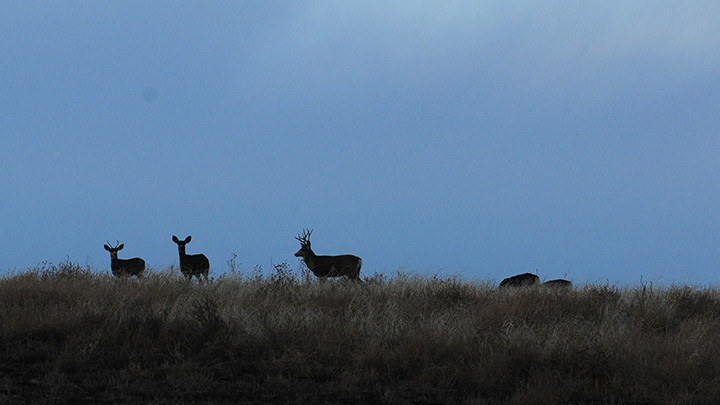
A mature mule deer buck is considered one of the hardest animals in North America to harvest. To successfully find and kill a big buck you’ll need skill, the determination of a pit bull and good equipment. Shots in the wide-open arid country mule deer call home are commonly long, so you’ll need to hunt with something that can “reach out and touch ‘em.” Translated, you should hunt with a cartridge that’s accurate and maintains downrange energy well beyond “average” shot distances.
Mule deer are not hard to kill, but they are prone to soak up punishment from small(ish) calibers, acting undisturbed until they suddenly fall over dead. For that reason, I’ve left cartridges like the .243 Winchester off this list in favor of rounds that impact with more authority. Similarly, I’ve left away bigger calibers that deliver more recoil but don’t offer the ability to make a mule deer any more dead. Choose any of the cartridges featured below and you’ll be set to hunt mule deer anywhere they reside.
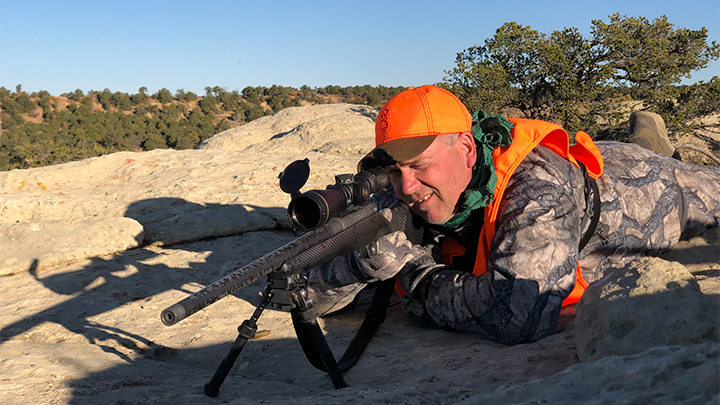
1. 6.5 PRC
For a dedicated deer-hunting cartridge, in my opinion, it’s pretty hard to top the 6.5 Precision Rifle Cartridge (PRC). Recoil is mild, accuracy is generally superb and retained downrange energy is outstanding. I have killed a handful of big muley bucks with the 6.5 PRC (including the one featured in the beginning of this article) and experienced impressive results every time. Shooting a .264-inch diameter bullet weighing in the 125- to 150-grain range and starting out around 2960 fps, the cartridge isn’t built to take out Sherman tanks, but rather to kill with accurate finesse.
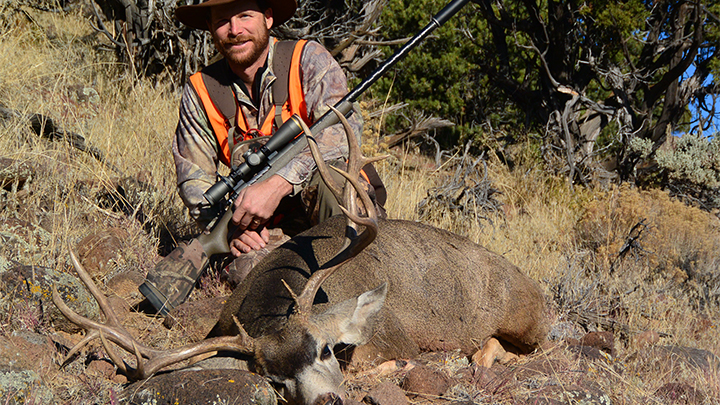
2. .280 Ackley Improved
Were I to choose the ideal all-around cartridge for hunting Western big game it would be the .280 Ackley Improved. Why? Because it hits hard enough for moose but not too hard for deer and pronghorn, is very aerodynamic, sports a slender case that enables good magazine capacity, and owns the panache of James Bond. Recoil is firmer than the 6.5 cartridges but less than the 7mm Rem. Mag.
The .280 Ackley sends a .284-inch diameter 140- to 175-grain projectile downrange at velocities ranging from 2850 to 3150 fps. While it used to be a wildcat cartridge, Nosler, Hornady and Federal now build factory .280 Ackley Improved ammo. My personal widest mule deer fell to a rifle chambered in .280 AI; a beautiful buck sporting double cheater points that stretch his spread to just north of 34 inches.
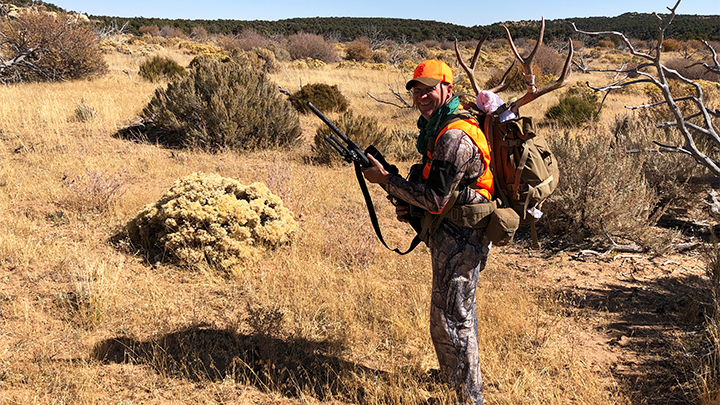
3. 6.8 Western
The .270 Winchester should have been on this list, you say? You’ve got a point; the venerable .270 is an awesome mule deer cartridge. However, barrel twist rate is generally slow, necessitating light-for-caliber projectiles that smoke downrange at first, but lose steam later. Not to worry; the 6.8 Western will tag into the fray in its behalf. The “Western” shoots the exact same diameter bullet (.277-inch) as the .270 Win., but is designed to stabilize long, heavy-for-caliber projectiles that offer superb long-range performance.
Brand-new on the hunting cartridge scene, the 6.8 Western is rapidly gaining popularity in the hunting field. It’s new enough that I personally have not killed a muley buck with it, though I have harvested a great bull elk and watched a buddy harvest a beautiful Coues deer buck, both at extended distances. I am comfortable in opining that the 6.8 Western will build a reputation as a fantastic mule deer and all-around Western hunting cartridge. Bullet weights will average 165 to 175 grains, with velocities ranging from 2800 fps and up.
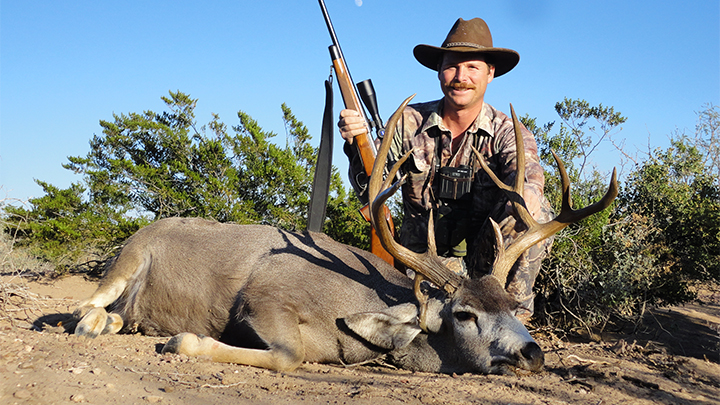
4. 7mm Remington Magnum
The “Seven Mag” has maintained a reputation as a great mule deer cartridge for half a century, and the modern long-range shooting movement has enabled the 7mm Remington Magnum to become a headline cartridge. It seamlessly transitioned from shooting light, fast projectiles to shooting heavy-for-caliber, aerodynamic bullets, and is now considered to be one of the finest long-range hunting cartridges available. One of my favorite big muley bucks fell to my 7mm Rem. Mag.; a massive old warrior with huge, bladed brow tines and 13 inches of forked drop tine. I still feel giddy when I think about that buck.
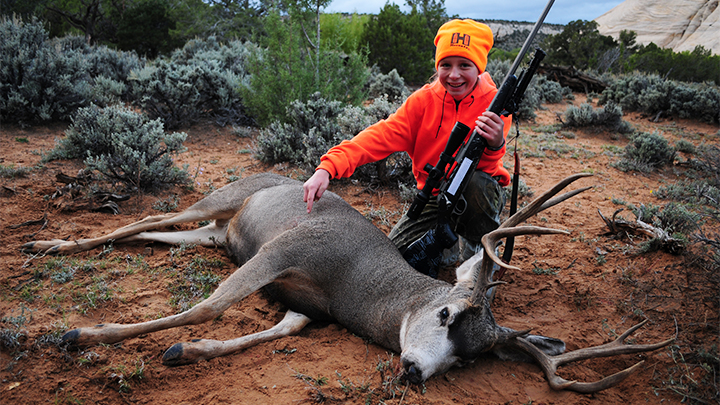
5. 6.5 Creedmoor
This list would be incomplete without a mule deer cartridge dedicated to our ladies and youth. While many of them can shoot the above-listed cartridges with ease, some are recoil sensitive and benefit from a hunting round that is a bit more friendly on the shoulder. In my opinion, the 6.5 Creedmoor is an awesome mule deer round, and while it lacks a little of the punch offered by the afore-mentioned cartridges, it still possess deadly oomph out to ranges beyond the distance most hunters have any business shooting. My wife and oldest daughter have shot handfuls of mule deer with the Creedmoor—many of them great bucks—with awesome results. It shoots the same projectiles as the 6.5 PRC, but starts them out about 200 to 250 fps slower. It’s supremely accurate, boasts excellent aerodynamics and is beautifully comfortable to shoot.
Conclusion
Dozens of cartridges that didn’t make this list are great mule deer killers. I had a particularly hard time leaving the legendary .30-06 Springfield off, but this article is about the best mule deer hunting cartridges. The ones listed here are, in my opinion, the best of the best when climbing sage slopes and stalking rocky crags in search of mule deer. Choose a premium bullet, settle your crosshairs and squeeze the trigger well. If you’re shooting one of these cartridges, it won’t let you down.
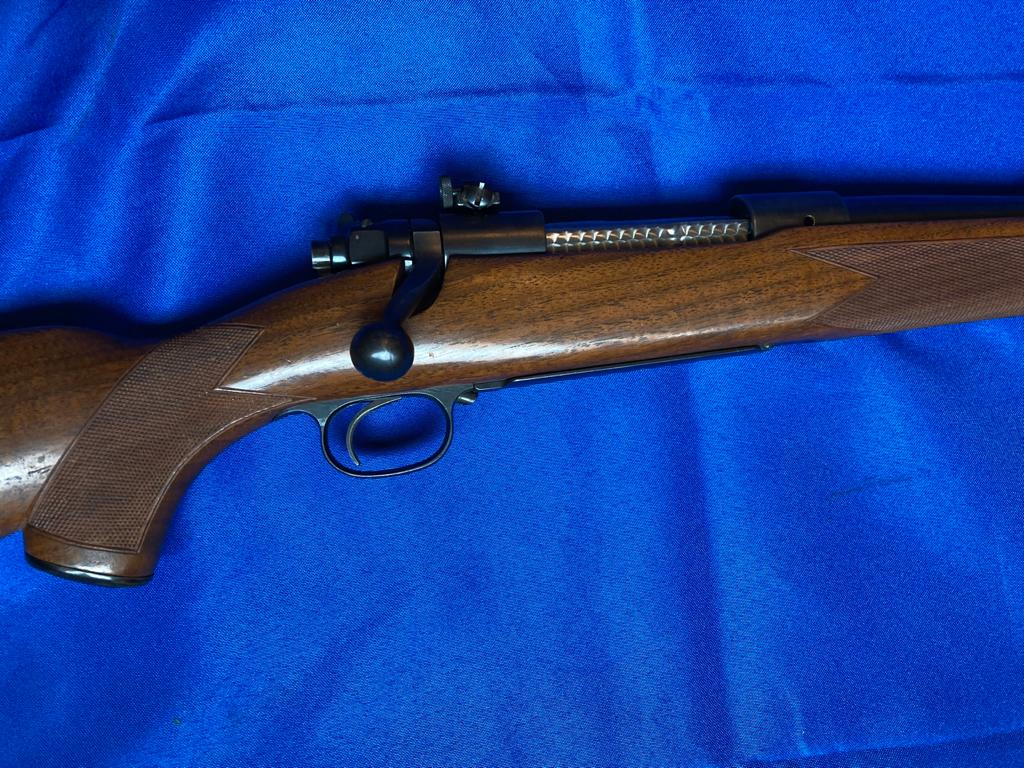
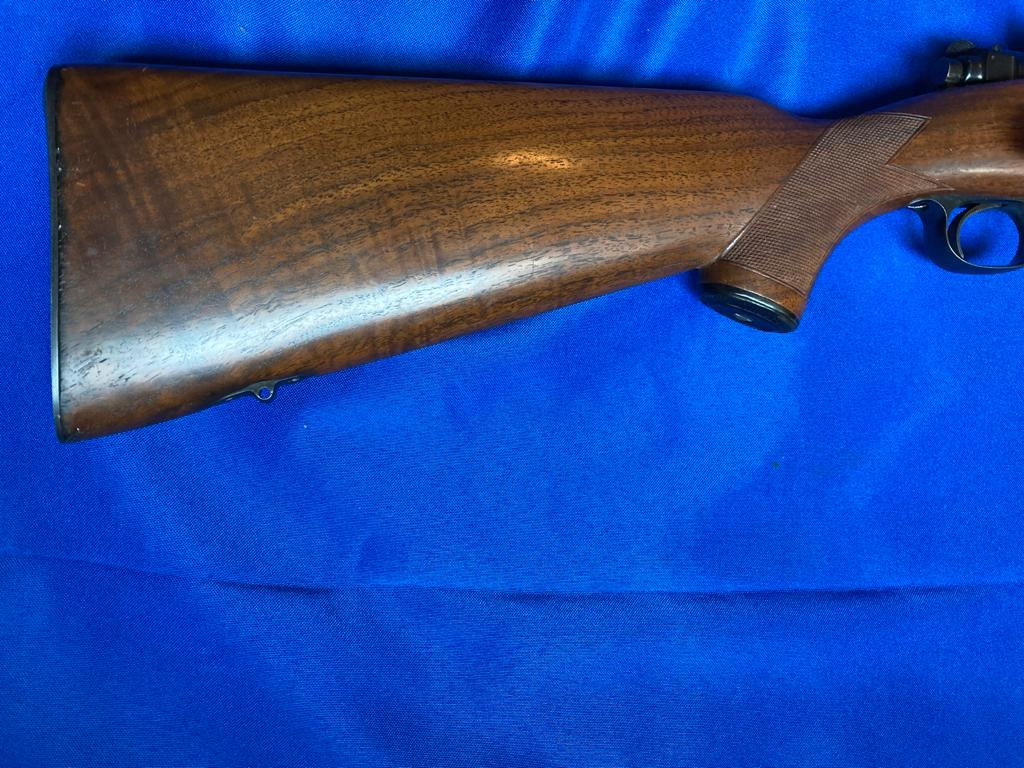
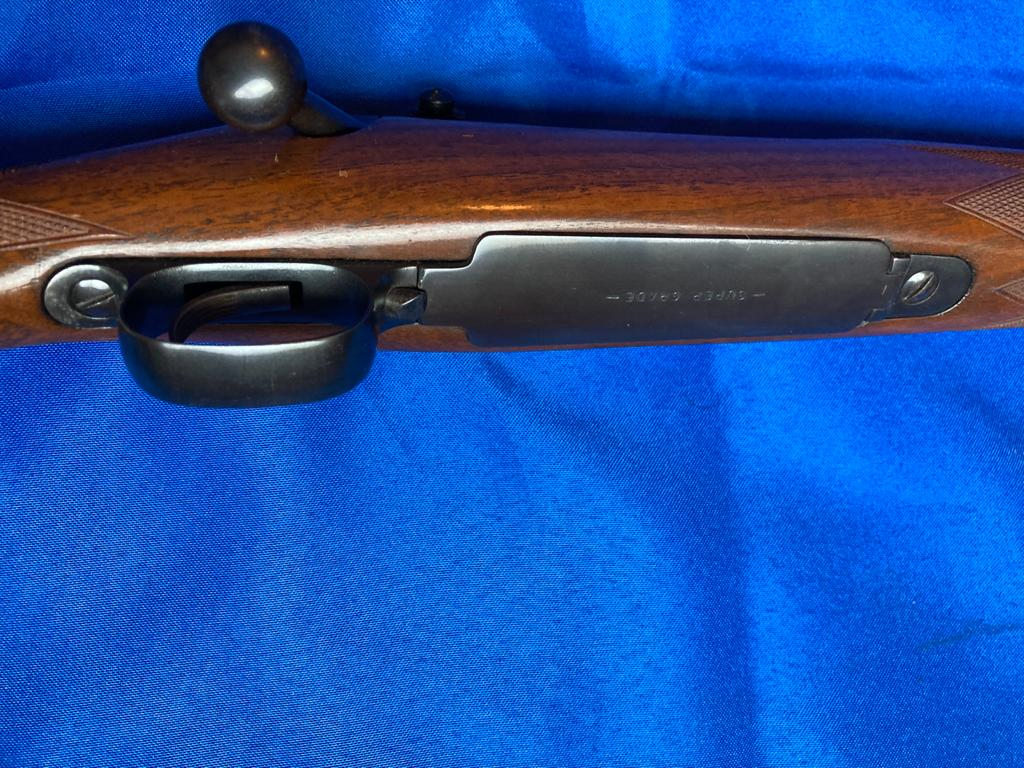
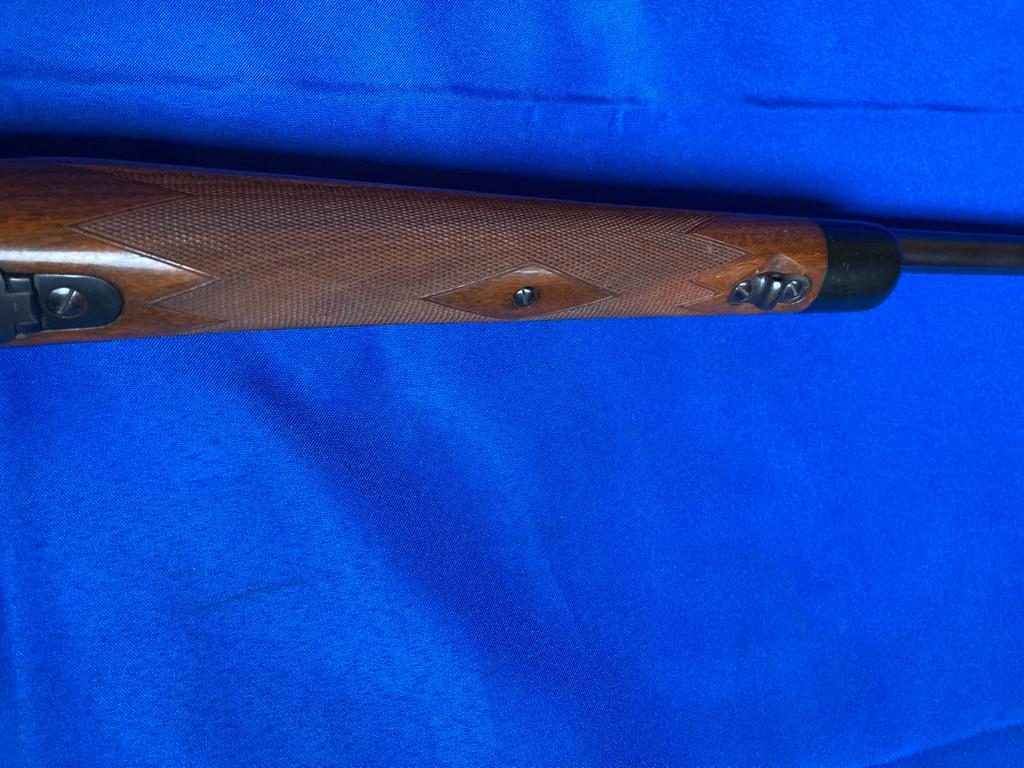
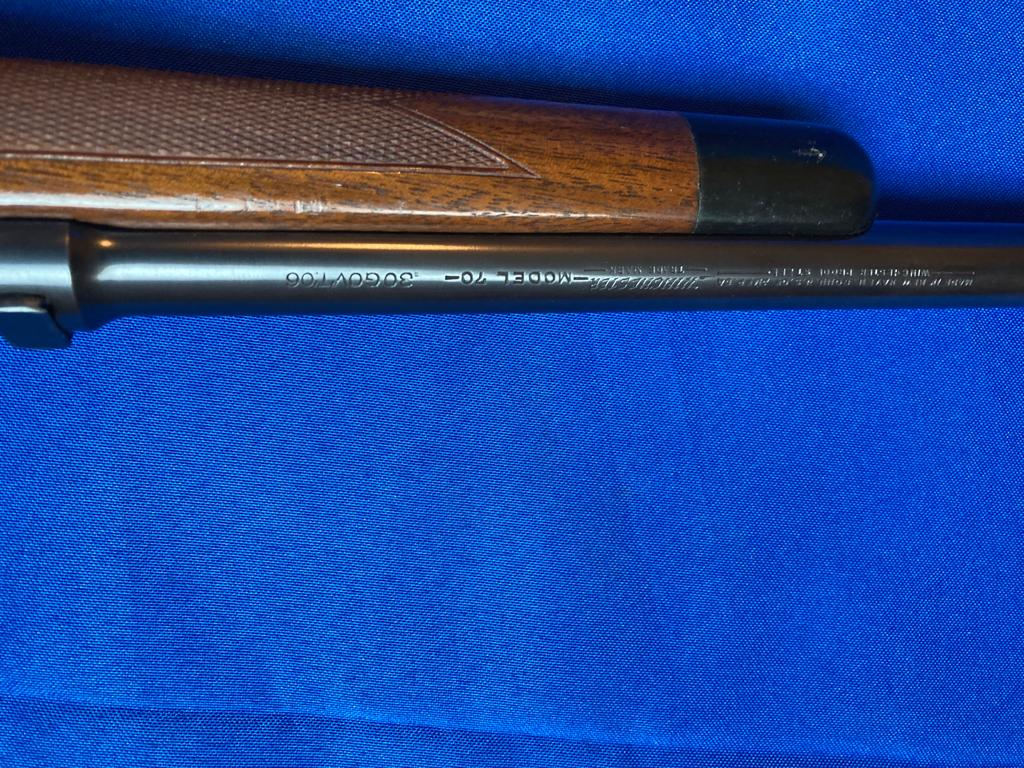
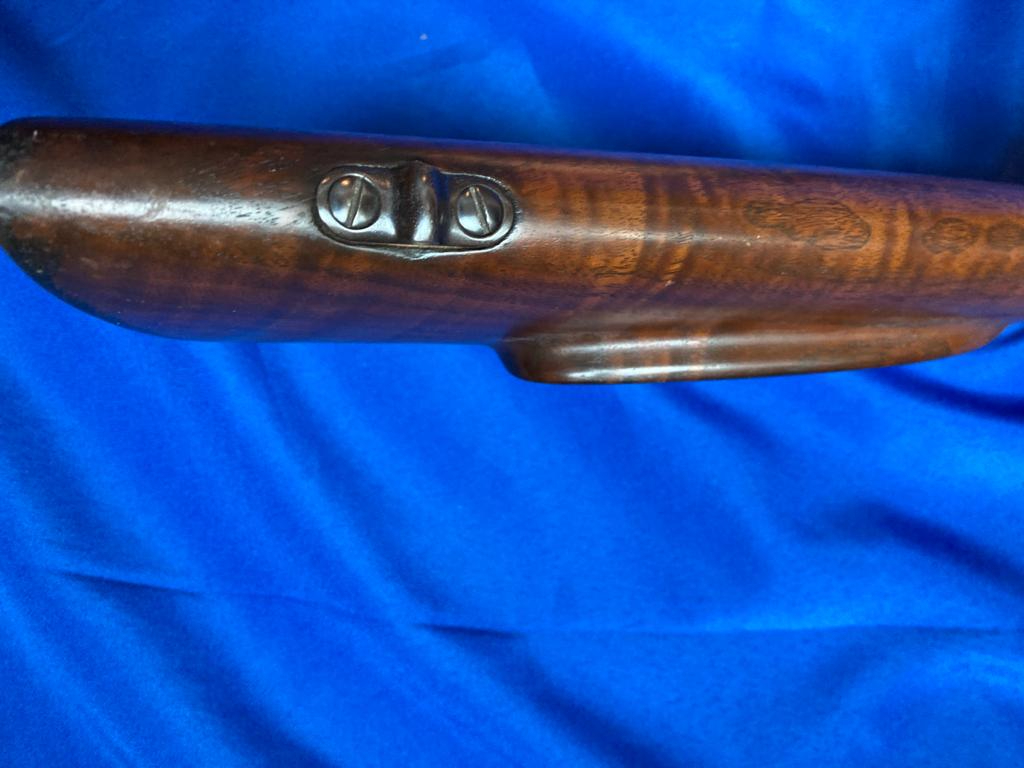
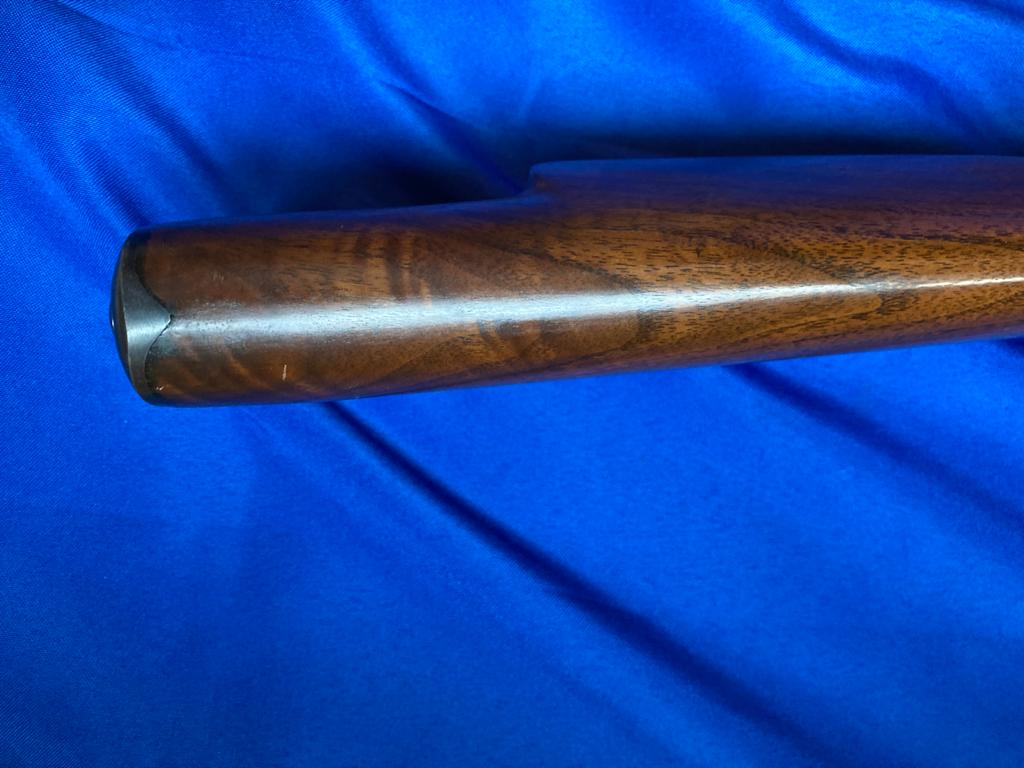
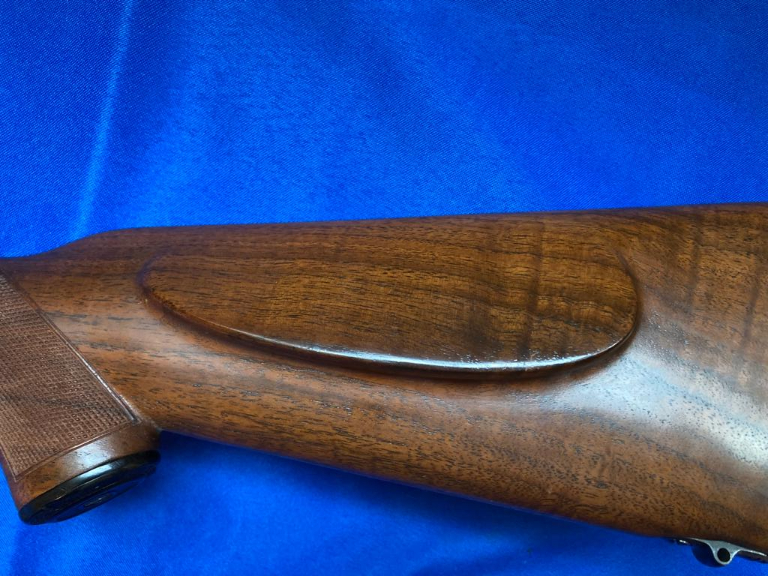

by Patrick Carroll
Americans have long been concerned about government surveillance, and rightly so. Being watched by the government is incredibly disconcerting, especially when government agents are probing into your private life.
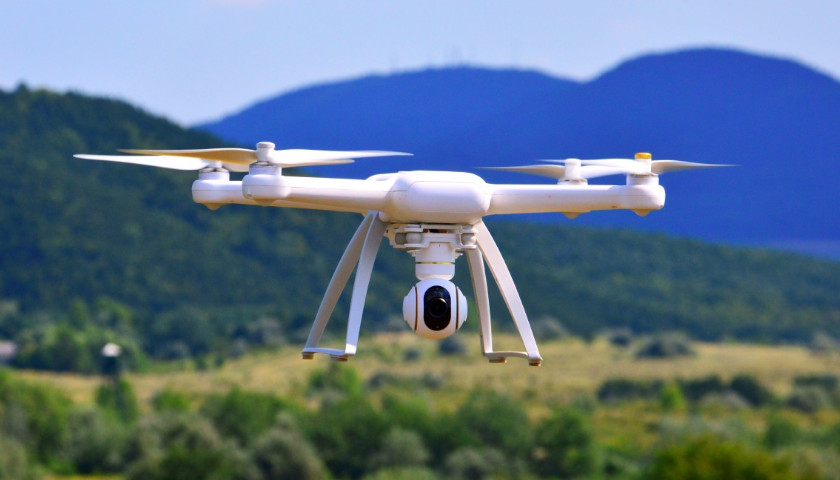
The rise of drone technology has not helped on this front. Whereas before a government would need a plane or helicopter to get aerial views of you or your property, now they just need a small remote-controlled device.
The issue of governments spying on Americans using drones has come up in some recent court cases and legislative disputes. One recent case involves Todd and Heather Maxon who live on a rural five-acre property in Long Lake Township, Michigan. Todd likes to fix up cars, and he keeps a number of vehicles on his property.
For years the Township has been going after the couple for zoning violations, accusing them of illegally storing “junk” on their property. But here’s the kicker. The cars can’t even be seen from outside the property…that is, unless you fly a drone overhead. And that’s exactly what the Township did.
Without even attempting to get a warrant, the Township hired a contractor to fly a drone as low as 150 feet over the Maxons’ property multiple times over two years. The Township is now trying to use the pictures taken by the drone as evidence that the Maxons are violating a local zoning ordinance.
“If the government wants to conduct intrusive surveillance like this, the Fourth Amendment requires that it get a warrant,” said Institute for Justice Attorney Mike Greenberg regarding the case. “The zoning authority’s failure to even try to get one shows their indifference to Michiganders’ constitutional rights.”
New York City has also come in the crosshairs in recent years for its decisions on this front. In 2019, the New York Police Department acquired 14 drones for “monitoring giant crowds, investigating hazardous waste spills, handling hostage situations and reaching remote areas in crime scenes, among other tasks.” Though the NYPD insists the drones won’t be used for warrantless surveillance, many are worried that putting this technology in the hands of police is just asking for trouble.
Citing these fears, privacy advocates pushed for legislation known as the Public Oversight of Surveillance Technology Act (“POST Act”), which requires the NYPD to release information about how surveillance tools are being used and creates an annual oversight system to audit compliance with department policies. The Act was passed in June 2020 after gaining momentum following the death of George Floyd.
The Legal Issue
The legal issue with warrantless government surveillance revolves around the Fourth Amendment to the US Constitution, which states the following:
“The right of the people to be secure in their persons, houses, papers, and effects, against unreasonable searches and seizures, shall not be violated, and no Warrants shall issue, but upon probable cause, supported by Oath or affirmation, and particularly describing the place to be searched, and the persons or things to be seized.”
In plain language, governments aren’t allowed to conduct searches and seizures as they please. They need to get a warrant.
In the more than two centuries that have passed since this amendment was adopted in 1791, mountains of case law have built up establishing precedents for what exactly constitutes “unreasonable” and what qualifies as a “search” or “seizure.” Other related questions have also been extensively litigated, such as whether evidence collected in an unconstitutional search (such as pictures from a warrantless drone flight) can be used in court. On that issue, there is a long-standing precedent. “For more than a century, the remedy for a Fourth Amendment violation has been suppression of unlawfully obtained evidence,” the Institute for Justice notes.
Whether the Maxons win their case remains to be seen.
What’s clear, however, is that drone technology provides governments with unprecedented spying capabilities—capabilities they would gladly use against Americans if they could get away with it.
The Philosophical Issue
For many topics addressed in the Bill of Rights libertarians are firmly in favor of the right being recognized (for example, freedom of speech and gun rights). With the Fourth Amendment, however, there are some philosophical problems.
The economist and political philosopher Walter Block addresses the “right” to privacy in the Peeping Tom chapter of his book Defending the Undefendable 2. “According to the libertarian legal code,” Block writes, “we may do anything at all to each other, whether they like it or not, provided, only, that in so doing we not violate—not their privacy ‘rights’ which do not exist, but rather—their property rights in their own persons and justly owned physical possessions.”
As Block correctly points out, spying on people isn’t technically a rights violation from a libertarian perspective. Indeed, a “right” to privacy, consistently recognized, would lead to all sorts of absurd laws, such as banning detectives or prohibiting most journalism and gossip.
Should we let governments spy on us at will, then, and never push back through legal channels? Of course not. There is a sound philosophical case to be made against government surveillance—it just doesn’t rest on a supposed “right” to privacy.
The most fundamental point to be made in this regard from a libertarian framework is that government surveillance is funded by taxpayer dollars, which are taken coercively. This alone makes the practice immoral in the libertarian view.
It’s also worth pointing out that the purpose of government surveillance isn’t necessarily protecting people. Sometimes the government uses drones because it intends to force its laws on people (such as in the case of the Maxons and Long Lake Township’s zoning laws) in which case the government is using surveillance as a means to a liberty-violating end.
In such cases, libertarians will often make a tactical move. While we may disagree with the Fourth Amendment philosophically, holding the State to its stated laws on privacy is often a more effective way of defending people’s liberties (property rights) than appealing to philosophical ideals. Just saying “it’s their property, they have a right to use it as they please” may be a more philosophically sound rebuttal to zoning laws, but it’s not particularly effective in court.
If appealing to the Fourth Amendment is what will convince the powers that be to respect property rights, there’s nothing wrong with that. We just need to recognize that, for libertarians, such an appeal is merely a practical tactic—the philosophical argument against the government’s actions is rather different from the legal argument.
Privacy in Libertopia
So that’s the argument against government drones, but what about private drones? Would libertopia have private drones flying everywhere, snooping on people constantly, seeing as libertarians don’t recognize a right to privacy? Of course not. Privacy is in high demand, so drones would almost certainly be regulated with voluntary contracts.
Responding to the Fourth Amendment at the end of his Peeping Tom chapter, Block summarizes the libertarian position on privacy as follows: “We have no such right. It is merely a privilege, one that, fortunately, the free market system can bestow upon us.”
– —
Patrick Carroll has a degree in Chemical Engineering from the University of Waterloo and is an Editorial Fellow at the Foundation for Economic Education.