Categories
Author: Grumpy
It wasn’t long before experimenters came up with even heavier loads for the .38/44. In 1932, Ed McGivern had high praise for both the revolvers and the new cartridge. He spoke of shooting the Outdoorsman out to 500 yards and called it the finest gun ever turned out by anybody at any time. The .38/44 Heavy Duty was considered “… the finest, strongest, all around general-purpose gun, coming from all angles, that has ever been given to the shooting public.” Experimenters like Elmer Keith and Phil Sharpe came up with much heavier loads and Keith’s .38/44 load is still a standard today among sixgunners.
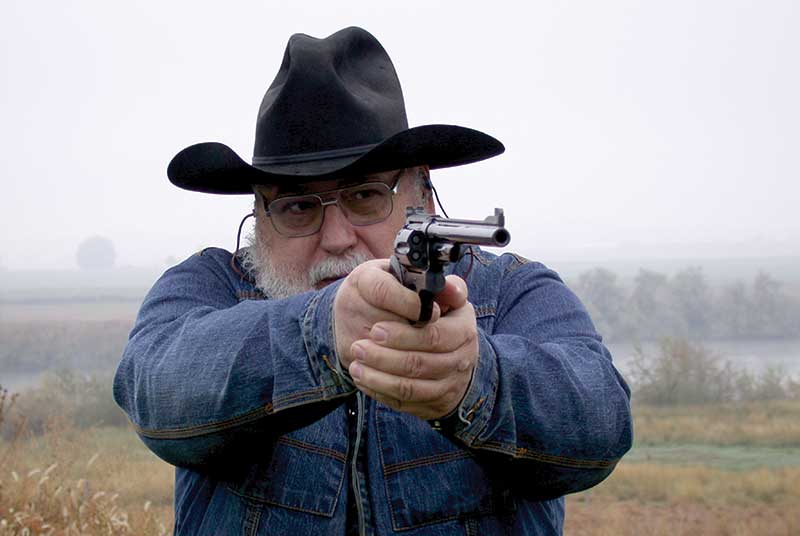
Taffin shooting his long-barreled Smith & Wesson 8-3/8″ .357 Magnum.
The Beginning
The S&W .38/44 Outdoorsman made the .357 Magnum possible and the latter really started in the hunting fields. Sharpe, in his monumental work, Complete Guide To Handloading, published in 1937, said, “The .357 Magnum cartridge was born in the mind of the author several years ago. On a hunting trip with Col. D.B. Wesson, Vice-President of Smith & Wesson, a pair of heavy framed Outdoorsman revolvers was used with a large assortment of handloads developed and previously tested by the author. In the field they proved entirely practical, but Col. Wesson was not content to attempt the development of a Magnum .38 Special cartridge for ordinary revolvers, and set to work on a new gun planned in the field.”
In 1935 their work with the .38/44, as well as, by ammunition companies, resulted in a new cartridge. The .38 Special case was lengthened and a new name was needed. Wesson, of Smith & Wesson, used the diameter of the bullet, .357″ and the French word for a large bottle of champagne, Magnum, and the .357 Magnum arrived. The original load was 15.4 grains of Hercules 2400 under a 158-grain lead bullet and ignited by a large—not small—primer.
The first Magnum sixgun, known appropriately as “The .357 Magnum” was born. The .357 Magnum sixguns were more than simply production guns. Each of the new .357s were specially fitted and finished, and given a registration number in addition to a serial number. In 1935, in the midst of the Great Depression, the new sixgun and cartridge were so popular Smith & Wesson soon dropped the special registration, as they could not keep up with the demand. Back then, $60 was a lot of money, but many shooters were more than willing to pay it to get the finest revolver ever made up to that point.
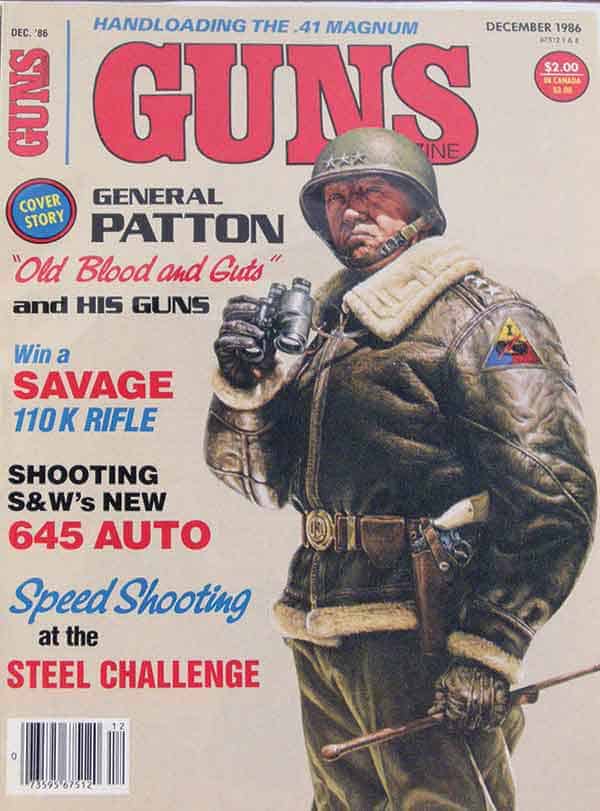
Gen. Patton and his .357 Smith & Wesson were featured on the cover of the December 1986 issue.
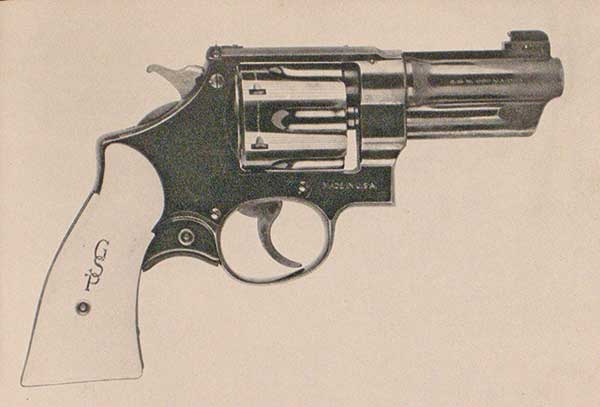
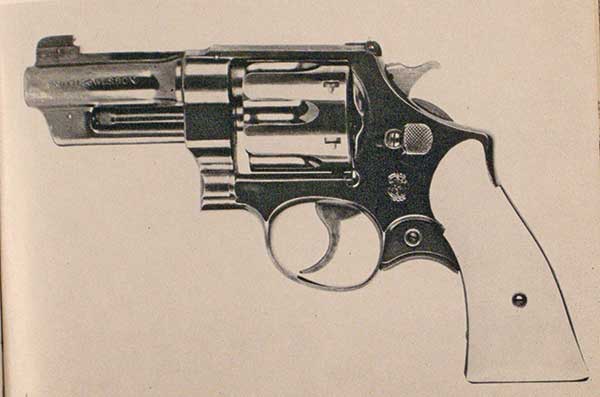
Patton purchased this Smith & Wesson 3-1/2″ Registered Magnum .357 in Hawaii in 1935 and
referred to it as his “killing gun.” The ivory grips had his initials on the right grip panel.
Remember, 1935 was long before the age of instant communication or even gun magazines, except the American Rifleman. Elmer Keith wrote up the .357 for the latter, but opined the barrel was too long and he still preferred the .44 Special. Wesson promoted the new gun and cartridge using both a 6-1/2″ and 8-3/4″ .357 Magnum-taking elk, antelope and black bear. He even went to Alaska with the hopes of taking a brown bear, but was unable to find one. After contemplation, he felt it was a good thing he had not done so. In later years both of these early .357 Magnum, revolvers were owned by Col. Rex Applegate, and it was my privilege to be able to handle them. After his death they were sold, so they now belong to a Smith & Wesson collector somewhere.
Keith’s .38/44 load used his 173-grain 358429 hardcast bullet, which proved too long for use in the .357 Magnum cartridge due to the length of the Smith & Wesson cylinder. Sharpe designed a 158-grain bullet with a shorter nose and less bearing surface for use in the new cartridge, and published extensive reloading data while warning reloaders not to take this cartridge for granted. In the early 1950s it was left to Ray Thompson to come up with the ideal bullet for the .357 Magnum with his gas-checked 358156. Leading was always a problem with both factory and reloads for the .357 Magnum until Thompson solved the issue. I have never been able to get really good accuracy using plain-based bullets in full-house .357 Magnum loads, but the Thompson gas-checked bullet works perfectly. I consider it the number one bullet for standard weight loads in the .357 Magnum.
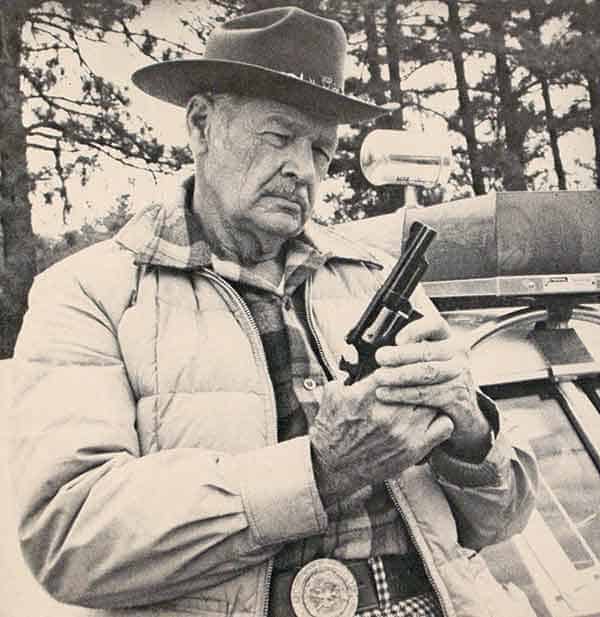
Bill Jordan checks out the trigger pull on his “Peace Officer’s Dream Gun,” the
Smith & Wesson .357 Combat Magnum. Jordan was instrumental in its development.

In the beginning, the .357 Magnum was considered the ultimate big-game revolver.
Here, Col. Doug Wesson of S&W and the moose he took with his .357 Magnum in 1935.
The FBI Gun
Smith & Wesson advertised the .357 Magnum as the most powerful revolver ever made, far above any .44 or .45 available. It was not only promoted by Col. Wesson, but Smith & Wesson was also wise enough to present one of the first production 8-3/4″ .357 Magnums to the then head of the FBI, J. Edgar Hoover. That barrel length was, of course, too long for law enforcement use, however, 4″ and 3-1/2″ .357 Magnums soon became very popular with FBI agents.
Soon-to-be General George Patton purchased a 3-1/2″ .357 Magnum in Hawaii in 1935 and carried it in tandem with his Colt Single Action .45 during World War I. He called the Smith & Wesson .357 his “killing gun.” Even though both his Colt and Smith & Wesson wore ivory grips, contrary to popular belief, they were not finished the same. The Colt was engraved and nickel-plated, while the Smith & Wesson was plain high-polish blue. https://gunsmagazine.com/wp-admin/post.php?post=29220&action=edit#
Those early .357 Magnums may very well be the finest revolvers to ever come from the Smith & Wesson factory. From 1935 to 1939 approximately 5,200 “Registered Magnums” were manufactured. These guns were basically handfitted, beautifully polished and, in addition to a serial number, had a second number, a registration number, placed on the yoke cuts. Patton’s .357 Magnum carried registration No. 506. Registration No. 1 went to Hoover and No. 2 to Sharpe.
Barrel lengths in order of preference were 6-1/2″, 5″, 6″, 8-3/4″, 3-1/2″ and 4″. In 1939 Smith & Wesson dropped the registration procedure and barrel lengths were standardized at 3-1/2″, 5″, 6″, 6-1/2″ and 8-3/8″, not necessarily in order of preference. All of these guns had a beautiful high bright-blue finish (nickel was an extra option) with a fine-line checkering on the barrel rib, top strap and rear sight assembly. Both the backstrap and the frontstrap were serrated and the first grips/stocks were the small old-style found on all N-frames since late 1907. The .357 Magnum was the first Smith & Wesson to be fitted with Magna stocks, which were soon offered as an option. These filled in on both sides of the grip frame to the top of the backstrap.
Of course, production of the .357 Magnum and all other firearms stopped at the beginning of WWII as machinery was geared up for wartime production. After the war, it would be December of 1946 before another .357 Magnum would be produced, and only 142 were manufactured through 1949. One of these went to President Harry Truman. Obviously, .357 Magnums were hard to find.
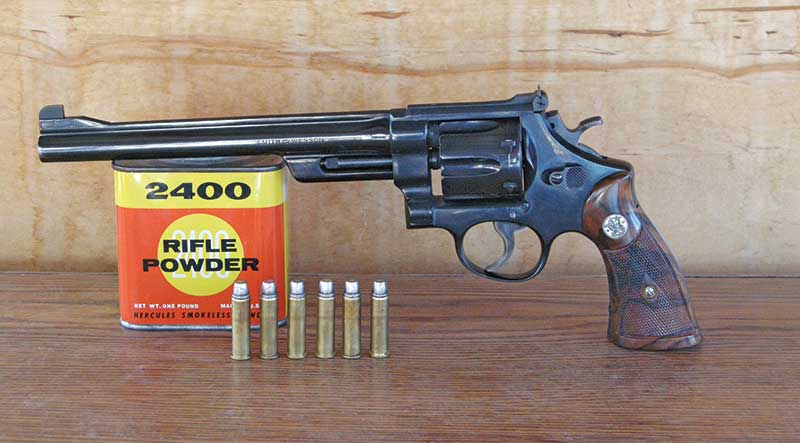
Early advertising by Smith & Wesson about the .357 Magnum proclaimed it to be the most powerful
revolver ever offered. The first factory .357 loads were assembled with Hercules 2400 powder and
75 years later it is still a favorite propellant. Custom stocks are by Keith Brown.
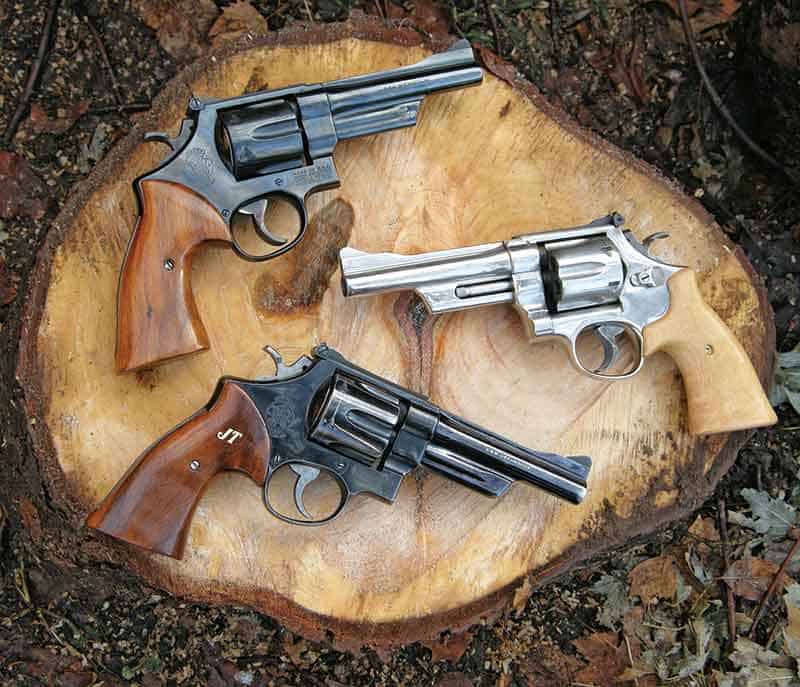
Taffin is a firm believer in the philosophy of a “Pair and a Spare” as exhibited by these 5″ Model 27s.
The 5″ is one of the handiest barrel lengths. Custom stocks are by BearHug and BluMagnum.

Before 1957 Smith & Wessons were known simply as the “.357 Magnum” and these
two from the early 1950s are pre-27s. Custom stocks are by Keith Brown.
Debut Of The Short Action
In 1950 the long action of the .357 Magnum was changed to the current short action, which allowed a shorter distance for the hammer to travel. Skeeter Skelton often remarked how hard it was to find a .357 Magnum in the 1950s. When I started really getting interested in gunshops in 1956, I don’t recall ever seeing any. In fact, I saw the .44 Magnum first.
In 1956, the upper sideplate screw was deleted and the “5-screw” .357 Magnum became a “4-screw” with three screws in the sideplate and one in the front of the triggerguard. One year later, this magnificent revolver, which had been known only as the .357 Magnum since its inception, now became a number instead of a name: the Model 27. Four years later, the screw in the front of the triggerguard was eliminated and the Model 27 became a “3-screw” sixgun.
In 1994 the unbelievable happened, and the .357 Magnum, the Model 27, was dropped from production. However, it was not forgotten and just before the end of the 20th century a new Model 27 appeared. This Performance Center gun bears little resemblance to the original with an 8-shot cylinder and a heavy tapered underlugged barrel. It is a good sixgun, but simply not the same. Just recently, in their Classic Series, Smith & Wesson reintroduced the Model 27 in time for its Diamond Anniversary.
The .357 Magnum, as mentioned, was a beautifully finished revolver, so beautiful in fact, some were reluctant to carry it as a duty gun. In 1954, to answer this “problem,” Smith & Wesson brought out a special version of the .357 Magnum known as the Highway Patrolman. This was a basic no-frills .357. No high polish here as the finish was a matte blue, and also gone was the fine checkering on the top strap. Barrel length was 4″ or 6″ and Magna stocks were standard. The first new Smith & Wesson I ever purchased was a 4″ Highway Patrolman. In 1957 the Highway Patrolman became the Model 28.
Now we had a less fancy .357 Magnum for duty and outdoor use. What’s next? Bill Jordan began petitioning Smith & Wesson to produce a lighter weight .357 Magnum using the Military & Police .38 as the basic platform. In 1955 Smith & Wesson unveiled the .357 Combat Magnum. Using the K-frame .38, a full-length .357 Magnum cylinder was installed matched up with a 4″ bull barrel. The result was a revolver Bill Jordan called “The Peace Officers Dream.” Weighing a full 1/2-pound less than its older brother and with a smaller cylinder diameter, the Combat Magnum was much easier to carry all day.
In 1957 the Combat Magnum became the Model 19. Somehow, .357 Magnum, Highway Patrolman and Combat Magnum stir the sixgunning soul a whole lot more than 27, 28 and 19! In 1963 a 6″ version was introduced for the Model 19, followed by a 2-1/2″ in 1966. In 1970, the Model 19 was produced in stainless steel with the same barrel lengths, and was called the Model 66. In 1999, the Model 19 was dropped, and the Model 66 received the same fate in 2005. Long before they disappeared, they had basically been replaced by the stronger L-Frame, heavy under lugged–barreled Models 586 and 686.
Prior to World War II, Colt chambered their New Service, Shooting Master and Single Action Army in .357 Magnum. Production ceased in 1940. However, in 1954 Colt introduced their .357 Magnum followed by the Python, their Cadillac of revolvers, in 1955, and in 1956, the Colt Single Action Army returned in .357 Magnum.
Ruger’s first centerfire sixgun was the .357 Blackhawk in 1955. This was a true outdoorsman’s sixgun with adjustable sights, a heavy top strap and a Colt-sized grip frame. Since that time, both companies have introduced several other .357 Magnums, including the underrated Ruger GP100 and Colt King Cobra, and we have also seen .357s from manufacturers such as Freedom Arms, Dan Wesson and Taurus.
The .357 Magnum remains extremely popular and is probably the most powerful revolver most shooters can handle really well. We have a long list of revolvers chambered in the original Magnum available today. However, my heart still belongs to the old classics, and especially to the original .357 Magnum. With the Lyman/Thompson 158-grain gas-checked bullet over 14 to 15 grains of 2400 loaded in any of the above, life is quite pleasurable. Happy 75th anniversary to the Smith & Wesson .357 Magnum.
Smith & Wesson
2100 Roosevelt Avenue
Springfield, MA 01104
(800) 331-0852, www.smith-wesson.com
BluMagnum
2605 East Willamette Avenue
Colorado Springs, CO 80909
(719) 632-9417, www.blu-magnum.com
Herrett’s STOCKS
P.O. Box 741, Twin Falls, ID 83303
(208) 733-1498, www.herrettstocks.com
Keith Brown Grips
3586 Crab Orchard Avenue
Beavercreek, OH 45430
(937) 426-4147
www.kbgrips.com
Categories
Huh!




Categories
Winchester M1 Garand at 100 Yards

A federal judge is blocking a California law that would mandate certain safety features for semiautomatic handguns.
U.S. District Judge Cormac Carney on Monday ruled in favor of the California Rifle & Pistol Association (CRPA) and four individuals who had said the law violates the Second Amendment right to keep and bear arms since no new guns being manufactured complied with it, Reuters reported.
The plaintiffs noted that gun buyers in California were de facto limited to purchasing models from before 2013, the year when the law fully took effect.
California’s Unsafe Handgun Act, enacted in 2001, requires new semiautomatic weapons to have an indicator showing when there is a round in the chamber and a mechanism to prevent firing when the magazine is not fully inserted in case to prevent an accidental discharge, according to Reuters.
The state law also requires handguns to implement microstamping, where a serial number will be stamped on each bullet fired.
Carney, who was appointed by former President George W. Bush, also said in his ruling that the state failed to point out any historical parallels for its law, adding that residents “should not be forced to settle for decade-old models of handguns.”
CRPA President Chuck Michel celebrated the court ruling in a statement saying: “If we can hold on to this great Second Amendment win, people will be able to choose from among thousands of the latest, greatest and safest handguns made today.”
Carney noted that the state has 14 days to appeal his ruling, Reuters reported.
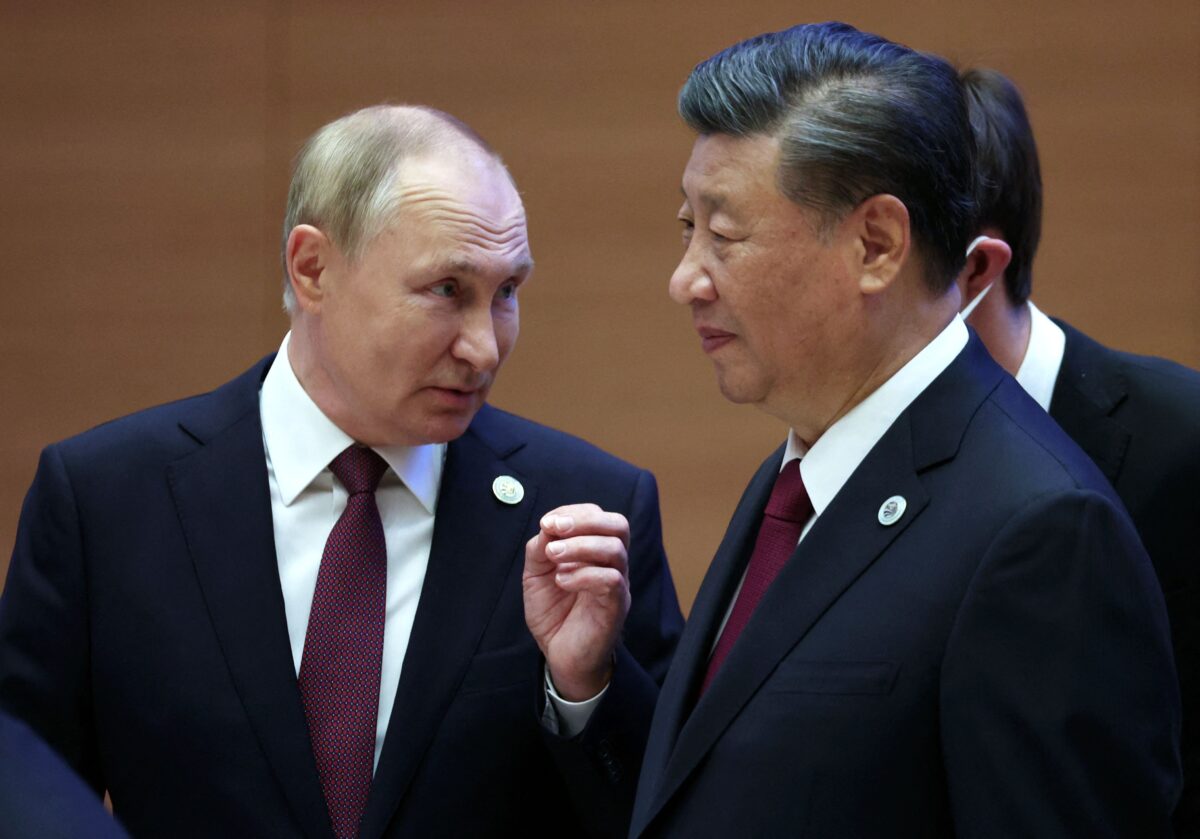
Russian President Vladimir Putin speaks to China’s President Xi Jinping during the Shanghai Cooperation Organisation (SCO) leaders’ summit in Samarkand on September 16, 2022. (Sergei Bobylov/SPUTNIK/AFP via Getty Images)

March 20, 2023Updated: March 20, 2023
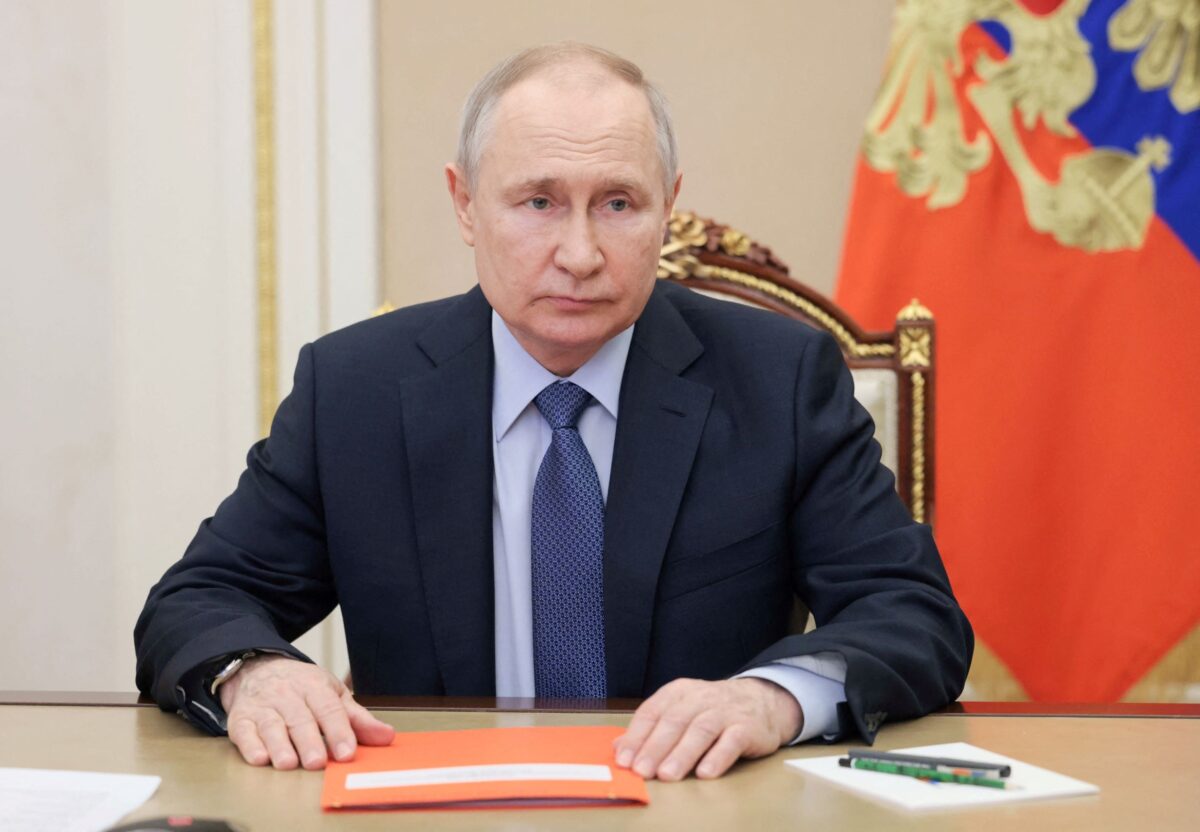
Chinese leader Xi Jinping’s meeting with Russian President Vladimir Putin is aimed at furthering the Chinese Communist Party’s (CCP) designs against the United States, according to analysts.
Xi’s March 20 to March 23 visit to Moscow is his first to the country since Putin’s February 2022 invasion and comes on the heels of Beijing’s brokering a resumption of diplomatic relations between Iran and Saudi Arabia. Weeks before Russia’s invasion of Ukraine, Xi and Putin declared a “no limits” partnership, and ties between the two countries have only deepened since then.
The meeting was announced on Friday, incidentally not long after the International Court of Justice issued an arrest warrant for Putin for war crimes.
The timing of the visit is critical for both Xi and Putin, experts say.
“I think that Beijing—like most of the rest of the world—is worried that the conflict might escalate to nuclear warfare that would harm their own plans as much as anyone else,” said Brandon Weichert, a U.S.-based geopolitical analyst and author of the book “Winning Space: How America Remains a Superpower.”
“At the same time, though, Beijing doesn’t mind seeing their two biggest competitors, Russia and the U.S., bleeding each other in Europe while China has free reign in the Indo-Pacific,” he told The Epoch Times.
Timing
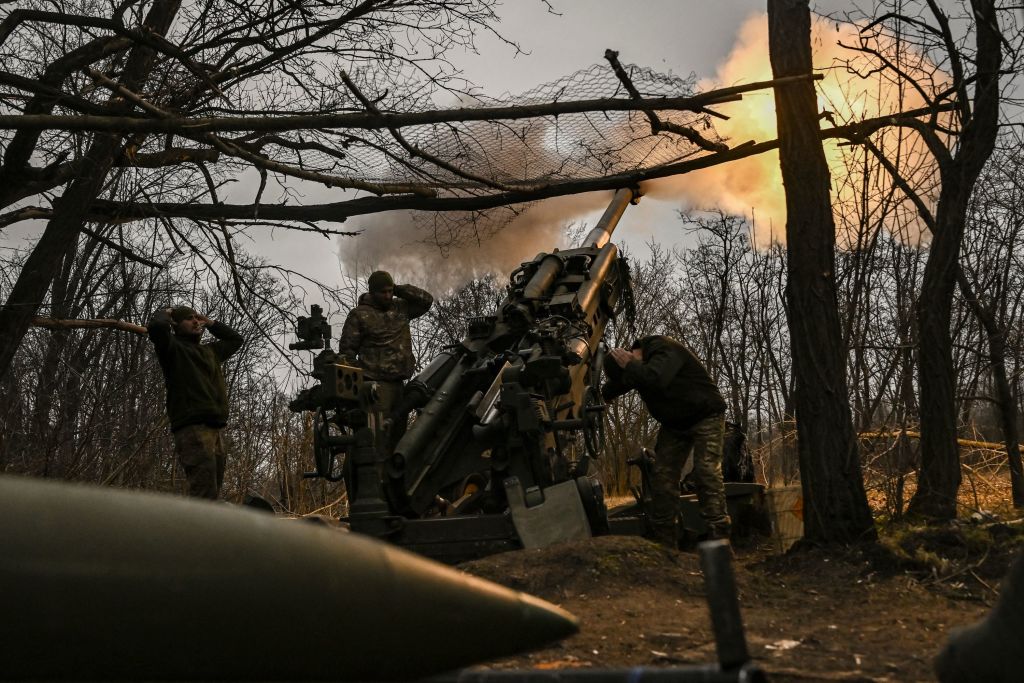
The meeting comes as Russia slowly makes advances in its monthslong operation to capture the eastern Ukraine city of Bakhmut. The bloody battle has led to massive losses on both sides, especially the Russians.
Madhav Nalapat, a strategic affairs analyst and vice chair of the India-based Manipal Advanced Research Group said that Xi and Putin are meeting at a time when the war in Ukraine is entering a stage where it can either end conclusively or can drag out into a stalemate.
“Putin is under pressure from his commanders to unleash the full fury of Russian weapons against Ukraine rather than have the war get prolonged,” Nalapat told The Epoch Times. “Xi clearly wants to know whether Putin will go all out or continue with the present tactics.”
To Frank Lehberger, a Germany-based Sinologist, Xi and Putin’s “hasty arrangement” and secret get together” on Monday is because the Russian military is on the “brink of collapse” in Ukraine.
“Xi Jinping, who is since last week the sole autocrat of China, is anxious not to let this happen, because a military rout of Russian armies in Ukraine would be the end of Putin’s autocratic and anti-Western regime of Russia,” Lehberger told The Epoch Times in an email.
The Russian army has lost nearly 200,000 soldiers in the war, according to Western officials, and at least 500,000 Russians have fled the country since the war started. Lehberger said that Russian elites and nationalist hardliners are angry with Putin and hold him responsible for the situation, wanting an end to Putin’s dream to recreate a Russian empire in Europe.
“Putin desperately needs Xi to come now and pledge his help, or it will be too late for Putin and his dreams of an autocratic empire,” said Lehberger.
“Xi knows all this, and he also desperately needs Russia to fight on ….not only against Ukrainians but by association against the entire democratic West or NATO, which are the CCP’s existential enemies.”
Nalapat said that Russia losing a war to Ukraine would weaken China’s position significantly in the international order and the timing of the meeting is mindful of that.
Lethal Arms for Russia
There has been rising apprehension about China supplying military assistance to Russia. Secretary of State Anthony Blinken said last month that China is already providing “non-lethal” weapons to Russia during the war and is considering supplying lethal ones. Beijing denies these claims.
While much has been made of Xi’s purported role as peacemaker in the conflict, experts said that this is just a smokescreen, pointing to Beijing’s supply of “dual-use” equipment to Moscow that aids its military efforts.
Weichert said that China has long been providing “vital support and supplies” to Russia.
“The Biden administration knows full well that there are Chinese ‘technicians’ working alongside Wagner Group units in Bakhmut, helping them to maintain the drone fleets that Chinese drone makers have sold to the Russians,” he said, referring to the private mercenary group.
The Wagner Group purchased more than 2,500 Chinese drones in a deal between the mercenary group and Russian and Chinese intelligence, British media outlet Daily Mirror reported, citing a UK intelligence report.
Nalapat said that misleading the enemy is a “standard operating procedure” for the CCP, noting that the regime is supplying arms to Russia through discrete channels.
“Do you believe that the flood of weapons, many sophisticated, coming to Russia from North Korea and Iran have all been made in those two countries?” he said.
According to a recent Politico report citing customs data, Chinese firms have exported 1,000 assault rifles and other equipment to Moscow that could be used in the conflict.
In June 2022, for example, Russian firm Tekhkrim imported rifles from China North Industries Group Corporation Limited, a large state-owned defense contractor. The data also showed that Russian companies received 12 shipments of drone parts and over 12 tons of body armor from China via Turkey in late 2022.
In response to this report, White House National Security Council spokesperson John Kirby told The Epoch Times that the administration couldn’t confirm that China has in fact provided lethal aid to Russia.
Lehberger said that “All these activities are in contravention of current international sanctions,” adding that the reported efforts are only the tip of the iceberg.
In addition to Iran and North Korea, China is also sending arms to Russia through other countries like Myanmar, Serbia, Turkey, and Russia’s staunch ally in Europe, Belarus, according to Lehberger.
After his summit with Putin, Xi will talk via satellite link to Ukrainian President Volodymyr Zelenskyy for the first time since the invasion. Lehberger termed this as Xi’s “make-believe peace mission.”
According to the expert, Xi will aim at a temporary cease-fire to earn recovery time for Putin’s depleted army and Russia will “at a later time” attack Ukraine more fiercely.
Lehberger said that the CCP will continue to supply arms to Russia for at least another two years, because he believes that Xi has plans to take over Taiwan in 2025 and would thus wish to use prolonged Ukraine-Russian conflict to stun or weaken the United States and other Western powers.
China’s Economic Stake
Experts said that China has long-term economic agendas vis-a-vis the Russia-Ukraine war and its economic goals over the next decades are linked with Beijing’s subjugation of the Russian economy.
“Russia is squarely in the camp of China’s new empire; the vast Russian wilderness will become protein for which the dragon can feed on as it rises over the next decade, and Putin will become a powerful vassal prince under Xi Jinping,” said Weichert, adding that fusing the Chinese and Russian economies would be a major victory for Xi and for that, it would need Russia to be ensnared in a protracted conflict with Ukraine.
Nalapat said that Russia has become China’s most important supplier of industrial raw materials at discounted prices. The two countries want to work together to topple the U.S. dollar as the global reserve currency.
“A weakened U.S. dollar would in their view boost their own currencies, especially the RMB [Chinese yuan]. For some time, much of U.S. deficit funding has come from increases in overseas purchases of USD as a reserve currency, and a dollar reset would significantly crimp the ability to spend of the U.S. government,” he said.
Xi wants the United States to not only be weakened but also be deprived of reliable and functioning allies within Europe, according to Lehberger who sees the Ukraine war as vital to Beijing’s economic game plan against Washington.
“A weak E.U. will then be earmarked to become an economic dependency of China,” Lehberger said.