Categories
Author: Grumpy
The cocktail that beat the Nazis in Egypt
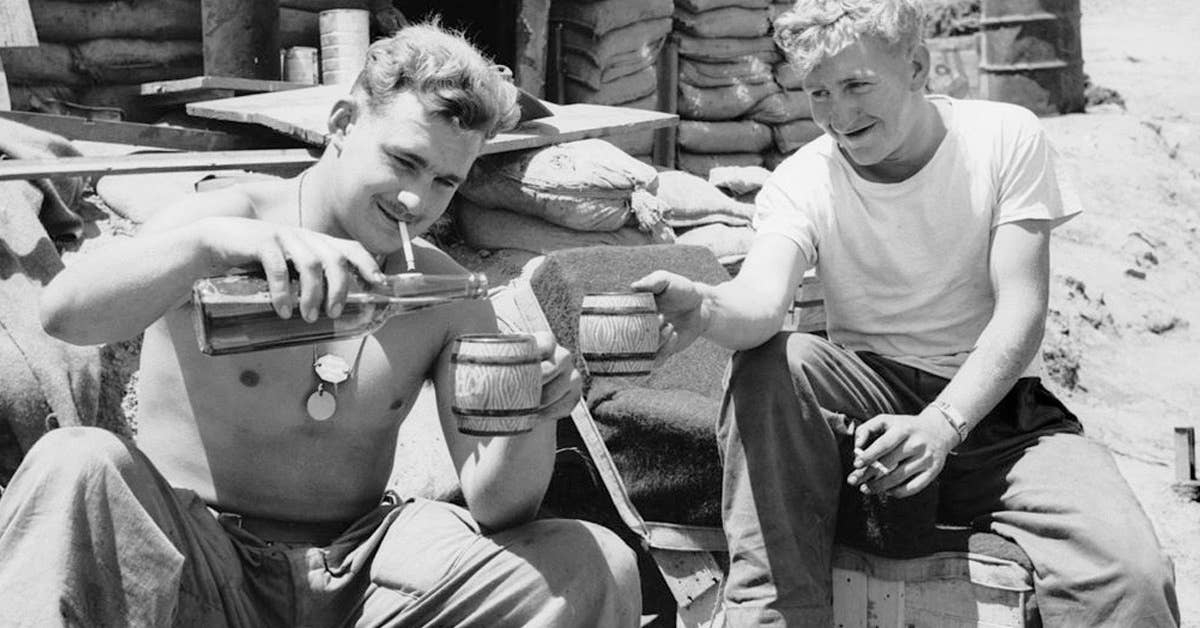
When considering the origins of legendary cocktails, it’s doubtful that Egypt is the first place to spring into anyone’s mind. Like many culinary innovations made during World War II, “The Suffering Bastard” is a concoction birthed from a world of limited supplies in which everyone had to make do with whatever they could get their hands on – and it shows.
The Suffering Bastard is a legendary beverage, created by a legendary barman, in time and place where new legends were born every day. The unlikely mixture is said to have turned the tides of the war against Erwin Rommel’s Afrika Corps in Egypt. True or not, it succeeded in its original mission: curing the hangovers of British troops so they could push Rommel back to Tunisia.
In 1941, World War II was not going well for the British Empire. Even though the previous year saw British and Imperial troops capture more than 100,000 Italian Axis troops in North Africa, Hitler soon sent in his vaunted Afrika Corps to bolster Axis forces in the region.
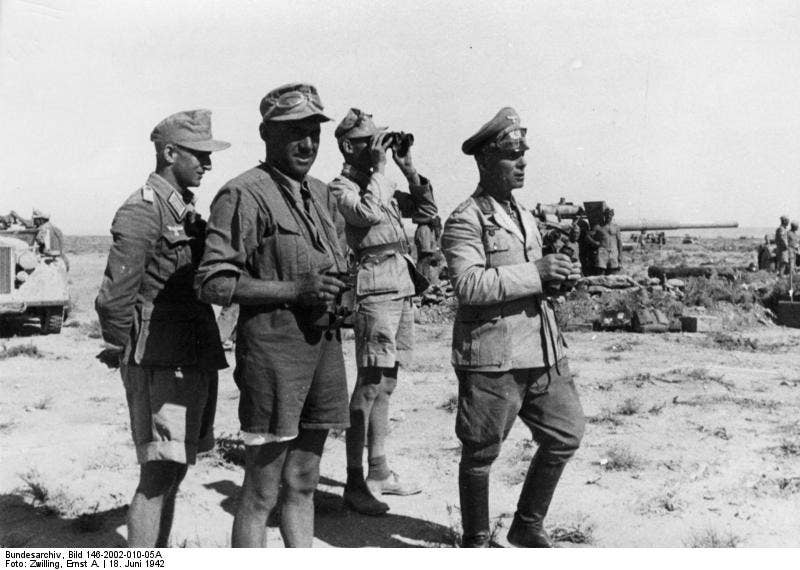
Up against crack German troops led by capable tank strategist and Field Marshal, Erwin Rommel, the British experienced a number of defeats in the early months of 1941. They were pushed out of Libya and the lines were within 150 miles of the Egyptian capital of Cairo. His goal was to capture the Suez Canal and cut the British Empire in two.
During the Battle of El-Alamein, Rommel was quoted as saying “I’ll be drinking champagne in the master suite at Shepheard’s soon,” referring to the world-famous Shepheard’s Hotel in Cairo. Inside the hotel was the well-known Long Bar and behind that bar was bartender, Joe Scialom, whose stories could rival anyone’s, from Ernest Hemingway to Ian Fleming.
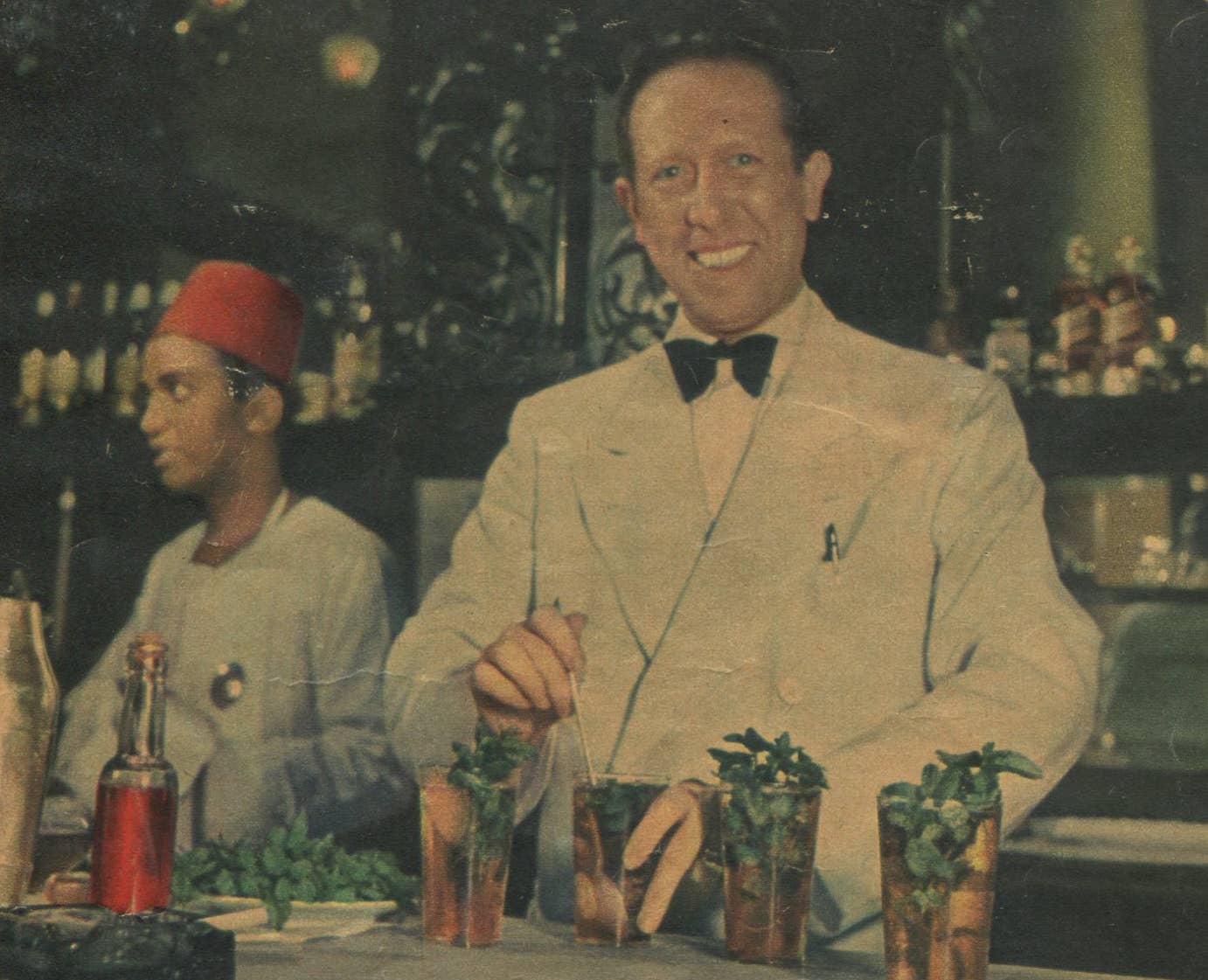
Scialom was a Jewish Egyptian with Italian roots. Born in Egypt, he was a trained chemist who worked in Sudan in his formative years but soon found he enjoyed applying the principles of chemistry to making drinks. The chemist-turned-barman who spoke eight languages would eventually travel the world over, to Cairo, Havana, London, Paris, Rome, Istanbul, and Manhattan, drinking alongside folks like Winston Churchill and Conrad Hilton. Much of that would come later, however. In 1941, he was the barkeep at the Long Bar and he was faced with a unique problem.
The war made it very difficult to get good liquor in Egypt. British officers resorted to drinking liquor that wasn’t made of such high quality and soon began complaining about terrible hangovers. In an effort to do his part for the British, Scialom set out to make a drink that would give them the effect they wanted while curing their inevitable hangovers. He used an unlikely combination of bourbon and gin along with added lime, ginger ale, and bitters to create a drink that did the job perfectly.
Many variations on the original recipe exist, to include ingredients like pineapple syrup and rum, but the original Suffering Bastard used bourbon and gin as its base.
The Recipe:
- Equal parts Bourbon, Gin, and Lime Juice
- A dash of Angostura bitters
- Top off with ginger beer
His creation was so successful in fact, in 1942, he received a telegram from the British front lines asking for eight gallons of the cocktail to be brought to the front at El-Alamein. Scialom filled any container he could find with Suffering Bastard and shipped it off to the war.
The first Battle of El Alamein in 1942 resulted in a stalemate. The Axis supply lines from Libya were stretched out to their breaking point and Rommel could not press on to Alexandria. Before the second Battle of El Alamein, the ranking British general, Claude Auchinleck, was replaced. His spot eventually taken by one General Bernard Montgomery. The next time the two sides met at El Alamein, Montgomery was in command and British hangovers were a thing of the past. Monty and the British Empire troops turned Rommel away and pushed him westward toward an eventual defeat.
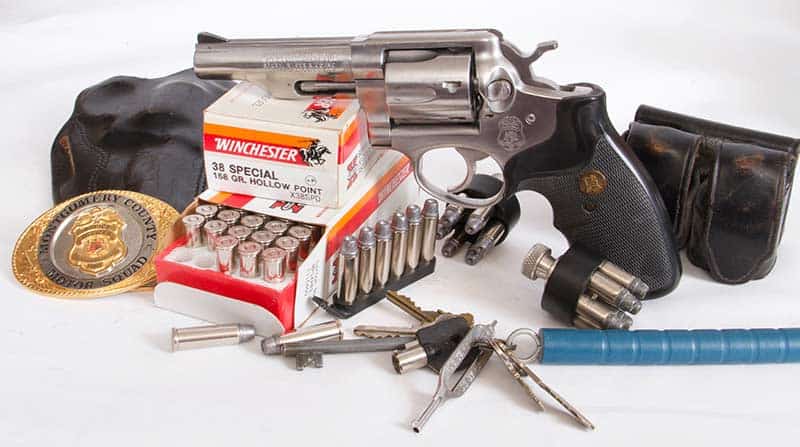
Mid-80s gear flashback: Pachmayr grips, kubaton keychain,
speed loaders, speed strips and wheelguns. Winchester +P 158
grain SWC HP ammo, known as the FBI load, was our duty load.
On September 23, 1985, I entered the portals of the Montgomery County Police Academy, as a fresh young police recruit. We were told to report to the main lobby, later affectionately called “hitting the bricks” due to the brick floor it had. Here, we were indoctrinated to becoming police officers. Hopefully …
Shooting
Our instructors were police officers themselves, comprised mostly of 10+ year veterans. They seemed ancient compared to a bunch of raw recruits. They were a salty, savvy bunch of old-timers who seemed to know it all. Looking back now, being in their early to mid-30s, they were nothing but kids themselves. Isn’t it funny how perspective changes over time?
After going over the four basic cardinal rules of firearm safety we went over the basics of grip, stance, sight alignment, trigger pull and follow-through. Then, we were each assigned a shooting lane on the range, with our own box of cartridges and issued revolver. Remember now, this was 1985.
Our service gun was a 4” Ruger Service-Six chambered in .38 Special. Commands were given to load and holster. Oh, boy! This was it. Shooting BB guns since I was 5, then progressing to a .22 rifle and several center-fire rifles, I was familiar with the concepts of sight picture and had a pretty educated trigger-finger. But I’d never applied these skills to the revolver.
Commands were given to “watch your targets” as the bladed targets turned broadside, and the range erupted in gun fire.
DA Only
We were taught to shoot double action only. After all, we were going be cops, and that’s how cops shot. We shot thousands of rounds of ammo during firearms training. I don’t remember the brand of ammo, but it was dirty, leading fiercely, obviously low bid.
Our barrels leaded so much the bullets eventually keyholed on target. I was introduced to the Lewis Lead-Remover, which efficiently removed the lead from the barrel’s grooves.
After every shooting session, our guns and hands were covered in black soot. The smell of burnt powder, oil and Hoppes #9 was forever etched in my brain, as we scrubbed our guns. It was during this time. my love for revolvers and double-action shooting was ingrained in me.
Rules to Live By
We were told, under no circumstances, to clip any springs or work on our duty guns, to give them a better trigger or slicker action. Also, any ivory, stag or “flashy” replacement stocks were also prohibited. As time passed, I began to understand why.
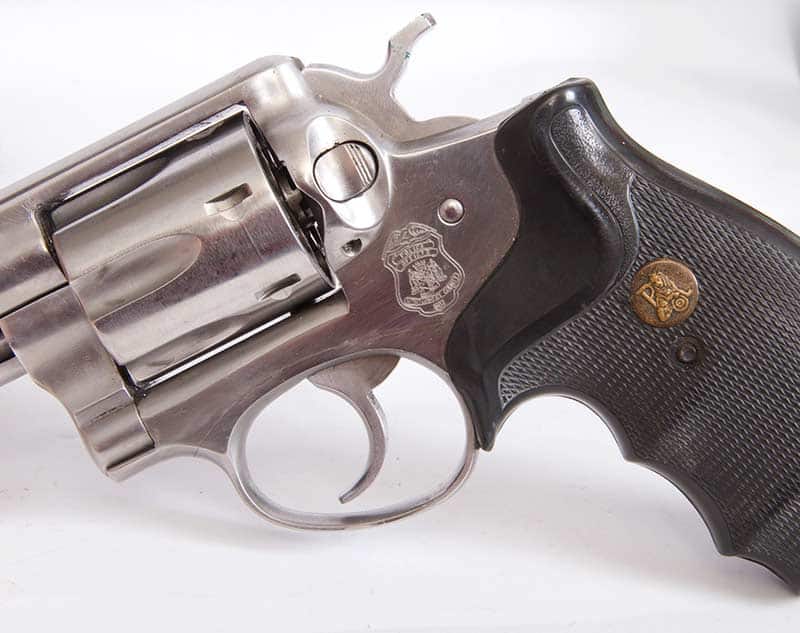
Tank’s department had their badge engraved onto
the side-plate for a nice personal touch.
“Just Shoot It!”
The Ruger Service-Six has fixed sights, unlike the Ruger Security-Six, which has adjustable sights. You’re stuck with the point of impact with a Service-Six, but its fixed sights are much more durable. My gun tended to shoot 2” left with the ammo we shot at 25 yards. When I raised this point, it was confirmed by a grizzled instructor. His stare made me feel foolish, as he grunted, “aim a little right, you’ll be alright” and walked away. The code back then was, a good shot didn’t complain, or make excuses, they just shot.
Other issues arose from other candidates and the answer was always the same,” Just shoot it! You’ll figure it out.” I guess this is where my “out of the box” philosophy comes from, just shoot the gun … you’ll figure it out …
Qualification
We shot a modified version of the PPC course for qualification since we only had a 25-yard range. A 70% or better average for three courses of fire on the B-27 target was needed to graduate.
Back then, we carried six rounds in the gun and two speed loaders, for a total of 18 rounds. I still hear the range master’s muffled voice over the intercom, through my earmuffs, “This first course of fire is 12 shots in 20 seconds … watch your targets!” Like coiled springs, we waited for the bladed target frames to turn …
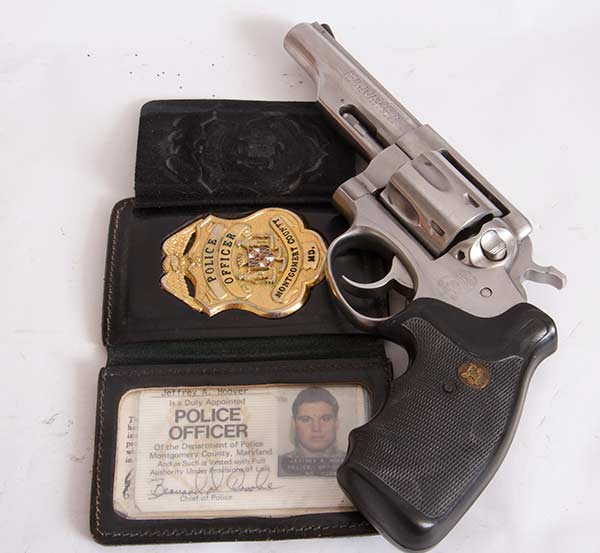
Tank’s old police credentials. What happened?
Symphony of Skills
Shooting 12 shots with a revolver entails firing your first six rounds, placing your revolver in your weak hand, dumping brass, grabbing your speed loader, lining up six bullets to six chambers, releasing them, then closing your cylinder, returning your gun to your strong hand while re-establishing your grip and firing your final six rounds.
It’s a complex symphony of both gross and fine motor skills. Shear repetition made us masters at it. The total course of fire was 60 rounds, consisting of kneeling, prone, left- and right-hand barricade positions, from 7-, 15- and 25-yard distances.
Progression…
Afterwards, our instructors came up with a more practical course of fire for qualification. We started shooting on the move, taking advantage of cover and concealment, while doing “hot” tactical re-loads and real-life scenarios. The training improved, getting us to think, “what if…”
Finally …
Shooting is a perishable skill. You need practice to stay proficient. Shooting is the least used skill in police work but the most important. Conversely, some of the best street cops I worked with were terrible shots while some of the best shots were terrible street cops. Like life, sometimes it just doesn’t make sense at all.
I put one on a 30-06 of mine and went to the range to zero it in. After a couple of round later, a few REALLY pissed off folks told me to leave. So learn from my mistakes okay? Grumpy


