— humans without context (@HumansNoContext) September 4, 2023
Author: Grumpy
Franchi USA’s Affinity lineup of semi-automatic shotguns has grown over the years with increasing popularity among waterfowlers, upland hunters and clay target shooters, providing well-built guns, made in Italy and feature a tried-and-true operating system developed by Benelli. Now Franchi offers a premium version of its Affinity-series shotgun to passionate turkey hunters. Watch the video above to see the Affinity 3 Turkey Elite in 20 gauge on the range.
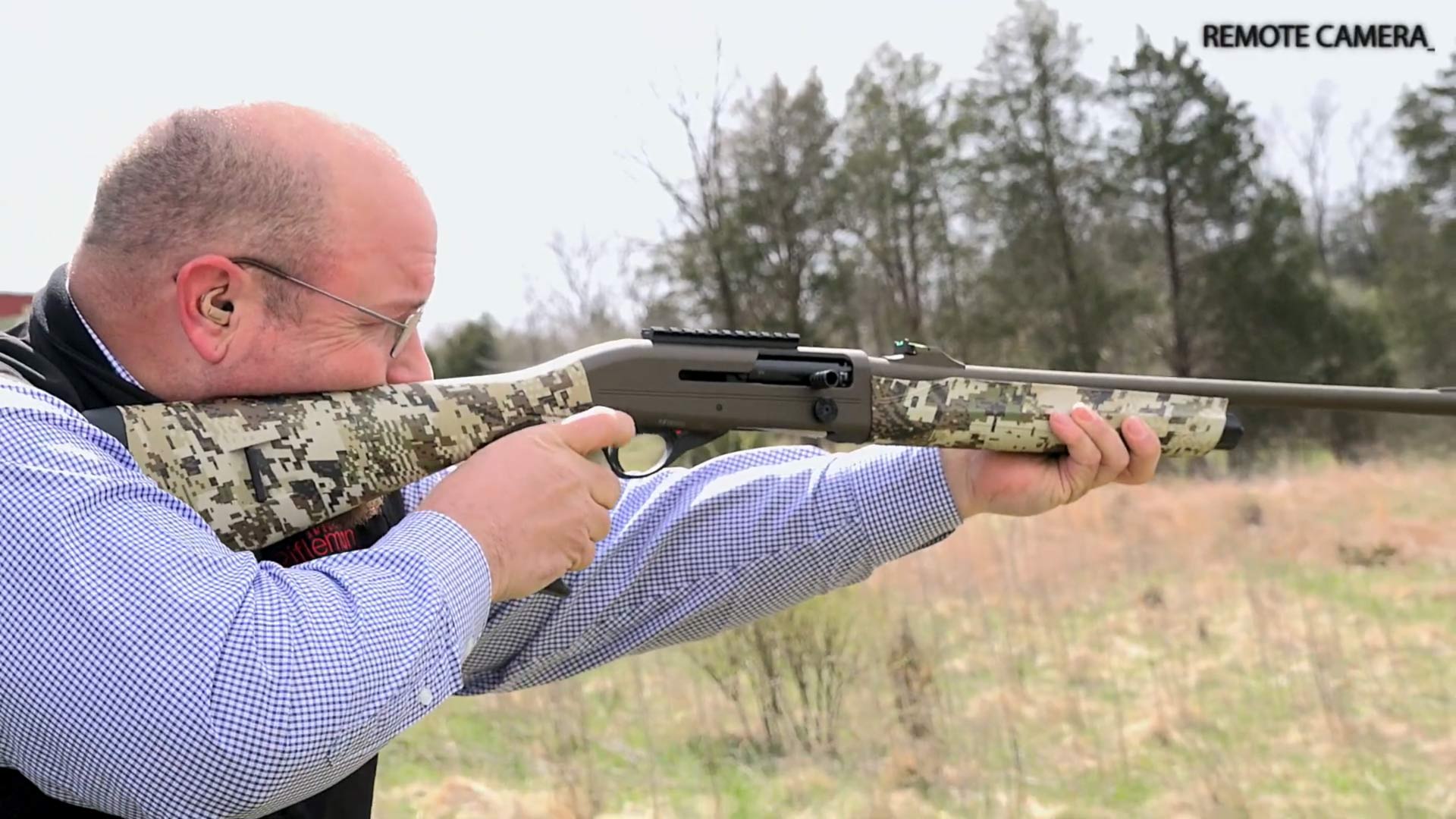
The Franchi Affinity Turkey Elite provides a robust inertia-driven operating system wrapped within an aluminum receiver featuring Cerakote’s Midnight Bronze finish. The gun’s chrome-lined barrel comes with a ventilated rib and also covered in Cerakote’s premium finish to withstand the worst Mother Nature has to offer. Though Franchi has included a long list of creature comforts that really make this latest Affinity series a truly dedicated turkey-hunting gun, its features lend utility to hunting myriad big game animals while also serving as a defensive tool.
Proprietary forcing cones within the barrel work to reduce recoil and improve down-range pattern consistency, which is important when hunting wary, call-shy birds. Franchi USA includes a set of Rhino choke tubes, long and extra long range. Ports in the tube work to redirect expanding gas recoil mitigation, enabling its user to maintain eyes on target. The tube’s extended length gives a boost in ballistic performance and its machined exterior makes for easy changing.
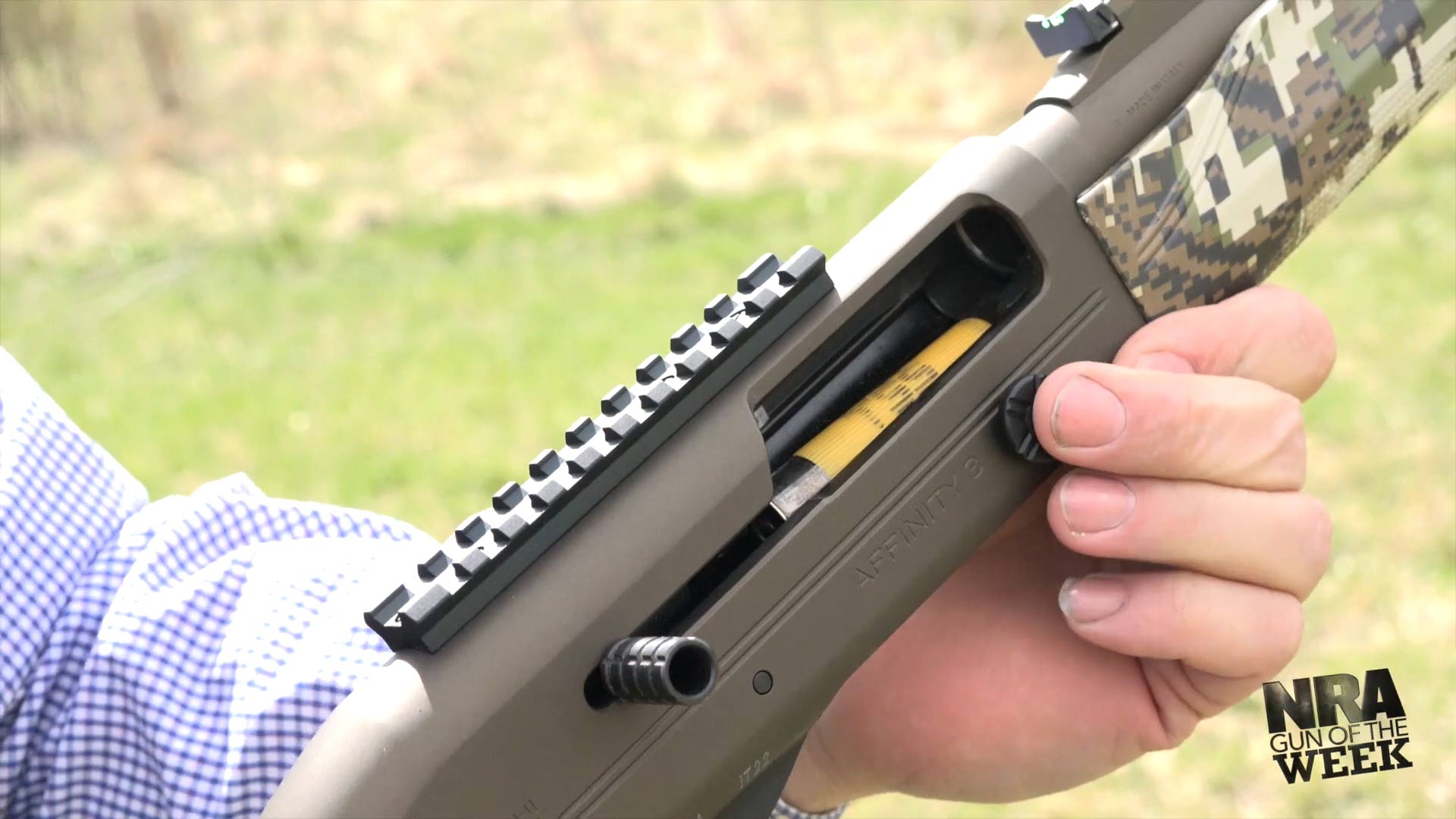
Aiding the performance of the Affinity 3 Turkey Elite setup is a premium set of fiber-optic, rifle-type sights. The rear unit is adjustable for elevation and windage to effectively dial-in shot placement, and the front post is fixed with a hood for glare reduction and protection. In addition, Franchi includes a drilled-and-tapped receiver with a Picatinny rail for mounting optics.

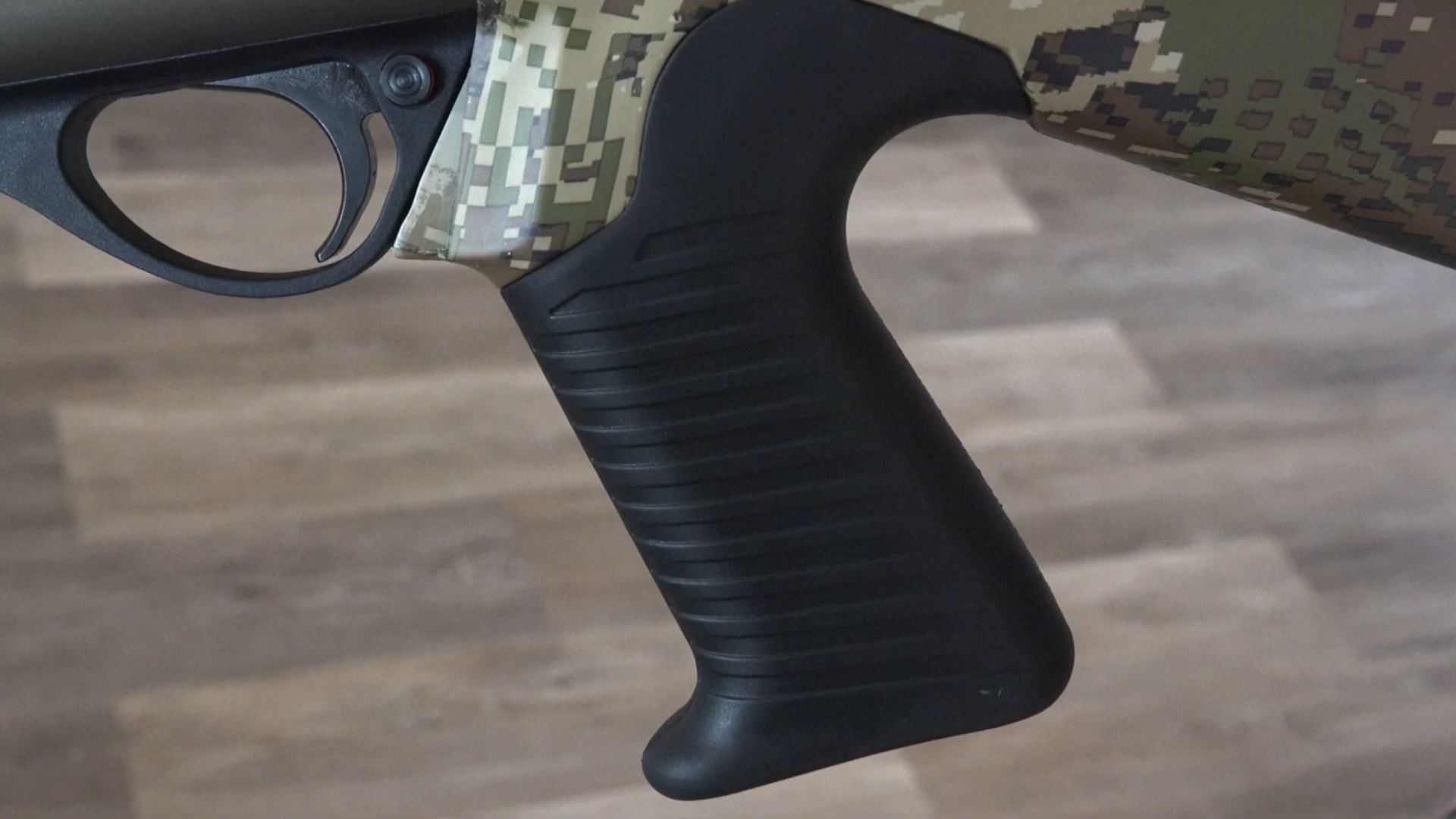
On the range, the Franchi Affinity 3 Turkey Elite proved its ability to consistently print patterns on target, and at distance. The addition of a vertical grip pairs nicely with the gun setup as a dedicated turkey-hunting rig. The use of Gore’s Optifade Subalpine camouflage is a nice addition, too. An enlarged loading port, oversized controls and a cross-bolt safety, we found, are a boon to fully clothed hunters. Our testers noted the gun’s ergonomics as being woods friendly, providing all of the features you need with nothing you don’t.
Specifications
Importer: Franchi USA
Model: Affinity 3 Turkey Elite
Action Type: recoil-operated, semi-automatic shotgun
Gauge: 20; 3″ chamber
Barrel: 24″ chrome-lined steel
Receiver: aluminum
Finish: Cerakote Midnight Bronze
Stock: polymer; Optifade Subalpine camouflage finish, black pistol grip
Length: 41″
Weight: 6.8 lbs.
MSRP: $1,279

Categories
Lee Enfield bolt.
Categories
MarColMar CETME LC

Table of contents
A Playful Game Goes Awry
A simple game of “cops and robbers” turned a child’s world upside down at Bagley Elementary School in Alabama last month.
J.B. Belcher, just 6, mimicked a finger gun, and was then thrust into an adult situation, reported Fox News Digital.
A Distress Signal from the School
“He was terrified, rightfully so,” shared Jerrod Belcher, J.B.’s dad, revealing that his son faced an interrogation and was forced to sign a Class III infraction form for using finger guns.
Comparing Imaginary Finger Guns to Real Threats?
Labeling a child’s playful act alongside serious offenses like arson and bomb threats, as a Class III infraction?
The suspension notice claims J.B. committed a “3.22 Threat” infraction, akin to threats involving actual weapons.
Signature of Innocence
A document, bearing J.B.’s hesitant, childlike signature, screams the absurdity of expecting such young ones to grasp these adult concepts.
Belcher’s attorney, M. Reed Martz, underscores that it highlights the ludicrousness of the school’s approach.
Can Play Equal Violence?
Arson, assault, and threats are all severe. But finger guns? Fox News’ Laura Ingraham and many others ponder if they can reasonably share a category.
A Slight Reprieve But Not Enough
J.B.’s back in class with a downgraded Class II Infraction, yet the family demands the district to erase this blip from his record, refusing to let him be labeled violent or dangerous.
“Additionally, the school must remove any label, warning, or other sort of classification of J.B. as a potentially violent or dangerous student,” says the letter drafted by Martz.
Not an Isolated Incident
Sadly, this isn’t the school’s first rodeo. Another 6-year-old faced a Class III infraction last year for a water gun incident.
These youngsters are ensnared in surprisingly harsh, adult situations for mere child’s play.
More Harmful Than a Punch?
The bizarre irony: a finger gun is deemed more dangerous than a physical punch in this school’s eyes. Belcher aptly points out the non-existent injury record from finger guns in history.
“It should be noted that punching or hitting a student would have only been a Class II violation, so in the eyes of these school administrators, a finger gun is more serious than punching a classmate in the nose,” Belcher told FOX News Digital.
“Many noses have been broken by fists, but in the last 600 years since the invention of firearms, not a single person has been so much as bruised by a ‘finger gun,’” he added.
Taking a Stand
Martz and the Belcher family are demanding a rectification, hopeful it won’t reach legal complexities. They’ve given the Board of Education a deadline to acknowledge the situation’s absurdity and act.
Finger Guns Vs. Reality
So here we are, questioning: how did we get to a point where a child’s imaginative play leads to genuine fear, threat labeling, and potential legal action?
The recoil from this scenario sparks a broader debate about our school systems, children’s rights, and how best to safeguard both.
Let’s aim for a future where child’s play isn’t court material.
Categories
Well I thought it was funny!
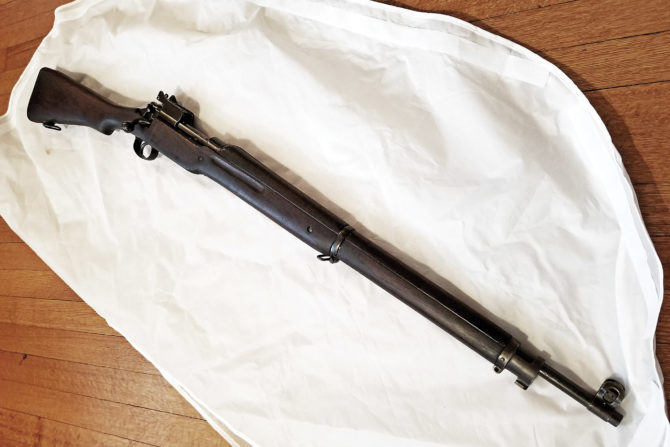
Some firearms have interesting backstories; this is especially true with military firearms — many of which are designed to address a need, fill a gap, or overcome a perceived inferiority. It may be difficult to believe but the best bolt-action battle rifle of the 20th century, the No1 Mk III or SMLE (Short Magazine Lee Enfield), and its descendants were almost consigned to the scrap heap before World War I.
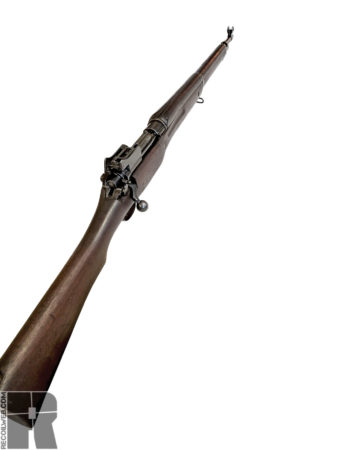
The British Army had an extremely difficult time subduing the Boers in South Africa. The Boers used terrain extremely effectively and were excellent at bushcraft. Additionally, most of them were accomplished marksmen and careful hunters. This combination of traits, combined with overconfidence and gross underestimation of enemy capability, led to a number of embarrassing British defeats. Like most organizations that experience difficulties that should have been “beneath them,” the British Army sought a scapegoat and found it in the Enfield rifle and the .303 cartridge. As the somewhat apocryphal story goes, it wasn’t the Boers’ excellent skill as irregular soldiers that stymied the British, but their damn powerful and accurate 7mm Mausers; it was a more comfortable thought.
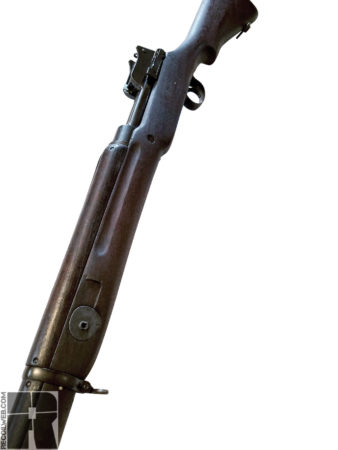
In the aftermath of the Boer Wars, Britain set out to design a new infantry rifle that emulated the traits of the Boers’ Mausers. It would have a stronger action and a more powerful cartridge, and it would “close the gap” so the army wouldn’t suffer any more embarrassing defeats … or something like that.
The resulting rifle was the “forgotten” Enfield, the Pattern 14. Originally designed to chamber the new .276 Enfield cartridge, the bulk of all P14s made were chambered in .303 British. The simple reason was that WWI began well before mass production of the rifle could get underway. Since the new action was stronger, there was absolutely no problem chambering the P14 Enfield rifle in .303 British. In fact, the basic core of the P14 went on to create the P17 chambered in .30-06, and the P17 arguably armed more of the Americans in the trenches in 1917 and 1918 than the M1903 Springfield. What’s more, the action was so strong, it’d be readily modified to accept more powerful cartridges than the .30-06, and many were sporterized as such for hunting by companies after both World Wars.
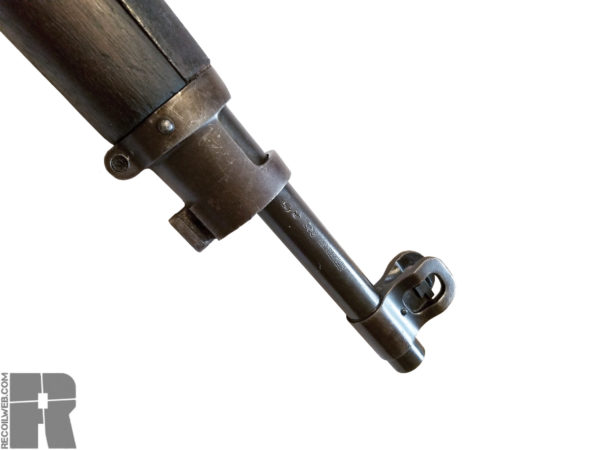
The differences between the P14 Enfield Rifle and the SMLE are striking. The P14 has a five-round internal magazine instead of a detachable 10-round box magazine. The P14 has graduated peep sights instead of conventional notch and post rifle sights. The P14 bolt is clearly a Mauser derivative, and the receiver is significantly different.
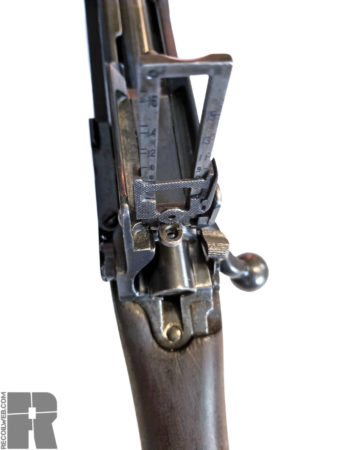
However, unlike most Mausers, the British retained the cock-on-opening feature of the earlier SMLE. This feature was extremely important to the British Army. It made rapid fire easier to achieve. Soldiers were paid small bonuses for higher musketry (marksmanship) scores, and [largely] free access to ammunition and range time was common. Further, the P14 Enfield Rifle maintained the volley sights of the earlier SMLE.
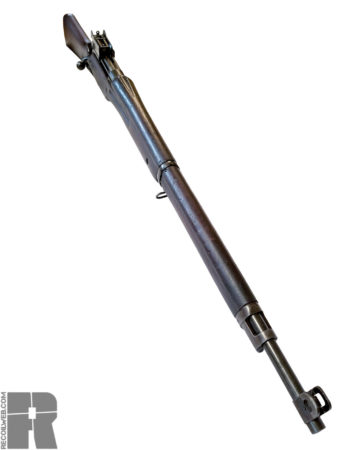
While the diminished magazine capacity was a detriment, the improved action resulted in increased accuracy. In fact, the P14 was so accurate that it was modified for use as a sniper rifle, a role in which it served in both World Wars. The P14 Enfield Rifle gives the .303 more “legs” than either the SMLE or No. 4, stretching the effective range out to 800 yards, maybe a little more.
Other than in the sniping role, the P14 saw little active combat service. During WWII, it was relegated to rear area soldiers, excepting again, the sniper role. Most of the production run was made in the United States, as again it was too late for mass production in Britain once WWI began. Although over 1.2 million were made, the P14 isn’t a common rifle on the U.S. collectors’ market. They’re scarce, but they don’t break the bank when encountered. The tricky part is finding one with a nice bore, as many of these were sent to the far reaches of the world following WWII, and in some places, maintenance was clearly a matter of convenience. A nice P14 Enfield Rifle with a good or better bore will command $700. If it has the complete volley sight assembly (frequently removed), $950 to $1,000 isn’t unreasonable.
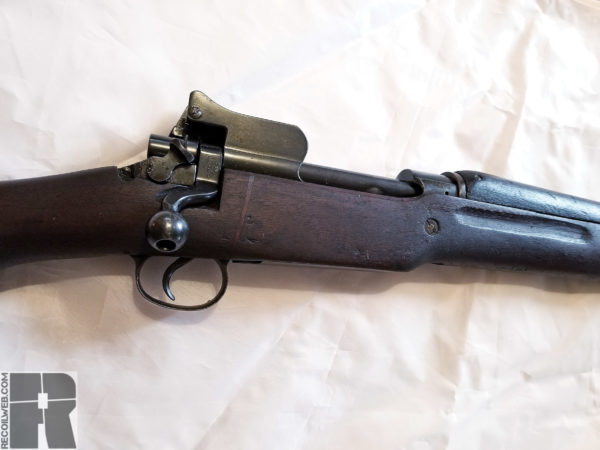
P14 ENFIELD RIFLE
Caliber: .303 British; very few in .276 Enfield
OAL: 46¼ inches
Barrel: 26 inches
Weight: 9 pounds, 6 ounces
Practical ROF: 15 to 20 rpm for most shooters
Muzzle Velocity: 2,380 fps
Effective Range: 800 yards +/-