Author: Grumpy
Categories
Great War Sniper by Mark Freburg
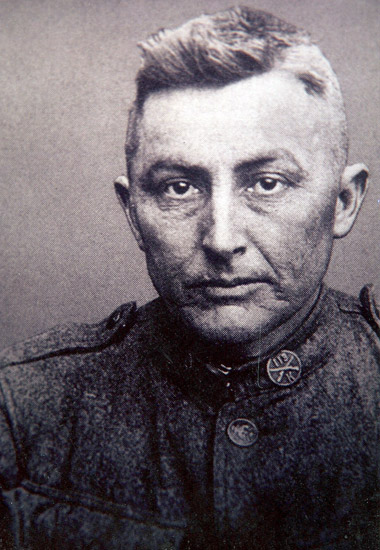 America was late in entering the Great War, not getting any troops “over there” until June 1917, and not any real numbers until October of 1917. Yet by May of 1918 there were over a million American troops in France, at least 500,000 on the front lines. While it had taken the French and British a long time to get up to snuff in the sniping game–something the Germans had been prepared for from the very beginning, the Americans took advantage of their Allies’ experience and fielded snipers right away.
The downside was that they had delayed and delayed on getting proper sniping rifles into the field. (In point of fact, the final American solution was a Winchester A5 mounted on an M1903, but the final rifle wasn’t even approved until two months or so after the Armistice.)
The upside with the Americans was that many soldiers were highly experienced riflemen. I should interject here that, unlike the modern belief that all Americans of the time could shoot, that simply wasn’t the case. Read writings of the time and you’ll find authors of the day bemoaning the fact that riflemen simply were no longer to be commonly found among young men of that day. A good example of this can be found in Townsend Whelen’s The American Rifle, written and published in 1917.* Yet there were some fine rifle shots among the men from many of the rural states, where city life had not spoiled riflry as a natural art to be learned by young men coming of age in the new 20th Century.
A splendid example of such men was of course Alvin York of Tennessee, but let me tell you about another young soldier named Herman Davis of Arkansas. Davis was not a sniper by training or assignment, and darn near missed the war altogether. At age thirty, the Army initially rejected Davis for service because he was considered too old, and because he was only 5’3″ tall, but eventually was able to convince the authorities to let him join up. It turned out to be good for the Army as Davis was a good soldier.
Davis’ claim to fame came while he was in the line and serving as a regular infantryman. A German machinegun nest was particularly troublesome. Davis asked his fellow soldiers why no one was doing anything about the gun. He was told that the gun was 1000 yards distant, far to distant to deal with. Davis replied “That’s jest a good shooting’ distance.” Taking aim, he proceeded to shoot four German gunners with his rifle. Davis’ amazing shooting skills earned him a permanent position as company scout/sniper, and he began a solo campaign to eliminate all the Germans he came across.
It isn’t known all what Davis accomplished after that as he worked mostly solo and most his record was never recorded, much like many Americans in that long ago war, but a few incidents he mentioned privately to friends after the war were quite remarkable. In one advance Davis moved through the lines to within fifty yards of the German lines and managed to shoot eleven Germans as they came out of their dugout to man their machine guns.
In another battle at Verdun, Davis’ company came under heavy fire. Davis crawled into No Man’s Land until he could find a point where he was able to find a firing position overlooking the Germans, then carefully shot every member of the German gun crew. Unlike the majority of Davis’ shooting feats, this one was witnessed by an American officer, and Davis was subsequently awarded the Distinguished Service Cross. Later during that same advance Davis managed to shoot another 26 Germans, mostly machine gunners.
It seems machine gunners were a favorite target of this soldier. Over the course of his career he managed to also pick up the Medaille Militaire and Croix de Guerre with the Palm Leaf and Silver Star, so Herman Davis ended up being well rewarded for his work as a sniper in the Great War–yet few have ever heard his story, however short. It is one well worth telling.
* It is dead common to hear modern gun people talk about young male citizens of the WWI era as all fine shooters, but I’ve read multiple books written during that era and am convinced that this belief is pure and unadulterated horse puckey.
Sources: Sniping in The Great War, Martin Fegler; The Armerican Rifle, Townsend Whelen; various articles for background found in Wikipedia.

From The June 1944 Issue Of American Rifleman
In peacetime, when we talk of rifle shooting and rifle training and rifle competition, the general public thinks it’s just the hobby of a few—a small-time sport. Even in wartime, it takes time and battle experience to get down to the fundamentals. But now, just as in World War I, we’re learning that riflemen count, and that too much emphasis cannot be placed on their training. For battle riflemen aren’t made in a day, nor even in a few weeks on the range.
Here are some stories you haven’t seen in your daily papers—because these men are not heroes; they’re just good all-around riflemen:
On Mt. Castellone, one day in February, a two-hour Boche barrage heralded an attack by two German battalions on a ridge held by one platoon of one company of one battalion of the 36th Division. Two platoons were sent up to help meet that attack—less than a company, riflemen, with a few ’03 grenade launchers and a supply of grenades for close quarters—against two well-armed German battalions.
Platoon Sergeant H.C. Pruett, of Brownwood, Texas, was in charge of one of those two supporting platoons. The first platoon was already engaged when Pruett arrived. The Jerries had some four hundred yards to cover. Pruett threw his men into the fight as riflemen, in the prone or kneeling position according to each man’s locations. As riflemen, they started picking off Germans. The Boche were coming on in groups of three or four, running, ducking, hitting cover, rising to charge again. Pruett himself knocked down seven out of five different groups, getting one and sometimes two as each group made its short rush forward.
“The guys all around me were doing the same,” Pruett says. “We made ‘em pay for that yardage! But a few finally got up to within about fifty yards of us and we started heavin’ hand grenades.” That was a hot spot for Pruett and he was thankful the ‘03s would still work, for their rifle grenades were effective. “Must have had too much oil on the M1s,” he suggested. But he had some very definite opinions about marksmanship! “It pays off,” he said. “Every man ought to know his rifle, and how to shoot it. Hunting, back home, helped me. I’ve heard a lot of fellows say the same.”
Sergeant J.B. Johnson of Gustine, Texas, put the whole story of marksmanship in a few words when he said, “I don’t want a fellow around me that can’t shoot! He’s no help, and he’s just usin’ up ammunition—which, around these mountains, you can’t carry enough of, or get more!”
Yes, it pays. One hundred and thirty-two dead Germans were found in front of that ridge position. In the three defending platoons, only three men were hit with small-arms fire.
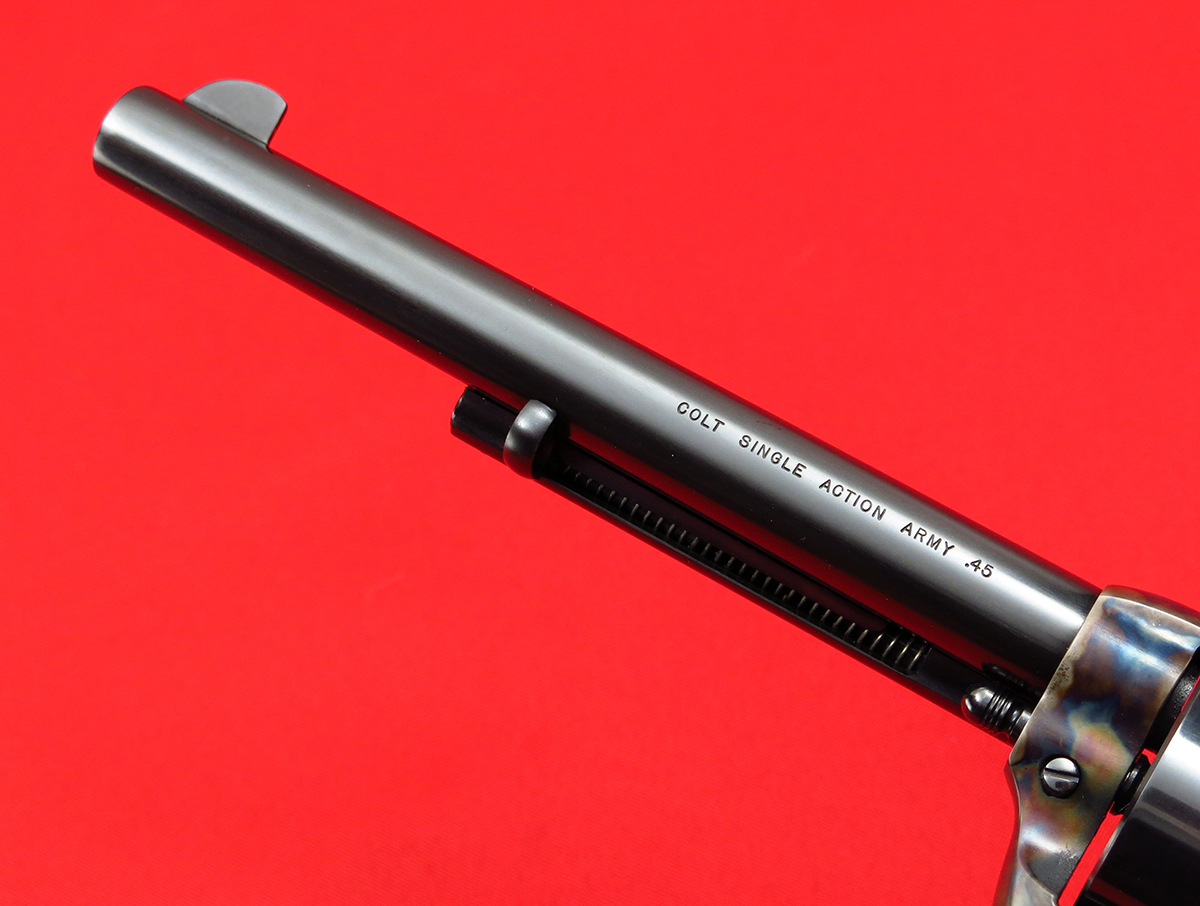
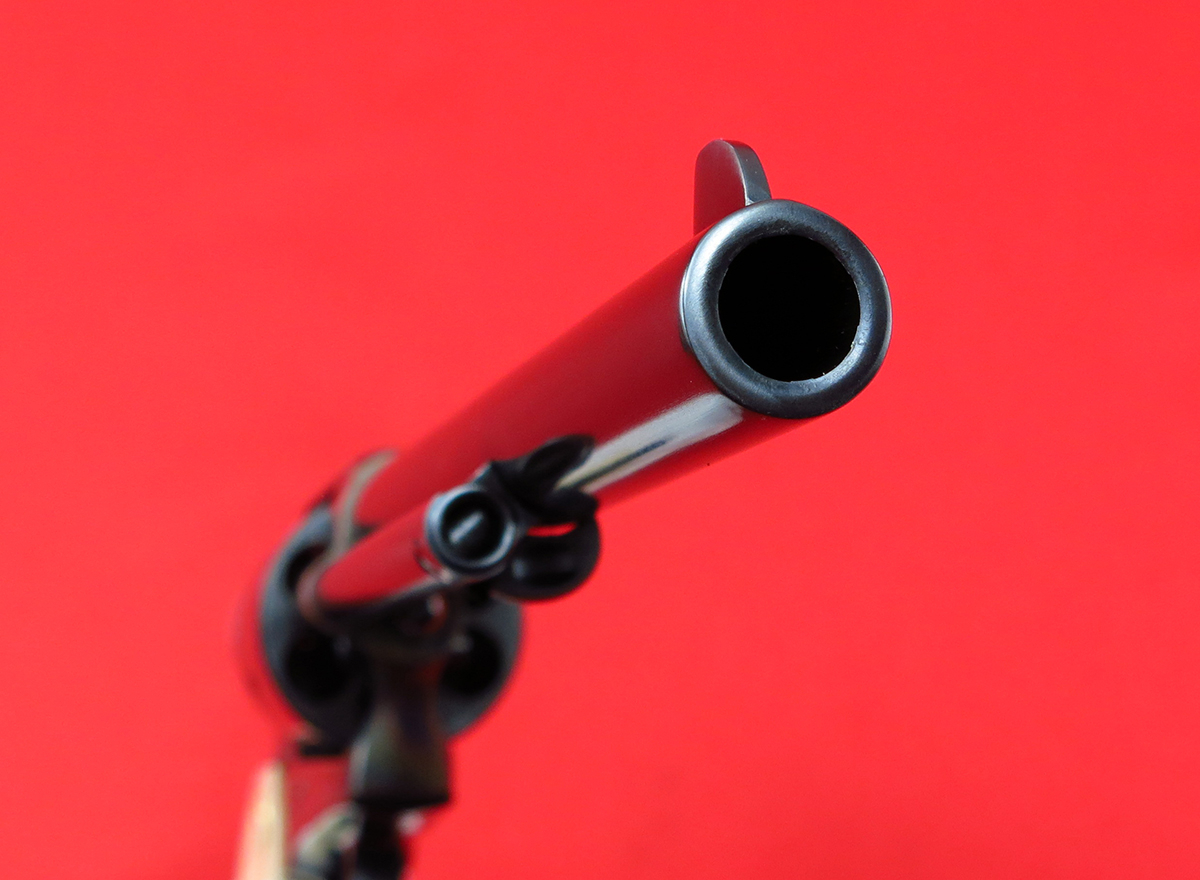
There is an old saying in the US Army which goes like this. Mess with the best and then die like the rest. It also amazes me that somebody that high up lives in such a fantasy world. I guess that when he was young that he was shielded from play ground rules. Its just a pity that so many folks on both sides have to pay with their blood & lives for such stupidity. Grumpy
If you have a rifle or two you’d like to equip with a telescopic sight, but can’t justify several hundred dollars for most of the offerings currently out there, Primary Arms has a good deal at the moment. It’s for their Classic Series 3-9×44 Rifle Scope, currently priced at just $94.99.

It has a 30mm scope tube, which transmits more light, more efficiently than the typical 1-inch tube used on most lower-cost commercial scopes. That means using 30mm. mounts and/or rings, of course, which are a bit more expensive, but not too much so. You’ll have the opportunity to buy discounted scope covers and mounts if purchased with the sight, which is useful. It uses a standard duplex reticle, with no bullet drop compensation or range-finding ability, but for its target market that’s probably not a problem. I intend it for use at up to 300 yards, and out to that range I can compensate for bullet drop and windage by eye. Any competent rifleman should be able to do so, if he knows his firearm and ammunition.
I’ve been trying one out, and I’m pretty impressed by it. It works just fine for cartridges from rimfire to .308 Winchester, and I presume it’ll probably suffice for more powerful ones too, despite their heavier recoil.
At its price point it’s probably unbeatable value right now. I own several Nikon ProStaff scopes, which were (sadly) discontinued a few years ago, and always found them to be very good value for money.
Well, this Primary Arms scope is at least as good as them in terms of optics, gathers more light, and costs a lot less than they did. I don’t know how Primary Arms managed to hold this price point, but I’m not complaining! I just bought a couple more to put on rifles that don’t yet have scopes, because with my eyes getting as old as the rest of my body, iron sights are really not an option for me any more.
(No, Primary Arms isn’t compensating me in any way to boost their products – they don’t even know I’m writing this article. I just like what I bought, and I like to tell my readers and friends about good deals when I find them.)
Recommended.
Peter
Categories
How many calibers can you ID?
