Category: Gun Info for Rookies
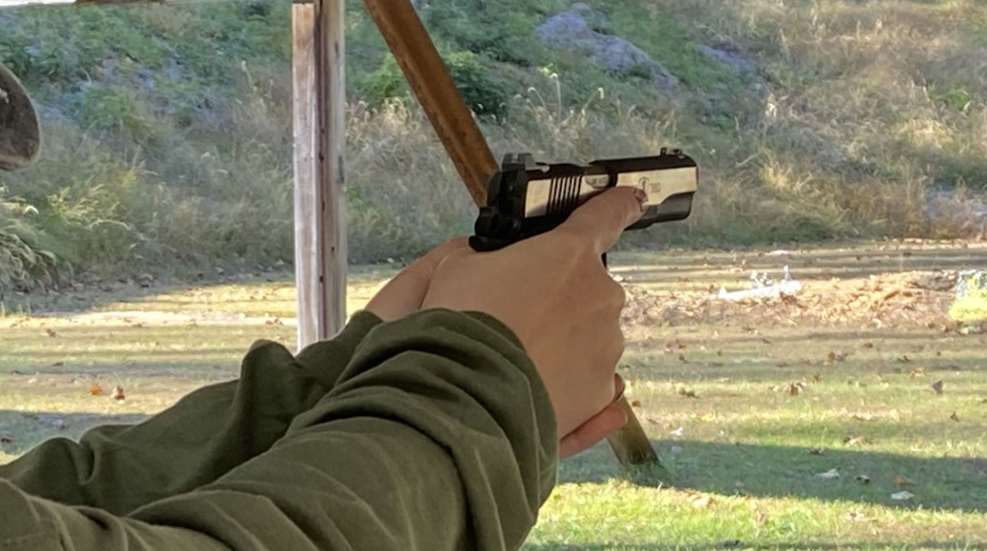
Most gun ranges are safe and have established Standard Operating Procedures (SOPs) to ensure a fun and accident-free experience. Accidents at a gun range are rare, but they do occur. This is usually because a range rule was broken, or the shooter makes one of the 5 common mistakes at the gun range. These mistakes include failing to know what to do when a “Cease Fire!” or “Stop!” is called; uncasing mistakes; firing line mistakes; ready area or line mistakes; and improper clothing mistakes.
1. Cease Fire (Stop) Mistakes
What do you do if you hear “Cease Fire!” or “Stop!” called out on the firing line? Not knowing what to do is one of the most common mistakes that individuals make when shooting on a gun range. Not only do many shooters at the range not know what to do, many non-NRA-certified Range Safety Officers (RSOs) do not know what his or her customers, the shooters, are supposed to do.
Many shooters think that when they hear the command “Cease Fire!” or “Stop!” that you stop shooting, unload your firearm, clear their chamber, lock the slide to the rear or open the cylinder, and place the gun on the shooting table or in the gun rack. Additionally, many non-NRA RSOs expect their shooters to perform the mentioned steps when they call a “Cease Fire!” or “Stop!” on the range.
If the RSO on the range wants their shooters to perform the steps—stop shooting, unload their firearm, clear their chamber, lock the slide to the rear or open their cylinder, and place the gun on the table or in the gun rack, this should have been made clear to the shooters in a “range safety briefing” before they are even permitted on the firing line. This would fall under “additional range rules” that are established by that gun range, in their SOPs.
The correct actions that each shooter should do when the command “Cease Fire!” or “Stop” is called is to stop what you are doing and freeze. Take your finger off the trigger and index your trigger finger along the side of the firearm outside of the trigger guard. Nothing else. The shooters should freeze and wait for further instructions given by the RSO. This is because the shooters do not know why the “Cease Fire!” or “Stop!” command was called. For example, an individual could appear down range and someone could have an accidental discharge while trying to clear their firearm. This is why it is important for everyone, RSOs and non-RSOs, to sign up for the NRA’s Range Safety Officer Course for further understanding of overseeing safety procedures on the range.
2. Uncasing Mistakes
Uncasing mistakes usually involve sweeping someone with the muzzle of your firearm. This may occur at the check-in counter of a range, if an employee asks to see the firearm. It may also occur on the range. Sweeping someone with the muzzle of their firearm is usually an accident. For example, a shooter at the check-in counter or range opens their gun case and the firearm inside is pointed at an employee or a customer in the store, or someone next to them on the firing line.
This is a very easy problem to avoid. A simple solution would be to place a piece of tape on one end of your gun case and mark with an arrow or write “muzzle” on it. When you case your firearm always place the muzzle toward the end of the case that you marked. This way you always know the direction your muzzle is pointing.
This not only helps at the check-in counter or on the firing line, it helps in identifying the position of your muzzle when you are walking to or from the parking lot. For example, if you are walking to the building other customers are ahead of you or behind you, you could carry the gun case so that the muzzle is pointed in the safest direction.
3. Firing Line Mistakes
The most serious firing line mistakes involve picking up fallen items while the line is still hot and people are shooting. It is not uncommon to see an individual shooting at the range who accidentally drops a magazine or a live round and steps forward or bends over to retrieve the item while the range is hot. Many times, the individual retrieving the item exposes a part of their body in front of the firing line. Most often it is the individual’s head!
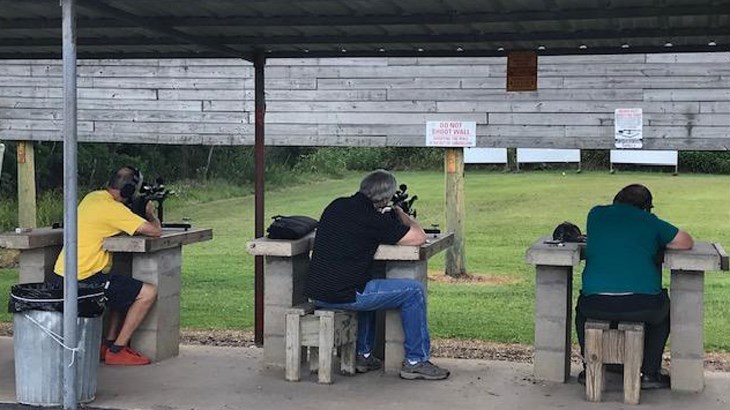
The only time that dropped items should be retrieved is when the firing line is cold, and permission is given from the RSO to move forward the firing line. If you are shooting a qualification course such as an NRA Firearms Training Course, your state’s concealed or open carry course, or any other course where you are moving different distances, it is not uncommon for the individual calling the course to announce, “Range is cold, you may now retrieve your magazines!”
Bending over and retrieving items when the range is hot can lead to serious bodily injury or death. When a shooter does this, it is usually a reflex of just picking something up that you have dropped. This is why it is extremely important to keep your mind focused and avoid distractions while you are shooting.
4. Ready Area or Line Mistakes
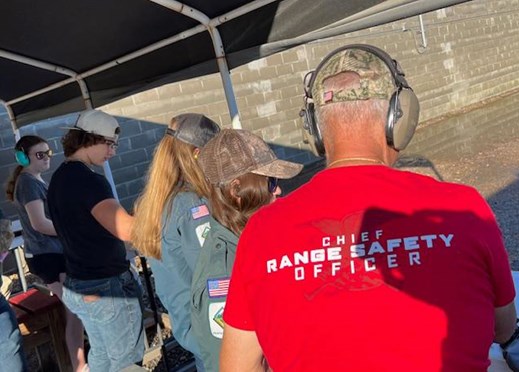
The ready area or line is located behind the firing line. In this area, there are usually tables to set your gun case, range bag, and anything else you are carrying. This means that the shooters on the firing line are between you and the target area. Ready line mistakes are common because many individuals take the name of the area too literally. It would only make sense that on the ready line, it means that you get ready to shoot.
On the ready line, you should get your hearing and eye protection on and anything else needed before getting on the firing line. This could be applying sun protection, lotion or insect repellent. The ready line or ready area is also where any range briefings take place.
The most common mistake that takes place in the ready area or line is the handling of firearms and ammunition. The only time that firearms and ammunition should be handled is on the firing line. It is not uncommon for individuals in this area to be seen uncasing and handling firearms, loading firearms, and loading magazines. Handling firearms in the ready area or line is very dangerous and should be always avoided. This mistake is also one that can get you ejected from the gun range, or even banned from some clubs. Once again, this is why it is advisable for everyone who works at a gun range take an NRA Range Safety Course!
5. Improper Clothing Mistakes
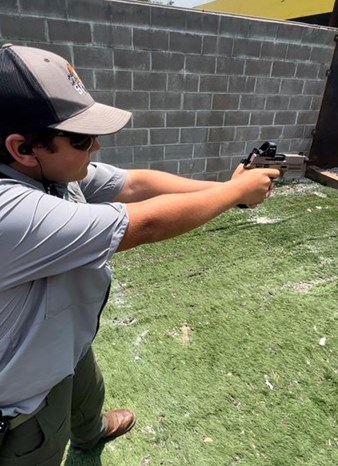
Just like any sport, when shooting, proper attire should be worn. Proper attire includes a hat, shooting glasses, hearing protection, high and tight-fitting collar around the neck, long sleeve shirts, long pants, and closed-toe shoes. Wearing improper attire at the gun range can lead to injuries and accidents.
Hot brass down the shirt, exposed feet, or bare arms can induce the “Hot Brass Dance.” Even though it sounds funny, the hot brass dance can lead to serious bodily injury or death. Someone who is jumping around with a loaded gun because they are being burned by hot brass traveling down their torso is a very dangerous situation. Strict dress codes should be enforced at all gun ranges and in all firearms training classes.
A day at the range is supposed to be fun. Avoiding these common mistakes can make a difference between a fun day at the range or a trip to the hospital, or worse. It is important that all shooters take the appropriate NRA Firearms Training Courses to ensure they are properly educated in the safe and proper use of firearms.
Categories
Some more red gospel there
The year 2020 has been a notable one. In just the past few months, several million Americans have become first-time gun owners. If ever there were a circumstance under which the wisdom of the Second Amendment was made patently manifest, it is this.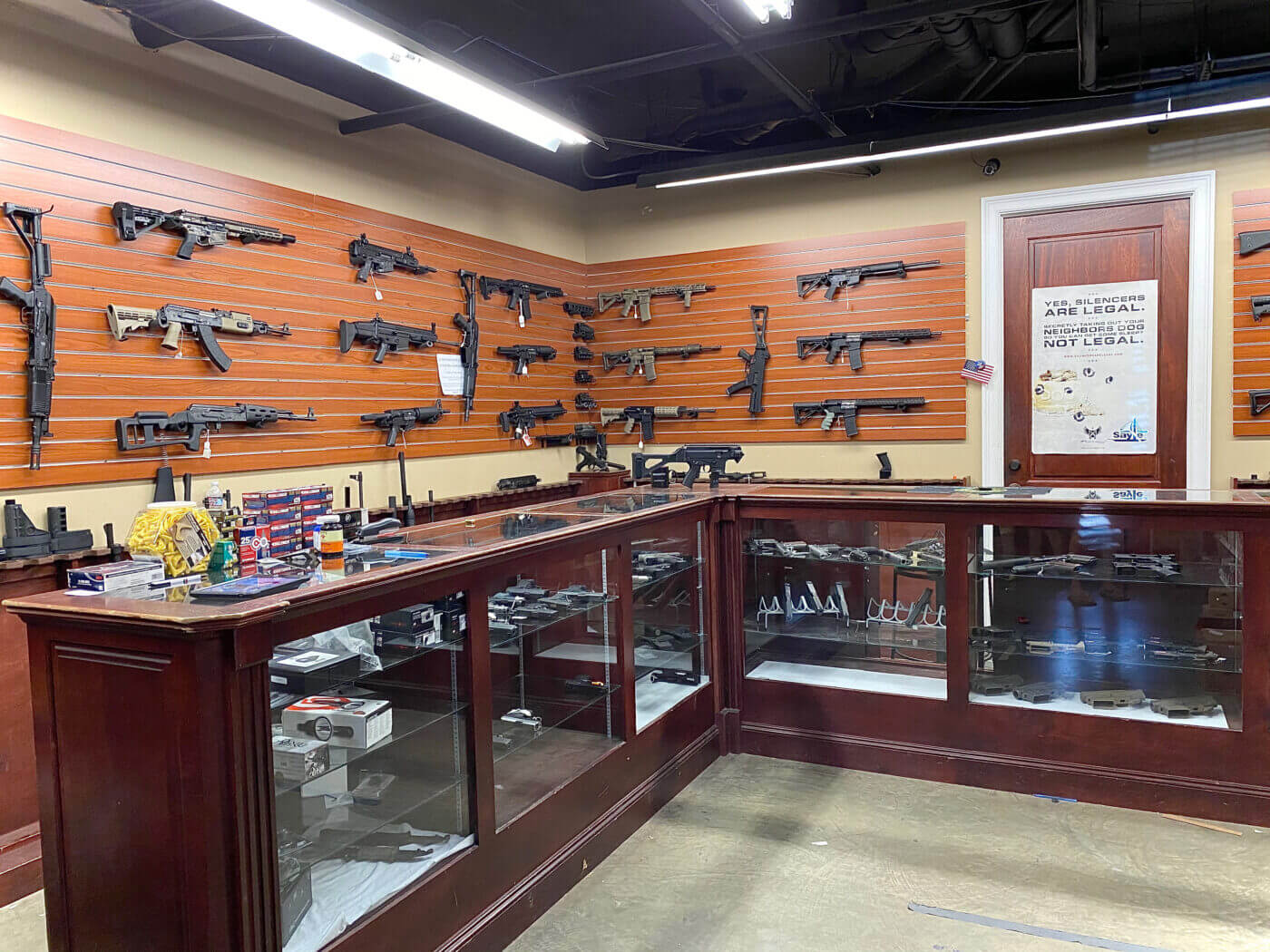
But how about those of you who do want to get your first gun, but find the whole process utterly baffling? The vernacular, customs and variegated regulations associated with gun ownership can indeed seem daunting. As a result, we here at The Armory Life thought it might be helpful to create a basic primer on how to buy a gun in America.
Not unlike finance, plumbing, computer programming or brain surgery, once you get the hang of it the whole system will seem fairly straightforward. But we understand how intimidating it can be to dive in. So, let us help you learn the process.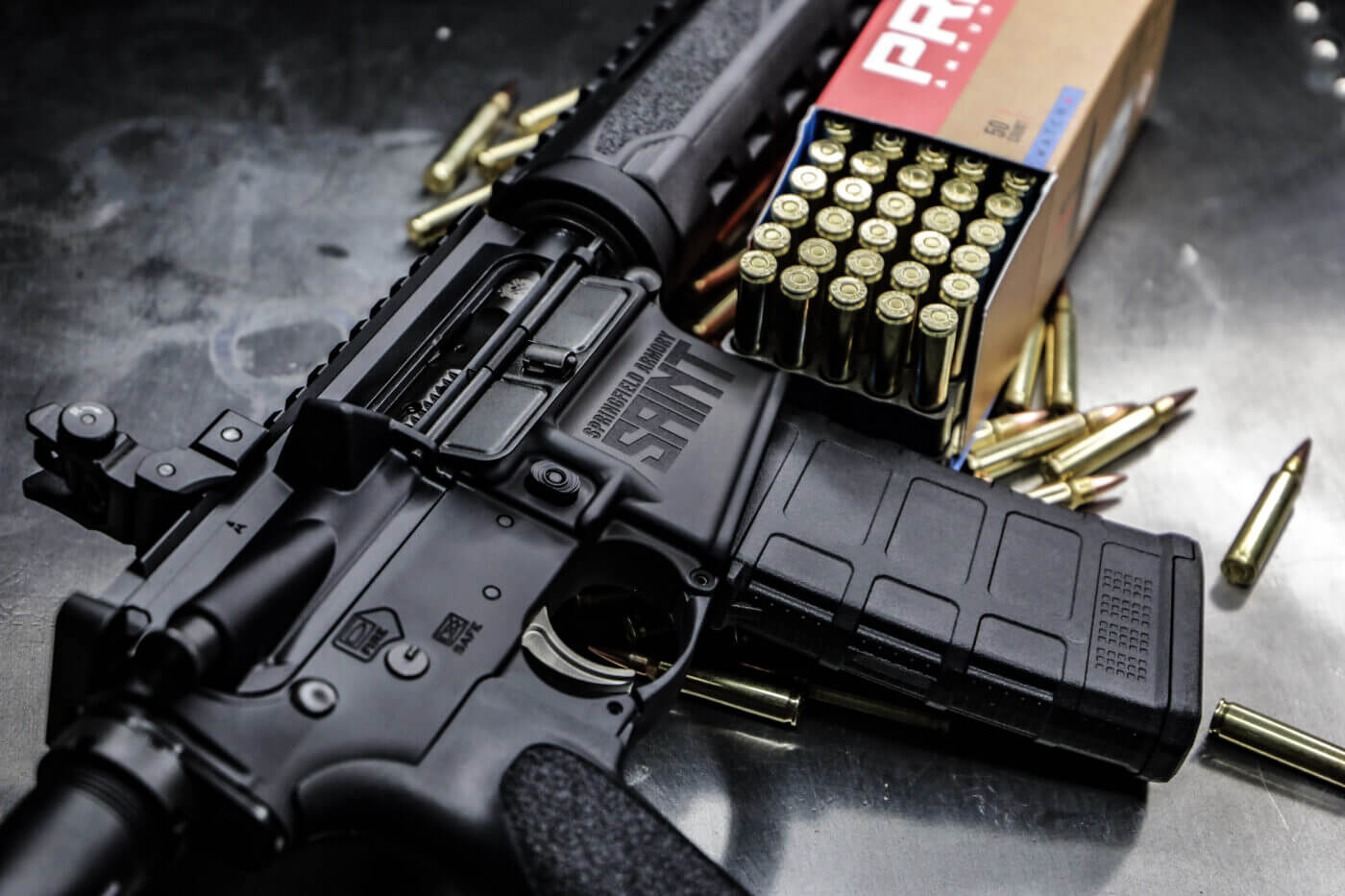
Intro to American Gun Culture
This process typically begins at your local gun shop. The archetypal gun shop employee is some large hirsute ex-Army Ranger covered in tattoos who oozes scary attitude. He’ll have a gun on his hip and look like he munches pea gravel for breakfast. But looks can be deceiving.
On the other hand, a dear friend of mine owns the coolest gun shop in the world (Mississippi Auto Arms in Oxford, Mississippi). By contrast, he employs a petite and inoffensive young lady. She is engaging, knowledgeable, and disarming. That guy is brilliant, if you ask me.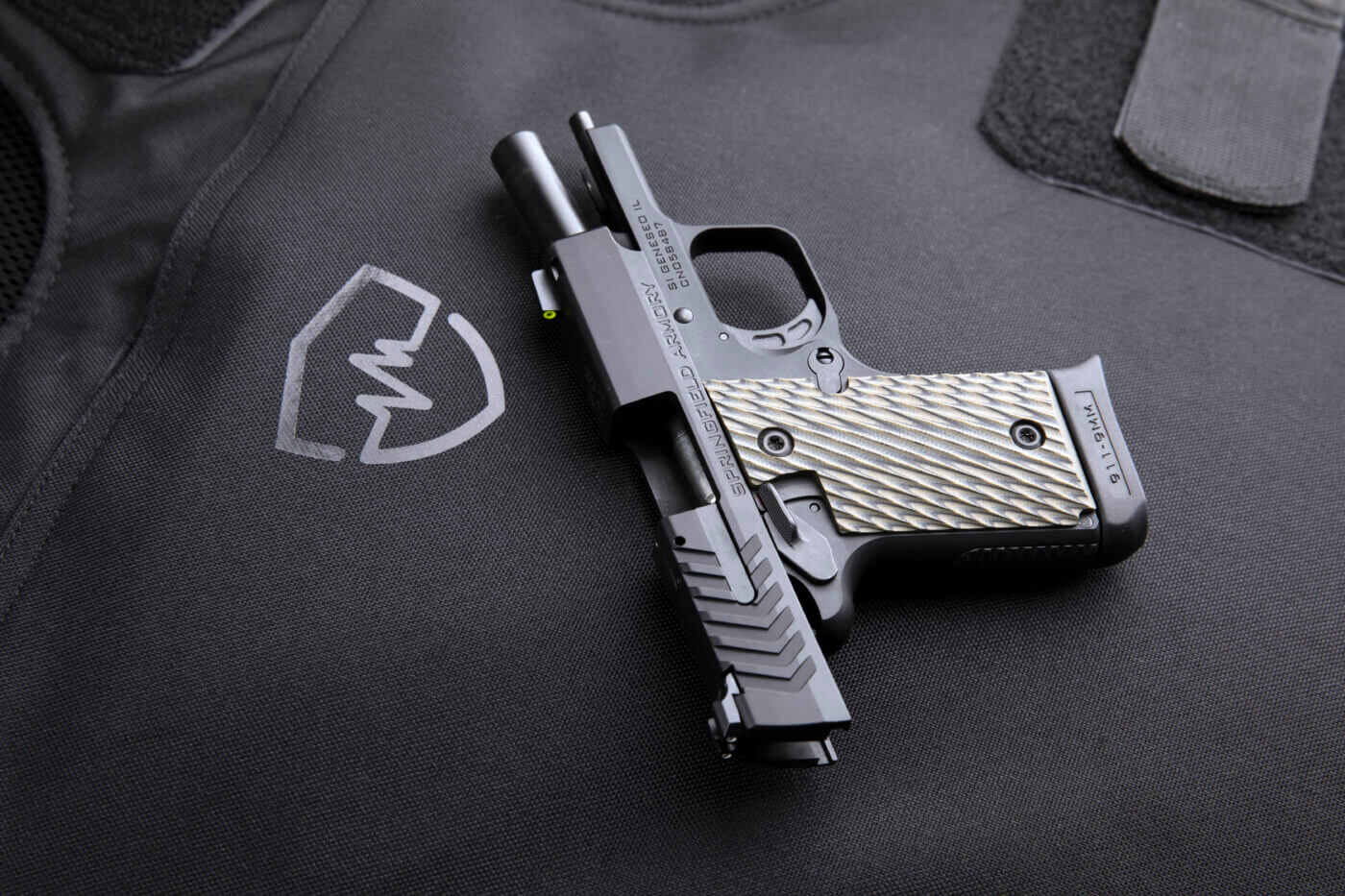
The bottom line is, chances are if you head into a gun shop, you’ll leave with a gun, some valuable information and a new friend.
Can You Own a Gun?
In general, you need to be a U.S. citizen with a clean criminal record. The document used to manage a firearm transfer is called an ATF Form 4473, and it asks a series of questions about your criminal, military and mental health background. The form is three pages long, but the first page is the only one of consequence to the prospective buyer.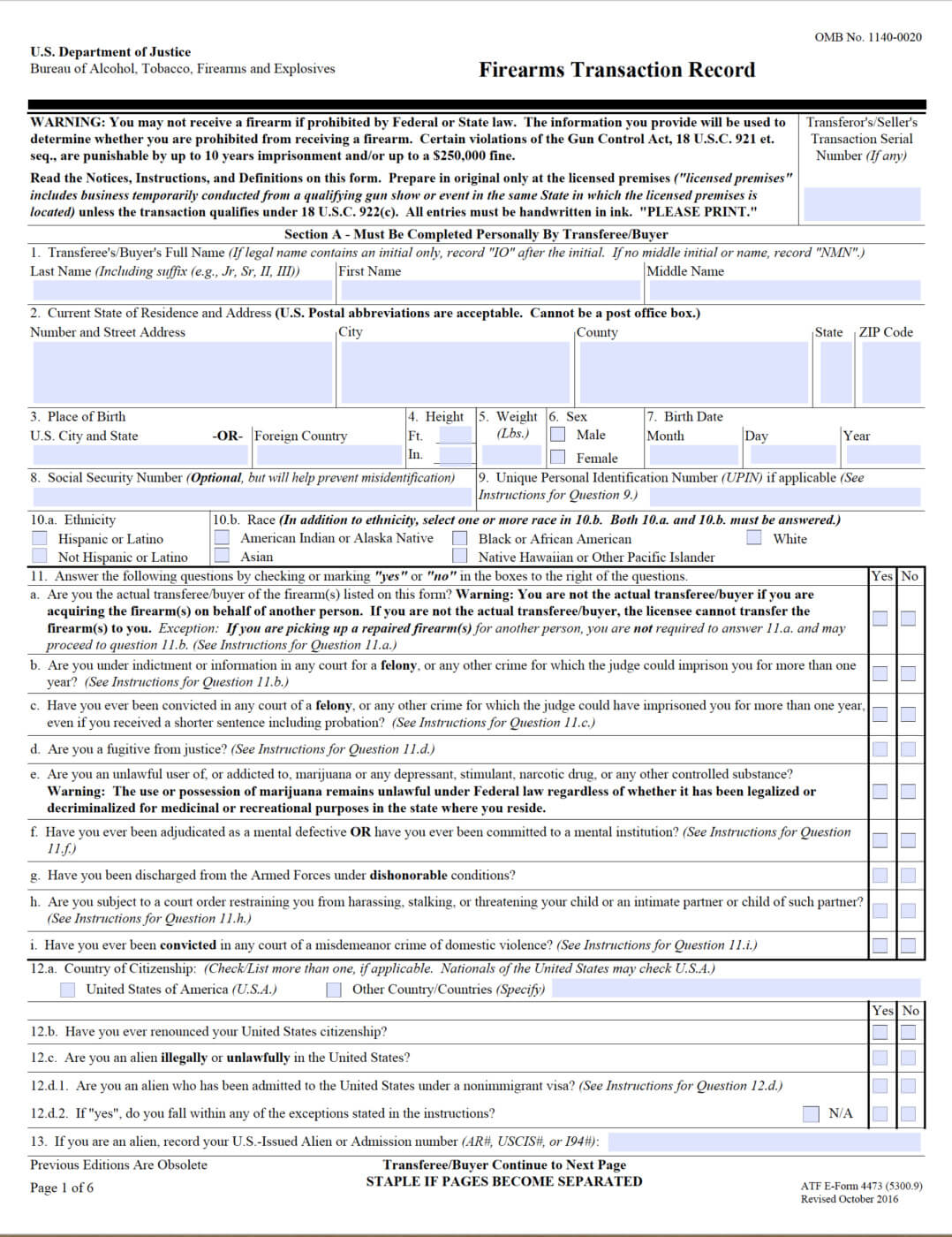
The dealer is going to verify your information using the NICS system, which stands for “National Instant Criminal Background Check System.” Your responses must therefore be truthful.
NICS is usually, but not always actually, instant. If the system is backed up or you have a really common name, you may have to wait a couple days for the check to come through. If you aren’t sure whether you’re eligible, just glance over the questions on the 4473.
Some states have extra restrictions over and above what is required by the federal government. In freedom-averse places like New Jersey, Illinois, New York and California, some of those restrictions can be quite onerous. Across most of our Great Republic, however, gun ownership is fairly straightforward if you are a citizen with no criminal background.
Is There a “List”?
All commercially purchased guns must be physically transferred through a dealer with a Federal Firearms License (FFL). Your gun shop will have one of these. Some other businesses like hardware stores may maintain FFLs as well.
The regulatory system governing the national network of gun dealers dates back to 1968 and is actually quite elegant. When you buy a gun and fill out the 4473, that form never leaves the dealer’s premises. NICS checks that are approved are automatically purged every 24 hours. NICS checks that are denied are essentially maintained forever, but that doesn’t apply to you if you have a clean criminal record.
If a crime weapon is recovered, the ATF will trace the gun via its serial number starting with the manufacturer, through the distributor, and then on to the individual FFL dealer. The dealer will then produce the form 4473 that identifies the final purchaser. This decentralized system very effectively prevents anyone from maintaining a database of American gun owners, something that is expressly forbidden by federal law.
Just Amazon It?
You cannot legally buy a gun directly over the internet. That’s just an anti-gunner talking point. And buying a gun illegally is one of those crimes that Uncle Sam typically takes pretty seriously.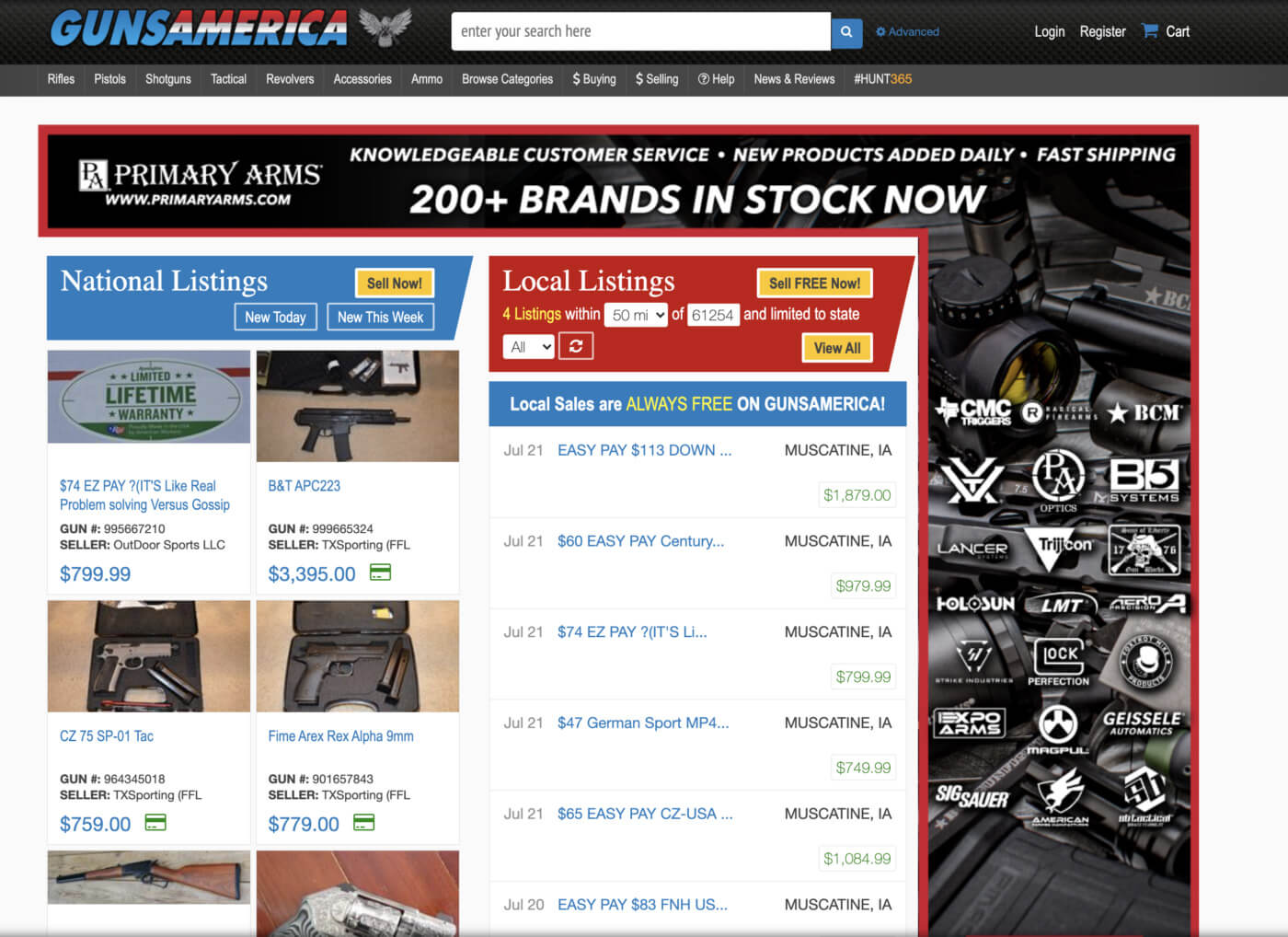
There are lots of places to buy guns on the internet, but they will all have to be transferred through your local FFL dealer. That FFL dealer will usually charge a modest fee to do the transfer. Google can help you find an FFL dealer locally. Call the dealer in advance and they can tell you what their fee is. $20 to $50 is pretty typical.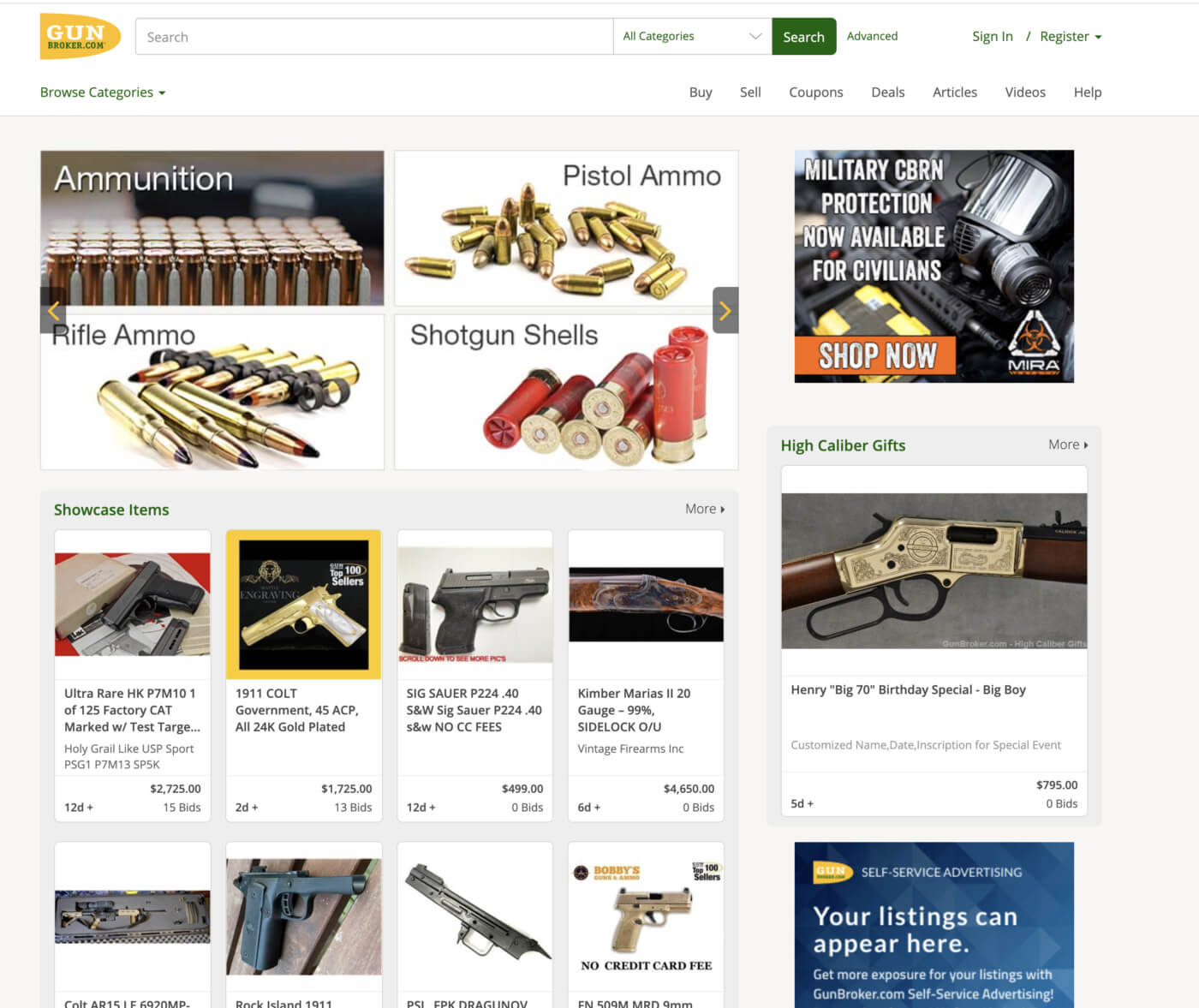
Want a great place online to find your next gun? GunsAmerica.com is like Craigslist for guns and features fixed prices. GunBroker.com is more like eBay with an auction format. Countless other businesses like Mississippi Auto Arms sell guns online. Once you’ve purchased a firearm online, contact your local gun dealer and they will submit a copy of their FFL to the seller. The gun is then shipped to the FFL’s business premises where you then go undertake the transfer, submit your form 4473, go through a background check, etc.
Ruminations
There are nearly 400 million firearms in circulation in America among some 328 million citizens. Gun buying may seem intimidating at first, but it’s really not difficult. If you’re a first-time gun owner I’d strongly recommend you seek out a training course to help familiarize yourself with your new firearm. Your FFL dealer is a good place to start.
Responsible gun ownership is the cornerstone of American freedom. That freedom is what makes America different, more productive, and frankly better than the rest of the world if you ask me. So, go out and exercise your Second Amendment rights. And we hope this guide makes the process a little bit more clear.
Categories
And now you know! Grumpy


by Lee Williams
It’s hard not to smile or even giggle a little bit when you see how badly President Donald Trump is scaring the country’s paid anti-gun community, especially when you combine the President’s efforts with those of the United States Supreme Court.
No one is feeling this pro-gun heat more than the youngsters working at the Trace, the propaganda arm of former New York City mayor Michael Bloomberg’s gun control empire, who want the public to believe it’s an actual newsroom comprised of actual journalists—a fiction they’ll go to great lengths to maintain.
The Trace kids are extremely busy trying to stop this Second Amendment tidal wave that’s washing across the entire country. They realize that they’re losing, so they’re rabidly coming up with new ideas to counter our coming freedom—and some of their ideas are absolutely crazy.
Two Tracers just released this tome: “New Jersey Just Lost Its Assault Weapons Ban. Here’s Why That Matters for the Rest of the Country.”
The story’s last line is bedeviling. It’s not a quote or taken from any report. It’s completely attributable to the story’s two anti-gun authors:
“If the Supreme Court strikes down assault weapons bans nationwide next year, states could try other strategies, including putting semiautomatic rifles behind a permitting process,” they actually wrote.
Can you actually imagine that?
The highest court in the country says you can legally possess ARs in every state and U.S. Territory, but then some blue state suddenly requires you to obtain a state permit—regardless of the Supreme Court decision?
Do they think that might actually work?
It’s a Second Amendment right, right?
It would be like requiring state permits before allowing someone to read a book or scour the internet, which are rights guaranteed by the First Amendment.
The Trace is redefining desperation.
I’m picturing five-gallon pails of Zoloft, Prozac and Xanax scattered throughout their newsroom, each with a “help yourself” label.
It actually gets even worse. They’ve actually run out of legitimate sources.
The two authors wrote this:
“It’s unclear whether rescinding the bans will cause an increase in gun violence — or mass shootings in particular. Assault weapons have been used in most of the deadliest mass shootings in U.S. history, and studies have found that assault weapons, combined with high-capacity magazines, may increase the death count in mass shootings,” the story claims.
The link takes you to another hilarious medical study, which falsely claimed that “state assault weapons bans are associated with fewer fatalities.” The study based its findings on one particular source: “Data were abstracted from the Gun Violence Archive, an independent online database of US gun violence incidents.”
We’ve nearly written volumes about the faulty data from the Gun Violence Archive—so much so that it’s hard not to laugh every time some academic clod uses it in their “research.” Suffice it to say, the GVA said there were 417 mass shootings in 2019. The FBI says there were 30, because it uses actual data and doesn’t make stuff up.
The two authors actually supported using the GVA’s faulty numbers.
“The Trace uses the Gun Violence Archive’s definition of mass shooting, which includes shootings resulting in four or more injuries or deaths, excluding the shooter,” they wrote.
Trace history
The Trace calls itself “The only newsroom dedicated to covering gun violence.” Its staff refer to themselves as journalists, rather than anti-gun activists who are paid by Bloomberg to write propaganda.
Since the Trace was founded about a decade ago, scores of newspapers, websites and other legacy media outlets have fallen victim to this ruse. What’s left of Gannett’s flagship newspaper, USA Today, has collaborated with the Trace multiple times, and has even allowed Trace activists to produce and edit content, which appeared in the newspaper under a joint byline.
“We have partnered with more than 170 national and local media organizations,” the Trace boasts on its website. “We’re always looking to start new partnerships.”
The Trace is nothing more than the propaganda arm of Everytown for Gun Safety, which is also funded by Bloomberg.
Both nonprofits share the same president, John Feinblatt. In fact, Feinblatt is also listed as the two nonprofits’ principal officer. Federal tax documents show that the Trace and Everytown also use the same phone number, 646-324-8250.
Both nonprofits were incorporated in Delaware, which is known for its stringent corporate privacy laws.
Takeaways
Now that New Jersey-compliant ARs are a thing of the past, and California-compliant ARs may soon follow, we should take a minute to relax, but only one minute, no more.
The Trace and its followers will certainly come up with more whacky ideas, but they live in states whose judges support whacky behavior, especially if it harms the Second Amendment.
We remain in a constant battle for our civil rights, and anything can still go wrong at any time, according to Murphy’s Law.
“I learned that Murphy is alive and well. He’s in every drawer, under every rock and on top of every hill.”
Col. Charlie Beckwith said that. He should certainly know.
The Second Amendment Foundation’s Investigative Journalism Project wouldn’t be possible without you. Click here to make a tax-deductible donation to support pro-gun stories like this.