Categories
Cursed Mauser ASMR
This Trooper judging by his Combat Tankers Badge was no Rookie. Grumpy
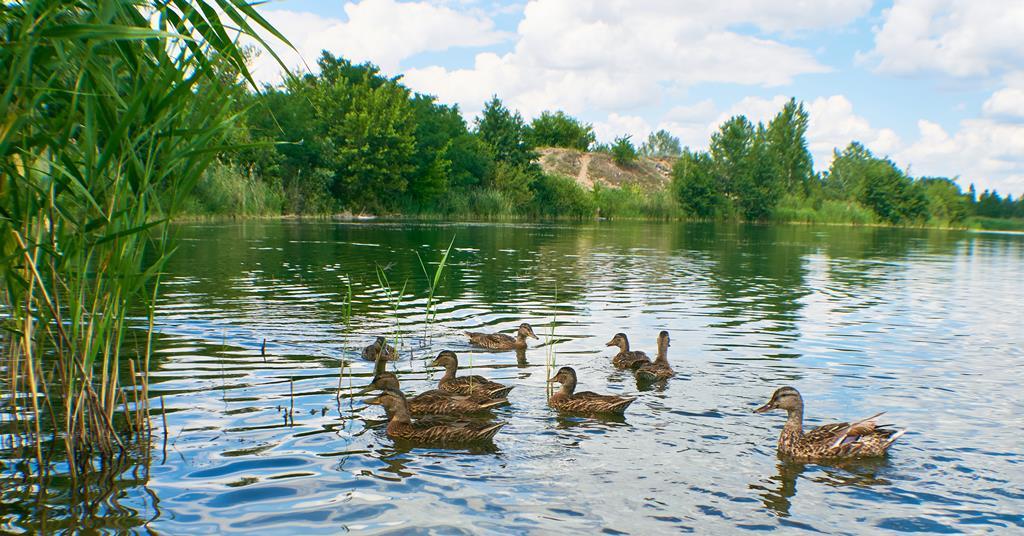
A warm thermos cap of coffee steams in my hand as I slowly pull down my neck gaiter on a 25-degree morning in paradise. The sunrise over the far trees is neon red, mirroring the ripples on the water in front of the ancient duck blind. A small flock of wood ducks whistles overhead three minutes before shooting light. That first sip is pure happiness.
Everyone has their spot. Could be a well-worn stool at the local pub, a section of trail on a mountain slope in Utah, or the rocking chair on your back porch. Mine is a 40-acre plot in northern Wisconsin that does little more than require you to be there to lighten your soul.
It’s a sliver of land that connects a large state protected marshland to a large chain of lakes. Water flows from the marsh through our tiny plot into these lakes and thanks to the commitment of some studious beavers, backs up and floods to form the perfect 15-acre duck pond.
Being a marshland in northern Wisconsin it’s only viable to be back there during the fall and winter. Ticks have infested the grounds and it’s not possible to get out during the spring and summer months without a fist full of those fuckers burrowing into your undercarriage.
Life stands still in the winter up north. The marsh freezes solid, and snow is measured in feet rather than inches. Often too deep to hike, snowshoes provide access to the far side, which is otherwise only accessible by canoe.
Hundreds of miles have been snowshoed back here and onto the public marsh it pushes up against. We’ve gotten lost and nearly had to spend a blistering cold night, but thankfully our stars have aligned, and there’s never been a major accident.
Things really light up in the fall. Large flocks of ducks and geese have called the surrounding marshlands home for more than the 3 generations it’s been in our family. Migrating birds swing through on their short stay when the weather pushes them south. A small herd of deer graze the surrounding forest, even the local albino stud has been known to make an appearance.
The ruffed grouse, king of the upland game birds, have given many a near heart attack—although they are much more easily hunted on the local logging roads. King of the marsh though is a 500lb black bear we call Hank. He wanders home after munching on cranberries all day at the bogs down the road. Not sure how old he is, but one day we’ll finally draw a bear tag and find out.
These hallowed grounds have led to some unbelievable hunts, some miserable ones, and a few with water filled waders. I’ve trained 3 dogs back here to carry on the tradition that 8 more had before them. They’ve left an unforgettable yet unseen mark on this place. A duck dog is home back in the pond. They always come ready for an adventure, even if that adventure is dunking the canoe and almost drowning you on a 20-degree day.
First hunts, memorial ceremonies, and innumerable other memories have graced this land. My wife even encouraged the idea of heading back there for her first duck hunt mere hours after I proposed. The hunting is great, but the wildlife only starts there. Trumpeter swans swing in from the big marsh on occasion and sing to us.
The aforementioned beavers have become an unlikely ally as they dam up the water, so it doesn’t dry up like it did in 2004. Owls feast on yard grizzlies, woodpeckers make their way with trees, and bald eagles circle above scanning for their next meal. One significantly large bald eagle even constructed a nest opposite the old duck blind, which it inhabited for 6 years.
Outside of worn-down grass on the drive in and trails to the duck blinds and tree stand, nothing has disturbed this land since 1967. It will stay that way as long as it’s in our family, as our house is located on another parcel across the street. Its entrance is guarded by overhanging branches thick with leaves that, unless you know where to look, won’t give up the narrow driveway.
Is it the top of a mountain overlooking a great Alaskan range? No, but who cares. That morning cup of coffee can’t be beat.
Categories
SP9A3S 5″ MICRO STRIBOG
Categories
10 Most Feared Soldiers In The World
‘You will die’: Mob of 30 people attacked college student for reporting a burglary, leading his father to shoot one of them dead
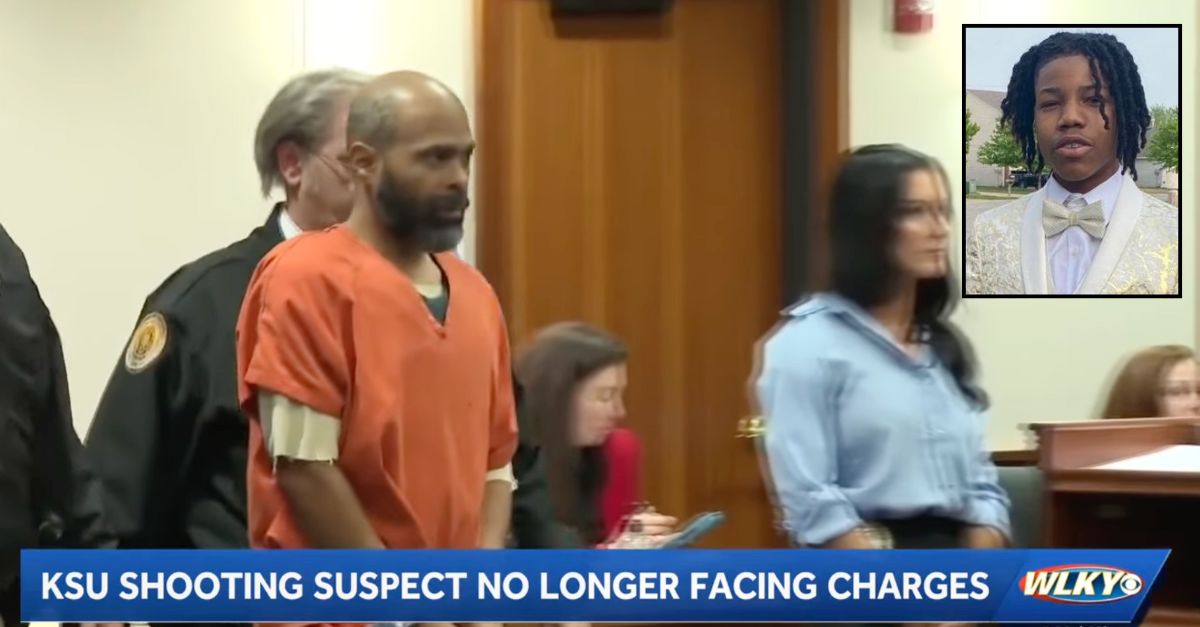
Background: Jacob Bard appears in a Franklin County, Kentucky, court in December 2025 (WLKY/YouTube). Inset: De’Jon Fox (GoFundMe).
An Indiana dad who was accused of murder and assault for shooting at a mob of people attacking his son on his college campus will no longer be prosecuted.
A Franklin County, Kentucky, grand jury declined to indict 48-year-old Jacob Bard on Tuesday, finding that there was not enough evidence to charge him in connection with the shooting at Kentucky State University (KSU). As Bard’s attorney Jonathan Danks told Law&Crime, the matter is now closed.
In early to mid-October, a KSU dorm room housing one of Bard’s sons was burglarized, with an “organized group” pulling the fire alarm and using fire extinguishers to disable the area’s security cameras, Danks said. The 18-year-old reported the crime to campus police.
Immediately after, he “began receiving threats of physical violence and threats that ‘you will die,'” according to Bard’s attorney, who claimed that at least one of the students involved in the threats had previously had a firearm seized on campus and yet still bragged that he carried around a gun.
On Dec. 6, 15-20 people — “many of them non-students and with faces concealed” — broke into the son’s dorm and “violently assaulted him and three other students that were with him,” Danks recounted.
The four of them were “thrown to the ground and stomped and punched repeatedly,” with the attackers allegedly destroying hundreds of dollars of property, including a school laptop. The incident was reported to the police and was supposedly caught on camera.
Two days later, 20-30 people “gathered outside the dorm room with baseball bats and other weapons,” according to Danks. They “beat on the door,” and Bard’s son called the police. However, when officers approached, “the mob fled.” Bard’s son called his father that evening and told him what had happened, Danks said.
Bard had two children who were currently attending KSU. He also had a 19-year-old son attending the university, and both teens were on the school’s baseball team.
The father and his wife “immediately” drove to the campus, arriving around midnight, and they realized that their son and his friends “had not eaten a meal in several days because they were afraid to leave their dorm rooms.” They took the young men to eat, and the next morning, the parents met with campus police to express their concerns.
The meeting did not sufficiently ease their concerns, Danks said, nor did a subsequent conversation with the university’s dean. The Bards “became convinced that the university would not be able to maintain a safe environment for their son and informed the university they were moving him home due to extreme safety concerns.”
Accompanied by a campus police officer, they approached the 18-year-old son’s dorm room to find four people outside “waiting for him,” Danks said.
Though the officer ordered the group to leave, at one point, “one of the individuals involved in the prior assaults” began taking photographs of Bard’s sons. A physical confrontation was looming, and more and more people “involved in prior attacks” started arriving, some wearing ski masks, Danks reported.
“Watching the mob gather, Jacob Bard armed himself with his wife’s firearm,” Danks said. As the family and the officer escorting them reached the entrance to the building, “the mob immediately rushed out of the dormitory past an armed KSU police officer, and began violently assaulting Jacob’s family and others present.”
Bard and his family retreated about 40 feet, but they were being hit, and his son was “slammed into the concrete, and had multiple people on top of him beating his head against the pavement with feet and fists.” The officer was no help, according to Bard’s sequence of events.
“In the chaos, Jacob tried to physically pull the individuals off his son,” but he was hit and could not get the people off. Seeing him “in imminent danger of death and serious physical injury, Jacob then drew his firearm and shot two individuals who were actively and viciously beating his son.”
As Law&Crime previously reported, two people were struck by bullets. One of them, 19-year-old De’Jon Fox, died, while the other was taken to an area hospital in critical condition but later listed as stable.
After firing the gun, Bard “immediately dropped the weapon when his son was then able to escape the violence,” though not before being kicked in the face, Danks said. The attorney maintained that his client’s actions “were absolutely justified under the law, and were the only measure that prevented his son’s death or serious injury.”
Though Bard was charged with murder and assault, he and his legal team contended that the university was to blame for not addressing the previous alleged attacks. “Those failures ultimately resorted in the tragic death of one student and the injury of many others,” Danks said on Monday.
Danks also took issue with the mob of attackers not currently facing charges.
“Even now, despite the many known identities of students and others involved in the vicious attack that day and the multiple armed attacks in the days prior, criminal charges have not been pursued against those individuals,” Danks said.
“Jacob and his family continue to receive credible death threats, and Jacob’s sons are now residing in a non-disclosed location for their safety,” he continued.
According to local CBS affiliate WLKY, Bard will be repaid the bond he posted on Tuesday before the grand jury declined to indict him.
Franklin County Commonwealth Attorney Larry Cleveland suggested he was conflicted by the case. He told the outlet that he “felt that Mr. Bard could meet the requirements of defense of others, but at the same time, a young man was killed, and another young man was seriously injured.”
As part of a statement reported on by area Fox affiliate WDRB, KSU said it is cooperating with law enforcement as the investigation into the shooting continues.
“We remain centered on our students’ safety and well-being,” KSU President Koffi Akakpo, said. “The University is enhancing security measures and continuing internal reviews, while taking steps to help ensure our campus environment remains one where all can pursue their education safely. In accordance with University policies, when conduct within the University’s jurisdiction is found to violate our standards, appropriate action will be taken through established processes.”*
——————————————————————————–
*I.E. The usual Bullshit that any institute says when the shit hits the fan!! I would like to think that I would do the same thing if anybody tried to hurt my family or friends. Grumpy
