


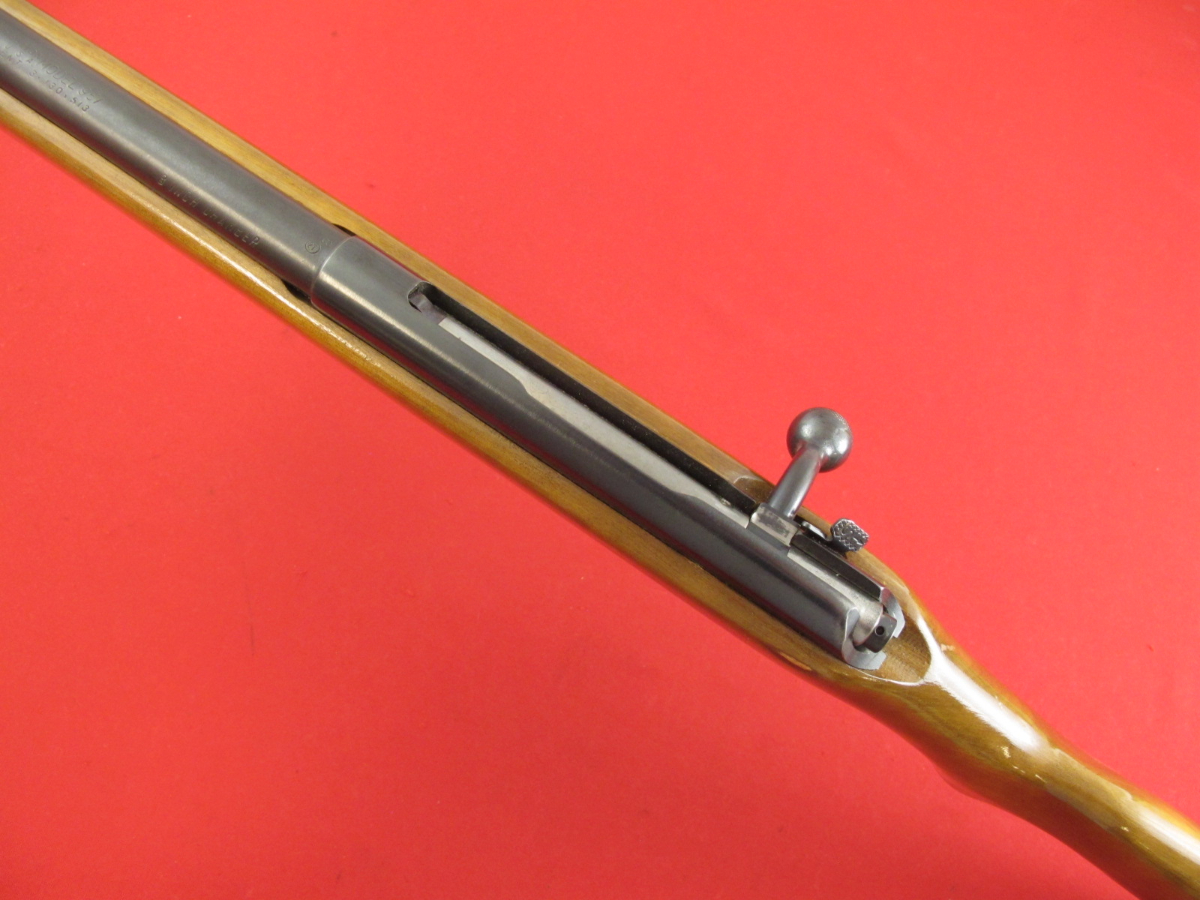

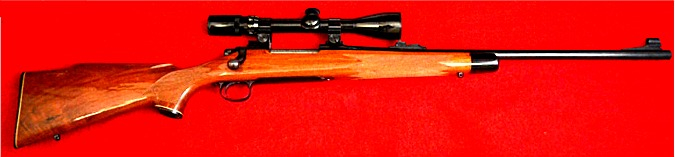


My Wonderful Grandmother Alice gave me one of these a VERY long time ago. Of which I very stupiditly traded for a divorce. ( I should of sold another gun instead. But then I am an idiot) Anyways, this rifle was in ’06 and kicked like a mule. Especially since it had NO recoil pad to speak of.
So learn from my mistakes! In that one should be very careful of who or what you marry. Also that one should NEVER sell a classic rifle unless your back is to the wall. That & a good recoil pad is a solid investment! Grumpy

We haven’t seen any independent reports about Ukraine’s drone strike yesterday morning against Russia’s strategic bomber force (Tupolev Tu-95‘s, Tu-22‘s and Tu-160‘s). Ukraine claims that 40 or more of these aircraft were hit by its drones; if so, that would mean that up to a third of them have been damaged or destroyed. (Since the factories that produced these aircraft, and components for them, have mostly been shut down or drastically reduced in capacity, a severely damaged aircraft will take so long to repair and restore that it might as well be written off as destroyed anyway.)
My first thought is that this attack is not a surprise. Anyone studying military history and current military technology could have (and in many cases did) predict such a strike against Russian assets. The only surprise to me is that it’s taken so long to do it. I thought it would come within the first couple of years of the war.
Second, this should be an extremely urgent wake-up call to the West. Drone flights over our air bases have been publicly reported for years; I’ll be very surprised indeed if some, if not most of them were operated by potential enemies such as China, Russia, Iran and others. Some may also have been operated by terrorist groups or drug cartels looking for potential high-profile targets. A strike similar to Ukraine’s could be launched against the USA at any time by almost anyone, because there will be no difficulty getting drones and their explosive payloads into this country and right up to the boundaries of the air bases concerned. Our internal security measures are laughably poor (and I speak as one who had extensive experience of anti-terrorism measures in another country for the best part of two decades). I hope Defense Secretary Hegseth and his top brass are alert to that possibility, and I hope they’re doing something very concrete about it – because if they’re not, we could lose half our Air Force overnight. I mean that literally. The same could happen to any or all NATO country(ies).
My third thought is that this might escalate the Russia-Ukraine war to a new level of viciousness. Russia’s strategic bomber force, one of the “nuclear triad” legs that safeguard its independence and national pride, has suffered a severe blow. That might be enough to make already paranoid Russian politicians and military leaders even more so. How might they retaliate? There are a number of ways, up to and including tactical nuclear weapons. Will they go that far? Who knows? I suspect we may be about to find out.
Fourth, where did the containers holding those drones come from? I don’t think they were all smuggled clandestinely across an active war zone to penetrate Russia. I suspect at least some of them were shipped into Russia through third parties, perhaps as outwardly innocent-seeming commercial containers containing normal goods and products. Can that have been done without the involvement of the intelligence and/or customs officials in those third party nations? Possibly . . . but I’d be more inclined to believe that a certain degree of officially blind eyes were involved. If Russia can determine the ingress routes of those containers, it may be able to use its own extensive intelligence resources to find out whether official tolerance was given to their passage. If so, I won’t be at all surprised if Russia does something nasty to discourage those nations from further meddling. What might that be? Who can say?
Finally, this highlights how parlous is the international security situation at present. From Ukraine’s point of view, this strike was a no-brainer. Ukraine’s already losing on the battlefield, slowly but steadily. A big propaganda success like this, causing severe damage to its enemy, can only look positive from the loser’s perspective. However, for the nations supporting Ukraine, it’s a lot more difficult and dangerous. If it leads to Russian retaliation against, not just Ukraine, but every nation that supports it, that may drag the entire region into the war whether they like it or not. The almost suicidal fixation of some nations to support Ukraine no matter what is another aspect of this problem (for example, Germany’s recent removal of restrictions on its weapon exports to Ukraine, allowing the latter to use them to attack anywhere in Russian territory). In physics, Newton’s Third Law of Motion assures us that “to every action there is an equal and opposite reaction”. In war, the reaction is equally guaranteed, but not that it’ll be equal. It can be a lot more than equal, to make a point. If Russia hits out at any and every nation it believes might have been involved with or supported the Ukraine drone strike, that may drag the whole of NATO into the war – and right now, NATO is in no condition to sustain a conflict of that nature for any length of time.
So . . . a propaganda and military success for Ukraine, but producing a much more volatile and dangerous situation for the wider region. Was that a win, overall? We’ll find out . . .
Peter
Categories
Defending the Defenders BY DR ROBERT PARR
 Why the UK Must Back Its Special Forces: Russia’s Hybrid Warfare and the Growing Threat to UK Security
General Valery Gerasimov, Chief of the General Staff of the Russian Armed Forces, pictured below, is widely credited with formalising Russia’s hybrid warfare doctrine, commonly referred to as the ‘Gerasimov Doctrine’. This strategy integrates traditional military tactics with political, economic, informational, and legal operations designed to destabilise adversaries without direct military confrontation.
A key component of this doctrine is the use of specialised units within the Russian military intelligence agency, the GRU. One such unit, known as Unit 29155, has been implicated in numerous covert operations across Europe. Established in 2008, it remained largely unnoticed until investigations linked it to major incidents, including the 2014 Vrbětice ammunition depot explosions in the Czech Republic, the 2015 poisoning of Bulgarian arms dealer Emilian Gebrev, and the 2018 Skripal nerve agent attack in Salisbury, UK.
In response to increased Western support for Ukraine, Russia reportedly established a new entity in 2023 known as the Department of Special Tasks (SSD). This unit consolidates elements from various Russian intelligence services and is believed to be responsible for a range of covert operations aimed at Western targets, including assassinations and sabotage missions. Reports suggest the SSD has plotted attacks against aviation infrastructure and key defence industries in Europe. The unit is reportedly led by Colonel General Andrey Averyanov and Lieutenant General Ivan Kasianenko, two figures deeply entrenched in Russia’s strategic operations.
Recent events have further highlighted the persistent efforts of Russian intelligence to conduct hybrid warfare against Western nations. In the UK, a Bulgarian spy ring led by Orlin Roussev was uncovered; this network had been conducting surveillance on high-profile individuals deemed adversarial to Russian interests, including investigative journalist Christo Grozev. The group’s exposure and conviction for espionage confirm the scale and sophistication of Russian intelligence networks in Britain. Given Russia’s history of covert influence, it is plausible that a terrorist network within the UK, armed and ready, could be part of Moscow’s long-term destabilisation strategy. This possibility demands heightened security measures and strategic countermeasures from UK defence and intelligence agencies.
The UK’s Special Forces: An Elite Force Under Attack
For decades, the United Kingdom’s Special Forces (UKSF) have operated in the shadows, executing missions critical to national security. They are not conventional soldiers, nor do they function as part of routine military structures. Instead, they form an elite force, undertaking operations that require precision, intelligence, and absolute secrecy. However, the nature of modern conflict has shifted. Hybrid warfare, pioneered by adversaries like Russia, has expanded into legal, financial, and political spheres. These tactics have been used to fracture NATO alliances, weaken EU economic stability, and infiltrate radical networks across the West. As a result, Special Forces now face an entirely new battlefield, one that includes lawfare, media manipulation, and financial warfare.
UKSF represents one of the greatest threats to Russia’s global strategy, making them a primary target for legal and political subversion. This means that UKSF personnel are now facing threats not just on the battlefield, but in the courtroom, in media narratives, and in international legal proceedings. As lawfare becomes a weapon of hostile intelligence agencies, the UK must ensure that its Special Forces are protected from politically motivated prosecutions designed to weaken Britain’s global security footprint.
It is a grave mistake to consider UKSF as just another military unit that can be easily replaced. Their role is distinct, their mission parameters are unique, and their operational requirements demand a level of discretion that conventional forces do not require. These elite units do not just fight wars; they shape them. Every mission is based on high-level intelligence, often gathered over months or years, with operations planned in coordination with the UK’s top intelligence agencies. However, this reliance on intelligence presents a unique challenge. UKSF cannot publicly defend themselves in the same way conventional forces can. They cannot reveal intelligence sources, mission details, or operational methods without compromising national security. The need for secrecy is not about avoiding accountability; it is about protecting intelligence networks, safeguarding future operations, and maintaining an advantage over adversaries actively seeking to exploit vulnerabilities.
Lawfare, Russian Espionage, and Financial Warfare
In recent years, a growing number of legal cases have been brought against UKSF personnel, often alleging misconduct in operations conducted in conflict zones. However, many of these cases are not driven by genuine legal concerns but rather form part of a broader adversarial strategy—a concerted effort to entangle British military personnel in a cycle of legal warfare. Russia, through its intelligence agencies—including SSD and Unit 29155—has actively funded legal campaigns designed to stall UK military operations, drain resources, and damage reputations.
The exposure of Russia’s legal warfare tactics mirrors a broader history of financial manipulation. The IRA was one of the first organisations to understand the power of targeting British financial institutions to weaken national stability. While IRA attacks in London and Gibraltar were framed as part of a militant campaign, they had significant economic repercussions, which ultimately benefited financial institutions operating outside British jurisdiction. Today, Ireland’s financial evolution as a tax haven has opened new doors for illicit Russian money laundering networks, some of which may be actively funding legal and media operations designed to undermine UKSF and broader British security interests.
Recent investigations into Irish financial networks uncovered the Smart and TGR money laundering networks, which facilitated the flow of Russian oligarch funds into Western financial institutions between 2022 and 2024. The Kinahan Organised Crime Group, originating from Dublin, was one of several groups exploiting this system. The same financial networks reportedly funnelled illicit funds into Russian intelligence operations, raising concerns that elements of these transactions may have been used to fund legal cases against UKSF personnel. This aligns with the broader Russian hybrid warfare strategy: weaponising law, finance, and political influence to weaken British institutions from within.
The Urgent Need for Government Action
If UK Special Forces are left unprotected, they will remain an easy target for adversarial hybrid warfare. The UK government must recognise this and take decisive action. Strengthening legal protections is essential, legislation must be enacted to shield UKSF personnel from politically motivated prosecutions. This does not mean eliminating accountability, but rather ensuring that vexatious legal cases, often backed by hostile foreign actors, do not paralyse UK military operations. Additionally, adversarial lawfare tactics must be exposed. The UK government must publicly identify Russian-backed legal warfare campaigns, declassify intelligence where possible, and implement countermeasures against hostile legal firms receiving foreign funding.
Beyond the legal battlefield, Britain must tighten regulations on financial networks that facilitate Russian money laundering, particularly within Ireland’s offshore banking sector, high-street businesses, and cryptocurrency exchanges. The financial warfare dimension of hybrid threats must be countered alongside military and legal challenges. Most critically, political and public backing for UKSF must be secured. The British public and political leadership must be educated on the realities of modern hybrid warfare. Secrecy does not imply wrongdoing, and UKSF’s inability to disclose classified intelligence must not be mistaken for a lack of justification.
Britain Must Act Now
UK Special Forces are among the most elite and effective military units in the world. They operate with precision, intelligence, and strict adherence to the law. But they now face a new kind of warfare—one that does not involve bullets and bombs, but lawsuits, media attacks, and financial manipulation. The UK government cannot afford to remain passive. It must take a proactive stance to protect its Special Forces from lawfare, expose adversarial tactics, and secure long-term legal and political support. UKSF has defended Britain in the shadows for decades—it is time for Britain to defend them in the open.
Dr Robert Parr is a 25-year veteran of UK Special Forces, National Intelligence and the Royal Marines. He holds a PhD in Defence Studies from King’s College London and was appointed OBE for outstanding service with Special Forces.
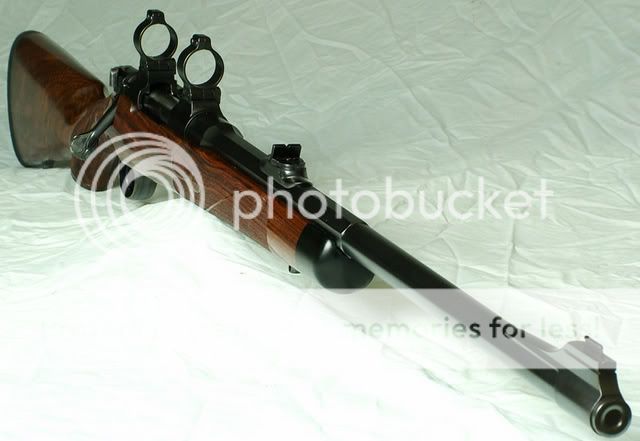

Yes that is Theodore Rex back from the woods! Grumpy