Month: November 2025

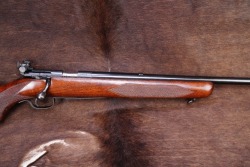

That any of them survived WWII? Grumpy
Categories
Nothing wrong with that kid!
.gif)
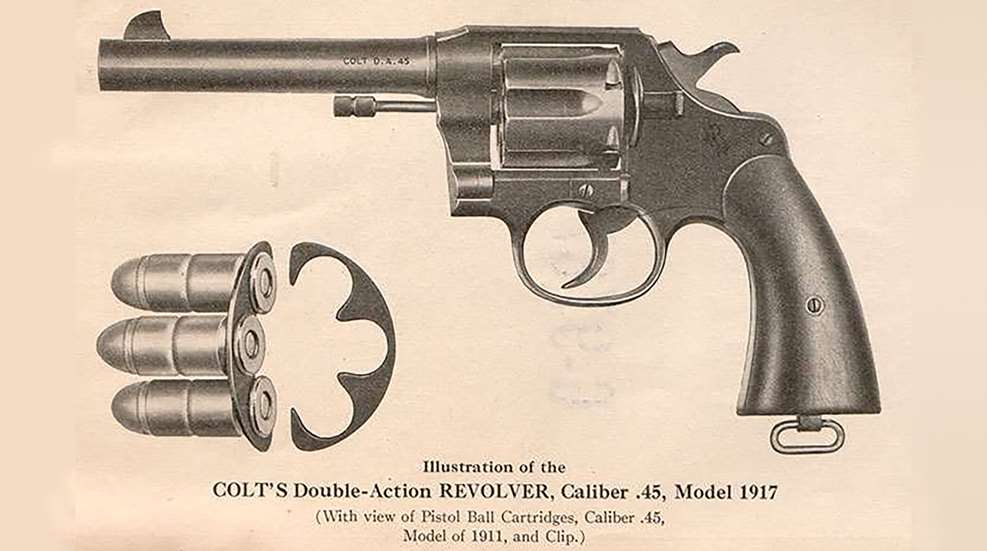
Revolvers have been part of the US military arsenal for a long time. In fact, despite the 1911 semi-automatic having “won two World Wars!,” the revolver continued in US military service longer than that 1911 to 1985 time period. Both the Army and the Air Force kept revolvers in their inventory well past the end of the Vietnam War.
As late as the 1988 edition of Field Manual 23-35, the US Army revolver inventory was listed as “six basic caliber .38 service revolvers in use by the Army.” One 2-inch barreled .38- caliber revolver and five 4-inch barreled .38-caliber revolvers were still in use.
The snub was used by Army CID and counterintelligence personnel, while the 4-inch barreled revolvers were used by aviators and Military Police. The US Air Force didn’t retire the last of its Smith & Wesson Model 15 revolvers until 2018. By that time, the Model 15s were only used with blanks to train working dogs.
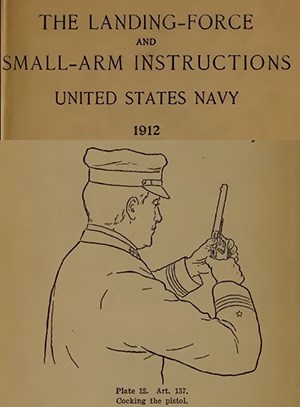 One of the earliest 20th century examples of US military revolver training is presented in the US Navy manual “The Landing-force and Small-arm Instructions, United States Navy, 1912.” The techniques shown in the manual, e.g., cocking the pistol, demonstrate how much evolution has taken place in military revolver training. Even then, safety was an issue that had to be emphasized. “In shooting from shipboard, men should be cautioned against standing where poorly aimed or accidental shots may be deflected from boat davits.”
Just as at the beginning of The Great War, the beginning of World War II saw the military woefully short of 1911 pistols. During the pre-war buildup, the Model 1917 .45 ACP revolver was pressed into service to provide training sidearms for the millions of troops who fought the war.
The author’s father was familiarized with a 1917 revolver in basic training shortly before Pearl Harbor was attacked. One handed bullseye target shooting was still the initial form of pistol shooting taught.
Train For Combat, Not The Range
As the War progressed, it became clear that training only for bullseye target shooting was not adequate to train men for combat. Combat firing courses pertinent to both semi-automatics and revolvers were developed. After the war, an interesting development in training that was pertinent to revolvers occurred. The reason for this development is historically unclear.
Change No. 2 to Field Manual 23-35, was issued in 1948. It contained an interesting addition to handgun training that was intended for both semi-autos and revolvers. The addition was the Advanced Firing Course. The course was designed “for use by specially qualified individuals whose military duties demand above average performance with handguns. … Any pistol or revolver may be used, providing it is of sufficient caliber to be effective. Generally speaking, this confines calibers to .38 or larger. Exceptions are the .30 Luger, Mauser, and Russian, and the 32-20 cartridge.” 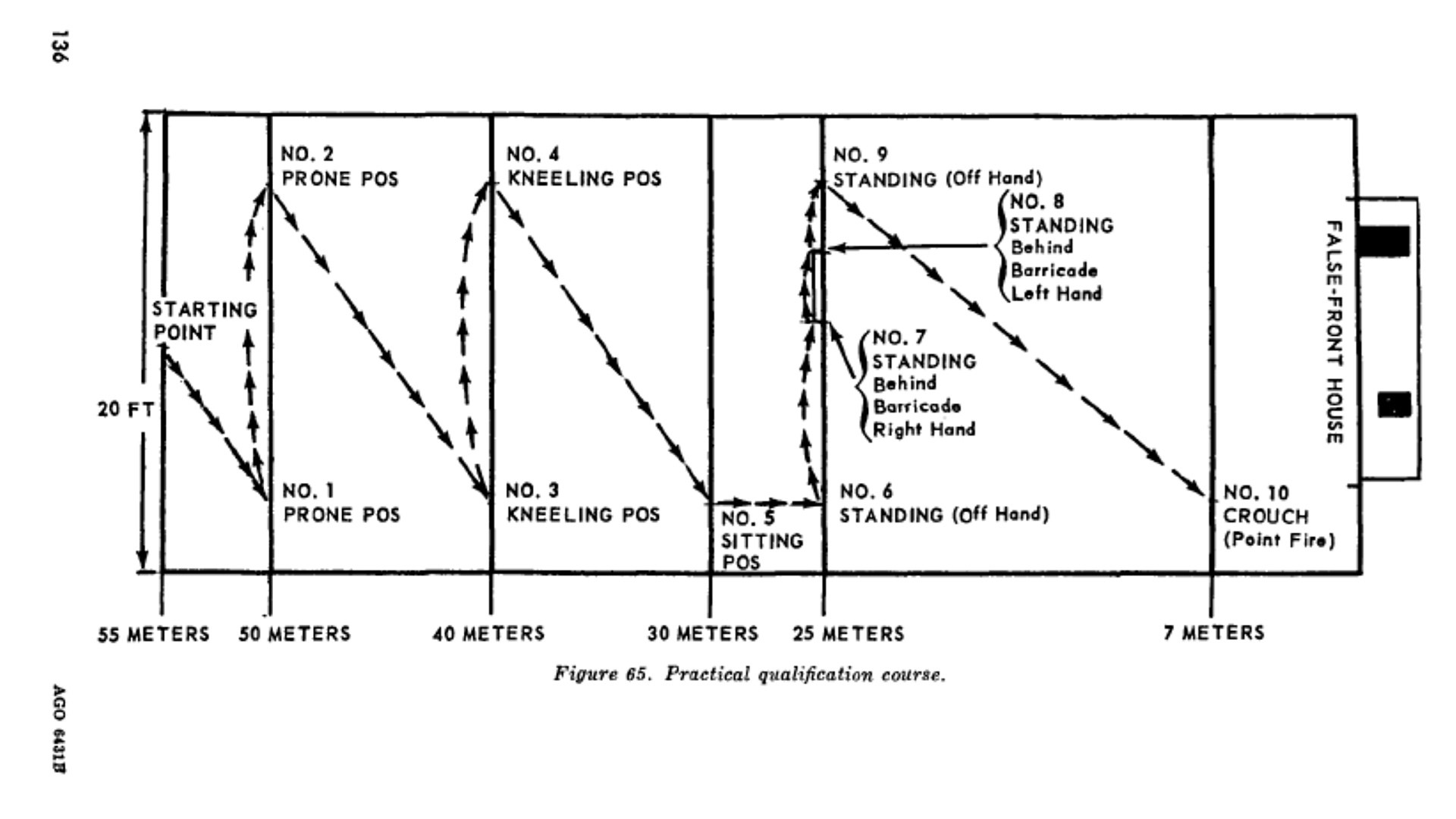
The course was divided into six tables totaling 50 rounds. The targets ranged from 50 yards to 7 yards. Other than the 50-yard table, it was shot on paper silhouette targets of varying sizes and heights. All the tables under 50 yards require drawing from the holster with some tight time limits. Single-action revolvers were specifically allowed as demonstrated by the reloading requirements in Table XI. Including this category of revolver is curious, although many were furnished to Great Britain during the War.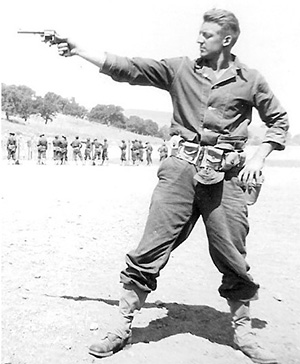
The author’s father firing an M1917 shortly before Pearl Harbor
Recognition of what constituted meaningful handgun practice was included in the course description with a caveat. “Movement not included. The course does not include shooting at ‘running man’ targets, shooting while the firer is running, or a combination of the two. Nor does it include shooting from a moving vehicle, shooting while seated behind a desk, or night shooting.
It is felt that while all these are valuable and should be included in familiarization practice, they involve too many complications to be included in a fixed course of fire.” This emphasis seems to have had its roots as much in clandestine OSS type operations as in the law enforcement role.
Out With The Old, In With The New
The 1960 edition of FM 23-35 was completely restructured, and the Advanced Firing Course was eliminated. The Colt Detective Special was the only revolver mentioned and received a separate section from the 1911 pistol. The Advanced Firing Course for all handguns was replaced for revolvers by the Practical Qualification Course.
The course fundamentals were stated as “Qualification in practical revolver shooting includes firing from several positions at varying ranges; shooting with the right and left hands; point (crouch) firing; double action; and hip shooting.” In this sense, it had become a parallel to the FBI’s PPC, since revolvers were now relegated to the law enforcement function in the Army.
A further evolution of revolver training occurred in the 1988 edition of FM 23-35, which was titled “Combat Training with Pistols And Revolvers.” In place of the Colt Detective Special, the Smith & Wesson Model 10 had become the CID sidearm while aviators were equipped with 4-inch revolvers. Reactive silhouette targets had replaced paper targets of both bullseye and silhouette versions.
The Combat Pistol Qualification Course in the 1988 edition could be used for both pistols and revolvers. Changes to range layout required soldiers to engage single and multiple targets at various distances.
In addition, soldiers were given 40 rounds to fire the 30 targets. This enabled soldiers to fire makeup shots on targets they missed. The manual specifically stated, “A firer who can successfully reengage the target with a second round during the exposure time is just as effective as a firer who hits the target with the first round. The firer is not penalized for using or not using the extra rounds he is allocated.” Making allowance for follow-up shots was a noticeable change in doctrine from years past.
The USAF continued to use revolvers in the law enforcement function for a time but eventually the M9 Beretta replaced it for all but dog training. Finally, even this usage was discarded. Revolvers are no longer part of the US military inventory, but still had a very long period of service that deserves recognition.

The B-24 was an all-purpose workhorse warplane during World War 2. The Liberator was used
as a heavy bomber, a reconnaissance platform, a utility transport, and a maritime patrol aircraft.
Fred was a patient in the clinic. He was both old and deaf. He carried a dry erase white board to receive, but he transmitted just fine. The key was to ask open-ended questions. “How did you lose your hearing?” seemed a good place to start.
The Waist Gunners
Fred was a waist gunner on a B-24 Liberator during World War 2. The B-24 was the most-produced warplane in the American arsenal. We built 18,188 of them. It was a miserable machine.
The B-17 was graceful. It wanted to fly. By contrast, the B-24 had to be manhandled. For the two waist gunners, theirs was a particularly sordid lot. Their combat positions were open to the slipstream … at 25,000 feet and thirty below zero.
The two waist gunners fought back to back. They danced around each other within the plane’s tight confines swiveling their pintle-mounted fifties to engage Luftwaffe fighters trying desperately to kill them. They wore heavy electrically-heated clothes and oxygen masks to survive. It was an unimaginably hostile world. As a result, these two guys got really close.

We built more than 18,000 Liberators during the war.
Just Keep Fighting
On one mission Fred’s counterpart had a stoppage. In desperation he tore off a glove and clawed at the cold-soaked receiver to get the gun back in action. The resulting frostbite took forever to heal, but he kept the weapon shooting.
When the Luftwaffe fighters pulled away they knew what was coming. On Fred’s last mission a German 88mm round went off alongside the fuselage on the opposite side.
The hot shrapnel detonated the ammunition on his buddy’s gun. It also pulverized his friend, blew off Fred’s helmet, and left him permanently deaf in one ear. Fred had to endure the long trip home manning his gun amidst what was left of his best friend in the world. And we complain about the wi-fi speeds …

The waist gun positions were cramped, cold and terrifying. USAF Museum photo.
Battle of the Bulge
Fred’s bum ear left him grounded, so Uncle Sam made him a Military Policeman. One day during the Battle of the Bulge, Fred was driving a jeep with a pair of officers onboard.
The Germans found that stringing a length of common wire between two trees was a cheap way to decapitate American soldiers driving in jeeps with the windshields down.
As a result, GI’s welded a length of steel stock vertically in front of the grill. Fred’s jeep indeed sported such an appendage, but they were going too fast … and the wire was actually a small cable. The impact tossed the little jeep into a ditch. Fred was thrown out — nobody wore seatbelts — and the vehicle came to rest on top of him. Mashed into the cold mud with a fractured collarbone and a punctured lung, the young man lost consciousness.
When Fred came to he found that only one arm worked. It took him quite a while to dig himself out from underneath the jeep one-handed. Once clear he found the two officers shot through the head. The Germans had apparently assumed he was already dead. The B-24 was said to be fairly miserable in combat.
Note that the waist gun positions are open to the slipstream.
The American Deep South
When Fred got home he put his military experience to work, subsequently spending his entire professional career in Law Enforcement. By the time he had reached retirement age the cumulative effect of gunfire and chainsaws had taken its inevitable toll. Hence the dry erase white board.
Folks from big cities really cannot appreciate how great the American Deep South really is. Soon after the war Fred found himself in a rural commissary.
These little company stores were typically maintained by large land owners to provide the goods needed to keep those who worked the land supplied with necessities.
There was one of these quaint establishments near where I lived back in the day. It had a giant moose hanging on the wall and just reeked character. My dad and I frequently dropped by for ice cream or a cheap hamburger. In Fred’s case, this old store had a little bit of everything.
The US Eighth Air Force alone suffered more than 26,000 dead over Europe during World War 2.

And we think we have problems …
The Greatest Generation
In one corner of the place was a modest rack of firearms. Amidst the small collection of sporting weapons was an absolutely gorgeous unfired GI M1 Garand. Soldiers of Fred’s day didn’t call it the Garand. It was just the M1. Quietly smitten with the rifle, Fred inquired of the owner.
The weapon was for sale on consignment. It had obviously come back surreptitiously with some GI who now found himself on tough times. Fred offered the shopkeeper $25 on the spot, and he accepted. Meticulously maintained and spotlessly clean, that old service rifle spent the next seven decades hanging on the wall in Fred’s living room.
Fred is gone now, as are most all of the old heroes of his generation. He wasn’t much to look at, just some old deaf guy with a dry erase white board. He couldn’t hear thunder, but he could still speak fine. The key was to ask open-ended questions.

Categories
Me yesterday
