Categories
Month: September 2024
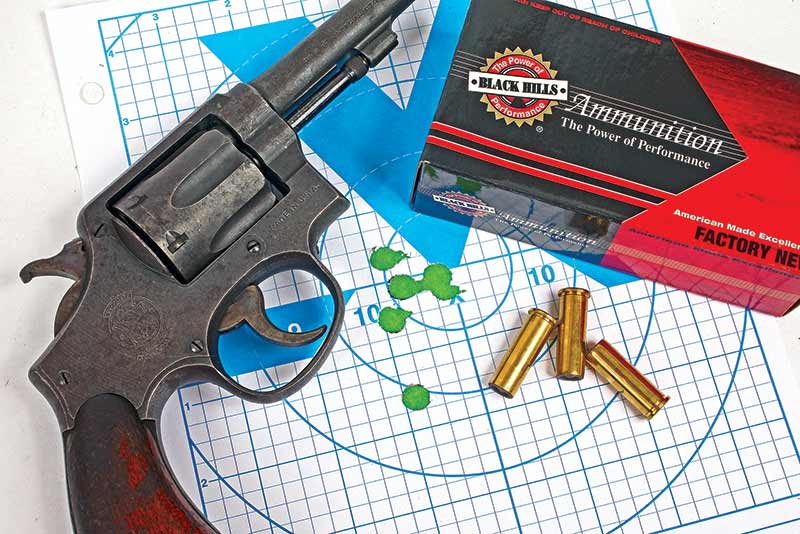
This 15-yard off-hand group with the war-weary Victory shows what they could do —
and still can! Without the flyer, that’s a solid 1″ group using Black Hills 148-grain target
wadcutter ammo. Roy didn’t have enough original military ammo to shoot any groups.
It’s the beginning of WWII, we’ve had our face slapped at Pearl, and virtually the entire world will soon be engulfed in a struggle to fight the warmongers and get some sanity — and freedom — back. While politicians yammered, pounded chests and pointed fingers, there were those who realized this was turning into a toe-to-toe fight where bayonets and pistols would be bloodied.
And we weren’t ready for it. Not even close.
Things changed fast as time seemed to rocket by. As suddenly as Nazi tanks stormed through Europe, Banzai charges trampled Asia and bombers struck Honolulu, the U.S. and its allies were faced with sending millions of troops worldwide to face-off the threats. Industry ramped up — fast — and it was soon realized there weren’t enough 1911s to go around. The old 1917 revolvers were dusted off yet the numbers were still far short. Smith & Wesson responded with a “Hand Ejector” .38 S&W Special revolver to fill the holsters of soldiers, sailors, airmen, guards, allies, insurgents — and even some spies.
Available at first in 4″, 5″ and 6″ barreled versions, the gun proved light, handy, effective and universally popular. Almost 850,000 were made, including hundreds of thousands in .38 S&W for the allies. The finishes went from “commercial” blue to a sand-blast blue to Parkerized — with the “Wartime Finish” noted by the maker lest anyone think they’d slumped to a new low in quality. This revolver fought back in the hands of pilots, factory security, in the jungles, forests, deserts and in the back-pockets of spy-catchers in a 2″ version.
It was called the “Victory” model for good reason, and the bold “V” before the serial number let anyone seeing it know what it was for. This game was final, total Victory — or no win at all.
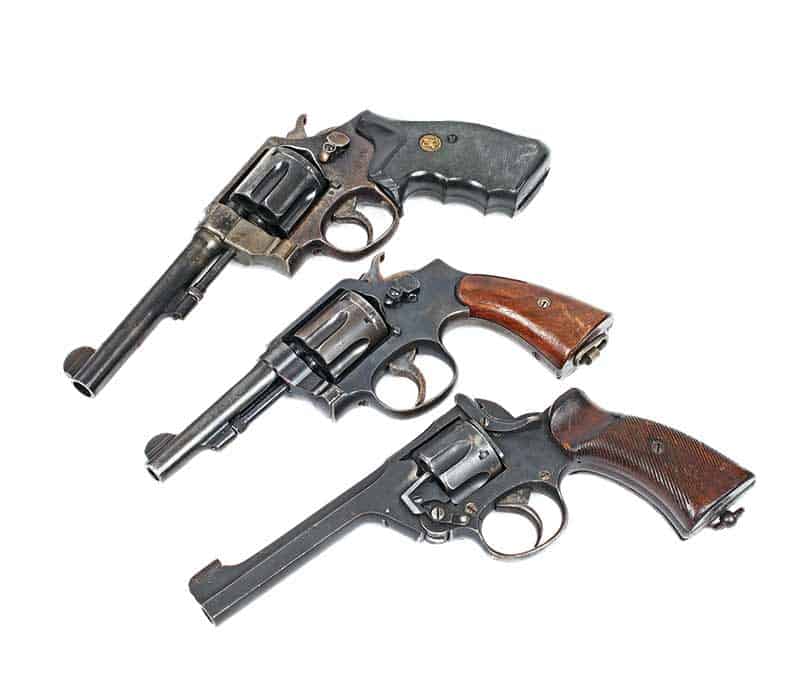
The Victory (center) was lighter and handier than the 1917 S&W (top) and soon
found favor with anyone needing a handy side arm. The 1940-era Enfield in .38 S&W
(lower) was Britain’s way of answering the need for a mass-produced revolver but Roy
feels the S&W Victory is easier to operate and more accurate.
Historical Legacies
My dad was a Navy man, joining in 1952. I recall men I used to meet on his ships, at duty stations or who visited us. Men who had all fought in WWII. To my 10-year-old eyes, they were almost mythical. They’d “been there” and “seen that” many times. Things I’d only seen in old war movies — but they’d lived it. I remember my dad was often very respectful of certain gentlemen, and he’d later carefully explain who they were and what they had done “in the war.”
A life-long memory for me arrived the day one of them showed me his “old S&W” as he called it. We were at his home and he knew I was a gun-crazy kid but understood about the war, and how to be safe around guns. He brought it out, unwrapped the oiled rag, and before me lay the first Victory model I had ever seen. I recall the glow of the old incandescent light on the brushed blue finish and the tarnish on the old brass cartridges he took out of the cylinder. He smiled, let me handle it, then loaded it and returned it to its safe place.
Later, my dad told me the man had fought in the Pacific in WWII and had used the gun in earnest. I felt changed having handled it. I got a bit older that night.
As time passed, I’ve always been attracted to Victory models and I can’t hold one without trying to listen to its story. They all talk, some more quietly than others, but they all have stories. It may just be about walking the perimeter of an aircraft factory — or time in a P-51 as the pilot tried to outsmart a Focke Wulf 190 in the skies over Germany. But they talk.
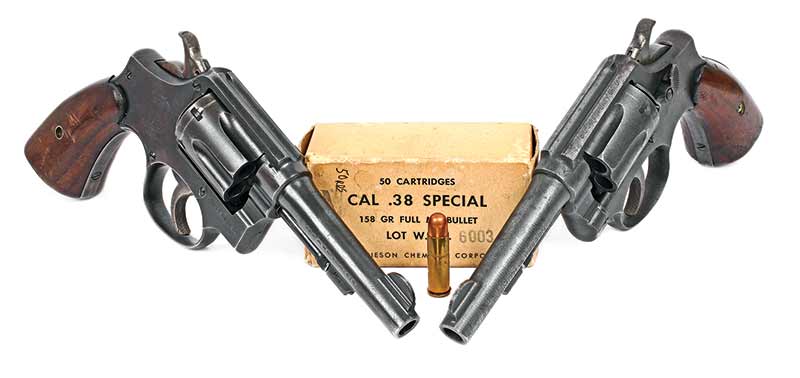
The original military loading of a 158-grain FMJ showed 760 fps over Roy’s chronograph
but was advertised at 850 fps. Note brushed blue finish on left, parkerized on right.
S&W’s “Victory” model ruled the revolverroost during WWII and beyond.
Two Now
I have a pair of Victory models right now. Both have good stories. I bought them from the men who carried them — one in WWII and one in Vietnam. They sold them to me because they knew I cared, and still do. The Victory was long-lived in our armed forces and uses were found for them for decades after WWII. I predict some are still hiding in lockers or duffels around the world. My blued one helped protect a PT boat crewman in the South Pacific in WWII. The Parkerized one — showing some honest wear — rode in a Jeep quite a bit in Vietnam and, according to the soldier, “Made me feel a lot safer at times.”
I shoot them now and again and enjoy it every time I do. The small grips and sharp edges of the top-strap bite some, and after a couple of cylinders I stop. But that old S&W long action is smooth, predictable and familiar and I always smile. After 80-odd years, they still work, are still accurate and could be relied upon to protect a lonely guard, a 19-year-old tank commander or a G.I. in a foxhole on Iwo Jima.
Find a Victory model if you can — and listen to its story.
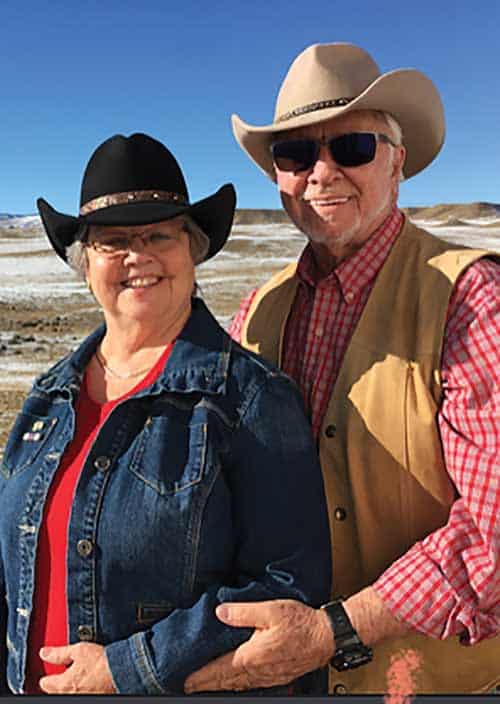
Our Friend Gwen
You might not have ever seen Gwen’s name on the masthead of our magazines, but for years now, she’s turned her sharp eye toward finding any pesky mistakes in our pages before going to press. Gwen’s title was “Grammar Guru” and she was all that — and more.
I first met Gwen when she was production director of our police association newspaper, The Informant, almost 40 years ago. I soon became the editor there during my police career, and for 15 or so years, Gwen and I were part of a team running that award-winning newspaper. When I heard Gwen had retired I snapped her up to handle proofing for us and she proved her mettle time after time, instantly becoming part of our FMG team and well-liked by all.
Alas, Gwen, and her kind-hearted husband Joe, passed unexpectedly in August from COVID, within one week of one another. We all miss Gwen’s ready-willingness to lend a hand, her amazingly sharp eye when it came to proofing and her unfailingly positive outlook. She and Joe were two of the nicest, kindest and sheer decent people I’ve ever known. Darn it all anyway.
Categories
The Zündnadelgewehr
Categories
We Are Losing Fans

At the ripe old age of 5, I finished kindergarten. We never got diplomas or graduation parties for attending back then. Those things were unheard of. But I did get something better, much better to my way of thinking. It became an established tradition following me through grade school, one I enjoyed and appreciate to this day.
Following a fresh buzz cut, Mom sent me to my grandparent’s farm for a week with three new pairs of Wrangler jeans, cowboy boots and fresh packs of T-shirts and underwear. The farm provided me room to roam. It also gave me time to spend with my uncles, who were masters of tastefully teasing me, as they taught me about farm life. These simple things toughened me for life, in a gentle way.
The yearly visits made me learn and appreciate farm life, too. My Pap operated the dairy farm my uncles eventually took over, followed by my cousin.

No Free Ride
Right off the bat, Grandma had me pulling my weight. Taking the trash to the burn barrel and gathering eggs every morning were a few of my assigned chores. I was also designated “gopher” for my uncles, as I followed them around the farm “helping” with their chores. My contribution consisted of getting food and water for them from the main house.
Grandma taught me about chickens, while also teaching me a great lesson as a bonus. She kept separate coops for breeding chickens, to keep the number of laying chickens and eatin’ chickens in check. She told me I was lucky, because some of the eggs were due to hatch in the next few days. I was excited to see the chicks hatch out, checking on them every morning.
Life Lesson
Here’s the interesting part. Grandma told me if the chicks start pecking through their shells, not to help them. She explained the chicks needed the struggle and effort to stimulate and strengthen their heart, lungs and muscles. She told me when she was little, she helped some chicks break free of their shells. This seemingly act of kindness was detrimental. She told me every chick she helped, died.
This lesson stuck with me. Today, it makes more sense than ever with what’s going on today. Parents figuratively wrap their kids in bubble-wrap, protecting them from everything, rather than giving their children a chance to learn, grow and fail on their own. Failures are surely some of the best life lessons one can learn.
The Good Ol’ Days
We watched violent cartoons, rode bikes without helmets, and shot BB guns, not only surviving, but thriving. We rode our bikes for miles, out of sight from any adult, and were home by dark. I was five when I got my BB gun, a Daisy 1894 reproduction.
On my eighth birthday I got an H&R Plainsman bolt-action .22 rifle. Roaming the fields, or walking the roads at my grandparent’s farm, rifle forever slung over my shoulder, was a regular occurrence. As cars passed, we’d wave to each other. Some stopped, asking how the hunt was going. In my mind, I was a professional groundhog hunter/raccoon trapper.
Yes sir, life was great back then. Isn’t it always? There was more freedom than now. Parents didn’t hover, and the kids didn’t want them too. Today, I’d probably be arrested, and my parents would be indicted for contributing to the delinquency of a minor for the things we did back then, which wasn’t wrong at all. It was life.
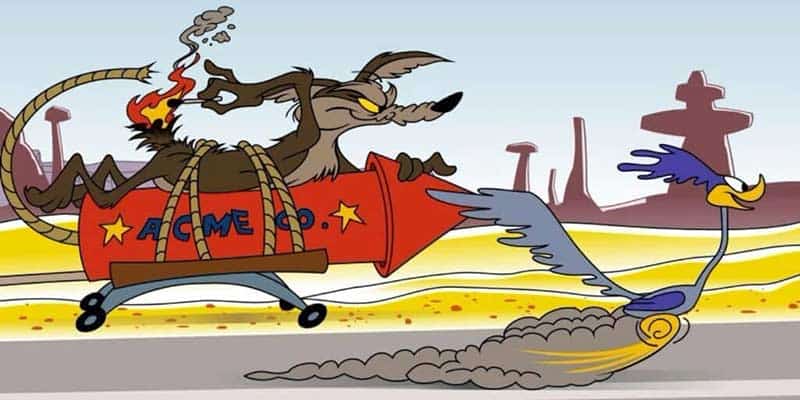
We were kids familiar with brand names like Daisy, Crossman, Copperhead, Winchester and Remington, while knowing what ratchets, crescent wrenches and sockets were. We watched cartoons where explosives and anvils were used as booby traps. We didn’t need warning labels telling us not to mimic the antics we watched. We had common sense.
We built things, jumped over friends with bike ramps, Evel Knievel style, and drank from the hose, living to tell about it! We carried pocketknives and shot wrist-rocket slingshots, and no one ever got hurt — well, usually. Doing these things made us better adults, too! We’re far more independent, willing to take risks, while having a sense of adventure in our soul, something lacking in today’s world.
Epilogue
I guess all I’m trying to say is it’s time to pop the bubble wrap, get rid of the leashes, and put the “woke” crowd and their unrealistic demands back to sleep. Life is too short not to be enjoying it while we can.