
Once, on the way into remote desert mountains in southern Arizona, I paused to check the zero of my lightweight custom mountain rifle. I’d flown to Tucson with the rifle, and wanted to be sure I was prepared to make a clean, precise shot on a tiny-bodied coues deer buck.
To my frustration, I found the rifle hit way off. As in, a foot to the right at 100 yards. Worse, it wouldn’t shoot small groups, and I couldn’t get the scope to adjust properly and hold zero. It was a Zeiss; a premium optic that should be consistent and reliable.
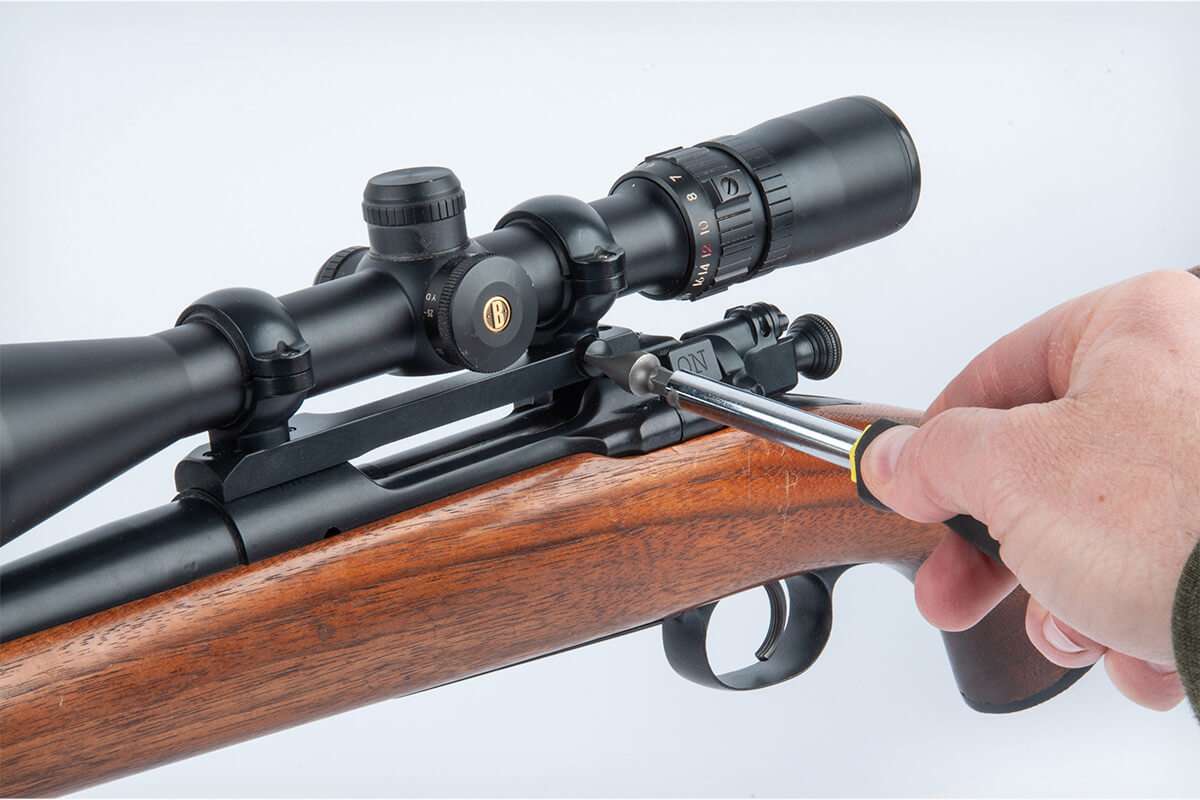
Finally, a full box of ammo into the ordeal, I put on my forensics cap and began examining the rifle. I confirmed that the action bolts were torqued properly. I checked that the scope ring screws were as well. Lastly, I went to the scope bases—and found the problem. One of the side-mounted screws that clamps the rear ring in place had come loose. No wonder my point of impact had been way to one side.
Once that screw was tightened, the rifle produced its customary small groups, and the scope held zero perfectly.
The inability to get a rifle sighted in can come from several sources. Your rifle could have a problem. Or it just may not like the loads you’re feeding it. It could—(shocking thought!)—even be you, the shooter, that’s inconsistent. However, scope and scope mounting-system issues are frequently the culprit, and that’s what we’re here to explore in this article.
When you think about it, riflescopes and the rings that hold them in place are rather amazing creations. It’s surprising that anything could hold a glass telescope with many moving parts in place while a controlled explosion and a whole bunch of Newton’s Law occurs inside the rifle that scope is mounted to.
Good bases and rings do hold quality scopes precisely in place. Not just for a while, but as hundreds, even thousands of shots create mini earthquakes.
However, some scopes just won’t hold zero, and some bases and rings just won’t hold tight. Usually, that’s because they’re either cheap (let’s call it what it is), or they’ve been improperly mounted.
Either is extremely frustrating. Both must be resolved before the rifle can perform properly.
What causes scopes, scope rings, or bases to come loose? There are a variety of possibilities, but the most common ones are recoil—when a scope is mounted improperly—and vibration. As in, vibration in the belly of an airplane, or the rifle case mounted to your ATV, or behind the seat of your pickup.

Recoil, of course, is the primary suspect. When a cartridge ignites and the gunpowder inside explodes, thrusting the projectile from zero to Mach 2 or 3 in a nanosecond, there’s a whole lot of seismic activity going on. Up top, that scope full of glass and aluminum parts has to hang on, and what’s more, all those parts have to stay stable. Worst, there are several potential “weak links” between the scope and the rifle.
If your scope rings aren’t positioned properly and torqued properly, the scope can actually slide forward a fraction inside the rings each time the rifle recoils rearward.
If the rings are properly fit to the bases, repeated rearward recoil of the rifle can eventually loosen the joints.
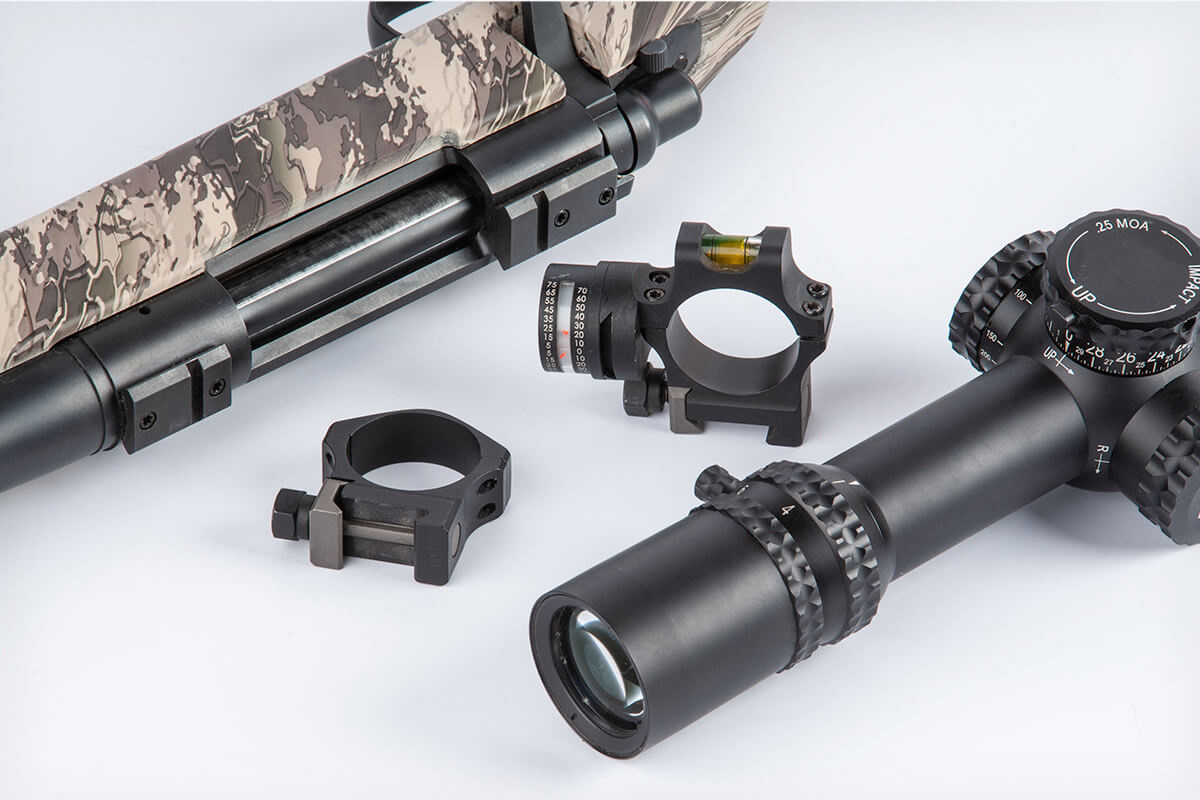
If the bases aren’t correctly mounted to the action, the same thing can occur: repeated recoil can jar screws loose. In extreme cases, substantial recoil (such as a .30-378 Weatherby, .458 Lott, or .470 Nitro Express) can sheer screws right off.
Simple, continued vibration, such as the gentle hum of an airplane, is most likely to just loosen screws. It’s relatively harmless in the grand scheme of things—unless it causes you to miss a giant buck or bull.
Identifying an issue usually begins with unpredictable point of impact and bigger-than-average groups. Once you suspect you have an issue, spend some time examining your rifle and scope mounting system. On more than one occasion when a friend was struggling with point of impact issues, I’ve grabbed the scope atop his rifle and given it a brisk twist; you’d be surprised how often it moves. And how disconcerted the shooter is when it does!
Twist on the scope, attempt to wiggle it forward and back, lift and press on the front and the rear, and so forth. You may feel a trace of movement.
Sometimes you uncover a distinct issue, as I did on my way into coues deer country. Other times, you have to work on suspicion, performing corrective action on the possibility that the optic system is at fault. Whether or not you pin the issue to the scope and/or mounts, making sure the optic is mounted correctly is one step toward eliminating all potential issues.
When performing corrective surgery on a riflescope and mounting system, it’s usually best to disassemble the entire system. This is particularly true when working without a known diagnosis.
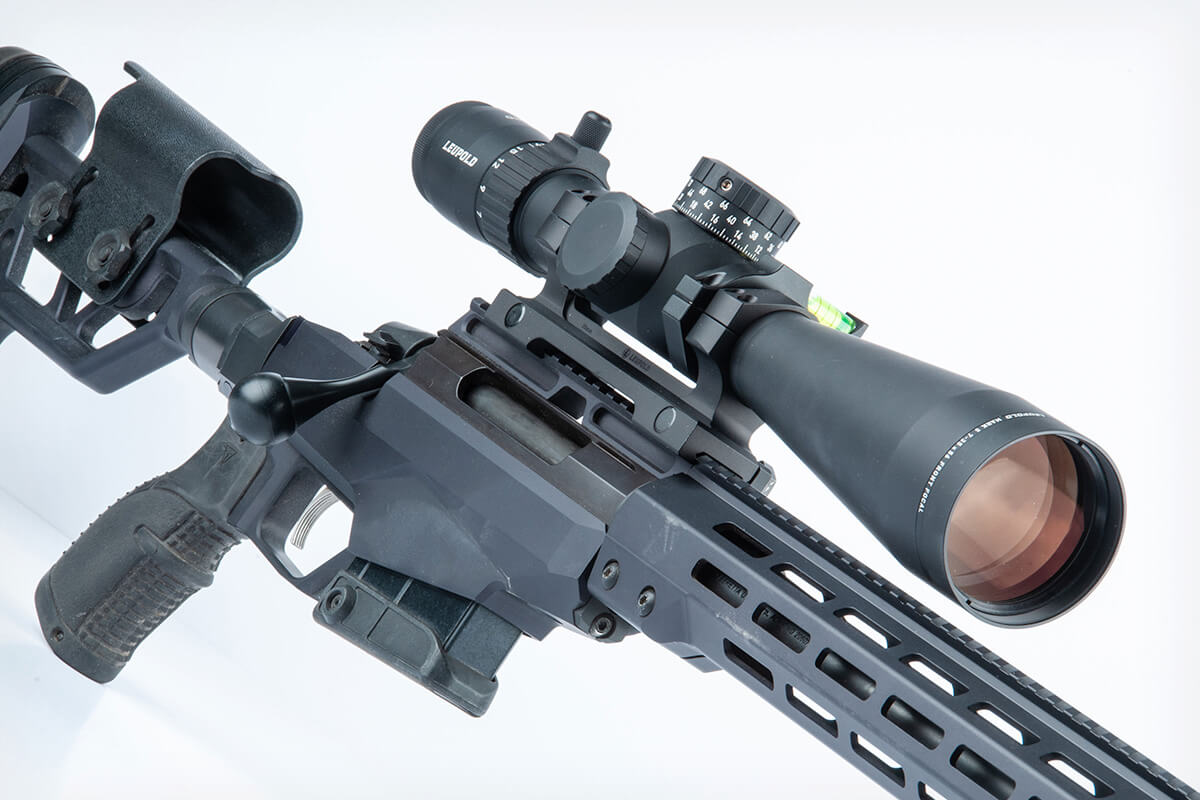
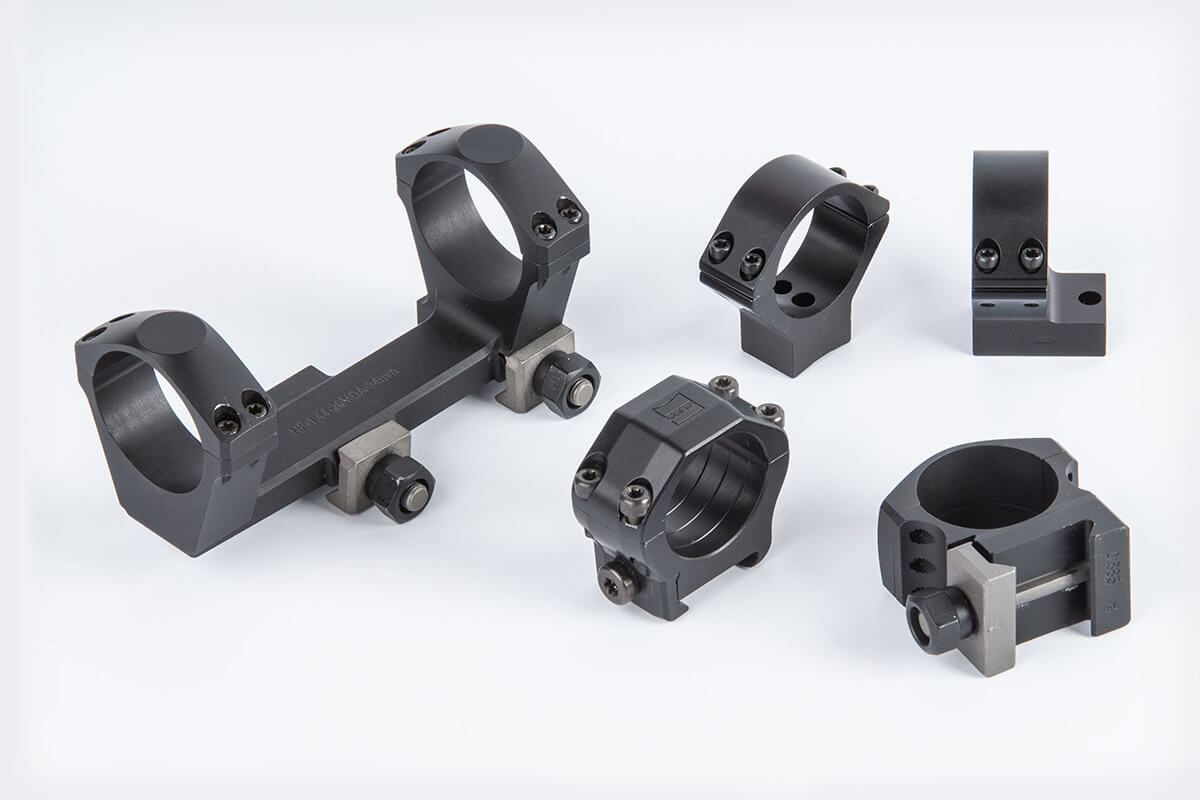
Replace any cheap parts with premium-grade gear. This generally means steel bases, and rings by high-end manufacturers. Talley’s one-piece base/ring combinations made of aluminum are exceptional. Called the Lightweight Alloy Scope Mounts, they eliminate one weak link, are perfectly concentric, and superbly strong. Best of all, they don’t cost much. Nightforce’s X-Treme Duty Ultralight rings are a titanium alloy, and are exceptional—but expensive. For AR-type rifles, a one-piece cantilever-type mount eliminates several weak links and is absolutely the way to go.
Long ago while working in a Utah gunshop through college, I was taught to degrease all mounting screws and holes. The manager didn’t like battling Loctite when mounting a new scope for a customer, and degreased screws stayed tight.
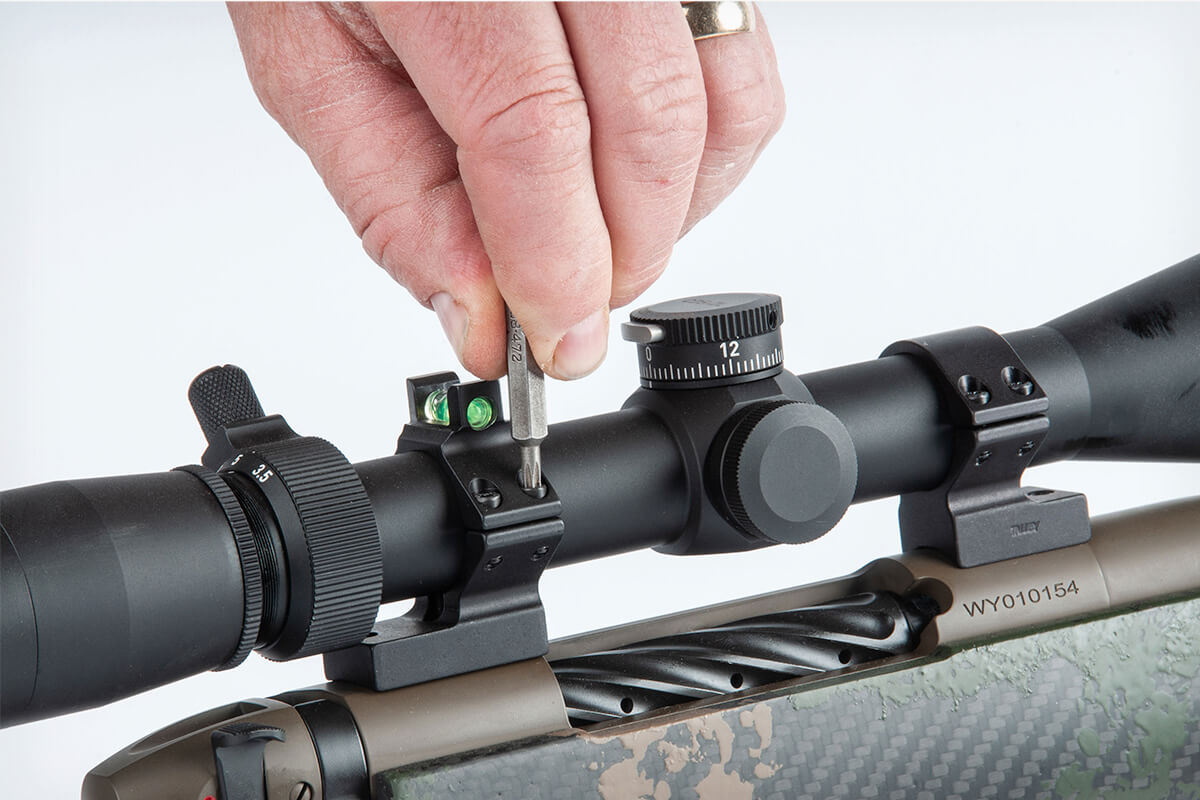
Then I moved to Los Angeles to work for Petersen Publishing for two years, after which I transferred to the new publishing headquarters in humid Illinois. All my degreased screws rusted. Rusted-up screws are harder to remove than those with Loctite, and, well, they’re rusty. Not cool. Loctite is a far better choice for securing screws.
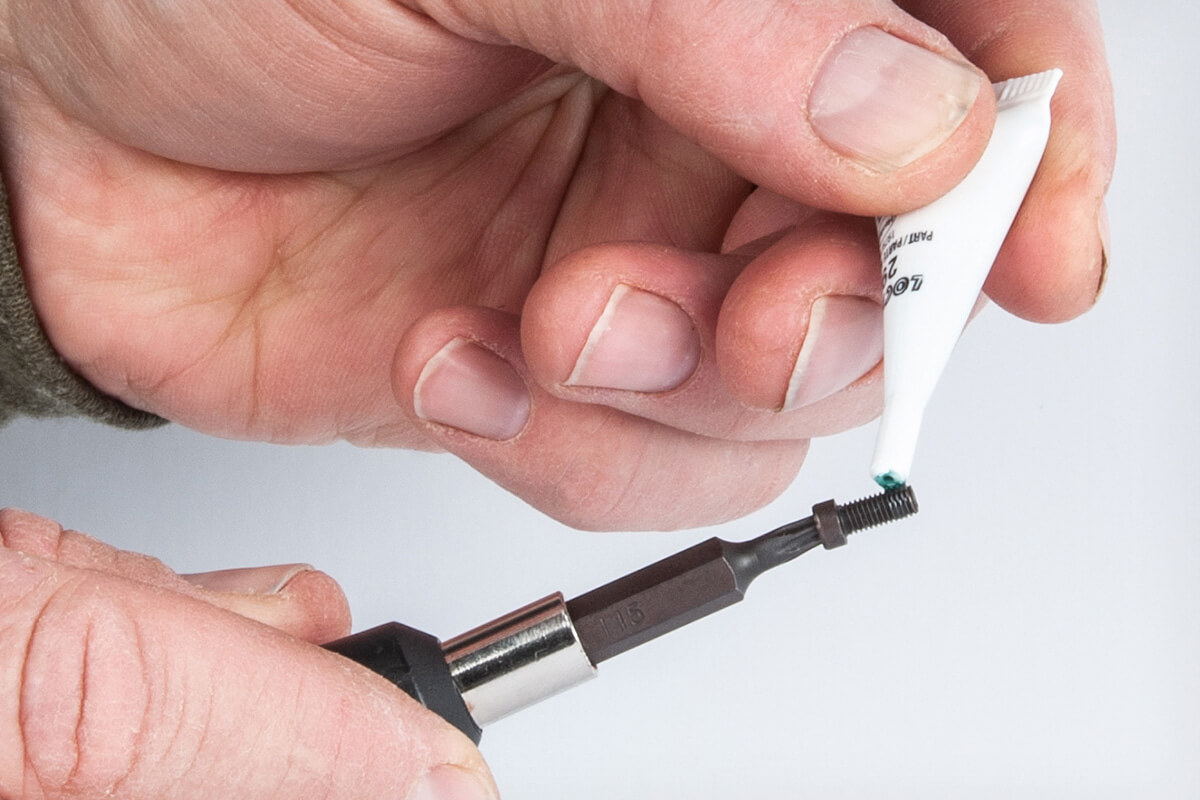
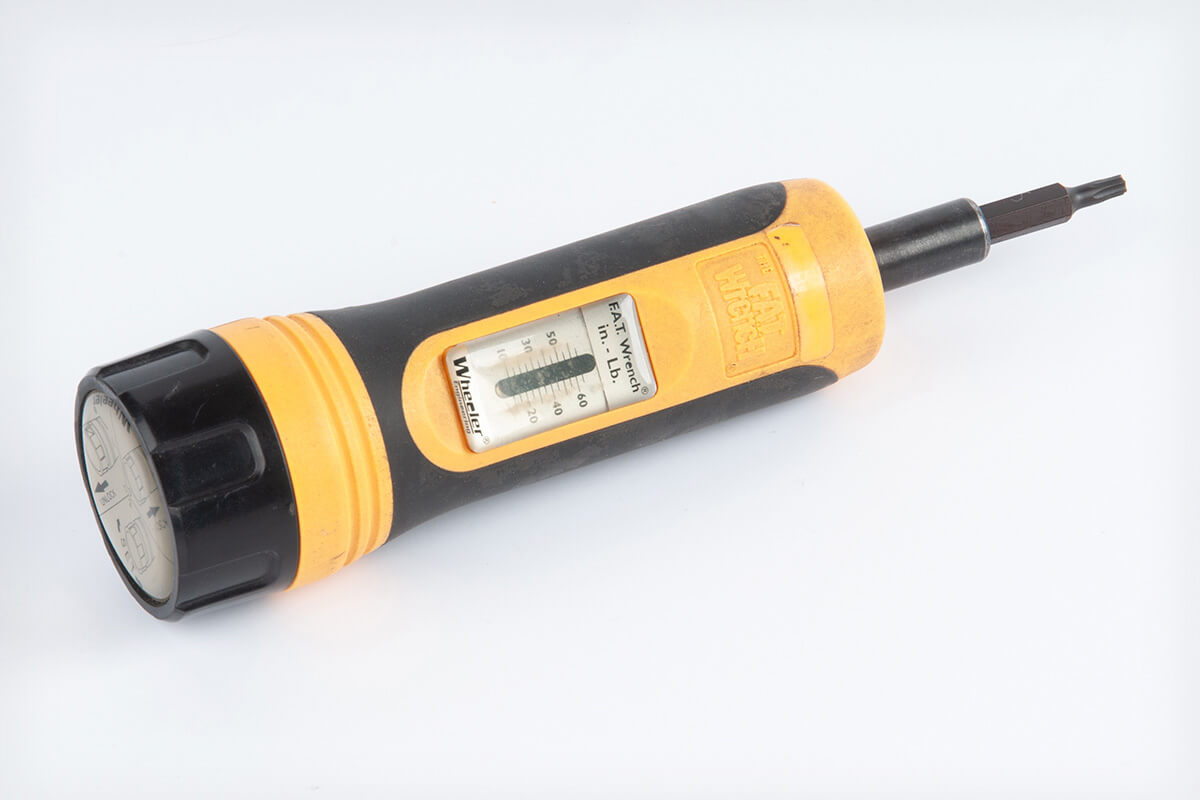
With a dab of Loctite on the threads, finger-tighten each screw incrementally, wiggling and working the base to make sure it finds a correctly centered equilibrium. With all movement eliminated and the screws firmly finger tight, swap to your torque wrench (I use a $60 F.A.T. Wrench by Wheeler Engineering), and torque the screws to the manufacturer’s recommended spec.
Don’t overtighten screws. You can strip the threads from the holes in your rifle’s action, or sheer off a screw in the hole.
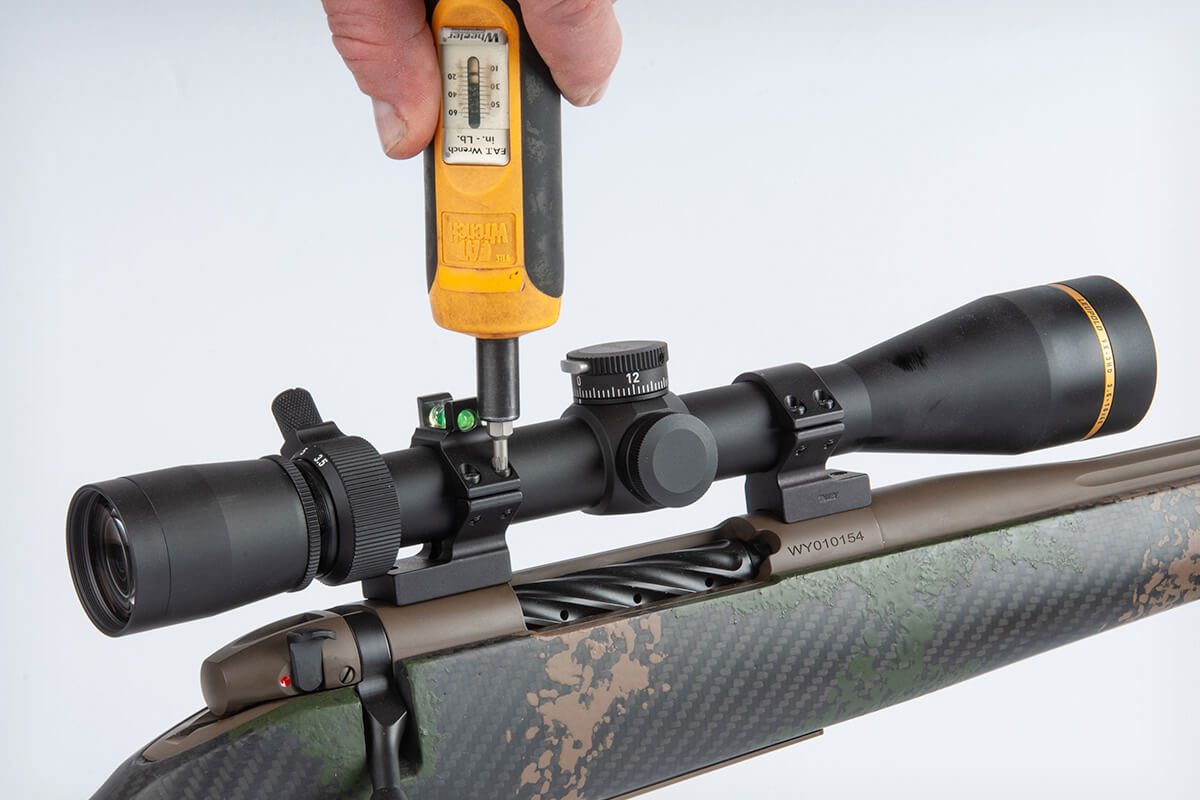
Lay your scope in the rings, place the ring upper halves, and start the screws—each with a dab of blue Loctite. Work out the correct eye relief and level up the scope. Incrementally snug the ring screws to finger tight, maintaining an even gap on each side where the upper and lower portions of the ring nearly meet.
Finally, tighten each rings’ screws in an “X” pattern—front right, rear left, front left, rear right, repeat—a bit at a time until the torque wrench clicks over on all of them.
Again, don’t overtighten. Torque on scope rings is surprisingly mild, usually in the realm of 17 to 20 inch pounds. Much tighter, and those rings can compress the aluminum scope tube, restricting the movement of the magnification zoom and turret adjustments inside.
If you’re setting up a heavy-recoiling rifle, it’s worth lapping the inside of the rings to make them perfectly round (a topic for a different article), and dusting the inner surfaces with powdered rosin such as Scope Grip Rosin. For those unfamiliar, traditional rosin is a tacky derivative of sap. Violinists use it in solid form to treat their bows. Bull riders use powdered rosin to help their gloves stick to their bullropes. Savvy big-bore shooters use it to prevent scope slippage.
With quality bases and rings, correctly secured by screws treated with a dab of Loctite and properly torqued, a high-quality scope will stay put through thousands of rounds worth of recoil and thousands of miles in an airplane or pickup truck.

Periods of transition are inevitably awkward. Matriculating from Kindergarten into First Grade is reliably trying. Marriage, divorce, graduation, and retirement can all be challenging for their own unique reasons as well. Periods of transition in military history, however, are invariably bloody.

For all of its unique capabilities and extraordinary toys, the military mind can be extraordinarily inflexible. Billy Mitchell sacrificed his career to birth airpower, and the equine cavalry was not retired until their horses were mowed down by the hundreds on the industrial battlefield. The absorption of the machinegun into martial doctrine represented another convulsive evolution in military tactics.

It really all comes down to turf. Whoever runs the Army will invariably be reticent to embrace new technologies that might threaten their position as apex predators in the military hierarchy. In 1915, however, English military planners leapt outside their comfort zones to fold the revolutionary capabilities of the belt-fed, water-cooled, sustained-fire machinegun into the British order of battle.

When the First World War kicked off in July of 1914 British military planners satisfied themselves with a single two-gun machinegun section per infantry battalion or cavalry regiment. Untold thousands of Limey corpses later the English formed the Machinegun Corps (MGC). The MGC was envisioned as being its own branch of the British military on par with the infantry, cavalry, and artillery. The first machinegun training center was established at Belton Park in Grantham, Lincolnshire, England. A forward machinegun depot operated at Camiers, France.

The MGC saw service from France to Palestine in all major theaters of the war. The newfound capabilities of the belt-fed machinegun were tested and refined throughout. Along the way British Tommies assigned to the MGC showed remarkable grit. Of the 170,500 troops that served in the MGC during WW1 more than 62,000 became casualties. Almost 12,500 were killed. Early on the MGC was known as “The Suicide Club.”

Machine gunnery in the British Army during the First World War bore little similarity to what we might consider the employment of machineguns today. The tactics and tools of the MGC seemed more akin to tube artillery than to infantry fire and maneuver. Relatively immobile sustained-fire guns were employed en mass as well as over and across terrain features in an indirect fire role. The results were utterly devastating.

The maximum effective range of the British Vickers gun was considered to be 4,500 yards. At these extreme ranges, the guns employed plunging fire wherein rounds were discharged at a high arc to drop onto a target from a sharp angle. Such devastating fires could be pre-registered and unleashed remotely day or night in any weather. The downrange saturation effects of such a sustained treatment would be difficult for the modern mind to comprehend.

These new and untried tactics received their ultimate test on the 24th of August, 1916, at a place called High Wood during the Battle of the Somme. A single company of the MGC fielded ten tripod-mounted Vickers guns based in the Savoy Trench. British infantry organized for an attack. Realizing that a German counterattack would have to be canalized through a certain area, commanders unlimbered all ten of the 100th Company Vickers guns upon a target some 2,000 yards distant.

The specific mission during this engagement was to disrupt the inevitable German counterattack that would ensue once the Tommies went over the top. At a coordinated moment these ten Vickers guns opened up and then kept right on firing for a full twelve hours. So long as the British maintained this prodigious volume of fire the Germans were helpless to reinforce their beleaguered troops. The end result was an unprecedented feat of arms.

This single sustained machinegun barrage focused on the known approaches to the battle area. These ten machineguns burned through fully one hundred new barrels. Every drop of water available to the company was consumed in the cooling jackets of these ten guns.

The MGC troops emptied their canteens and then used up all of their available drinking water. The latrine buckets were transferred into the smoking barrel jackets, and everybody who was able urinated into these reservoirs. All of this liquid both vile and otherwise was burned off as steam to keep the barrels in these ten guns from catastrophically overheating.

This steady and unrelenting volume of fire went on for a full half day. During the course of this single engagement, the 100th Company consumed 999,750 rounds of belted .303 British ammunition. A single gun commanded by a SGT Dean fired 120,000 rounds. According to the after action report, these ten guns did not have a single noteworthy stoppage. Captured German prisoners described being on the receiving end as “annihilating.” This deep into the Information Age modern belt-fed guns could not nearly rival such a feat. The key was the extraordinary Vickers gun.

The Vickers machinegun was first introduced in 1912 and soldiered on through 1968. Massively heavy at 51 pounds with its substantial tripod and traverse and elevation gear, the Vickers owed its parentage to one Hiram Stevens Maxim.

Maxim was born in America but lived in Britain as an Englishman. His remarkable gas-boosted recoil action drove the belt-fed guns of both the Germans and the Russians during WW1. The British Vickers Company bought the Maxim Company outright in 1896 and subsequently gained access to the associated intellectual property.

Using the Maxim design as a starting point Vickers engineers inverted the mechanism and lightened the overall system through the use of advanced alloys and a simplified action. Serving alongside the more portable Lewis machinegun, the Vickers was the scourge of no-man’s land for the Boche. Firing at a cyclic rate of 450 to 500 rounds per minute, the Vickers gun fed from 250-round canvas belts. The gun was typically serviced and supported by a six to eight-man machinegun team.

One soldier served as the gunner, while another kept the ammunition flowing smoothly. The rest of the team was tasked with humping the gun, ammunition, support gear, and spare parts. British machinegun troops were legendarily well trained and effective.

Vickers guns saw widespread use on early combat aircraft as well as rudimentary British tanks.

Fitted in massive quad mounts Vickers guns filled an antiaircraft role on Royal Navy combat vessels.

Vickers guns saw widespread use with the early SAS and the Long Range Desert Group in North Africa during WW2. The last operational use of the Vickers by the British was in the Radfan Hills in Yemen during the Aden Emergency.

The employment of the 100th Company of the MGC during the attack on High Wood was an intense but small part of the overall Battle of the Somme. During the High Wood fight, there were more than 13,000 British casualties as well as another 9,500 among the defending Germans. The overall casualties for the Battle of the Somme numbered more than 1.7 million killed and wounded on both sides over the course of this horrible four-and-one-half-month battle.

Much changed about warfare during the course of World War 1. Combatant nations began the war with horse cavalry and balloons and ended the conflict with tanks and combat aircraft. Around 18 million people perished.

During the course of the war, the British formed the Machinegun Corps and later folded the tank arm into the MGC. Tanks ultimately got their own branch titled the Tank Corps, while the MGC was formally disbanded in 1922, four years after the armistice. Along the way, the belt-fed Vickers gun exacted a simply breathtaking butcher’s bill across the Western Front.

Sustained fire machineguns were used in WW1 as strategic assets against such vital targets as enemy crossroads, assembly areas, and trench systems. Such coordinated fires were carefully planned and meticulously executed. Nowadays, by contrast, every infantry soldier carries a handheld automatic weapon, and air-cooled, belt-fed guns sprout from the top of almost every combat vehicle.

Advances in metallurgy, engineering, and materials science have produced belt-fed machineguns sufficiently light and rugged to travel along with the infantry squad on the move. Such tools afford ground commanders the luxury of on-demand fire support that is critical for both offensive and defensive combat operations on the modern non-linear battlefield.

Heavy machineguns capable of providing sustained fire from fixed positions themselves evolved from the multi-barrel Gatling guns of the 19th century.

While it took some time and a lot of blood for tactics to catch up to these remarkable new tools, the automatic machinegun was ultimately the most influential weapon on the WW1 battlefield. Whether it was mounted in the nose of an SE5A fighter, in a barbette on an Mk IV Female tank, or on the deck of a British destroyer, the Vickers gun served as the strong long arm of the British Empire.


 I still think of it as one of the nicest places in Amerrca & the world! Grumpy
