Categories
California COOL!!!!!!!!!!!!!!!!!

WAIT NOT, WANT NOT FEDERAL LAWSUIT CHALLENGES CALIFORNIA’S 10-DAY WAITING PERIOD WRITTEN BY DAVE WORKMAN

A vintage Model 19 S&W with the original box, a gun collector’s
dream. Why should anyone wait 10 days to take home a classic like this?

Declaring “a right delayed is a right denied,” the Second Amendment Foundation’s Alan Gottlieb recently announced a lawsuit — this outfit specializes in legal action, some 50 currently underway around the country — challenging California’s 10-day waiting period on firearms purchases.

Gottlieb has a point. Why should any law-abiding citizen have to wait more than a week to take delivery of a firearm he or she has a constitutionally protected right to have?

By no small coincidence, the California lawsuit came about the same time Washington Gov. Jay Inslee, a perennial gun control advocate, was signing legislation setting a 10-day waiting period for gun purchases in the Evergreen State. Nobody has ever provided a rational justification for making gun buyers wait for any length of time to buy a firearm.

Anti-gunners only think they’ve provided good reasons: It’s a “cooling off” period so somebody doesn’t a) shoot their neighbor, b) shoot their spouse or “significant other,” or, c) shoot themselves. It allows for an “expanded background check” so government can determine whether the buyer is preparing to, a) rob a bank, b) stage a mass shooting.

All of this is pretty much nonsense, and waiting period proponents know it. What may really be at work here is one more hoop through which citizens must jump as government tries to convince us the Second Amendment is a regulated privilege.

Joining SAF are the North County Shooting Center, San Diego County Gun Owners PAC, California Gun Rights Foundation, Firearms Policy Coalition, PWGG LLP, John Phillips, Alisha Curtin, Dakota Adelphia, Michael Schwartz, Darin Prince and Claire Richards. They are represented by attorneys Bradley A. Benbrook and Stephen M. Duvernay at Benbrook Law Group in Sacramento. Defendants are Attorney General Rob Bonta and Allison Mendoza, director of the California Department of Justice, Bureau of Firearms, in their official capacities. The case is known as Richards v. Bonta and it was filed in U.S. District Court for the Southern District of California.

“There is nothing in the Second Amendment about waiting more than a week in order to exercise the right to keep and bear arms,” Gottlieb said. “California’s waiting period relegates the Second Amendment to the status of a government-regulated privilege, in direct conflict to the U.S. Supreme Court, which declared in its 2008 Heller ruling that the Second Amendment is not a second-class right, subject to an entirely different body of rules than the other Bill of Rights guarantees.”

And it goes a little deeper, he explained.

“There’s a Fourteenth Amendment aspect to this case,” Gottlieb added. “The state broadly discriminates against average citizens by allowing exemptions to nearly two-dozen categories of favored individuals who can take possession of firearms without having to endure the delay, which violates the Equal Protection clause. We’re hoping to bring this practice to an end.”

“Really Silly”

SAF Executive Director Adam Kraut, himself a practicing attorney, noted the Golden State’s waiting period restriction “isn’t analogous to any constitutionally relevant history and tradition of regulating firearms.” His criticism of California’s waiting period didn’t stop there.

“Where this really gets silly,” he observed at the time the lawsuit was filed, “is when the waiting period restriction even applies to a gun buyer who already owns other firearms. Not to mention, those who are looking to acquire a firearm for protection immediately do not have the luxury of waiting 10 days. Long story short, the state’s 10-day waiting period must be declared unconstitutional and enjoined, which is the purpose of our lawsuit. We’re asking the court for injunctive and declaratory relief.”

The Double Standard

It has often been said about liberals that if they didn’t have the double standard, they’d have no standards at all.
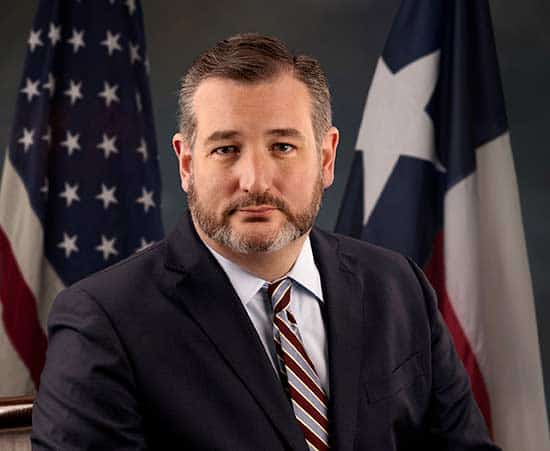
U.S. Senator Ted Cruz was recently victimized by the
political double standard. (Official photo, Cruz website


Case in point: Last month, in the aftermath of a highly publicized mass shooting at a mall in the Dallas suburb of Allen, U.S. Senator Ted Cruz commented on Twitter that he was “praying” for the families of the victims.

“Heidi and I are praying for the families of the victims of the horrific mall shooting in Allen, Texas,” Cruz wrote. “We pray also for the broader Collin County community that’s in shock from this tragedy.”

Typical of the gun control crowd lately, Cruz was pilloried for his remark, according to The Guardian.

The backlash included nasty remarks from various anti-gunners, including Shannon Watts, founder of the gun prohibition group Moms Demand Action. Her Twitter message was blunt: “YOU helped arm him (the gunman) with guns, ammo and tactical gear. He did exactly what you knew he’d do. Spare us your prayers and talk of justice for a gunman who is … dead.”

Funny thing about shooting one’s mouth off on social media; you occasionally shoot yourself in the foot. To wit: About the same time Cruz was talking about remembering the victims in his prayers, Joe Biden was releasing a statement from the White House in which he announced, “Jill and I are praying for their families and for others critically injured, and we are grateful to the first responders who acted quickly and courageously to save lives.”

Apparently, Watts and other Cruz critics had used up all of their righteous indignation and had none left over for their guy in the Oval Office.

Took ‘Em a While

Following the shooting, Texas lawmakers moved a piece of legislation raising the minimum age for purchasing a semiautomatic rifle in the Lone Star State. It’s something which has happened in other states over the past couple of years, and the effort started in Texas following last year’s grade school attack in Uvalde.

The Texas Tribune reported on the legislative action, but waited a whole eight paragraphs into the story before acknowledging something which should have been right up front. Raising the minimum age would have had no impact (that’s zero, zip, nada) on the Texas mall killer.

“Because the man identified as the gunman in Allen was 33, raising the age limit for semi-automatic rifle purchases likely wouldn’t have kept him from purchasing such a weapon,” the newspaper admitted.

More Hypocrisy

Readers might recall another tragic mass killing in Texas just 24 hours after the mall shooting, but then, again, perhaps not because this was different.

Where eight people died at the Dallas-area mall, eight more people were killed when a guy ran over them with an SUV in Brownsville as they were waiting at a bus stop. The aforementioned Alan Gottlieb, this time speaking on behalf of the Citizens Committee for the Right to Keep and Bear Arms, had some timely observations.
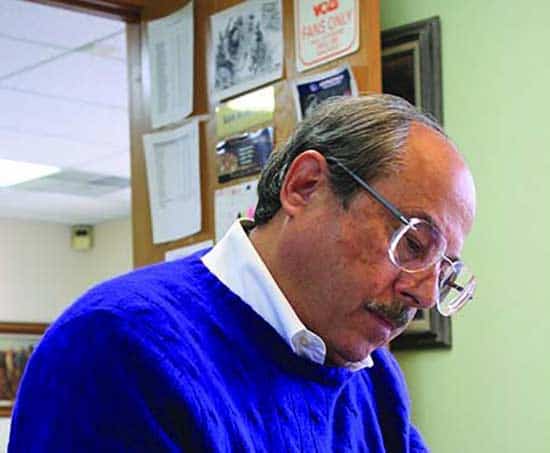
CCRKBA’s Alan Gottlieb says motor vehicles are
the new “assault weapons” nobody wants to ban.

“Brownsville was just the latest outrage which proves people intent on … mayhem don’t always use firearms,” he said, “but in none of these cases has anyone ever tried to blame, and then ban, motor vehicles. Yet, the victims are just as dead.”

He’s got a point. Early in my career, I frequently was called upon by the Washington State Patrol to photograph fatal accident scenes in the mountain country east of Seattle, primarily along Interstate 90. In those days, troopers didn’t have cameras, so they needed somebody to handle the chore and, as the editor of the local newspaper, I had a camera. I lost count of the number of fatal accidents to which I responded.

Gottlieb said motor vehicles were “the new assault weapons the gun banners don’t want to ban.” He ran down a short list of mass murders (by the gun control formula of more than four victims) committed in recent years with motor vehicles.

“Remember the six people murdered by Darrell E. Brooks when he drove an SUV through the annual Christmas parade in Waukesha, Wisconsin in 2021,” Gottlieb noted. “Sixty-two other people were injured in that rampage.

“Eight people were killed on a New York City bike path in 2017 when an Islamic extremist deliberately ran them down with a rented pickup truck,” he continued. “The driver was punished, not every truck owner in America.

“Who can forget the 2016 mass murder in Nice, France when a man drove a large truck into a crowd celebrating Bastille Day,” Gottlieb recalled. “He killed 84 people and injured hundreds more.”

In each of these cases, the perpetrator was held responsible. Their choice of weapon was never demonized in the media the same way firearms have been singled out.

Categories
All About Guns

“V” Is For Victory: The Smith & Wesson Victory Model Revolver by BRUCE N. CANFIELD, FIELD EDITOR

victory.jpg

The Smith & Wesson “Victory Model“ was chambered in .38 Spl. and had a 4″ barrel as made under a World War II U.S. Navy contract. It is seen here being fired by Navy cadets. 

In mid-1940, when it was becoming increasingly likely that the United States would be drawn into the war raging in Europe, the U.S. Navy, along with all branches of our armed forces, was evaluating the projected demand for arms. The standard handgun for the Navy at the time was the M1911A1 .45 ACP pistol. It became pretty obvious that the demand for these pistols would soon overwhelm the available supply, particularly since the Army and Marines would also be clamoring for handguns when war began.

The Navy adopted a policy of equipping its personnel with as many M1911A1 pistols as possible and obtaining a secondary source of handguns for “less critical requirements.” It was determined that the most suitable gun for this purpose was the Smith & Wesson Military & Police .38 Spl. revolver with a 4″ barrel. The M&P was Smith & Wesson’s “K-frame Military & Police” revolver which had proven to be popular in the civilian marketplace prior to the war.

This course of action was related in the Ordnance Dept. document “Project Supporting Paper; Miscellaneous Pistols and Revolvers”: “In addition to the M1917 revolvers … sizeable numbers of various other revolvers and pistols were procured by Ordnance. The United States Navy, unable to obtain the standardized M1911A1 Pistol, placed contracts directly with Smith & Wesson for the Caliber .38 Special, Military and Police Model Revolver.“

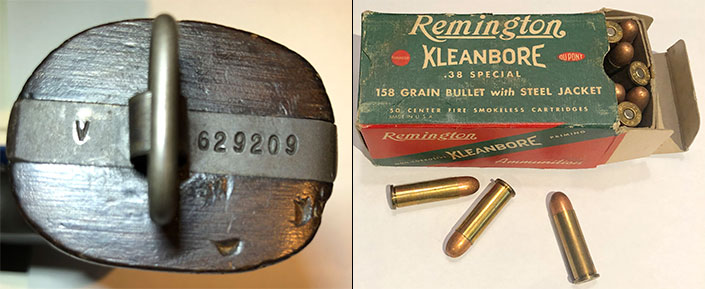
lanyard ring, “V”-prefix, 158-gr. jacketed bullets

(l.) Victory Model revolvers are distinguished by a lanyard ring and their “V”-prefix serial numbers stamped into the butt’s bottom. (r.) This original 50-count box of .38 Spl. ammunition, featuring 158-gr. jacketed bullets, was made by Remington for issue with Victory Model revolvers.

Although the U.S. Navy specified that the revolvers made under its contract be chambered for the .38 Spl. cartridge (technically, the .38 S&W Spl.), the British government also ordered large numbers of similar sixguns from Smith & Wesson chambered for another cartridge, the “.38-200”—which was essentially the .38 S&W cartridge with a 200-gr. lead bullet. This was later changed to a 175-gr. jacketed bullet.

The .38 S&W and .38 Spl. cartridges are sometimes confused, but they are two different chamberings and are not interchangeable; the .38 S&W is shorter and has a slightly larger diameter than the .38 Spl. As related in an Ordnance Dept. document: “From October 1941 to March 1945, Smith & Wesson produced the Caliber .38-200 Revolver for the British Army. This weapon was almost identical to the U.S. Navy’s Caliber .38 Special Revolver except for caliber and barrel length. The British revolver has a 5″ barrel, while the U.S. Navy used the 4-inch.”

While most of the S&W .38-200 revolvers did have 5″ barrels, some were made in 4″ and 6″ lengths as well. The 5″ barrel was made standard after April 10, 1942. Ordnance records indicate that a total of 590,305 of the .38-200 revolvers were manufactured by Smith & Wesson between October 1941 and March 1945, which was significantly more than the number of S&W .38 Spl. revolvers produced during the war.

Although the majority of S&W .38-200 revolvers were made under British contract and sent to Great Britain, some were also used by the U.S. military, chiefly for security purposes and for arming allies, such as resistance fighters. As discussed in Charles W. Pate’s excellent book, U.S. Handguns of World War II—The Secondary Pistols And Revolvers: “It is not a generally known fact, but the U.S. Army also used these arms (S&W .38-200 revolvers), though on a very limited basis.

There are a few documented cases of U.S. Army issue in the continental United States, primarily for guard purposes, and more substantial numbers were used in combat theaters. Several .38-200 serial numbers were found in OSS [Office of Strategic Services] hand receipt records of overseas units. But the revolver’s association with the OSS was primarily in that organization’s role in supplying resistance forces. Many thousands of .38-200 S&Ws were channeled through the OSS. In addition, it was the OSS that requested development of U.S. jacketed ammunition for the revolver.

“Clearly, the .38-200 S&W made a significant contribution to the war effort, especially with our allies. But with the end of the war drawing near and with the need for additional handguns lessening, the remaining .38-200 contracts were cancelled during the first quarter of 1945. Most components still in production were diverted to use in the .38 Special Victory Model, and surplus components in a finished state that were not interchangeable with the .38 Special, such as cylinders and barrels, were shipped to field service depots.

“After the war, thousands of the revolvers remained in the U.S. Army inventory as a regularly stocked item, but again, not for general U.S. issue. The primary use of these revolvers continued to be for arming foreign military and security personnel.”

U.S. Navy pilot Lt. James Pope, shown here aboard the U.S.S. Yorktown in October 1943 (l.), had a Victory Model revolver in the shoulder holster on his left side. This “Property of U.S. Navy” marking on the side of a Victory Model revolver (above) has been enhanced with red ink, which was often the case.

Smith & Wesson U.S. Navy .38 Spl. Victory Model Revolver

While all of the .38 revolvers made by Smith & Wesson during World War II were dubbed “Victory Model,” the term as generally used today refers to the .38 Spl. 4″-barreled revolvers as made under U.S. Navy and U.S. Ordnance Dept. contracts. The Navy initially bypassed the standard procurement procedure of ordering its small arms under the auspices of the U.S. Army Ordnance Dept. and issued production contracts directly to Smith & Wesson. This course of action, however, soon resulted in problems, and Ordnance eventually got involved. As reported in the above-referenced “Project Supporting Paper; Miscellaneous Pistols and Revolvers”:

“The contracts at Smith & Wesson for Caliber .38 Special Revolvers were taken over by Ordnance, ASF (Army Service Force) in early 1942. Under Navy contracts, no inspector was stationed at the plant, and quality of revolvers suffered as a result.

The Resident Inspector of Ordnance at Smith & Wesson worked under the handicap of having no drawings or gages with which to conduct a thorough inspection. The manufacturer had no complete set of drawings for the revolver so Ordnance inspection consisted of a visual and manual examination, function, proof and target firing. During the early production, as much as 30% of a day’s production was rejected for various defects.”

With the increased oversight by Ordnance, including more stringent inspection standards, the quality of the Smith & Wesson .38 revolvers continued to improve. The .38 Spl. revolvers built under Navy contract had 4″ barrels and the standard finish was Parkerizing. The serial number, having a “V” (Victory) prefix, was stamped on the butt. A lanyard ring was also attached to the butt. Some early production .38 Spl. Victory Model revolvers were not stamped with Navy markings at the factory.

In most cases, these guns were subsequently stamped “Property of U.S. Navy” on the left side of the frame. As production continued, the Navy markings were factory-applied to the topstrap above the cylinder. Approximately 65,000 Victory Model revolvers were purchased by the Navy directly from Smith & Wesson. After Army Ordnance took over procurement, the marking was changed to “U.S. Property G.H.D.” The “G.H.D.” marking signified U.S. Army Col. (later Brig. Gen.) Guy H. Drewry, head of the Springfield Ordnance District (SOD) in which Smith & Wesson was located.

Drewry’s initials will be found on other types of arms made in the SOD, including Winchester M1 Garand rifles, M1 carbines and military shotguns. It is sometimes believed that such initials represent the person who actually inspected the guns, but that was not the case. Rather, it indicates that the arms were inspected by Ordnance personnel operating under Col. Drewry’s authority.

S&W Victory Model revolver

A S&W Victory Model revolver is shown next to a World War II U.S. Navy shoulder holster (above) with cartridge loops on the strap. Note the markings applied to the topstrap of a Victory Model revolver manufactured under U.S. Navy contract (right).

The standard ammunition procured for issue with the .38 Spl. Victory Model revolvers was manufactured by the Remington Arms Co. The cartridges had 158-gr. steel-jacketed bullets, and the cases were head-stamped “REM UMC 38 SPL.” Standard commercial .38 Spl. ammunition with lead bullets could not be utilized in overseas combat zones due to provisions of the Hague Convention, thus the necessity for the steel-jacketed bullets. The cartridges were packed in green, commercial-style, 50-round cardboard cartons with lot numbers in the 5,000 range. There was also a limited quantity of .38 Spl. tracer cartridges produced during the war intended for signaling purposes.

Initially, the Navy restricted issuance of the M1911A1 .45 ACP pistols to overseas combat zones and used the .38-cal. revolvers for stateside Navy and Coast Guard personnel. Part of the reason for this policy was to mitigate the logistical problems inherent to having handguns chambered for two different cartridges in oversea theaters. Nonetheless, it didn’t take long for the impracticality of this policy to become apparent.

The lighter .38 revolver was actually preferred over the heavier .45 pistol by many Navy and Marine Corps aviators. By mid-1944, the Navy reversed its original policy and began to issue M1911A1 .45 pistols to some non-combatant personnel, such as guards aboard merchant vessels so that the .38 revolvers they would ordinarily be armed with could be available to flight crews.

The U.S. Navy and Marine Corps aviators generally carried their Victory Model .38 revolvers in a leather shoulder holster, often with web loops sewn onto the strap to hold extra cartridges. A leather hip holster was also made for these revolvers, but the shoulder holster was generally preferred by pilots due to space constraints in the cramped cockpits. The hip holsters were used more often by security personnel, but period photos show some flyers with their Victory Model revolvers in hip holsters.

While the U.S. Navy was the primary user of the S&W .38 Spl. Victory Model revolvers, Ordnance records indicate that some of the guns were also purchased by the U.S. Army and the Office of Strategic Services (OSS). As was the case with the S&W .38-200 revolvers previously discussed, the majority of these .38 Spl. revolvers were undoubtedly used for arming foreign security personnel and, in the case of the OSS, irregular military units.

However, some of the revolvers were utilized overseas by American combat troops, including U.S. Marines. As stated in R.G. Rosenquist’s Our Kind Of War, Illustrated Saga Of The U.S. Marine Raiders: “The M1911A1 .45 automatic pistol was the standard issue sidearm, but also plenty of .38 caliber Smith & Wesson ‘Victory Model’ revolvers saw action.” There are a number of contemporary accounts of .38-cal. revolvers being used in combat during World War II by American troops. Often the exact model is not mentioned, but, based on the numbers made and wide issuance, the odds are that most were the S&W .38 Spl. Victory Model.

For example, Marine Raider R.G. “Rudy” Rosenquist carried a .38 revolver, quite likely a S&W Victory model, and found it to be a literal life-saver during fierce fighting on Guam when he was bayoneted by a Japanese soldier: “[A]s the enemy soldier … stepped over him, Rudy reached up and grasped the man’s canteen strap and was yanked to his feet. The Japanese tore loose and rushed on. Now a second enemy soldier came running, and Rudy took a bayonet wound in the stomach. By this time, he had got out a .38 pistol, which he emptied into the man, who fell back upon the Marine at the machine gun … .”

As the S&W Victory Model .38 revolver was becoming a commonly issued sidearm, a problem arose that caused a temporary halt in the procurement of the guns. As discussed in an Ordnance Dept. document: “The death of a sailor, resulting from dropping a loaded Smith & Wesson, Caliber .38 Special Revolver prompted a test by the Navy Department to determine (the) effectiveness of the Smith & Wesson Hammer Block. Results of the test showed the Hammer Block to be unsatisfactory. This test was confirmed by a more carefully conducted test at Springfield Armory, authorized by Office, Chief of Ordnance.

Work was commenced immediately by Ordnance and Smith & Wesson to develop an improved Hammer Block capable of preventing discharge even if the revolver fell several feet, striking on the Hammer. This was desired because of the possibility of a seaman dropping a revolver from one deck of a ship to a lower deck. Deliveries of revolvers equipped with the present improved Hammer Block commenced in early 1945. The improved Hammer Blocks are vastly superior to the old type, samples tested having withstood 90-foot lbs. impact without firing.”

The death of the sailor due the S&W Victory Model’s flawed hammer block design resulted in the U.S. Navy requesting that Colt .38 revolvers be supplied for future requirements instead of the Smith & Wesson revolvers. However, it was reported that “ … improved quality and the quick development of a new hammer block convinced the Navy to stay with the S&W revolvers.”

Smith & Wesson advertisement

This Smith & Wesson advertisement touts its Victory models and promotes the guns for plant defense by guards. It states that the revolver was adopted in 1942 as “ … the official sidearm for all U.S. Navy Flying Personnel, and is widely used by U.S. Marine Corps Flyers, the U.S. Coast Guard and in the Merchant Marine.” The gun was marketed for S&W via the Defense Supplies Corp.


Victory Model Revolvers With 2″ Barrels

While the vast majority of the S&W .38 Spl. Victory Model revolvers had 4″ barrels, there was also a little-known variant that was otherwise identical except for having a 2″ barrel. The revolvers were the subject of a May 10, 1944, letter from Stuart K. Barnes, vice president of Defense Supplies Corp., to Capt. F.M. Volberg, Small Arms Branch, Chief of Ordnance:

“[W]e have received advice from Smith & Wesson, Incorporated that they are prepared to produce a limited number of 2″ barrel .38 caliber Special revolvers without impairing their production schedule.

“The War Production Board, under the date May 8, 1944, has given approval for the production by Smith & Wesson of 500 .38 caliber Special 2″ barrel revolvers in order to supply essential non-military users. Therefore, it would be appreciated if permission would be granted for the production of 500 2″ barrel revolvers in lieu of 500 4″ barrel revolvers on subject contract at the earliest convenience and placed in the stock of Defense Supplies Corporation at Smith & Wesson Incorporated.

“These 500 revolvers would not be additional to the contract of the 35,000 4″ barrel .38 caliber revolvers, and would not constitute an increase in cost to Ordnance and this Corporation.”

According to factory records, the 500 Victory Model 2″-barrel revolvers were shipped to the Office of Strategic Services on Aug. 22, 1944. It has been reported that some were utilized by couriers, intelligence personnel and other individuals needing a handgun that was a bit more concealable than the standard 4″-barrel revolver. The only martial marking typically applied was a small “flaming bomb” insignia on the top of the frame.

S&W Victory Model with 2" barrel

The U.S. military “flaming bomb” insignia was applied to this S&W Victory Model with 2″ barrel.

It is easy to identify a genuine 2″-barrel Victory Model revolver from a 4″ revolver that subsequently had the barrel shortened. If a barrel was cut down from 4″ to 2″, a portion of the lettering on the barrel would be missing and a replacement front sight would be required, sure indication the gun had been modified. There was a well-made leather shoulder holster fabricated specifically for these 2″ Victory Model revolvers that had “US” embossed on the front. This would be suggestive that some were indeed used by U.S. military personnel. Original examples of these revolvers are quite uncommon today.

The S&W Victory Model revolver’s role in World War II is sometimes minimized or given little more than a cursory mention. Production of the Smith & Wesson .38 Spl. Victory Model revolver under U.S. government contracts (DSC, Navy and Ordnance) between 1941 and 1945 totalled the not-insignificant sum of 352,315 guns. While it wasn’t employed as extensively as was the M1911A1 pistol, it accompanied many U.S. Navy and Marine Corps aviators during the pivotal battles of the Pacific Theater. Its contributions to the war effort should not be overlooked.

Even though none were manufactured under government contract after 1945, the Victory Model revolver’s legacy extended well beyond World War II. It continued to be issued to some Navy and Marine Corps aircrews during the Korean and Vietnam wars and beyond. Uncle Sam certainly got his money’s worth from the Victory Model!

Categories
All About Guns

A Remington Model 30 Express Bolt Action Rifle in .30 Smith with a 22″ barrel


The Model 30 was Remington’s first high-powered bolt action sporting rifle and are the grandfather of their world-famous bolt actions today. While to the untrained eye this may look like “just another sporter”, this is a fine factory offering from Remington .

Categories
All About Guns

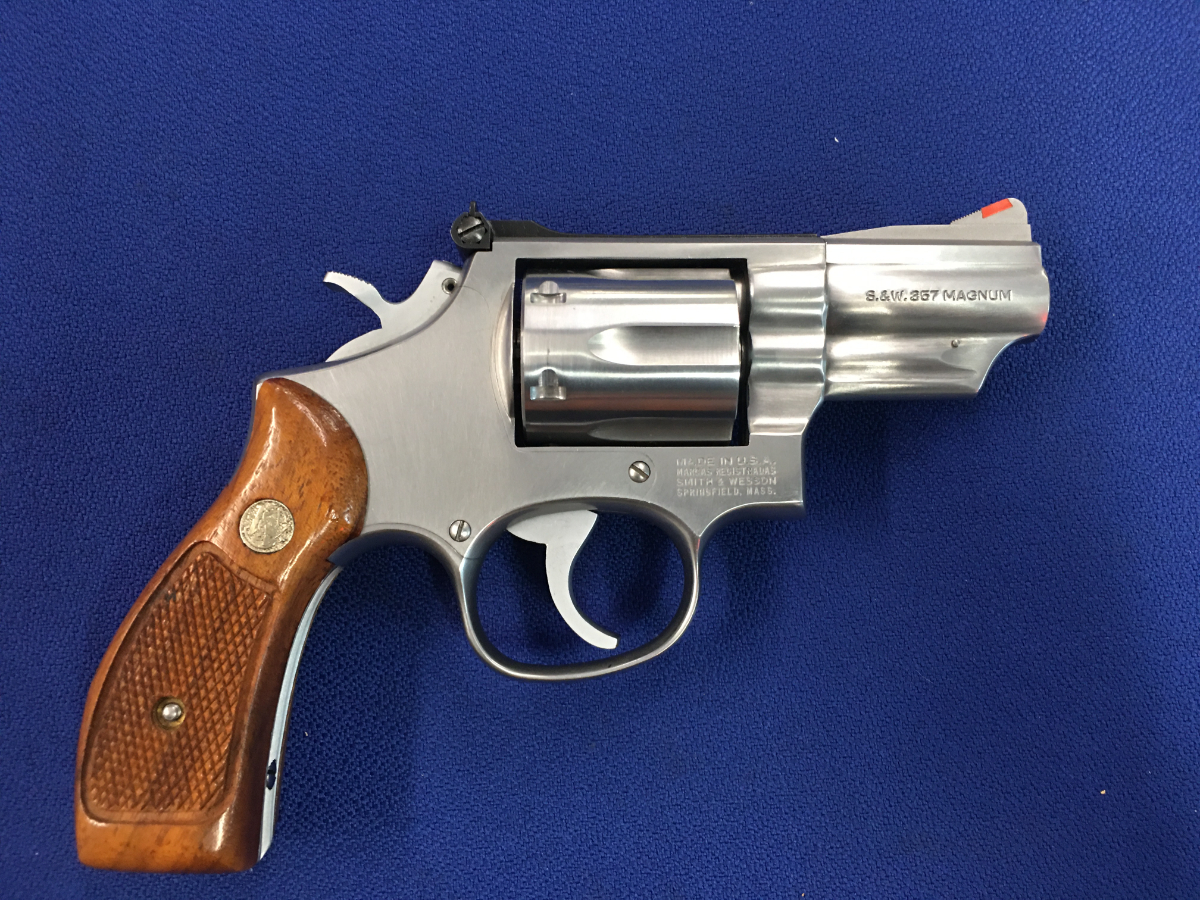
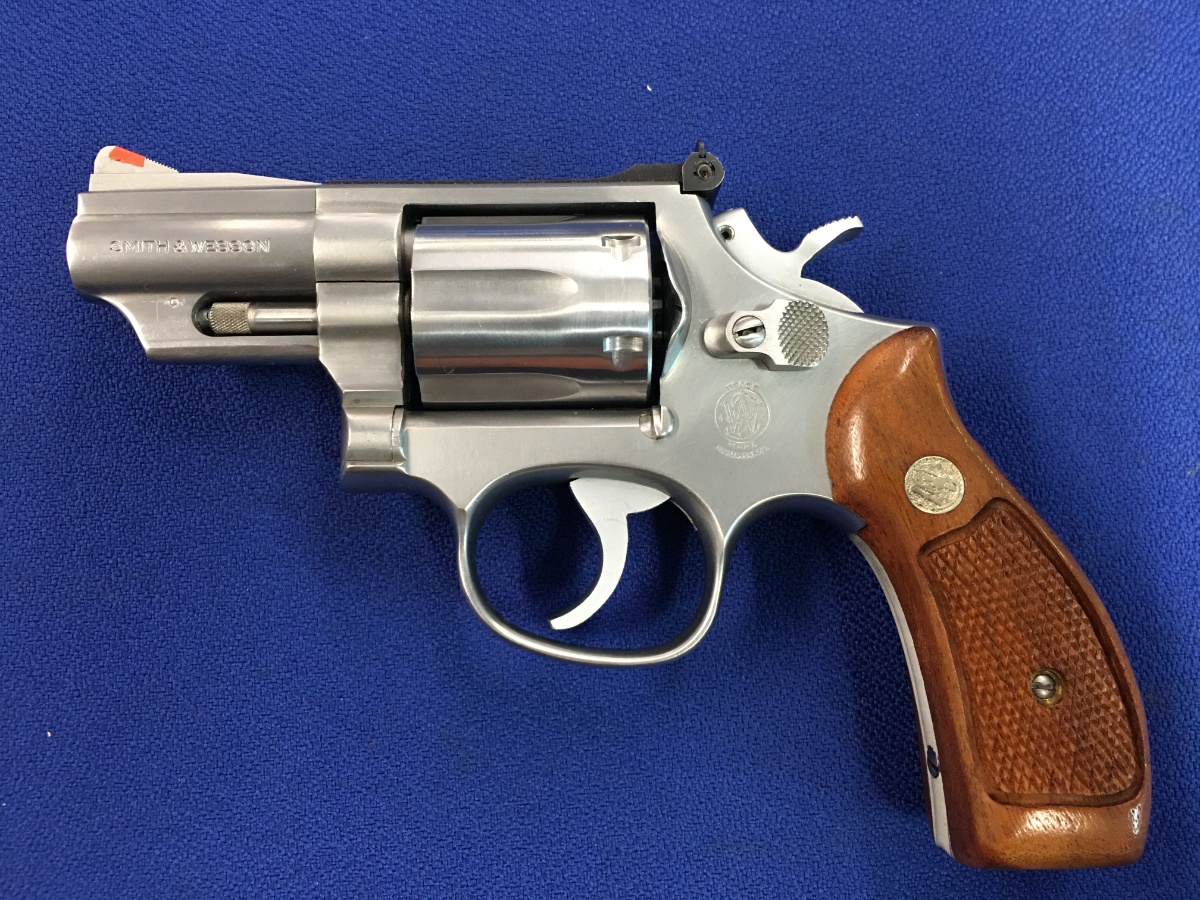
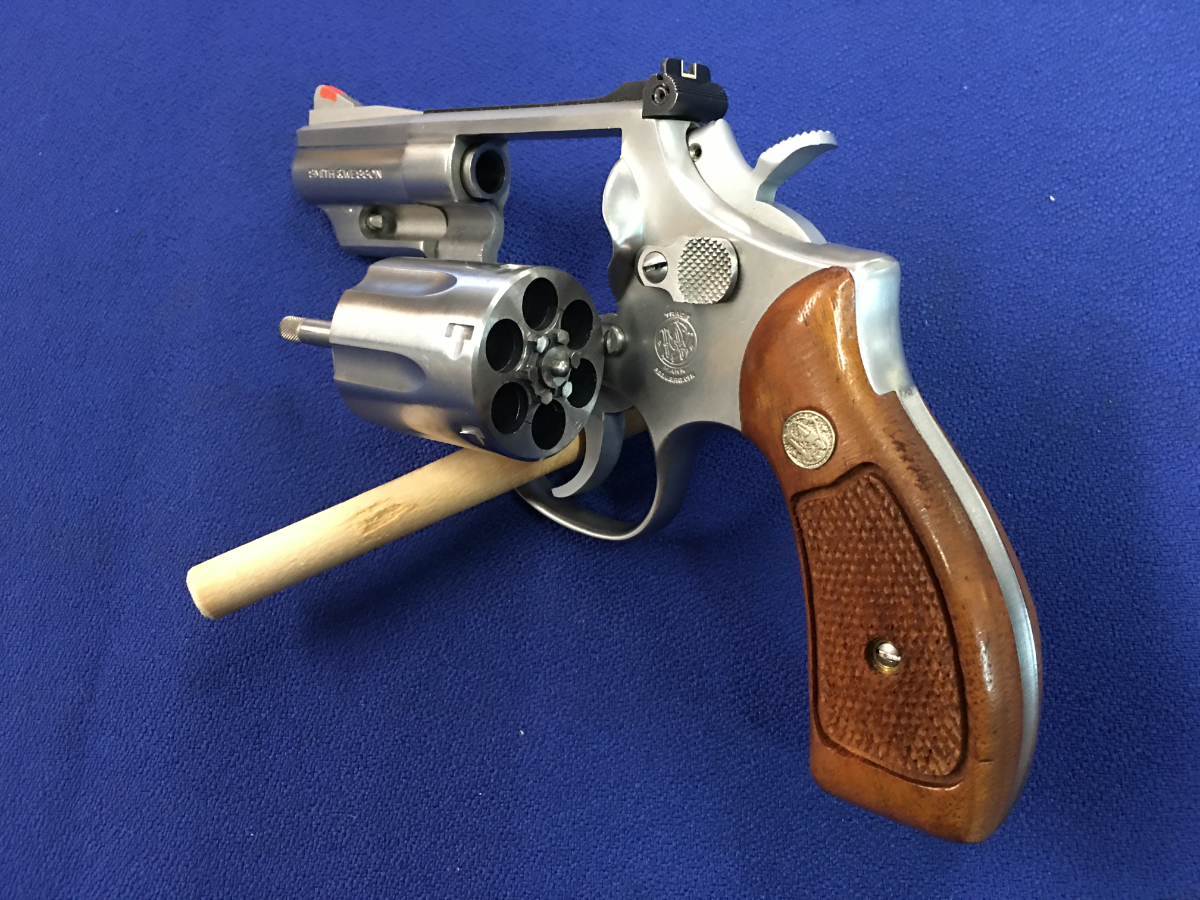
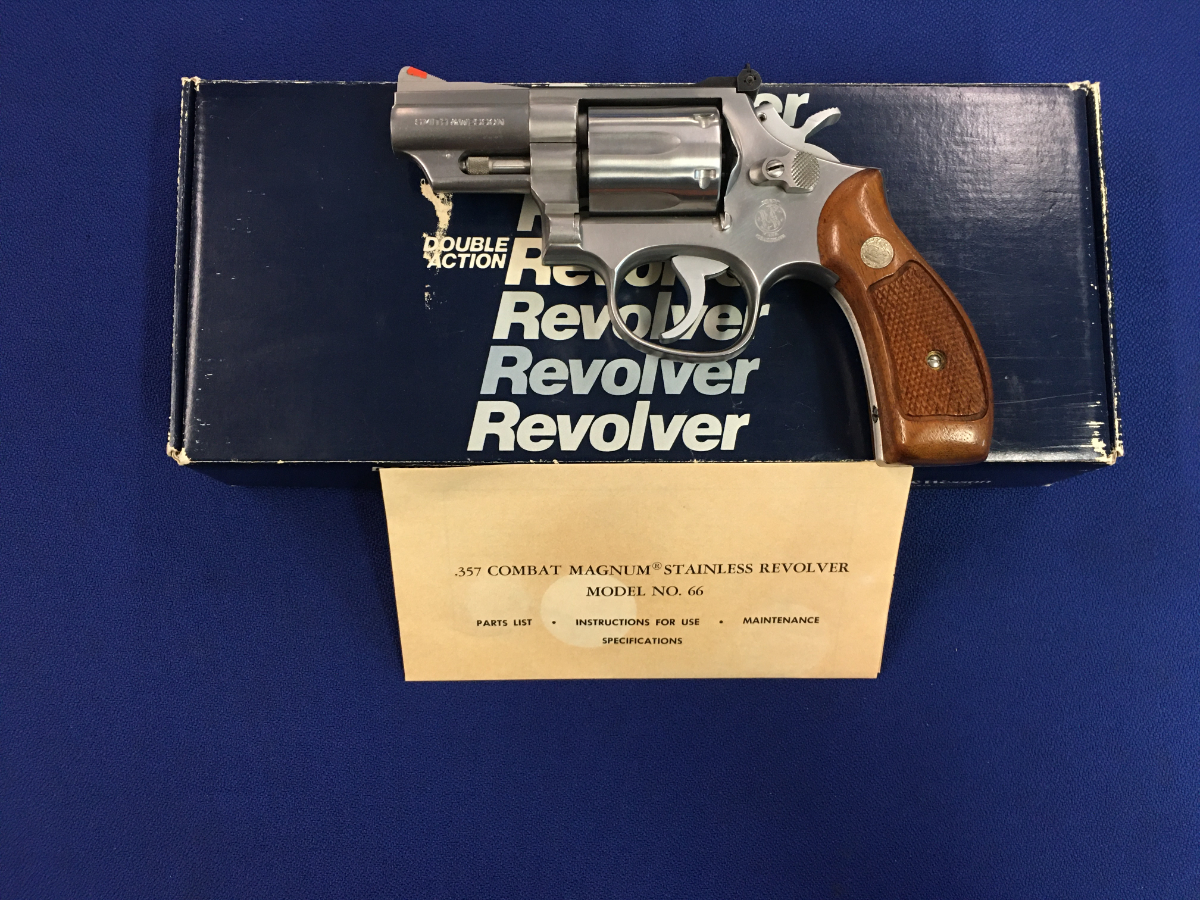
A Smith & Wesson MODEL 66-2 in 357 Magnum

Smith & Wesson MODEL 66-2, COMES W/ FACTORY BOX & PAPERS, CHAMBERED IN .357 Magnum - Picture 2
Smith & Wesson MODEL 66-2, COMES W/ FACTORY BOX & PAPERS, CHAMBERED IN .357 Magnum - Picture 3
Smith & Wesson MODEL 66-2, COMES W/ FACTORY BOX & PAPERS, CHAMBERED IN .357 Magnum - Picture 4
Categories
Some Scary thoughts

And if they can do this in Jolly Old England……

In Place until 1973

Categories
A Victory! COOL!!!!!!!!!!!!!!!!! Cops

The moral of story? Don’t f*ck with the St Louis PD!!!!

Categories
All About Guns

Small Arms Primer 178: Webley No.5 Army Express

Categories
Well I thought it was funny!

Blackface in the Military | Andrew Schulz | INFAMOUS

Categories
All About Guns Anti Civil Rights ideas & "Friends" California

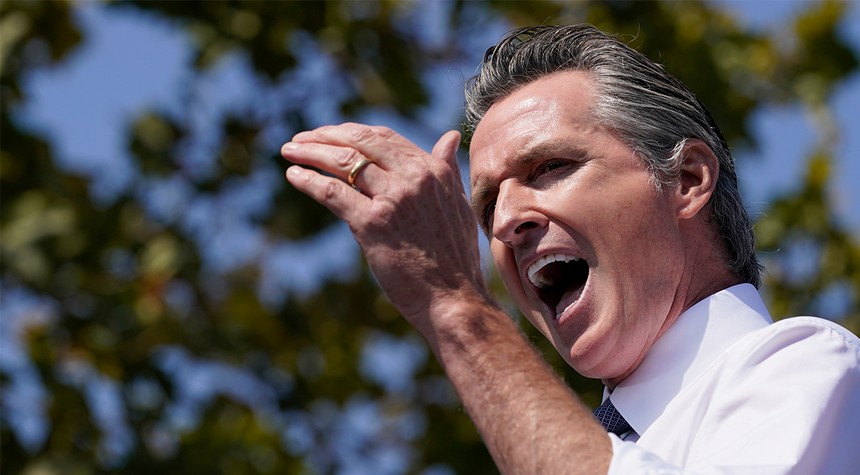
Gavin Newsom Wants to Protect Your Gun Rights by Destroying Them BY STEPHEN GREEN

Gavin Newsom Wants to Protect Your Gun Rights by Destroying Them
AP Photo/Carolyn Kaster
California governor — and stealth presidential candidate/Ron DeSantis obsessive — Gavin Newsom announced a plan on Thursday to implement “common sense” gun control measures nationwide, “while leaving the 2nd Amendment unchanged and respecting America’s gun-owning tradition.”

“Our ability to make a more perfect union is literally written into the Constitution,” said Governor Gavin Newsom. “So today, I’m proposing the 28th Amendment to the United States Constitution to do just that. The 28th Amendment will enshrine in the Constitution common sense gun safety measures that Democrats, Republicans, Independents, and gun owners overwhelmingly support – while leaving the 2nd Amendment unchanged and respecting America’s gun-owning tradition.”

All it requires is one teensy little amendment to the Constitution that would neither “leave the 2nd Amendment unchanged” nor “respect America’s gun-owning tradition” as Newsom claims because Newsom hates your rights and is also a known liar.

Newsom’s 28th Amendment, if adopted, would raise the minimum age to purchase a firearm from 18 to 21; mandate universal background checks; institute a “reasonable” waiting period for all purchases; and ban so-called assault weapons. In addition, it would authorize Congress, state governments, and even local governments to impose even stricter measures. Under the 28th Amendment, I guess Sacramento could legalize a state Gestapo to take every California resident’s guns away and that would be totally kosher.

What’s reasonable? I suppose that’s up to the courts to decide. What’s an assault weapon? State governments have tried again and again to define it, and sometimes comically failed.

So the 2nd Amendment would still be there in the Constitution. But like the 18th Amendment outlawing the sale, production, or transportation of alcohol was superseded by the 21st, ending Prohibition, the 2nd would be completely gutted by Gavin’s 28th.

What I’ve been unable to find — even on Newsom’s official release announcement — is the actual text of the amendment. It could be even worse than Newsom describes it. Since the text seems to be nowhere to be found, I’m forced to conclude it is far worse than even Newsom describes it.

Amending the Constitution, fortunately, is easier said than done. It requires a two-thirds majority vote in both the U.S. House of Representatives and the Senate, followed by ratification by three-fourths of the states. Amendments can also be proposed and adopted by a constitutional convention called for by two-thirds of the State legislatures — something that has never happened in our country’s history.

Only 27 amendments have ever been adopted, the first ten — the Bill of Rights — as a package deal. So, really, the amendment process has only taken place 18 times.

The Framers’ wisdom puts Newsom’s proposal, which is a non-starter in every red state, at a serious disadvantage. Liberty lovers can breathe easy at Newsom’s conspicuous posturing to Democrat primary voters… but remain ever-vigilant against the next attempt.

———————————————————————————-If this “person” were to tell me that the Pacific Ocean was wet. I would go & check just to make sure!! And no I did not vote for him either. Grumpy

Categories
All About Guns

Nope since my dad’s childhood was a nightmare (God how I miss him!)