Categories
All About Guns Allies

The .35 Whelen Story by Layne Simpson

35-whelen-story-1

The origin of the .35 Whelen has long been debated despite the fact that in two of his books, Colonel Whelen named James V. Howe as its developer.

Read more: http://www.gunsandammo.com/ammo/rifle-ammo/the-35-whelen-story/#ixzz5G4PM5kyt
Remington forever legitimized the .35 Whelen when it began loading it in 1988. Eventually, Big Green would offer it in the Model 700 as well as its slide-action and semiautomatic rifles.
Read more: http://www.gunsandammo.com/ammo/rifle-ammo/the-35-whelen-story/#ixzz5G4PH804y
Prior to that, however, the .35 was one of our most popular wildcats. For about as long as it has been around, its origin has been debated. Some are convinced it was James V. Howe who created it, and others argue with equal fervor that it was Col. Townsend Whelen.
Read more: http://www.gunsandammo.com/ammo/rifle-ammo/the-35-whelen-story/#ixzz5G4PC5HiJ
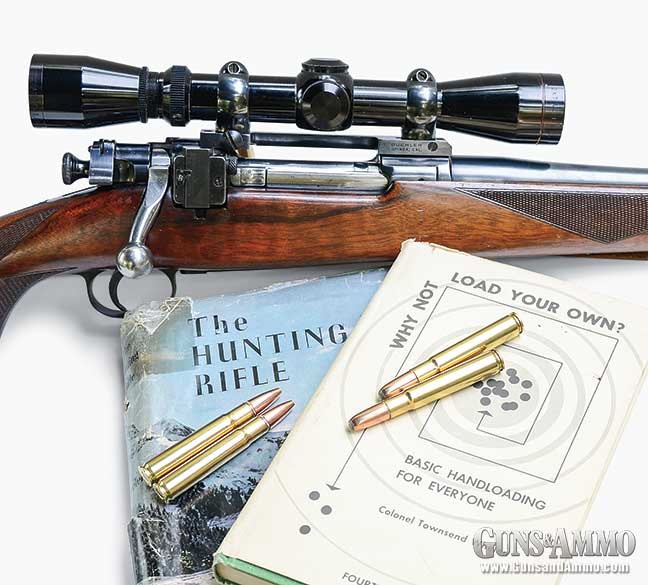
The argument rages on despite the fact that Whelen long ago settled it in two of his books. In the .35 Whelen section of “Why Not Load Your Own?” (1957), he writes, “This cartridge was developed by James V. Howe in 1922 and named for the writer.”
Page 271 of “The Hunting Rifle,” which was published during the early 1940s, reads in part, “In 1922, Mr. James V. Howe and the writer developed the .400 Whelen cartridge. This cartridge was constructed by taking the .30-’06 case before it had been necked at all and necking it down to .40 caliber. About the time we completed development of this cartridge, I went on a long hunting trip in the Northwest, and when I returned, Mr. Howe showed me another cartridge that he had developed. The .30-’06 case was necked to .35 caliber to use existing .35-caliber bullets. Mr. Howe asked my permission to call this cartridge the .35 Whelen, but he alone deserves credit for its development.”
whelen-story-35-5

There is little evidence that Col. Townsend Whelen ever hunted with the .35 Whelen.

Whelen was known for his modesty, but he was equally renowned for his painstakingly accurate reporting. Had he been involved in the creation of the cartridge, he would have written so.
I have two different printings of Whelen’s “The Hunting Rifle.” Almost two pages of one are devoted to the .35 Whelen, but in the later printing, the cartridge is hardly mentioned. The earlier book also has a photo of the .35 Whelen alongside a couple of other wildcats: the .276 Dubiel Magnum and the .22-3000 Lovell. That photo is absent in the later book.
As a colonel in the U.S. Army, Whelen was commanding officer of Frankford Arsenal in Philadelphia where James V. Howe was in charge of the machine shop tool room. In addition to his gunsmithing skills, Howe was an accomplished stockmaker.
Read more: http://www.gunsandammo.com/ammo/rifle-ammo/the-35-whelen-story/#ixzz5G4P474Ye
After leaving Frankford in 1923, he got together with Seymour Griffin and formed Griffin & Howe, a shop that became widely known for building fine custom rifles. The partnership did not work out, and after about six months, Howe moved on to Hoffman Arms Company in Cleveland, Ohio, where he stayed for a long time.
Even though Col. Whelen staked no claim to the .35 Whelen, we still owe him partial credit for its existence. During the 1920s, American Leslie Simpson was considered to be an authority on hunting the African continent. Among other things, he, along with novelist Steward Edward White and a couple of others, was said to have taken more than 50 lions during a control shoot lasting three weeks.
whelen-story-35-2

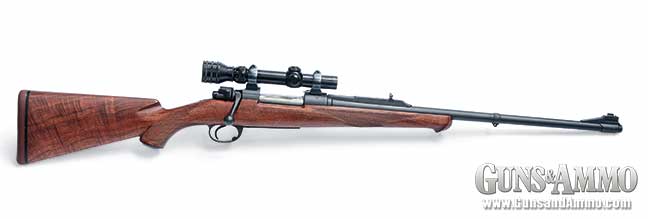
For the past 25 years, this custom rifle on a Whitworth Model 98 Mauser square-bridge action has been the author’s favorite in .35 Whelen. Its 22-inch Apex barrel was made by the late Sam May, and its 1:12-inch twist handles bullets as long as the 310-grain Woodleigh. Butch Searcy did the barreled action, and it was stocked by E.C. Bishop & Son of Warsaw, Missouri.

Simpson and Whelen became friends, and during one of their conversations, Simpson mentioned using the .35 Winchester and finding it lacking. What was needed for taking thin-skinned African game, including lions, was a cartridge of the same caliber but capable of pushing along a 250-grain bullet at 2,500 to 2,600 feet-per-second. Whelen passed the idea on to James Howe, who came up with two cartridges, one of which was the .35 Whelen while he was at Frankford Arsenal.
After moving on to Griffin & Howe, Howe followed up with the .350 G&H Magnum, and it was loaded by Western Cartridge Company.
Whelen had several favorites, but reading his books, I find very little evidence of the .35-caliber cartridge bearing his name being one of them. In fact, I’m not sure he ever actually hunted with it.
The book “Mister Rifleman,” published by Petersen Publishing Company after Whelen’s death in 1961, has a chapter titled “A Rifleman’s Battery.” It’s filled with two-page-spread photos of about 30 rifles owned by Whelen along with comments on each written by him. The only rifle in the group in .35 Whelen was built on a 1903 Springfield action by James Howe in 1922 and originally had a Niedner barrel in .400 Whelen.
35-whelen-story-4

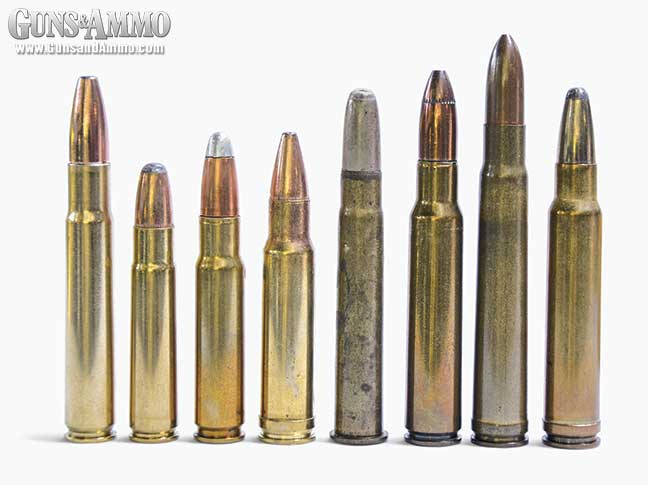
Of the various factory- loaded cartridges of .35 caliber introduced through the years, the .35 Whelen and .35 Remington went on to become the most popular. Left to right: .35 Whelen, .35 Remington, .358 Winchester, .350 Rem. Mag., .35 Winchester, .35 Newton, .350 G&H Mag., .358 Norma Mag.

Due to very little shoulder on its case for headspacing, the .400 was a troublesome cartridge to reload and shoot, yet Whelen did not get around to having the rifle rebarreled to .35 Whelen until around 1950, long after he did most of his hunting. His reloading manual came out seven years later, and he may have needed a rifle in .35 Whelen for developing the loads published in it.
Read more: http://www.gunsandammo.com/ammo/rifle-ammo/the-35-whelen-story/#ixzz5G4OyClVX
Col. Whelen was a practical man, and my guess is that he had very little use for the .35 simply because the game he successfully hunted was easily taken with cartridges of smaller calibers and less recoil. His 40-year Army career began not long after the .30-40 Krag was adopted, and both became favorites in the hunting fields.
He later became equally fond of the .30-’06, 7x57mm Mauser and .257 Roberts, but the .270 Winchester that accounted for his best moose seemed to be his favorite. There were others in his life, both factory and wildcats, with the .243 Winchester and .308 Winchester among the last he wrote up while on the technical staff of Guns & Ammo.
Someone who did hunt a great deal with the .35 Whelen was Elmer Keith. Before using it, he used a custom Springfield in .400 Whelen given to him by James Howe in 1925. Like Whelen, he eventually had his rifle rebarreled to .35 Whelen and used it to take what he described as a record-book brown bear during his first hunt in Alaska in 1937.
35-whelen-story-7

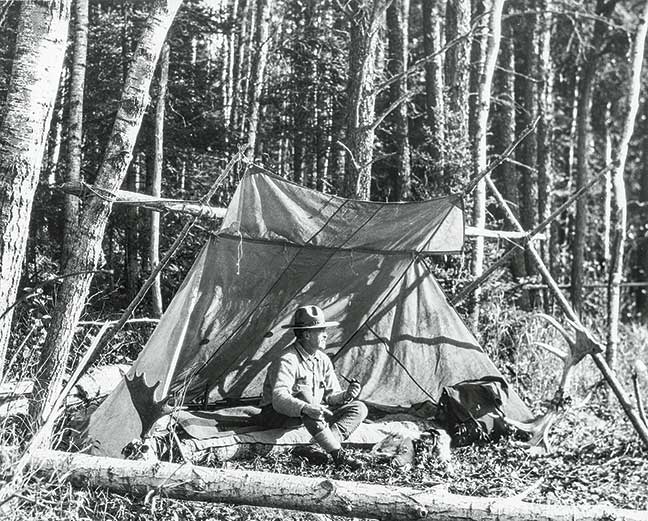
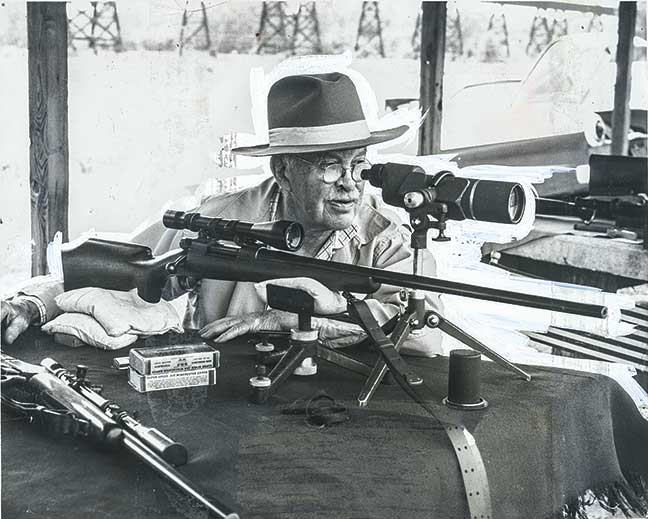
Col. Whelen, dean of American riflemen, shooting his 7mm rifle on assignment for accuracy and trajectory.

Keith took the bruin with a 275-grain bullet made by Western Tool & Copper Co., his favorite for all-around use. He loaded 57 grains of IMR 4064, but that powder in his day was a bit slower in burn rate than today’s version, since 52 grains is now considered maximum with a bullet of that weight. Elmer speculated that the 300-grain roundnose made by Fred Barnes might be a better choice when hunting elk in heavy timber, but I don’t believe he actually got around to trying it.
In notes written about his .35-caliber Griffin & Howe Springfield, Whelen recommended two loads for it with IMR 4350. One was 61 grains behind a 275-grain roundnose bullet made at the time by Joyce Hornady. Velocity was 2,375 fps. The other was 60 grains with the Barnes 300-grain bullet for 2,350 fps.
He must have been using special brass because I am unable to get that much IMR 4350 into factory .35 Whelen cases or those formed from various brands of .30-’06 brass and still have enough space left to seat bullets at the overall cartridge lengths required by the magazines of various bolt-action rifles. The heaviest charges I can squeeze behind 275- and 300-grain bullets are 59 and 53 grains, respectively, for velocities of 2,219 and 2,059 fps.
Reloder 15 has become the powder for .35 Whelen handloads, not only for me but for several other hunters I know who use the cartridge. Clean-burning, it delivers top velocities with all bullet weights, accuracy is usually very good, and it meters through powder measures with minimum charge-to-charge variation.
Read more: http://www.gunsandammo.com/ammo/rifle-ammo/the-35-whelen-story/#ixzz5G4OqymyU
story-35-whelen-6

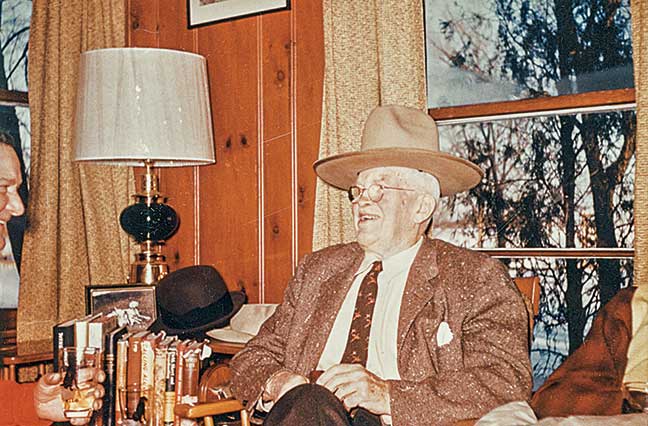
Col. Whelen at Winchester’s Nilo Farms. This photo, taken February 1961, is thought to be his last. He passed away 10 months later, on December 23, 1961, at age 84.

Maximum charges with all bullets weighing from 180 to 210 grains are either 100 percent density or close enough to it. If I were to pick a second favorite, it would be Vihtavuori N-140. Others with similar burn rates include Accurate 2520, Varget, W748 and IMR 4064. Various reloading manuals have data for all of them.
Today’s bullets are much better than in Elmer Keith’s time, and lighter weights than those used by him are capable of taking any game most would want to hunt with the .35 Whelen.
For those who wish to turn back the calendar to the good old days, a few heavyweights are available. Loading the heavier bullets also puts the .35 Whelen on a more equal footing with the 9.3x62mm Mauser. Woodleigh offers a 275-grain Weldcore, and from Swift we have a 280-grain A-Frame. Both are a bit long for the 1:16-inch twist of Remington rifles and usually require 1:14 or quicker.
The Woodleigh 310-grain roundnose is available in both expanding and solid styles; both require a 1:12 twist. I have not tried the 275-grain Lion Load bullet from A-Square, but since it is of roundnose form, it should work in a 1:16 twist. I believe Savage rifles have a 1:12 twist, but I’m not sure about Brownings, Rugers, Winchesters and others.
Unprimed cases are available from Nosler, Hornady, Remington and Norma USA, but necking up .30-’06 cases as in the old days remains an option. A tapered expander button in most .35 Whelen full-length resizing dies makes doing so easy. Applying a light coat of wax-type resizing lube (available from Hornady and Redding) to the mouth of each case makes the job go smoothly. Case loss should be zero if new brass is used.
whelen-35-story-8

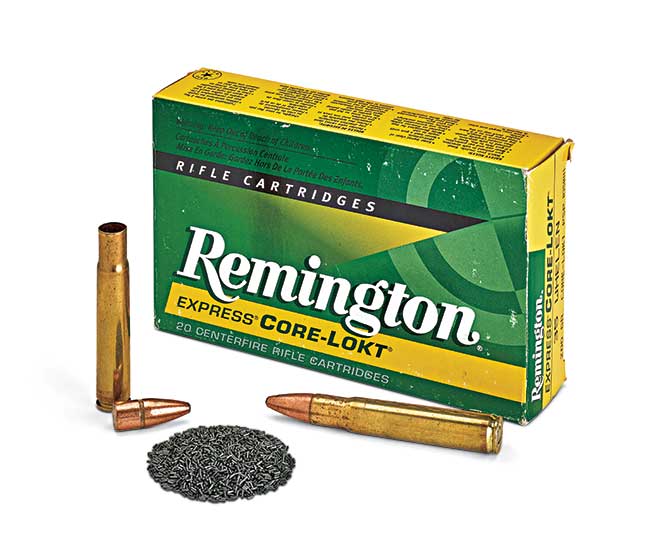
Remington Express Core-Lokt .35 Whelen, 200 gr.

Remington continues to offer two .35 Whelen loads: 200-grain Core-Lokt and 250-grain softnose, the latter a Hornady bullet. Federal Premium loaded with the 225-grain Trophy Bonded Bear Claw is a good choice when sticking with one load for everything from mice to moose. Nosler ammunition loaded with 225- and 250-grain Partition bullets has a following, and Winchester loads the cartridge as well.
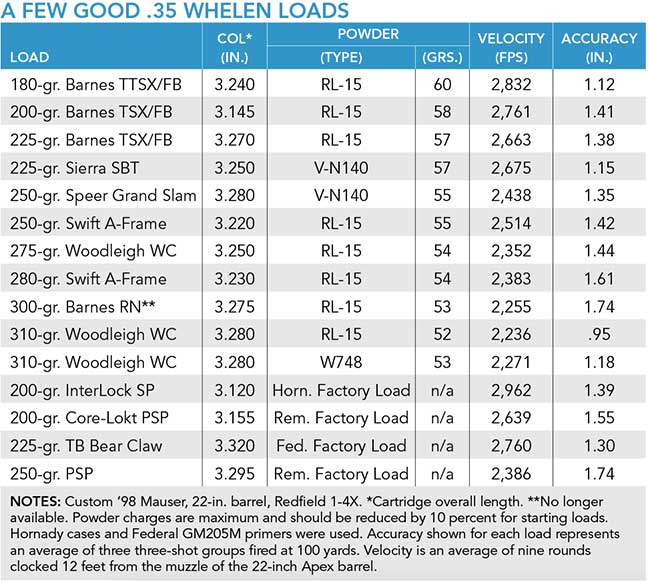
Hornady Superformance with a 200-grain softpoint is the fastest factory load available. I wondered whether the 2,920-fps velocity printed on its box was a misprint, but skepticism turned to amazement when my Oehler Model 33 indicated an average of 2,962 fps from the 22-inch barrel of my Mauser. That’s more than 100 fps faster than maximum handloads with 180-grain bullets in that rifle. It should be devastating on deer. A second load with the 225-grain GMX at 2,800 fps or so would be equally effective on elk and other large game.
I have also owned a couple of Model 700s in this caliber, but my favorite is a custom rifle built about 25 years ago by Butch Searcy, who is now better known for building fine double rifles. He began the project by installing one of Sam May’s Apex barrels on a Whitworth ’98 Mauser square-bridge action.
The barrel is 22 inches long, and since the Barnes 275- and 300-grain bullets were available back then, I specified a rifling twist rate of 1:12 inches. Butch also machined a quarter rib for the barrel, installed a banded ramp sight up front and modified the bolt shroud for a Model 70-style safety.
loads-whelen-35-story-9
The barreled action was stocked by E.C. Bishop & Son custom shop in Warsaw, Missouri. The only scope it has ever worn is a Redfield 1-4X variable from the 1960s. It is held in place by quick-detach rings available at the time from Kimber of Oregon. Weight with scope is 8½ pounds. It is the most consistently accurate rifle in .35 Whelen I have ever owned and quite comfortable to shoot.
Down through the decades, a number of .35-caliber cartridges have been introduced, but not a single one has managed to win the hearts of America’s hunters. They range from oldies such as the .35 Remington, .35 Winchester, .35 Whelen, .35 Newton and .350 Griffin & Howe Magnum to newer numbers such as the .358 Winchester, .356 Winchester, .350 Remington Magnum and .358 Norma Magnum.
The .35 Remington was once quite popular among hunters in the east. It is the chambering I chose for my very first store-bought deer rifle and was used to take my first black bear. Sad to say, very few Marlin 336s in that caliber are sold these days.
The .35 Whelen has yet to win a popularity contest among hunters and probably never will, but the fact that it has been in use for more than 90 years is proof of its ability to shrug off the challenges of more modern cartridges. It may eventually be the only cartridge of its caliber we have left.
Read more: http://www.gunsandammo.com/ammo/rifle-ammo/the-35-whelen-story/#ixzz5G4OiyUWt

Categories
Well I thought it was funny!

A Solid Question

Categories
All About Guns

American Tactical German Sport’s 9mm MP40 — A Tribute to WWII by JORDAN MICHAELS on JANUARY 20, 2018

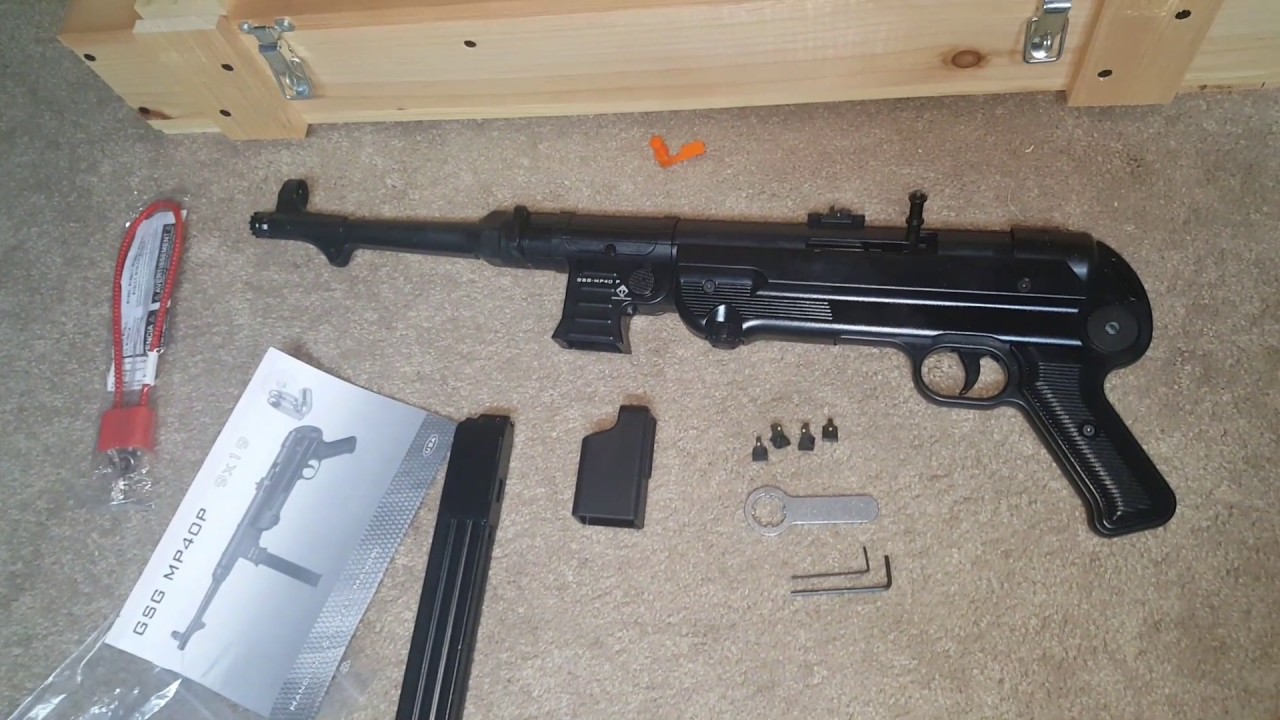
Image result for American Tactical German Sport’s 9mm MP40
The Nazi’s inability to conquer Europe wasn’t their only failure of the Second World War. They also failed to successfully invade Russia, exercise basic humanity, march-like normal people, and a host of other blunders. Suffice it to say that in 1,000 years they won’t be remembered as successful, virtuous, or honorable.
But despite their eventual surrender, Hitler’s forces did manage to use more iconic weapons of war than any other army. The Luger pistol, the steel helmet, and the stick grenade became regular fixtures throughout the European theater, but Maschinenpistole 40 surpassed them all.

The MP40 from German Sport Guns and American Tactical combines a historically accurate appearance with modern manufacturing.

The MP40

Known in the English-speaking world as the MP40, it’s difficult to imagine a Nazi soldier without one of these firearms swinging by his side. The Germans produced over 1 million MP40s from 1940 to 1945 and used them to devastating effect against the Allied forces.
American Tactical is now importing the very first reproduction of the MP40 chambered in 9mm. It’s manufactured by German Sport Guns (GSG), and I had a chance to test drive one earlier this year.

A stock would have provided greater stability, but this gun is still seriously fun.

SPECS

  • Overall Length: 24.5 in.
  • Height: 7 in.
  • Frame Construction: Zamak 5 with Polymer Accents
  • Weight w/ Magazine (Unloaded): 7.875 lbs.
  • Cartridge: 9x19mm
  • Barrel length: 10 in.
  • All-metal detachable 25-round magazine
  • Includes loading assistance accessory
  • MSRP: $650

History of the MP40

German soldier with an MP40 on the Eastern Front in 1944. Photo: By Bundesarchiv.

The fun of this gun lies in its connection to history. According to Spencer Tucker’s Instruments of War: Weapons and Technologies That Have Changed Historythe MP40 was one of the “outstanding small arms weapons of WWII.”
It was based on the MP-38, a similar “machine pistol” designed by Ermawerk a year before the war began. German engineers simplified the MP-38 to develop the MP-40, creating a cheaper version of the firearm by using stamped steel rather than machined parts. This change allowed the German army to manufacture huge quantities of this firearm quickly and easily.
The Nazis originally created the pistol to be used by tank crews and security personnel. Its innovative folding stock allowed soldiers to maneuver it in tight spaces while maintaining enough stability for accurate firing. Even so, accuracy obviously wasn’t a top priority as the original version only had one mode: fully automatic.
The firearm proved to be so effective that the Germans began assigning them to infantry units, who found them to be perfect for the kind of short-range urban warfare so common during WWII.
Today most people know the MP40 from movies and video games where Nazi soldiers shoot from the hip and never, ever hit anything. But the historic firearm claimed thousands of lives in WWII and remains one of the most famous guns in the history of war.

GSG MP40: Construction and Features

German Sport Guns designed their version of the MP40 to imitate the appearance of the original firearm. While it isn’t compatible with WWII-era MP40 parts or magazines, it is made with all-new parts that meet U.S. regulation specifications.

The firearm’s plastic sides can be easily removed to reveal the inner mechanisms underneath. The silver piece pictured above is the trigger bar.


The package comes with several different front sights to adjust for elevation. The rear sight can be flipped up to accommodate longer-range shots. It can also be adjusted for windage.

The frame is made from Zamak 5, a relatively tough zinc alloy most commonly used in Europe. At first, I thought the frame was polymer, but once I removed the plastic “accents” I saw the all-metal body underneath. The firearm feels solid in the hands, and all the parts appeared to be well-machined.
The rear sight includes two settings, one for short range and one for longer range. The front sight features a white bead to distinguish it from the rear black notch sights. The package includes several different heights of front sights, so users can choose the height that most closely matches the point of impact. The rear sight arrived loose, and though I couldn’t determine a way to secure it, it didn’t seem to affect accuracy.

Shootability could be improved with either a sling or a shoulder stock, both of which can be attached to the firearm.

The MP40’s weight (7.875 lbs) reduces recoil to almost nothing but makes the firearm tiring to aim for extended periods of time. I would recommend using a sling, which can be attached at two points on the gun. Shooters will also be able to purchase a rear stock kit from American Tactical in the near future.

GSG MP40: Function

Just a few notes on how this firearm operates. The safety is located underneath the firearm, and it functions like a rotating dial. I’ve never seen a safety like this, but its location is intuitive and the dial is easy to operate.
The magazine release is a large button on the left side of the firearm. It’s also easy to operate, but I found that the heel of my hand accidentally pressed it while firing. I could adjust my support hand towards the rear of the gun, but it felt less comfortable.

The trigger isn’t designed for a crisp break.

The trigger is not what I would call match quality. The pull is heavy (it maxed out my analog scale), mushy, and long. It works fine, but don’t expect to be hitting any squirrels at 50 yards (unless you want to unload the magazine, which is always an option).
The MP40 can be broken down in just a few minutes for cleaning and maintenance. Removing the action pin allows the firearm to be separated into two halves, and from there the bolt and spring can be removed and cleaned.

The bolt can be locked to the rear to check the chamber or load another magazine.

GSG MP40: Testing

Despite the MP40’s quirks, I had a blast shooting it. Its lack of a stock limits its applications, but it’s a great range gun and fun to shoot. While I don’t advocate pretending to be a Nazi, shooting from the hip like a Hollywood SS officer is more than a little amusing.
If you’ve read other reviews of this gun, you might have seen writers report feeding problems. While the gun jammed twice the first time at the range, it fed perfectly for hundreds of rounds after that. I used loads from Federal, Hornady, and American Eagle—both round nose and hollow point—and I never experienced any issues.
The folks at American Tactical say they’ve tested the firearm with “115 & 147 grain factory new ammunition” and “135 grain hollow point” loads. While they admit that “it is not possible to adjust a semi-automatic gun to all loads,” a properly lubed firearm should be able to handle a wide variety of ammunition.

I experienced two failures to eject within the first 60 rounds or so. After that, the gun functioned flawlessly.

Like I mentioned previously, this firearm isn’t designed for extreme accuracy. I used a front rest and fired five-shot groups with several different loads from 25 yards. I used…

  • American Eagle 115-grain TSJ
  • Federal Train and Protect 115-grain Versatile Hollow Point
  • Hornady Steel Match 125-grain Hollow Point

The results weren’t overwhelming, but it’s difficult to maintain the same point of aim with iron sights.

All groups are within approximately 5 inches.

I also fired Hornady’s 115-grain. XTP Hollow Point ammunition and Federal’s 124g. Personal Defense HST. I didn’t do accuracy testing with these rounds, but they fed without any issues.
I should also mention that I didn’t have any trouble hitting 6-inch steel plates from 20 yards. That’s nothing to write home about, but it demonstrates that the MP40’s accuracy won’t get in the way of having a good time at the range.

Lasting Impressions

If you’re a WWII buff looking to have some fun, the MP40 is for you. It functions well, it looks great, and it’s a blast to shoot.
With the addition of a stock, this firearm could also function as a truck gun or even a home defense weapon. It stores easily in a small space, the magazine capacity is excellent, and the low recoil allows for easy maneuvering. Handgun caliber carbines are a popular choice for these applications, and the MP40 could fill that hole nicely.
As original WWII-era guns become ever more rare, I hope companies like German Sport Guns and American Tactical continue to provide customers with the ability to own a “part” of history without breaking the bank.
For more information about American Tactical Imports MP40, click here.
To purchase an American Tactical Imports MP40 on GunsAmerica, click here.
 

Categories
Anti Civil Rights ideas & "Friends"

Colorado Woman w/ CCW Arrested for Carrying Handgun in New York by JORDAN MICHAELS on JANUARY 30, 2018

Haley Leach has a valid Colorado concealed carry permit.  But that doesn’t matter in the land of Bloomberg.  (Photo: Twitter)

Another day, another reason to pass the Concealed Carry Reciprocity Act.
Local media outlets reported earlier this month that a Colorado woman had been arrested at the Albany International Airport after trying to check in a handgun with airport security.
The woman, Haley Leach, 28, had been vacationing in Hunter, New York, since November and was attempting to fly home. When she tried to declare her handgun to Southwest Airlines representatives, they telephoned the police because she didn’t possess a New York pistol permit.
Despite holding a valid Colorado concealed carry permit, Leach was charged with criminal possession of a weapon and released on bail. She must return to New York in February to appear in court.
The New York legislature has imposed some of the strictest gun laws in the nation. But as anyone from the state will say, big-city politicians don’t speak for every Empire State resident.
“We’re taking so many law abiding citizens and basically making them criminals,” Albany County Sheriff Craig Apple told News10 ABC.
“These are people that are professionals,” he said. “They are doctors, pilots, lawyers, cops, firemen, whatever the case may be, and then when they go to fly out they get arrested.”

SEE ALSO: Meet the Face of National Concealed Carry Reciprocity: Shaneen Allen

Apple said the Concealed Carry Reciprocity Act would keep people from ending up like Leach. But until then he’ll be forced to arrest out-of-state residents who have no criminal intent.
“This is sad because it’s happening more and more,” he said.
Apple’s isn’t the only one frustrated with the patchwork of state gun laws.
Leslie McDermott runs an indoor shooting range and gun store in New York. He says that out-of-state customers come in daily who do not realize they might be breaking the law.
“Traveling through, see our sign, and stop in,” McDermott told News10 ABC. “They can’t shoot here because they don’t have a New York State pistol permit.”
“It’s frustrating for people who don’t know the law,” he said.
The National Concealed Carry Reciprocity Act of 2017 would force state officials to treat concealed carry permits much like drivers’ licenses. If the legislation passes, Leach’s Colorado permit will be valid in New York and vice versa.
The House of Representatives passed the bill in December with a bipartisan vote of 231 to 198. The bill now faces a much more difficult fight in the Senate, where Republicans hold a razor-thin 51-49 majority.

Categories
Uncategorized

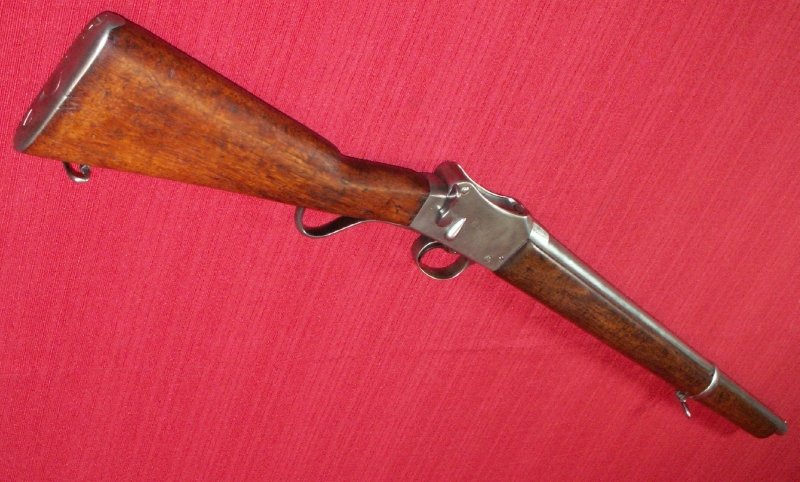
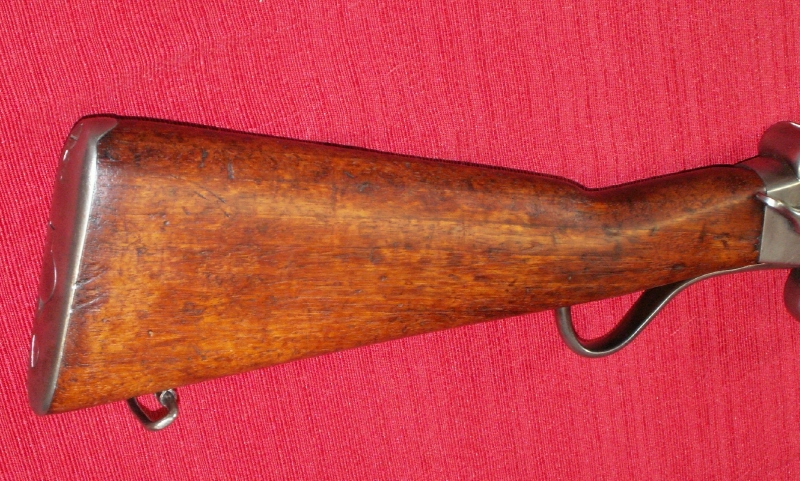
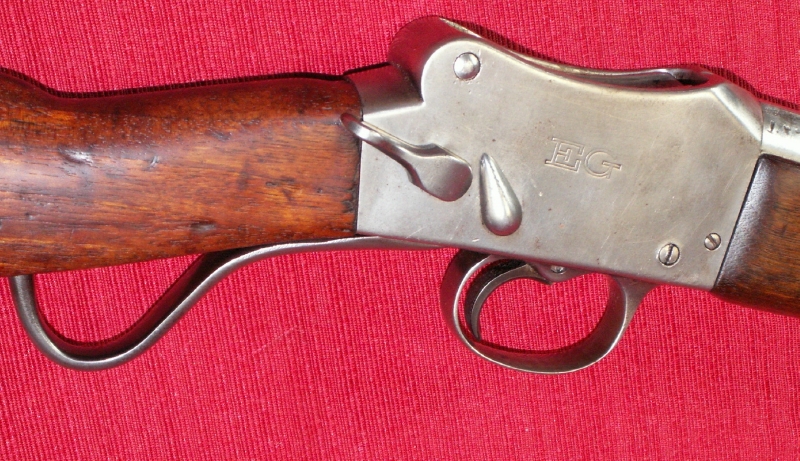
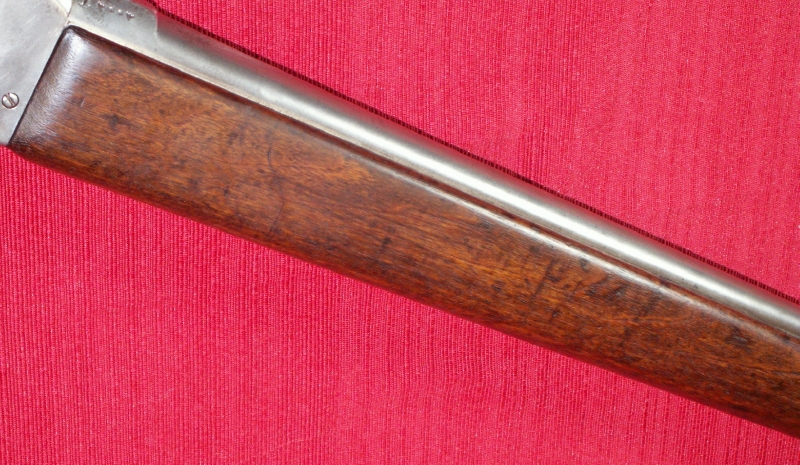
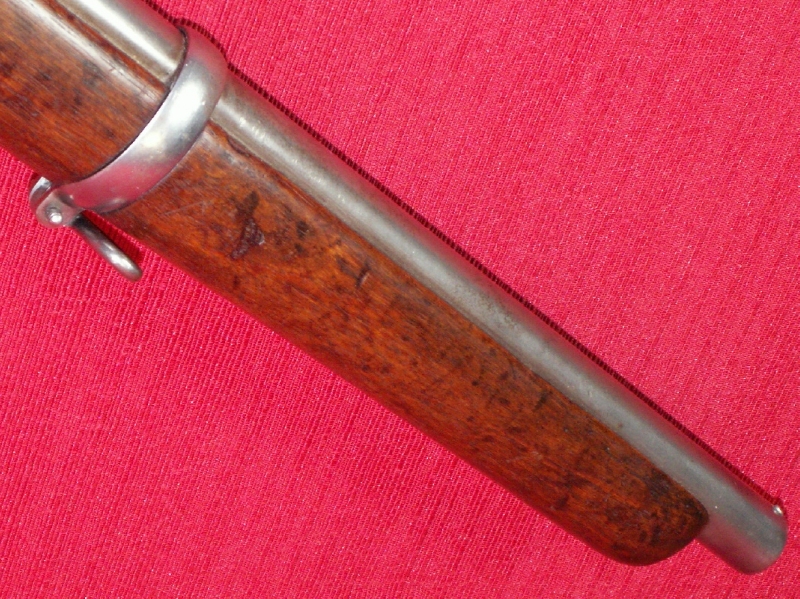
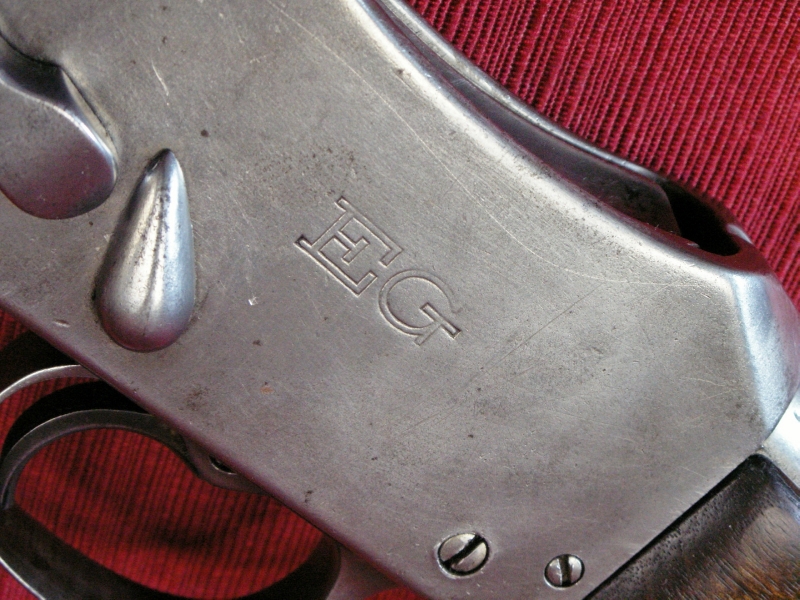
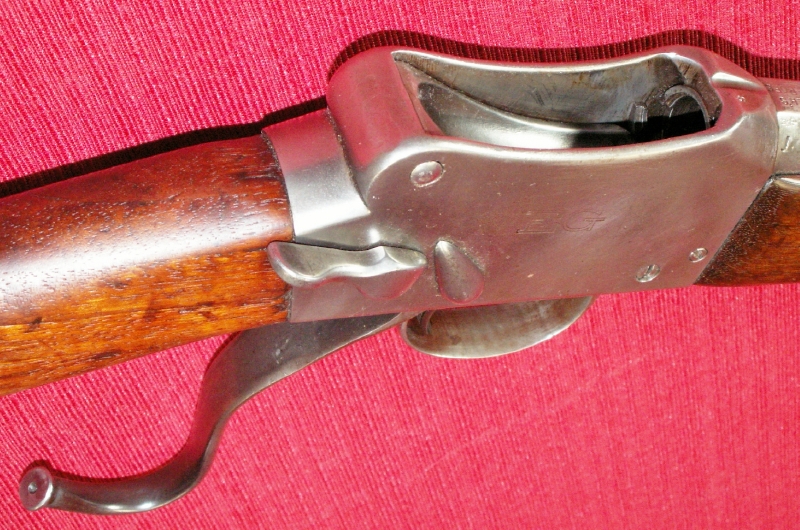
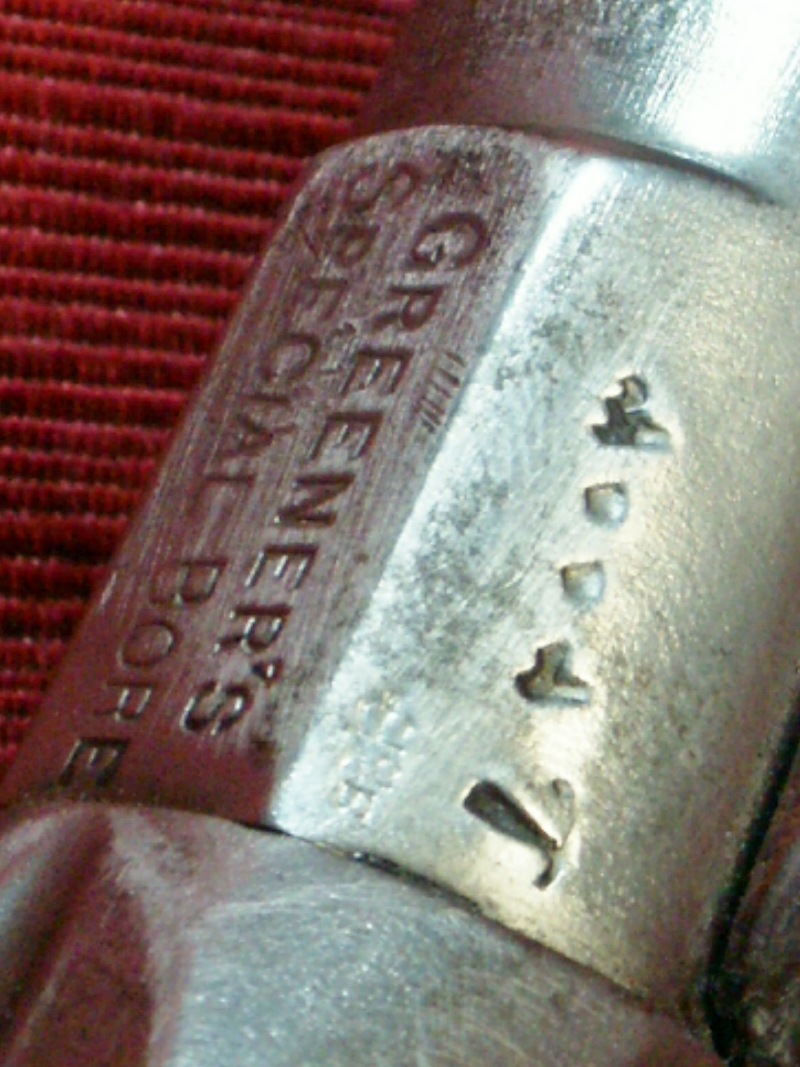
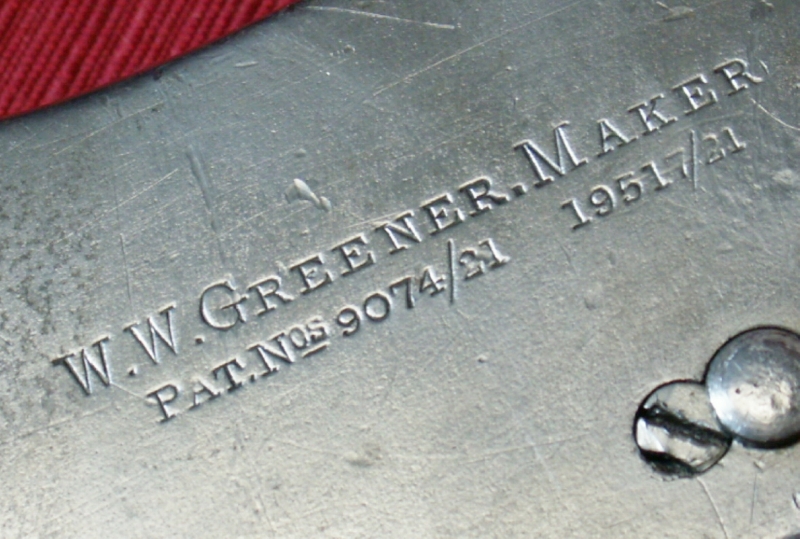
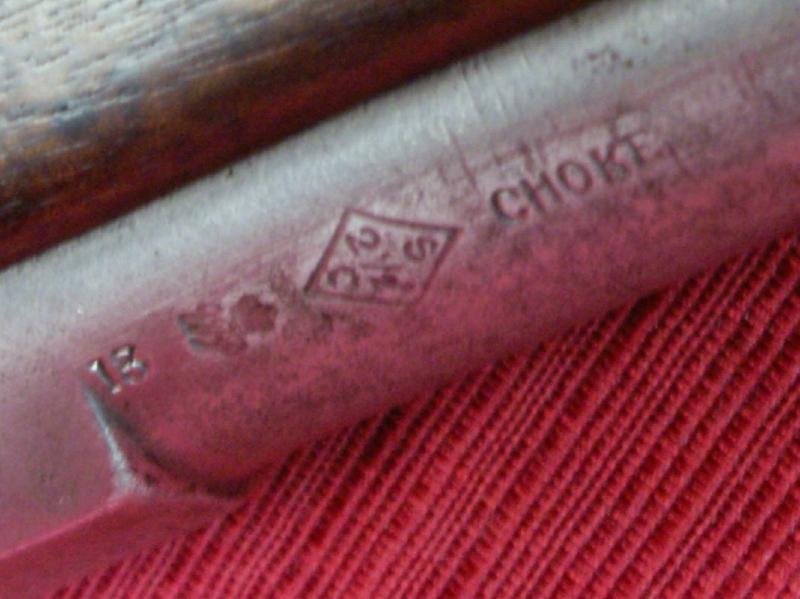
W. W. Greener, Ltd. — EG Special Bore Police Shotgun

W. W. Greener, Ltd. - EG Special Bore Police Shotgun - Picture 1

W. W. Greener, Ltd. - EG Special Bore Police Shotgun - Picture 2
W. W. Greener, Ltd. - EG Special Bore Police Shotgun - Picture 3
W. W. Greener, Ltd. - EG Special Bore Police Shotgun - Picture 4
W. W. Greener, Ltd. - EG Special Bore Police Shotgun - Picture 5
W. W. Greener, Ltd. - EG Special Bore Police Shotgun - Picture 6
W. W. Greener, Ltd. - EG Special Bore Police Shotgun - Picture 7
W. W. Greener, Ltd. - EG Special Bore Police Shotgun - Picture 8
W. W. Greener, Ltd. - EG Special Bore Police Shotgun - Picture 9
W. W. Greener, Ltd. - EG Special Bore Police Shotgun - Picture 10
I would hate to be on the wrong side of this puppy!
 W. W. Greener EG Special Bore Police Shotgun. These EG models were uses in the Egyptian Military and police Departments. These single shot Martini style shotguns were chambered for a unique shotshell.
It shouldn’t be used with a standard 12 gauge shell. I have read that a cut down (2” or 2-1/2) low brass 12 gauge shell can be made to work but you will need to have a conversion performed or you damage the split tip firing pin if not converted to a standard Martini rifle firing pin. The barrel length is 26 inches and overall length of firearm is 42 inches.
W.W. Greener is a sporting shotgun and rifle manufacturer from England. The company produced its first firearm in 1829 and is still in business, with a fifth generation Greener serving on its board of directors.

W. W. Greener Ltd
Private
Industry Firearms
Founded 1829
Founder William Greener
Headquarters ChippenhamUnited Kingdom
Area served
Local
Products Rifles
Website http://www.wwgreener.com/

History[edit]

The history of W.W. Greener begins in 1829, when William Greener, who had been working in London for Manton, a prominent gun maker, returned to his hometown of Newcastle and founded the W. Greener company. In November 1844, he determined that most of the materials and components he used for gun making came from Birmingham, and his business was being hampered by the distance between the two towns. Hence, he moved his business from Newcastle to Birmingham.
During the period of 1845-58, W. Greener was appointed to make guns for Prince Albert. Money obtained from supplying South Africa with two-groove rifles enabled the company to erect a factory on “Rifle Hill”, Aston, in 1859. It was around this time that the company began to really prosper.
Greener was a firm believer in the concept of muzzleloaders and refused to make any breechloaders. Hence, his son, William Wellington Greener, struck out a line of his own (the W.W. Greener company) and produced his first breechloader in 1864. When William Greener died in 1869, the two companies were amalgamated together as the W.W. Greener Company, and carried on by William Wellington Greener. William Wellington Greener was responsible for several innovations, as described in the sections below, and it was on the strength of his inventions that the company became famous. Under W.W. Greener, the company established offices in Birmingham, London, HullMontreal and New York City.
William Wellington Greener was succeeded by two of his sons, Harry Greener and Charles Greener. Leyton Greener, Harry’s son and fourth generation took over as Chairman in 1951 and today the company has a fifth generation, Graham Greener, as one of its directors.

Production[edit]

Production of Greener weapons started in 1829, when W. Greener began manufacturing his muzzleloaders. W. Greener was the first to discard vent holes in breeches. He was also instrumental in improving the hardness and quality of barrels, by using more steel in their manufacture. He also improved the Harpoon Gun and his model was the one adopted by the Scottish Fisheries, and is still in use today. His greatest innovation was the invention of the expanding rifle bullet.
In 1845-59, W. Greener was appointed to make sporting guns for the Prince Consort. In the 1851 London Exhibition, the company received the highest award “for guns and barrels perfectly forged and finished”. In 1853 and 1855, the company received Silver medals at the New York City and Paris Exhibitions. The company’s products were also sold for as much as 75 pounds, in the Southern states of America, before the Civil War.
Since W. Greener did not believe in breechloaders, his son, W.W. Greener started his own factory. In 1864, he produced his first patent, an under-lever pin-fire half-cocking breechloader with a top bolt entering the barrel underneath the top rib.
When W. Greener died in 1869, his son W.W. Greener merged the two companies into one. His next patent was the self-acting striker, followed by a famous cross-bolt mechanism produced as a single top bolt, in 1865. In 1873, this cross-bolt mechanism was combined with the bottom holding down bolts to produce the “Treble Wedge-Fast” breech action. The treble wedge-fast was one of the strongest breech actions ever invented and was widely copied by other manufacturers, after the patent rights expired.
The introduction of choke boring in 1874 is regarded as W.W. Greener’s greatest achievement. It was this invention that made the firm’s name famous. A discussion about this is in the section below.
In 1876, the firm introduced the Treble Wedge-Fast Hammerless Gun, otherwise known as the “Facile Princeps”. This gun was cocked by the dropping of the barrels. This action was one of the strongest ever produced. The W.W. Greener company restarted production of Facile Princeps guns in 1998.
In 1880, the firm produced a self-acting ejector for its guns, followed by the “Unique” ejector gun. These guns were designed to eject the spent cartridges when the gun was opened. Manufacture of the “Unique” ejectors stopped during the Second World War, and the company has recently begun to manufacture them again.
In 1895, W.W. Greener invented the world’s first Humane Killer, a gun designed to kill cattle, sheep, pigs and horses, quickly and easily. This instrument was adopted by the War Office, for use in the Veterinary, Remount and Butchering Departments, and by the Admiralty for its Victualling yards. The instrument was also modified to use .310 caliber cartridges. After several years, the models became obsolete in the 1960s and ammunition for the older models was impossible to obtain. Recently though, the company was asked to manufacture another model and hence, the Humane Killer Mk II was introduced. This new gun fires a .32 ACP round.

Choke bores[edit]

The introduction of choke bores was largely responsible for the fame of the W.W. Greener name. The invention of choke boring is usually attributed to American gunsmiths. The first known patents for choke boring were granted to a Mr. Sylvester H. Roper, an American inventor and gunsmith, (U.S. Patent 53,881, Improvement In Revolving Fire-Arms, April 10, 1866; and U.S. Patent 79,861, Improvements In Detachable Muzzle For Shot-Guns, dated July 14, 1868.) This was followed by a patent claim in London by Mr. Pape, an English Gun maker, whose patent application was six weeks too late to the 1866 Roper patent. Mr. J.W. Long, in his book “American Wildfowling”, credits a Mr. Jeremiah Smith of Southfield, Rhode Island, as the gunsmith who first discovered the concept, as far back as 1827.[1]
While American gunsmiths were the pioneers of the choke boring system, they had not really progressed beyond the elementary stage and their guns would lead, throw irregular patterns and not shoot straight.
W.W. Greener’s first intimation of the choke formation was derived from instructions given in a customer’s letter, in early 1874. The customer’s instructions described a choke, but did not give any details on the size or shape, or how it was to be obtained. Hence, W.W. Greener had to conduct many experiments to determine the perfect shape and size of a choke for a given bore. After that, he developed tools to produce the choke bore profile correctly and smoothly. The system of choke boring that he pioneered was so successful that it was later adopted by other manufacturers and hence, some authorities give him the credit for inventing the concept.
In December 1874, the first mention of Greener’s choke bore appeared in an article by J.H. Walsh, the Editor of Field magazine. The article mentioned the extraordinary shot pattern that the Greener shotgun could produce. The next issue came with an advertisement from W.W. Greener, stating that the firm would guarantee that their new guns would shoot a closer pattern than any other manufacturer. The advertisement claimed that Greener 12 bores were warranted to shoot an average pattern of 210, when the best 12 bore gun in the London Gun Trial of 1866 could only average 127. Naturally, the advertisement generated considerable controversy, especially from rival manufacturers of cylinder guns, who refused to believe the numbers quoted in the advertisement.
In order to resolve the controversy, the Editors of Field magazine decided to conduct a public trial in 1875. The London Trial of 1875 pitted choke bores and cylinder guns of various manufacturers in four categories—Class 1 (large bores, any boring), Class 2 (Choke bores, 12 gauge), Class 3 (Guns of English boring or Cylinders) and Class 4 (Small gauges, any boring). The choke bored guns performed better than the cylinder guns in all these tests, and W.W. Greener choke bore guns won the class 1, class 2 and class 4 categories. Greener Choke bores also won at the London Gun Trials of 1877 and 1879, and the Chicago Field Gun Trial of 1879. The results of these trials were responsible for making the W.W. Greener name famous.

Fake Greener guns[edit]

During the 1880s, as the company became well known, several small manufacturers in Belgium and Australia attempted to manufacture copies of Greener weapons. In several cases, the name was misleadingly similar: Greenen, Horace Greener, Albert Greener, A. Greener, W.H. Greener, A.H. Greener etc. are several examples of names of spurious weapons. Note that J.H. Greener and Albert Greener were two brothers of W W Greener and both brothers also made guns. Most J H Greener and a few Albert Greener guns are genuine.
In other cases, the maker would print “Greener” in bold gilt letters on the top rib and their own name in small characters, elsewhere on the gun. When one of these makers was challenged in Belgian courts, the defence advanced the theory that the weapons were using the Greener cross-bolt system and hence, the larger letters were intended to refer to the system, and not the maker of the weapon.
Due to the large number of forgeries, the W.W. Greener company offers to authenticate genuine Greener weapons for a small fee.

In popular culture[edit]

Wilbur Jonas, the general store owner, offers to sell Matt Dillon four Greener shotguns at an attractive price, in “Renegade White”, episode 4.30 of Gunsmoke.
Episode S5E1 of The Life and Legend of Wyatt Earp (1959), Earp is confront by “Shotgun Gibbs” who is armed with a Greener loaded with a rifled slug.[citation needed]
In the film Big Jake, John Wayne’s character asks his ex-wife, Martha (played by Maureen O’Hara), if she brought his “Greeners, the double-barrels”. Wayne then proceeds to open a gun case revealing matching shotguns and his favorite derringer, “Betsy”. There is also a reference in the 1973 film Cahill U.S. Marshal where Wayne is in a box car with several prisoners and one says, “You’re not going to leave that old Greener on cock are you?”.
In the Blood Bond book series by William W. Johnstone, most shotguns and sporting guns are referred to as greeners.
In the 1975 classic Jaws, Robert Shaw’s Quint character uses a modified Greener harpoon gun.

Bibliography[edit]

Teasdale-Buckle, G.T., Experts on Guns and Shooting, Sampson Low, Marston & Co. Greener, William Wellington, The Gun and Its Development, Ninth Edition, Bonanza Books NY, 1910 Greener, Graham N., The Greener Story, Quiller Press, 2000

See also[edit]

Categories
All About Guns

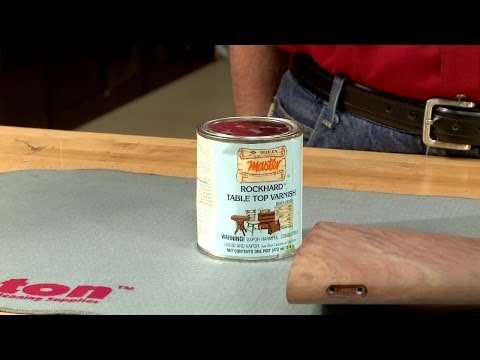
Some videos about gunstocks finish

I found these on youTube and thought they might be useful to either me or somebody else. I hope that you like them!
Thanks Grumpy!

Categories
All About Guns

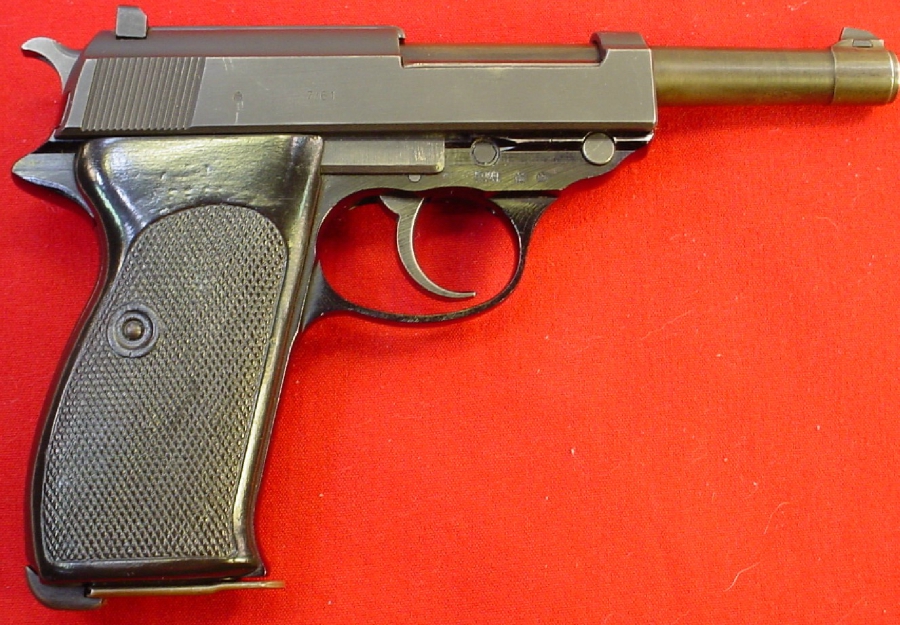
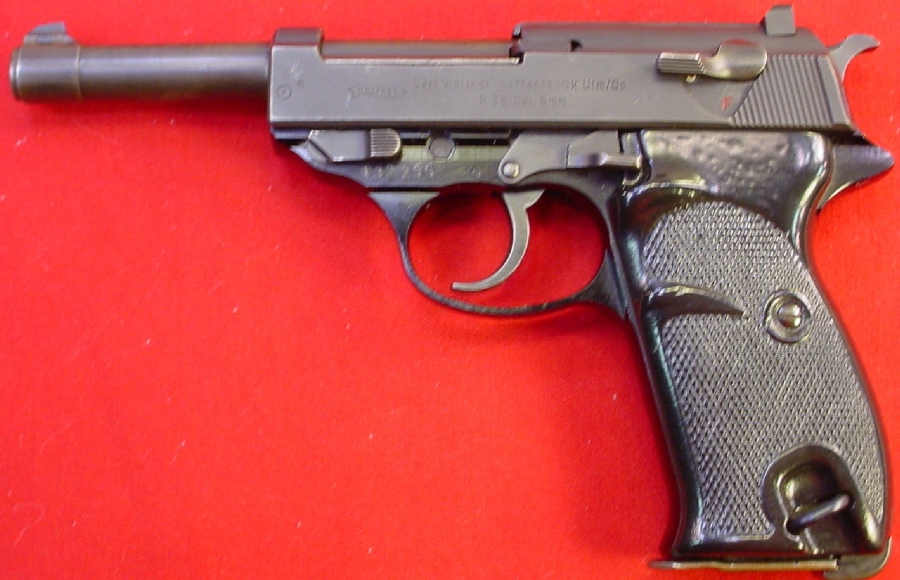
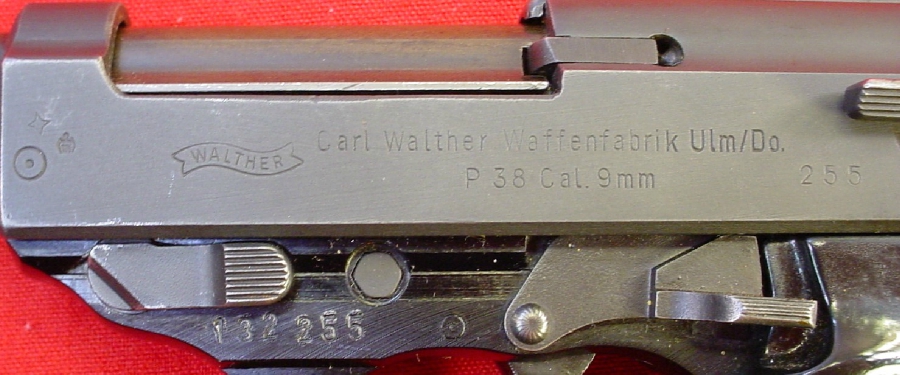
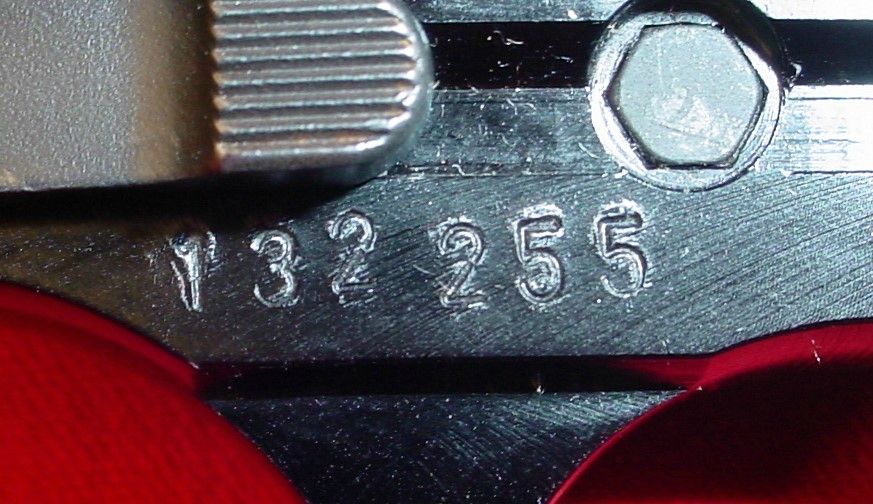
Walther P-38 Semi Auto Pistol.

Walther - P-38 Semi Auto Pistol.
Walther - P-38 Semi Auto Pistol. - Picture 3
Walther - P-38 Semi Auto Pistol. - Picture 5
Walther - P-38 Semi Auto Pistol. - Picture 4
Walther - P-38 Semi Auto Pistol. - Picture 2
 

Categories
Uncategorized

This Song Almost became a National Anthem!

We will Rise again!
Enjoy!
Grumpy

Categories
N.S.F.W. Well I thought it was funny!

Well I thought they were funny! FML

Categories
All About Guns

On cleaning a Lever Action Rifle

Now I found this video and I thought it was pretty useful. So I thought I would share it with you!
Grumpy
 

Attachments area