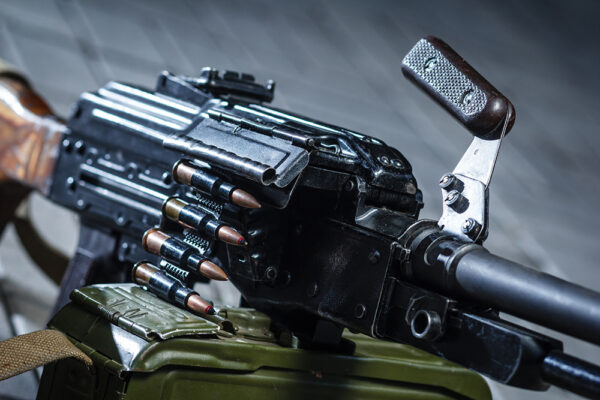
In a move that has triggered debate among gun rights advocates and lawmakers, West Virginia Senate Bill 1071, commonly referred to as the “Machine Gun Bill,” will not proceed in the current legislative session. Senate President Randy Smith (R-Preston) announced his decision to block the bill, citing what he calls significant legal and drafting issues rather than any opposition to Second Amendment rights.
The bill, introduced late in the session, aimed to expand access to fully automatic machine guns for eligible West Virginia residents.
Specifically, it advocated creating the Office of Public Defense within the West Virginia State Police, which would oversee the purchase, sale, and distribution of machine guns to individuals for state defense purposes. Supporters contend the bill aligns with Second Amendment protections, bolsters personal and community security, while complying with federal background check requirements.
SB 1071 initially cleared the Senate Judiciary Committee on Monday, March 2, following a contentious meeting that ended in confusion.
Committee Chairman Tom Willis called for a recess, and after discussions, the bill appeared to advance with strong support.
However, it never reached the full Senate floor or the Finance Committee, stalling ahead of the crossover day deadline on Wednesday, March 4, the point by which bills must pass their originating chamber to remain viable.
Smith explained his rationale in statements released today, describing the legislation as “poorly drafted” and submitted on the final day for Senate bills.
He consulted with multiple attorneys, members of West Virginia’s National Rifle Association, and the West Virginia Citizens Defense League (WVCDL), all of whom reportedly advised that the bill would likely fail in the House of Delegates and invite court challenges. “This bill, as it was submitted to us, would be unable to pass the House of Delegates and would face numerous judicial challenges to its implementation upon passage,” Smith stated.
Speaking to multiple senators, WVCDL lobbyist Art Thomm implied that the NRA does not support the bill.
Ammoland News spoke to NRA-ILA President John Commerford, who denied that the NRA had anything to do with killing the bill.
In fact, Commerford stated that the NRA is looking forward to working with the sponsor of the bill to improve it for next year.
Mr. Commerford also confirmed to AmmoLand News that Thomm does not work for the NRA and hasn’t worked for the gun rights organizations for a few years.
The NRA has a new West Virginia State Director starting Monday. The lawmakers AmmoLand News spoke to said they believed the NRA was opposed to the bill’s passage.
Critics of the decision, including bill sponsor Sen. Chris Rose (R-Monongalia) and Sen. Laura Chapman (R-Ohio), voiced frustration over the lack of transparency.
Rose noted that reviving the bill would require suspending constitutional rules and obtaining a two-thirds majority, a hurdle he deemed unlikely at this stage. “Traditionally speaking, this bill would be dead at this time,” Rose said. Chapman reiterated these sentiments, calling the process opaque: “The bill is dead, and it was killed without transparency and without consensus, despite the fact that this bill had overwhelming support by this body.”
Gun Owners of America (GOA) has mobilized supporters to pressure Smith for a floor vote.
In an urgent call to action, GOA claimed the bill “mysteriously disappeared” despite passing committee and urged constituents to contact the Senate President, pointing out that 93% of West Virginia gun owners reportedly support such measures. “We have an extremely small window to get this done,” GOA stated.
The bill’s failure emphasizes continuing tensions in West Virginia’s Republican-dominated legislature over gun rights legislation.
While the state has some of the most permissive gun laws in the nation, including permitless carry, efforts to challenge federal restrictions on machine guns, which have been tightly regulated since the 1934 National Firearms Act (NFA) and further restricted by the 1986 Hughes Amendment, commonly experience scrutiny for possible conflicts with national law.
During committee discussions, concerns were raised that the bill may unintentionally expose residents or state police to federal violations, with West Virginia Troopers Association President Lonnie Faircloth voicing concerns about transferring machine guns to private citizens.
Opposition within the committee was limited but notable. Sen. Ryan Weld (R-Brooke) voted against the bill, and Sen. Joey Garcia (D-Marion) questioned its adherence to federal regulations. Despite this, the measure had obtained considerable backing from gun rights groups and some lawmakers who viewed it as a stand against supposed federal overreach.
As the legislative session winds down, the fate of SB 1071 acts as a reminder of the procedural and statutory hurdles even popular ideas can face. Smith reasserted his commitment to Second Amendment issues, suggesting that a better-drafted version could be considered in future sessions.
For now, however, West Virginians seeking machine guns have to navigate the existing National Firearms Act licensing process, which remains stringent and costly.