Categories
Uncategorized

This makes me VERY worried about the state of our great Republic

America in the Shadow of Lawfare

The use of litigation to demolish democracy is the new Democrat playbook.

The relentless criminal and civil prosecution of former president Donald Trump is an unprecedented weaponization of our legal system to attack a political opponent. The goal is to re-elect Joe Biden by any means, without regard to the rule of law Democrat prosecutors and officials pretend to be enforcing.

Beyond E. Jean Carroll’s so far successful defamation cases funded by billionaire Reid Hoffman, and failed efforts in 36 states to take Trump off the ballot for purportedly engaging in insurrection, Trump is a defendant in five active criminal or civil actions, and an unindicted co-conspirator in two additional criminal cases, all brought by partisan progressive Democrat prosecutors seeking hundreds of millions of dollars of fines and more than 100 years of prison time. The timing of these cases was coordinated to inflict maximum inconvenience and cost on Trump, and to make it impossible for him to campaign actively. State and federal prosecutors met in the White House to refine their cases and for purposes that have never been disclosed.

No sitting or former president of the United States has ever before been indicted, let alone faced a coordinated, multi-layered legal attack. That is not because Trump is the only president ever to have walked up to the line, or perhaps crossed it.

Trump-haters see his questioning of the 2020 election results as a watershed event in U.S. history, and his malapropisms and hyperbole as evil. They are willfully blind to Biden’s corruption and disregard of the Constitution, Bill Clinton’s transgressions, and the parallels to House Democrats who objected to certification of Republican electors when Republicans won the presidency in 2001, 2005, and 2017; continued speculation about hacked voting machines in Ohio in 2004 that allegedly swung the state for George W. Bush; to Hilary Clinton’s repeated assertion that she is the rightful winner of the 2016 election, or Al Gore’s novel theories in 2000.

The media embraced Stacey Abrams’ repeated false claim that she had actually won the 2018 race for governor of Georgia, despite Republican Brian Kemp’s nearly 55,000 vote margin. Abrams falsely asserted that voting machines switched votes and that Republicans had suppressed black votes. Her PAC filed a lawsuit that was dismissed for failing to state a claim.

With a pretext of righteous indignation, powerful Democrats are using a massive censorship enterprise, and weaponization of all levers of government to threaten Trump’s finances and liberty, and the rights of tens of millions of Americans to select a president at the ballot box.

The overarching strategy is to bog down Trump with continuous legal battles, thereby requiring his daily presence in court and with his lawyers, impeding his availability to campaign, draining his financial resources, and eroding his support among independent voters. Legal actions that could have been initiated far sooner were delayed so the process would interfere with the presidential election.

Both Letitia James and Alvin Bragg ran for their offices (New York State attorney general, and New York County district attorney, respectively) on the promise that they would take Trump down. Federal Special prosecutor Jack Smith insists the federal trials must happen immediately, and almost concurrently, even though the right to a speedy trial is the defendant’s right to ensure due process, not the government’s right to ramrod a conviction.

New York Judge Arthur Engoron found Trump liable for fraud and ordered him to pay more than $450 million, even though there were no victims and no damages. At one point during the trial, he said he wasn’t interested in what Trump had to say. James salivated in multiple tweets at the prospect that Trump would be unable to pay the judgement or post a bond, and took the first steps toward foreclosure proceedings. When an appeals court reduced Trump’s bond to $175 million, James took the highly unusual step of challenging his bonding company. She asked Engoron to throw out the bond and give Trump just five days to replace it. That was too far even for Engoron, who rejected the effort.

In extraordinary complaints and even more extraordinary decisions, progressives have indicted, fined and disbarred Trump’s lawyers, including Claremont Institute’s John Eastman, and former New York City Mayor Rudy Guliani, signaling that lawyers who support conservative causes do so at their peril. None of the Democrat officials who denied the outcome of previous elections, or their lawyers were ever charged with a crime, fined or disbarred for their unfounded activities.

With rare exceptions, political speech cannot constitutionally be the basis for a prosecution. As the Supreme Court explained in West Virgina State Board of Education v. Barnette (1943), protecting political speech is part of the “fixed star in our constitutional constellation.” The First Amendment even protects false political speech, United States v. Alvarez (2012), and advocating the commission of a crime or violence to advance political goals, unless the speech is a direct incitement to imminent lawless action, Brandenburg v. Ohio (1969). There is no exception for misinformation, let alone “malinformation,” which the Department of Homeland Security defines as “based on fact, but used out of context to mislead, harm, or manipulate.”

The Supreme Court recently heard two cases that will impact these cases. On April 16, the Court heard arguments in Fisher v. United States. That case centers on whether 18 U.S. Code § 1512, a statute used by the Department of Justice in cases against numerous January 6 defendants and against Trump in the so-called Federal Elections case (see below) applies to demonstrations, or primarily to the destruction of evidence used in a hearing. The Court appears to be leaning toward a narrower interpretation, which might benefit Trump. A decision is expected by June.

On April 25, the Court heard arguments on whether Trump is protected by presidential immunity in the Federal elections case. U.S. District Court Judge Tanya Chutkan and the D.C. Circuit Court of Appeals previously rejected immunity. During oral arguments, Trump’s counsel took a balanced position that Trump’s actions should be parsed, with official acts immune from prosecution. This nuanced stance signals that the Federal elections case likely will proceed, though, if the Court rules in Trump’s favor, it would be cut back, and delayed by motions on the scope of immunity. A ruling also could impact other cases pending against Trump, particularly the Georgia elections case. A decision also is expected by June.

If Trump is elected president, most legal experts agree that he could pardon himself in the federal cases. A president has no pardon authority regarding criminal or civil cases brought in state court.

The following brief summary of the current cases against Trump explicates that with minor potential exceptions, these cases are an abuse of law, and the prosecutors who bring them, and in numerous instances, the judges who are presiding over them, are partisan hacks placing their Trump hatred above justice and their oaths of office:

Election Eligibility:  The unanimous Supreme Court decision that Section 3 of the 14th Amendment prohibits states from kicking Trump off the ballot stopped efforts underway in 36 states to deprive Americans of their right to vote for him. Without any enabling statues from Congress, or any charges ever made against Trump for insurrection, or a criminal trial, Colorado, Maine and other states were prepared to decide that Trump was guilty of insurrection and that Americans should be deprived of their rights to vote for him. That so many Americans believe destroying democracy is the way to protect democracy shows how far our nation has strayed from its founding principles.

New York Civil Fraud Case:  Spearheaded by Letitia James, the New York civil fraud case against Trump is selective prosecution on steroids. No similar case has ever been brought in New York where, as here, there was no victim, no damages and no scheme to harm consumers. No other case has resulted in a comparable fine – a fine so large that it violates the 8th Amendment to the U.S. Constitution and Article I §5 of the New York Constitution. That is probably why the appellate court reduced Trump’s bond from $454 million ordered by Engoron to $175 million. Before that happened, James evidenced visceral pleasure at the possibility that she could padlock and liquidate Trump’s properties. While the results might not be overturned, ultimately, the amount of damages likely will be reduced to a much smaller sum. In the meantime, James succeeded at tying up Trump’s focus and finances.

New York Hush Money Case:  Trump faces 34 counts of falsifying business records in relation to alleged hush money payments made to pornography actress Stormy Daniels prior to the 2016 election. The federal government, Bragg’s predecessor and initially, Bragg, refused to prosecute this case. It is both common and lawful for men to pay a former paramour to keep an affair quiet, and to require a non-disclosure agreement as a condition of the payment. Calling this hush money doesn’t change that. Trump paid Daniels by first paying his lawyer, Michael Cohen. Cohen then paid Daniels. Trump’s company recorded the payments to Cohen as legal fees.

Even presuming that recording the payments as “legal fees” instead of “hush money” was wrong, the labels were seen only by Trump’s bookkeepers. No one was defrauded. No one cared. The deductibility of the payments would not have been different if they had been recorded as hush money. Any reports that might have been required by the Federal Elections Commission would have been reported in 2017, after the election. At most, if the premise is accepted the label should have been “hush money” this is a minor misdemeanor, and the statute of limitations expired years ago.

To get Trump, Bragg fabricated a case. He alleged that mislabeling was part of a scheme to fraudulently obtain votes by keeping the true character of the payments out of the campaign’s federal reports. Under New York law, if a business record is falsified to support another crime, the statute of limitations is extended and the crime can be prosecuted as a low level felony.

Just a few problems: As a county district attorney, Bragg is prohibited from asserting a federal crime as the second crime. Second, for a range of technical reasons, Trump was not required to report the payments, regardless of how labeled – which is why the U.S. attorney did not prosecute. Third, New York law does not apply its fraud laws to defrauding the general public. Finally, the reports were due in 2017 and therefore could not have influenced the 2016 presidential election.

Nonetheless, Trump is locked in a New York courtroom every day. Given a New York jury and Judge Juan Merchan, a partisan judge who has donated to Biden’s campaigns and whose daughter is a Democrat operative, Trump might lose. Whether Bragg then will abandon his principles eschewing incarceration for non-violent offenders convicted of low level felonies is unknowable. Though Trump likely would overturn a conviction on appeal, the case is diverting Trump from the campaign and costing a considerable sum to defend.

Georgia Election:  This case is an attempt to curtail Trump’s First Amendment rights under the guise of prosecuting improper electoral influence. While there are some potentially valid claims against Trump’s alleged co-conspirators for forged documents, computer theft, and trespass, the allegations against Trump are based on intemperate tweets and advocacy with which the prosecutors disagree. The First Amendment protects both speech and the right to petition government. Based on early orders from Judge Scott McAfee, there is a potential that he will dismiss the case after the prosecution makes it presentation. If Trump is convicted, there is a strong potential that it would be overturned. It is unlikely, but still possible, that trial could begin before the election. The Supreme Court’s decision regarding immunity should impact the timing and scope of this case. If Trump is convicted, there is a low potential that he could be jailed. Again, the prosecution achieves the Democrats’ objectives whether Trump wins or loses. For a more complete analysis of this case see my article here.

Federal Elections:  Like the Georgia case, Jack Smith’s indictment of Trump in the so-called January 6 case is a whiny, indignant recitation of Trump tweets and statements that annoy the prosecutor and the Left. The indictment accuses Trump of tweeting or asserting falsehoods or of adopting novel legal theories advanced by renowned lawyers with whom Smith disagrees. As described above, by June the Supreme Court will determine the scope of Section 1512. The Court’s decision could result in two of the four counts in the indictment being dismissed. The other counts are based on a statute which applies only to financial crimes, and a statute which, with one exception, has only been applied where the accused uses violence against an individual to prevent him from voting. The Supreme Court’s decision regarding immunity will further shape the timing and scope of this case. The indictment does not allege that Trump was violent, and contrary to how this case is described by Judge Merchan in the Hush Money case, does not accuse Trump of insurrection.

Despite its weaknesses, if this case survives the Supreme Court’s ruling on immunity, Judge Chutkan, who has made numerous disparaging comments about Trump in other cases, can be expected to resolve all doubts against Trump. With a Washington D.C. jury, this appears to be another case that Trump will have to win on appeal. For a more complete analysis of this case see my article here.

Classified Documents:  The charges brought by Special Counsel Jack Smith concerning the retention of classified documents at Mar-a-Lago merit a closer inspection. Trump bears some responsibility for mishandling sensitive documents, and for playing games with federal prosecutors. Recent reports indicate that he had returned just a portion of the documents this indictment likely would have been avoided. The issue here lies more in selective prosecution. Hillary Clinton’s withholding and destruction of thousands of documents is a much more troubling violation of national security. Both Joe Biden and Mike Pence withheld multiple documents. Contrary to the spin offered by Biden supporters, Biden was uncooperative until well after his lawyers discovered the documents. Still, Biden and Pence had fewer documents, and were more cooperative than Trump. Nonetheless, neither has been prosecuted. Special Prosecutor Robert Hur’s rationale that Biden is too cognitively impaired to prosecute rings hollow.

Judge Aileen Cannon, a Trump appointee, has been balanced in her rulings. She has resisted Smith’s efforts to accelerate the trial date, though this case is still on the calendar immediately after the Hush Money case. Nonetheless, it is unlikely this case will proceed to trial before the elections. If Trump is convicted, an appeal is less likely to achieve a complete reversal than the other cases.

Arizona and Michigan:  This week, both Arizona and Michigan announced indictments for the use of alternative elector slates by Trump supporters following the 2020 election. Defendants in Arizona include former White House chief of staff Mark Meadows, John Eastman, and Rudy Guiliani, and Trump was named an unindicted co-conspirator. In Michigan, Trump, Meadows, and Giuliani are unindicted co-conspirators. Alternative elector slates have been used before, including by John Kennedy in the 1960 election. The law is unclear regarding when and how such slates are lawful.

The United States is now seeking to financially destroy and incarcerate a former president who is also the leading opposition candidate for that office. This is what happens in Third World countries, which routinely confiscate assets of, and imprison, the opposition. Regardless of whether Trump prevails in his trials, America has crossed a line from its republican past into something very ugly.

Categories
All About Guns

A Remington Nylon 66 Rifle in caliber .22lr

Categories
All About Guns

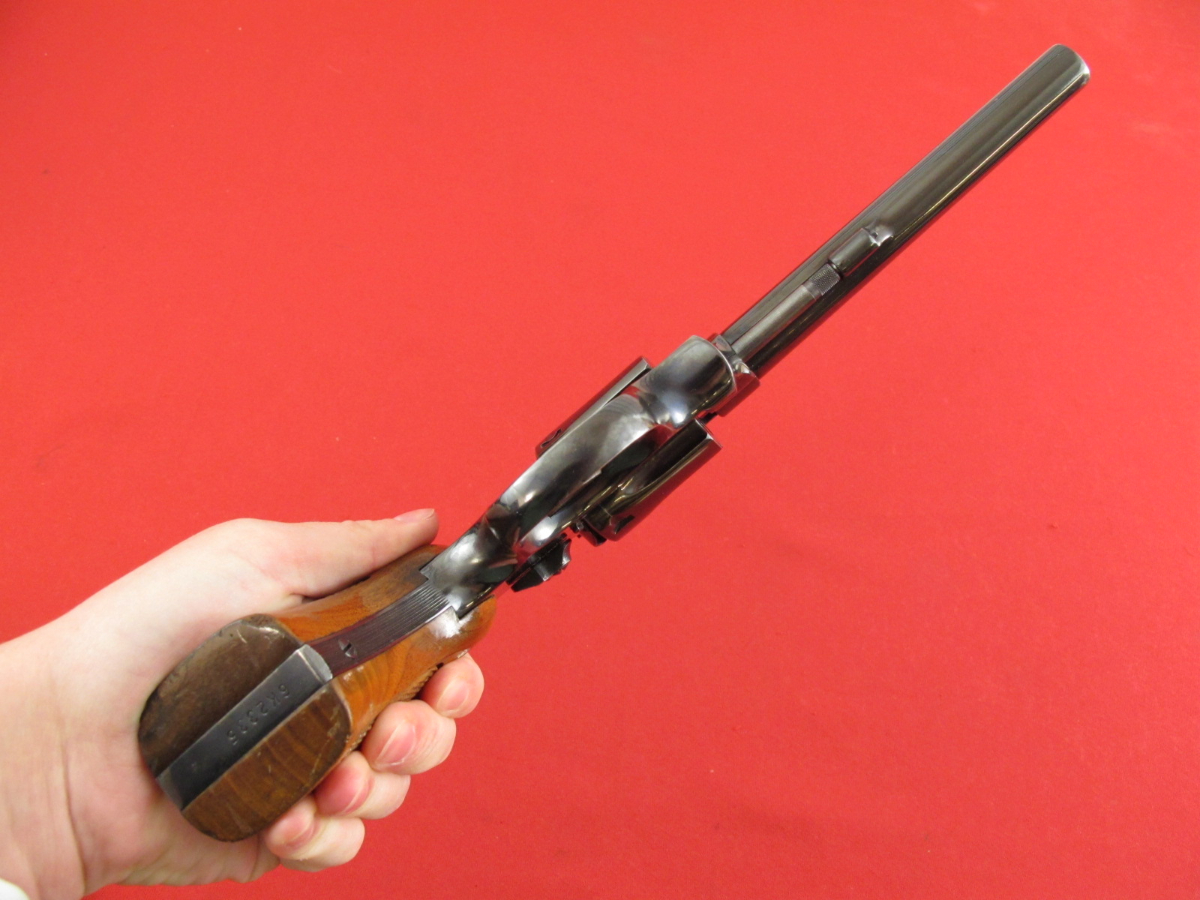
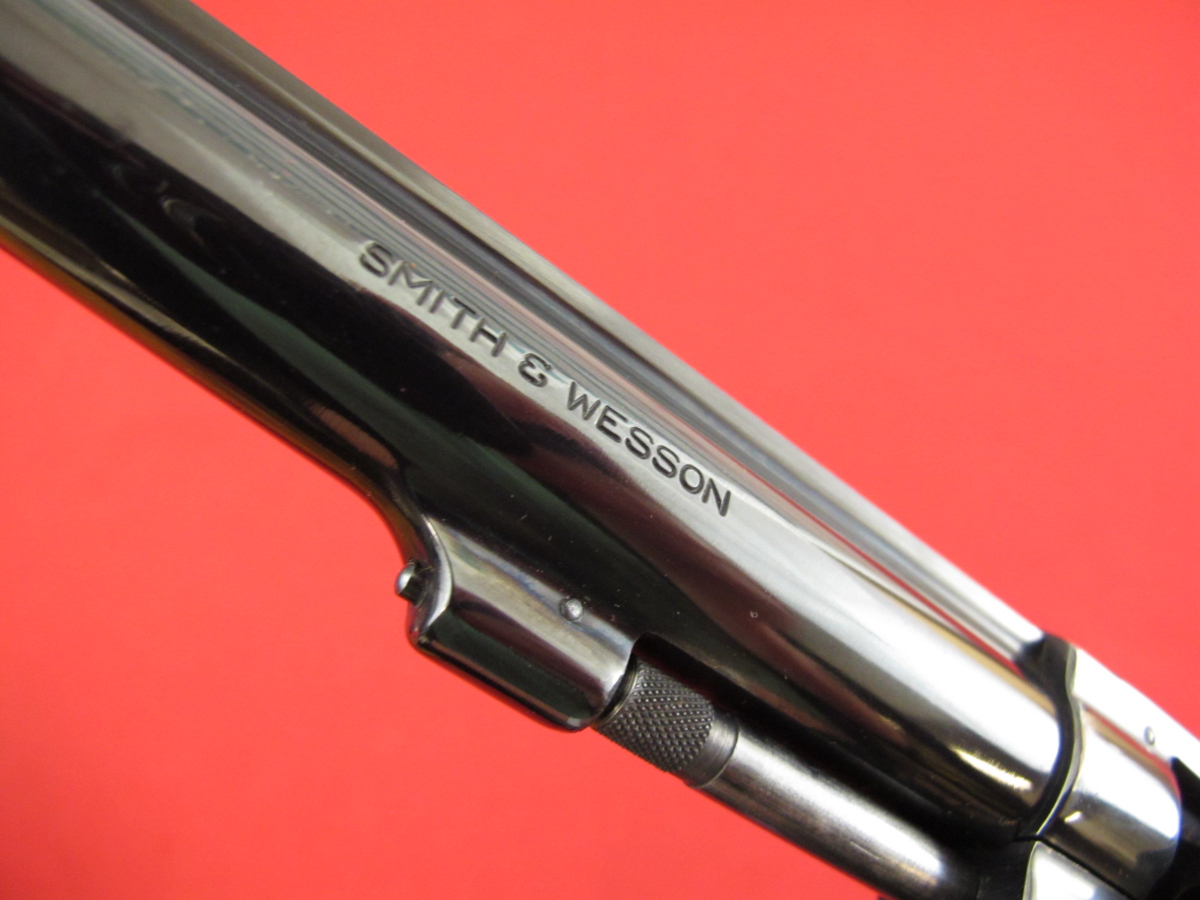
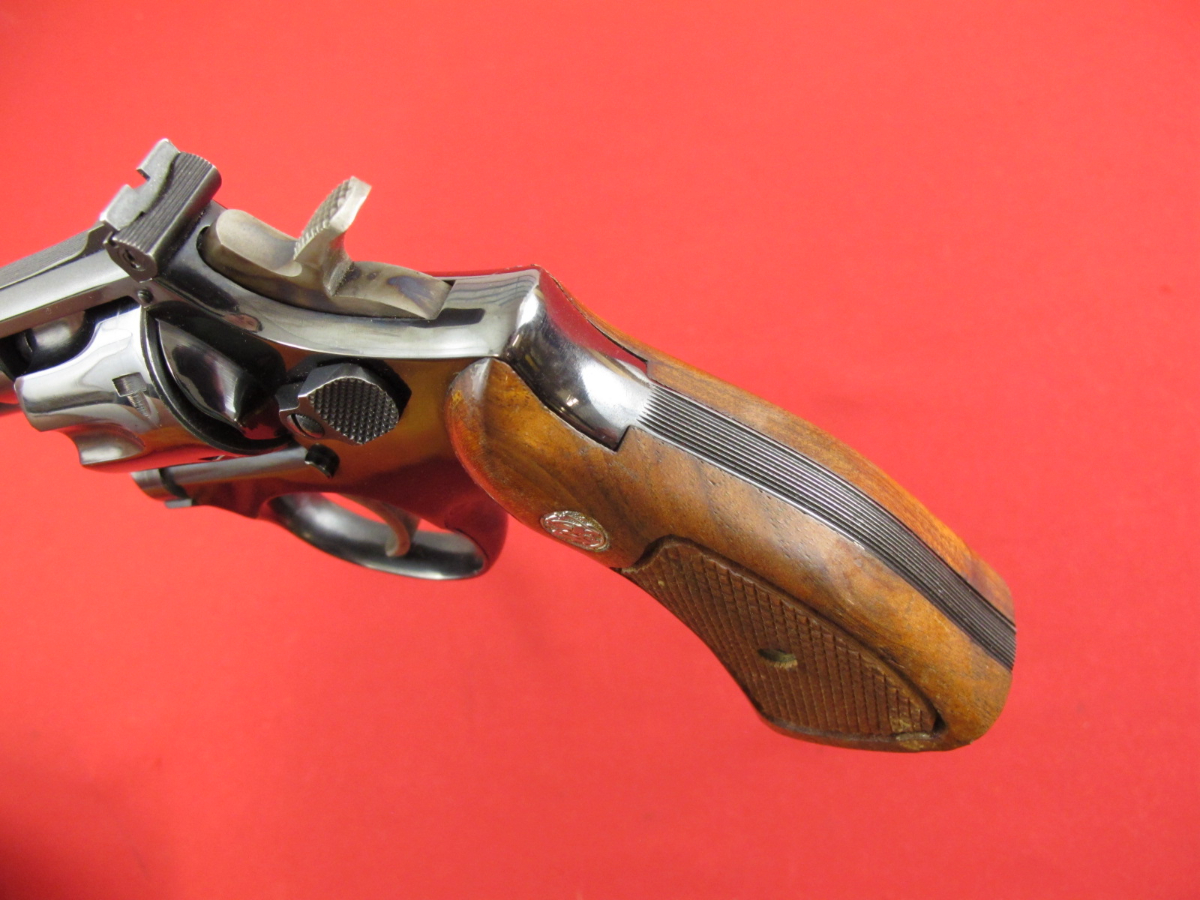
Classic Firearms: The Smith & Wesson Hand Ejector Revolver By Jerry Lee

This Hand Ejector Second Model .44 Special is in excellent condition.
This Hand Ejector Second Model .44 Special is in excellent condition. Photo: Guns International

Introduced more than a century ago, the basic design of the Smith & Wesson hand ejector continues to define double-action pistols today.

What You Need To Know About Smith & Wesson Hand Ejector Revolvers:

  • The first hand ejector model was the .32 Hand Ejector Model of 1896.
  • Soon to follow was S&W’s first K-frame revolver—the .38 Military Model 1899 or .38 Hand Ejector Military & Police.
  • The first Triple-Lock was .44 Hand Ejector First Model (New Century, Triple-Lock, .44 Military Model of 1908).
  • For many, this hand-ejector model is considered to be the finest double-action pistol ever made.

Among the many contributions Smith & Wesson has given to the firearms industry, the most significant would have to be the Hand Ejector revolver. This series of solid-frame, double-action models with swing-out cylinders and manual case extraction has certainly stood the test of time. Introduced in 1896, its basic design is still in production, not only by Smith & Wesson, but also by many other gun manufacturers around the world. Author Jim Supica wrote in Standard Catalog of Smith & Wesson, “The Hand Ejector is the style of handgun that epitomizes Smith & Wesson.”

The focus of this column is on Hand Ejector models of the pre-World War II years with “Hand Ejector” in their official names. When referring to the basic design, all Smith & Wesson revolvers made since 1899 can be described as “hand ejectors,” but my plan here is to provide a bit of history on the original named models.

Toward the end of the 19th century, Smith & Wesson began work on a new-style revolver—one with a solid frame that would soon replace the popular top-break models the company had been known for since the 1870s. “Hand Ejector” is a reference to the loading and unloading procedure, whereby the shooter releases the cylinder to tilt out of the left side of the gun. This allows the cylinder to be loaded or for the fired cases to be “hand-ejected” by pushing back on the ejector rod.

Background: The .32 Hand Ejector

The first revolver to be given the name was the .32 Hand Ejector Model of 1896, its year of introduction. It was made on a new frame size called the I-frame, which had been designed for a new cartridge, the .32 S&W Long. Smith & Wesson lengthened the case of the .32 S&W by 1/8 inch to increase its powder capacity, and this required a slightly larger frame.

The Model of 1896—which would later be known as the .32 Hand Ejector First Model—was made for only seven years. It was not a big success on the civilian market, but a few major police departments, including Philadelphia’s, adopted the model as a service revolver.1

This Hand Ejector First Model belonged to a member of the Los Angeles County Sheriff’s Silver Mounted Posse in the 1950s. Its nickel finish was redone at the Smith & Wesson factory. The Bohlin silver grips add a fine touch. (Photo: Guns International)

In 1903, the Second Model was introduced, along with several design improvements. The .32 Hand Ejector Model of 1903 remained in production until 1917, with a series of five changes over that time period.2 These differences were relatively minor for the first four model changes, with somewhat more significant variations internally with the fifth change.

The K-Frame Revolver

Another major contribution to firearms history from Smith & Wesson occurred in 1899 with the introduction of the first K-frame revolver—the .38 Military Model 1899 or .38 Hand Ejector Military & Police. K-frame models are still being made and are now well into their second century. They remain very popular; more K-frames have been manufactured than all other Smith & Wesson revolvers combined.3

At the same time the .38 Hand Ejector of 1899 was introduced, the most popular revolver cartridge of the 20th century, the .38 Special—or, to be precise, the .38 S&W Special—was introduced. Two of the most popular variants of this model with collectors are the U.S. Army and U.S. Navy models. These are marked “U.S. Army/Model 1899” or “U.S.N.” One thousand of each were made in 1900 and 1901.

The .32-20 was a popular cartridge in the late-19th and early-20th centuries and was another .32-caliber Hand Ejector. It went through six changes as the .32 Hand Ejector Model of 1902 and then, the Model of 1905.

The last variant remained in production until 1940. It was also made on the K-frame and could be considered the predecessor of one of the rarest Smith & Wesson models: the K-32 Hand Ejector First Model (K-32 Target). Chambered for the .32 S&W Long, only about 94 were made throughout the 1936–1941 period leading up to the beginning of World War II. Its rarity makes this version of the K-32 one of the priciest S&W collectibles.

The .22s

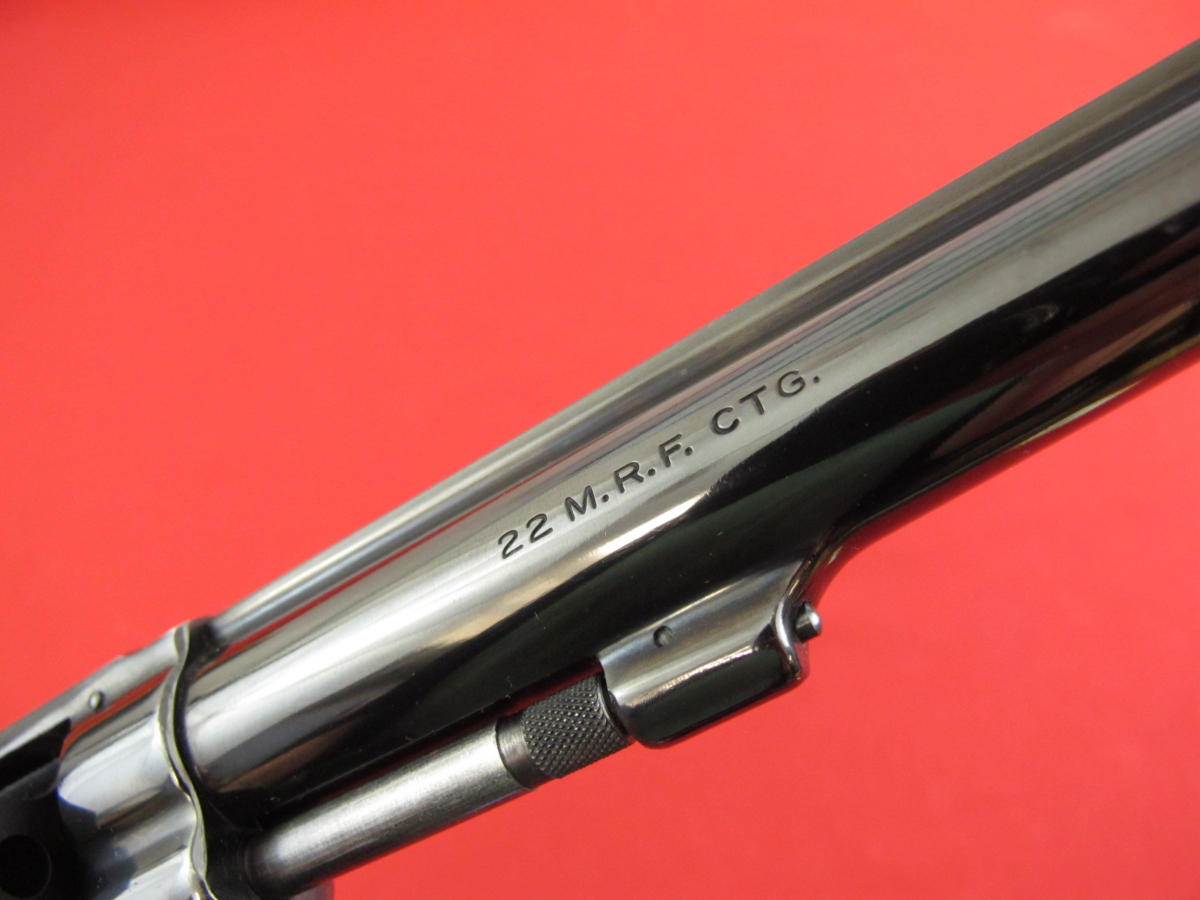
Several of the early Hand Ejectors were .22s. The first of these was the .22 Hand Ejector (LadySmith). Made on the tiny M-frame, it had a seven-shot cylinder and was chambered for the .22 S&W cartridge (which was the same as the .22 Long). It was in production from 1902 through 1921, with three model changes and serial number ranges.

Among the early Hand Ejector models were small-frame .22 models such as this Ladysmith.

Smith & Wesson resurrected the name, written “LadySmith,” in 1990 for a 9mm semi-auto and later for a J-frame .38 Special, which is still in the catalog.

The Bekeart Model

The .22-32 Hand Ejector had an interesting beginning. A San Francisco gun dealer named Philip Bekeart came up with the idea for Smith & Wesson to build on the .32 Hand Ejector I-frame a .22-caliber model with a 6-inch barrel and adjustable sights. He believed in the concept so much that he placed a special order in 1911 for 1,000 of these revolvers. These guns became known as Bekeart models and are highly collectible. Only 292 of the first 1,000 guns were delivered to Bekeart, and some went to other dealers. It was 1915 before Smith & Wesson put the model into regular production.

Bekeart models were not marked, so identifying them can be confusing. Serial numbers were included in the range of those for the .32 Hand Ejector (from 138226–139275), but there was a special and separate series of serial numbers stamped on the buttstock of the first 3,000, beginning with the letter “I.”4 Some collectors consider any .22-32 Hand Ejector with a letter showing shipment to Bekeart’s gun shop to be a Bekeart model. This revolver remained in production until 1941.

The N Size

The largest frame for Smith & Wesson revolvers for nearly 100 years was the N size. It was designed for a new cartridge, the .44 Special, and came aboard the S&W train in 1908. Based on a lengthened .44 Russian case, the .44 S&W Special could hold three more grains of black powder under a round-nosed, 246-grain lead bullet.5 (Some .44 Special fans might disagree with the statement that the cartridge was originally loaded with black powder, but six-gun guru John Taffin says so in Gun Digest Book of the .44.)


More Gun Collecting Info:


The Triple-Lock

The complete name of this revolver was quite a mouthful: .44 Hand Ejector First Model (New Century, Triple-Lock, .44 Military Model of 1908). Buried in the name is a feature that referred to the lockup of the cylinder; this feature became one of the nicknames of the model: the Triple-Lock. It was also often called the New Century.

In the Gun Digest Book of the .44, Taffin describes it as “the epitome of double-action six-guns: The New Century, alias the .44 Hand Ejector First Model, which would forever be known to its loyal followers as the Triple-Lock … In addition to enlarging the frame, two other improvements were made. A shroud was added to the bottom of the barrel to enclose the ejector rod, thus not only protecting the ejector rod, but also improving the looks of the S&W revolver. The second, unfortunately short-lived, improvement was the addition of a third lock, giving the Triple-Lock its unofficial name. Before, the .44 Hand Ejector First Model S&W cylinders locked only at the rear of the cylinder and at the front of the ejector rod. On the New Century, a third lock was brilliantly machined in the front of the frame at the yoke and barrel junction to solidly lock the cylinder in place.”

SW Values

Interestingly, the Triple-Lock was in production only seven years. Apparently, in 1915, someone at Smith & Wesson decided that the third lock was too expensive to manufacture, and it was eliminated—as was the shroud around the ejector rod. Following the changes, the price of the revolver was reduced from $21 to $19.

About 15,375 Triple-Locks were made before the changes took place; most, but not all, were .44 Specials. A limited number was chambered in .38-40, .44-40, .445 Colt and .455 Mark II.

The .44 Hand Ejector Second Model—as it was now known—was made from 1915 to 1917, when wartime work called a halt to large-frame revolver production. The model returned to the S&W line in December 1920 and remained there until 1940.

The Third Model

Another popular .44 Hand Ejector model, called the Third Model or the Model of 1926, was added in that year. It was identical to the Second Model except for the return of the ejector rod shroud. Smith & Wesson received a large number of inquiries asking for the heavier barrel lug—many from law enforcement agencies wanting a slightly heavier revolver. The Third Model was a special-order gun until July 1940, when it was listed in the Smith & Wesson catalog shortly before it was discontinued. It was reintroduced in 1946, following the war.6

For more historical and technical information on these great revolvers, the books listed below in the footnotes are excellent sources.

FOOTNOTES
1, 6: History of Smith & Wesson, Roy G. Jinks, Beinfeld Publishing, 1977
2, 4: Standard Catalog of Smith & Wesson, Jim Supica and Richard Nahas, Gun Digest Books, 2004
3, 5: Gun Digest Book of the .44, John Taffin, 2006

Categories
Darwin would of approved of this! Dear Grumpy Advice on Teaching in Today's Classroom If I was in Charge

Me, me, me & I went to one of them !!

Categories
All About Guns

A WINCHESTER MODEL 1886 LIGHT WEIGHT TAKE DOWN RIFLE IN CALIBER 33 WCF

Categories
Well I thought it was funny!

I am counting on you Folks about this

Categories
All About Guns

A trio of double rifles by Holland and Holland made between 1887 and 1938.

Categories
All About Guns The Green Machine War

“Limited Standard” The Story of the M1919A6 Machine Gun from the American Rifleman

The M1919A6 Machine Gun


Private First Class Ralph Kollberg, a combat veteran of the U.S. Army’s 77th Infantry Division, poses with his M1919A6 machine gun on Okinawa, May 14, 1945. Despite the gun’s 32-lb., 8-oz., weight, it was far more portable than the tripod-mounted M1919A4.

One of the most popular and effective U.S. small arms of World War II was the M1919A4 light machine gun. Despite the almost universal accolades heaped upon the M1919A4, the U.S. Army Ordnance Dept. continued to seek ways to increase the gun’s utility. While attempting to improve upon existing designs is not a bad thing in and of itself, sometimes the “Law of Unintended Consequences” comes into play. 

A good example of this in the realm of World War II U.S. military arms was the Model 1918A2 Browning Automatic Rifle (BAR). As a brief review, when the M1918 BAR was fielded late in World War I, it was an immediate sensation and was, hands-down, the best gun of its genre in the world at the time. The Ordnance Dept. couldn’t leave well enough alone, however, and after World War I, the BAR was subsequently fitted with all manner of attachments that were intended to improve it, including bipods, stock rests, folding buttplates, receiver magazine guides and carrying handles. The popular selective-fire feature allowing either full-automatic or semi-automatic operation was discarded on the M1918A2 version and was replaced with a full-automatic-only mechanism consisting of “slow” and “fast” cyclical rates of fire that few of the users liked, or employed, and which was prone to malfunction.

Most of these “improvements” offered few real advantages but seriously mitigated one of the major hallmarks of the original design—its comparatively light weight and handiness. This resulted in many of the users disregarding or stripping off as many of the extraneous features as possible, especially the bipod, in an attempt to put the gun back in the configuration originally designed by John Browning. 

M1916A6 machine gun in Germany

U.S. Army troops are seen here in Germany in early 1945 firing an M1916A6 machine gun. Note also the holstered M1911-pattern pistol on the shooter’s equipment belt and the M3 fighting knife retained by the straps of the M1943 boots worn by the G.I. at right.

A similar scenario occurred during World War II with the M1919A4 machine gun. Since before World War II, the U.S. military had been seeking a gun that could fill the perceived gap between the BAR and the M1919A4. Several designs were evaluated in 1941 and early 1942, but none were deemed to be satisfactory. As the war progressed, there were increased requests for a machine gun of this type. Although the M1919A4 was widely used with notable effectiveness during the war, there were some negative points cited in a 1943 Marine Corps evaluation of the gun:

“Some weapons platoon leaders believe the gun (M1919A4) to be too slow in getting into action and the crew too vulnerable. It is suggested that a new mount for close in jungle fighting be designed, on the order of the bipod and butt-rest similar to the BAR M1918A2 with the addition of a carrying handle on the barrel jacket similar to the British Bren.”

The Ordnance Dept. wanted to develop a new type of gun with the attributes that were being sought and resisted the suggestions to simply field a modified M1919A4 instead. A World War II Ordnance Dept. report stated: “[It] is believed that no advantage would accrue in recommending a modification of the M1919A4 machine gun at this time, as such modifications would meet the approved military characteristics of the light machine gun in part only.”

The Infantry Board did not agree with the Ordnance Dept. assessment and was of the opinion that a modified M1919A4 might not be optimal, but it would fulfill the requirements until a more suitable type of firearm could be developed.

As documented in an Infantry Board report: “The Infantry Board favors a project by the Ordnance Department for the development of a light machine gun. However, based on past experience, the Board believes that the time consumed in the development, technical testing, production of pilot models, service testing, adoption as standard for issue, set up for manufacture and distribution to the services will be so great that under the best of conditions of accelerated procedure, it will be a distant date before the weapon can be placed in the hands of the troops. These modifications for the M1919A4, namely a lighter barrel, no muzzle plug, an 041 spring, a bipod and a shoulder rest … should present no great manufacturing difficulties, and after the items are manufactured, the modifications can be made in the field. If this is accomplished, the services would have a flexible and satisfactory light machine gun at an early date, certainly many months before a new type of light machine gun can be developed and distributed.

“While these modifications [of the M1919A4] do not constitute the ultimate in the development of a light machine gun, they do give a satisfactory gun in a minimum amount of time and manufacturing adjustment.

“The Infantry Board considers the modification of the M1919A4 Machine Gun a matter of major importance to the infantry … and recommends that action be taken to accomplish this modification … .”

This position was very much akin to the hoary old saying, “Perfect is the enemy of the good” or, to paraphrase Gen. George S. Patton, “A good plan now is better than a perfect plan later.” The Infantry Board prevailed, and the modified M1919A4 was recommended for adoption as the “M1919A6.” As stated in the book Machine Guns Of The United States: “The most recent modification of the Model 1919A4, for infantry use, is the Model 1919A6 which incorporates a pressed-metal shoulder stock, a carrying handle, and a bipod similar to that used with the Browning Automatic Rifle. This results in a light machine gun—classed as substitute standard—suitable for air-borne troops as well as for general use. Though the barrel of this gun weighs 2.5 pounds less than that of the 1919A4, the two are interchangeable. This model became substitute standard on April 10, 1943.”

The M1919A6 machine gun was succinctly described by noted author and former Ordnance Dept. officer, the late Konrad F. Schreier, Jr.: “[T]he most unique gun in the M1919 series was the M1919A6. It featured a detachable shoulder stock, a folding bipod on the end of the barrel, a carrying handle, a different barrel bearing than the M1919A4 and a lighter barrel.

Its basic action was identical to the air-cooled M1919A4 machine gun. The gun weighed 32.5 pounds, which made it 12.5 pounds lighter than the M1919A4 mounted on the M2 tripod. A total of 43,479 M1919A6 light machine guns were produced during World War II by Saginaw. However, a number of M1919A4 machine guns were also converted into M1919A6 configuration. The M1919A6 machine guns were manufactured from very late 1943 through 1945. The M1919A6 machine gun could also be used with the M2 tripod if necessary.”

The Ordnance Dept. was not a big fan of the M1919A6, and basically felt that the gun was foisted upon it by the Infantry Board. Paradoxically, while the Infantry Board was successful in lobbying for acceptance of the modified M1919A4, as events transpired, the Board wasn’t overjoyed with the M1919A6 either.

As related by author Dolf Goldsmith: “[T]he Ordnance Department … was most unhappy about their inability to create and supply the infantry with what they had requested … . After the M1919A6 was accepted, testing began anew. Every conceivable facet of the gun was tested … throughout the spring and summer of 1944 … the infantry was … less than happy with the M1919A6, but there was simply nothing else available that could have been used instead. This grudging acceptance is well brought out in one of the test reports, which concluded:

“That the Production Model, Machine Gun, Caliber .30, M1919A6 is substantially equal to the pre-production model as tested and approved, and is satisfactory as an intermediate type.

“That the Machine Gun, Caliber .30, M1919A6, is not a satisfactory light machine gun for infantry use.

“The Infantry Board recommends:

a. “That no action be taken looking at any modification or change in the Machine Gun, Caliber .30, M1919A6.

b. “That development of a more suitable light machine gun for infantry use be pushed.”

It seemed the Infantry Board was talking out of both sides of its mouth. On the one hand, it was stated that the M1919A6 “ … is satisfactory as an intermediate type … .” But in the next sentence stated it “is not a satisfactory light machine gun for infantry use.” Reading between the lines of the Infantry Board report indicates that no more effort should be expended in trying to tweak the M1919A6 any further, and the document closed with the recommendation that the development of a better light machine gun be expedited. As events turned out, this didn’t happen until 1957 with the adoption of the M60 machine gun, which was intended to replace all the Browning .30-cal. machine guns, and the BAR, as standard issue. Throughout its service life, the M1919A6 was designated as “Limited Standard.”

Saginaw M1919A6

In total, 43,479 of the belt-fed M1919A6 light machine guns were manufactured from late 1943 through 1945. Note how the receiver markings on a Saginaw M1919A6 reveal a slightly misaligned “6” hand-stamped into the model designation (inset).

Contracts were placed with the Saginaw Steering Gear Division of General Motors for the manufacture of the M1919A6. In 1944, 23,329 of the guns were made, with an additional 20,150 produced in 1945, for a total of 43,479. It was a simple matter to convert existing M1919A4s to M1919A6 configuration, and kits to accomplish this conversion in the field were produced.

Examples of M1919A4s modified to M1919A6 configuration have been noted with the last digit “4” being defaced and a “6” overstamped. It is not known how many were modified in this way. Also, later in the war, when many of the light tanks were withdrawn from service, the M1919A5 tank machine guns were removed and converted into M1919A4 or M1919A6 configuration, typically with the “5” similarly being overstamped to “4” or “6”.

The U.S. Army airborne units were issued M1919A6 machine guns, as it was felt that the gun would be better-suited for use by the paratroopers since it was lighter and did not require a tripod. They proved to be unpopular with many of its users. As is the case with most “compromise” arms, it didn’t really excel at any one thing. While it fired at a slightly higher cyclic rate than the M1919A4, it wasn’t any more effective in laying down fields of fire than its predecessor. The M1919A4 and the M2 tripod were carried by the gunner and assistant gunner, respectively, and the M1919A6 (which was heavier than the M1919A4 sans tripod) was carried by a single gunner. The M1919A6 could be mounted on the M2 tripod, but that would defeat the entire purpose of the gun. The gun was too heavy to be a true light machine gun, and it didn’t have the stability of a tripod-mounted gun.

There was a reason why the M1919A6 was always designated as “Limited Standard.” While it wasn’t horrendously bad, the M1919A6 simply wasn’t very good at its intended purpose of being a light and easily portable machine gun. There’s nothing wrong with trying to modify a design for uses other than those for which it was originally designed, but that doesn’t mean such efforts will always produce stellar results. The M1919A6’s major, if not sole, advantage was its ready availability. As stated, it was believed that the time required to design, test and manufacture an entirely new light machine gun would have taken too long.

M1919A6 machine gun fitted with a blank-firing adapter

(l.) U.S. Army soldiers, possibly in the post-World War II era, are seen here training with an M1919A6 machine gun fitted with a blank-firing adapter. The gun remained in service well into the Vietnam War. (r.) American troops serving in Germany, in 1945, fire an M1919A6 light machine gun from behind a wall through an embrasure cut into the structure.

It is a little-known fact that the Ordnance Dept. did embark on a program to produce a virtual copy of the excellent German MG42 machine gun chambered for the .30-’06 Sprg. cartridge. Such a gun would likely have filled the role envisioned for the M1919A6 superbly. However, these efforts did not work out very well. The developmental contract to fabricate a copy of the German MG42, to be designated as the “T-24,” was granted to the Saginaw Steering Gear Division of General Motors.

Like the M1919A6, the gun was envisioned as a replacement for the BAR and the M1919A4 machine gun and was designed so it could be used with the M2 tripod as well. The length of the American .30-cal. cartridge as compared the MG42’s 7.92×57 mm cartridge required that the German design essentially be re-engineered. However, the prototype gun functioned quite poorly in initial testing. It was soon discovered that a draftsman had not properly accounted for the differences in the dimensions between the American and German cartridges, and the receiver was about a 1/4″ too short, which resulted in the numerous malfunctions. The amount of additional engineering work to properly re-design the prototype was not considered to be worthwhile, and the project was canceled. This resulted in the gun being discarded and the M1919A6 being adopted instead. It has been suggested that there was an element of the “NIH (not invented here) Syndrome” involved in the decision to abandon the .30-cal. MG42 project and accept, albeit reluctantly, the M1919A6. It may not have been as good as a properly engineered .30-cal. MG42, but it was felt to be better than the alternative, which would have been nothing.

Like the M1919A4 machine gun it was based on, the M1919A6 remained in service well into the Vietnam War era. It is fair to say that the M1919A6 was not one of the best-loved American arms of World War II, even though the gun’s basic mechanism, the .30-cal. Browning, was held in high esteem. It has been said that the M1919A6 machine gun was akin to the old adage that “a camel was a horse designed by a committee.”


The foregoing was excerpted from the author’s comprehensive work U.S. Small Arms Of World War II. The 8 1/2″x11″ book contains 864 pps. and is lavishly illustrated. Contact: Mowbray Publishing, Inc.; (800) 999-4697; (gunandswordcollector.com).

Categories
All About Guns

Lugers for the Dutch East Indies Army

Categories
Gear & Stuff

NEW XS SIGHTS R3D NIGHT SIGHTS FOR KIMBER K6S REVOLVER WRITTEN BY HANDGUNNER STAFF


Owners of the Kimber K6s compact, stainless-steel revolver who have trouble seeing their factory sights or simply wish to upgrade for better front sight visibility, day or night, now have the option of adding the XS Sight R3D Night Sight — a 3-dot tritium notch and post sight.

The R3D front sight is equipped with XS’s proprietary Glow Dot with tritium center for dual illumination. The Glow Dot absorbs ambient light and glows in low light while also absorbing light from the tritium which continually charges the dot. This makes the front sight glow even brighter than the tritium rear sights which drives focus toward the front sight and downrange threat, enabling faster and more accurate target acquisition.

The high-contrast colored front sight is available in Orange or Green. The 2-dot, blacked-out tritium rear sight illuminates to facilitate proper sight alignment without outshining the front sight for accurate indexing.


R3D sights are CNC machined from solid steel bar stock by XS Sights’ in-house machine shop in Ft. Worth Texas and have a 12-year warranty on the tritium.

Gunsmith installation of these sights is recommended for the Kimber K6s as the front sight will need to be drilled for the retention pin. The R3D sights do not fit the Kimber K6xs.

The front sight retails for $73 and the front and rear sight set retails for $138. All XS Sights are backed by XS’s 30-Day Satisfaction Guarantee. For more information, visit XSSights.com.