Categories
All About Guns

This Won’t Be Good by KIM DU TOIT

So this little snippet arrived in my Inbox a while ago, sent on by Loyal Reader Max H., who asks, “Waddya think?”
Oh FFS.

The US Army’s PEO Soldier – Project Manager Soldier Weapons has issued an Request for Information (RFI) to obtain industry feedback on possible submissions to Sub Compact Weapons (SCW) evaluations. The specification details offered by the Project Manager Soldier Weapons (PMSW) are scant and extremely broad. Describing potential SCWs as being select fire weapons, chambered in 9x19mm and having MIL-STD 1913 rail (Picatinny Rail) space.
The RFI, published 2 May, makes no mention of physical dimensions such as size or weight and instead seeks to cast as wide a net as possible for potential submissions. It does, however, call for suppressors, spares and slings for the weapon (not holsters). Potential future SCW submissions will have to chamber ‘9×19 mm military grade’ ammunition – meaning both M882 ball and the new XM1153 Special Purpose 9mm Round from Winchester.
The RFI gives interested parties until the 18 May to submit their responses. It remains to be seen what purpose the SCW would serve and to whom it might be issued. If earlier Army references to a Sub Compact Weapon system are to be believed the new weapon is likely destined for rear echelon troops – in the traditional PDW / submachine gun role.

It starts when the new acronym SCW (Sub Compact Weapon) is used instead of the universally-known SMG (Sub-Machine Gun). (When did the .dotmil start this fucking bullshit? Never mind, I know the answer.)
People, this is not difficult. You take a simple, basic and easy-to-produce concept like the venerable M3 Grease Gun, add the doodads the Army wants, and away you go. Most of the serious firearms manufacturers like SIG, CZ or IMI could do this in their spare time, like over a couple weekends.

Why use the Grease Gun concept as the platform? Because it fucking works, as countless dead Nazis, Japs or Commies would tell you, if they could. With modern steel and production CNC machining, you could have a prototype put together in two weeks, and after a couple months of testing, into full production.
Which is kinda what the .dotmil did with the M3 (minus the CNC) back in the Big One, and it served until the 1990s when the .dotmil ditched it because OMG it wasn’t cool enough anymore. (That’s not the official reason, of course, but it’s the real one.)
Simplicity is just not gonna happen here, of course. What will emerge is some massively over-priced, over-engineered and over-complicated abortion which will be too heavy and too unreliable, because the current loose parameters of the RFI are going to be tightened and tightened until they cry for mercy, and the REMFs are going to get something which they’ll ditch in favor of their handguns at the first opportunity. Something like the HK MP7:

…which begs the question, “Why not just use the MP7?” (It sure as hell is ugly enough.) Of course, that would be just too simple. The .dotmil hates simple, which is why they got rid of the perfectly-capable M3 Grease Gun.
Also, the .dotmil would never adopt a foreign-made SMG with a simple operating mechanism — such as the MP7 or Kalashnikov’s KR-9 SBR (short-barreled rifle) — because OMG Russia, even though Kalashnikov USA is the same type pf corporation as Beretta USA (which supplied the .dotmil with the M-9 pistol, lest we forget).

And the KR-9’s operating system is simple — again that damning word — when we all know that the Pentagon will only consider whizzbang-gee-whizz-complicated guns because that’s how they’ve operated since WWII.
Never mind that everything the Pentagon wants is right there in that photograph, and ready to ship for testing tomorrow. But that would be too easy. Let’s rather take five years to reach a decision and end up with something that doesn’t work well, costs too much and will be in production only after a further five years. (The cost of the KR-9, in the quantities that the Pentagon would order, would be about $395 per piece. Unthinkable.)
And I haven’t even broached  the touchy subject of the .dotmil wanting to use the under-powered and pointless 9x19mm cartridge…
Bah.


Just so we’re all clear on the concept: I’ve fired some of the “modern” SMGs myself, notably the UziSkorpion, the MP5 and yes, the Grease Gun. Of all, the little Skorpion was the easiest to manage and the most reliable, probably because of its dinky lil’ cartridge. But neither the simpler Uzi or Skorpion designs will ever be used because old and made by furriners. Also, they just don’t look ugly modern enough for today’s Army.

Categories
All About Guns

Accurize Your Ruger 10/22 — Victor Company Titan Stock by IAN KENNEY

The .22LR is about as American as apple pie and it’s safe to say that no other .22 rifle is as American as the Ruger 10/22. Since the 1960’s, the Ruger 10/22 has been responsible for the countless shot-up cans, the taking of small game, and general fun having then just about any other .22LR made. This is for good reason. Similar to the AR-15, the 10/22 is manufactured in a way that makes it easy to swap out components to go from plinker to tack driver in no time. The most common way to do this is to swap the Ruger’s relatively thin factory barrel out for a heavy .920-inch bull barrel for better accuracy.

The Titan stocks are available in three, molded in colors. Black, Tan, and Green.

Since the factory stock’s barrel channel is only made for the thin barrel, the new bull barrel isn’t going to be able to just drop back down in the old stock, a new one is needed. Now, aftermarket stocks for the 10/22 are very plentiful and it’s easy to find one that can fit any budget but they are not without their pitfalls. For several years I had been using a Bell & Carlson 10/22 stock that closely emulated the B&C Light Tactical to create a sort of tactical trainer rifle. That stock was good but I decided an upgrade was needed and boy did I did I find it in the Victor Company Titan 10/22 stock.

The Titan pistol grip is nearly vertical so it’s very comfortable to shoot with a variety of positions. The texturing also keeps the hand firmly in position.

SPECS

  • Type: Aftermarket stock; fits Ruger 10/22
  • Material: Ultra-rigid engineering fiberglass; hardened aluminum bed anchor locking system
  • Finish: Black, FDE, OD Green
  • Features: Accepts free-floated barrels up to .920 in.
  • Rail: Mini Picatinny Rail section
  • Sling: QD swivel sling studs
  • Design: Ambidextrous
  • MSRP: $170
  • Manufacturer: Victor Company USA

Victor Company USA has been around for a while, mostly making aftermarket skins and accessories for the Accuracy International chassis systems. A few years ago they branched out and introduced a new stock for the Ruger 10/22, which I’m sure made some enthusiasts roll their eyes at “another Ruger 10/22 stock”. If you start to peel back the layers though and start going down through the features and specs, it’s easy to see that this stock isn’t just another 10/22 stock. For starters, when you take the Titan out of the box the feel and quality of the stock belies its relatively low price point of just $170. It’s constructed not of cheap plastic or laminated wood but from a rigid fiberglass composite resin with hardened aluminum inserts to help support the action. The stock will fully free float a .920 bull barrel with room to spare and multiple sling attachment points and methods mean that a variety of slings can easily be used for carrying or shooting the rifle. It’s available in three colors, but the finish isn’t painted on, the colors are molded in for maximum durability over time without any peeling or chipping. The profile and feel aren’t too dissimilar from some of the popular tactical rifle stocks such as the McMillan A3 or Manners T2 so it can be a good choice for someone wanting to put together a .22 that mimics their centerfire rifle.

Even with the heavy target barrels there is more than enough room to spare.

As I said before, I’d been using a B&C stock for quite some time but it had its quirks. The receiver area was tight and I ended up having to relieve some material with a file in order to get the safety to function properly and have magazines drop free. The stock also didn’t completely free float the barrel, it had two barrel pads at the front and rear of the barrel channel for support. This meant that if I wanted to sling up to practice positional shooting I could count on my zero shifting in some form or fashion. In the B&C stock the rifle was also prone to experiencing inexplicable zero shifts, which was a bit annoying, especially if I was looking for accuracy and precision. Many of these issues could’ve been cured by pillar bedding the action but that is a time-consuming and messy affair I’d rather do without. Bedding a traditional stock like the B&C for a Ruger 10/22 involves installing a front bedding pillar, relieving the rear of the stock to create a shelf, and then bedding the rear of the receiver to that shelf. Most people that are looking to make enhancements to the 10/22 simply want to able to put a new barrel on, drop it in a stock, tighten a screw, and hit the range. This is where the Titan 10/22 stock comes in.

Not only is the stock equipped with flush cup mounting points but also features standard sling swivels and accommodations for a front Picatinny rail for QD bipods.

The Titan 10/22 stock isn’t really like other 10/22 stocks because it has what Victor Company calls the Anchor Lock System, which creates a chassis-like bedding interface for the receiver. It starts in the back of the receiver channel where a hardened aluminum insert creates a cozy shelf for the rear of the receiver to rest on. In many ways, it’s just like in a traditional 10/22 stock that has been relieved and bedded but with a twist those other stocks don’t have. The aluminum insert has a threaded hole that you use to insert a nylon tipped set screw so that it just barely protrudes out of the bottom. The nylon tip contacts the trigger assembly hanging below the receiver as it’s inserted into the stock and creates a bit of a wedge action that holds the rear solid. The front takedown screw is likewise well supported by a generous bedding pillar that has a surface area almost equal to the v-block holding the barrel on. When done correctly you should not feel any movement between the rear of the receiver and the stock when you flex the barrel as it sits in the barrel channel. I will say that I had to do zero inletting or fitting to the stock to get the magazines to drop free or the safety to engage properly. This wasn’t by chance though, Victor Company intentionally enlarged those areas to have additional clearance to mitigate any fitment issues across the wide range of aftermarket parts for the 10/22. At this point the receiver is locked in, the barrel is fully free floated back to the v-block, and it’s ready for some range time.
Article Continues Below

The front grip of the Titan stock is textured to limit slipping and features flush cup mounting points on both sides.

To be fair, this isn’t my first outing with my Ruger 10/22 in the Titan stock, I’ve actually had it for a few months but this is the first time that I’ve had the action in and out of the stock without confirming my zero. This would be a good test of the stock’s zero retention capabilities that I could then use to compare to my experiences with the B&C stock. My plan for the range was pretty simple, get a zero at 50 yards, shoot some groups, maybe do some positional stuff, and basically just have fun. You know the typical stuff that you do with a 10/22. Well, I couldn’t quite get 50 yards in the bay that I was in but I could get 45 yards so that would just have to do. At first, my intent was to shoot a partial box of Aguila rimfire ammo only in hopes of getting on paper and then getting a final zero with CCI Mini-Mags. Instead what happened is that I shot three very impressive groups with the Aguila that were so close to the original zero that I didn’t have to make much of an adjustment to the scope to the get the rounds hitting to point of aim. The first ten shot group measured about 5/8 inch, and it was really nothing more than a large hole in the paper. The next two ten shot groups both measured right around 3/4 inch but I was noticing that the groups were staying fairly consistent.

The barrel channel free floats the barrel and it can readily accept heavy .920 bull barrels.

This author was very satisfied with the accuracy performance of the rifle after being dropped into the Titan stock. The average group size for all 60 shots on paper was .676 inch.

I haven’t shot much of the Aguila ammo but I was liking what I was saw. I switched over to my usual CCI Mini-Mags to double check the zero on the scope and let loose with the first 10-round magazine. The first shot went a little low right but the next nine shots created a ragged hole just a little left of center, I almost couldn’t believe how good the group was. Keep in mind that CCI Mini-Mags are not match grade .22LR bullets so to me this kind of accuracy was awesome. I shot two more 10 shot groups with the CCI Mini-Mags before I concluded that after taking the action in and out of the stock twice, the elevation required no adjustment and I only needed to add .2 mils of right adjustment to get it shooting to point of aim. That is pretty darn good considering that in the B&C stock if I had to remove the action for cleaning or switch out parts, I could count on the zero shifting considerably. I measured all six groups with the smallest 10-shot group being .530 inch while the largest group was .903 inch. When I averaged the groups together it yielded an aggregate group size of just .676 inch over 60 shots between two different brands of ammunition. I can tell you honestly that I’ve never seen that kind of consistency and accuracy when the rifle was installed in the B&C stock.
I’m also happy to report that slinging up in shooter’s sling to add some stability in the sitting or kneeling positions also didn’t have a negative impact on the zero. The Anchor Lock system and the free floated barrel allowed me to really get some tension on the sling so that I was pretty steady looking downrange. I’d found some clay pigeons that got left on the range so I threw a few out and loaded up another magazine to see how well I could break them up from the kneeling. The comfortable grip angle, texturing in all the right places, and consistent accuracy that was afforded to me by the Titan stock meant that nine out of the tens shots broke those pigeons up into small bits. I spent a good portion of the afternoon ringing some of the steel targets and thoroughly enjoying this little rifle. The Titan 10/22 stock has breathed a little fresh air into this Ruger that I’ve had since I was 14 years old and it was a complete drop-in affair. It’s pretty hard to not like that.

Tin cans, varmints, and targets beware, the Titan stock is here.

Not only will Victor Company USA sell you the Titan 10/22 they also have accessories for the stock that some might find quite useful. There’s a cheek riser system that screws into the comb of the stock to tailor the stock to the shooter’s eye so they’re more comfortable behind the gun. A small Picatinny rail section can be attached to two pre-installed holes in the forend near the front swivel stud that allows a shooter to attached their Atlas or other quick detach bipod. To some people, the Titan 10/22 may not be the prettiest stock or the lightest but it does offer a solid set of features at an incredibly affordable price that makes it an excellent choice for those wanting to enhance the performance of their 10/22.
For more information about Victor Company USA, click here.
For more information about Aguila ammunition, click here.
For more information about CCI Mini Mags, click here.
To purchase a Ruger 10/22 on GunsAmerica, click here.

Categories
All About Guns

A .357 Magnum Research Desert Eagle — History, Movies & Action by WILL DABBS

“The fact that you’ve got ‘Replica’ written down the sides of your guns…and the fact that I’ve got ‘Desert Eagle point five O’ written down the side of mine… should precipitate a shrinking of your presence.”
Thus uttered Bullet-Tooth Tony in the Guy Ritchie movie Snatch, generating some of the coolest gun-related dialogue ever put to celluloid. If you haven’t yet seen the movie then stop what you’re doing and surf on over to Amazon.com. They will rent it to you for $3.99.  It will change your life.

Thanks to its broad cinematic exposure in movies, TV, and video games, the Magnum Research Desert Eagle is one of the most recognizable firearms in the world.

Origin Story

The Desert Eagle is a unique and iconic firearm. Though the Deagle, as most die-hard fans refer to the gun, has long been associated with the nation of Israel, naturally a gun this manly was originally born in America. The U.S. patent application for this gas-operated pistol was approved in January of 1983 under the auspices of Magnum Research Inc. The gun earned a second patent in December of 1985. After Israel Military Industries refined the design the gun went into volume production.
IMI built the gun until 1995 when MRI shifted production to Saco Defense in Saco, Maine. In 1998 MRI returned manufacturing back to IMI, now reorganized as Israel Weapon Industries. Since 2009, MRI has produced the Desert Eagle in the United States at its facility in Pillager, Minnesota. If ever there was a better town in which to produce guns than Pillager, Minnesota, I have yet to hear of it. Pillager just looks cool stamped on the side of the piece. Kahr Arms purchased Magnum Research in 2010 and they produce the Desert Eagle to this day.
I am pretty old, and I recall when the Desert Eagle first hit the streets. The first commercial chambering was .357 Magnum followed soon thereafter by .44 Magnum. Interestingly, the gun was actually marketed for military use back in the day. The angle was that this was an incredibly robust gas-operated handgun that offered unprecedented firepower in a handheld package. Nowadays we realize that there really isn’t much practical military application for packing a 4-pound semiautomatic .44 Magnum pistol, but these were the heady days of Dirty Harry so nobody was really thinking clearly.

SPECS

  •  Type: Hammer-fired semiautomatic pistol
  • Action: Gas-operated rotating bolt
  • Cartridge: .357 Magnum
  • Capacity: 9+1 rds.
  • Weight: 4 lbs., 8 oz.
  • Trigger: Single action
  • Barrel Length: 6 in.
  • Overall Length: 10.6 in.
  • Finish: Black oxide with custom finishes
  • Sights: Combat type, fixed
  • MSRP: $1,572
  • Manufacturer: Kahr Arms

Morphology

Like everything else about the Desert Eagle, the controls are massively oversized. Up is fire. Down is safe.

The Desert Eagle was indeed a unique design. Incorporating the rotating bolt from an M16 along with a proprietary piston-driven action, the Desert Eagle did a fine job of taming the magnum cartridges of the day. The mechanics of the gun are simply brilliant.
Gas taps off from the barrel and then feeds into a hole that serves as a cylinder. Into this cylinder slides a piston that is rigidly affixed to the slide. The slide then serves the same purpose as does a bolt carrier in a gas-operated rifle, pushing the slide back to unlock the rotating bolt via a cam mechanism. This rotating bolt has four locking lugs and an extractor on its right aspect. This component strongly resembles the 7-lug bolt from the M16 rifle. The fixed gas cylinder and its captive piston are very similar to those of the Ruger Mini-14 rifle.
The upside to all this complexity is that the Desert Eagle is most at home running heavy magnum cartridges. Over the years the Deagle has been offered in .357, .41, .44, .440 Corbon and .50 Action Express. Swapping between cartridges requires only that you swap out the bolt, barrel and magazine. As the .44 Magnum and .50 AE share a common rim diameter changes between these two calibers require only a new barrel and magazine. The .440 Corbon is a .50AE case necked down to accept a .44-caliber bullet, and it therefore only requires a new barrel on an otherwise-stock .50AE Deagle.

The left-sided magazine release is a simple button in the expected spot. Magazines drop away freely.

The nature of the Desert Eagle’s gas system is such that it should only be used with jacketed bullets. Raw lead bullets can foul the gas port over time. The Desert Eagle barrel sports polygonal rifling that extends barrel wear and offers a modest increase in velocity over more conventionally rifled barrels. Magazine capacity ranges from nine rounds in .357 to eight in .41 and .44 and seven in .50AE and .440 Corbon. The .44 and .50AE guns are the most popular with the .357 pulling up third. .41 and .440 Corbon chamberings are currently out of production and tough to find as a result.

The single column magazine in the .357 Magnum Desert Eagle holds nine rounds.

The single action trigger on the Desert Eagle is creepier than that of your favorite 1911 but still serviceable.

The Desert Eagle sports a fairly crisp single action trigger and a massive slide-mounted manual safety. The trigger is not the equal of that of your favorite tuned 1911, but it gets the job done. The safety and comparably large scaled slide release are designed for shooters with huge monkey thumbs, but they remain serviceable enough. Magazines drop free quickly should you ever find yourself needing to run a Deagle fast.
The Desert Eagle design has evolved over the years offering variegated finishes and optics mounting options. However, throughout it, all the classic trapezoidal cross-section remains unchanged. Regardless of its practical capabilities, no other handgun has attained the level of cinematic popularity as has the Desert Eagle.

Film Credits

There were more than five hundred film and TV credits thus far that I could find. The Desert Eagle has been wielded by some of our favorite stars on both the big and small screens. The gun is also a staple in most first person shooter video games. The combination of the gun’s muscle-bound geometry and its pure unfiltered mass make the Deagle a favorite in the sorts of make-believe spaces where the gun’s bulk and four-pound weight don’t matter so much as might appearance and muzzle flash.
The Agents in the Matrix movies all packed Desert Eagles in shoulder rigs. Arnold Schwarzenegger wielded one in Last Action Hero, an underappreciated action gem that I like to describe as the Thinking Man’s Schwarzenegger movie. Eraser, Rambo III, Red Heat, Assassins, Double Impact, The Last Boy Scout, and Austin Powers featured the Desert Eagle as well along with many more.

Practical Tactical

While the Desert Eagle is indeed everything described above, actual trigger time on the range is fettered by the immutable dicta of Physics. Throwing a 300-grain half-inch bullet at 1,475 feet per second (fps) is going to produce some spunky recoil no matter what sorts of whiz-bang engineering you wrap around it. Pull my man-card if you must, but I have found that running a .50-caliber Desert Eagle loses its allure in fairly short order. Combine this with ammo that wholesales at a buck and a half a pop and you have the perfect recipe for a splendid wall hanger.
The .44 Magnum version is more fun. Ammo is cheaper and the recoil, while still impressive, is more pleasant than punishing. However, for pure unfiltered Desert Eagle shooting enjoyment, nothing beats the .357 Magnum.

The .357 Magnum Research Desert Eagle nicely tames recoil and produces some decent 15-meter groups from a simple rest.

I owned a .357 Magnum Desert Eagle back in the day. In a heady moment of impulsive stupidity, I traded mine to a guy at a gun show for a Beretta 92. The Beretta 92 was the Army’s new handgun at the time and I falsely assumed owning one would make me as cool as Mel Gibson in the original Lethal Weapon film. This is, incidentally, the same sort of irresponsible impulse that drives young American males to get tattoos and see if they can turn a lawn chair and a couple dozen weather balloons into a viable flying machine. Testosterone is the most potent poison known to man. When I tripped across a low mileage .357 Magnum Desert Eagle at a price I could stomach I jumped at it.
The Desert Eagle in .357 Magnum is actually fun to shoot. Recoil is more a pleasant shove than a punch, and with 9+1 rounds onboard the gun actually flirts with becoming a serviceable defensive weapon. When fired at dusk the gun produces a delightful bi-lobed muzzle flash that is visible from the International Space Station. The first piece jets out the muzzle while the second blasts downward from the gas port at the muzzle. Being in its very presence will reliably raise serum testosterone values.

Ruminations

Nobody needs a Desert Eagle handgun. There are countless more efficient home defense platforms, and it is the rare event indeed wherein a typical American might need to drop a charging hippo at bad breath range. Practicality is not what drives one to purchase such a massive pistol.
However, if you do decide you want a Deagle of your own and you can stomach having “.357 Magnum” rather than “.50AE” stamped on the side you will have lots more fun on the range. The bantam-weight Deagle is fun to run and won’t put you in the poor house buying ammo. The .357 Magnum is the Thinking Man’s Deagle.
For more information about the Magnum Research Desert Eagle, click here.
For more information about Winchester ammunition, click here.
For more information about SIG Sauer ammunition, click here.
To purchase a Magnum Research Desert Eagle on GunsAmerica, click here.

Categories
All About Guns

A Full House of Colts

Categories
All About Guns

Somebody's else's thoughts about the Colt Python

Wiley Clapp: This Colt Python Business

Wiley Clapp: This Colt Python Business
I may be dating myself to the detriment of my ongoing credibility, but I do remember the incident. No less of an authority than Maj. Gen. Julian Hatcher, editor of the prestigious American Rifleman, was commenting on a new product of a major American Arms maker. Colt Firearms had just introduced a completely new gun. As was the Colt custom, the gun was a six-shot revolver, but this one was fancy well beyond the norm. So much so that the good general wondered in print whether or not enough shooters would ever pony up $125 for a .357 Mag. revolver.

4″ barrel blued Colt Python
It was the mid 1950s and Colt had just announced a revolver they called the Python. That was better than 60 years ago and public acceptance of the big wheelgun has always been strong. As a matter of fact, General Hatcher would doubtless be completely dumbfounded at what he could get for a mint condition 1955 Python today. It might be as much as $5,000 to $6,000 and sure, a great deal of that differential is what has happened to our money in six decades. But a lot more is because the gun is a classic symbol of the best of old-time gunmaking. Mostly however, the astronomical price tags are a function of the fact that the supply of Pythons is finite. And they’ll never make any more.
There was plenty to get excited about in 1955, as the Python was a hell of a nice revolver. The exotic name might have been questionable in the minds of traditional shooters, but it seems to me that it gave just the right touch of adventure in the outdoors. The name followed the Cobra,  the very successful hideout revolver that was the first to use an aluminum frame. Essentially, the Cobra was a lighter version of the pre-war Detective Special. But the Python was not only a bigger gun, there was a bigger story behind it.
Just before the start of World War II, Smith & Wesson had scored a major coup with the first .357 Mag. known as the Pre-War Registered Magnum. Although Colt made .357s in the late 30s (Peacemakers and New Services), the Python was introduced to compete with a post-war version of the same S&W gun. (In ’55, no one knew what S&W had in store for post-war shooters, but they found out in 1956—the .44 Magnum). Colt management wanted to offer a premium revolver with traditional, visual and practical appeal. In other words, the new Python had to look like a Colt, but with a new sort of updated aspect and it had to shoot as well as anything they had ever made.
Bullseye shooting was very popular in those days and many shooters used special custom revolvers from King’s of San Francisco. These guns were usually medium-to-large frame Colt or S&Ws with longer barrels. They were fitted with precisely adjustable rear sights, ventilated ribs and their lockwork was tuned to perfection. For shooters who wanted a gun with a more forward point of balance, King also offered a weighted tube on the lower edge of the barrel. Originally, the idea was to mount a weight in such a way that it can be moved back and forth to stay at that “just right” point of balance. It worked rather well and was even used on the customized Colt Woodsman .22s. The major visual appeal to the King revolvers was used on the Python—the ventilated rib.
Initially, the Python came with a 6” barrel and weighed 43 ozs. The gun was instantly popular, but there was an almost immediate demand for a shorter version for police holster carry. The factory wasted no time in getting the four” ones in production. Snubbies (2 ½-inchers) came along a little later and Target .38s with impossibly long eight” barrels were sold in the waning years of Python popularity. And there is a handful of almost mystic 3” Pythons that command incredible prices in today’s market. Most Pythons were polished and blued, but nickel plating was also popular. A couple of other rough service plating systems came along and a complete stainless steel Python pleased the growing range of fans at its introduction in 1983.


6″ barrel Colt Python with blued (top) and nickel finishes
Everything about the big revolver was first class. It was polished and assembled by hand and if the action needed a few strokes of a stone, it got them. When the makers determined that the hollow, adjustable-weight barrel lug was not going to be a useful touch, it became solid. In any length, the Pythons had a comfortable, muzzle-heavy feel to them. Even with the hotter loads, there was serious weight to the gun and it did not beat you up with recoil. As pricey as they may have been, Pythons initially sold well and respectable numbers of the guns actually ended up in the basketweave holsters of the nation’s police officers.
It was in the early 1970s that I began to pay attention to combat shooting in general and Pythons in particular. I had taken a job with the Sheriff’s Department in Orange County, Calif., and even managed to geezer my way through their academy. As was the case with most of my fellow deputies, I used S&W revolvers. I grew familiar with the subtleties of that great S&W action and used guns of four different sizes—J, K, L and N. But I also paid attention to the Colts and fired them whenever I could. One of my academy buddies used a 4” Python and I ran over the PPC course with that one once in a while. Eventually, he decided to sell the gun and I was right there with the C-note that he needed. I knew that Dave had the Python come out of a suspicious holster one night and bounce across an asphalt parking lot. He was chasing somebody who richly needed to be chased. The big Colt landed right on the edge of one cylinder notch and it never locked up right—on that chamber—after that. The permanent and positive solution was a new cylinder, which I was saving to have done. It was safe to shoot, so I fired the gun a good bit before I could assemble sufficient bucks to have that accomplished. In the interim, the Python was stolen, along with seven or eight other nice shooters. My learning program with Colts was curtailed. That’s too bad, as I was getting downright respectful of the Colt system.

2.5″ barrel snub-nose Colt Python
Later on, I went into the writing business and got assignments that had me shooting Pythons from time to time. I always came away with respect for their accuracy and performance. As a police officer, I had been one of the fans of the so-called “Smython” revolver, which marries a Python barrel to a Smith K frame. This gives you Python accuracy and heft, plus the Smith action and reliability. A Python barrel cost $35 in those days and when it was mounted on a S&W action, the result was one damned fine PPC revolver. But time passed and most police agencies began to shift to high-capacity semi-automatic pistols. As police weapons, the revolver saw declining interest, even though Ruger’s GP100 and S&W’s L frames were the finest service revolvers ever made. Colt was running to catch up and never really did. Their DA revolvers were eventually all discontinued. Including that magnificent Colt Python.
The Colt Python revolver was made from 1955 ’til 2006, about 51 years. It was a black day for Colt people when the maker was no longer able to offer this gun to the American shooter. This was a firearm that demanded too much time from experienced craftsmen, so much so that its own excellence drove it out of the marketplace. In order to thrive in today’s mass-produced polymer world, a product has to enjoy a steady and continuing demand. Too many up and down spikes in sales send those who count beans into heart palpitations. But what has happened in the firearms second-market defies logic.

4″ barrel Colt Python with stainless steel finish
Some unknown, but relatively small, number of the original 600,000-odd Pythons were never fired. A much larger number of the guns were fired sparingly and most were fired even more. It is rare to see a Python that is worn out, but you do see guns that have been used heavily. I saw one at the Big Reno Show last year that had been through the patrol wars—nicks, small dents and no finish left. The guy wanted $1,300 for it. An early gun, had it been unfired and mint, he could have probably realized three times that. The Colt Python is the hottest gun in circulation.
This unusual and intense demand for pristine specimens has carried over to six other revolvers made by Colt in the latter part of the 20th Century—Cobra, King Cobra, Diamondback, Boa, Viper and the massive Anaconda. An excellent recent book—Seven Serpents—chronicles the production history of the seven. It is, however, with the Python that the values are out of sight. The gun was made in several different barrel lengths and finish variations, as well as specially marked special editions and custom shop engraved. Everything that is done to a Python that makes it different from all others increases its value—as long as the differences are factory original and in good taste. Any new Python lists for at least several thousand dollars. As an example of how crazy this is getting, I recently watched a rare 3” barrel sell on an on-line auction for two grand—just the barrel—not the whole gun.

4″ barrel Colt Python with nickel finish, circa 1975
In the pistolero’s vernacular, these guns are safe queens. Colt made them to be fired in their owner’s service, but shooting a mint or “minty” (whatever that means) Python at this point in time is stupid. It’s just as dumb as lighting your cigar with a C-note. There must be tens of thousands of good used Pythons in circulation, but there aren’t that many of them on the used gun shelf at your local gun store. I am guessing that guys who have one are keeping it to shoot and enjoy. They have doubtless concluded that they will never get another one. They won’t.
We have a major contradiction going on here. Once we had writers hard at work extolling the virtues of the Python as a shooting tool and now they wonder about how much one of these is worth—if they say anything at all. I am a shooter and I want to shoot these grand old guns, not put on kid gloves to admire them once a month when the moon is full. I have discovered a way to create a revolver that has every meaningful shooting characteristic of the Colt Python. Look to the next posting of “Clapp on Handguns” and I’ll explain it in detail. Then … well, we’ll just have to take them to the range … .
Categories
All About Guns

Somebody was a real hard case back then!

Categories
Allies The Green Machine War Well I thought it was funny!

Well I liked it!


Categories
Well I thought it was funny!

A real mans answer to everything Duct Tape it

Image result for women & duct tape memes
The only thing that it won’t fix is women problems but then we have divorce court for that! Enjoy
Grumpy


Categories
Uncategorized

Another tough Cop from the Bad Old Days

John Peter Gabriel – Lawman & Gunfighter

John Peter Gabriel

John Peter Gabriel

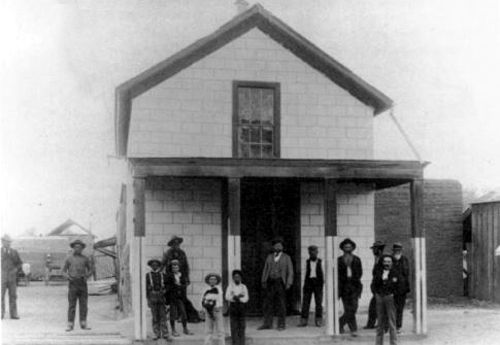
John Peter Gabriel (1838-1898) – A prominent lawman in Pinal County, Arizona in the 1880s, Gabriel pursued the Red Jack Gang and numerous other bandits. In 1888, he barely survived the Florence, Arizona Gunfight with Joe Phy.
Gabriel was born on November 17, 1838 in Kruft, Germany, the fourth of six children to John and Anna Schlauss Gabriel. When he was just nine years-old, he immigrated with his parents to the United States, where the family settled in Grant County, Wisconsin. Two years later, his father died and when his mother was unable to support the family 12-year-old Pete was taken in by a prominent lawyer named Ninian Whiteside, who soon joined the gold rush for California, moving his family and young Gabriel with him. When John grew up he worked in various professions before eventually making his way to Arizona, where he often worked in mining and at other times, as a lawman.
In 1877 , he was running a hotel at Silver King in Pinal County, when Sheriff Peter R. Brady appointed him a resident deputy. Gabriel’s popularity with local Democrats prompted him to run for sheriff against his boss the following year, he defeated Brady at took office in January, 1879.
He quickly established himself as one of Arizona’s finest and most-dedicated sheriffs, fighting lynch mobs and tracking down stage robbers, murderers, horse thieves and cattle rustlers. His skills with a gun were also well known, prompting one observer to say: “Gabriel was the finest pistol shot I have ever known, equaling, I am sure, the best the West ever produced.”
Somewhere along the line, he hired a man named Joseph Phy, an experienced law officer, to become his deputy. The pair who had previously known each other in the law enforcement capacity were friends. However, in 1883 he fired Phy for disorderly and drunken conduct and later arrested him in Case Grande, Arizona for assault.
Gabriel left the office of sheriff at the end of his term in 1886. He spent much of his time at his mine in the Dripping Springs Mountains, only occasionally coming to town to buy supplies and conduct business. That same year, Phy decided to run for sheriff and despite their past differences, Gabriel initially supported him for the job. However, at some point he withdrew his support and the two former friends soon became bitter enemies.

Tunnel Saloon, Florence, Arizona

Tunnel Saloon, Florence, Arizona

After two years of simmering anger, both men were in Jack Keating’s Tunnel Saloon in Florence, Arizona on May 3, 1888. Before long an argument erupted that quickly escalated to the point that Phy went out on the street, calling Gabriel out. Both men went for their guns and a blazing gunfight occurred. After eleven shots had been fired, Gabriel was wounded in the groin and in the chest and staggered to a nearby stable where he collapsed. Miraculously, he would survive. Phy; however, was not so lucky. Also seriously wounded, he lived but four hours. Gabriel stood trial for the killing but was exonerated on the grounds of self-defense.
Peter Gabriel spent the next decade prospecting in Arizona and northern Mexico before returning to work his old claim – the Monitor Mine on Mineral Creek. At the age of 59, he drank some poisonous water, probably laced by arsenic used in mining, and for a week, he lay alone and deathly ill in his cabin. Finally, his mining partner found him there on July 28, 1898. Gabriel died the next day and was buried near the mine.
In reporting his death, the Phoenix Herald said, “He was a bold and fearless man, a good officer … Pete Gabriel probably carried more scars at the hands of the lawless element than any other man in the southwest.”
By Kathy Weiser-Alexander, September, 2017.
Sources:
Auer, L.C.; Gun Grudge in Florence
Boessenecker, John; Pete Gabriel: Gunfighting Lawman of the Southwestern Frontier; The Journal of Arizona History; Arizona Historical Society, Spring, 2012.
Find a Grave
True West Magazine
Also See:
Lawmen of the Old West
Old West Gunfights
Arizona (main page)

Categories
Born again Cynic! California

Just another reason on why I want to leave California !

 Pop goes a tradition: county cracks down on free popcorn in hardware stores
Around San Diego County, a hot, salty, buttered controversy has popped up.
Should hardware stores offer free bags of freshly popped popcorn?

While that may look like a warm, welcoming treat, free popcorn is a threat to public health — or so argue county officials. Last month, health inspectors raided La Jolla’s Meanley & Son Hardware, warning that its old-fashioned red popcorn machine is a germy outlaw.
“They explained we didn’t have the proper permits,” said Bob Meanley, whose shop had handed out 30 to 40 bags every day for about 25 years.
To comply with the 1984 California Uniform Retail Food Facility Law, Meanley & Son would need to install a three-basin sink to clean and sterilize the popcorn popper. Also required: regular inspections, just like a restaurant.
Meanley declined and instead rolled the offending machine into storage. Thus ended a tradition he had started 25 years ago.
“I hate to take away something that our customers really like,” said Meanley, whose grandparents founded the hardware store in 1948. “On the other hand, this whole thing has made me more aware of our liability.”
While closely associated with movie theaters, popcorn is also tightly linked to neighborhood purveyors of hammers and screwdrivers. The connection is seen in shops from Cambridge, Mass. (Tags Ace Hardware) to Lakeside (Payton’s True Value Hardware).
“The little kids get a kick out of it,” said Dianne El-Hajj, co-owner of Payton’s, where the free treat has been a staple since 1997. “They come in for the popcorn and dad comes in for the tools.”
The county Department of Environmental Health, for its part, has a long tradition of cracking down on these scofflaws. Three years ago, inspectors cited Encinitas’ Crown Ace Hardware and San Carlos True Value Hardware.
“The Health Department came in,” said San Carlos True Value manager Danielle Matheny, “and told us if we wanted to continue giving away free popcorn and coffee we’d have to install a bigger vent system, a bigger and better sink in the break room — a lot of rules and restrictions they put on us.”
In both Encinitas and San Carlos, the stores dropped the practice. Inspectors so far have ignored Payton’s, but El-Hajj figures it’s just a matter of time.
“I feel sad,” she said, “that some of the old traditions we have become so regulated.”

Grimy fingers

At the oily heart of this tale, there’s a hard kernel of concern. Food-borne illnesses annually sicken an estimated 48 million Americans, leading to 128,000 hospitalizations and 3,000 deaths.
Food poisoning, the Department of Environmental Health warned, is just one potential problem with free popcorn.
“Potential health hazards include but are not limited to risk of foodborne illness, cross contamination, improper storage of equipment and foods, unsanitary equipment, and vermin,” a department statement maintained. “According to the Center for Disease Control and Prevention, cross contamination of food through unclean equipment and improper food handling or hand washing are major contributors to foodborne illness.”
Yet, none of the hardware store proprietors contacted for this story had heard of customers falling ill after partaking of popcorn.
Still, some worry that this is unsanitary.
“We had a customer complain,” said Martin Lopez, a salesman at Hillcrest Ace Hardware, which abandoned free popcorn a few years ago. “I guess it was because people were not wearing gloves. Anybody could stick their hands in there and take the popcorn.”
Meanley & Son’s fate was sealed with an anonymous tip phoned into the authorities. Employees popped the corn, but the rest of the operation was self-serve, with a scoop and bags set out for patrons. The tipster claimed some folks stuck their bare, potentially grimy, fingers into the machine, plucking out crunchy handfuls.
On a recent afternoon, though, the focus was less on public health than on the public’s loss.
“Because one guy complained,” said Joe Guiney, a regular customer at Meanley & Son, “it was ruined for everyone else.”
“People are very upset,” said Cathy Jones, head cashier at Meanley & Son. “Even if they didn’t eat the popcorn, they appreciated the aroma.”

End of an era

Hardware stores aren’t alone in seeing the customer-pleasing potential of free popcorn. When Rough Draft opened in Miramar in 2012, the brewery’s owner sought — and obtained — official clearance.
“I called the health department and said, ‘Hey, we’d like to serve popcorn but we don’t have a kitchen,’” said Jeff Silver, Rough Draft’s owner and brewer.
“They said, ‘We don’t really consider popcorn food, so you’re fine.’”
Rough Draft now has a kitchen, and the popcorn machine has been transferred to the brewery’s pub on the UC San Diego campus. The machine is still popping, but for a price.
“Our days of free popcorn,” Silver said, “are over.”
Mor Furniture for Less’ four outlets across the county all offer free popcorn. But this chain obtained the proper health certificates and posts its “A” rating, like a restaurant.
San Diego libraries, too, sometimes offer free popcorn at in-house movie screenings, a practice that has gone unquestioned.
“We have not been contacted by anybody either way,” said Shaun Briley, manager of the La Jolla/Riford library branch. “How about we have everybody sign a waiver?”
Briley paused. Then he said, “That was a joke.”
How about the end of the free popcorn era? Is that a joke, too?
“People say, ‘You’ve got to be kidding,’” said Meanley & Son cashier Jones.