Hitler definitely died in 1945, according to new study of his teeth
Hitler committed suicide in 1945 as Soviet troops captured Berlin
By Rory Mulholland French researchers claim to have put an end to conspiracy theories surrounding the death of Adolf Hitler, after a study of his teeth proved he definitely died after taking cyanide and shooting himself in the head in Berlin in 1945.
The researchers reached their conclusion after they were given rare access to fragments of Hitler’s teeth which have been held in Moscow since the end of World War II.
“The teeth are authentic, there is no possible doubt. Our study proves that Hitler died in 1945,” said professor Philippe Charlier.
“We can stop all the conspiracy theories about Hitler. He did not flee to Argentina in a submarine, he is not in a hidden base in Antarctica or on the dark side of the moon,” he told AFP news agency.
The teeth were put on display in 2000 in Moscow as part of an exhibition to mark the 55th anniversary of the end of the war.
They were back in the news again last month when the memoirs of a Russian interpreter who worked in Berlin in 1945 were published in English for the first time.
She recounted how she had been tasked with proving Hitler’s death by tracking down his dental records in the ruined German capital and seeing if they matched a set of teeth she had been entrusted with – which they did. In March and July 2017, Russia’s FSB secret service and the Russian state archives authorised a team of French researchers to examine Hitler’s bones for the first time since 1946, said Professor Charlier, who was one of the scientists chosen.
They were able to look at a skull fragment presented as being from the Fuhrer, which showed a hole on the left side which was in all probability caused by the passage of a bullet.
The scientists were not authorised to take samples from this fragment, they noted in their study published on Friday in the scientific magazine European Journal of Internal Medicine.
The skull fragment’s morphology was “totally comparable” to radiographies of Hitler’s skull taken a year before his death, the research found.
The analysis of the Nazi leader’s bad teeth and numerous dentures found white tartar deposits and no traces of meat fibre – the dictator was vegetarian.
The examination of the teeth did not find any traces of powder, which indicates there was not a revolver shot to the mouth, more likely the neck or the forehead.
Equally, bluish deposits seen on his false teeth could indicate a “chemical reaction between the cyanide and the metal of the dentures,” the researcher said. If this study confirms the generally accepted view that Hitler died on the 30 April, 1945, in his Berlin bunker with his companion Eva Braun as the Soviets were capturing the city, it also sheds new light on the exact causes of death, said Mr Charlier.
“We didn’t know if he had used an ampule of cyanide to kill himself or whether it was a bullet in the head. It’s in all probability both,” he said.
Charlier, a specialist in medical and legal anthropology, was also involved in the analysis of the mummified heart of Richard the Lionheart.
New Trump Regs Would Alleviate Registration Costs for Gunsmiths, FFLs
byJORDAN MICHAELS
President Donald Trump (Photo: Twitter)
A new proposed regulation announced this week by the Department of State could alleviate the massive annual registration fee that has for years kept small gunsmiths and FFLs out of business.
The regulatory amendment would transfer defense articles to the jurisdiction of the Department of Commerce if they are not inherently for military end use and are widely available in retail outlets. The change would remove the annual $2,250 fee required by the Department of State’s Directorate of Defense Trade Control (DDTC), which the Obama administration imposed on gunsmiths who “manufacture” firearms and ammunition.
In 2012 the Obama administration stepped up enforcement of a regulation that required firearm and ammunition manufacturers to register with the DDTC under the International Traffic in Arms Regulations (ITAR). Because they said that even small gunsmiths engage in activities that are regulated under the ITAR. Many of these small shops closed down because they couldn’t afford the annual registration fee along with compliance costs.
Now the Trump administration’s Department of State is looking to revise these regulations by transferring items currently listed in the United States Munitions List and controlled by the ITAR to the Export Administration Regulations (EAR), which is controlled by the Department of Commerce. These items include non-automatic and semi-automatic firearms and ammunition, as well as their related parts and services. This is good news for gunsmiths because the Department of Commerce does not impose a registration requirement for the manufacture of controlled items and there is no annual fee.
Fully automatic weapons will remain under the ITAR, but so will suppressors, suppressor parts, and any related services. Magazines that have a capacity in excess of 50 rounds will also remain on the list, and companies that manufacture these accessories will be required to register under the ITAR.
The decision to retain these items in the USML seems to contradict the Department of State’s stated goal to “revise the U.S. Munitions List so that its scope is limited to those defense articles that provide the United States with a critical military or intelligence advantage or, in the case of weapons, are inherently for military end use.”
Suppressors and 50+ round magazines are not inherently for military use and are widely available in commercial retail stores throughout the United States. It is unclear why the Department of State would deregulate semi-automatic firearms but retain the burdensome registration fee for companies that manufacture suppressors and high-capacity magazines.
Interested parties may submit comments on the new regs by emailing: DDTCPublicComments@state.gov with the subject line, “ITAR Amendment – Categories I, II, and III.”
Please Folks, no Pollock jokes in the comment section!
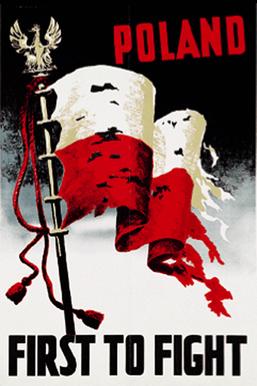
Poland has always been a hard luck country in may ways. What with being caught between Russia to the East and Germany to the West. Making it a kind of speed bump between the two. Yeah I know too soon!
All right already, we get the picture! Move on!
So not being stupid. The Poles once they regained their independence after WWI. Quickly started up their own arms industry. Having looked around to see what was out there.
Wisely, they settled on the Mauser Bolt Action system. But as a relatively poor country. It could not match either Germany or Russia in military might. So you can guess the rest of the story. I actually doubt that the Poles charged Tanks with Lances.
Moving right on. These are a very hard gun to find as they really got dragged thru WWII. As the Germans were more than happy to take these rifles into their army.
But if you can find one. They will make a great addition to anyone’s collection.
Here is some more information about these forgotten Guns!
The Polish Mauser from Wiki
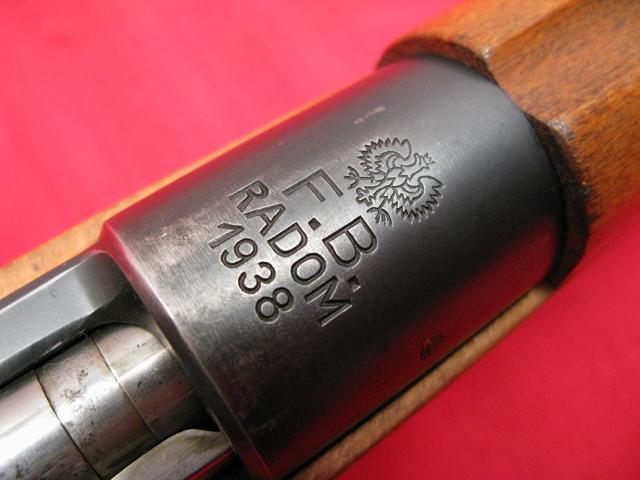
The Karabinek wz.29 (Kbk wz.29; Polish: carbine model 29) was a Polish bolt-action short rifle based on the German Kar98AZ.
Identifying attributes include a 98/05 style mast bayonet lug ending directly beneath the front sight and winged protective ears to either side of the front sight blade.
Cavalry models featured a turned-down bolt handle, and early versions had a stacking hook near the end of the stock on the right side.
Design history
After regaining independence, the Polish Army was armed with weapons left over from the nations that occupied Poland during the Partition Era.
Including Russian M91 Mosin–Nagants, Austrian Steyr-Mannlichers, and German Gewehr 98s.
French Berthiers and Lebelsfrom the soldiers of the Blue Army were also on hand, as well as guns from Great Britain such as the Lee–Enfield and Japanese Arisaka.
As a result, at the end of Polish-Soviet War in 1921, the Polish army was armed with approximately 24 types of guns and 22 rifles firing different ammunition.
Since no armies ever have desired multiple types of firearms in multiple calibers for the same role due to the training, maintenance, and logistical nightmares involved.
The Polish Army sought to adopt a single type of rifle. Conveniently, the Treaty of Versailles, having established the Free City of Danzig, gave the Polish access to the tooling and machinery at the Danzig Arsenal.
Facilitating the choice of the Mauser 98 action as the basis for any new Polish military rifle. The Mauser was also arguably one of the best bolt-action rifles at the time and the best available to Poland.
Production of the wz.98 began in July 1922, after the Danzig machinery was moved to Warsaw to create the National Rifle Factory in Radom.
Two years later, production of the wz.98 rifles was stopped. The military sought to adopt an intermediate-length rifle.
Such as the Lee–Enfield, M1903 Springfield, and the German Karabiner 98a. Due to conclusions drawn from combat experience in World War I and the Polish-Soviet War.
It was based on the German Karabiner 98a. Polish K98a rifles differed from the German K98a only in minor technical details.
Field use of the K98a rifles showed that as an infantry weapon, and not a weapon for auxiliary or special troops as originally purposed, the design was inadequate.
The greatest flaw was the weak bayonet mount (the bayonet lug would break off when hitting hard objects). The K98a also used a small-ring Mauser action, which complicated production and parts interchangeability.
Following the postwar shift to large-ring carbines with 600 mm barrels and Gewehr 98-style bayonet lug/muzzle lengths, such as the Czech vz. 24, the decision was made to develop an intermediate model rifle for the Polish Army.
The design was finalized in 1929. The new wz.29 rifle was based on the old wz.98 rifle.
But with a shortened stock and barrel, stronger alloys for the receiver and barrel, a reinforced chamber, and increased dimensional tolerance in the action. This allowing for easy interchangeability of parts.
There were two versions of the rifle: Infantry models had straight bolt handles, while cavalry models had curved handles. Since both variations used the same stock, infantry models had a cutout in the stock for the curved handle.
Production of new weapons began in 1930 at the National Arms Factory in Radom. Despite wz. 98a long rifle production beginning in 1936, wz.29 production continued until September 1939, with a total of approximately 264,000 rifles produced, including rifles for export to Spain and Afghanistan.
During the September Campaign, wz.29 rifles were used by the Polish Army in the defense of Poland, against German troops using the similar Karabiner 98k.
After the defeat of Poland, they were used by the guerrillas of the Polish Underground. Captured wz.29 rifles were also used by the Wehrmacht as the Gewehr 298 (p).
Technical overview
Carbine wz.29 was a bolt-action rifle, with typical Mauser-action lock, with two large main lugs at the bolt head and a third safety lug at the rear of the it.
Ammunition was supplied from a fixed, two-row box magazine holding five rounds.
A three-position safety catch was attached at the rear of the bolt, securing the firing pin.
The sights consisted of an open post-type front sight, and a tangent-type rear sight with a V-shaped rear notch; the rear sight was a rear tangent sight was graduated 100 to 2000 meters at 100-meter intervals.
The weapon was equipped with a knife-type bayonet wz.29.
“Competition Breeds Excellence” is more than a fanciful quote. To the guys at CZ Custom in Mesa, Arizona, those three words fuel the fire of creativity and drive them to build better and better handguns.
It also has the founder of the company, Angus Hobdell, traveling to IPSC matches the world over to prove it’s more than a motto.
Innovation and Excellence
I am most fortunate to have for review the latest brilliant innovation from CZC, the CZ-75 Bull Shadow. My sample gun (a pre-production unit) was shipped to me only one day before I took it to compete in a steel challenge match.
While I enjoy the challenge of competing with guns I have never fired before, when that start timer sounds, it can be nerve-wracking for any manufacturer whose confidence in their guns is less than 100%.
It is well known that I “show and tell” what happened like it happened, and not every gun performs well.
SPECS
Type: Hammer-fired pistol
Cartridge: 9mm
Capacity: 15+1 rds.
Trigger: 3.5 lbs. (SA); 7 lbs. (DA)
Overall Length: 8.5 in.
Barrel Length: 4.8 in.
Weight: 40 oz.
Width: 1.6 in.
MSRP: $1,495 –$1,650
Manufacturer: CZ USA
However, the CZC Bull Shadow is, in my mind, the perfect blend of CZ USA technology and CZ Custom know-how. These two entities have combined what is arguably the most ergonomic frame ever created with the first use of a Bull Barrel in a CZ handgun!
I am a CZ-75 fan and while I started shooting IPSC/USPSA with an Ithaca 1911A1 (before these games had divisions by gun type) within a year or so I had moved on to my first of many CZ-75 “clones.” I put many, many rounds through Springfield P-9s and Tanfoglio parts kit guns; I always loved the “feel” yet suffered from the lack of reliability.
That was decades ago. But today, with CZ-USA and more importantly CZ Custom on the scene, one can now have it all: reliability, accuracy, an incredibly smooth trigger and that oh-so-wonderful ergonomic connection between hand and handgun inherent in the CZ-75 grip frame.
If you only take away one lesson from this article, take this one statement to heart: this CZ Custom Bull Shadow is one of the top 3 handguns I have reviewed.
Considering that I have tested and reviewed over 30 handguns in the competitive arena alone, that statement is not proffered lightly.
The 4-1-1 on Bull Barrels
What is a bull barrel and why might you want one? Custom pistolsmiths have been tweaking and tuning competition handguns since we have had handgun competitions! Bullseye, Bowling Pins, Metallic Silhouette, Bianchi Cup, IPSC or IDPA or USPSA – each and every discipline has its devotees and its custom hardware.
And in all of them oversized, match-grade, heavy weighted, hand fitted “Bull Barrels” have been employed. Check the photos to see the difference between a stock CZ-75 barrel and is Bull Shadow counterpart. Now that is putting the “bull” in bull barrel.
The benefits observed in using bull barrels in self-loading “Browning style” tilting barrel handguns is due to their weight.
Not only is there more weight at the muzzle-end of the gun where it can reduce muzzle lift, there is also greater initial mass that must be overcome during the recoil cycle. Increasing that mass reduces recoil as some of the energy must be used to move the combined weight of the heavy bull barrel and slide.
My particular sample gun was built by CZC’s Master Maker (aka Head Gunsmith), and a man of many talents, Eric Zinn. Zinn’s attention to detail even in this rushed-to-me project was evident in his most excellent fit of the Bull Barrel and truly superior trigger work.
Fitting a bull barrel is more labor intensive than a “traditional” unit and the fire control components more complex. For Zinn to make this all come together in near perfection in just a few hours is simply amazing! Oh…and he is also the man who shot, signed and provided the enclosed test target that I show in the video.
Article Continues Below
From Box to Match
Let’s do some shooting! Unless a deadline is pressing I try to shoot review guns twice through a match and that generally nets me 300+ rounds in actual competition.
The event I competed with this pistol required more than 400 rounds to complete. Not quite satiated at the end of the match I continued to pour another couple hundred through it later that day.
I shoot these guns right out of the box with nothing more than a field strip, bore check and lubing. Any mechanical device can fail and guns are no exception.
While I was delighted with the 3.5-pound, single-action trigger, I was concerned that the wonderfully smooth 7.5-pound, double-action trigger would not be able to reliably ignite factory ammo primers.
Many competition shooters rely on the easier to light Federal primers in their own reloads when running DA trigger pulls in this weight class. Despite my pre-match concern, however, I am happy to report that this CZ Custom Bull Shadow never failed to go bang on my asking.
A Few Issues
Not everything was perfect with this pre-production CZC Bull Shadow. During accuracy testing, I found that the beautiful set of fixed sights were regulated to place bullets 6 inches above the aiming point at 25 yards.
Perhaps that accounted for one or two of my misses at the match, but it was sure apparent when I was holding hard on one bull during accuracy testing and hitting the one above it. The other less-than-perfect item was noticed during field stripping.
The recoil spring guide rod bushing is fit so tight in the slide that it must be pressed or tapped out. That unnecessarily complicates the takedown process and can lead to frustration. I immediately shared these issues with the good guys in Mesa, Arizona, and was assured that these two issues will be resolved well before release. These are set to be released in January 2018.
Lasting Impressions
That said, overall I am quite impressed with this masterfully assembled yet rushed to me pre-production gun bearing a brand new USA made slide and barrel.
Not only did it run flawlessly over the course of 700 rounds fired, it demonstrated superior accuracy as well! I shot a total of 50 rounds for accuracy at 25 yards off of a pair of sandbags. Those 50 rounds were comprised of 10 rounds of each of five kinds of ammunition.
The average of all 50 shots was 1.68 inches. I wish I would have had time before the deadline for this article to take this fine shooter out to 50 yards, where I am sure it would shine. And I don’t say that about many handguns.
Beyond this innovative competition pistol, the CZ Custom shop builds many guns built for use by us good guys that carry daily. Compact CZs of all stripes, 1911 and Browning Hi Powers just to name a few. Each built with the care and knowledge that any one of their creations could be called upon to defend life and limb.
Looking for something unique? Something with a personal flair? Perhaps a gift or something to show-off to your gun buddies? CZ Custom has you covered as all manner of high-end artistry is available.
Here’s an example of some other CZ Custom options.
This gun was meant to be used, and while it was pretty enough to be the “queen of the gunsafe.” It was lubed, loaded and ridden to two match wins.
Then I continued to hammer it both before and after my accuracy testing. So as you check out the photos, remember they are “post-Patrick” and I added those competition character enhancements myself.
The CZ Custom Bull Shadow is in my mind a USPSA Production Division masterpiece. It is truly a pleasure to shoot, wicked accurate and the trigger is outstanding. Over the course of the 700 rounds downrange it never even hinted at a malfunction.
Thank you, CZ Custom Shop for “lending” me this beautiful ballistic tool … but you ain’t getting this one back. I just paid the invoice in FULL.
To learn more about Federal ammunition, click here.
For more information about CZ USA Custom shop, click here.
To purchase a CZ Shadow 75 on GunsAmerica, click here.
Stock photo: George Frey, Getty Images North America/AFP
A new platform composed of left-wing politicians, police officers and psychiatrists is pushing for Switzerland to follow the European Union in tightening controls on guns.
Representatives of the Social Democratic Party (SP), the Swiss police officers association VSPB/FSFP and the Swiss federation of psychiatrists and psychotherapists FMPP joined forces on Thursday ahead of a debate on the issue in parliament, the Tribune de Genèvereported.
The EU parliament approved a revised gun law last year designed to close security loopholes and introduce tighter controls on blank-firing and inadequately deactivated weapons like those used in the Paris terror attacks.
On March 2nd the Federal Council issued a message on a “pragmatic implementation” of the EU legislation in Switzerland in response to the terror attacks in Europe.
It said the focus was on limiting access to semi-automatic weapons with a large magazine capacity and improving the exchange of information in the Schengen area that includes Switzerland.
The government’s message will now be debated by the two chambers of parliament.
While supporters of gun ownership in Switzerland oppose the proposed tighter legislation and have threatened to call a referendum, the new platform backs even stronger controls on guns.
In particular it wants to limit access to fire arms in order to reduce their use in domestic crimes where the victims are most often women.
Max Hoffman of the police officers association told news website Watson police were campaigning for the EU legislation to be adopted in Switzerland as “violence is becoming ever more brutal” in the country.



 Yeah I know too soon!
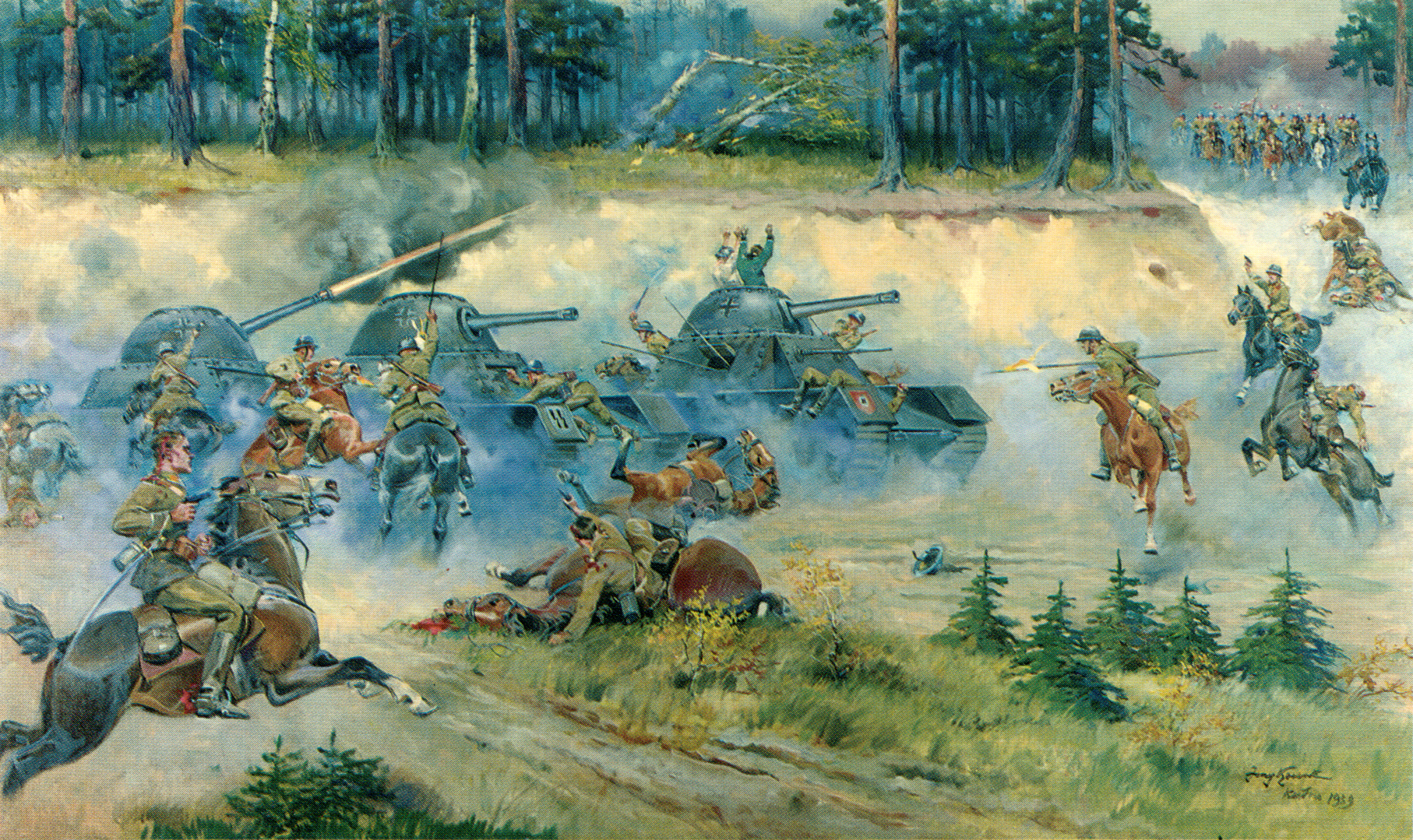
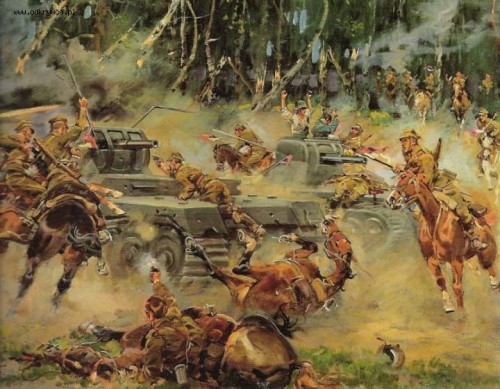 I actually doubt that the Poles charged Tanks with Lances.


 SPECS
SPECS


 Beyond this innovative competition pistol, the CZ Custom shop builds many guns built for use by us good guys that carry daily. Compact CZs of all stripes, 1911 and Browning Hi Powers just to name a few. Each built with the care and knowledge that any one of their creations could be called upon to defend life and limb.

