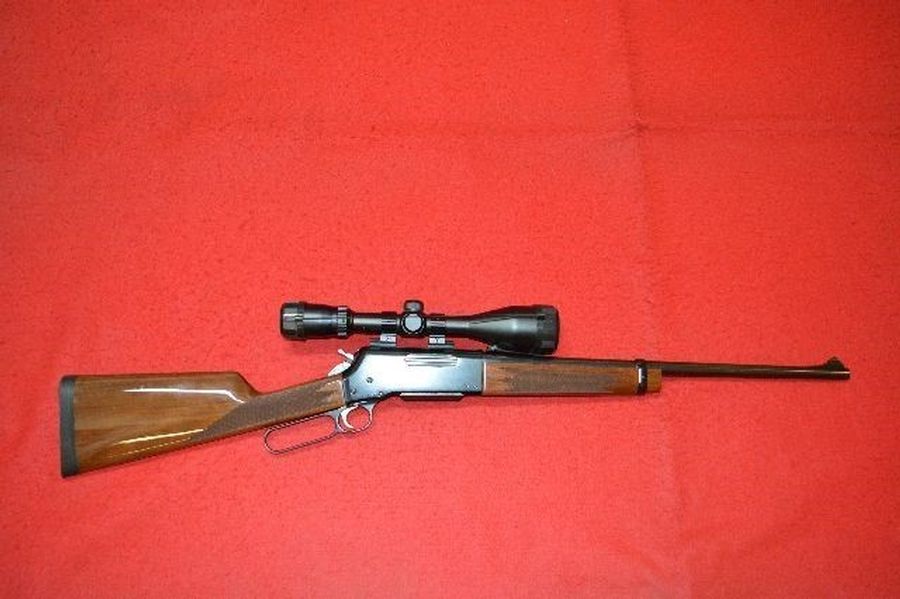
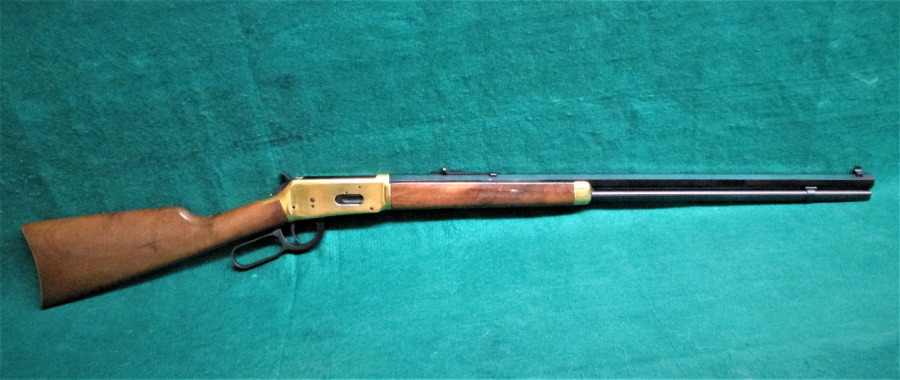
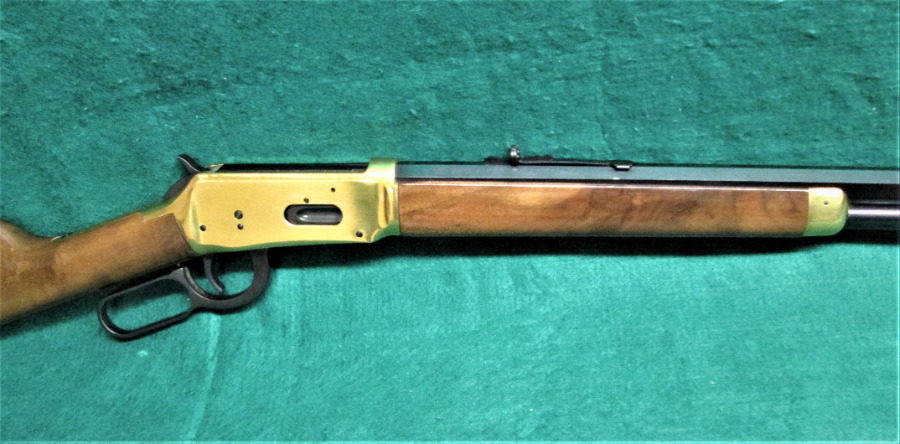
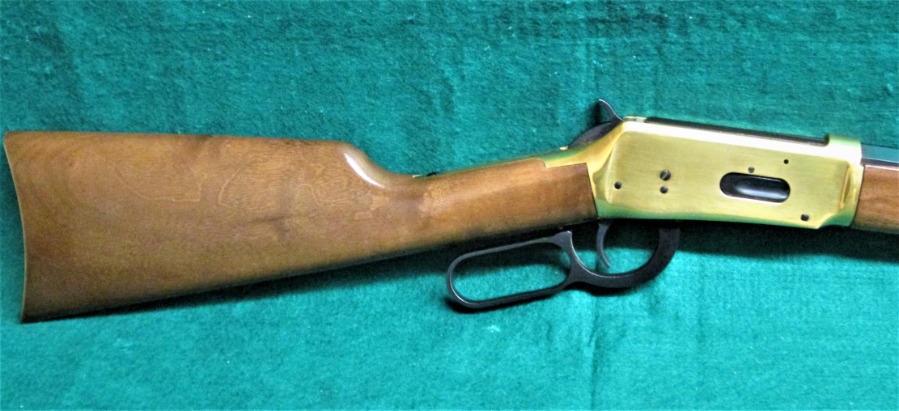
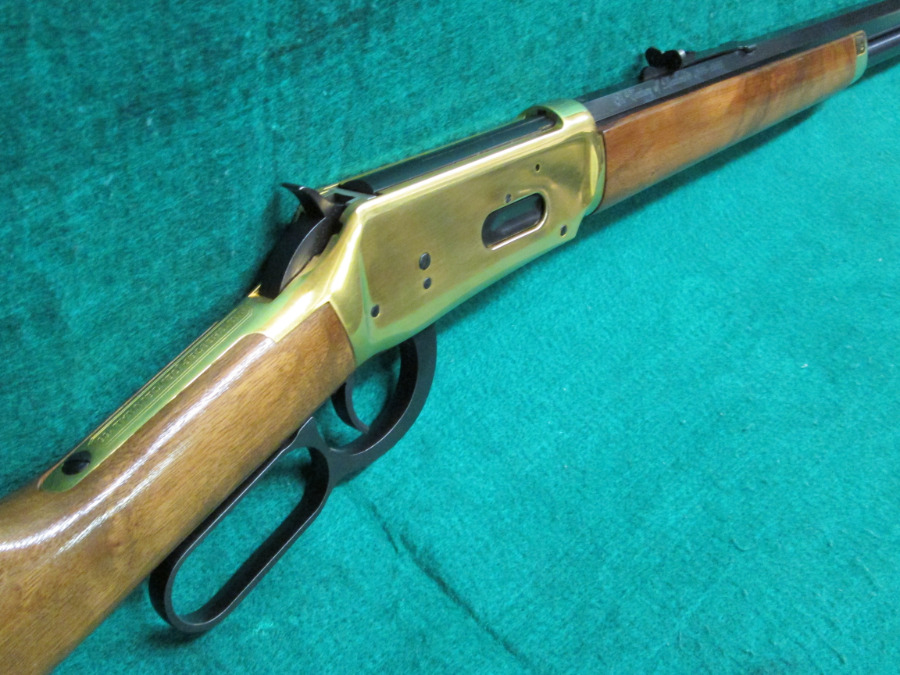
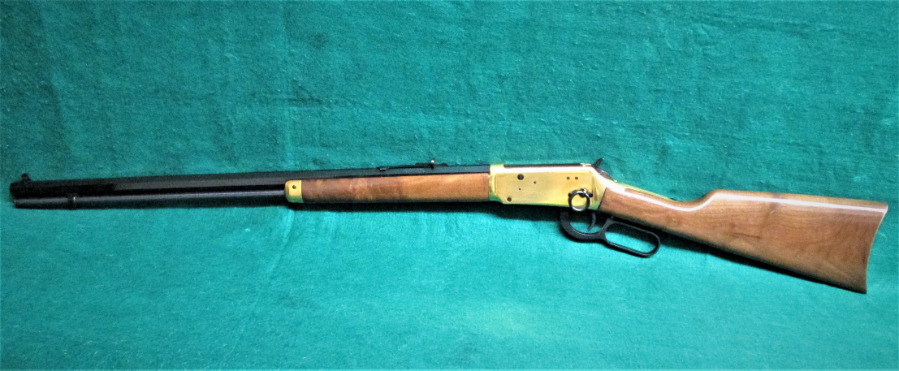
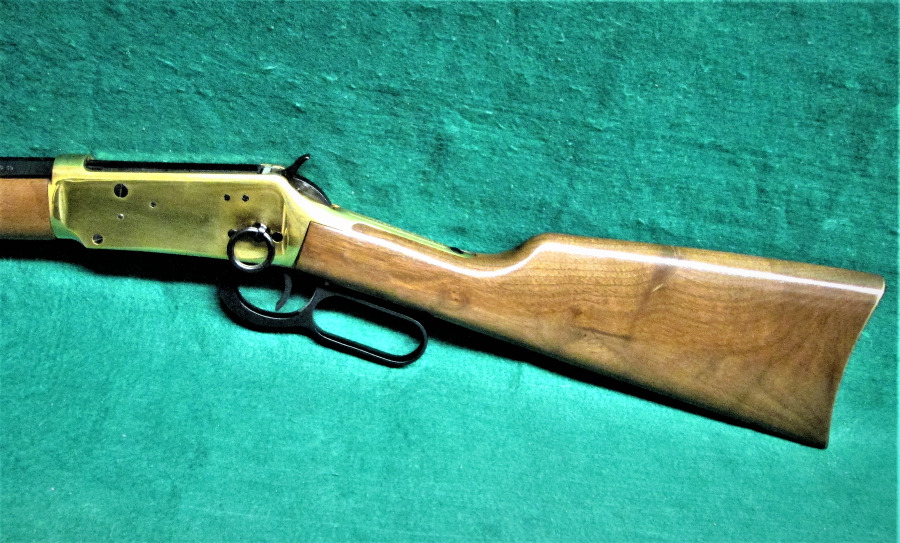
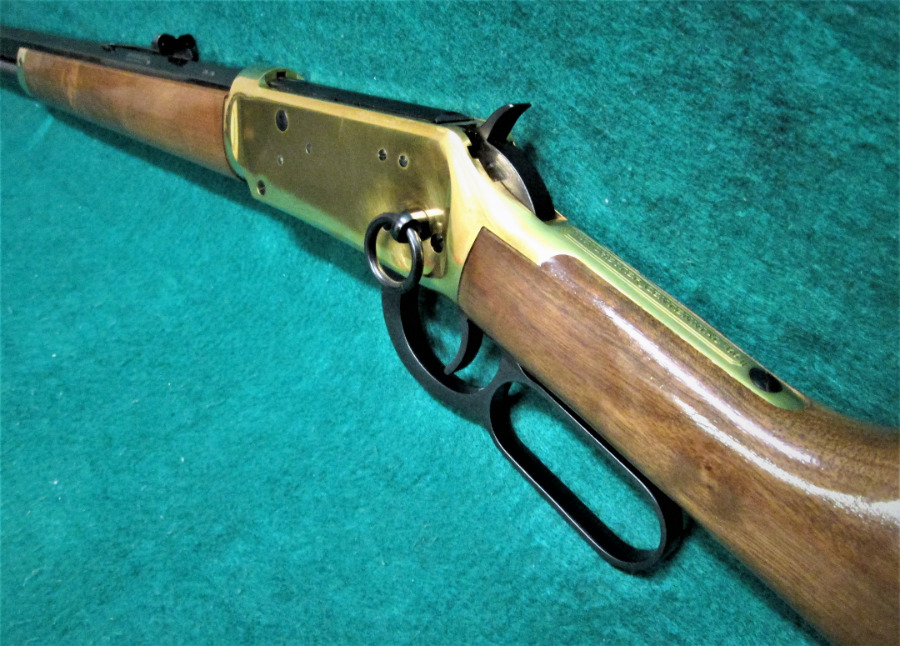
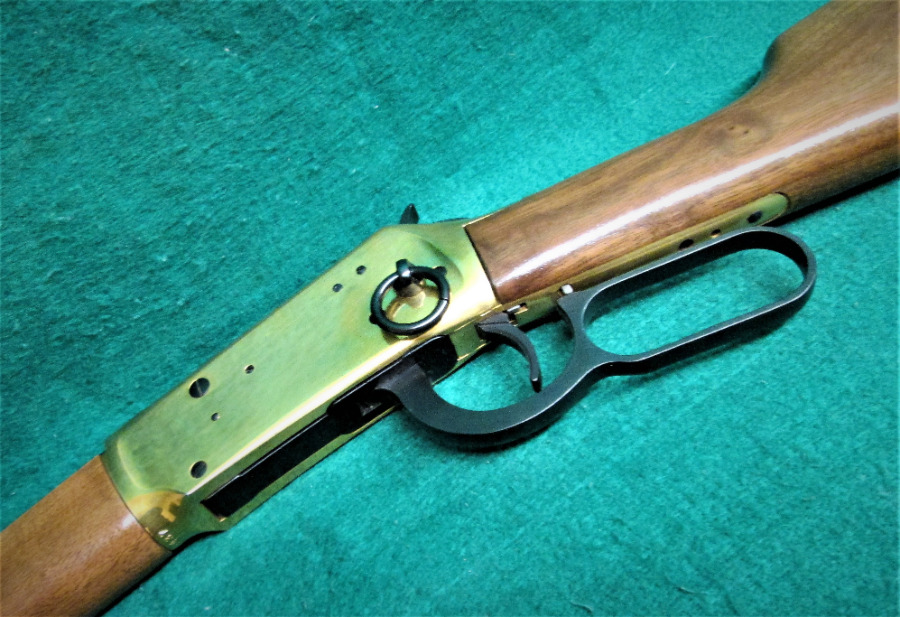
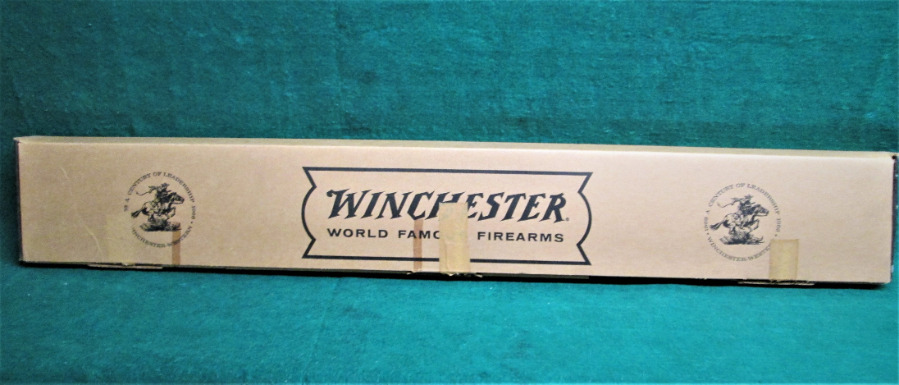
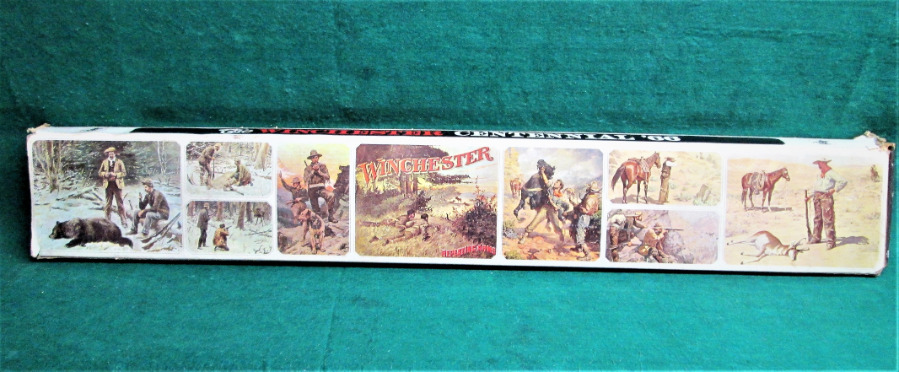
Now all I can say is that somebody over in the Browning Company really earned their pay with this rifle!
As the Old Timers would tell you. In that most lever actions have a couple of problems compared to most Bolt Actions & Semi Auto rifles.
In that you can not put a scope on them. Which to an Old fart like me. Is very important as time has not been kind to my eyeballs!
Next problem is that you can not use top of the line ammo. With its spitzer (pointed nose) Since you can not have that type in a tube magazine.
W/o the chance of some real excitement. When the sharp end of the bullet hits the primer & causing it to go off . Causing a chain reaction explosion with your hand grasping it. OUCH & you may now call me Lefty or Stumpty!
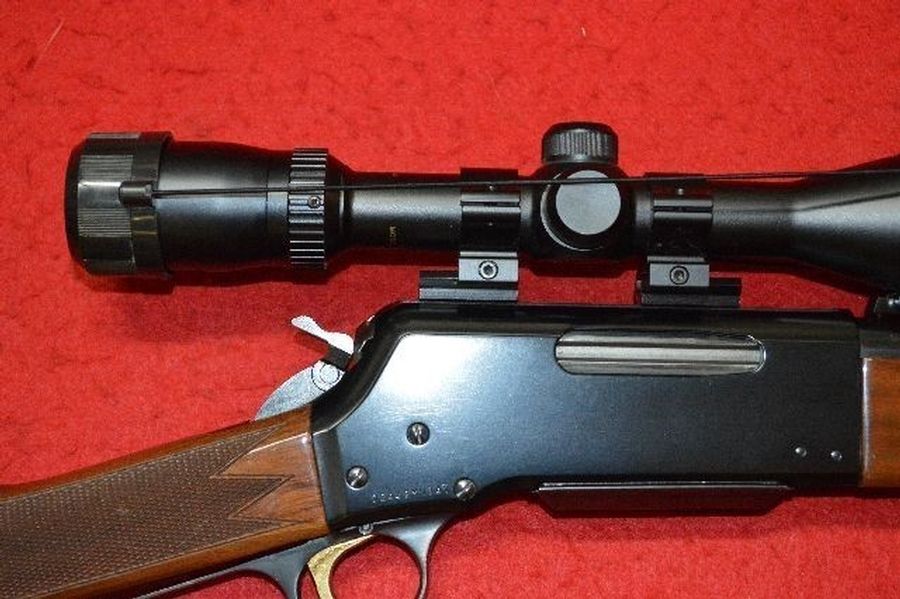
Now here come the very clever part! The bolt of the rifle is inside. Allowing you to mount a scope. (Granted it makes it a pain to clean later on)
Also this rifle uses a Magazine that allows you to use top of the line modern ammo. Hence making a chain reaction a lot harder*.
(*Just remember that there are Folks that can & will fuck stuff up due to their limited brain cells that God gave them!)
So endeth the sermon about this fine Rifle!
If you see one up for sale. You might want to think about getting it. As they are so good that owners seldom sell them. There by making them as scarce as a Honest Politician.
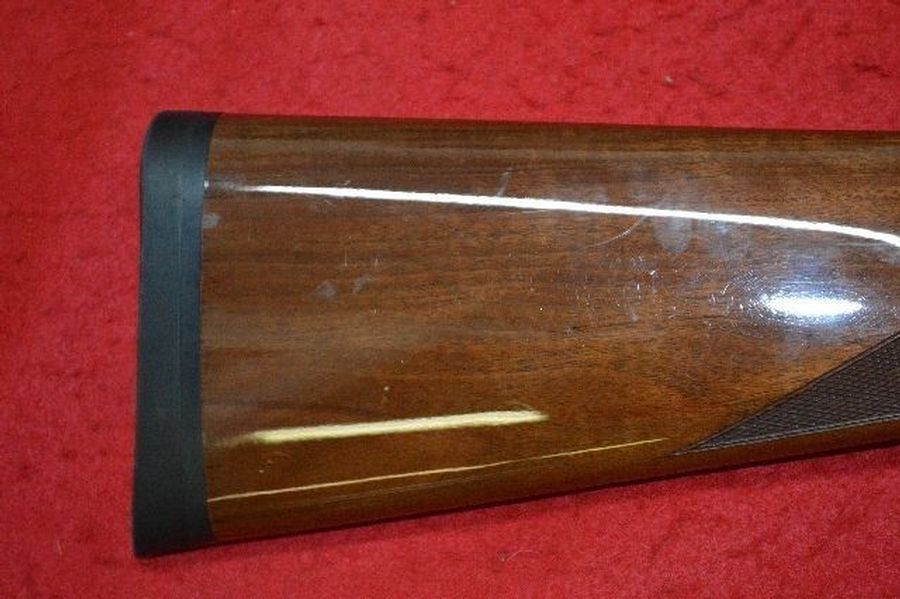
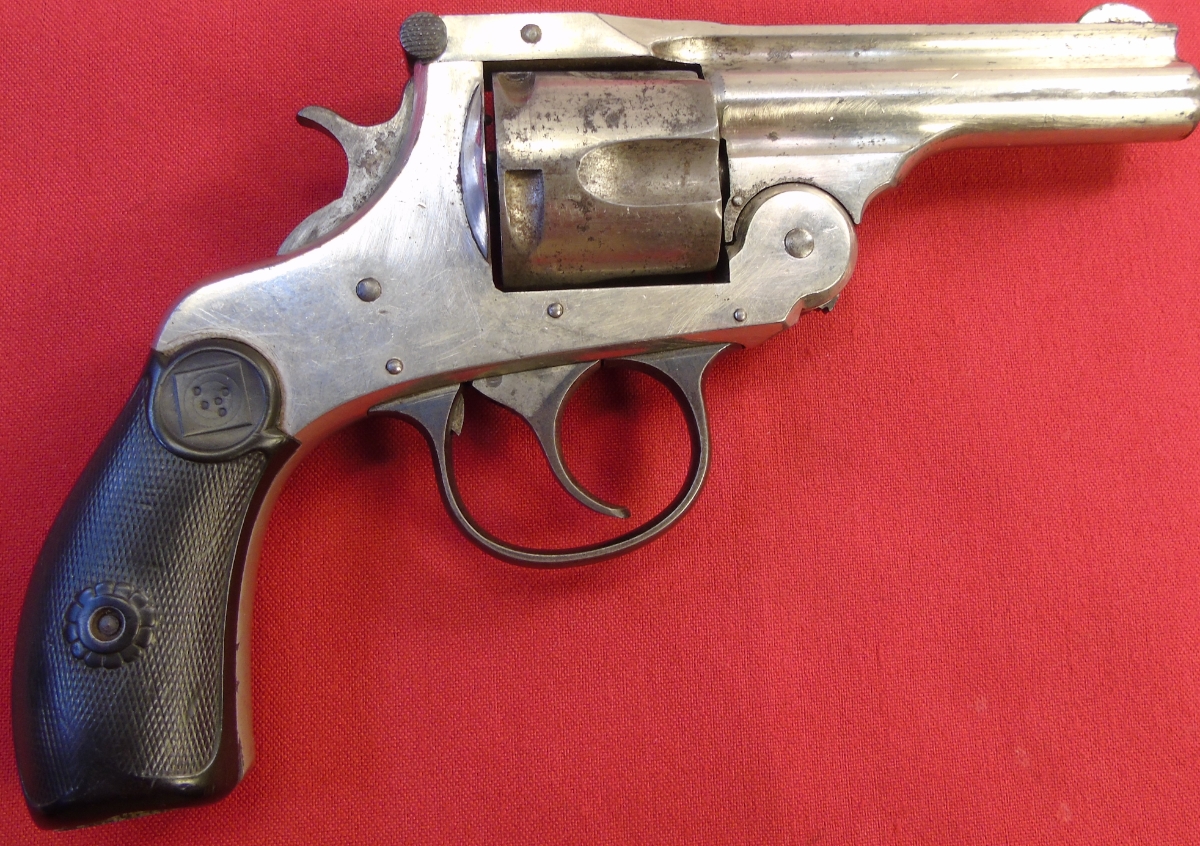
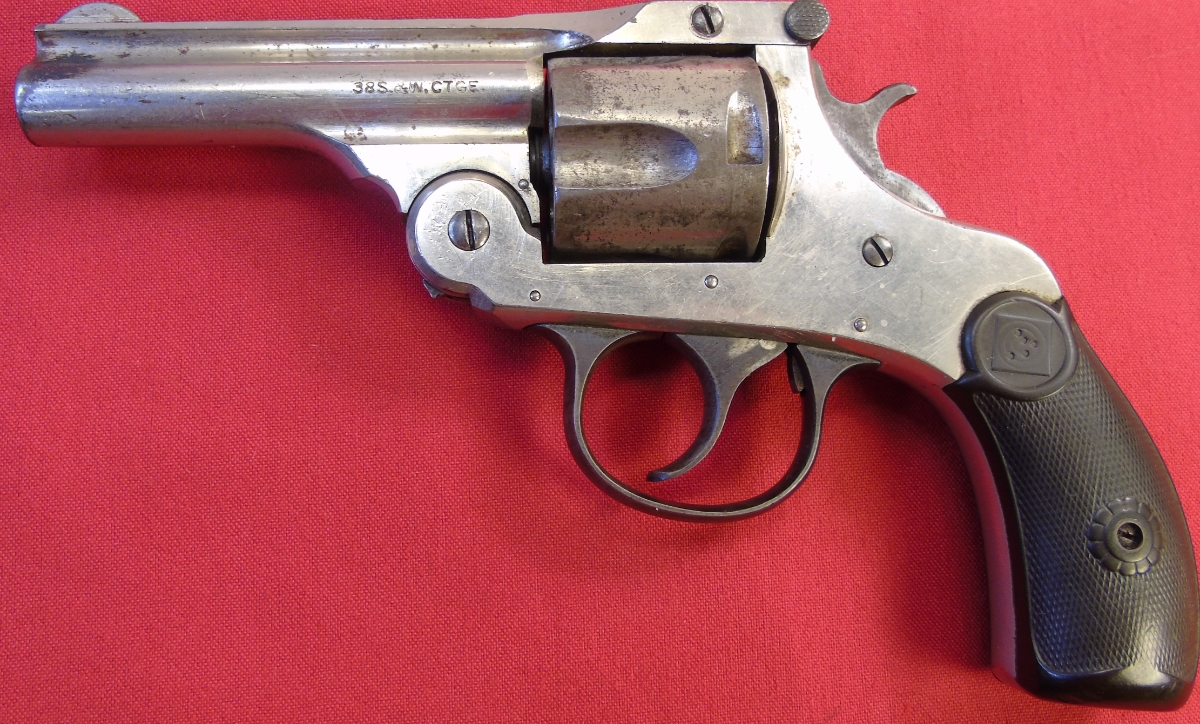
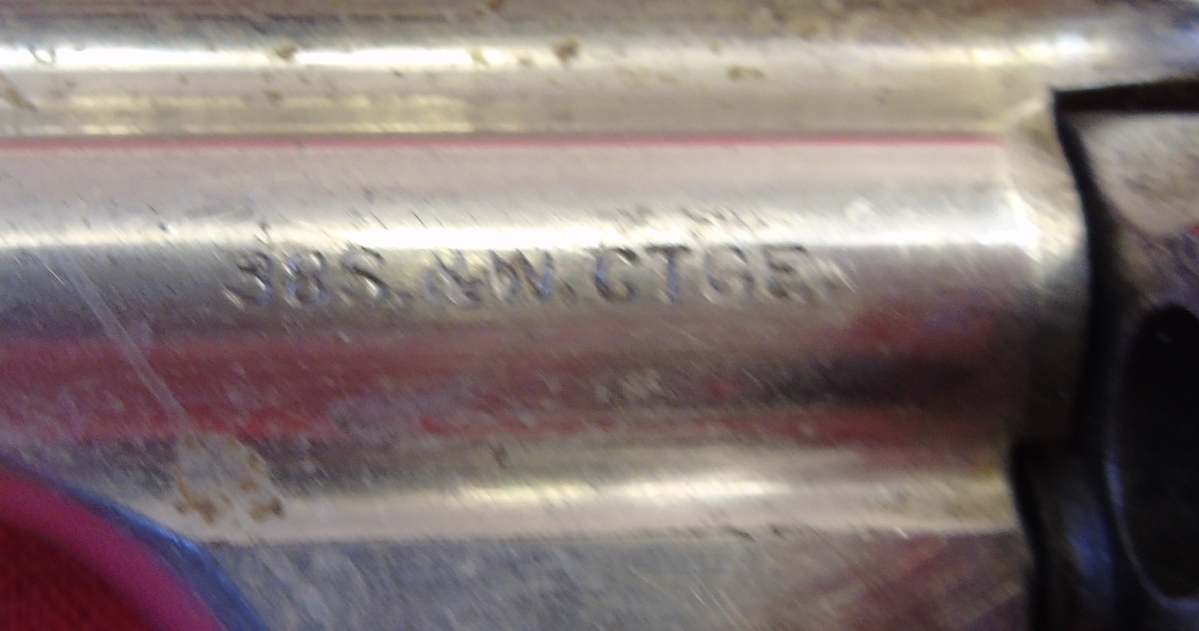
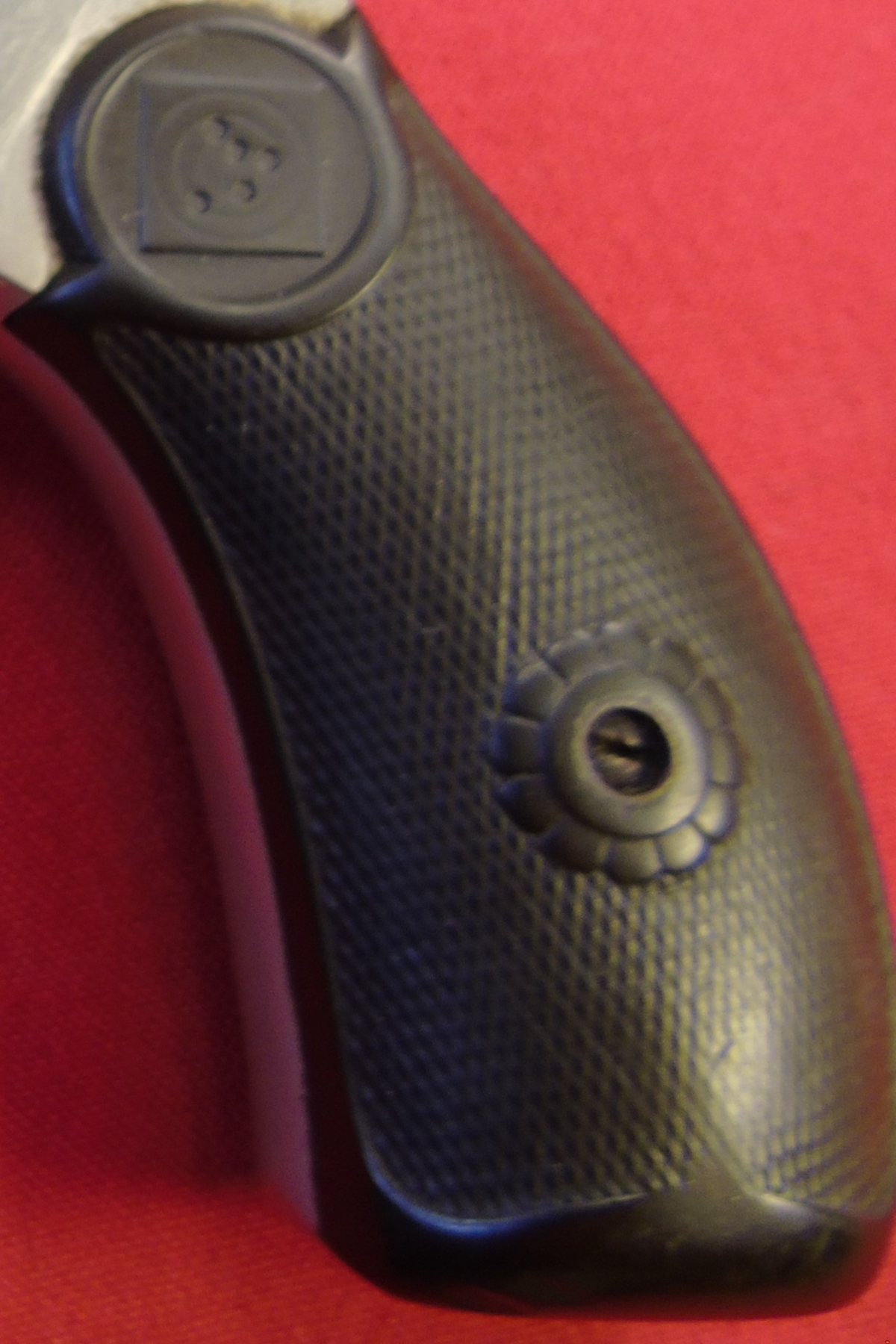
Here is what I would call a ‘Wall Hanger”. Since I would not fire it. Unless the Mob was storming Fortress Gumpy & I could not get to the “good”stuff!
Funny thing is that some people are now buying these up at a fast clip.
Seems that folks are collecting them. Because generally you can buy a nice one for around a C Note*. Go figure! But all I can say good luck & God Bless!
(*That is old timers speak, it is a $100 to my ex Students)
I live in the Atlanta Area, and there are 2 iconic images from Atlanta, one is Delta Airlines, the other is “Coke”, They say that babies are nursed on this stuff and if you don’t drink Coke, then you must be a carpetbagger or some Yankee sympathizer. The locals take their “Coke” seriously, so seriously that every carbonated drink here in the south is called “Coke”.
The Coca-Cola trademark remains one of the most iconic brands in history, and the company behind it remains one of the wealthiest corporations in the world. The secret formula for the original flavor that makes this beverage so distinct is guarded with maximum security, as enthusiasts all over the world try to copy it.
It first started as an alcoholic drink, similar to vermouth, but switched to its non-alcohol taste which we know today in 1886, when John Pemberton, the inventor of the patent, had to step down from alcohol production due to legislative circumstances in Atlanta, where the company was seated.
But how did the brand become so influential?
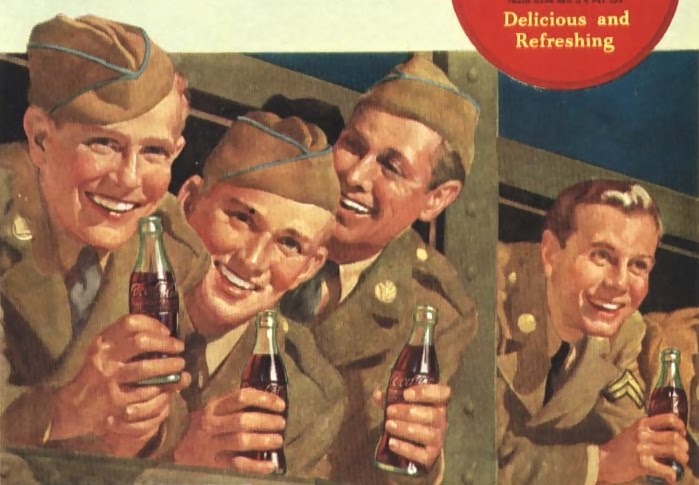
Well, part of the success of the Coca-Cola company lies in its cunning use of marketing and its even more cunning use of investments. When the U.S. entered the World War II, Coca-Cola made sure to be the official drink of every GI Joe on the field. In 1941, a subsidy for servicemen was introduced, making the price of a coke bottle 5 cents, which was more than affordable at the time.
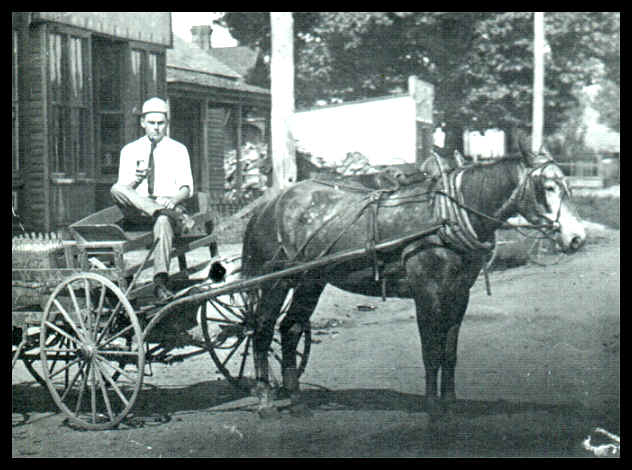
Coca-Cola horse drawn delivery wagon on the Boulevard in Leaksville, North Carolina, 1909.
Also, Coca-Cola briefly turned its investments into weapons manufacture, operating a propellant ammunition loading plant in Talladega, Alabama.
An average of 30 railroad cars of ammunition per day was reportedly produced from their Coosa River Ordnance Plant until closure in August 1945.
The subsidy and the munition production made the company immune to war-time sugar rationing, therefore leaving the production level at its normal rate and even blossom, while their reputation skyrocketed.
The conscripted Coca-Cola employees were also used to operate the 64 newly-formed bottling factories which supplied the military with the beverage. As a result, many of the employees were granted Technical Observer status and were called the Coca-Cola Colonels, never stepping on the battlefield, due to their expertise.
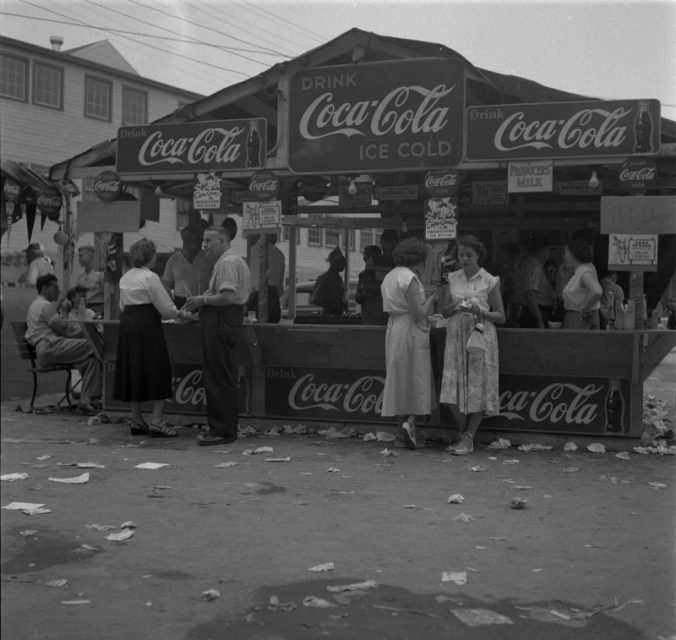
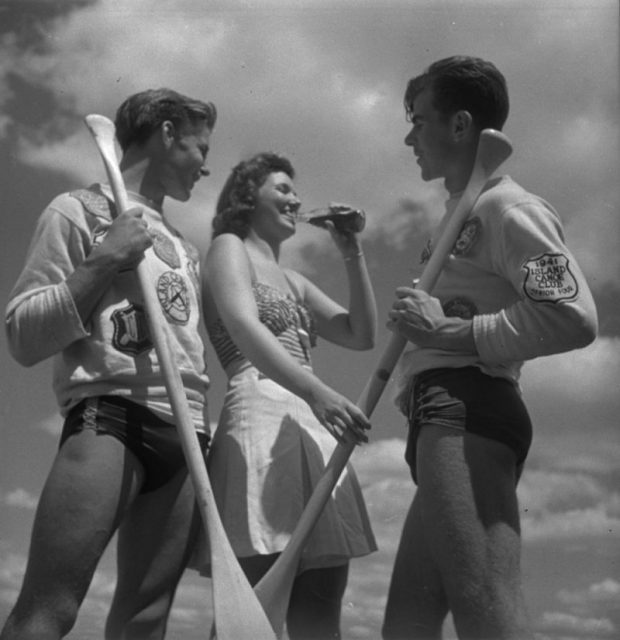
People Gathered By Coca-Cola Stand. Photo: Credit: Rosemary Gilliat Eaton / Library and Archives Canada..
They would go on to produce and distribute 10 billion Coke bottles to Allied military bases and fleets in Europe, Africa, and the Pacific.
Speaking of Africa, while fighting on the North African front, Germans would come across the typical American soft drink. Even though it was forbidden for German soldiers to consume the treat of their enemies, Coca-Cola soon earned its popularity among the members of Wehrmacht, and especially the Luftwaffe.
Allegedly, pilots would wrap Coke bottles in towels while on their sorties and attach them to the underwings of their BF109 fighter planes. This was truly an ingenious cooling method, as the altitude cooled the drink to almost freezing, which was a true refreshment in the desert sun.
A similar method was used by the American pilots in the Pacific Theater of War. They would freeze an ice-cream mixture in mid-air, and upon their return, voila―an excellent icy treat!
As for the Germans, they relied on captured Coca-Cola bottles, which reached an incredible price as contraband goods in the soldier’s black market. The flavor was truly adored by German soldiers, but this was in part due to the fact that Coca-Cola had a factory in Germany prior to the war, and the Germans weren’t all that unfamiliar with the tasty beverage.
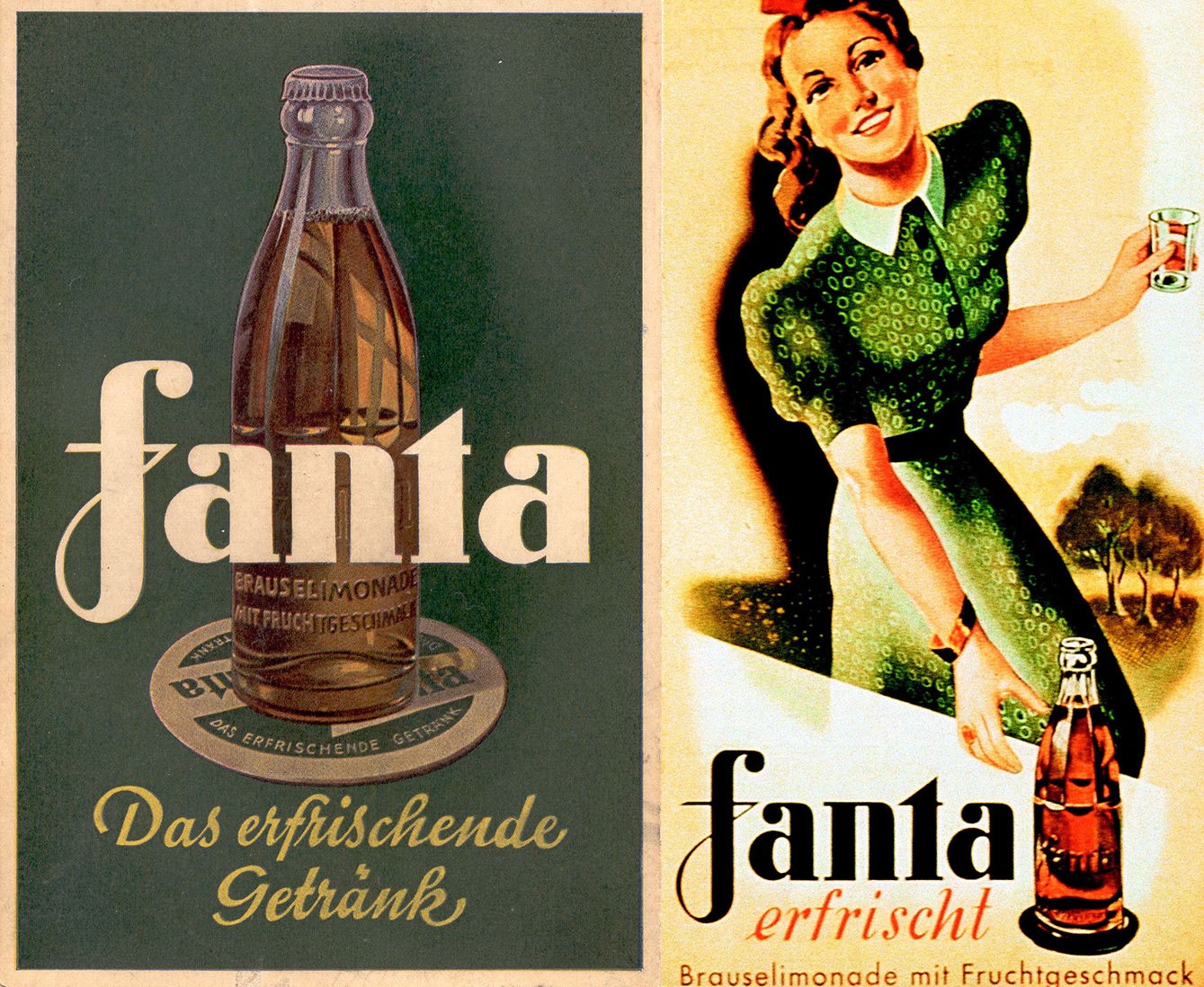
Coca Cola advertising. Photo: Karsh, Malak/Library and Archives Canada
For a decade before the war broke out in 1939, the Coca-Cola Company in Germany operated uninterrupted. Once the two countries declared war on each other, the import of the syrup necessary for production was prevented by the embargo. Germany’s new Coca-Cola factory director, Max Keith, then decided to use the potential of the factory and produce a local soft drink that would serve as an equivalent to Coca-Cola.
He gathered the experts to make a combination of fruit pomace and whey―which were ingredients classified as “leftovers”―and thus Fanta was born. The name came from the German word for “fantasy,” as it really took an imaginative effort to make anything tasty from the given ingredients.
The drink was distributed to soldiers, but due to war rationing, its flavor was often used by military and civilians alike to sweeten their food instead of sugar, which was a wartime luxurious commodity.
After the war, Coca-Cola regained its factory in Germany and continued to produce Fanta under its trademark.
During WWII, a trade embargo was established against Nazi Germany – making the import of Coca-Cola syrup difficult. To circumvent this, Max Keith, the head of Coca-Cola Deutschland (Coca-Cola GmbH) decided to create a new product for the German market, using only ingredients available in Germany at the time, including whey and apple pomace—the “leftovers of leftovers”, as Keith later recalled. The name was the result of a brief brainstorming session, which started with Keith’s exhorting his team to “use their imagination” (Fantasie in German), to which one of his salesmen, Joe Knipp, immediately retorted “Fanta!”
The plant was effectively cut off from Coca-Cola headquarters during the war. After the war, The Coca-Cola Company regained control of the plant, formula, and the trademarks to the new Fanta product—as well as the plant profits made during the war.
During the war the Dutch Coca-Cola plant in Amsterdam (N.V. Nederlandsche Coca-Cola Maatschappij) suffered the same difficulties as the German Coca-Cola plant. Max Keith therefore also put the Fanta brand at the disposal of the Dutch Coca-Cola plant, of which he had been appointed the official Verwalter (caretaker). Dutch Fanta had a completely different recipe from German Fanta, elderberries being one of the main ingredients.
Fanta production was discontinued when the German and Dutch Coca-Cola branches were reunited with their parent company. Following the launch of several drinks by the Pepsi corporation in the 1950s, Coca-Cola competed by relaunching Fanta in 1955. The drink was heavily marketed in Europe, Asia, Africa and South America.
I shamelessly cribbed this from the “National Post”. I didn’t know that the Enfield was still in front line service with the Canadians. I really like the Enfields, I have 2 of them.
They are from front to back, my 303 Enfield, my Springfield 03A3 and my 308 Enfield.
My Enfield was made at the Ishapore Royal Armory in India in January 1945, She is a Number 1 Mark III. My other Enfield is a “308” enfield made in 1968 for the Indian Police. Both were made in the same arsenal. I thought that was pretty neat.
I have copied the entire article through the magic of “Cut and Paste”. I thought that this was a really cool article for us people that like history and rifles. I am using “Chrome” to do this article. so the fonts are a bit different.
It has killed Germans in two world wars, shown up on both sides of the Arab-Israeli conflict and has turned up in the hands of Taliban fighters. Easily one of the deadliest rifles in history, it once protected nearly 50 national armies.
Canadians carried it on D-Day, at Vimy Ridge, through Ortona and in the defence of Kapyong.
Now, after 114 years, the Canadian Armed Forces is becoming the last national military in the world to retire the Lee-Enfield rifle from front-line service.
They even put the gun on their official badge.Wikimedia Commons
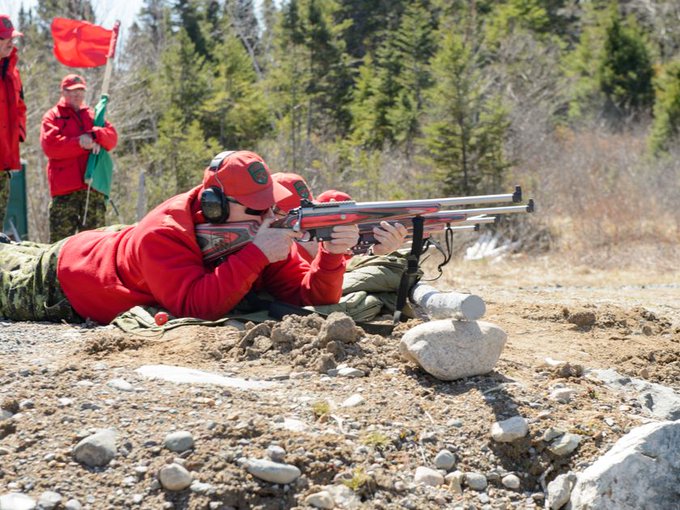
Since 1947 the Lee-Enfield has remained the main service weapon of the Canadian Rangers, a part-time force mainly devoted to Arctic patrols. This week, the Canadian Rangers began replacement of their Lee-Enfields with the specially commissioned Colt Canada C19.
Unlike many other antique items in the Canadian military, the Lee-Enfield didn’t hang on for so long out of apathy or tight budgets. Rather, it’s because it’s still one of the best guns to carry above the tree line.
The Lee-Enfield’s powerful .303 cartridge was famous for killing enemy soldiers with one shot, and it’s equally good at stopping a charging polar bear.
Its wood stock makes it uniquely resistant to cracking or splitting in extreme cold. The rifle is also bolt-action, meaning that every shot must be manually pushed into place by the shooter. This makes for slower firing, but it also leaves the Lee-Enfield with as few moving parts as possible.
“The more complicated a rifle gets … the more prone you are to problems with parts breaking or jamming in a harsh environment,” said Eric Fernberg, an arms collection specialist at the Canadian War Museum.
“It might seem old-fashioned … (but) the retention of the Lee-Enfield by the Canadian Rangers was a wise choice for their role and environment.”
In this 2016 photo from Whitehorse, Yukon, Prince William, Duke of Cambridge is greeted by Canadian Rangers and Junior Rangers carrying Lee-Enfields.Photo by Mark Large – Pool/Getty Images
The Lee-Enfield was developed as a standard-issue British infantry weapon at the close of the 19th century. Given that this was the height of the British Empire, the gun was soon being used to arm troops in virtually every corner of the globe.
“It has been used in every conceivable theatre of war … and its high build quality and tough construction made it all but indestructible,” wrote the historian Martin Pegler in a book about the Lee-Enfield.
And while it can’t shoot as fast as modern automatic rifles, a well-trained British soldier could fire and reload quick enough to squeeze off 30 rounds per minute from a Lee-Enfield.
Two First World War Canadian soldiers wearing gas masks examining a Lee-Enfield rifle.Library and Archives Canada
Canadian militias first picked up an early version of the Lee-Enfield in 1896 and Canadian volunteers would carry them in the Boer War. The more familiar short-muzzled Lee-Enfield came out in 1904.
When the First World War broke out, Canadians initially went into battle carrying the Canadian-made Ross Rifle. However, the Ross was so prone to malfunction that Canadians were soon scavenging Lee-Enfields from dead British soldiers.
From then on, the Lee-Enfield remained the weapon of choice for Canadian soldiers right up until the 1950s. Of the more than 118,000 Canadians who have been killed in foreign wars, most would have been issued a Lee-Enfield.
Although Brits stopped using the Lee-Enfield right around the time they dissolved the Empire, the Lee-Enfield became the English-speaking world’s version of the ubiquitous Soviet-made AK-47. With thousands of the rifles turned over to the surplus market after the Second World War, they were soon making cameo appearances in dozens of conflicts, skirmishes and civil wars.
Canadian Ranger Ernestine Karlik armed with a Lee-Enfield in 2014.Pamela Roth/Edmonton Sun/QMI Agency
Lee-Enfields were wielded by IRA terrorists in The Troubles. They were among the mish-mash of guns that Israelis used to fend off Arab armies in 1948. Bangladeshis used them to gain independence from Pakistan.
In the 1980s, the United States funnelled massive shipments of antique Lee-Enfields to Afghanistan for use by Mujahedeen fighters against the Soviet Union. It’s for this reason that Lee-Enfields continue to show up in the hands of Taliban fighters, often as a sniper rifle.
And while they were no longer taken by uniformed soldiers into battle, Lee-Enfields are still in the arsenals of several police forces in the developing world.
In Canada the guns had a more peaceful afterlife as a hunting rifle. Cheap and able to fell large game, Lee-Enfields are responsible for the antlers and taxidermied animal heads on countless Canadian roadhouses. “No other rifle could be more reliable,” reads one glowing review of the Lee-Enfield published in March.
Orillia Legion Public Relations Officer, Colin Wackett sit with a Lee-Enfield rifle that was donated to the Legion by the family of WWI veteran Joseph Leyland.Postmedia File
This was part of the reason why the rifle was an easy choice for the Canadian Rangers in the first place; it was a gun that most Northern hunters already trusted.
“A lot of us grew up using the old .303s … it was a good gun, it was a gun you could depend on,” Northwest Territories MP Michael McLeod told CBC this week.
It’s a testament to the Lee-Enfield’s reliability that replacement is strikingly similar.
The Colt Canada C19 is still bolt-action, still has a wood stock and still fires 10 shots. The main differences are that it’s lighter, more accurate and has several cold weather modifications, such as a larger trigger guard to accommodate gloved hands.
Although the Lee-Enfield spent years as one of the cheaper offerings in Canadian gun shops, the rifle’s advancing age and increasing rarity has recently caused it to climb in price.
Some current listings for used Lee-Enfields put the gun at between $700 and $900 — a price comparable to a brand new higher-end bolt-action rifle
However, the gun’s retirement from the Canadian Rangers will mark the final time that a major batch of Lee-Enfields will be released to the private market.
According to the Department of Defence, some 9,500 will be turned over to cadets for use in target practice while 5,000 will be offered as gifts to Canadian Rangers holding valid gun licences.
Prime Minister Stephen Harper shoots .303 Lee Enfield rifle’s in Gjoa Haven, Nunavut on Tuesday, August 20, 2013.The Canadian Press/Sean Kilpatrick
By Kathleen McGarvey / University of Rochester
Our popular ideas of the chivalric world are off base, according to historian Richard Kaeuper. The gallant knights on horseback and banners unfurling before exciting tournaments largely come from people in the 19th century who saw the Middle Ages through a romantic haze.
Chivalry was a violent, often grisly, phenomenon. “It’s hands-on cutting and thrusting. It’s a very bloody profession, and [people from the last several centuries] admire it to excess,” says Kaeuper, a professor at the University of Rochester. But he also insists that chivalry is more than a timeless warrior code.
Kaeuper has devoted his career to changing these misconceptions, with books such as Holy Warriors: The Religious Ideology of Chivalry (University of Pennsylvania, 2009) and Chivalry and Violence in Medieval Europe (Clarendon Press, 2001). Now he’s completed a book, commissioned by Cambridge University Press, called Medieval Chivalry, which looks at the concept generally.
The work of a knight was a bloody business. (Image: e_monk/ CC BY-NC-SA 2.0 )
Chivalry’s path through Europe
Though its influence is still felt, chivalry is specific to a historical period—from roughly the second half of the 11th century into the 16th century—and it underpins medieval society in many ways. “It’s an immense topic that goes everywhere,” he says.
The term “chivalry”—unlike “feudalism”—is a medieval one, and an essential concept for the age. It denotes “deeds of great valor performed by knights,” he says.
But it also refers to the collective body of knights present in an action and—most important—a set of ideas and practices. He writes that “virtually every medieval voice we can hear accepts a chivalric mentalité and seems anxious to advance it (and often to reform it toward some desired goal) as a key buttress to society, even to civilization.”
Chivalry is “pretty much a French creation,” and then it moves through Western Europe . The English, the Italians, the Spanish, and the Germans not only adopt it but also make it their own.
He identifies three phases of chivalry. The first, he calls “knighthood before chivalry”—the beginnings of the military profession in the period before kings and other noblemen would have called themselves knights.
In the second period, such high-born men begin to cultivate
And in the third phase, which he calls “chivalry beyond formal knighthood,” the influence of chivalry pervades society. By then, it’s a “set of ideas that organizes thought and behavior.”
Dressage by e_monk encapsulates the image of a chivalrous knight on horseback. ( CC BY-NC-SA 2.0 )
Kaeuper uses five “model” knights to guide readers through the concepts of his book: cross-Channel, 13th-century hero William Marshal ; 14th-century king of Scotland Robert Bruce ; 14th-century French knight and author Geoffroi de Charny; late 14th-century Castilian warrior Don Pero Niño; and 15th-century English knight and author Thomas Malory, still famous for his Le Morte d’Arthur.
All the figures—whose lives illustrate changes over time in chivalry and its geographical range—are the authors or subjects of a major textual work. “They’re active participants” in the chivalric world, he says.
As a historian, Kaeuper finds enormous value in literary texts. “I use a lot of miracle stories, as well as standard imaginative literature,” he says. “They’re important—because they are imaginative, because they show what people are worried about, what they’re hoping for.”
Young Knight in a Landscape by Vittore Carpaccio. ( Public Domain )
Lessons for today?
The title of his book is deliberate because Kaeuper wants to emphasize that what he is examining is medieval chivalry, not post-medieval chivalry or neo-Romantic chivalry.
Describing his task as “cutting a path through the thickets of Romanticism,” Kaeuper says that people in the 1800s in England and continental Europe, and to a lesser extent, the United States, looked back to the Middle Ages in a search for national identity and in an effort to escape problems of modernity.
“Far from dark,” he writes, “the medieval past was not only colorful and fascinating, but too important and too useful to be ignored. The romantic revivers did not and perhaps could not recognize that they were altering the original drastically and investing it with meanings that would have surprised its first practitioners.”
According to Kaeuper, the chivalric world resonates still—and he feels its power as it touches on issues of violence, religion, governance, and more.
“It’s a scary subject, because it’s so serious,” he says. “The editor of one of my books wrote to me and said, ‘This isn’t just about the Middle Ages. This is a modern book.’ That’s not the goal. My goal is to understand the Middle Ages. But you can see how it applies.
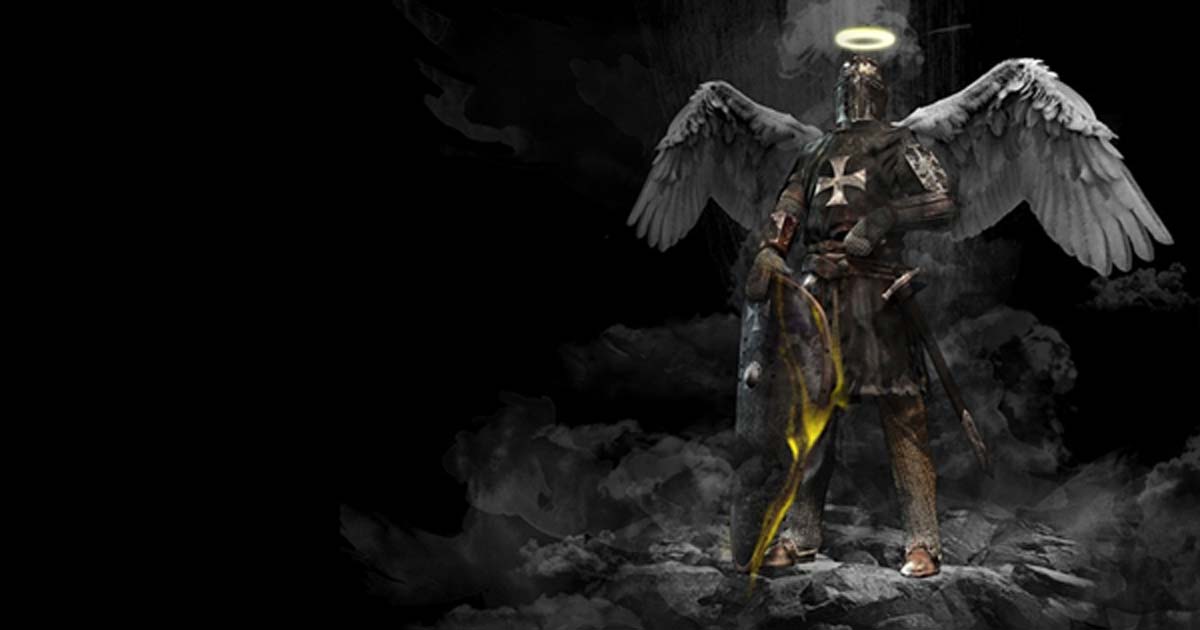
“If you start thinking modern as you go into the past, you distort the past. If you start with the past and see if it informs the present, I think you’re on the right path.” Top image: Medieval Knights are viewed as moral do-gooders. Source: Public Domain The article ‘ Medieval chivalry wasn’t just knights and valor’ by Kathleen McGarvey-University of Rochester was originally posted on Futurityand has been republished under a Creative Commons license. Source: University of Rochester