There are diseases of poverty, such as tuberculosis, malaria, and HIV/AIDS. There are diseases of affluence, such as lung cancer, high blood pressure, and type-2 diabetes. And then there are the hazards of extreme affluence, such as being thrown off a polo pony, flipping your Cigarette boat, or succumbing to altitude sickness on a vanity expedition to the Himalayas.
JACOB WEISBERG
Jacob Weisberg is chairman and editor-in-chief of The Slate Group and author of The Bush Tragedy. Follow him on Twitter.
This point was brought home this week with the presumed death by drowning of Philip Merrill, the mid-Atlantic press baron who owns Washingtonian magazine. The 72-year-old Merrill was sailing alone on his 41-foot boat, probably without a life jacket, when he fell into the Chesapeake Bay. I mean no disrespect to Merrill or his family when I say that the risk of meeting this sort of end goes into the small but poetic category of problems unique to the rich and famous. Members of the middle class do not have to worry about falling off $250,000 sailboats because they don’t have $250,000 sailboats to fall off of.
In fact, the rich are less likely to perish in expensive boating accidents than in expensive flying accidents. Travel by private plane and chartered helicopter may be the ultimate corporate perk, but it is much riskier than flying commercial, claiming in recent years figures in entertainment, politics, and business including the R&B singer Aaliyah, Sen. Paul Wellstone, and Wal-Mart heir John Walton. The accident that killed golfer Payne Stewart and four others in 1999 was particularly grisly: Their Learjet depressurized. After the occupants suffocated and froze, the plane coasted another 1,500 miles on autopilot before crashing into a field in South Dakota.
An even greater hazard for the wealthy and privileged is the urge to fly their own planes. This costly urge killed country singer John Denver, who died when he pressed the wrong pedal on an experimental Rutan Long-EZ. John F. Kennedy Jr., his wife, and wife’s sister died when the single-engine plane Kennedy was piloting plunged into waters off Martha’s Vineyard. Though the crash was apparently caused by spatial disorientation on the part of an inexperienced pilot, there was speculation that Kennedy might also have been impaired by a foot injury from an earlier paragliding accident. If true, that would make the tragedy doubly wealth-and-fame-related. Of course, the Kennedy family is in a risk category all its own. One wonders if the surviving members are insurable at all, given the family history of driving off bridges (Teddy), smashing into trees while playing football on skis (Michael), death by drugs (David, Christina Onassis), plane crashes (Joseph Jr., Kathleen, Alexander Onassis, and, very nearly, Teddy), and assassination (JFK and RFK). These are terrible fates, but ones that members of the struggling middle class do not have to worry much about.
The problem of having more money than sense also drives fatality statistics in the world of high-end travel. Given the cost of a tour to the top of Mount Everest (between $10,000 and $40,000), it’s safe to assume no one collecting the Earned Income Tax Credit was among the 10 deaths there last season. Similarly, while the poor of Africa are sometimes eaten by wild animals, it is only the well-to-do from other continents who face the risk of being mauled by lions or trampled by hippopotamuses, which surprisingly kill more people than any other animal in Africa.
The next frontier for extravagant death is, of course, space. Richard Branson is taking reservations for his Virgin Galactic airship, which promises “the world’s first affordable space tourist flights” to view the aurora borealis, possibly as soon as 2008. Affordable, in this context, is somewhere around $200,000. Let us hope it will be a round trip.
Correction: June 14, 2006: This piece originally and incorrectly stated that Christopher Reeve died from injuries sustained in a dressage event; in fact the accident occured in the cross-country phase of a combined-training equestrian event. (Return to the corrected sentence.)
Truth told, the .38 Special and 9mm aren’t a world away. Put your pitchforks away and quit lighting your torches, the implication isn’t the time-tested cartridges are carbon copies of each other. Not by a long shot. Their countries of origin are disparate, there’s plenty that separates them ballistically and, even as most novice shooters know, they are generally shot from much different handguns.
That said, if you sit down and rattle off the .38 Special and 9mm’s virtues, you’ll end up with nearly identical lists. To start, both are relatively versatile for medium-bore handgun cartridges. Shot out of the right gun, they’re accurate and mild recoiling. Both have more than proven their worth as self-defense options. And each is economical, plentiful and just plain fun to shoot.
From that perspective, they almost seem echoes of each other, maybe even a bit redundant. So, everything laid bare, does it really matter who comes out on top in .38 Special vs 9mm?
Like so many aspects of the gun world, the answer isn’t as clear-cut as picking one or the other. Both are proven and excel at similar applications. But as is so often the case, each shines a bit more than the other for certain shooters.
.38 Special: The Persistent Revolver Cartridge
For a rather notorious cartridge, the .38 Long Colt had a particularly large influence on firearms and ammunition development. Its poor showing in the 1899-1911 Moro Rebellion not only led to the eventual adoption of the .45 ACP and Colt 1911 by the U.S. Military, but also spurred the development of what would become one of the most prolific cartridges of the 20th Century – the .38 Special.
Starting life in 1899 as a black powder cartridge, the .38 Special was essentially an elongated .38 Long Colt that offered greater case capacity. In turn, the .38 Special generated greater velocities as well as shot heavier bullets, which added up to greater penetration potential – an asset sorely lacking in the .38 Long Colt. Proving extremely popular shot from the Smith & Wesson K-frame Military & Police revolver, the cartridge was soon switched over to the modern marvel of the day – smokeless powder.
Given the respectable velocities for its day and the fact it was a kitten to shoot, the .38 Special became the primary service revolver caliber of most American law-enforcement agencies over the decades. Early on, the typical defensive load was a 158-grain lead semi-wadcutter hollowpoint, though later a 200-grain soft-cast lead round nose “Super Police” load become common, offering officers a bullet that yawed upon impact and created a larger wound canal.
Generally pushing bullets around 700 to 1,000 fps, the cartridge was quickly overshadowed by magnum and high-pressure semi-automatic pistol cartridges. Furthermore, almost exclusively a revolver round (yes, there are a few exceptions), the 5- and 6-round guns chambered for it paled in capacity to the double-stack pistols that started to dominate in the last quarter of the century.
From Cartridges of the World, 15th Edition.
The cartridge’s saving grace was the concealed carry movement of the past few decades. Double-action revolvers are among the easiest and most reliable handguns around – simply aim, pull the trigger and they go bang. This sort of dependability appealed to some armed citizen, particularly those who didn’t wish to master a semi-auto’s more complex manual of arms. Furthermore, material advancements shrunk down .38 revolvers to the point they became some of the easiest handguns to carry.
Think the polymer-framed Ruger LCR or aluminum-framed Smith & Wesson Model 642. Next to nothing weight-wise, the revolvers not only became a staple for those seeking the utmost convenience, but were light enough they gained popularity as insurance-policy backup guns.
There’s little arguing, the .38 Special is a bit of a throwback to a different era of handgun cartridges, but its usefulness has far from run its course.
9mm: Perhaps The Perfect Pistol Cartridge
In 1901, you would have gotten some funny looks had you claimed this little German cartridge would become among the most consequential ammo advancements of the last 100 years. Going further and maintain it would be among the most utilized centerfire cartridges of all time, heck they might have shipped you off to a nice comfortable rubber room.
Georg Luger’s upstart flew in the face of most conventional wisdom of the time – the 9mm wasn’t a revolver cartridge and it wasn’t big bore. Yet, it succeed and for an important reason — it was designed for semi-automatic pistols and came at a watershed moment when the advancement in handguns got its footing. Not to mention, the 9mm offered plenty of advantages in the breakthrough system.
Going down the list, the 9mm ticks off almost every box of desirable pistol cartridge traits. It was accurate and easy to shoot. It was possible to chamber small pistols for the cartridge. And, perhaps most importantly, it offered the potential firepower once only dreamed about when it came to handguns. There’s plenty of peace of mind in 15-plus rounds, standard capacity of most double-stack 9mms today.
Given it was designed to use smokeless powered, from the start the 9mm operated under much higher pressures than the .38 Speical and generated greater velocities. The maximum pressure for standard loads today is 35,000 psi. And, depending on the bullet weight (it shoots between 115 and 147 grain), generally the cartridge generated somewhere around 1,000 to 1,300 fps of velocity at the muzzle.
Lively, the cartridge for the most part not only meets FBI penetration standards, but it also works well with most jacketed hollow point bullets, ensuring the projectiles reached their maximum expansion diameter. This is particularly true with the new generation of bullets engineered for controlled expansion.
From Cartridges of the World, 15th Edition.
Over the years, militaries and law enforcement recognized these advantages and have flocked to the 9mm. Accordingly, the “Nine” has also become a favorite of armed citizens, who seek not only the assets of the cartridge, but also the guns chambered for it.
Perhaps no other cartridge more options to send it flying. In turn, especially from a defensive standpoint, you’re likely to find exactly the gun to meet your needs — be it a pistol to maximize your capacity or on one to cut down your carry profile.
.38 Special vs 9mm: Guns
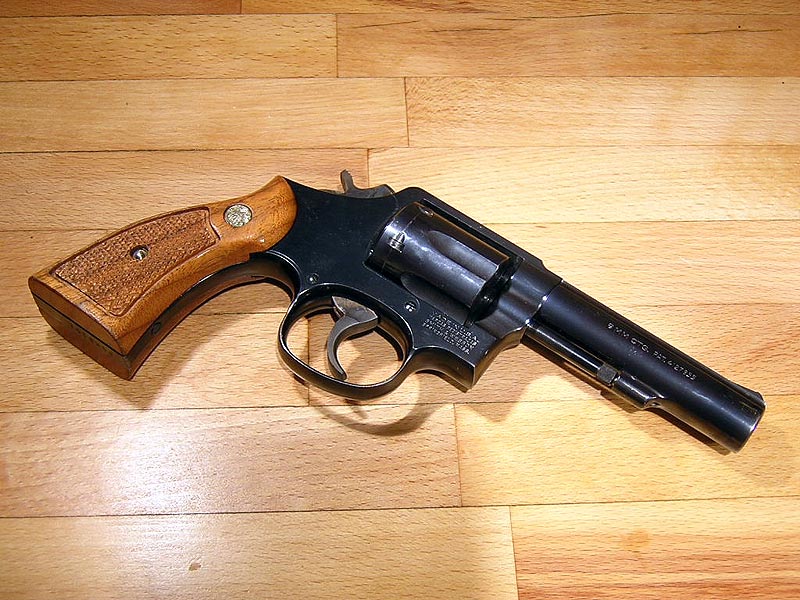
There’s an old misconception the .38 Special ideal for novices. That is, given the simplicity with which a double-action revolver operates, the tame cartridge makes it perfect for new shooters learning the ropes. In a sense, this is true, if you’re talking about a 4-inch barreled revolver and up. Not so much when discussing many of the popular carry models.
Take the Ruger LCR, for instance. At 13.5 ounces, the ultra-light revolver’s recoil can prove quite stout, generating a bit more than 7 ft/lbs of recoil energy when shooting Hornady’s 125-grain American Gunner ammo. This is nearly twice the amount from say a 4.2-inch barreled Ruger GP101. With the latter, of course, you have a much larger gun you have to contend with, a drawback for concealment. If it’s a plinker or competition gun, this might not matter a lick.
To be fair, you have to deal with the same physics with micro 9mm pistols. The Ruger LC9s generates around 8 ft/lbs of recoil energy spitting out Hornady’s 124-grain Custom ammo.
But, this can become considerably more bearable given the pistol offers the 9mm’s superior ballistics (it’s 210 fps faster than the .38 load), capacity (three more rounds) and concealment. Admittedly, there are hairs to split on the last point, but generally, semi-autos offer a much slimmer profile than revolvers, making them easier to keep under wraps.
OK, so what? You’ll get used to the recoil, what you care about reliability. Good point, on average a .38 Special revolver will experience fewer malfunctions than a 9mm pistol. Yet, the good ol’ revolver isn’t immune to failures and the argument exists that when a wheelgun fails it’s much more catastrophic than a pistol.
There’s no simple “tap and rack” to solve something like a pulled bullet or a stuck case in a revolver; in many circumstances getting it in working order involves tools – not ideal if your life depends on getting the gun back into the fight.
.38 Special vs 9mm: Concealed Carry
Overall, it’s difficult to argue that when it comes to concealed carry, for most modern shooters the 9mm edges out the .38 Special. As mentioned before, the semi-auto pistol cartridge offers better ballistics, is chambered in larger-capacity guns, of which there is a greater selection and, for the most part, are easier to conceal. Certainly, semi-auto pistols do require more practice to become competent, given the greater odds of having to solve a malfunction. Though, to many, this is a small trade-off.
It takes a five-shot and a six-shot .38 snub to equal the 11 rounds of 9mm held in the Glock 26, shown at right with Tactical Advantage sights. Author Photo
With that said, the .38 Special is no slouch. Over the years, it has more than proven itself a capable self-defense cartridge and in recent times has benefited from the advancements in ammunition. In the right hands and with the proper round, there’s no reason to believe the tried-and-true revolver cartridge won’t perform admirably in a self-defense situation.
Additionally, a streamlined manual of arms, mastering most of the guns chambered for it is generally a simpler task. While it may not be most people’s first choice any longer, it is no less a valid choice overall.
.38 Special vs 9mm: Versatility
Stepping away from defensive applications, the one area the .38 Special perhaps has an edge on the 9mm beat is versatility, particularly on two fronts: guns and reloading. To the former, since it is the parent of the .357 Magnum, it is possible to shoot the .38 in nearly any gun chambered for the larger cartridge.
This is a benefit from the standpoint that it is normally less expensive per round than the magnum and a magnitude less punishing to shoot. To the latter, given it has more case to work with the .38 also has more potential on the reloading bench. With experience and understanding about its capabilities, a handloader can get a lot out of the cartridge.
.38 Special vs 9mm: Ammunition
The .38 Special won’t break the bank by any stretch of the imagination. At the same tick, it still won’t outdo the 9mm for economy. Outside of the .22 LR, there is perhaps no more cost-effective option out there – especially when talking centerfire cartridges.
A quick survey of LuckyGunner.com gives a good example. At their cheapest, the .38 Special comes in at around .25 cents per round, the 9mm .14 cents – roughly a whole three more rounds per dollar spent. Over a long afternoon shooting that adds up.
Parting Shot
There is no doubt modern shooters have embraced the 9mm and for good reason. Of nearly all handgun cartridges on the market today, it is among the most well-rounded and allows even new shooters the ability to become proficient. Furthermore, dominating the gun world as it has, the 9mm just plain has more options when it comes to firearms.
You’re more likely to find a gun to fit exactly what you need, be it a service-pistol for your nightstand or a single stack for your belt holster. Finally, given ammunition advancements, it will perform in the direst circumstances.
Nevertheless, the .38 Special is still around for more than just the sake of nostalgia. While overall it doesn’t offer all the advantages of the 9mm, it remains a very competent cartridge, one of which many still trust their lives.
Arguably, the cartridge takes a bit more research to find the optimal defensive round, but for those who desire the reliability of a revolver that’s a small hurdle.

 JACOB WEISBERG