
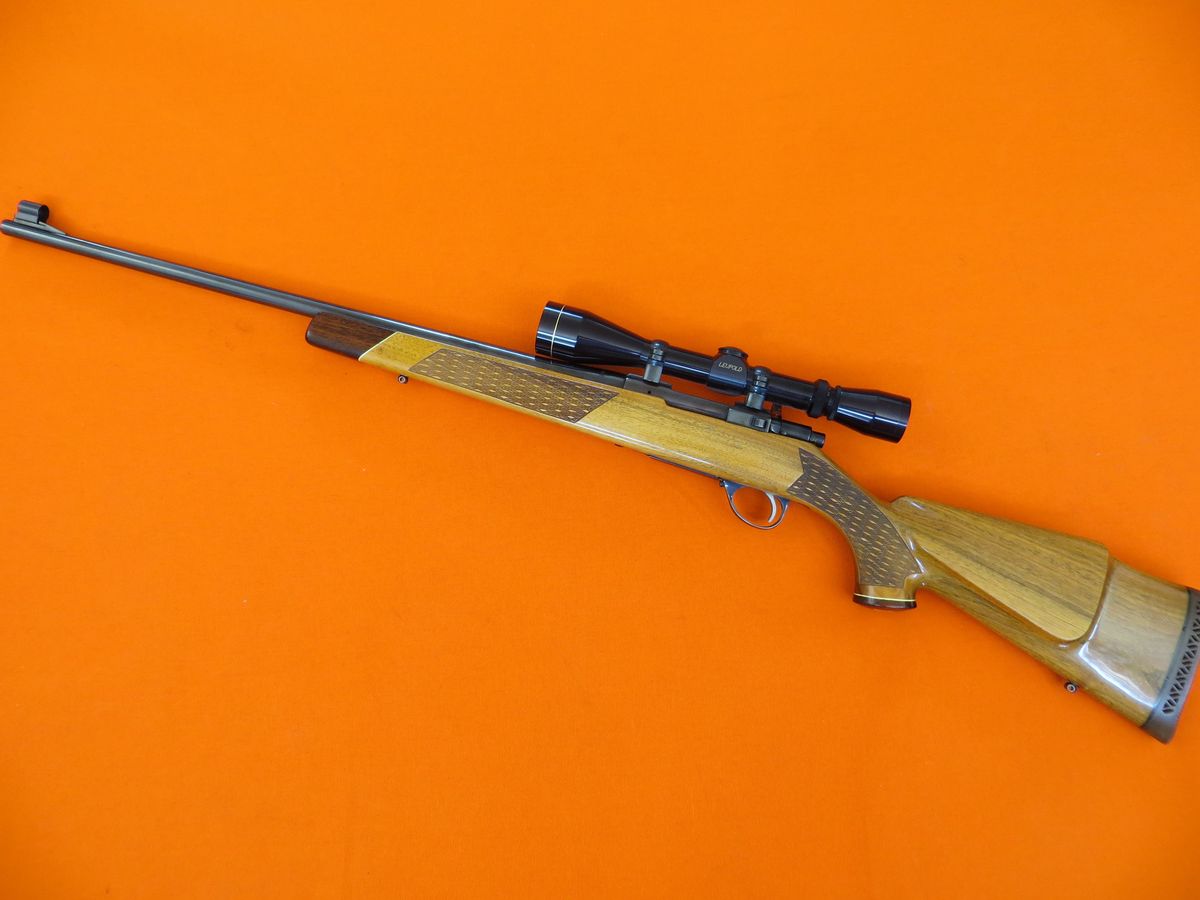
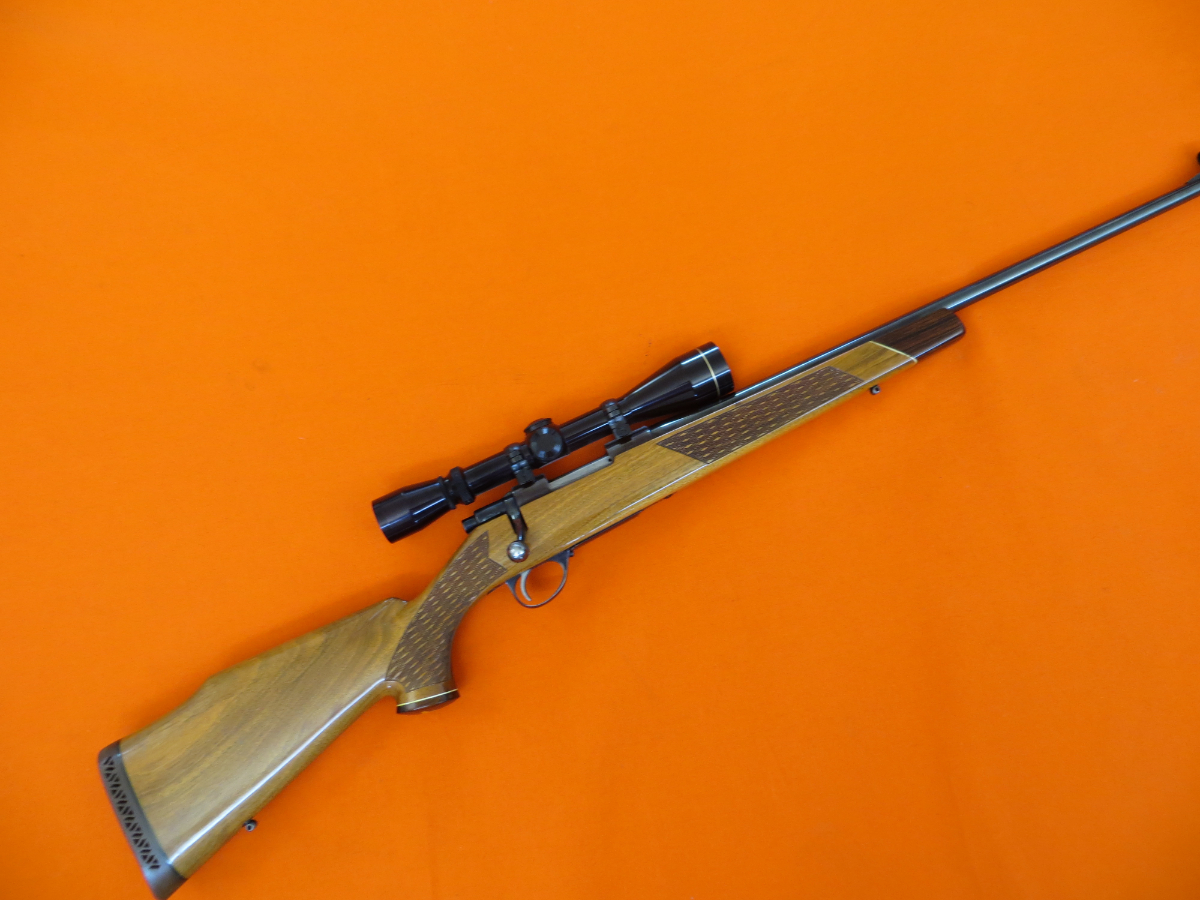
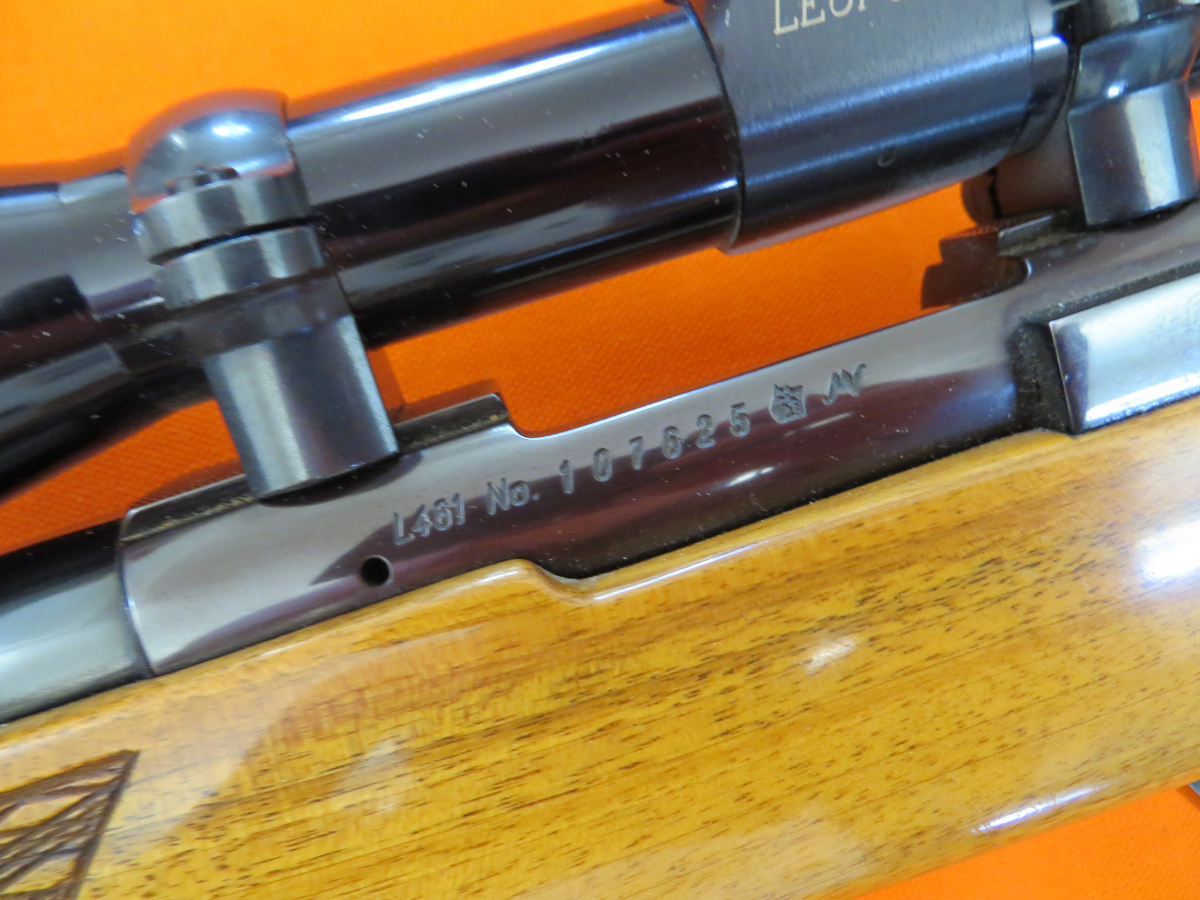
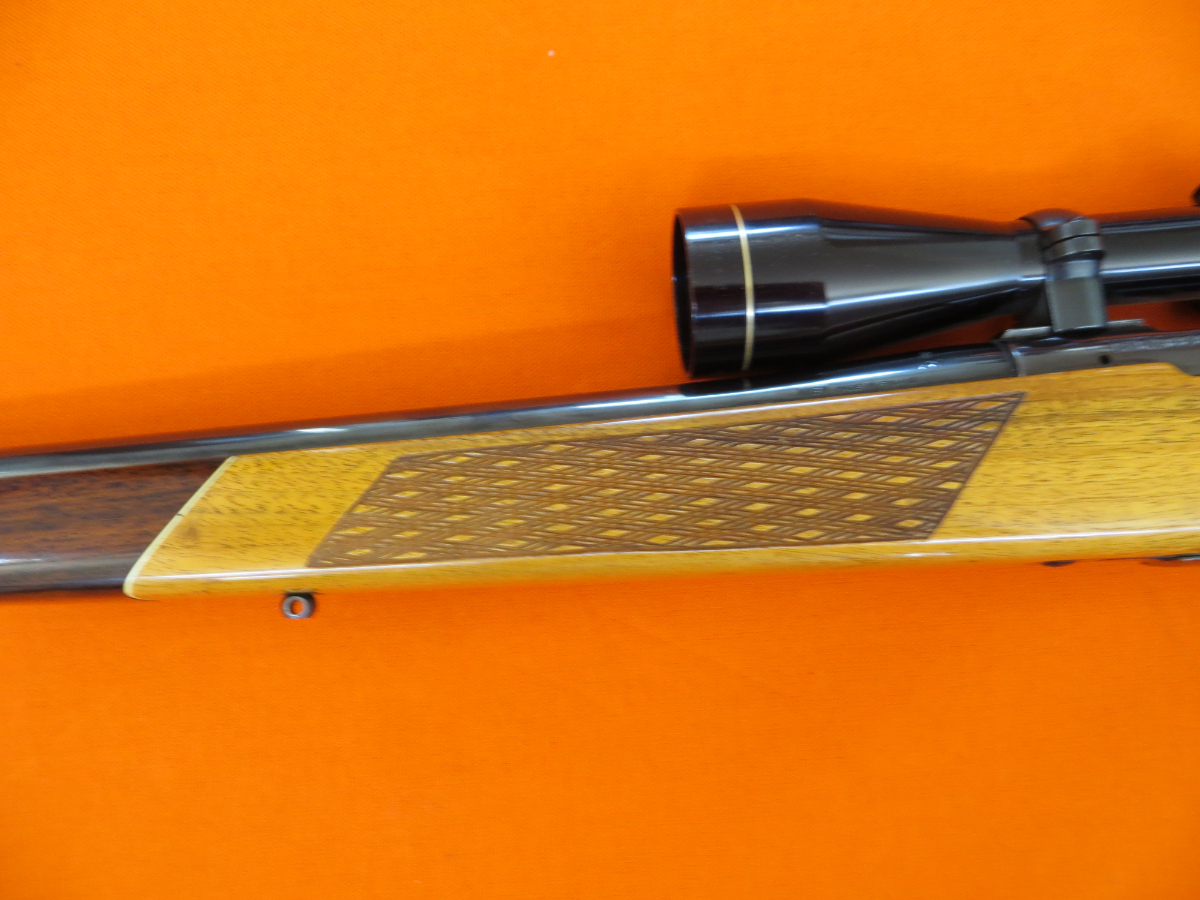
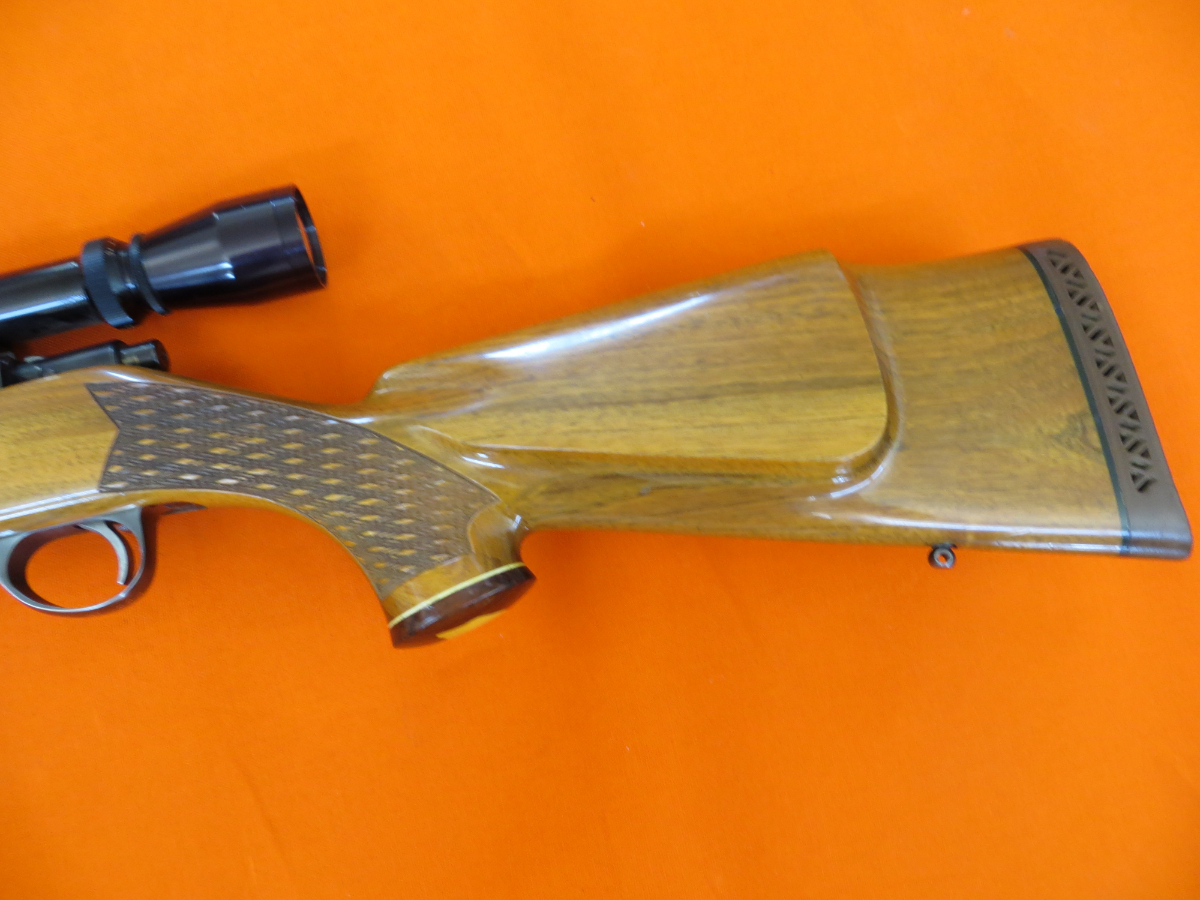
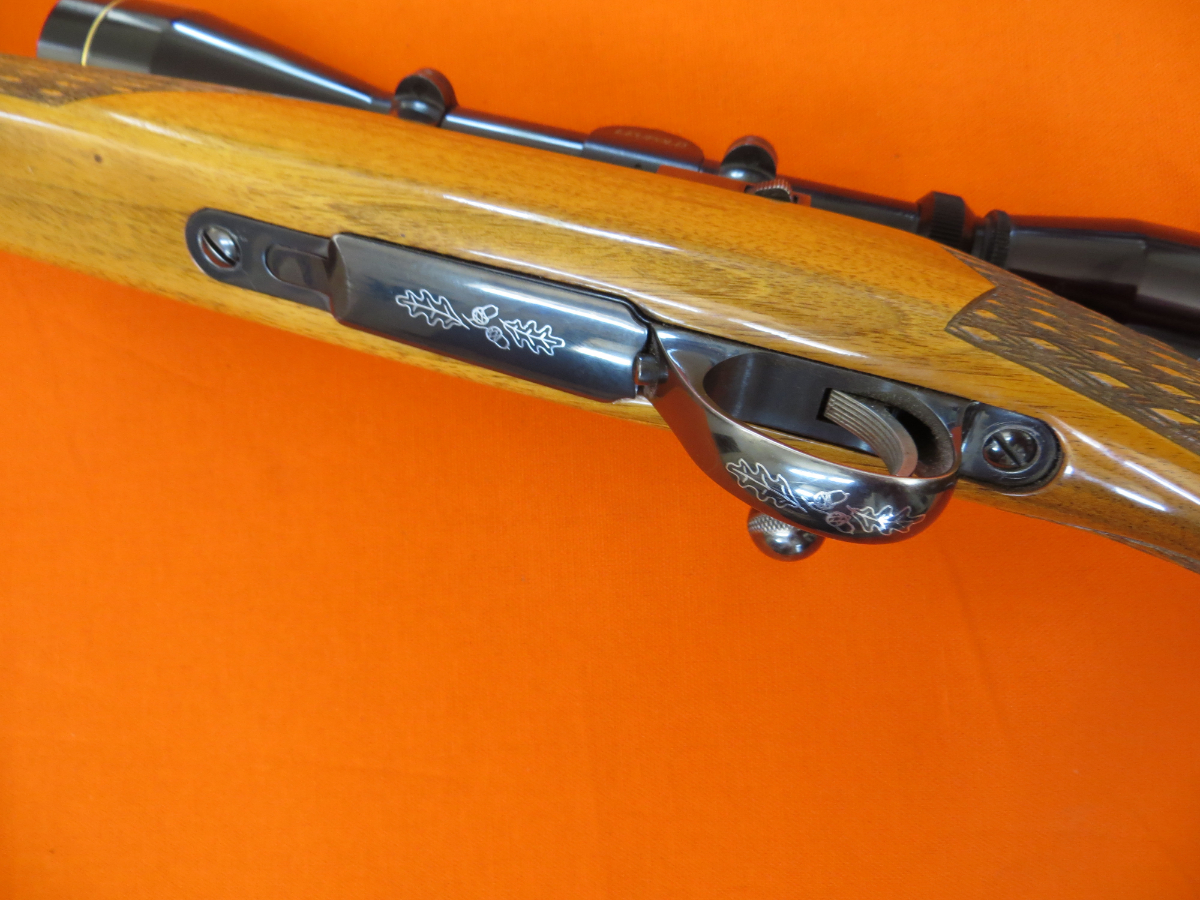
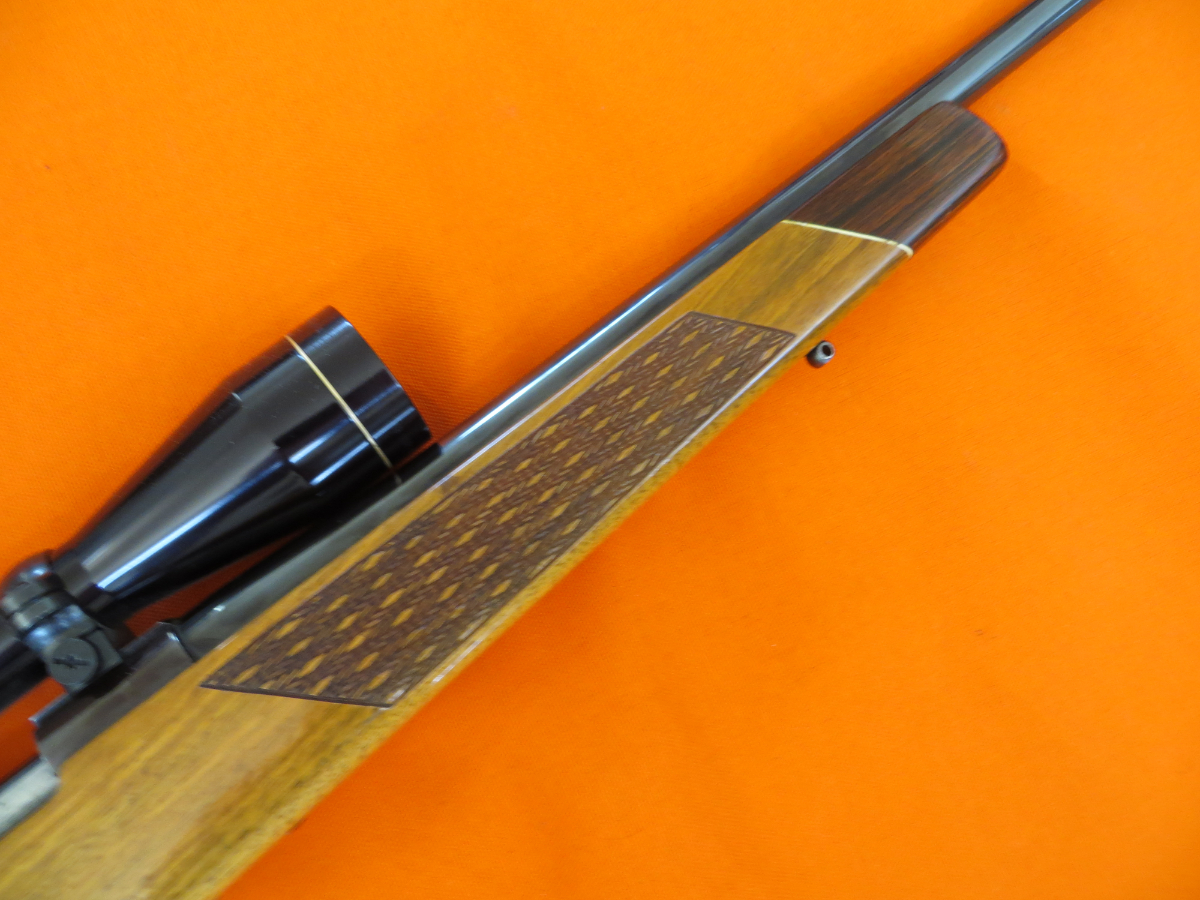
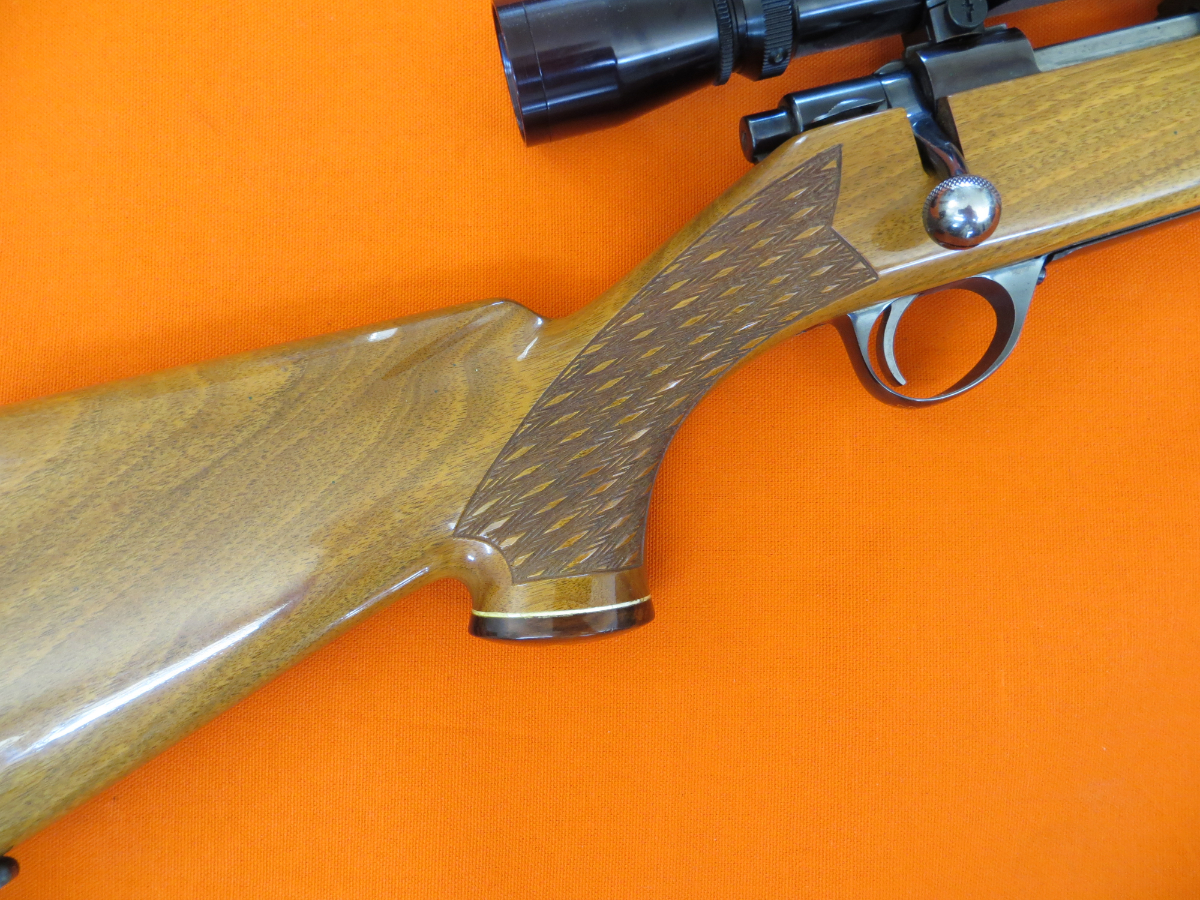
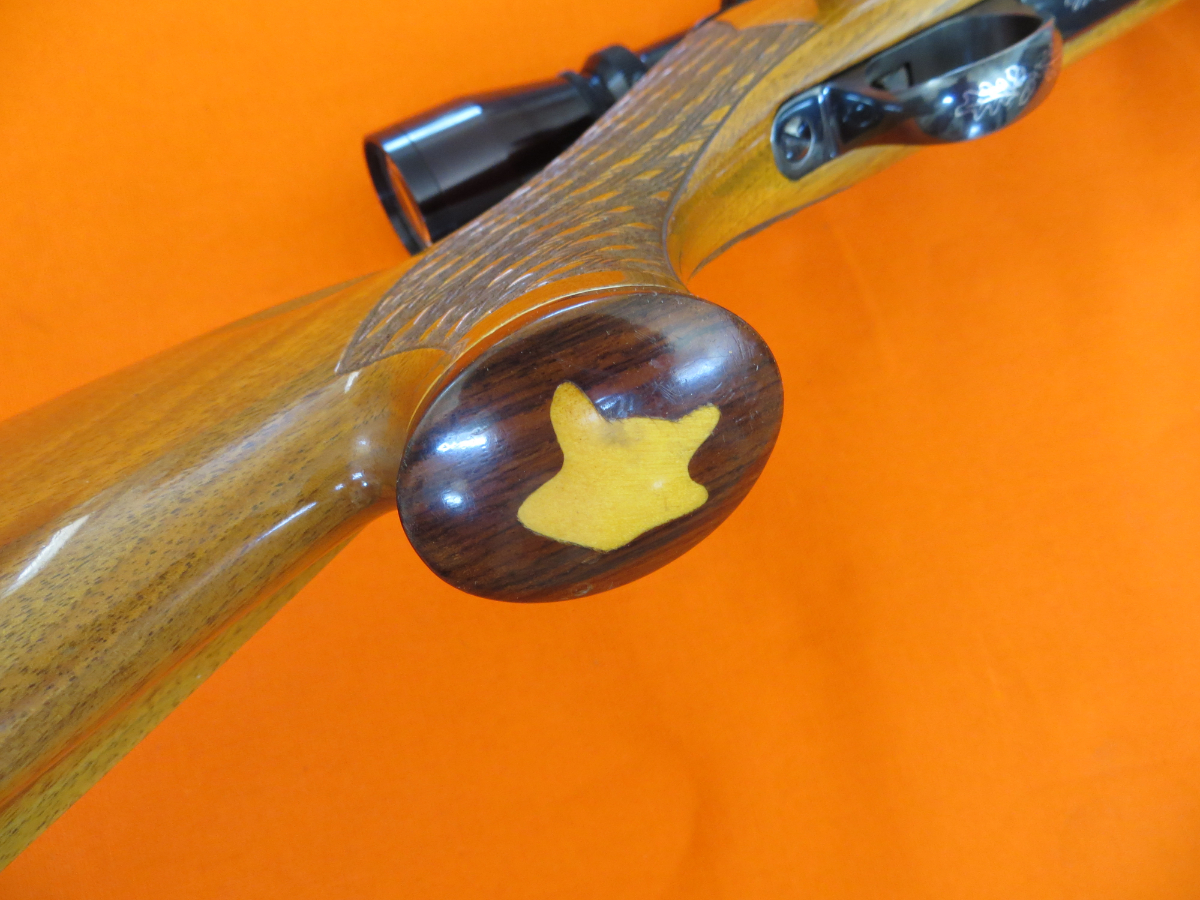
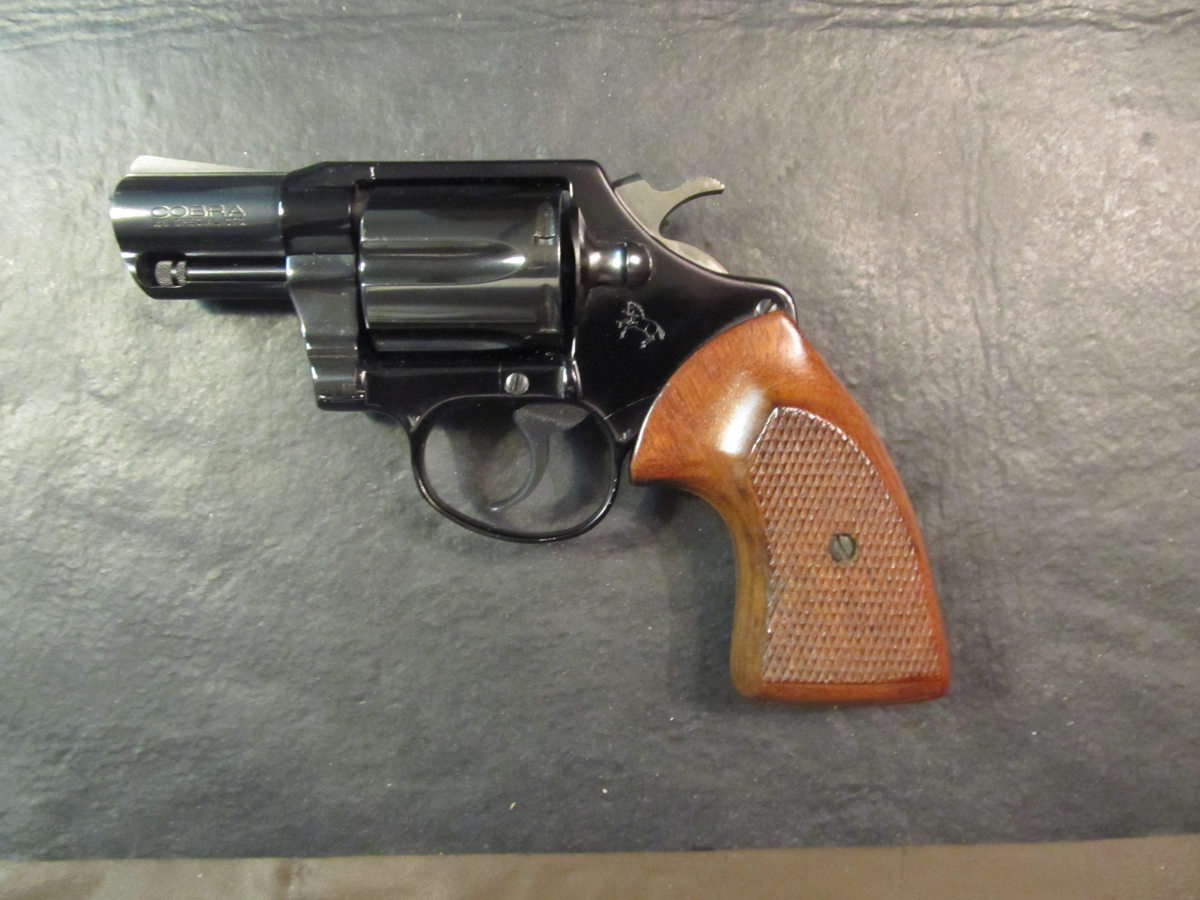
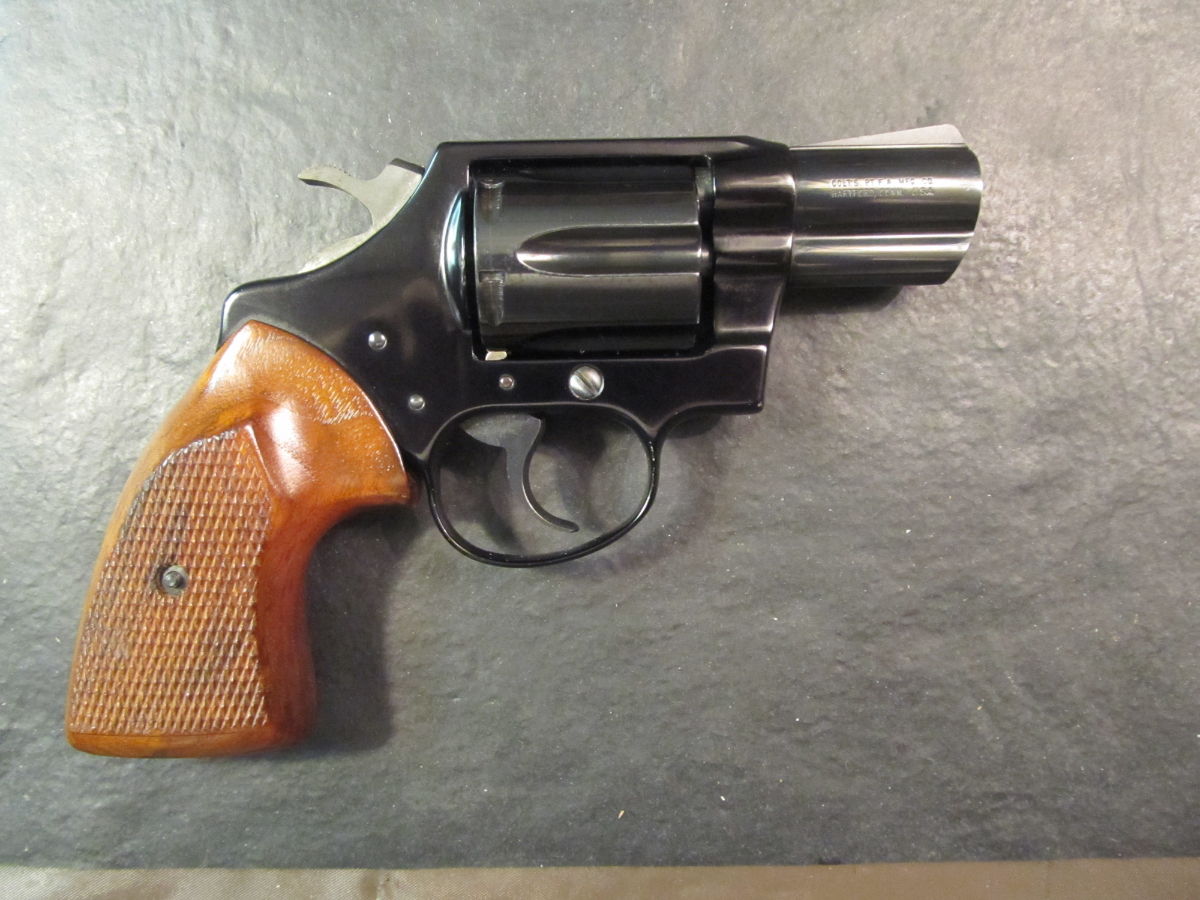
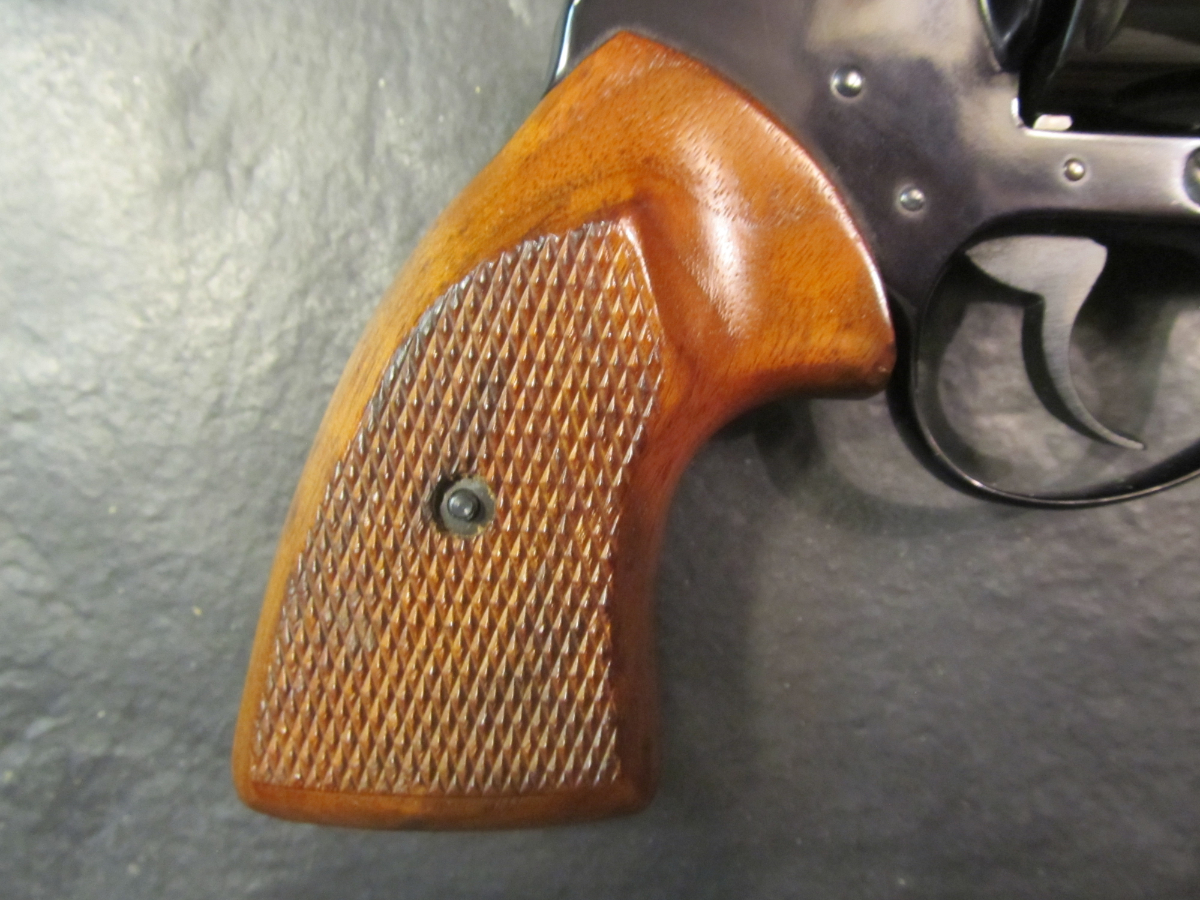
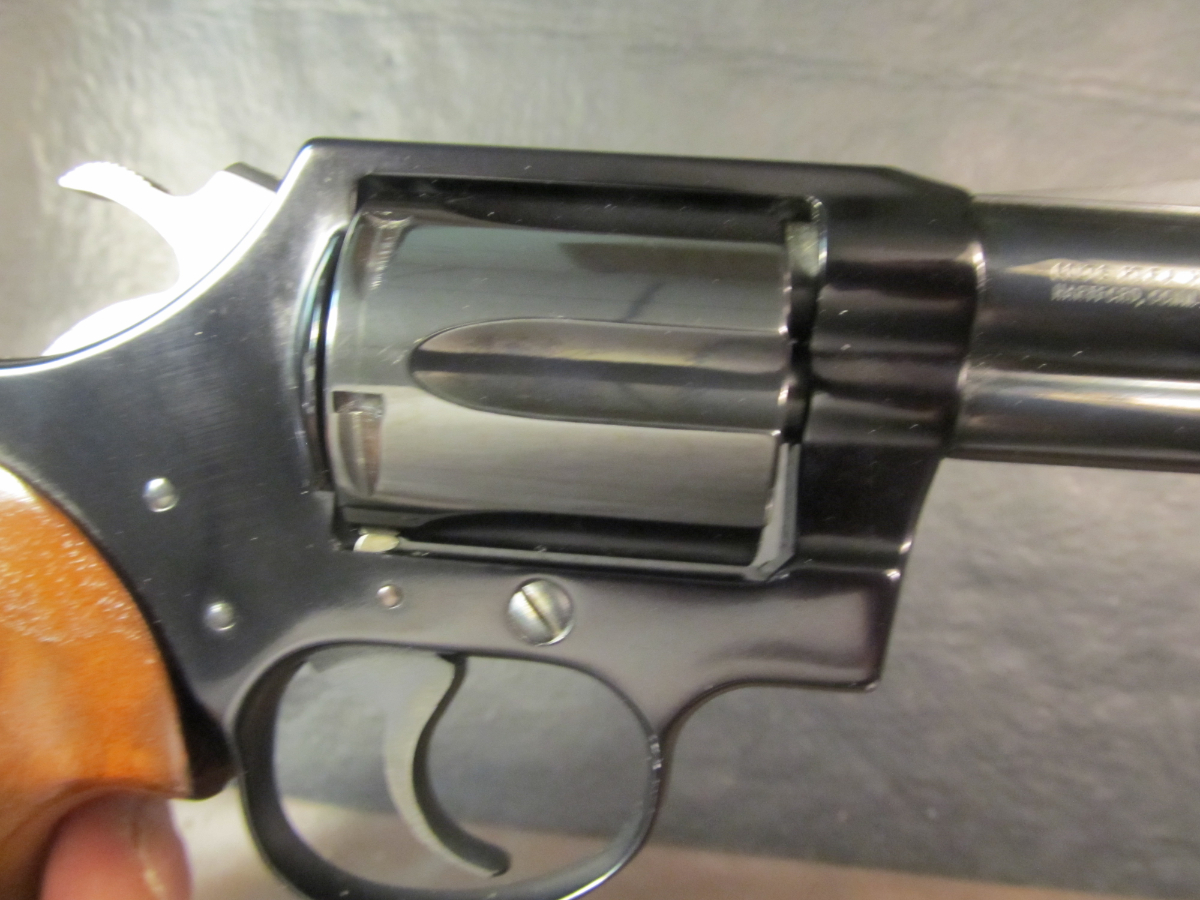
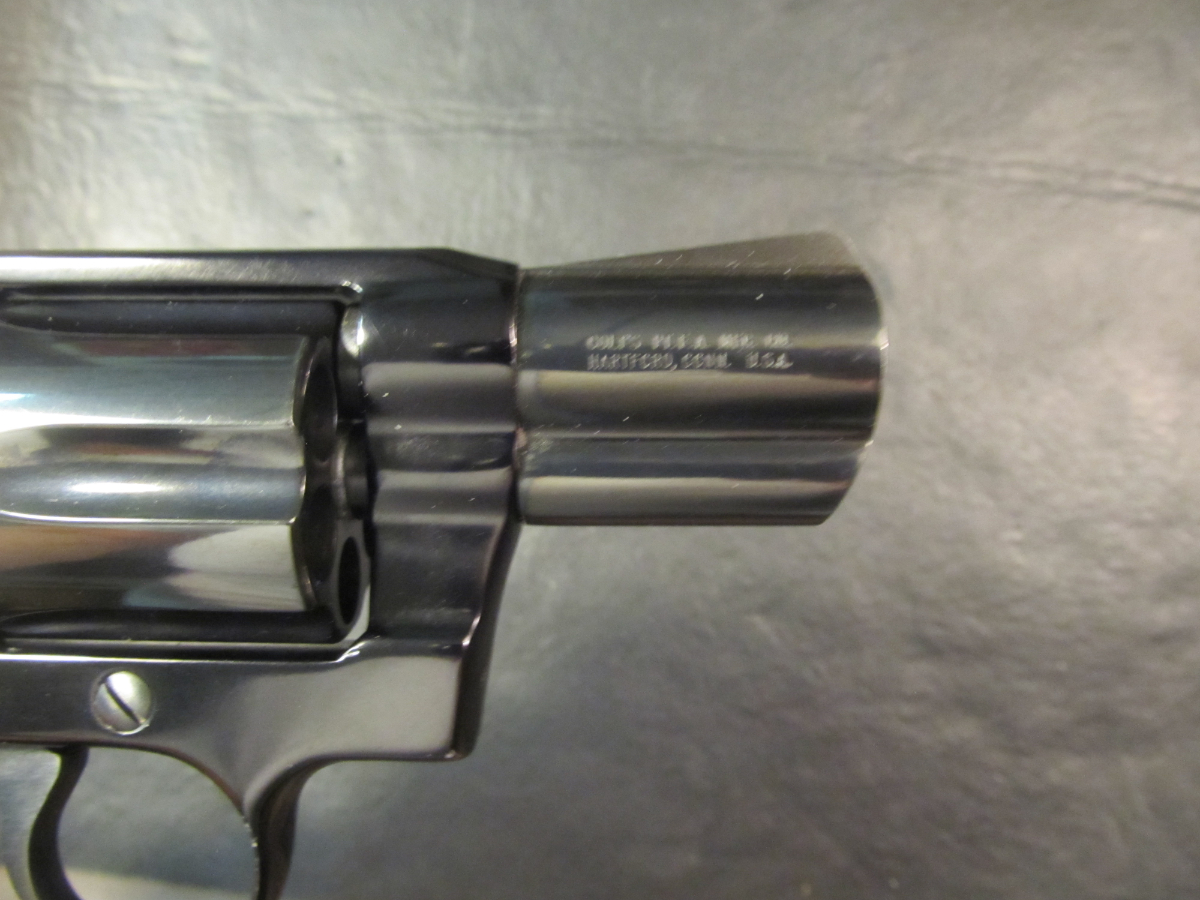
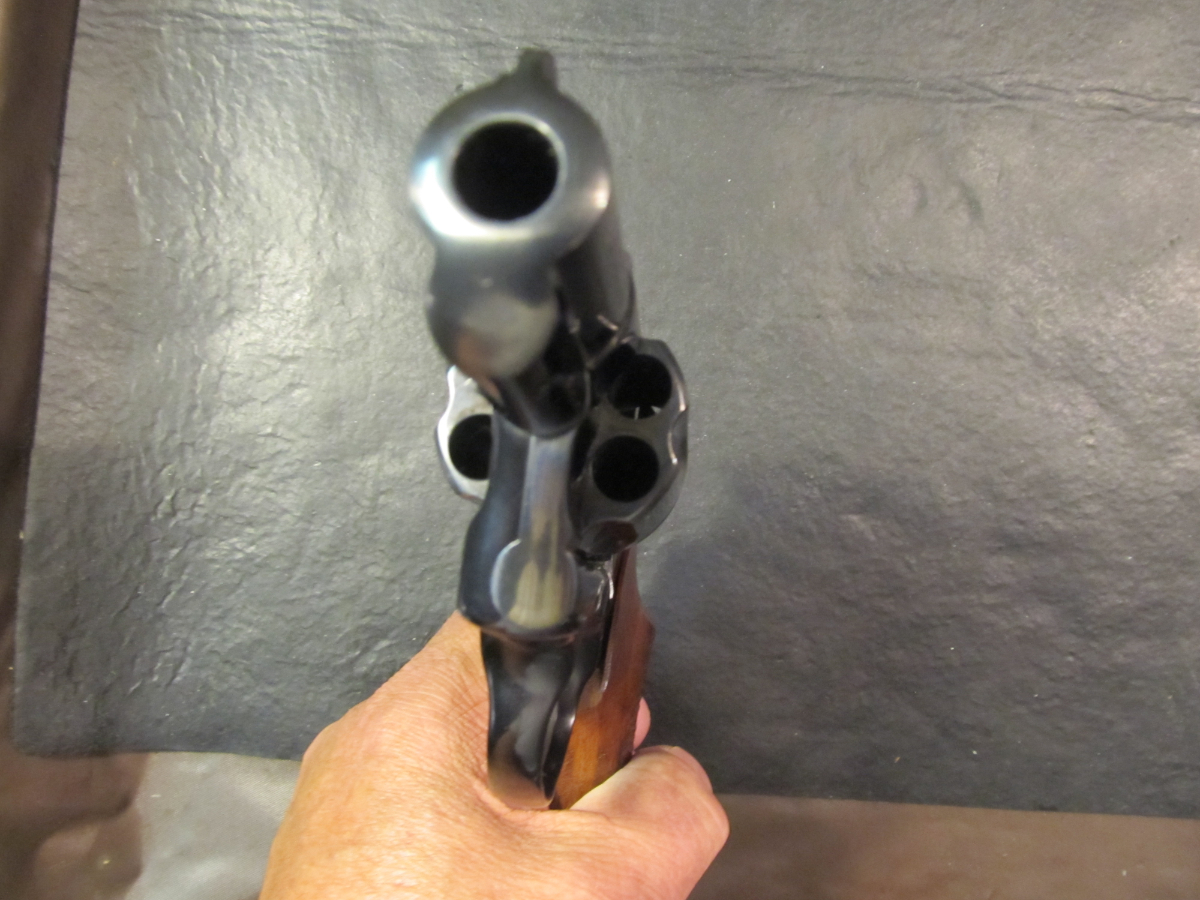
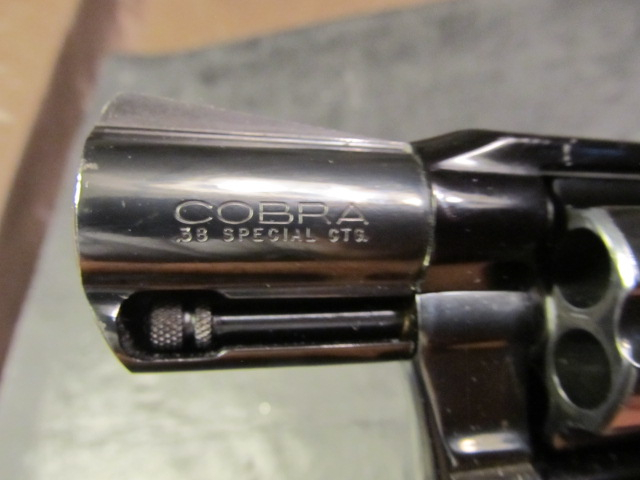
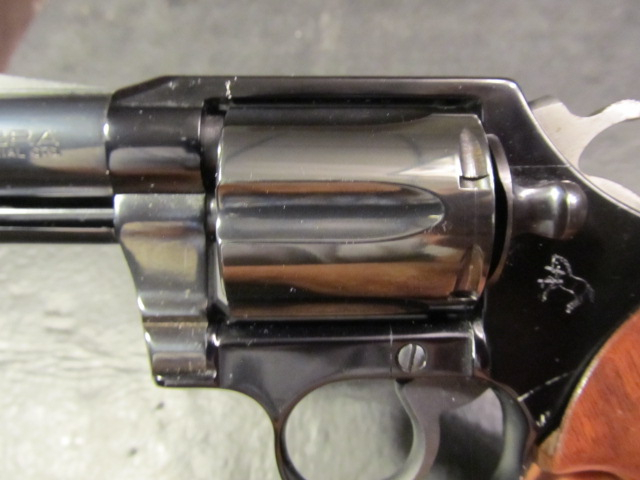
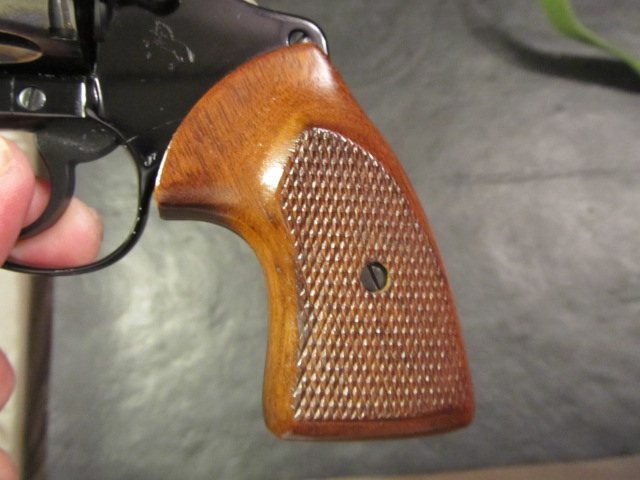
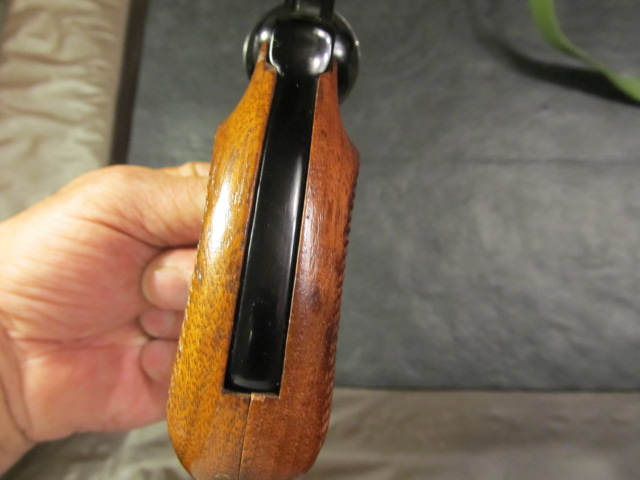
But will social actions at say under 20 yards. This excellent gun will be more than effective. Barring of course the target is high on PCP etc., is a linebacker for the NFL or otherwise in enraged mode. Then I highly suggest that you take off like a stripe ass Baboon and make tracks. Grumpy
Categories
Something Nice N.S.F.W.



Categories
Teddy

From the Long rifle to the AR-15, the story of firearm innovation is inextricably tied to the story of the United States.

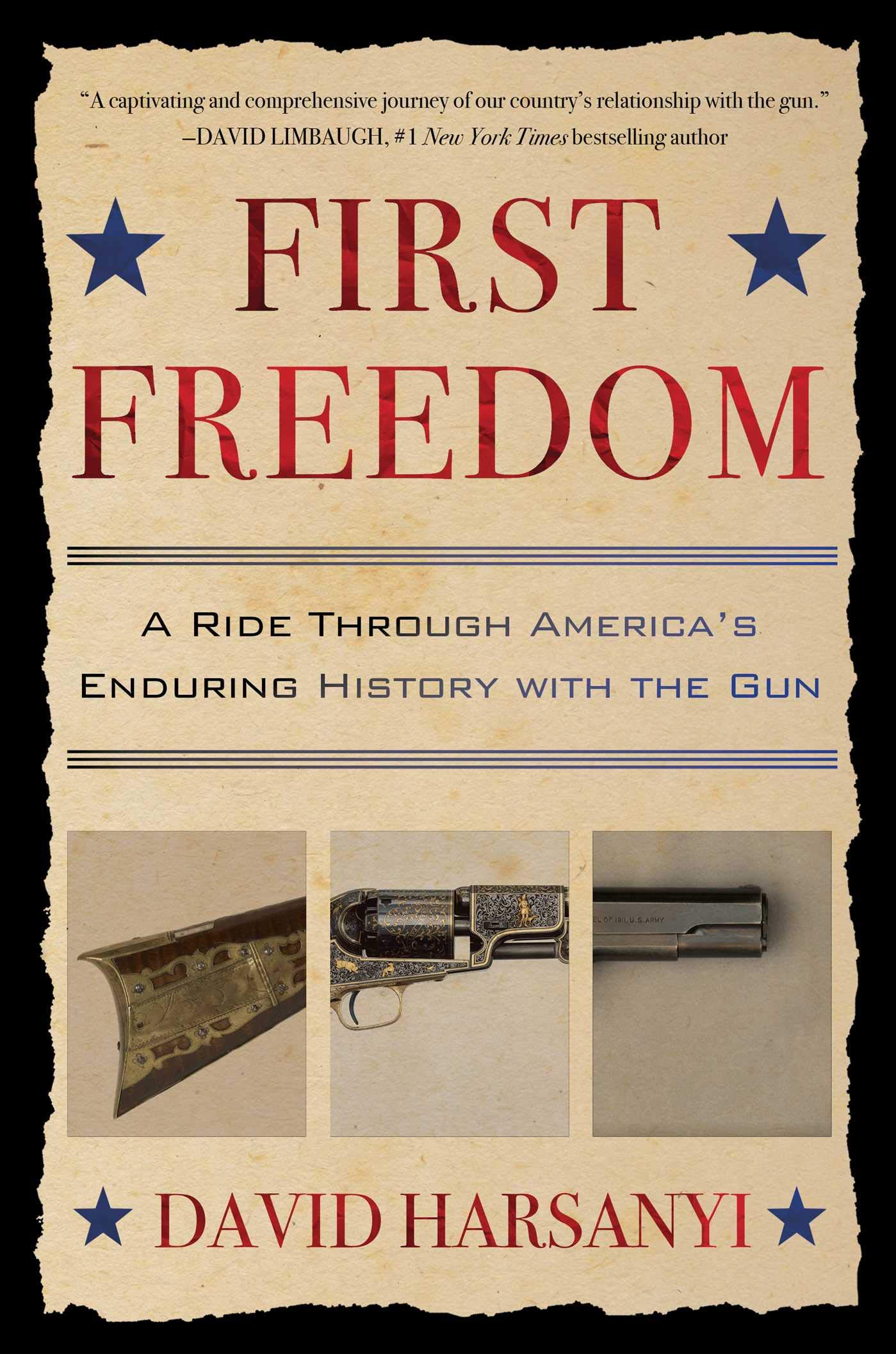
This piece is adapted from David Harsanyi’s new book, “First Freedom: A Ride Through America’s Enduring History with the Gun” (Threshold Editions).

1. Kentucky Rifle
Martin Meylin has been credited with being the first great American gunmaker and inventor of the Pennsylvania long rifle—which was to become known as the Kentucky long rifle (“Kentucky,” in those days, being anything in the wilderness west of Pennsylvania). Meylin’s small cobblestone workshop still stands off a two-lane road in Lancaster. Local schools are named after him. Plaques have been erected in his honor. State politicians have even written legislation commemorating his contribution to American life.
Well, while we know that Meylin left his home in Zurich, Switzerland, around 1710, and ended up in the German-speaking area of Lancaster County—a place that would become the center of American gun innovation for more than a century—we don’t know much else. And while it is tidy to give a single inventor credit for the gun, it’s probably the case that numerous inventors and blacksmiths engineered the Kentucky rifle over a period of decades.
The invention created by these German-speaking immigrants and their children changed the way Americans hunted, fought, and explored. Captain John Dillin, author of a popular book about the Kentucky rifle in the 1920s, would claim that the gun “changed the whole course of world history; made possible the settlement of a continent; and ultimately freed our country of foreign domination. Light in weight; graceful in line; economical in consumption of powder and lead; fatally precise; distinctly American; it sprang into immediate popularity; and for a hundred years was a model often slightly varied but never radically changed.”
The rifle—the word derived from the German riffeln, meaning to cut grooves—was first developed in Europe as a sporting weapon for noblemen to hunt with more precision. The invention of gun barrels with spiral grooves on the interior was likely to have originated among a number of blacksmiths in southern Germany and Switzerland. The physics of spinning propulsion as a means of improving aim was known to weapons makers for thousands of years—ever since feathers were placed on arrows to make them spin.
Muskets of early America were smoothbore weapons, and ammunition was fired at relatively low velocity. Moreover, the musket ball, which fit loosely when loaded down the muzzle, would bounce off the inside of the barrel when fired, making the final landing place unpredictable. The rifle Meylin and other gunsmiths made, on the other hand, immediately offered shooters decent accuracy at 150 or more yards—or a hundred more than an average musket.
The first German gunsmiths of Pennsylvania produced traditional Jäger rifles. Expensive and often ornate, they were short, easy-to carry, large-ammunition flintlock guns built to be quickly reloaded so that the carrier could hunt big game in dense German forests. The Kentucky rifle would feature a more elegant and elongated design. The longer barrel would increase the distance between the rear and front sights, giving the shooter a better bead on his target. A gun typically weighed only around nine to ten pounds: much lighter than a musket and therefore much easier to carry. The bore size, or “caliber”—which represents the diameter of the barrel—was reduced to save on powder and lead. The .45-caliber long rifle could deliver three times the number of shots from the same amount of powder that was used in the typically .75-caliber musket. These improvements made hunting for game—the most important use of the gun at the time—much more successful.
There were downsides to the weapon, of course, as the American revolutionaries would soon learn. For starters, rifles could be incredibly difficult to load. Fitting a projectile into a bore tightly enough to engage the rifling sometimes required hammering it all the way down the barrel. This was fine for a frontiersman who was hunting deer, but it created a perilous situation for a soldier. Another disadvantage of rifled weapons was that the black powder burned dirty and the grooves gunked up with residue after a few shots. This fouling often made loading impossible until the barrel was cleaned with a damp swab.
Yet, the imagination and techniques mastered by Meylin and others like him offered the thousands of incoming settlers and explorers the opportunity to continue to push into the wilderness of the Cumberland Mountains and surrounding areas. It was a gun that involved reengineering and reimagining Old World technology and was adapted to the rigors and uniqueness of frontier life, playing a large part in the Western mythos and becoming a standard tool of the American woodsman.
2. Colt’s “Peacemaker”
Like the Kentucky rifle, the revolver was a distinctly American invention. Unlike the Kentucky rifle, however, the revolver’s development, production, and initial popularity can be largely attributed to one man, Samuel Colt. The Connecticut native was not merely a mechanical virtuoso but a promotional and manufacturing mastermind who would become a template of the nineteenth-century American industrialist, epitomizing the exuberance and possibilities of the populist era of mid-1800s American life.
A self-made man, Colt was prodigious, a tireless self-promoter, innovator, autodidact, and mythmaker. His nose for opportunity made him one of the wealthiest men of his day. With this success came a leap forward in firearm technology. Colt invented the first hands-on, workable, mass-produced revolving firearm. And with his gun, he became one of the first industrialists to take advantage of mass marketing, celebrity endorsements, and corporate mythology to sell his product—a success that laid the groundwork for twentieth-century businessmen, including Henry Ford. In practical terms, his gun was more deadly, more accessible, more dynamic, and more useful than any that had ever been designed before it. It would play a part in carving out the West, revolutionizing war, and transforming the role of the gun in modern American life.
Although he certainly perfected the idea, multi-chambered guns already existed when Colt came up with his first revolver. Pepperbox pistols, for instance, were widely owned and used by the time Colt was first carving out his wooden model for the revolver. Named after the pepper grinders they resembled, these handguns had to be manually rotated, and were notoriously unreliable and difficult to aim because of the front-loaded weight of the multiple barrels. In 1814, the year Colt was born, the Boston inventor Elisha Collier had taken out a patent on a five-shot flintlock model pistol. Collier’s development was to invent a gun that was “self-priming”: in other words, when the hammer of the weapon was cocked, a compartment automatically released a measured amount of gunpowder into the pan for another charge.
Sam Colt
At the age of twenty-one, though, Colt decided to patent the idea he’d been toying with for years: the repeating revolver, It made a singular technical advance—what may seem obvious to us now: rather than relying on five barrels, Colt’s invention had a rotating cylinder that came into alignment with a single barrel. When cocked for firing, the next chamber revolved automatically to bring the next shot into line with the barrel. The gun included a locking pawl to keep the cylinder in line with the barrel, and a percussion cap that made it more reliable than any other gun available dominant mechanism of American weapons. The patent protected Colt’s fundamental ideas until 1857, by which time he was enormously wealthy and world-famous.
Colt would sell the Walker, Dragoon, and the Navy models. But it was the Single Action Army—more famously known as the “Peacemaker”—that would embody his legacy. An elegant gun with a practical and streamlined design, it took on near-mythological status not merely because of its easy use but because of the legendary men who claimed to shoot it. The first model gun had a solid frame that weighed around three pounds, a .45-caliber with a 7.5-inch barrel, blued steel, and an oil-stained walnut grip. It was soon one of the most popular guns ever made. In 1872, the Army’s Ordnance Board would adopt it for service.
It was likely Colt himself who came up with the moniker “Peacemaker” for his gun. It was not merely a stab at irony or an adman’s clever copy. Colt often, and vigorously, argued that this gun could empower the average American. The average man could order one through the mail for the somewhat affordable price of $17 and have a light but powerful weapon within weeks. And selling his guns to civilians—every civilian, if possible—would be Colt’s principal goal.
The weapon could be brandished for self-protection, of course, but it was a firearm so formidable that war was to become too destructive to be worth engaging in, Colt argued. The gun was, to him, an imperative tool in fulfilling the American dream on both a personal and providential scale. A Colt made one man six. “Place a revolver in the hands of a dwarf . . . and he is equal to a giant,” he said.
3. Spencer’s repeating rifle
On August 18, 1863, the inventor Christopher Spencer arrived at the White House to meet President Abraham Lincoln, who was fascinated by the mechanics of new guns, with his rifle in hand. The president would later refer to the inventor as “a quiet little Yankee who sold himself in relentless slavery to his idea for six weary years before it was perfect.”
The two men, surrounded by cabinet members and a smattering of other government officials, strolled to a spot not too far from where the Lincoln Monument now stands to have a shooting contest. “The target was a board about six inches wide and three feet high, with a black spot on each end, about forty yards away,” Spencer recalled. “The rifle contained seven cartridges. Mr. Lincoln’s first shot was about five inches low, but the next shot hit the bull’s-eye and the other five were close around it.”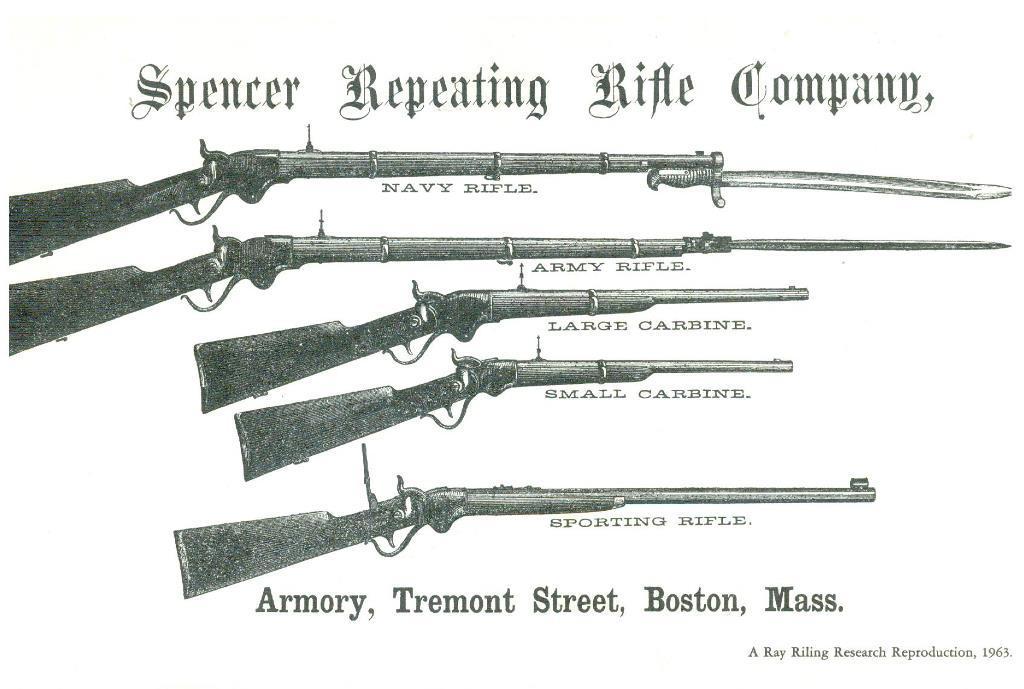
“‘Now,’ said Mr. Lincoln,” according to Spencer, “ ‘we will see the inventor try it.’ The board was reversed and I fired at the other bull’s-eye, beating the president a little. ‘Well,’ said he, ‘you are younger than I am and have a better eye and a steadier nerve.’ ” It was in this moment that Lincoln finally decided these repeating rifle would be the gun of the Union.
While that last bit is almost surely mythology, the Spencer repeating rifle that Lincoln shot that day would take less nerve to use than any of the muzzle-loaded rifles being fired by the soldiers battling in the Civil War. Even in the best of conditions, the bravest and most competent soldier could fire a single-shot, muzzle-loaded gun—the dominant gun of the Civil War—perhaps three times in a minute. The Spencer rifle offered the soldier a spring-loaded, seven-shot tubular magazine in the butt of the gun. Its lever action ejected a spent cartridge and chambered a fresh one. A man could empty his entire magazine well within a minute and already be reloaded.
When an Army captain tested the Spencer rifle for the Union, he fired it more than eighty times without a single misfire. He then let the gun sit outside in the rain and sun. No problem. It still fired perfectly. Dyer buried the weapon in the sand, yet there was still no clogging of the mechanisms—even without cleaning. When he put the breech mechanism in salt water for twenty-four hours, it still worked.
General Ulysses S. Grant called Spencer’s rifles “the best breech-loading arms available.”
Like many later historians, Robert V. Bruce argued in his book Lincoln and the Tools of War that if the Union had adopted the repeating rifle earlier, “Gettysburg would certainly have ended the war. More likely, Chancellorsville or even Fredericksburg would have done it, and history would record no Gettysburg Address, no President Grant, perhaps no carpetbag reconstruction or Solid South.”
Bruce laid the blame for this calamity on the close-minded ordnance general James Wolfe Ripley. As a brigadier general in the Union Army during the Civil War, the rigid Ripley instituted a number of successful upgrades, including modernizing supply chains and artillery ordnance. Yet it was Ripley’s dislike of breech-loading repeating rifles—he called one a “newfangled gimcracker”—for which he is best remembered. Ripley had been witness to numerous allegedly game-changing inventions that failed during his time in American armory in Springfield, which made him skeptical of new loading techniques. Specifically, he believed breech-loading guns promoted waste and undermined discipline in battle.
But this, too, was likely revisionism. Though repeating rifles would dominate gun making in the coming decades and change the way Americans thought about shooting, even if the North had been able to ramp up production to arm enough troops to make a difference, it is unlikely the military would have been able to instill the principles and training necessary to make guns like the Spencer repeating rifle the dominant gun of the war.
Moreover, Lincoln had already directed Ripley to order Spencer repeating rifles by the time he fired the gun: more than 10,000 of them would be delivered to the Army and Navy by 1862, and another 37,000 had already been ordered. The gun, in fact, had already seen action by the time the Spencer and Lincoln were shooting at their targets. Union troops commanded by Colonel John T. Wilder’s “Lightning Brigade” had defeated the notably larger Confederate forces at the Battle of Chickamauga using some of the new repeating guns. One dazed Southern prisoner reportedly asked a Union officer, “What kind of Hell-fire guns have your men got?”
4. The Browning 1911
On June 28, 1914, Gavrilo Princip, a Bosnian Serb, pulled a Browning pistol from his coat and shot twice, killing Archduke Franz Ferdinand of Austria and his wife, Sophie, the Duchess of Hohenberg. Before the nineteen-year-old was able to turn the gun on himself, a group of bystanders standing nearby on the Sarajevo street tackled him and grabbed the gun. The scene was mayhem. Franz Ferdinand’s bloody undershirt and Princip’s gun would end up in the hands of a Jesuit priest named Anton Puntigam, a close friend, who had performed the blood-soaked last rites on the archduke and his wife.
The repercussions of this event, well-known and massive, would embroil millions and change the world forever. Yet we would be remiss not to point out that even a bumbling assassin with a half-baked plan needed only two shots from a Browning Model 1910 to plunge the world into conflict. The Browning pistol, after all, was one of the most reliable and sturdy handguns ever produced. What makes the gun even more amazing is that it was one of about a dozen game-changing inventions concocted by its inventor, John Browning.
 In one way or another, Browning’s ideas played a part in nearly every conflict in the twentieth century as he invented and conceptualized the modern gun. The rest would merely be tinkering and streamlining his foundational ideas. Browning brought his creations to a host of gun manufacturers around the world, and those gunmakers who didn’t work with him would copy him. By the end of his career, the man from Utah had a say in virtually every category of firearms in existence: rifles, pistols, shotguns, machine guns, and cannons.
One of his most lasting guns would be the 1911.
Browning’s patents evolved into the Model 1900, the Model 1903, the Model 1910, and finally the Colt Model 1911, which would possess numerous components that are still widely used in semiautomatic pistols—including, most recognizably, the detachable magazines that could be loaded in the butts of the guns. When the U.S. Army put the gun to its standard 6,000-shot test (allowing cooling every 100 rounds and cleaning every 1,000), it accomplished the task without a single failure of any kind.
During World War I its reputation was further buttressed by stories of American bravery. Most famous was the case of Alvin Cullum York, better known as Sergeant York, one of the most decorated American soldiers of the conflict. York famously received a Medal of Honor for leading an attack on a German machine-gun nest, killing at least 25 enemy soldiers and capturing 132. York, a Tennessean whose blacksmith father still hunted with a flintlock rifle, was also pacifist who had petitioned for conscientious objector status. “Don’t Want to Fight” was his stated reason. He was denied.
In October 1918, York found himself in command of his unit after an ambush killed two of his commanding officers. He helped fight off more than a hundred Germans. After his Springfield rifle was exhausted of ammunition, York claimed to have repelled a German bayonet charge of six soldiers with nothing more than his 1911 pistol. An investigator would later find twenty-three .45 rounds fired from a Colt 1911 handgun on the site.
The gun York used would be the standard-issue sidearm of the United States armed forces from 1911 to 1986; in other words, American soldiers holstered the gun from before World War I nearly to the end of the Cold War. It would be widely embraced by American law enforcement and become a bestseller in the civilian marketplace. Colt produced more than 2.6 million military pistols based on the 1911 design and another 400,000 for civilians. All told, nearly 5 million were manufactured by various gunmakers.
5. Stoner’s AR-15/M-16
Eugene Stoner was nothing more than a gun hobbyist shooting off rounds of his strange homemade rifle on a local Southern California range during the summer, when executives for the struggling Los Angeles firm ArmaLite spotted the young man. Stoner, who was something of an aviation technology expert when the men first approached him in 1945, would become the chief engineer of the small gun manufacturer, embracing the kind of jet-age idealism that allowed it to break free of the constraints of traditional gun design.
ArmaLite had shown early interest in hybridizing technological advances of World War II airplane design, of plastics and alloys, with their small arms. Although it took a long time for Stoner to get it right, and an even longer time to convince military leaders it could work, his creation dominates the rifle market to this day. In 1955, when Stoner completed the first version of his AR-10—a light, seven-pound selective-fire rifle—the company began receiving some notice. But it wasn’t until the summer of 1960, when controversial Air Force general Curtis LeMay—the creator of the strategic bombing campaign in the Pacific theater during World War II and reportedly the model for General Buck Turgidson in Stanley Kubrick’s Dr. Strangelove—attended an Independence Day picnic sponsored by Colt (which had bought Armalite), that the gun would become a military concern.
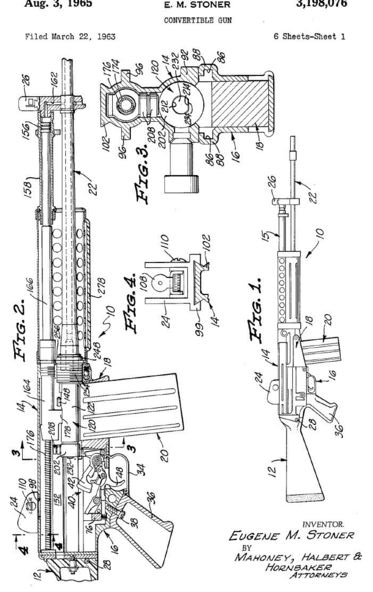
Stoner patent, 1965
As the tale goes, General LeMay was handed an AR-15 by Colt reps (the “AR” stands for Armalite, not “assault weapon”), who placed three watermelons at distances of 50, 100, and 150 yards. The general shot two of them and handed back the gun. When asked if he wanted to shoot the third, LeMay replied, “Hell, no, let’s eat it.” So impressed was LeMay after only two squeezes of the trigger, it seems, that he ordered 80,000 rifles on the spot.
Like the Lincoln-Spencer moment, this moment is probably less than the entire truth. Whatever the case, after initial mechanical and maintenance problem had been rectified, the AR’s military iteration, the M16, would be adopted by the United States Army .
In 1997, Stoner died in his garage while tinkering with guns at the age of seventy-four, a wealthy and content man. The gun he invented would not bear his name, nor would most Americans even know who he was. His AR-15 would be manufactured by dozens of American companies, including major Bushmaster, Remington Arms, and Smith & Wesson, becoming the most popular rifle in America. The civilian AR-15, which had a military appearance if not military power, would become increasingly controversial because mass murderers would often use them. Stoner’s family would claim that the inventor never intended for his famous gun to fall into civilian hands. This seems unlikely, considering that both ArmaLite and Colt sold the gun directly to the civilian marketplace before they ever agreed on large military contracts. Never once during the many years the gun was sold to Americans is there any evidence that Stoner was troubled by the civilian sales—or his profession, for that matter.
David Harsanyi is a Senior Editor at The Federalist. He is the author of the new book, First Freedom: A Ride Through America’s Enduring History with the Gun, From the Revolution to Today. Follow him on Twitter.
Categories
Can we say a really tuned up 1911?
