Two years ago, House Democrats pushed a bill requiring so-called “universal background checks” at the federal level, which would have effectively outlawed private sales throughout the country. That bill was H.R. 8, or the “Bipartisan Background Checks Act of 2019.”
Now, after taking control of all three branches, the Democrats are trying again and have just introduced, you guessed it: H.R. 8, the “Bipartisan Background Checks Act of 2021.” Who says Democrats can’t come up with new ideas?
This new bill, just like the old bill, would require that a federal background check be
conducted prior to all transfers of firearm possession. To many Americans, this may
seem like a reasonable idea. After all, law-abiding gun owners abhor the criminal
misuse of firearms
However, on closer examination, none of the claims from gun control proponents backing this bill holds water. We’re going to explore the top nine reasons this latest piece of gun control legislation is a bad idea..
Federally mandated universal background checks won’t end gun violence nor stop the criminal misuse of firearms, but they will significantly increase the burden of millions of law-abiding Americans who wish only to exercise their Second Amendment right to self-defense.
1. DEMANDS FOR NEW GUN CONTROL ARE AN ADMISSION THAT GUN CONTROL DOESN’T WORK
Background checks are used to ensure that a potential firearm possessor is not one of a class of “prohibited persons” who are prohibited from possessing firearms or ammunition under federal law. This class includes felons, fugitives, those subject to certain restraining orders, those convicted of crimes of domestic violence, and more.
This means current gun control laws already make it illegal for these people to
possess a firearm. Requiring more background checks is an admission that the
current law prohibiting these people from possessing firearms is not enough to
prevent their possession. This is true for all gun-control laws, because if we know one
thing about criminals, it’s this: they do not care if they break the law.
Every mass killing is caused by one thing: an evil person intent on killing many innocent people. The tool, whether it be an airplane, a pressure cooker, or a firearm, can change. Making even more laws restricting access to the tool will not stop mass killings, but it will make it more difficult for law-abiding citizens to defend themselves from potential violence. By definition, criminals don’t obey the law.
The horrific mass shooting at a school in Newtown, Connecticut, was not prevented by banning murder, banning guns on schools, banning the theft of firearms, nor requiring so-called universal background checks for every gun sale (Connecticut is one of the states that requires this). Adding yet another law on top of dozens of other laws that failed to prevent mass gun violence is an admission that these laws simply don’t work.
2. GUN DEALERS ALREADY CONDUCT BACKGROUND CHECKS
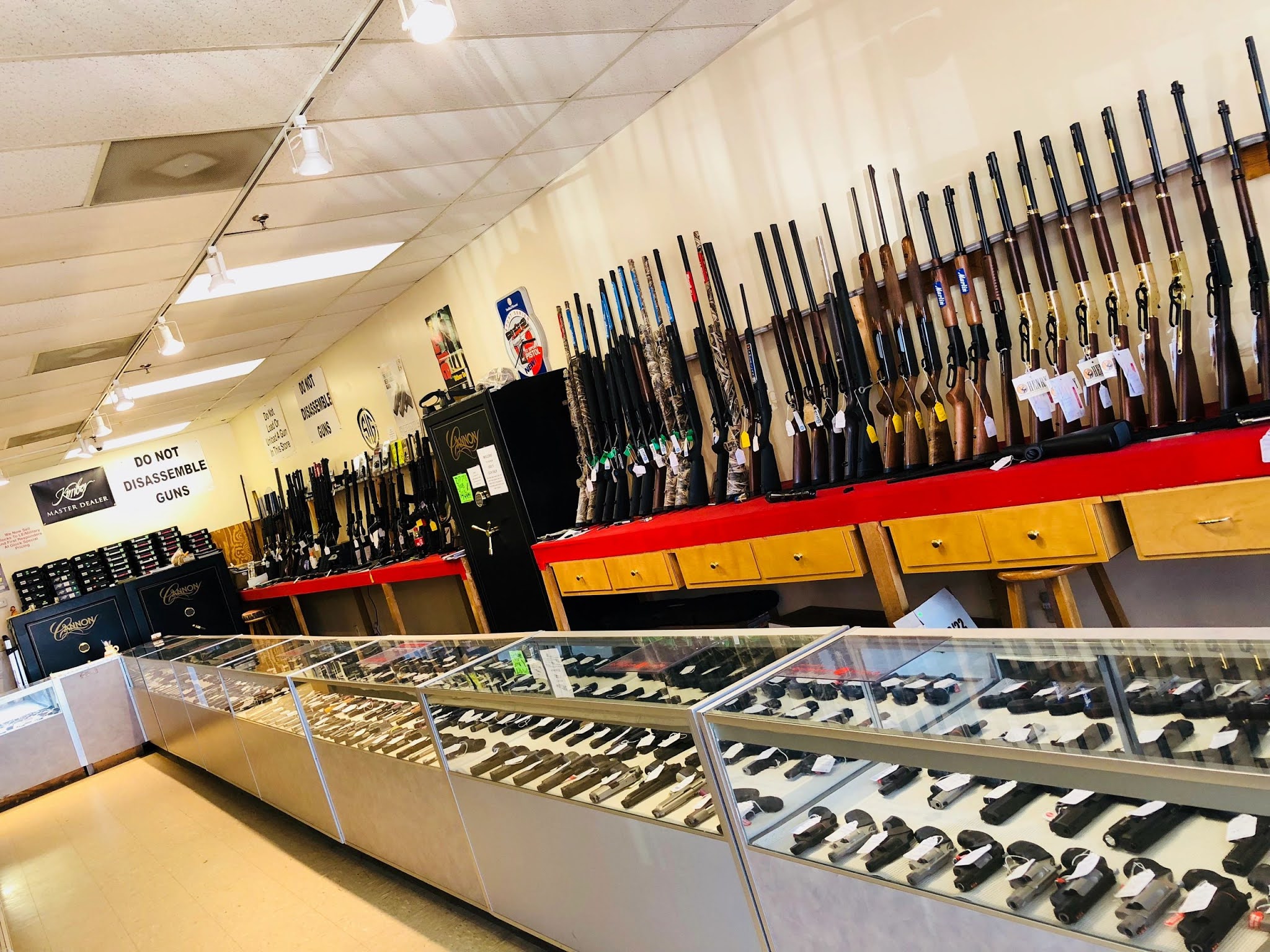
Federal law, promulgated via Bureau of Alcohol, Tobacco, Firearms and Explosives (ATF) rules, already requires all gun dealers to meet stringent requirements for getting their Federal Firearms License (FFL). As an FFL, they must ensure that a customer has satisfied the background check requirements prior to allowing the customer to have possession of a firearm.
Under current federal law, gun dealers are required to confirm, prior to any and all
sales, that a customer has passed a background check as part of every FFL transfer If
you head into a gun store to purchase a new firearm, that dealer must confirm that
you have satisfied the background check requirements before you can take
possession of that new gun and take it home. This is the case regardless of where you live
If you’re traveling across state lines and see a gun in another state that you’d like to purchase, you must either have that gun shipped to an FFL in your home state if it’s a handgun or, if it’s a rifle or shotgun, you must still pass a background check there before you can purchase and possess the firearm.
Nearly two dozen states place additional requirements beyond federal law on firearm transfers and already either require a background check to be conducted for every firearm transfer (even between private same-state resident individuals, like the Universal Background Check bill proposes) or a valid firearm possession license that is issued contingent upon a background chec
3. THERE IS NO ‘GUN-SHOW LOOPHOLE’
When someone brings up a desire for more background checks, it is often offered as a solution to close the “gun-show loophole.” There’s one big problem with that claim: there is no “gun-show loophole.” It is a myth.
As covered above, federal law requires that all sales from firearm dealers, or sales between residents of different states, must satisfy the background check requirements, regardless of whether those sales happen in a gun shop, at a gun show, or out of the back of somebody’s trunk in a parking lot. Many states also require background checks for individual sales.
There is simply no law anywhere that says if a gun is bought at a gun show, then the buyer doesn’t have to undergo a background check. A dealer who tries to sell a gun at a gun show without confirming that the buyer has passed a background check would be breaking the law.
Furthermore, federal law also prevents sales to anyone that any seller (not just FFLs) believes to be a “prohibited person” (e.g., a convicted felon). As a result, gun dealers regularly turn away potential customers if they think they are not legally allowed to purchase or possess a firearm. There is simply no special exemption or “loophole” in federal law that allows gun show sales to occur without background checks. Therefore, there’s no loophole to close.
4. THERE IS NO ‘ONLINE GUN SALES LOOPHOLE’
Another common call for universal background checks is based on a so-called “online gun sale loophole.” Similar to the “gun show loophole” above, it doesn’t exist. Firearms can be legally purchased (paid for) online as long as the purchaser is not a “prohibited person,” the firearm is legal to possess in the purchaser’s state of residence, and the state otherwise allows the sale.
The current legal process for online gun sales requires that the firearm be shipped to a federally licensed dealer (FFL) in the purchaser’s home state, where the purchaser must show up to fill out the required federal paperwork and satisfy the background check requirements prior to possession.
Just because you click “BUY” on a website that sells guns doesn’t mean you’ll have it shipped to your door without having to process the transaction through a federal gun dealer, who is required to confirm that you have passed a background check before you take possession of that new gun. Again, no loophole equals no loophole to close.
5. UNIVERSAL BACKGROUND CHECKS WON’T STOP CRIMINALS FROM GETTING GUNS
There are two categories of people looking to purchase a firearm: law-abiding citizens with clean criminal records and therefore not a “prohibited persons,” or people who are already legally prohibited from purchasing a firearm. As discussed above, the former category follows laws. The latter doesn’t.
Even under a legal regime that requires universal background checks, the person who is banned by law from owning a gun will continue to get a gun the same way criminals do today: by stealing it, having someone else by it for him or her, or purchasing it in the black market. A federal background check requirement will do nothing to prevent that already illegal sale.
Thinking this will stop the criminal misuse of firearms is like insisting upon a background check before someone can purchase crystal meth. Users of crystal meth, much like criminals with guns, act contrary to the law. If they can’t legally buy it, they’ll do it illegally. And the people in the business of illegally selling aren’t about to start complying with laws that require them to conduct their black market sales in a particular way.
Remember, it’s already illegal for a prohibited person to possess a firearm. If that law doesn’t stop them, requiring background checks in more types of transactions won’t either.
There’s also a real problem with “straw purchases” of firearms, wherein someone with a clean record buys a gun from a gun store for someone who can’t legally purchase it on his or her own. This is already illegal and our nation’s gun dealers are the front line of defense against these illegal transactions. However, despite the current background check requirements for gun dealers, straw purchases still happen, and illegal straw purchases will only become more popular and more difficult to discern if H.R. 8 becomes law.
6. BACKGROUND CHECKS WON’T STOP MASS SHOOTINGS
Demands for more gun control typically seem to follow mass shootings. It makes sense that we want to do something—these mass shootings are horrific, and we should do what we can to stop them. However, universal background checks will not end mass shootings nor gun violence.
Before proposing a new law that will create a hurdle to the exercise of a fundamental right, we should at least ask if the law would have prevented in the past whatever we’re trying to stop in the future. For example, universal background checks would not have stopped the deadliest mass shootings following the enactment of federal background check requirements in 1994:
Las Vegas 2017: Shooter purchased his firearms from a gun dealer (where background checks are already required).
Orlando 2016: Shooter purchased his firearms from a gun dealer.
Virginia Tech 2007: Shooter purchased his firearms from a gun dealer.
Sandy Hook 2012: Shooter stole his firearms.
Sutherland Springs 2017: Shooter purchased his firearm from a gun dealer. He had a criminal record and the background check system failed to stop him (the same system that would be used for private transfers).
Parkland 2018: Shooter purchased firearm from a gun dealer.
San Bernardino 2017: Shooters’ firearms were “straw-purchased” by someone else.
Fort Hood 2009: Shooter purchased firearm from a gun dealer.
Columbine 1999: Shooters’ guns were straw-purchased for them by someone else.
Thousand Oaks 2018: Shooter purchased firearm legally with a background check.
Navy Yard 2013: Shooter purchased firearm from a gun dealer.
Aurora 2012: Shooter purchased firearms from a gun dealer.
Democrats often cite stopping these mass shootings as a reason for enacting universal background checks. However, after seeing that universal background checks would have had zero effect, it invites the question: why are they really so eager to add burdens to lawful gun ownership?
7. IN-STATE COMMERCE IS A STATE ISSUE
Under current federal law, only firearms transactions between private, non-dealer residents who reside in the same state are exempt from federal background check requirements. That is because the federal firearm licensing system and background check requirements apply only to interstate commerce.
This is not because the federal government doesn’t want more power (since when has that happened?). Instead, it is a valid constitutional restriction on what types of activities and commerce the federal government may control.
As noted above, many states have their own gun laws and have placed additional restrictions on firearm possession above and beyond what the federal government already requires. These purely in-state transactions between private residents of those states should continue to be handled at the state level, as different states have different challenges that are best addressed with local solutions implemented by local representatives.
Furthermore, each state should retain the authority to decide whether it is willing to incur the additional costs and burdens that will arise from new gun control restrictions.
8. UNIVERSAL BACKGROUND CHECKS ARE TOO BURDENSOME
The current National Instant Criminal Check System (NICS) used for firearm background checks can only be used by federally licensed gun dealers or government entities. This restriction by the FBI on their system is due to them not being able to handle the burden of additional checks.
Opening the background check system, which already experiences significant backlogs and delays, especially with the record-breaking gun sales figures lately, will introduce an extra burden on the government, and on those who wish to exercise their Second Amendment right to keep and bear arms. The universal background check bill will amount to a delay and a tax on the exercise of a fundamental right.
First, a seller and buyer must find, and travel to, a local gun store during the store’s hours and wait for paperwork and a background check to be processed. Second, unless the federal government intends to force dealers into servitude, the dealer will charge a fee for his services conducting the background check. This fee, typically around $25-50, will be, in effect, an additional tax on every sale of a firearm.
There will also be a burden on gun dealers. Most gun dealers are small business owners who are focused on keeping their businesses running. This extra burden will take their time away from customers and other business duties including helping to spot and stop straw purchases. It will also significantly increase their ATF compliance burden, as they are liable for every piece of paperwork and transfer that takes place.
9. UNIVERSAL BACKGROUND CHECKS CREATE A DE FACTO FEDERAL GUN REGISTRY
It is currently illegal for the federal government to maintain a database of ownership of standard firearms (not including silencers, machine guns, etc. that require an FFL to have an “SOT License”). There is a good reason for this ban on a federal gun registry: a tyrannical government can only confiscate firearms if it first knows where they are all located.
Although a registry is not mentioned in the bill, it is a logical conclusion. After all, how could such a universal background check law ever be enforced absent a national gun registry showing who passed a background check, when, and for which particular firearms?
For law enforcement to prove that a firearm was purchased in a private transaction, they would need to know who was the most recent lawful possessor. Of course, someone with a lawfully possessed firearm could have a receipt from a gun store, but that could be lost or faked.
The natural conclusion to this law’s enforcement would be the creation of a database tracking the lawful transfers, and therefore current possessors, of all firearms in this country. It would be bad enough if the government were to maintain and use such a list, but what if hackers stole that list, just as they stole the personnel records of millions of federal employees? Suddenly, violent criminals in search of weapons would have a perfect map showing which homes to ransack when nobody’s home.
Mass shootings and gun violence are horrible, and we should try to stop them. However, demands for more gun control only make plain the truth that gun control cannot stop violence.
Current gun control doesn’t stop criminals. The latest gun control proposal is no different. It would do nothing to end gun violence, but it would drastically increase the burdens on law-abiding citizens who only wish to defend themselves and their families from violent criminals who don’t care whether something is against the law.
Ryan Cleckner is a former special operations sniper and a current firearms attorney, university lecturer, entrepreneur, and best-selling author of “The Long Range Shooting Handbook.” His most recent projects include online training to help people get an FFL and helping to educate gun owners at GunUniversity.com.
Categories
Enjoy! – N.S.F.W.
 Courtesy The Arms Room
Adopted by the British Army in 1871, the .577-450 Martini-Henry was a modification of the .577 Snider Cartridge that was reduced down to .45 caliber. Specifically designed to be used in the new Martini-Henry rifle, the .577-450 Martini-Henry cartridge was used by soldiers and hunters in the British Empire for many decades.
Though the cartridge is now obsolete and has since fallen out of use, the .577-450 can still be an effective hunting cartridge under certain circumstances.
When the British Army adopted the Martini-Henry rifle, it was the first rifle that they had ever adopted that was originally designed as a breechloader. The rifle, along with the accompanying .577-450 cartridge, was an instant success due to its rapid rate of fire and long effective range.
Two loads were originally produced for the cartridge: a rifle load and a carbine load. The rifle load fired a 480-grain lead bullet propelled by 85 grains of black powder to reach a velocity of approximately 1,350 fps. The carbine load, designed for use by the cavalry and artillery in their Martini-Henry carbines, fired a 410 grain bullet pushed by 71 grains of black powder.


Though the cartridge is now obsolete and has since fallen out of use, the .577-450 can still be an effective hunting cartridge under certain circumstances.
When the British Army adopted the Martini-Henry rifle, it was the first rifle that they had ever adopted that was originally designed as a breechloader. The rifle, along with the accompanying .577-450 cartridge, was an instant success due to its rapid rate of fire and long effective range.
Two loads were originally produced for the cartridge: a rifle load and a carbine load. The rifle load fired a 480-grain lead bullet propelled by 85 grains of black powder to reach a velocity of approximately 1,350 fps. The carbine load, designed for use by the cavalry and artillery in their Martini-Henry carbines, fired a 410 grain bullet pushed by 71 grains of black powder.


The .577-450 cartridge was originally designed with a rolled brass case (left center). However, these cartridges were difficult to extract from a hot, dirty chamber, as would be common under heavy combat conditions. To improve their reliability, the case was changed to the more modern drawn brass case (right center), which was much less prone to jamming.
The British Army used the .577-450 Martini-Henry all over their empire for the next few decades. The cartridge was accurate out to around 400 yards under normal conditions, or potentially as far as 1,000 yards when used by an expert rifleman under ideal conditions.
In addition to the impressive accuracy and range of the cartridge, the large, soft bullets fired by the .577-450 were also known for causing devastating wounds.
The rifle and cartridge became very famous during the Zulu War, specifically at the Battles of Isandlwana and Rorke’s Drift. In addition to use in Africa, the Martini-Henry was also utilized extensively by the British in Asia, especially in India and Afghanistan (where thousands of “Khyber Pass” copies were illicitly produced).
Though officially withdrawn from front-line service with the British Army in 1889, the Martini-Henry was used by various reserve and police forces for many decades, and thousands of the rifles can still be found in former British colonies all over the world.
.577-450 Martini-Henry Loads
Due to the age of the cartridge, factory .577-450 Martini-Henry ammunition can be very difficult to obtain. It is possible to find the occasional box of factory-loaded ammunition at gun shows and on the Internet. It is usually very expensive on the rare occasion when you do find it.
Because of the difficulty obtaining factory ammunition, hand-loading the .577-450 is the way to go. Though hand-loading the. 577-450 Martini-Henry is not for the faint of heart, it is certainly possible and the components and tools that you need are available.
Finding brass is relatively easy: Jamison Brass & Ammunition produces and sells good quality Boxer-primed .577-450 Martini-Henry cases. It is also not too challenging (or expensive) to find appropriately sized reloading dies.
Finding bullets is a little more difficult. Even though the bullet is nominally .45 caliber, the cartridge was originally designed to use paper patched bullets, so the bore is actually slightly larger than .45 caliber. Because of this, very few Martini-Henry rifles will accurately fire the .458 diameter bullets designed for the .45-70 Government (below) and similar rifles because they are too small to engage the rifling without a paper patch.
Further complicating the situation is the fact that the actual bore diameter of a Martini-Henry rifle varies between models and even manufacturers. That being said, if you want to shoot loads without a paper patch, the bullet generally needs to be between .463 and .468 caliber (.466 diameter bullets are the perfect size for my Martini-Henry).
To be certain of the proper bullet size, you need to measure the bore of your particular rifle. Once you do that, there are manufacturers that will be happy to produce a custom bullet or bullet cast for you.
Fortunately, there is a fair amount of reloading data using both smokeless and black powder for the .577-450 Martini-Henry available online. So, once you’ve gone through all of the hassle of finding all of the appropriate components, it’s not too hard to find loads that closely mimic the performance of the original loads that the British used in the 1800s.
Additionally, if your rifle is in good shape, and you are using appropriately sized bullets, the .577-450 can be a very accurate cartridge.
Hunting With the .577-450 Martini-Henry
Even though finding .577-450 Martini-Henry ammunition can be a real hassle, it can be an extremely effective hunting cartridge. Since the cartridge enjoyed such widespread use in the British Army, it should not be surprising that it has also been used extensively used by hunters all over the British Empire as well. Virtually every species of big game in the world from antelope to tiger to elephant has been successfully taken by hunters using the .577-450 Martini-Henry over the years.
John “Pondoro” Taylor famously used the .577-450 Martini-Henry to hunt elephant and Cape Buffalo for a short period of time at the beginning of his career. While it certainly worked for him, I would not recommend using the .577-450 on thick skinned dangerous game. The cartridge is a much better choice on smaller game like deer, feral hogs, black bear, and most species of African plains game.
I’ve personally used the .577/450 Martini-Henry to take a kudu, warthog, and springbok. I was using a 400gr Hawk custom bullet fired at 1,520 feet per second, which was quite effective on all three animals. The bullet exited the warthog and springbok, but I recovered the bullet from the kudu. As you can see below, it did not expand very well, probably due to the velocity being too low. However, all three animals were taken cleanly and only ran a short distance after the shot.
Even though the .577-450 can be a capable performer at long range, it is better to only take shots at relatively close range (where bullet drop is minimal) when using it for hunting. At 50 to 150 yards, it can even be effective on large animals like elk, moose and eland. Also, since it fires a heavy-sized bullet at a slow to moderate velocity, the .577-450 does not produce large amounts of ruined, blood shot meat like high-velocity cartridges do.
While the cartridge has fallen by the wayside in recent years, the .577-450 Martini-Henry can still be a great cartridge for hunting many species of big game. Finding ammunition can be a chore, but the cartridge is still a solid performer under the right conditions.
Countless hunters all over the world have taken many different species of exotic game with the .577-450 Martini-Henry since it was first developed nearly 150 years ago. There is no reason why you can’t do the same thing with this unique and storied cartridge