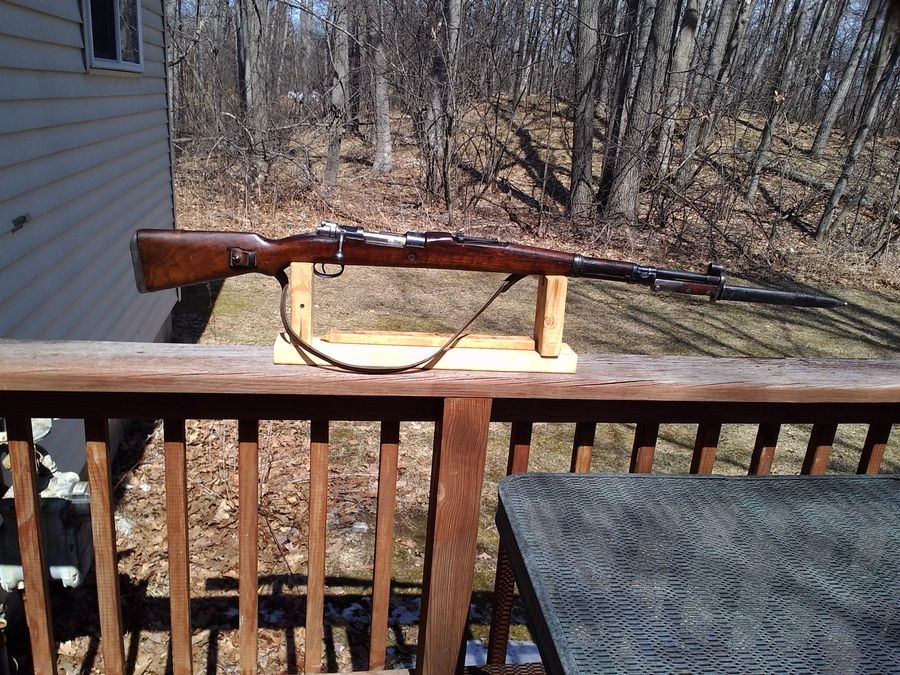
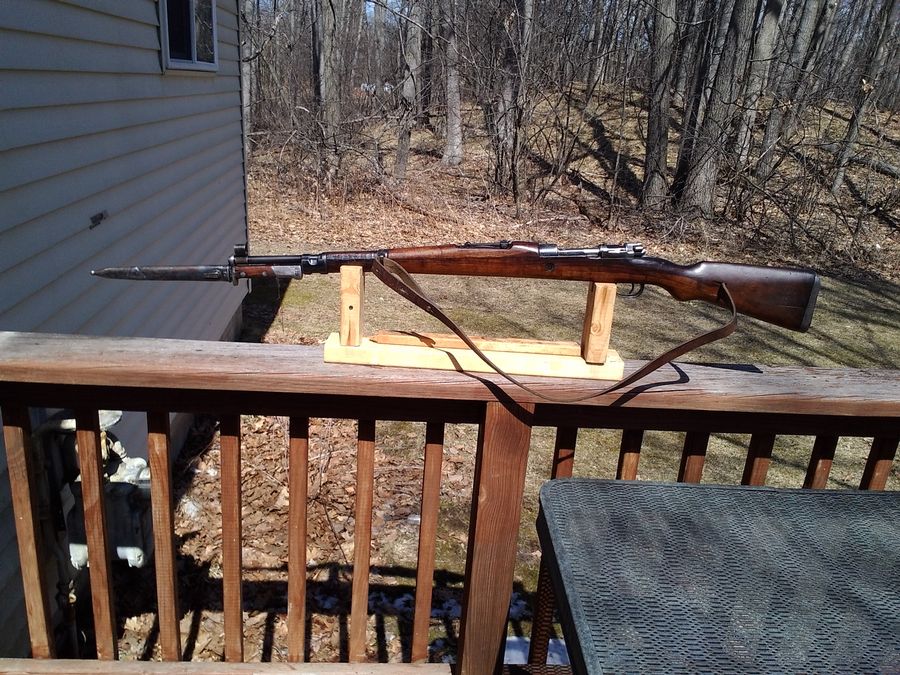
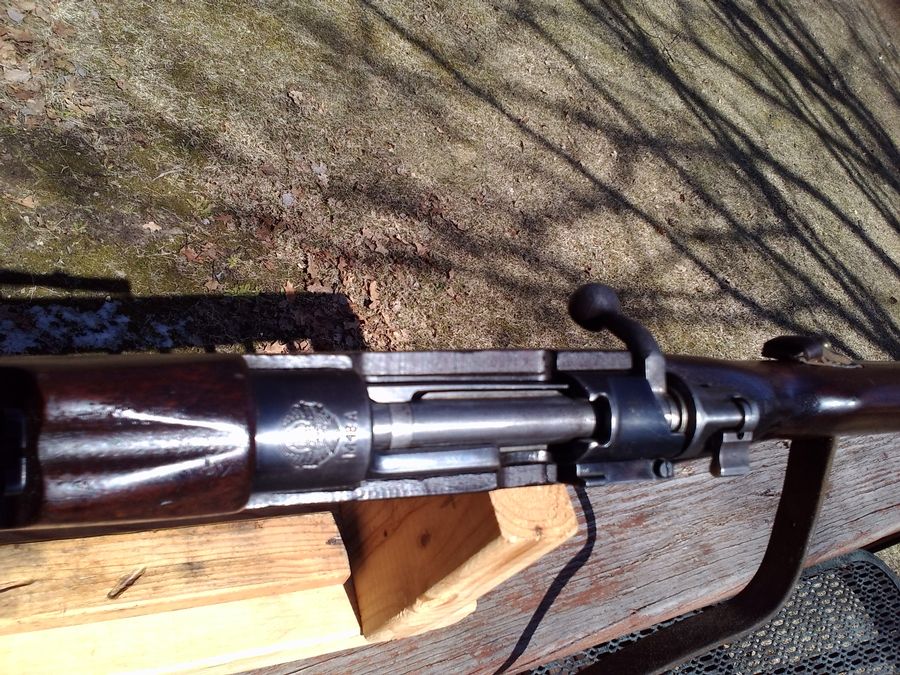
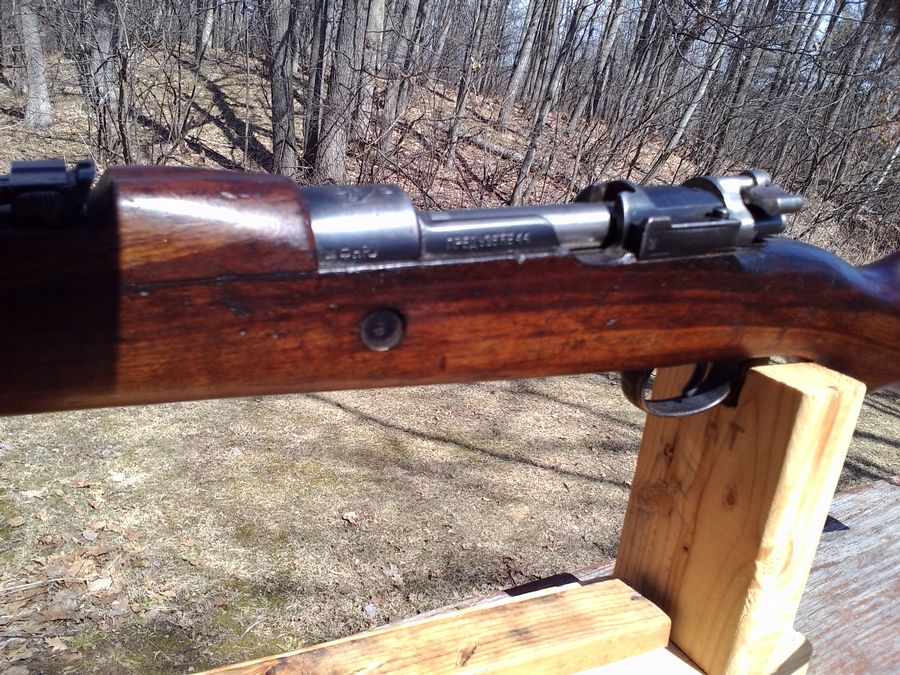
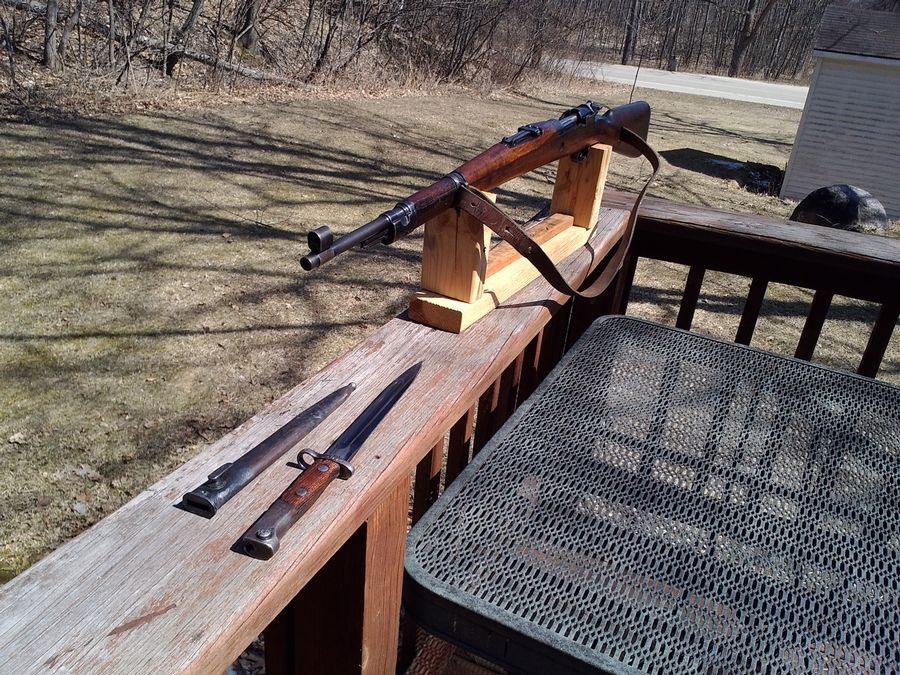
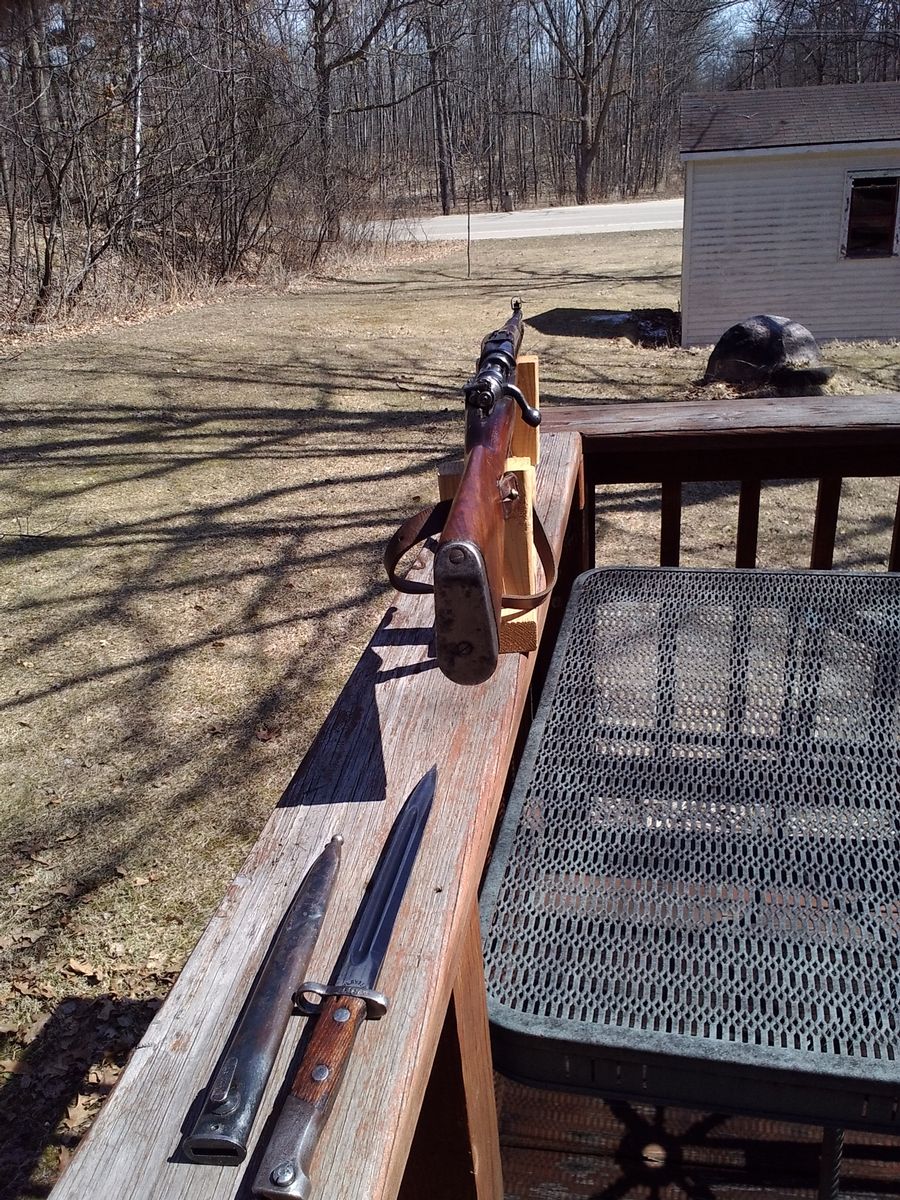
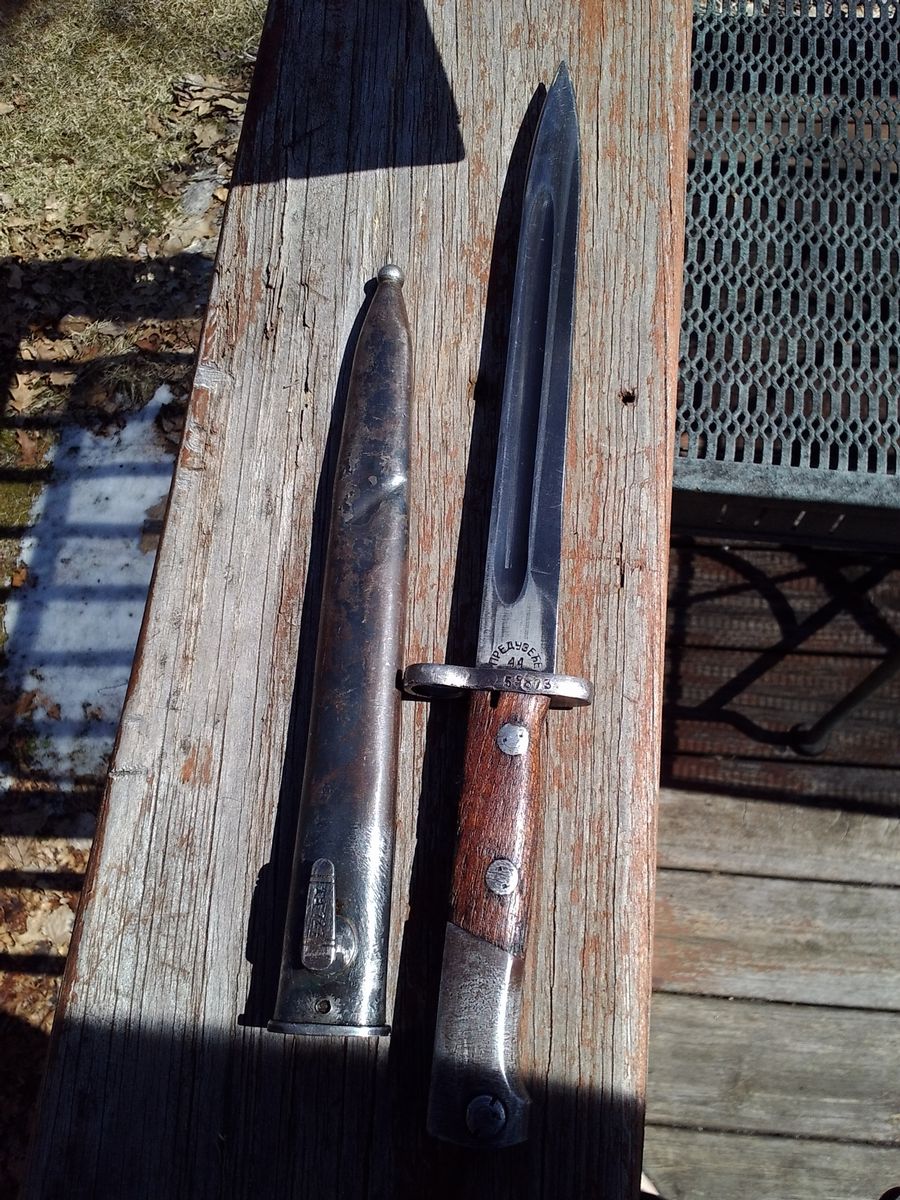
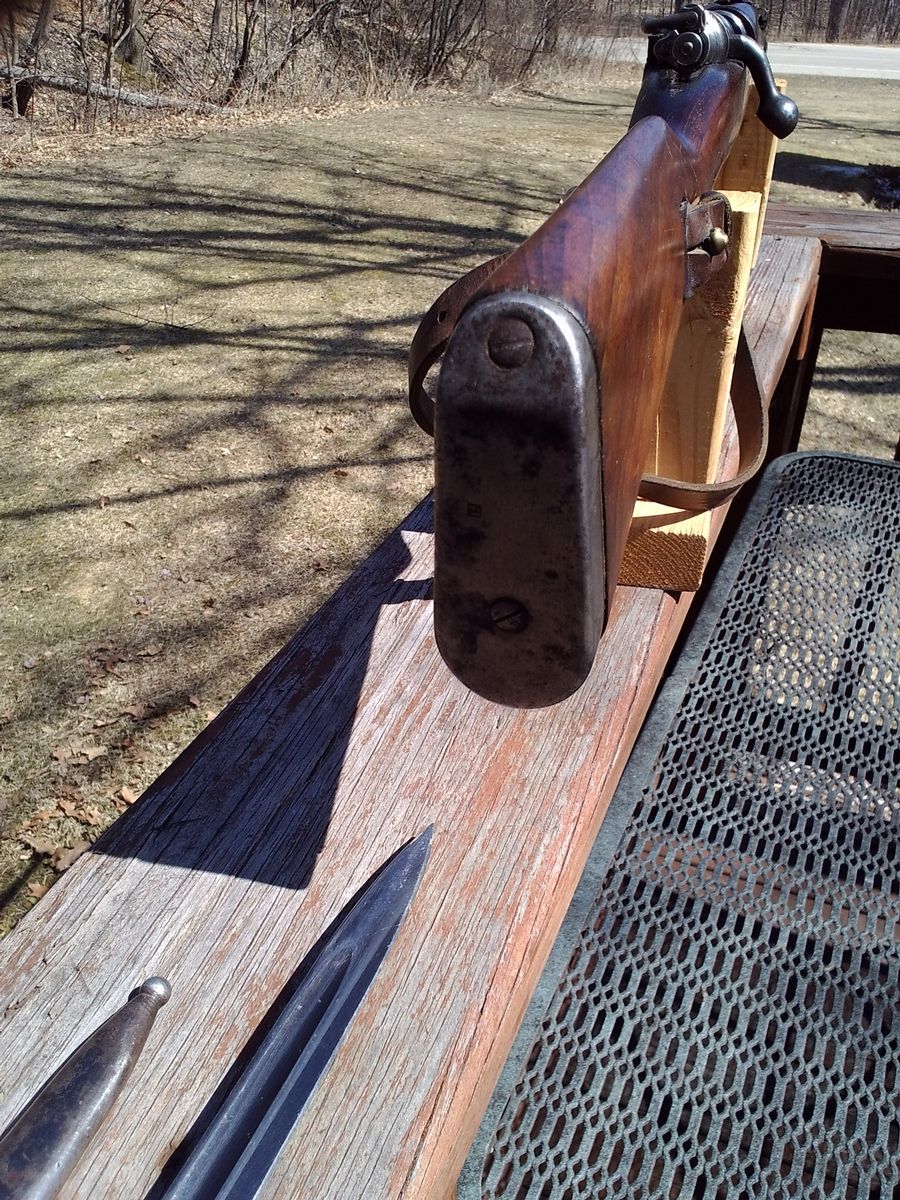
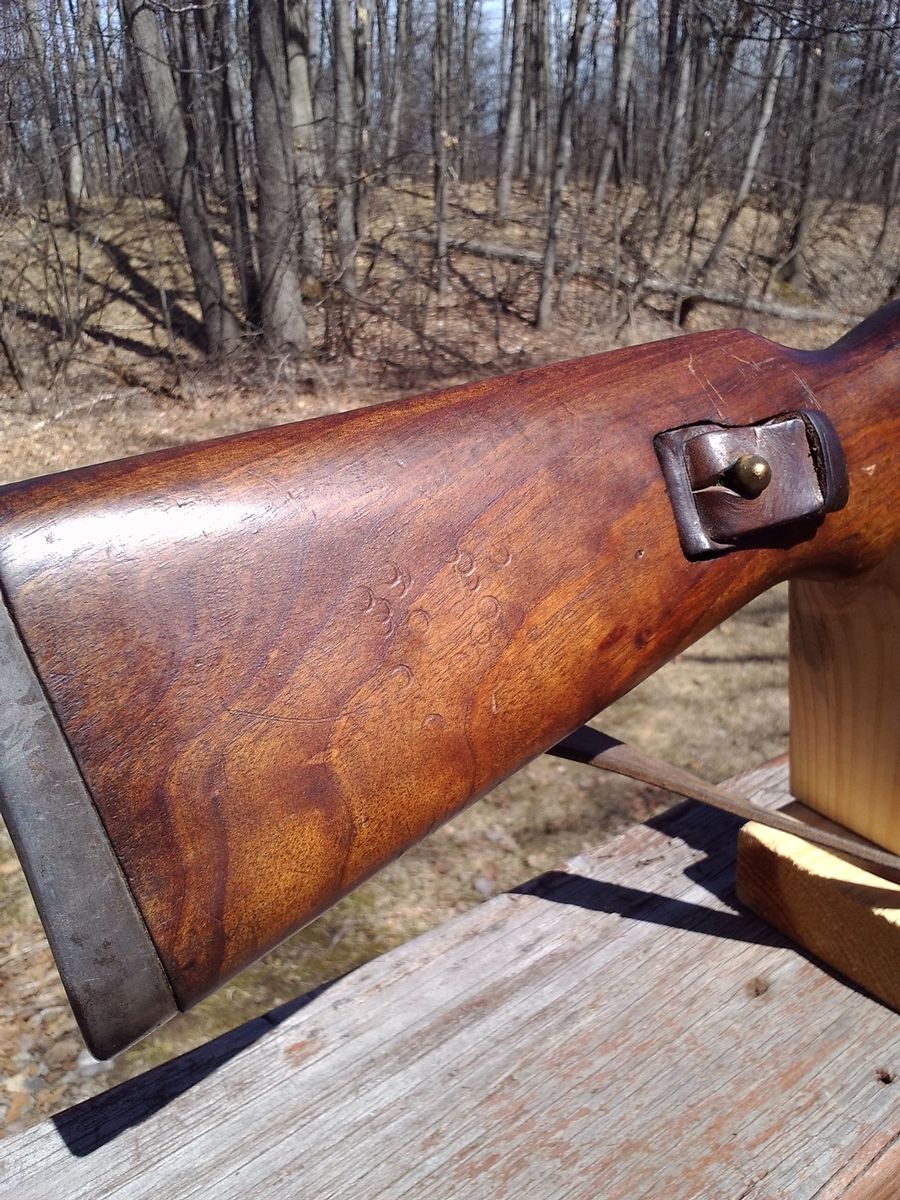
The Lord alone knows how many of these mausers were made by Tito’s minions/ It must be up in the several millions. They are a fine shooting rifle and have been the basis of many a sporterized project in the past couple of years.
Categories
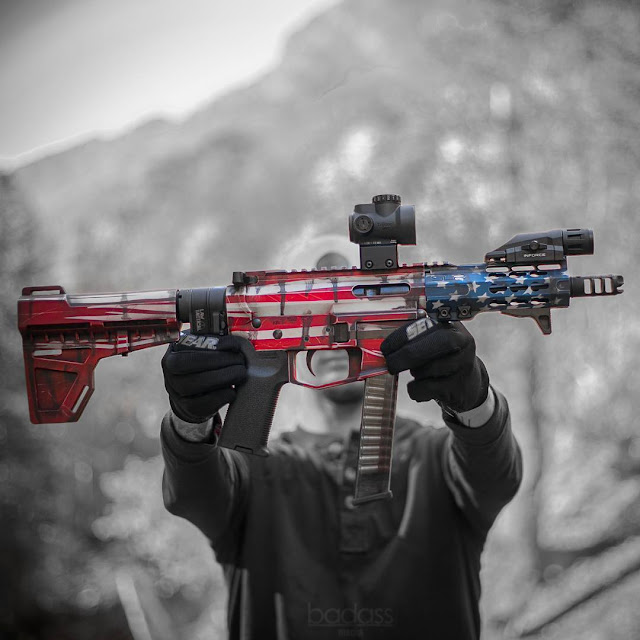
A little something about Rail Guns
Remembering A Legendary Lawman/Gunwriter, Part 1
By John Taffin
They used to dominate the gun writing field but they are mostly all gone now. When I went to my first NRA show more than 40 years ago there they were. I was more interested in them than I was the products on display. This was better than being at the Academy Awards. I’m talking about characters—real honest-to-goodness characters. As I walked the aisles it seemed they were everywhere. Not only did I meet them but most of them also became friends over the years.
I’m talking about the likes of Rex Applegate, Charles Askins, Jimmy Clark, Dean Grennell, Bill Jordan, Elmer Keith, John Lachuk, Bob Milek, George Nonte, Skeeter Skelton, Hal Swiggett, John Wootters … I was privileged to visit some of them in their homes, as well as have some of them visit me. It was a wonderful Technicolor world, but like most of the rest of the world, everything has changed. The world has become too much plain-vanilla and today I can count the characters remaining on the fingers of one hand.
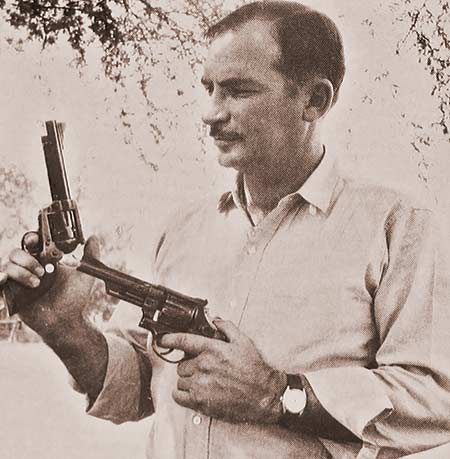
As a budding sixgunner the man from the list I identified with the most, the one whose articles I looked for every month, was Charles A. Skelton, who soon became affectionately known as Skeeter. He basically began his writing career right here with this magazine in the late 1950’s. At the time he was Sheriff of Deaf Smith County, Texas. Skeeter was on the Amarillo Police Department in 1950 when he met the love of his life, Sally. He also served on the Border Patrol and as a Federal Agent. When I read his first article in GUNS I was hooked on Skeeter for life.
I first met him at the NRA show when I looked up and saw this fellow walking towards me in a nice blue suit, tie, and light-colored Stetson. I knew immediately it was him. I walked up to him, said hello introducing myself, and handed him a picture. He grabbed me by the arm and said: “Son, let’s go somewhere quiet where we can talk.” And talk we did. The picture I showed him was of the barrel of a sixgun. Not just any sixgun, but a Colt Single Action. And on the barrel it said: “Russian & S&W Special .44” and I had found the way to his sixgunning heart.
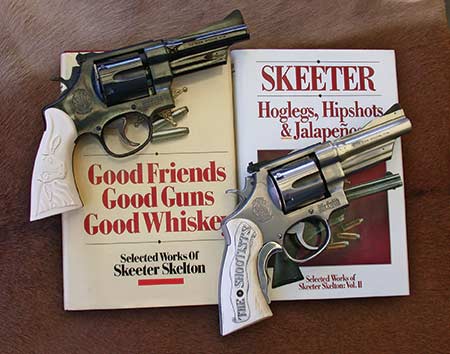
Thanks to the urgings of Skeeter Skelton, S&W brought back the Model 24 and
Model 624 .44 Special in the early 1980’s.
I was just a teenager when I discovered Skeeter in these pages. I’ve saved all of his articles, but even if I hadn’t I would still remember them. Such articles as “Pistols For Plainclothesmen” in which he extolled the virtues of pocket pistols. Eventually I had a Smith & Wesson Chiefs Special .38 dehorned and slicked up just like his. I lusted over his nickel-plated Detective Special with ivory stocks and shortly thereafter came up with a nickel-plated Colt Cobra .38 Special, however, money was too short at the time to have ivory stocks made. I still want to do this someday. Someday.
He covered the bigger sixguns with “Belt Guns On The Rio Grande” and one of my favorite pictures of Skeeter is with his holstered .44 Magnum. “These Are The New Varminters” dealt with long-range shooting of .357 Magnum and .44 Magnum sixguns. One of those he featured was a Ruger 7-1/2-inch .357 Flat-Top Blackhawk. Ruger never made such an animal and he had cut down a 10-inch Flat-Top Blackhawk to come up with this handier sixgun. (No one knew at the time how rare the 10 inchers would become!) He also wrote of his Ruger 7-1/2-inch .44 Magnum Flat-Top Blackhawk, how he found it for a good price in a gun shop and made his own grips to fit his hand. I sent my original Ruger .44 Magnum Flat-Top Blackhawk back to Ruger to be re-barreled to 7-1/2 inches. Just as with the 10’s .357, the 7-1/2-inch .44 Magnum Flat-Top was very rare.very
Skeeter also liked .44 Specials. When the .44 Magnum arrived he sold his .44 Special S&W and began carrying a 4-inch .44 Magnum. It did not take him long to realize the Magnum was too much for peace officer duties and he went back to the 4-inch .44 Special. He didn’t abandon the .44 Magnum but instead used it for hunting which is exactly what most of us did. He wrote of the .44 Special Colt Single Action which I had used as the key to his heart. At a time when .44 Specials were virtually impossible to find, he talked of finding a Colt Single Action for $125 and having it re-barreled and re-cylindered to .44 Special. When the New Frontier .44 Special came along, he had a 5-1/2-inch version with carved ivory grips by Jerry Evans and this was one of his “special Specials.”
Skeeter was a big fan of the .357 Magnum, especially the 5-inch S&W. With the coming of the K-Framed .357 Magnum, Skeeter found it much easier to carry all day, however the original .357 Magnum became his outdoor gun. He wrote of how hard it was to find his first 5-inch .357 Magnum at a time when even if I could find one I couldn’t afford it. One of his most memorable articles was the one dealing with the K-22 and how he had lusted over a picture of Gary Cooper in Life magazine on a cougar hunt with his K-22. Skeeter lusted over sixguns then and so did I.
Skeeter was also a fan of the .45 Colt in the Colt Single Action, the Colt New Frontier and the S&W Model 25. He shared his favorite loads for us for the .38 Special, .357 Magnum, .44 Special and .45 Colt. Every Skeeter fan knows his favorite loads. For the .357 Magnum he mostly used .38 Special brass with Ray Thompson’s 358156 gas check bullet seated in the bottom crimping groove over 13.5 grains of 2400. This load is a little milder than Elmer Keith’s and a lot easier on both sixguns and sixgunners. Skeeter did not load his .44 Specials heavy and everyone knows what the Skeeter .44 Special Load was and is. Remember, Skeeter carried his .44 Special in his peace officer duties and as such he used the Keith 429421 bullet over 7.5 grains of Unique. This load is about 900 fps and did everything he needed it to do. It didn’t take me long to agree with him and most of my .44 Special loads over the past four decades has been the Skeeter Load. I got it from him and he got it from Elmer Keith.
Two of Skeeter’s favorite sixguns were the .44 Special Colt New Frontier
5-1/2-inch and the .357 Magnum S&W 5-inch.
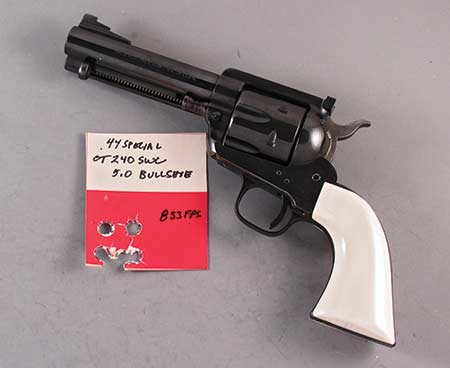
Just a few very special Ruger 3-screw Flat-Top .44 Specials were made soon after
Skeeter’s passing. This is John’s and its serial number is S.S.4.
When both Colt and S&W dropped all .44 Specials in the late 1960’s/early 1970’s, Skeeter looked for a solution. He took a pair of .357 Magnum sixguns to his gunsmith and in probably the most influential article he ever wrote, told how to turn them into .44 Specials. Both of these were Perfect Packin’ Pistols with a 4-inch barrel on the S&W and a 4-5/8-inch barrel on the Ruger. This article appeared 40 years ago and I wonder how many Ruger .357 Magnum Blackhawks have been converted to .44 Special over the years?
Today, several gunsmiths still do these and Ruger, thanks to Lipsey’s, finally offers the .44 Special chambered in the mid-framed New Model Blackhawk. I have examples in both blue and stainless. They are excellent shooters and I think of Skeeter every time I shoot one of these or one of the many conversions I’ve had done. My most used load still remains the Skeeter .44 Special Load.
Skeeter is directly responsible for getting both Colt and S&W to bring back the .44 Special in the late 1970’s. Colt offered the .44 Special in both the 3rd Generation Single Action Army and the Colt New Frontier and S&W followed with the Model 24 and stainless steel Model 624 in .44 Special. Unfortunately, all of these sixguns are now gone, however both Ruger and Freedom Arms offer .44 Special single-action sixguns today.
Skeeter passed in 1988 and shortly thereafter John Wootters sent me a letter informing me of a special sixgun being built for Skeeter while he was in the hospital in Houston. “Many years ago, Skeeter and I shared a hunting trip in northern British Columbia, during which we jointly discovered the skeleton of a mature Stone ram, probably killed in an avalanche. We slipped the horns, and Skeeter took one and I the other… I’ve been saving them for the ‘right gun’ for 15 years. This is the right gun. The so-called ‘Little Ruger’ in .44 Special was the favorite type of sporting pistol and cartridge of my late buddy, Skeeter Skelton, who spent much of his terminal illness in a hospital here in Houston… Sadly, Skeeter had to fold his hand before the last raise, and the project never went further until recently.”
This special sixgun was finished after Skeeter passed and I first saw it with John Wootters on the Y.O. Ranch when we were hunting together. Wootters went on: “The little .44 is a sweetheart, quiet and pleasant to shoot, accurate (naturally, in that chambering), light as a feather, and pretty as a yellow cactus blossom. It leaps to the hand of its own will, and seeks a target with the eagerness of a pointer pup. I will cherish it ’til the day I die… Having been struck by the similarity of our taste I thought you might like to hear about S.S.1.”
Bill Grover worked with Bob Baer and John Wootters on S.S.1 and then later built six more Skeeter Skelton Specials to remember Skeeter. Mine is S.S.4 and now wears 1-piece ivory stocks. It carries memories of three good friends now gone, Skeeter, Bill Grover and John Wootters.

Today is the anniversary of the Day the Tide started going out for the South during the 2nd War of Independence.
Pickett’s Charge

Thure de Thulstrup‘s Battle of Gettysburg, showing Pickett’s Charge

Pickett’s Charge from a position on the Confederate line looking toward the Union lines, Ziegler’s Grove on the left, clump of trees on right, painting by Edwin Forbes

Map of Pickett’s Charge, July 3, 1863.
Confederate
Union

Map of Pickett’s Charge (details), July 3, 1863
Confederate
Union
Pickett’s Charge was an infantry assault ordered by Confederate Gen. Robert E. Lee against Maj. Gen. George G. Meade‘s Union positions on July 3, 1863, the last day of the Battle of Gettysburg in the state of Pennsylvania during the American Civil War. Its futility was predicted by the charge’s commander, Lt. Gen. James Longstreet, and it was arguably an avoidable mistake from which the Southern war effort never fully recovered militarily or psychologically. The farthest point reached by the attack has been referred to as the high-water mark of the Confederacy.
The charge is named after Maj. Gen. George Pickett, one of three Confederate generals who led the assault under Longstreet.
Pickett’s charge was part of Lee’s “general plan”[1] to take Cemetery Hill and the network of roads it commanded. His military secretary, A. L. Long, described Lee’s thinking:
There was… a weak point… where [Cemetery Ridge], sloping westward, formed the depression through which the Emmitsburg road passes. Perceiving that by forcing the Federal lines at that point and turning toward Cemetery Hill [Hays’ Division] would be taken in flank and the remainder would be neutralized…. Lee determined to attack at that point, and the execution was assigned to Longstreet.[2]
On the night of July 2, Meade correctly predicted at a council of war that Lee would attack the center of his lines the following morning.
The infantry assault was preceded by a massive artillery bombardment that was meant to soften up the Union defense and silence its artillery, but was largely ineffective. Approximately 12,500 men in nine infantry brigades advanced over open fields for three-quarters of a mile under heavy Union artillery and rifle fire. Although some Confederates were able to breach the low stone wall that shielded many of the Union defenders, they could not maintain their hold and were repulsed with over 50% casualties, a decisive defeat that ended the three-day battle and Lee’s campaign into Pennsylvania.[3]
Years later, when asked why his charge at Gettysburg failed, Pickett reportedly replied: “I’ve always thought the Yankeeshad something to do with it.”[4][5]
Contents
[hide]
Background[edit]
Military situation[edit]
Opposing forces[edit]
Union[edit]
Confederate[edit]
Plans and command structures[edit]
Pickett’s charge was planned for three Confederate divisions, commanded by Maj. Gen. George Pickett, Brig. Gen. J. Johnston Pettigrew, and Maj. Gen. Isaac R. Trimble, consisting of troops from Lt. Gen. James Longstreet‘s First Corps and Lt. Gen. A.P. Hill‘s Third Corps. Pettigrew commanded brigades from Maj. Gen. Henry Heth‘s old division, under Col.Birkett D. Fry (Archer’s Brigade), Col. James K. Marshall (Pettigrew’s Brigade), Brig. Gen. Joseph R. Davis, and Col. John M. Brockenbrough. Trimble, commanding Maj. Gen. Dorsey Pender‘s division, had the brigades of Brig. Gens. Alfred M. Scales (temporarily commanded by Col. William Lee J. Lowrance) and James H. Lane. Two brigades from Maj. Gen. Richard H. Anderson‘s division (Hill’s Corps) were to support the attack on the right flank: Brig. Gen. Cadmus M. Wilcoxand Col. David Lang (Perry’s brigade).[6]
The target of the Confederate assault was the center of the Union Army of the Potomac‘s II Corps, commanded by Maj. Gen. Winfield S. Hancock. Directly in the center was the division of Brig. Gen. John Gibbon with the brigades of Brig. Gen. William Harrow, Col. Norman J. Hall, and Brig. Gen. Alexander S. Webb. (On the night of July 2, Meade correctly predicted to Gibbon at a council of war that Lee would try an attack on Gibbon’s sector the following morning.)[7] To the north of this position were brigades from the division of Brig. Gen. Alexander Hays, and to the south was Maj. Gen. Abner Doubleday‘s division of the I Corps, including the 2nd Vermont Brigade of Brig. Gen. George J. Stannard and the 121st Pennsylvania under the command of Col. Chapman Biddle. Meade’s headquarters were just behind the II Corps line, in the small house owned by the widow Lydia Leister.[6]
The specific objective of the assault has been the source of historical controversy. Traditionally, the “copse of trees” on Cemetery Ridge has been cited as the visual landmark for the attacking force. Historical treatments such as the 1993 film Gettysburg continue to popularize this view, which originated in the work of Gettysburg Battlefield historian John B. Bachelder in the 1880s. However, recent scholarship, including published works by some Gettysburg National Military Park historians, has suggested that Lee’s goal was actually Ziegler’s Grove on Cemetery Hill, a more prominent and highly visible grouping of trees about 300 yards (274 m) north of the copse. The much-debated theory suggests that Lee’s general plan for the second-day attacks (the seizure of Cemetery Hill) had not changed on the third day, and the attacks on July 3 were also aimed at securing the hill and the network of roads it commanded. The copse of trees, currently a prominent landmark, was under ten feet (3 m) high in 1863, only visible to a portion of the attacking columns from certain parts of the battlefield.[8]
From the beginning of the planning, things went awry for the Confederates. While Pickett’s division had not been used yet at Gettysburg, A.P. Hill’s health became an issue and he did not participate in selecting which of his troops were to be used for the charge. Some of Hill’s corps had fought lightly on July 1 and not at all on July 2. However, troops that haddone heavy fighting on July 1 ended up making the charge.[9]
Although the assault is known to popular history as Pickett’s Charge, overall command was given to James Longstreet, and Pickett was one of his divisional commanders. Lee did tell Longstreet that Pickett’s fresh division should lead the assault, so the name is appropriate, although some recent historians have used the name Pickett-Pettigrew-Trimble Assault (or, less frequently, Longstreet’s Assault) to more fairly distribute the credit (or blame). With Hill sidelined, Pettigrew’s and Trimble’s divisions were delegated to Longstreet’s authority as well. Thus, Pickett’s name has been lent to a charge in which he commanded 3 out of the 11 brigades while under the supervision of his corps commander throughout. Pickett’s men were almost exclusively from Virginia, with the other divisions consisting of troops from North Carolina, Mississippi, Alabama
In conjunction with the infantry assault, Lee planned a cavalry action in the Union rear. Maj. Gen. J.E.B. Stuart led his cavalry division to the east, prepared to exploit Lee’s hoped-for breakthrough by attacking the Union rear and disrupting its line of communications (and retreat) along the Baltimore Pike.[11]
Despite Lee’s hope for an early start, it took all morning to arrange the infantry assault force. Neither Lee’s nor Longstreet’s headquarters sent orders to Pickett to have his division on the battlefield by daylight. Historian Jeffrey D. Wert blames this oversight on Longstreet, describing it either as a misunderstanding of Lee’s verbal order or a mistake.[12]Some of the many criticisms of Longstreet’s Gettysburg performance by the postbellum Lost Cause authors cite this failure as evidence that Longstreet deliberately undermined Lee’s plan for the battle.[13]
Meanwhile, on the far right end of the Union line, a seven-hour battle raged for the control of Culp’s Hill. Lee’s intent was to synchronize his offensive across the battlefield, keeping Meade from concentrating his numerically superior force, but the assaults were poorly coordinated and Maj. Gen. Edward “Allegheny” Johnson’s attacks against Culp’s Hill petered out just as Longstreet’s cannonade began.[14]
Artillery barrage[edit]

Cannons representing Hancock’s defenses, stormed by Pickett’s Charge.
The infantry charge was preceded by what Lee hoped would be a powerful and well-concentrated cannonade of the Union center, destroying the Union artillery batteries that could defeat the assault and demoralizing the Union infantry. But a combination of inept artillery leadership and defective equipment doomed the barrage from the beginning. Longstreet’s corps artillery chief, Col. Edward Porter Alexander, had effective command of the field; Lee’s artillery chief, Brig. Gen. William N. Pendleton, played little role other than to obstruct the effective placement of artillery from the other two corps. Despite Alexander’s efforts, then, there was insufficient concentration of Confederate fire on the objective.[15]
The July 3 bombardment was likely the largest of the war,[16] with hundreds of cannons from both sides firing along the lines for one to two hours,[17] starting around 1 p.m. Confederate guns numbered between 150 and 170[18] and fired from a line over two miles (3 km) long, starting in the south at the Peach Orchard and running roughly parallel to the Emmitsburg Road. Confederate Brig. Gen. Evander M. Law wrote, “The cannonade in the center … presented one of the most magnificent battle-scenes witnessed during the war. Looking up the valley towards Gettysburg, the hills on either side were capped with crowns of flame and smoke, as 300 guns, about equally divided between the two ridges, vomited their iron hail upon each other.”[19]
Despite its ferocity, the fire was mostly ineffectual. Confederate shells often overshot the infantry front lines—in some cases because of inferior shell fuses that delayed detonation—and the smoke covering the battlefield concealed that fact from the gunners. Union artillery chief Brig. Gen. Henry J. Hunt had only about 80 guns available to conduct counter-battery fire; the geographic features of the Union line had limited areas for effective gun emplacement. He also ordered that firing cease to conserve ammunition, but to fool Alexander, Hunt ordered his cannons to cease fire slowly to create the illusion that they were being destroyed one by one. By the time all of Hunt’s cannons ceased fire, and still blinded by the smoke from battle, Alexander fell for Hunt’s deception and believed that many of the Union batteries had been destroyed. Hunt had to resist the strong arguments of Hancock, who demanded Union fire to lift the spirits of the infantrymen pinned down by Alexander’s bombardment. Even Meade was affected by the artillery—the Leister house was a victim of frequent overshots, and he had to evacuate with his staff to Powers Hill.[20]
The day was hot, 87 °F (31 °C) by one account[21] and humid, and the Confederates suffered under the hot sun and from the Union counter-battery fire as they awaited the order to advance. When Union cannoneers overshot their targets, they often hit the massed infantry waiting in the woods of Seminary Ridge or in the shallow depressions just behind Alexander’s guns, causing significant casualties before the charge began.[22]
Longstreet had opposed the charge from the beginning, convinced the charge would fail (which ultimately proved true), and had his own plan that he would have preferred for a strategic movement around the Union left flank. He claimed to have told Lee:
General, I have been a soldier all my life. I have been with soldiers engaged in fights by couples, by squads, companies, regiments, divisions, and armies, and should know, as well as any one, what soldiers can do. It is my opinion that no fifteen thousand men ever arrayed for battle can take that position.[23]
Longstreet wanted to avoid personally ordering the charge by attempting to pass the mantle onto young Colonel Alexander, telling him that he should inform Pickett at the optimum time to begin the advance, based on his assessment that the Union artillery had been effectively silenced. Although he had insufficient information to accomplish this, Alexander eventually notified Pickett that he was running dangerously short of ammunition, sending the message “If you are coming at all, come at once, or I cannot give you proper support, but the enemy’s fire has not slackened at all. At least eighteen guns are still firing from the cemetery itself.” Pickett asked Longstreet, “General, shall I advance?” Longstreet’s memoir recalled “The effort to speak the order failed, and I could only indicate it by an affirmative bow.”[24]
Longstreet made one final attempt to call off the assault. After his encounter with Pickett, he discussed the artillery situation with Porter and was informed that Porter did not have full confidence that all the enemy’s guns were silenced and that the Confederate ammunition was almost exhausted. Longstreet ordered Porter to stop Pickett, but the young colonel explained that replenishing his ammunition from the trains in the rear would take over an hour, and this delay would nullify any advantage the previous barrage had given them. The infantry assault went forward without the Confederate artillery close support that had been originally planned.[25]
Infantry assault[edit]

Cemetery Ridge, looking south along the ridge with Little Round Top and Big Round Top in the distance. The monument in the foreground is the 72nd Pennsylvania Infantry Monument.

Copse of trees and “high-water mark of the Confederacy” on the Gettysburg Battlefield; looking north.
The entire force that stepped off toward the Union positions at about 2 p.m.[17]consisted of about 12,500 men.[26] Although the attack is popularly called a “charge”, the men marched deliberately in line, to speed up and then charge only when they were within a few hundred yards of the enemy. The line consisted of Pettigrew and Trimble on the left, and Pickett to the right. The nine brigades of men stretched over a mile-long (1,600 m) front. The Confederates encountered heavy artillery fire while advancing nearly three quarters of a mile across open fields to reach the Union line and were slowed by fences in their path. Initially sloping down, the terrain changed to a gentle upward incline approximately midway between the lines. These obstacles played a large role in the increasing number of casualties the advancing Confederates faced. The ground between Seminary Ridge and Cemetery Ridge is slightly undulating, and the advancing troops periodically disappeared from the view of the Union cannoneers. As the three Confederate divisions advanced, awaiting Union soldiers began shouting “Fredericksburg! Fredericksburg! Fredericksburg!” in reference to the disastrous Union advance on the Confederate line during the 1862 Battle of Fredericksburg. Fire from Lt. Col. Freeman McGilvery‘s concealed artillery positions north of Little Round Top raked the Confederate right flank, while the artillery fire from Cemetery Hill hit the left. Shell and solid shot in the beginning turned to canister and musketfire as the Confederates came within 400 yards of the Union line. The mile-long front shrank to less than half a mile (800 m) as the men filled in gaps that appeared throughout the line and followed the natural tendency to move away from the flanking fire.[27]
On the left flank of the attack, Brockenbrough’s brigade was devastated by artillery fire from Cemetery Hill. They were also subjected to a surprise musket fusillade from the 8th Ohio Infantry regiment. The 160 Ohioans, firing from a single line, so surprised Brockenbrough’s Virginians—already demoralized by their losses to artillery fire—that they panicked and fled back to Seminary Ridge, crashing through Trimble’s division and causing many of his men to bolt as well. The Ohioans followed up with a successful flanking attack on Davis’s brigade of Mississippians and North Carolinians, which was now the left flank of Pettigrew’s division. The survivors were subjected to increasing artillery fire from Cemetery Hill. More than 1,600 rounds were fired at Pettigrew’s men during the assault. This portion of the assault never advanced much farther than the sturdy fence at the Emmitsburg Road. By this time, the Confederates were close enough to be fired on by artillery canister and Alexander Hays’ division unleashed very effective musketry fire from behind 260 yards of stone wall, with every rifleman of the division lined up as many as four deep, exchanging places in line as they fired and then fell back to reload.[28]
They were at once enveloped in a dense cloud of smoke and dust. Arms, heads, blankets, guns and knapsacks were thrown and tossed into the clear air. … A moan went up from the field, distinctly to be heard amid the storm of battle.
Lt. Col. Franklin Sawyer, 8th Ohio[29]
Trimble’s division of two brigades followed Pettigrew’s, but made poor progress. Confusing orders from Trimble caused Lane to send only three and a half of his North Carolina regiments forward. Renewed fire from the 8th Ohio and the onslaught of Hays’s riflemen prevented most of these men from getting past the Emmitsburg Road. Scales’s North Carolina brigade, led by Col. William L. J. Lowrance, started with a heavier disadvantage—they had lost almost two-thirds of their men on July 1. They were also driven back and Lowrance was wounded. The Union defenders also took casualties, but Hays encouraged his men by riding back and forth just behind the battle line, shouting “Hurrah! Boys, we’re giving them hell!”. Two horses were shot out from under him. Historian Stephen W. Sears calls Hays’ performance “inspiring”.[30]
On the right flank, Pickett’s Virginians crossed the Emmitsburg road and wheeled partially to their left to face northeast. They marched in two lines, led by the brigades of Brig. Gen. James L. Kemper on the right and Brig. Gen. Richard B. Garnett on the left; Brig. Gen. Lewis A. Armistead‘s brigade followed closely behind. As the division wheeled to the left, its right flank was exposed to McGilvery’s guns and the front of Doubleday’s Union division on Cemetery Ridge. Stannard’s Vermont Brigade marched forward, faced north, and delivered withering fire into the rear of Kemper’s brigade. At about this time, Hancock, who had been prominent in displaying himself on horseback to his men during the Confederate artillery bombardment, was wounded by a bullet striking the pommel of his saddle, entering his inner right thigh along with wood fragments and a large bent nail. He refused evacuation to the rear until the battle was settled.[31]

Field of Pickett’s Charge, viewed from north of The Angle, looking west.
As Pickett’s men advanced, they withstood the defensive fire of first Stannard’s brigade, then Harrow’s, and then Hall’s, before approaching a minor salient in the Union center, a low stone wall taking an 80-yard right-angle turn known afterward as “The Angle.” It was defended by Brig. Gen. Alexander S. Webb‘s Philadelphia Brigade. Webb placed the two remaining guns of (the severely wounded) Lt. Alonzo Cushing‘s Battery A, 4th U.S. Artillery, at the front of his line at the stone fence, with the 69th and 71st Pennsylvania regiments of his brigade to defend the fence and the guns. The two guns and 940 men could not match the massive firepower that Hays’s division, to their right, had been able to unleash.[32]
Two gaps opened up in the Union line: the commander of the 71st Pennsylvania ordered his men to retreat when the Confederates came too close to the Angle; south of the copse of trees, the men of the 59th New York (Hall’s brigade) inexplicably bolted for the rear. In the latter case, this left Captain Andrew Cowan and his 1st New York Independent Artillery Battery to face the oncoming infantry. Assisted personally by artillery chief Henry Hunt, Cowan ordered five guns to fire double canister simultaneously. The entire Confederate line to his front disappeared. The gap vacated by most of the 71st Pennsylvania, however, was more serious, leaving only a handful of the 71st, 268 men of the 69th Pennsylvania, and Cushing’s two 3-inch rifled guns to receive the 2,500 to 3,000 men of Garnett’s and Armistead’s brigades as they began to cross the stone fence. The Irishmen of the 69th Pennsylvania resisted fiercely in a melee of rifle fire, bayonets, and fists. Webb, mortified that the 71st had retreated, attempted to bring the 72nd Pennsylvania (a Zouave regiment) forward, but for some reason they did not obey the order, so he had to bring other regiments in to help fill the gap. During the fight, Lt. Cushing was killed as he shouted to his men, three bullets striking him, the third in his mouth. The Confederates seized his two guns and turned them to face the Union troops, but they had no ammunition to fire. As more Union reinforcements arrived and charged into the breach, the defensive line became impregnable and the Confederates began to slip away individually, with no senior officers remaining to call a formal retreat.[33]

The monument on the Gettysburg Battlefield marking the approximate place where Armistead was fatally wounded. The wall behind the monument marks the Union lines.
The infantry assault lasted less than an hour. The supporting attack by Wilcox and Lang on Pickett’s right was never a factor; they did not approach the Union line until after Pickett was defeated, and their advance was quickly broken up by McGilvery’s guns and by the Vermont Brigade.[34]
Aftermath[edit]
While the Union lost about 1,500 killed and wounded, the Confederate casualty rate was over 50%. Pickett’s division suffered 2,655 casualties (498 killed, 643 wounded, 833 wounded and captured, and 681 captured, unwounded). Pettigrew’s losses are estimated to be about 2,700 (470 killed, 1,893 wounded, 337 captured). Trimble’s two brigades lost 885 (155 killed, 650 wounded, and 80 captured). Wilcox’s brigade reported losses of 200, Lang’s about 400. Thus, total losses during the attack were 6,555, of which at least 1,123 Confederates were killed on the battlefield, 4,019 were wounded, and a good number of the injured were also captured. Confederate prisoner totals are difficult to estimate from their reports; Union reports indicated that 3,750 men were captured.[35]
The casualties were also high among the commanders of the charge. Trimble and Pettigrew were the most senior casualties of the day; Trimble lost a leg, and Pettigrew received a minor wound to the hand (only to die from a bullet to the abdomen suffered in a minor skirmish during the retreat to Virginia).[36] In Pickett’s division, 26 of the 40 field grade officers (majors, lieutenant colonels, and colonels) were casualties— 12 killed or mortally wounded, nine wounded, four wounded and captured, and one captured.[37] All of his brigade commanders fell: Kemper was wounded seriously, captured by Union soldiers, rescued, and then captured again during the retreat to Virginia; Garnett and Armistead were killed. Garnett had a previous leg injury and rode his horse during the charge, despite knowing that conspicuously riding a horse into heavy enemy fire would mean almost certain death. Armistead, known for leading his brigade with his cap on the tip of his sword, made the farthest progress through the Union lines. He was mortally wounded, falling near “The Angle” at what is now called the High Water Mark of the Confederacy and died two days later in a Union hospital. Ironically, the Union troops that fatally wounded Armistead were under the command of his old friend, Winfield S. Hancock, who was himself severely wounded in the battle. Per his dying wishes, Longstreet delivered Armistead’s Bible and other personal effects to Hancock’s wife, Almira.[38] Of the 15 regimental commanders in Pickett’s division, the Virginia Military Institute produced 11 and all were casualties—six killed, five wounded.[39]
Stuart’s cavalry action in indirect support of the infantry assault was unsuccessful. He was met and stopped by Union cavalry under the command of Brig. Gen. David McM. Gregg about three miles (5 km) to the east, in East Cavalry Field.[40]
As soldiers straggled back to the Confederate lines along Seminary Ridge, Lee feared a Union counteroffensive and tried to rally his center, telling returning soldiers and Wilcox that the failure was “all my fault.” Pickett was inconsolable for the rest of the day and never forgave Lee for ordering the charge. When Lee told Pickett to rally his division for the defense, Pickett allegedly replied, “General, I have no division.”[41]
The Union counteroffensive never came; the Army of the Potomac was exhausted and nearly as damaged at the end of the three days as the Army of Northern Virginia. Meade was content to hold the field. On July 4, the armies observed an informal truce and collected their dead and wounded. Meanwhile, Maj. Gen. Ulysses S. Grant accepted the surrender of the Vicksburg garrison along the Mississippi River, splitting the Confederacy in two. These two Union victories are generally considered the turning point of the Civil War.[42]
History may never know the true story of Lee’s intentions at Gettysburg. He never published memoirs, and his after-action report from the battle was cursory. Most of the senior commanders of the charge were casualties and did not write reports. Pickett’s report was apparently so bitter that Lee ordered him to destroy it, and no copy has been found.[43]
The controversy over Lee’s plans and his officers’ implementation of them have led historians to question whether the charge could have succeeded if done differently. One study used a Lanchester model to examine several alternative scenarios and their outcomes. The results suggest that Lee could have captured a foothold on Cemetery Ridge if he had committed several more infantry brigades to the charge; but this likely would have left him with insufficient reserves to hold or exploit the position.[44]
Virginian newspapers praised Pickett’s Virginia division as making the most progress during the charge, and the papers used Pickett’s comparative success as a means of criticizing the actions of the other states’ troops during the charge. It was this publicity that played a significant factor in selecting the name Pickett’s Charge. Pickett’s military career was never the same after the charge, and he was displeased about having his name attached to the repulsed charge. In particular North Carolinians have long taken exception to the characterizations and point to the poor performance of Brockenbrough’s Virginians in the advance as a major causative factor of failure.[45] Some historians have questioned the primacy of Pickett’s role in the battle. W. R. Bond wrote in 1888, “No body of troops during the last war made as much reputation on so little fighting.”[46]
Additional controversy developed after the battle about Pickett’s personal location during the charge. The fact that fifteen of his officers and all three of his brigadier generals were casualties while Pickett managed to escape unharmed led many to question his proximity to the fighting and, by implication, his personal courage. The 1993 film Gettysburg depicts him observing on horseback from the Codori Farm at the Emmitsburg Road, but there is no historical evidence to confirm this. It was established doctrine in the Civil War that commanders of divisions and above would “lead from the rear”, while brigade and more junior officers were expected to lead from the front, and while this was often violated, there was nothing for Pickett to be ashamed of if he coordinated his forces from behind.[47]
Pickett’s Charge became one of the iconic symbols of the literary and cultural movement known as the Lost Cause. William Faulkner, the quintessential Southern novelist, summed up the picture in Southern memory of this gallant but futile episode:[48]
For every Southern boy fourteen years old, not once but whenever he wants it, there is the instant when it’s still not yet two o’clock on that July afternoon in 1863, the brigades are in position behind the rail fence, the guns are laid and ready in the woods and the furled flags are already loosened to break out and Pickett himself with his long oiled ringlets and his hat in one hand probably and his sword in the other looking up the hill waiting for Longstreet to give the word and it’s all in the balance, it hasn’t happened yet, it hasn’t even begun yet, it not only hasn’t begun yet but there is still time for it not to begin against that position and those circumstances which made more men than Garnett and Kemper and Armistead and Wilcox look grave yet it’s going to begin, we all know that, we have come too far with too much at stake and that moment doesn’t need even a fourteen-year-old boy to think This time. Maybe this time with all this much to lose than all this much to gain: Pennsylvania, Maryland, the world, the golden dome of Washington itself to crown with desperate and unbelievable victory the desperate gamble, the cast made two years ago.
— William Faulkner, Intruder in the Dust
The battlefield today[edit]

A small portion of the Gettysburg Cyclorama
The site of Pickett’s Charge is one of the best-maintained portions of the Gettysburg Battlefield. Despite millions of annual visitors to Gettysburg National Military Park, very few have walked in the footsteps of Pickett’s division. The National Park Service maintains a neat, mowed path alongside a fence that leads from the Virginia Monument on West Confederate Avenue (Seminary Ridge) due east to the Emmitsburg Road in the direction of the Copse of Trees. Pickett’s division, however, started considerably south of that point, near the Spangler farm, and wheeled to the north after crossing the road. In fact, the Park Service pathway stands between the two main thrusts of Longstreet’s assault—Trimble’s division advanced north of the current path, while Pickett’s division moved from farther south.[49]
A cyclorama painting by the French artist Paul Philippoteaux entitled The Battle of Gettysburg, also known as the Gettysburg Cyclorama, depicts Pickett’s Charge from the vantage point of the Union defenders on Cemetery Ridge. Completed and first exhibited in 1883, it is one of the last surviving cycloramas in the United States. It was restored and relocated to the new National Park Service Visitor Center in September 2008.
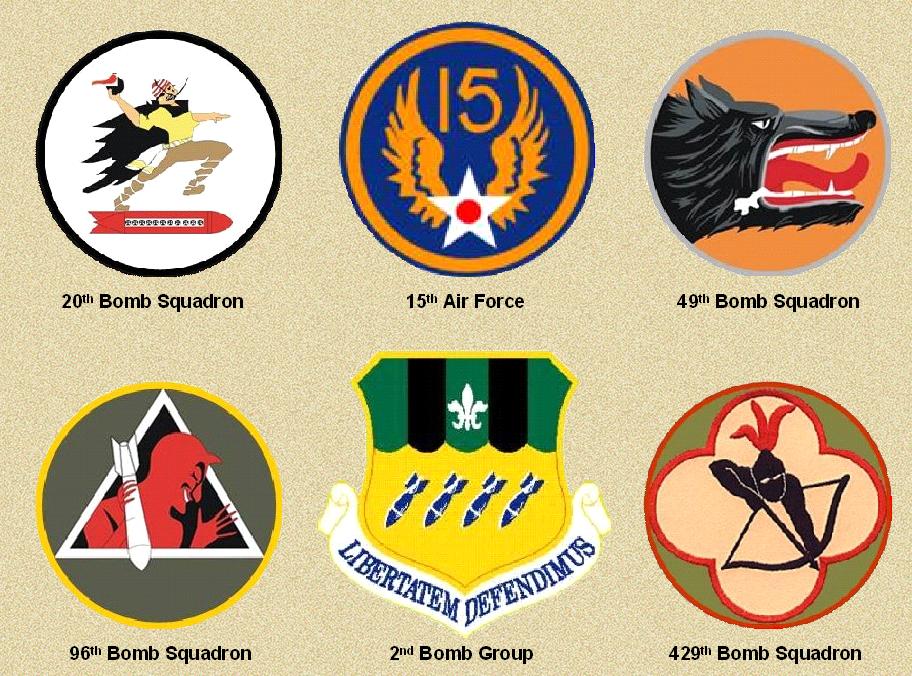
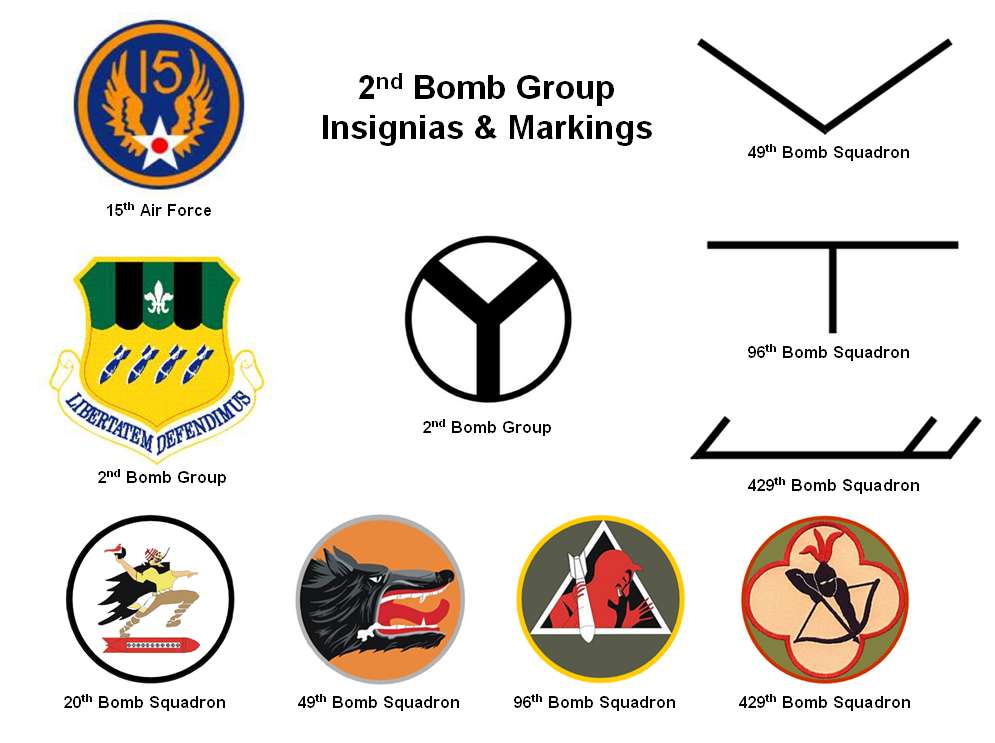
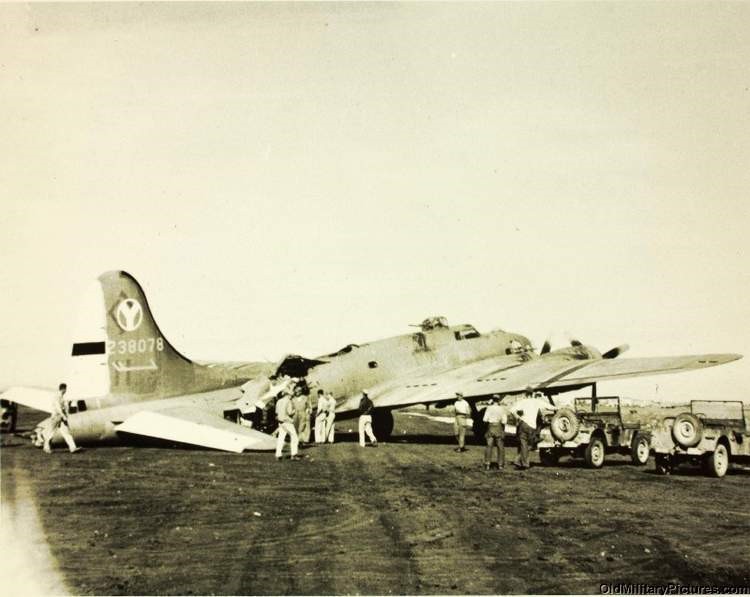
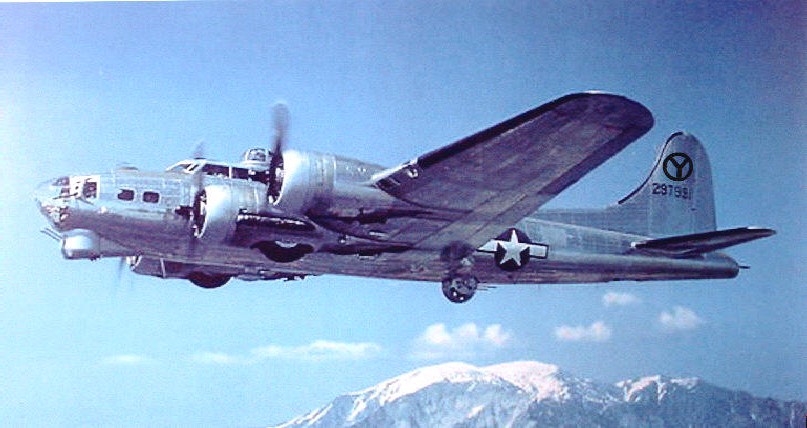
I ended up going down this rabbit hole Saturday night late. I was searching for information about a B-17 pilot from Alabama who was shot down over Romania in February of ’45. He was the only survivor out of his ship. His chute was on fire and he thought he was a “goner”. As his chute disappeared and his velocity increased towards earth, death was not meant for him at that time. He landed in a sedimentation pond at the lower end of field and stuck up to his neck in mud. Before he could get out, the Germans were upon him. He was taken into captivity and moved twice in front of the advancing Russians. At the third camp he awoke one morning to find all the Germans gone and the gates open. Thinking it might be a trap, he and the other POWs stayed put until the Ruskies arrived. Two weeks later he was back in England. This is not the story I was looking for, but this is one HELLUVA story about some men that nursed a damaged ship 600 miles back to Italy using engine power to steer and eventually land the plane.The Saga of “Sweet Pea”
|
||||
Someday I will try to do this myself. But is getting harder & harder to find a good shooter for sale in my limited Retired Teacher Budget! Grumpy
PS Here is some more information about THE Round used at the height of the British Empire.
.577/450 Martini–Henry
Jump to navigationJump to search
Also known as 11.43x60R (61R)
| .577/450 Martini–Henry | ||||||||
|---|---|---|---|---|---|---|---|---|

.577 Snider, two .577/450 Martini–Henry (coiled brass & drawn brass) and .303 British cartridges.
|
||||||||
| Place of origin | United Kingdom | |||||||
| Service history | ||||||||
| Used by | British Empire | |||||||
| Wars | Anglo-Zulu War, Mahdist War | |||||||
| Production history | ||||||||
| Designed | 1871 | |||||||
| Specifications | ||||||||
| Parent case | .577 Snider | |||||||
| Bullet diameter | .455 in (11.6 mm) | |||||||
| Neck diameter | .487 in (12.4 mm) | |||||||
| Shoulder diameter | .628 in (16.0 mm) | |||||||
| Base diameter | .668 in (17.0 mm) | |||||||
| Rim diameter | .746 in (18.9 mm) | |||||||
| Rim thickness | .05 in (1.3 mm) | |||||||
| Case length | 2.34 in (59 mm) | |||||||
| Overall length | 3.12 in (79 mm) | |||||||
| Ballistic performance | ||||||||
|
||||||||
| Source(s): Cartridges of the World.[1] | ||||||||
The .577/450 Martini–Henry is a black powder, centrefire rifle cartridge, it was the standard British service cartridge from the early 1870s that went through two changes from the original brass foil wrapped case (with 14 parts) to the drawn brass of two parts, the case and the primer. The .577/450 Martini–Henry was introduced with the Martini–Henry, in service it succeeded the .577 Snider cartridge and was used by all arms of the British armed forces as well British colonial forces throughout the British Empire until it was itself succeeded by the .303 British cartridge after unsuccessful trial of a .402 calibre [2]
Contents
Design[edit]
The .577/450 Martini–Henry is a rimmed, bottlenecked centerfire rifle cartridge derived from the .577 Snider, it was lengthened and bottlenecked. The .577/450 Martini–Henry was developed for use in the single shot Martini–Henry service rifle, originally loaded with blackpowder later it used cordite propellant.[1]
Rifle cartridges[edit]
The various rifle cartridges fired a 480 gr (31 g) bullet made of an alloy of 1 part tin and 12 parts lead, driven by 85 gr (5.5 g) of RFG2 blackpowder and later 35.8 gr (2.32 g) of cordite size 3 at a muzzle velocity of 1,300 to 1,350 ft/s (400 to 410 m/s).[1][3][4]
Coiled brass cases[edit]
The first .577/450 Martini–Henry rifle cartridge, the Cartridge S.A. Ball Rifle Breech-Loading Martini Henry Mark I, was made of coiled brass sheet .003 in (0.076 mm) thick with a strengthening strip of brass inside the coil and the body of the cartridge was riveted to the iron base disc and lined with thin white tissue paper. The smooth sided bullet was paper-patched with a thick cake of beeswax below the bullet with two cardboard discs above and a single one below.[5][6]
As a matter of economy, the Mark I was replaced by the Cartridge S.A. Ball Rifle Breech-Loading Martini Henry Mark IIwhich had a slightly thicker .004 in (0.10 mm) wall, no strengthening strip and a slightly longer base cap was added. The Mark II had a tendency to split at the base, so the Cartridge S.A. Ball Martini Henry Rifle Rolled Case Mark III was developed which had two layers of .004 in brass overlapped by .5 in (13 mm) with a .004 in brass strengthening strip with a small sight hole punched in the outer coil as a visual check that the strip was correctly placed and an inner and outer base cap turned over at the base.[6][7]
As a result of complaints about the recoil compared to the Snider cartridge, Woolwich developed a lighter loading with a 410 gr (27 g) bullet driven by 80 gr (5.2 g) of blackpowder, the Cartridge S.A. Ball Martini Henry Rifle Rolled Case Mark IV. The Mark IV is visually identical to the Mark III and once removed from its bundle can only be identified by weight, it was produced in batches between 1873 and 1880 by which time complaints about the recoil had ceased, presumably as soldiers became accustomed to it, and later production reverted to the Mark III.[5][6]
Drawn brass cases & cordite loadings[edit]
In service the coiled brass cases proved to be fragile and prone to sticking in the chamber so in 1885 a solid drawn brass case was introduced, the Cartridge S.A. Ball Martini Henry Rifle Solid Case Mark I, this was soon replaced by the Cartridge S.A. Ball Martini Henry Rifle Solid Case Mark II with a paper patch that did not extend so far up the bullet. The Mark II cartridge was replaced in British Army service by the .303 British from 1889, but remained in the service of colonial forces for many years.[3][4]
In 1902 the use of cordite was approved for use in the .577/450 cartridge and the Cartridge S.A. Ball Martini Henry Rifle Solid Case Cordite Mark I was introduced the same year, with a similar cartridge case and bullet, but loaded with cordite.[4]
Carbine cartridges[edit]
A reduced power load was produced for use in carbines, firing a 410 gr (27 g) bullet of the same alloy driven by 70 gr (4.5 g). The lighter carbine loading was less accurate, had a shorter range and less stopping power, but the two were interchangeable.[3][8]
Coiled brass cases[edit]
The Cartridge S.A. Ball Carbine Breech-Loading Martini Henry Mark I was introduced in 1877, it shared the coiled brass case of the Mark III rifle cartridge with a cotton card taking up the unused space left by the use of less powder. In service the Mark I carbine cartridge was found to be inaccurate, so in 1878 the Cartridge S.A. Ball Carbine Breech-Loading Martini Henry Mark II was introduced, which replaced the cotton card with thicker paper lining. In 1879 the Cartridge S.A. Ball Carbine Breech-Loading Martini Henry Mark III was introduced, the major changes was to the paper patching of the bullet which included longitudinal slits to ensure it was discarded upon the bullet exiting the muzzle. The Mark III carbine cartridge remained in service for many years.[8][9]
Drawn brass cases & cordite loadings[edit]
The introduction of solid drawn brass cases for rifle cartridges was followed in 1887 with the similar Cartridge S.A. Ball Martini Henry Carbine Solid Case Mark I solid drawn brass carbine cartridge, whilst it retained the same 410 gr bullet it had a heavier 85 gr (5.5 g) loading of blackpowder. Following the introduction of a cordite rifle cartridge, the Cartridge S.A. Ball Martini Henry Carbine Solid Case Cordite Mark I was introduced in 1903. It was propelled by 34 gr (2.2 g) of cordite, the other major difference was a green paper used to patch the bullet[10][11]
Anti-airship cartridges[edit]
Prior to World War I, to combat the threat of Zeppelins it was determined that machine guns firing explosive or incendiary rounds were required to ignite the airship‘s gas. The bullet of the .303 British was too small to carry enough incendiary composition for the intended purpose, so the .577/450 round was adapted to the purpose and in 1914 the Cartridge S.A. Tracer Martini Henry Rifle and Machine Gun Mark I was introduced. This round used reclaimed drawn brass cases from rifle cartridges, firing a 270 gr (17 g) bullet made of a brass outer envelope containing 50 gr (3.2 g) of incendiary mix (20 parts potassium perchlorate and 7 parts aluminium) and 20 gr (1.3 g) of igniting mixture towards the tip. The cartridge was propelled by 47 gr (3.0 g) of cordite size 3 at a muzzle velocity of 2,150 ft/s (660 m/s).[12]
In 1916 a tracer round was developed for the .577/450, the 295 gr (19.1 g) bullet comprised a cupronickel envelope containing 91 gr (5.9 g) of tracer element. The round was propelled by 40 to 50 gr (2.6 to 3.2 g) of cordite at a muzzle velocity of 2,000 ft/s (610 m/s).[12][13]
Sporting cartridges[edit]
The .577/450 was also loaded with a variety of bullets designed for sporting use, including solid, hollow-pointed and copper-tubed bullets.[14][15][16]
History[edit]
The .577/450 Martini–Henry was introduced into British service in 1871 with the single-shot, rolling block Martini–Henryrifle, replacing the .577 Snider and the Snider–Enfield rifle.[1]
Colonial service[edit]
The .577/450 Martini–Henry was first fired in combat on the Malay peninsular in the Perak War of 1875–76, although the first widespread deployment of cartridge and the Martini-Henry rifle occurred in 1878, when it saw service in Southern Africa in the later stages of the Ninth Xhosa war, and later that year in Afghanistan in the Second Anglo-Afghan War. It was used by British forces throughout the Anglo-Zulu War, chambered in both the Martini–Henry and the Swinburn–Henryrifles, the latter a commercially produced rifle designed to avoid contravening the patent for the Martini action.[17]
The .577/450 Martini–Henry, chambered in the Martini–Henry and later the Maxim gun, saw service throughout the British Empire. In Africa the cartidge saw combat in the Anglo-Zulu War, chambered in both the Martini–Henry and the Swinburn–Henry rifles, the latter a commercially produced rifle designed to avoid contravening the patent for the Martini action, the First Boer War, the Anglo–Sudan War, the Anglo-Egyptian War, the Emin Pasha Relief Expedition, and the First Matabele War, the cartridge continued to see widespread service throughout Africa even after the introduction of the .303 British, seeing service in the Second Boer War in both British and Boer hands.[17][18][19][20]
The .577/450 Martini–Henry also saw service throughout the British Raj, Burma, the various Australian colonies, the Canadian Confederation, the Colony of New Zealand and throughout the Caribbean.[17][19][20] The .577/450 Martini–Henry continued in service with various colonial police forces throughout Africa and India up to the First World War.[21]
Great War and subsequent use[edit]
The .577/450 Martini–Henry was still in British military service in World War I, in the early stages of the war it used by the Royal Flying Corps, both by observers and balloon busters. As late as the 2010s, Martini–Henry rifles have been seized in Taliban caches.[22]
Use[edit]
Service weapons chambering the .577/450 Martini–Henry[edit]
- Martini–Henry
- Swinburn–Henry
- Maxim gun
- Bira gun
- Civilian Martini-actioned sporting rifles
Sporting use[edit]
The .577/.450 lived on as a useful medium bore rifle for sporting or guard use long after it became militarily obsolete. Sporting rifles were made for the cartridge, and surplus military arms were sold off in the Third World (although not in India or the Sudan, where they were banned). The Martini Henry was particularly popular in the Middle East, and demand continued for the cartridges well into the 20th century.[14]
Commercial sporting load. Because of ease of ammunition availability of the military cartridge .577/.450 sporting rifles or Cape guns (a combination double barreled rifle and shotgun) were popular with colonial settlers and army officers.[15][16]
See also[edit]
References[edit]
- ^ Jump up to:a b c d Frank C. Barnes, Cartridges of the World, 13th ed, Gun Digest Books, Iola, 2012, ISBN 978-1-4402-3059-2.
- ^ Enfield Martini, “Enfield Martini .402 Mk1 Rifle Pattern A”, www.martinihenry.org, retrieved 02 April 2019.
- ^ Jump up to:a b c Øyvind Flatnes, From musket to metallic cartridge: a practical history of black powder firearms, Marlborough: The Crowood Press, 2013, ISBN 978-1-84797-594-2.
- ^ Jump up to:a b c Tony Edwards, “.45 Martini Henry Solid Case Rifle”, sites.google.com/site/britmilammo, retrieved 02 July 2018.
- ^ Jump up to:a b Martin J. Dougherty, Small arms up close, New York: The Rosen Publishing Group, 2016, ISBN 978-1-5081-7082-2.
- ^ Jump up to:a b c Tony Edwards, “.45 inch Martini Henry”, sites.google.com/site/britmilammo, retrieved 02 July 2018.
- ^ Imperial War Museums, “Cartridge, SA, Ball, Martini-Henry Rifle, Rolled Case, Mk 3”, iwm.org.uk, retrieved 02 July 2018.
- ^ Jump up to:a b Imperial War Museums, “Packet, 10 cartridges, .577/.450 Martini-Henry carbine Mark 3, Ball, Kynoch”, iwm.org.uk, retrieved 02 July 2018.
- ^ Tony Edwards, “.45 inch Martini Henry Carbine Ball”, sites.google.com/site/britmilammo, retrieved 02 July 2018.
- ^ Tony Edwards, “.45 inch Martini Henry Solid Case Carbine”, sites.google.com/site/britmilammo, retrieved 02 July 2018.
- ^ Imperial War Museums, “Cartridge, SA, Ball, Martini-Henry Carbine, Solid Case, Cordite, Mk 1”, iwm.org.uk, retrieved 02 July 2018.
- ^ Jump up to:a b Tony Edwards, “Air Service WWI (non .30 inch) .45 inch”, sites.google.com/site/britmilammo, retrieved 05 July 2018.
- ^ Imperial War Museums, “Cartridge, SA, tracer, .577/.450 inch, SPG”, iwm.org.uk, retrieved 02 July 2018.
- ^ Jump up to:a b Imperial War Museums, “.577/.450 Solid Martini-Henry” , iwm.org.uk, retrieved 06 July 2018.
- ^ Jump up to:a b Imperial War Museums, “.577/.450 Solid Martini-Henry, hollow point” , iwm.org.uk, retrieved 06 July 2018.
- ^ Jump up to:a b Imperial War Museums, “.577/.450 Solid Martini-Henry, copper-tubed” , iwm.org.uk, retrieved 06 July 2018.
- ^ Jump up to:a b c Stephen Manning, The Martini–Henry rifle, Oxford: Osprey Publishing, 2013, ISBN 978-1-78096-506-2.
- ^ Kenneth L. Smith-Christmas, “The guns of the Boer commandos”, americanrifleman.org, retrieved 02 July 2018.
- ^ Jump up to:a b Martin Pegler, The Vickers-Maxim machine gun, Oxford: Osprey Publishing, 2013, ISBN 9781780963839.
- ^ Jump up to:a b Ian F. W. Beckett, “Retrospective icon: the Martini–Henry”, A cultural history of firearms in the Age of Empire, eds. Giacomo Macola, Karen Jones & David Welch, Farnham: Ashgate Publishing, Ltd., 2013, ISBN 9781472402264.
- ^ James Walters, “The Martini-Henry rifle“, Shooting Times, New York: Outdoor Sportsman Group, Inc., 28 September 2010, ISSN 0038-8084.
- ^ C.J. Chivers, “One way to retire an old rifle”, atwar.blogs.nytimes.com, retrieved 02 July 2018.