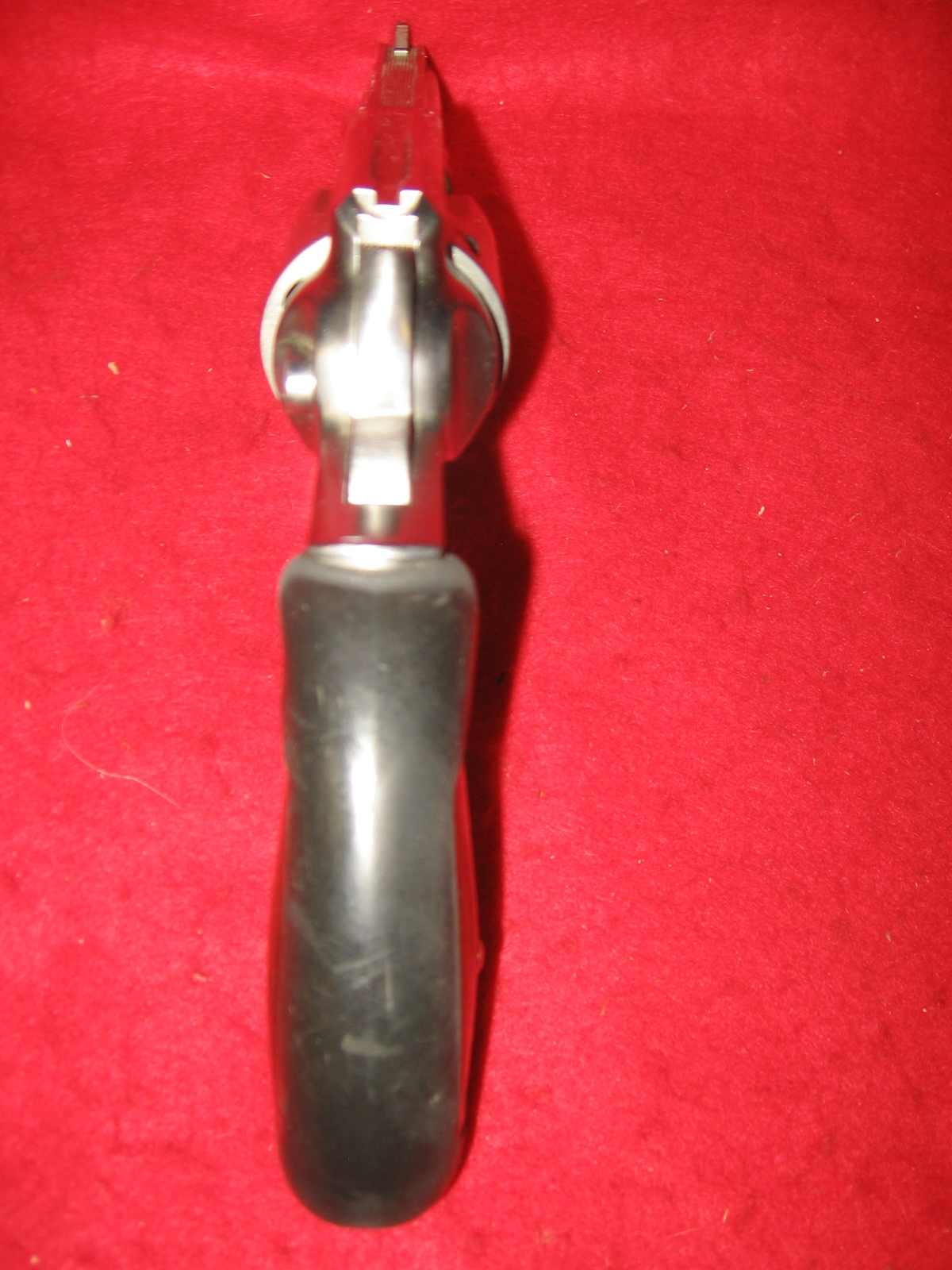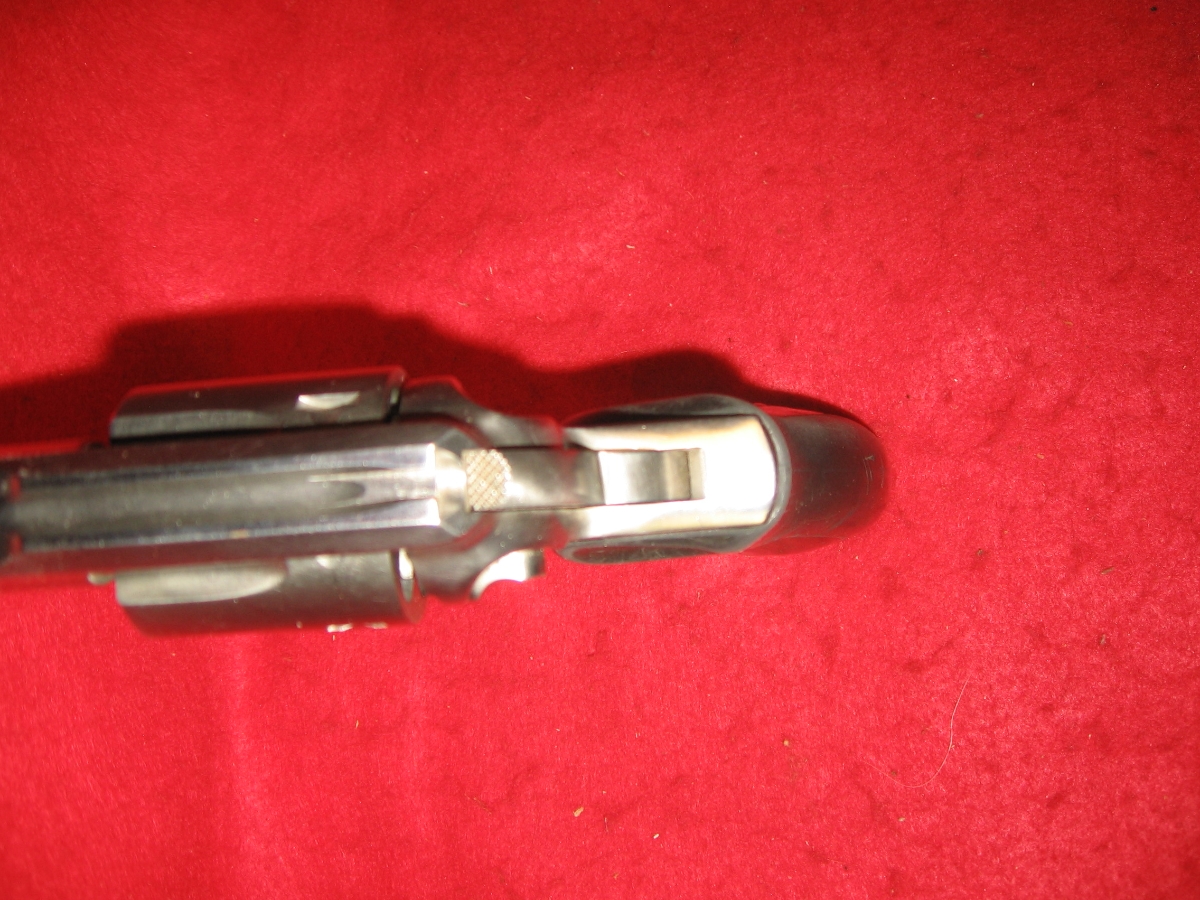


It’s tempting to think that the “revolution” of high-tech micro pistols is a new thing, but it’s not really accurate.
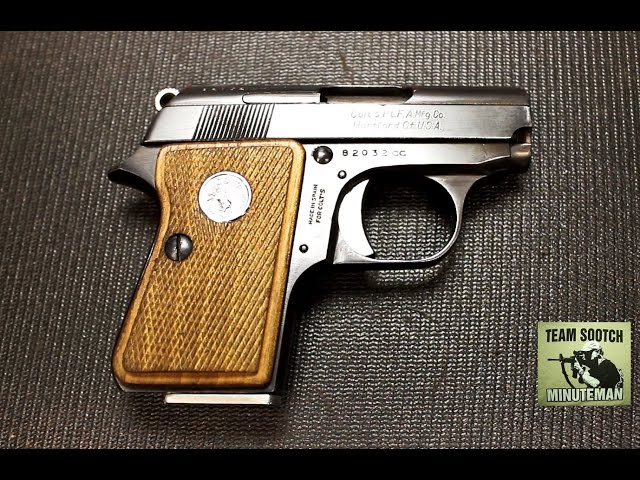
Small guns like this Colt Junior have been pushing the limits on size for decades, and they did it well before fancy new polymers changed the game. Most shooters would consider this little .25 ACP pistol to be more of a novelty in the age of micro 9mm handguns, but it certainly found its way into a few pockets over the years.

The Colt Junior we pulled from the Guns.com Vault is in .25 ACP, but they did make the guns for calibers as low as .22 Short. This one was manufactured in 1973, but guns such as the “Baby Browning” have been pushing the limits of size for semi-auto pistols for more than a century.

More than that, this gun has some interesting little tricks that helped it stay small and slim. First, you’ll notice the absence of the slide stop on the left side of the otherwise pretty classic Colt profile. Instead, the gun features a safety/slide lock to assist in the disassembly process. The safety levers forward to lock the slide and make the removal of the barrel easier.

Speaking of the barrel, it also serves as the takedown for the slide itself. You’ll notice the small groves on the tip of the barrel above. You can lock the slide back and rotate the barrel at the tip to release the lugs and remove the slide. That partially explains the care taken to add the fluting on the tip of the barrel. The maximum use of space is just another great example of how brilliant pistol engineers have been making tiny guns well before the polymer lines were even conceived.
The guns are very low recoiling because of the fairly anemic .25 ACP round and the overall weight of the all-metal pistol coming in at nearly a pound. But this little shooter is also an interesting storyteller about America’s shifting gun laws. The gun was originally made under a Colt license in Spain by Astra to cut down on the price.


Colt had some of the later models, like this one, assembled in Florida to get around the 1968 Gun Control Act that effectively ended the importation of the Spanish-made Juniors.
The gun is a simple blow-back design with a single-stack magazine. Because it does not have a slide stop, it won’t hold open after the last round. That trait is forgivable if we remember that this is a mouse-sized, vest-pocket gun. Overall, it’s a small package filled with a lot of fun history.


I know it is hard to believe but even in Los Angeles, up until the 1960’s that is. There were these folks called the Milk Man who brought to your home Fresh Milk and Butter!
Believe it or not! Grumpy

To make the matter even more ghoulish, the city has not actually come up with a plan yet on what to do with his remains that have been in the location since 1892.
General Hill had requested he be buried under the memorial in his will, ABC 8 reports.
“He had left in his will that he wanted to be buried in Richmond. I’m not sure why Richmond because he wasn’t from Richmond and didn’t have any particularly strong Richmond roots that I’m aware of,” Bob Balster, president of the Hermitage Road Historic District Association told 8News.
To ensure his wishes were carried out, Confederate veterans who served under Hill raised money for the monument and the land was donated by Lewis Ginter.
The National File reports that an effort “led by Mayor Levar Stoney and backed by Governor Ralph Northam, anti-history Democrats in Richmond, Virginia are finalizing plans to dig up the remains of Confederate General Ambrose Powell Hill, who lies beneath a towering statue dedicated in his honor and now marked for removal amidst efforts to erase all traces of the Confederacy from its former capital.”
Though the city removed nearly all of their Confederate statues during the terroristic Black Lives Matter riots last year, the general’s statue and grave had remained.
To circumvent laws against desecrating graves, the Democrats are reportedly designating the grave a threat to traffic safety, giving them the power to remove it.
According to the National File, under the removal plans, “workers will remove the bronze statue of the General before destroying its stone pedestal and removing the sarcophagus containing his remains. Details of what the city plans to do with Hill’s remains are unclear, and the project is estimated to carry a taxpayer-funded price tag of over $33,000.”